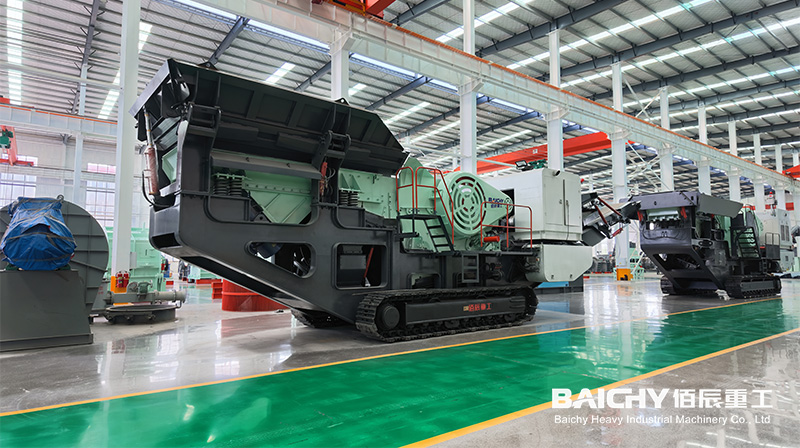
Tracked Mobile Crusher | Crawler Crushing Plant
In the fields of mining, infrastructure construction, and urban renewal (specifically construction waste processing), traditional stationary crushing production lines often face critical pain points such as "long installation cycles, difficult site transfers, and high foundation construction costs." Particularly against the backdrop of today's increasingly stringent environmental regulations and the highly mobile nature of modern engineering projects, crawler-mounted mobile crushers (also known as crawler-mounted crushing stations) have emerged as the ideal solution—becoming the core equipment for ensuring both flexibility and efficiency in crushing and screening operations.
As a specialized manufacturer of mining crushing, ore grinding, and mineral processing equipment, we fully understand the direct impact that equipment performance has on project profitability. This article will provide an in-depth analysis of crawler-mounted mobile crushing stations—covering their general overview, application scenarios, core advantages, and real-world case studies—to assist you in comprehensively evaluating this modern crushing solution.

Crawler Crusher PDF,Download ↓↓↓
I. What is an Integrated Crawler-Mounted Crushing Station?
A crawler-mounted mobile crusher is a self-propelled crushing unit that integrates multiple functions into a single machine, including feeding, crushing, screening, conveying, and iron removal. It typically employs fully hydraulic drive technology, utilizing a heavy-duty crawler chassis as its carrier, and is equipped with a high-performance diesel engine (or a dual diesel-electric power system) and an intelligent PLC control system.
Unlike wheel-mounted mobile crushers, the crawler design significantly increases the equipment's contact area with the ground, thereby reducing ground pressure. This enables the unit to easily navigate complex and harsh terrains—such as muddy sites, mountainous regions, and sandy areas—and even grants it strong climbing capabilities (typically up to an incline of around 30°). Consequently, it requires no external towing vehicle; site transfers can be executed freely using the unit's own remote control or onboard driving system.
Based on the type of primary crushing unit installed, crawler-mounted mobile crushing stations are primarily categorized into the following types:
• Crawler-Mounted Mobile Jaw Crushing Station: Primarily used for primary coarse crushing, processing large blocks of raw ore or construction waste.
• Crawler-Mounted Mobile Cone Crushing Station: Used for medium and fine crushing operations; suitable for high-hardness rocks (such as granite and basalt) and produces finished products with excellent particle shape.
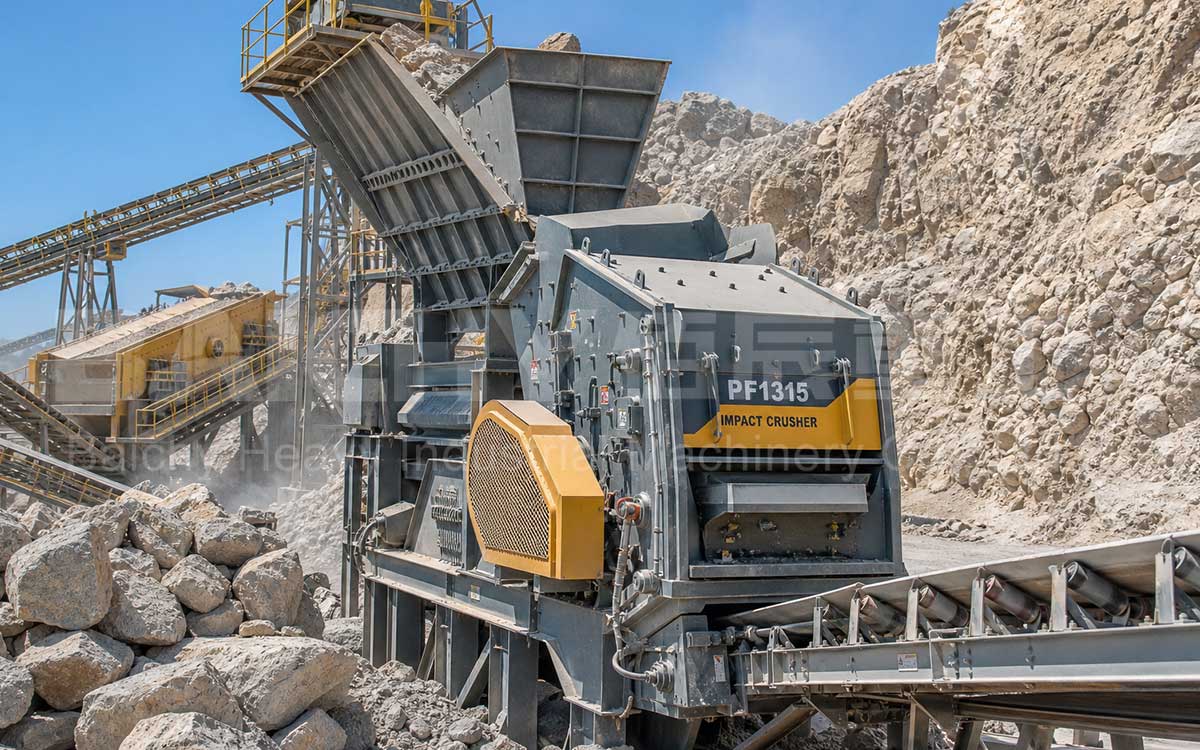
• Crawler-Mounted Mobile Impact Crushing Station: Used for medium-to-fine crushing or for the recycling of construction waste; features a high crushing ratio and incorporates particle shaping capabilities.
• Crawler-Mounted Mobile Screening Station: Dedicated to multi-stage screening operations; can operate independently or in conjunction with crushing stations.
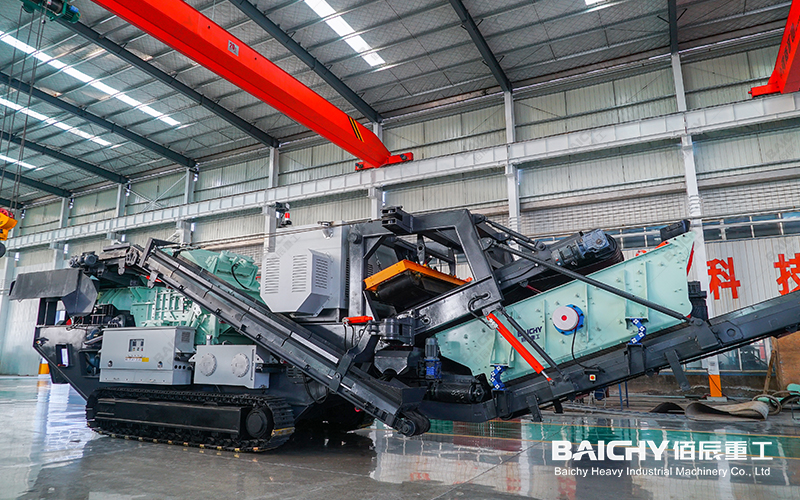
Crawler Impact Crusher
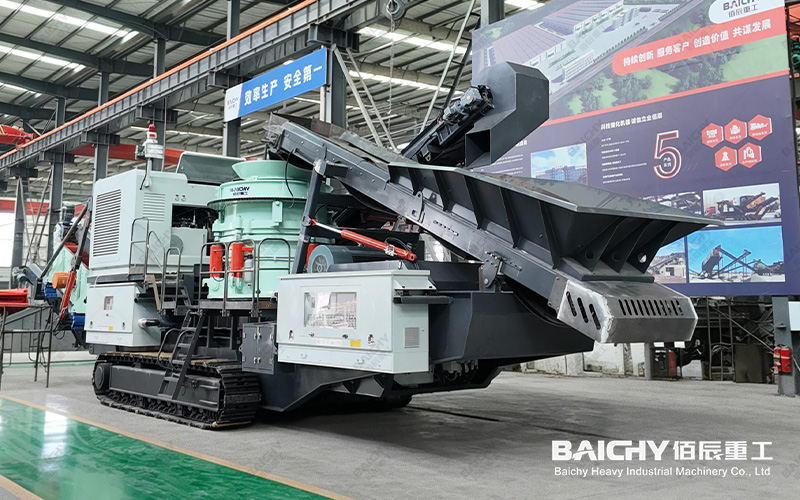
Crawler Cone Crusher
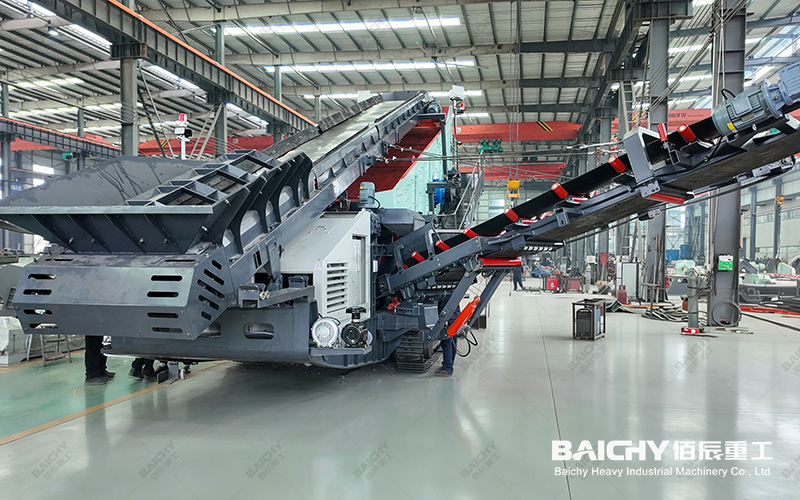
Crawler Screening
II. Reference for Key Technical Parameters (Illustrated by Typical Models)
To provide you with a more intuitive understanding of the equipment specifications, the following table presents the technical parameters for a selection of our crawler-mounted mobile jaw crushing stations (YMC Series):
| Parameter | Unit | Model YMC96 | Model YMC106 | Model YMC120 |
| Transport Dimensions (L×W×H) | mm | 14200×2900×3470 | 14900×3000×3600 | 15200×3200×3700 |
| Total Machine Weight | t | 38 | 50 | 65 |
| Main Crusher Model | - | CJ96 (Jaw Crusher) | CJ106 (Jaw Crusher) | CJ120 (Jaw Crusher) |
| Feed Opening Size | mm | 930×580 | 1060×700 | 1200×870 |
| Max. Feed Size | mm | 480 | 560 | 700 |
| Processing Capacity | t/h | 70-150 | 90-250 | 110-350 |
| Diesel Engine Power | kw | 96 | 106 | 132 |
| Hopper Volume | m³ | 5 | 5 | 6 |
| Main Conveyor Specifications (W×L) | mm | 800×9000 | 1000×10000 | 1200×12000 |
Note: The parameters listed above are subject to adjustment based on specific configurations (e.g., the addition of screening units or different main crusher models) and the nature of the materials being crushed. Specific details shall be governed by the formal technical agreement.
III. Wide Range of Application Scenarios: From Mining Sites to Urban Demolition
The inherent "mobility" of crawler-mounted mobile crushers dictates their extensive scope of application, making them particularly well-suited for the following scenarios:
1. Mining Operations and Quarrying
In remote mining locations or areas with complex terrain, the construction costs associated with establishing fixed production lines are prohibitively high. Track-mounted mobile crushers can drive directly to the mining face, serving as vanguard equipment for primary crushing. This reduces the transport distance for raw ore, enables the integration of "mining and crushing" operations, and significantly boosts mining efficiency.
2. Resource Utilization of Construction Waste (Urban Renewal)
Urban demolition projects and road resurfacing initiatives (converting concrete roads to asphalt) generate vast quantities of concrete blocks and brick rubble. The traditional approach involves transporting this waste off-site for landfilling—a method that is both costly and environmentally unfriendly. By utilizing track-mounted crushing stations, waste can be directly crushed and screened at the demolition site, transforming it into recycled aggregates of various specifications (e.g., 0–5mm, 5–10mm, 10–20mm). These aggregates can then be used for roadbed sub-bases or the manufacture of recycled bricks, truly turning waste into valuable resources.
3. Road, Railway, and Water Conservancy Construction Projects
These types of engineering projects typically involve long routes and dispersed work sites. Track-mounted mobile crushers can flexibly relocate to keep pace with project progress, providing on-site processing services for tunnel spoil and rock excavated during roadbed widening. This ensures a continuous supply of the necessary sand and aggregate materials throughout the project, thereby safeguarding construction schedules.
4. Open-Pit Coal Mines and Other Specialized Operating Conditions
In coal mining and iron ore stripping operations, this equipment can be configured with specialized screening units or double-toothed roller crushers to effectively handle the crushing of high-moisture or sticky materials. Furthermore, its fully enclosed design meets stringent dust control requirements.
IV. Core Advantages of the Equipment: Why Choose a Track-Mounted Mobile Crushing Station?
1. Exceptional Mobility and All-Terrain Adaptability: Featuring a heavy-duty track chassis design, the unit requires no steel plates or paved roads for movement; it can traverse directly across muddy ground, grassy areas, and rugged mountain paths. With strong climbing capabilities, it requires no tow trucks for relocation, resulting in significant savings in auxiliary time and transportation costs.
2. "Arrive-and-Use" Capability—No Foundation Installation Required: Thanks to its integrated, self-contained vehicle structure, the unit requires only simple site leveling and calibration upon arrival to commence production. It eliminates the need for pouring concrete foundations, making it particularly well-suited for short-term or temporary engineering projects and significantly shortening the time-to-production cycle.
3. Reduced Material Transport Costs: By implementing the philosophy of "moving the equipment rather than the material," the machinery is driven directly to the material stockpile for operation. This eliminates significant intermediate handling and transport expenses, thereby directly boosting project profit margins.
4. Intelligent Control and Dual-Power Options: Modern models are equipped with an intelligent PLC control system capable of real-time monitoring of data such as oil temperature, pressure, and current, while also supporting remote fault diagnosis. Furthermore, the equipment offers a choice of pure diesel drive, external power supply drive, or an intelligent dual-power switching mode; in sites where industrial electricity is available, operators can switch to electric power to reduce operating costs and emissions.
5. Eco-Friendly and Modular Design: Optional features—including spray dust suppression systems, noise reduction devices, and enclosed conveyor belts—are available to meet the environmental protection requirements of urban construction projects. The modular design allows for the rapid assembly or interchangeability of feeders, crushers, and screens, enabling the system to adapt flexibly to perse processing requirements.
V. Shared Application Case Studies
Case Study: On-Site Processing of Tunnel Muck for High-Speed Rail Construction (Reference: Similar Projects)
• Project Background: During the construction of a section of my country's northernmost high-speed railway (the Harbin-Yichun HSR), granite tunnel muck (with an input particle size of less than 700 mm) needed to be crushed into a mixed aggregate product (less than 60 mm) for use in the railway's roadbed.
• Equipment Configuration: A combination of a crawler-mounted jaw crusher (SP127JE) and a crawler-mounted cone crusher (SP300CE) was selected.
• Operational Results: The construction site was located within a forested area characterized by poor road conditions and electricity supply restrictions. Thanks to their self-contained diesel power systems, the crawler-mounted units were able to access the site smoothly. Operating in two shifts per day, the equipment maintained a stable output of 250–270 tons per hour. The resulting aggregate met the strict particle shape specifications required for high-speed railway roadbeds; impressed by the equipment's high stability and reliability, the client subsequently purchased a second unit.
Case Study: On-Site Recycling of Urban Construction Waste (Reference: Similar Projects)
• Project Background: A "White-to-Black" road resurfacing project (replacing concrete with asphalt) in a city in East China required the processing of a large volume of old concrete pavement blocks.
• Equipment Configuration: YMC Series Crawler-Mounted Mobile Impact Crusher.
• Operational Results: The material was crushed directly on-site, and the resulting mixed aggregate product was immediately utilized as the base layer for the new road pavement. Calculations indicate that, after deducting fuel consumption, rental fees, and labor costs, the operation generates a profit of approximately 2,420 RMB per hour. Furthermore, it eliminates the fines associated with off-site waste disposal, thereby achieving a win-win outcome in terms of both economic efficiency and environmental protection.
VI. Recommended Related Equipment
Based on your specific crushing requirements, we recommend the following equipment—either from the same series or complementary units:
1. Track-mounted Mobile Cone Crushing Station (Medium/Fine Crushing): Ideal for the secondary and tertiary crushing of high-hardness rocks—such as granite and iron ore—producing finished products with a cubic shape and low needle-and-flake content.
2. Track-mounted Mobile Impact Crushing Station (Shaping/Recycling): Suitable for the medium-to-fine crushing of limestone and construction waste; it offers a high crushing ratio, provides a certain degree of material shaping, and delivers excellent cost-effectiveness.
3. Track-mounted Mobile Screening Station: Can operate independently or in tandem with a crushing station to simultaneously produce finished materials of multiple specifications (e.g., 0–5 mm, 5–10 mm, 10–20 mm).
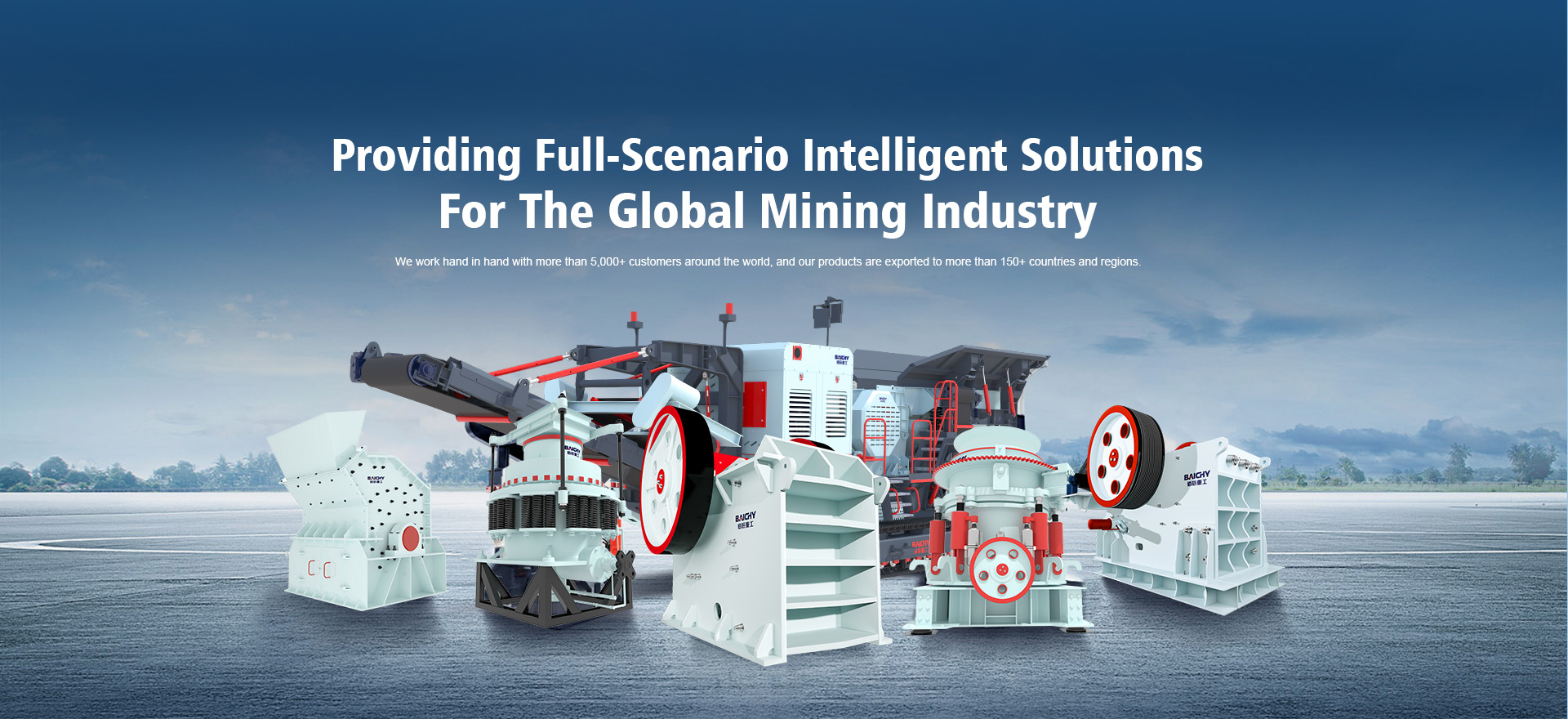
About of Baichy Heavy Industry
Baichy Heavy Industry is a high-tech mining equipment company integrating R&D, manufacturing, sales, and after-sales service. Focusing on crushing, grinding, and mineral processing equipment, we provide professional solutions to our customers. We are ISO9001:2015 、certified, and our products include mobile crushing palnts, crawler crushing plant, construction waste crushing plants, jaw crushers, sand making machines, cone crushers, fine crushers, grinding mills, ball mills, etc., all with reliable performance to meet diverse project needs.
Our advantages:
• Professional pre-sales support: Free project design and comprehensive solutions to help you accurately select the right equipment;
• Comprehensive on-site service: Providing installation guidance and worker training to ensure smooth equipment commissioning;
• Reliable after-sales guarantee: A complete after-sales system, timely response to technical inquiries and equipment maintenance, ensuring long-term stable operation.
To protect your rights, please contact us through the following official channels for professional service:
Official Website Customer Service
https://wa.me/+8615093222637
Email: [email protected]
We are committed to providing high-quality equipment and full-cycle services to deliver comprehensive intelligent solutions for the global mining industry!
VII. Frequently Asked Questions (FAQ)
1. What are the main differences between track-mounted and wheel-mounted mobile crushers? Which one should I choose?
A: The primary differences lie in their mobility mechanisms and terrain adaptability. Track-mounted units utilize a fully hydraulic, heavy-duty crawler chassis; they exert low ground pressure, allowing them to adapt to challenging terrains—such as muddy or mountainous areas—and are capable of turning in place, making them ideal for mines and remote construction sites. Wheel-mounted units, conversely, require a tractor unit for towing and are better suited for urban roads with good surface conditions or for long-distance transfers between sites. If your work areas are dispersed and road conditions are poor, the track-mounted option is the preferred choice; however, if your operations primarily involve short-distance movements within a plant facility or on paved surfaces, the wheel-mounted option offers relatively lower costs.
2. How can this equipment be utilized in remote mining sites where there is no access to grid electricity? What is the approximate fuel consumption?
A: The standard configuration for our track-mounted mobile crushing stations includes a high-performance diesel engine (e.g., from brands such as Cummins, Volvo, or Deutz), enabling the unit to be fully self-propelled and operational in areas completely devoid of grid power. Regarding fuel consumption—taking the WT106 Mobile Jaw Crushing Station as an example—consumption typically ranges from 18 to 22 liters per hour under full-load operation, though the exact figure may vary depending on the load factor and the hardness of the material being crushed. We also offer a "dual-power" (diesel-electric) version; when an external power source is available, the unit can be directly plugged in to operate, thereby saving on fuel costs.
3. What standards can the recycled aggregates produced from construction waste meet? Can they serve as a substitute for natural sand and gravel?
A: Through proper configuration—such as a multi-stage mobile processing line (e.g., "impact crusher + screening" or "jaw crusher + cone crusher + sand making machine")—recycled aggregates derived from construction waste can meet national standards (such as GB/T 25177). Generally, fine aggregates (0–5 mm) can be used to manufacture floor tiles and masonry blocks, while coarse aggregates (5–10 mm and 10–20 mm) are suitable for use in road sub-bases, cement-stabilized layers, or non-load-bearing concrete. If the goal is to completely replace natural sand for use in high-grade concrete, it is typically recommended that the recycled aggregates undergo specialized strengthening treatments or be blended with other high-quality aggregates.