+86-15093222637

Contact us for a quote and free process design
Baichy know what you are expecting from mining project and we are making it happen with unrivalled products and services.
Leave Message


Three-drum dryers have been widely used in many industries due to their advantages of high efficiency, energy saving, environmental protection, and easy operation. With the continuous development and innovation of technology, it is believed that three-drum dryers will play a more important role in the future.
Contact Us Now To Get A Customized Production Line Configuration Plan.

The three-drum dryer is particularly suitable for medium and large-scale production needs due to its energy-saving, high efficiency, and environmental protection. Long-term use can significantly reduce operating costs and is one of the preferred equipment for modern industrial drying. When choosing, you need to match the model according to the material characteristics, output, and environmental protection requirements.
• Three-pass structure: The material circulates repeatedly in three concentric drums (inner drum → middle drum → outer drum), which prolongs the contact time between hot air and materials, and the heat energy utilization rate can reach more than 80%, which is 30%~50% more energy-saving than the single-drum dryer.
• Insulation design: The multi-layer drum structure reduces heat loss and fuel consumption.
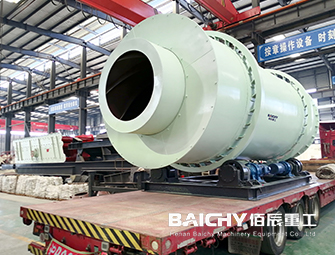
Three-drum drying delivery
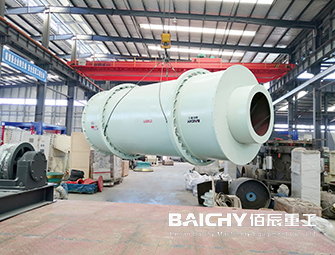
Three-drum drying delivery
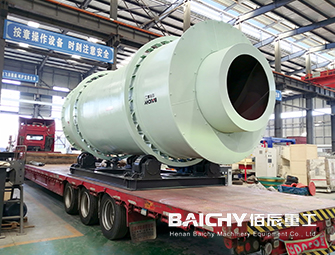
Three-drum drying delivery
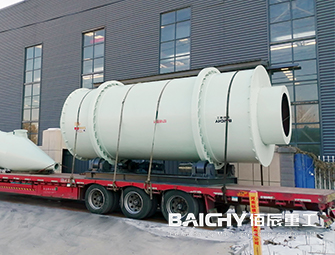
Three-drum drying delivery
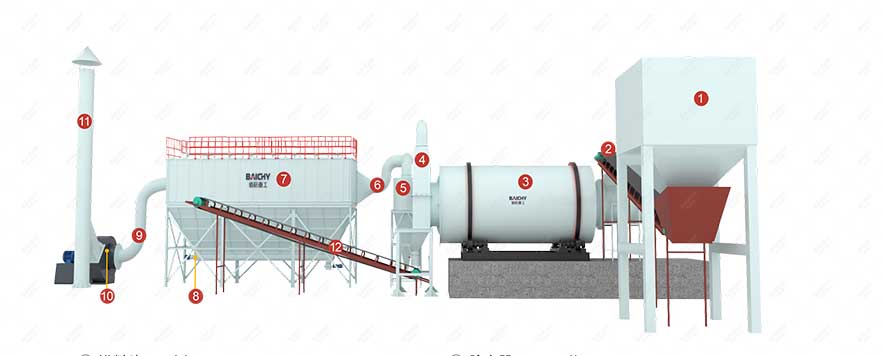
The three-drum dryer adopts advanced drying technology, which can greatly improve drying efficiency and reduce energy consumption. Compared with traditional drying equipment, its energy-saving effect can reach more than 30%.
The three-drum dryer is suitable for drying various materials, such as slag, clay, coal, iron powder, etc. At the same time, it can also be adjusted and optimized according to the characteristics and drying requirements of the materials to meet the needs of different industries.
The three-drum dryer adopts an advanced control system, which can realize automatic operation.
The waste gas generated by the three-drum dryer during the drying process can be discharged after treatment, which meets the national environmental protection requirements.
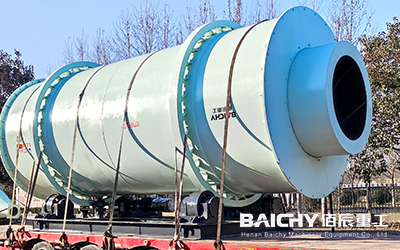
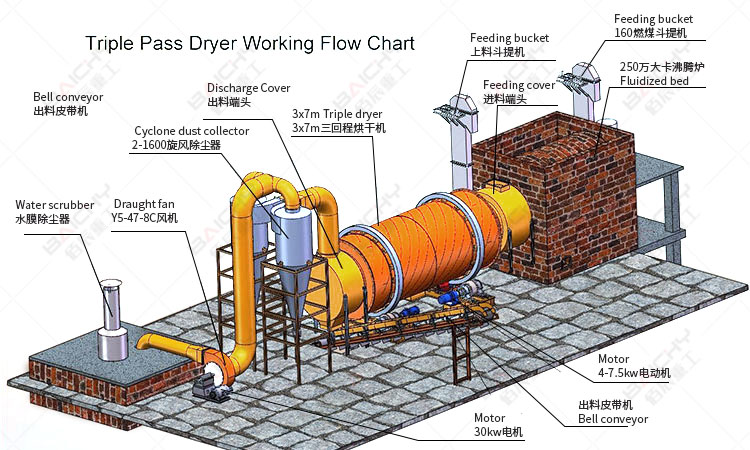
The working principle of the three-drum dryer is mainly based on the two drying methods of co-current and counter-current, and the material is fully dried through the heat exchange of multiple drums. The specific process is as follows:
| Model | Diameter of outer cylinder(m) | Length of outer cylinder (m) | Drum volume(m³) | Rotation speed(r/min) | Max. air flow temperature(℃) | Production capacity(t/h) | Power(kw) |
| Ф2.0*4m | 2 | 4 | 12.56 | 4-10 | 700-750 | 8-15 | 5.5x2 |
| Ф2.2*5m | 2.2 | 5 | 18.99 | 4-10 | 700-750 | 12-20 | 5.5x2 |
| Ф2.5*6m | 2.5 | 6 | 29.43 | 4-10 | 700-750 | 18-28 | 7.5x2 |
| Ф2.8*6m | 2.8 | 6 | 36.92 | 4-10 | 700-750 | 25-35 | 11x2 |
| Ф3.0*6m | 3 | 6 | 42.39 | 4-10 | 700-750 | 30-40 | 7.5x4 |
| Ф3.0*7m | 3 | 7 | 49.45 | 4-10 | 700-750 | 30-45 | 7.5x4 |
| Ф3.2*7m | 3.2 | 7 | 56.27 | 4-10 | 700-750 | 35-55 | 11x4 |
| Ф3.6*8m | 3.6 | 8 | 81.39 | 4-10 | 700-750 | 55-75 | 18.5x4 |
| Ф4.0*10m | 4 | 10 | 125.60 | 4-10 | 700-750 | 70-100 | 22x4 |
They are the same machine. "Three-drum dryer", "three-cylinder dryer" and "triple-pass rotary dryer" all describe one dryer built from three concentric drums — an inner, middle and outer cylinder nested together. Material passes through all three in sequence, which is why this design reaches a heat utilization rate above 80% instead of the single-drum dryer's single pass.
It dries high-moisture, granular or sticky materials such as slag, sand, quartz sand, clay, coal slime, sludge, metal powder, limestone, gypsum, fertilizer and feed. Available capacity is 8–100 t/h across nine standard models from Ф2.0×4m to Ф4.0×10m (drum volume 12.56–125.6 m³, rotation speed 4–10 r/min), with motor power from 11 kW (2×5.5 kW) to 88 kW (4×22 kW). Actual output depends on the material, feed size and required fineness.
A three-drum dryer saves 30%–50% energy versus a single-drum dryer, because the three-pass circulation keeps hot air in contact with the material far longer and lifts heat utilization above 80%. The multi-layer drum wall also reduces heat loss and fuel consumption. On footprint, the compact nested structure shortens the machine's overall length by about 60%, cutting civil works, steel structure and installation cost.
You can run the dryer on coal, gas, fuel oil, biomass, steam, electricity or waste heat recovery — choose according to local environmental rules and energy cost. Final moisture is controlled by three adjustable parameters: max air flow temperature (700–750 °C), drum speed (4–10 r/min) and feed rate. With these matched to your material, the finished product is usually dried below 1% moisture.
The dryer can be equipped with a cyclone dust collector, a bag dust collector or a wet dust removal system, and the waste gas is discharged only after treatment. The dust collection stage is selected together with the heat source and the local emission limit for your site, so the whole drying line — not just the drum — meets the standard.
If you need further information,please fill in your questions and comments in the form below.
Representatives from Baichy machinery will be back to you within the hour,thanking you for your support to Baichy machinery