+86-15093222637
Contact us for a quote and free process design
Baichy know what you are expecting from mining project and we are making it happen with unrivalled products and services.
Leave Message


Efficient, convenient, and environmentally responsible — the trommel screen is a trusted screening solution in industries ranging from mining and construction to waste recycling. It works on a simple yet powerful principle: separating materials by particle size through a rotating drum, so the right materials end up in the right place, every time.
Contact Us Now To Get A Customized Production Line Configuration Plan.
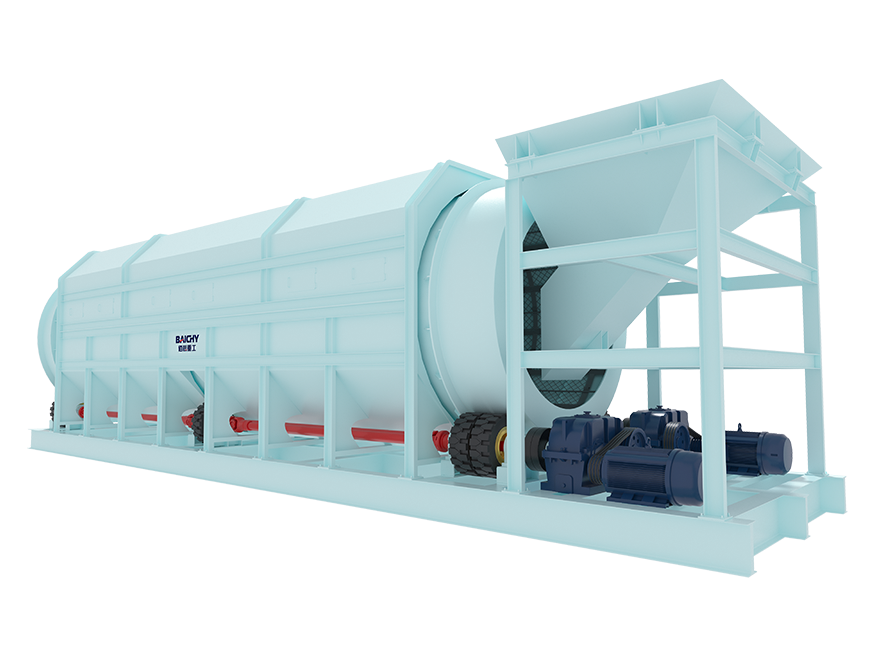
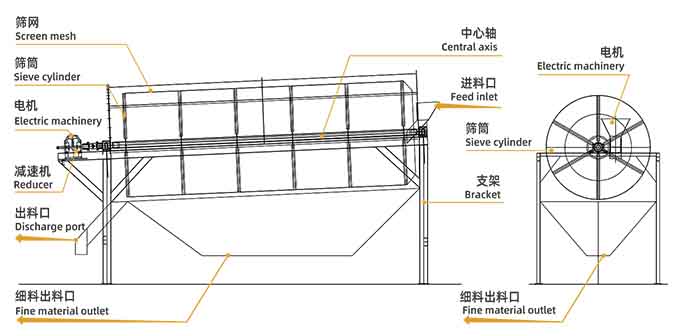
A trommel screen (also called a rotary drum screen or rotary sieve) is a classic, gravity-fed sizing machine for bulk granular materials. It consists mainly of a rotating cylindrical drum, frame, drive unit (motor + gearbox), support/guide rollers, dust cover, feed and discharge chutes, and an optional washing/self-cleaning system.
During operation, the drum rotates slowly. Material fed into the inclined drum is continuously lifted, tumbled, and conveyed forward. Particles smaller than the screen openings fall through the mesh into the lower hopper, while oversize material discharges from the far end — producing two or more graded fractions in one pass.
- High efficiency & large capacity — material is fully loosened inside the drum, with low blinding (especially shaftless designs).
- Smooth, quiet operation — low rotational speed means minimal vibration and wear.
- Flexible duty — works wet or dry, can be fully enclosed for dusty, sticky, or muddy feeds.
- Easy maintenance — modular, quick-change screen panels; optional brush/water spray cleaning.
- Flexible configuration — shafted, shaftless, static, or fully mobile (feeder + screen + conveyor integrated).
Typical industries: sand & aggregate, coal & mining, ore processing, construction & demolition (C&D) waste recycling, municipal waste / landfill mining, organic fertilizer, building materials, chemicals, and biomass.
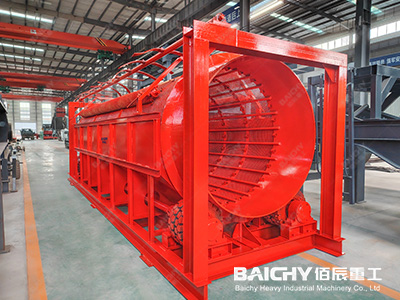
stone screening equipment
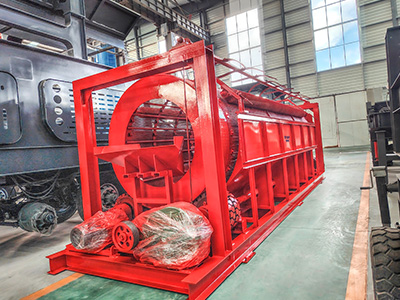
Rotary screen
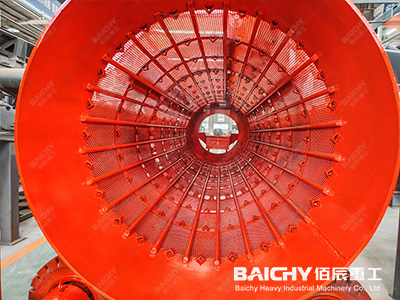
Rotary screen mesh
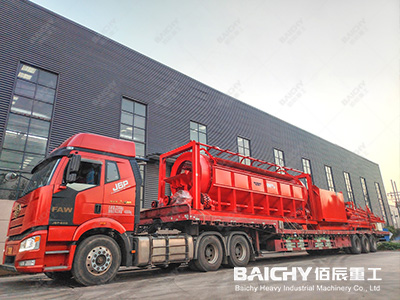
Rotary screeners are being shipped
| Category | Typical materials |
|---|---|
| Sand & aggregate | River sand, manufactured sand, gravel, crushed stone, recycled C&D aggregate |
| Mining & coal | Iron ore, granite, limestone, coal, gangue |
| Solid waste | C&D waste, landfill-mined waste, incinerator bottom ash, compost |
| Agri / chemical | Organic fertilizer, compound fertilizer, straw, plastic pellets |
- Shafted trommel: lower cost, best for fine, non-sticky, non-wrapping feeds (sand, coal, powders).
- Shaftless trommel: no central shaft → no jamming or wrapping, ideal for C&D waste, MSW, plastic/wood, wet sticky material, and lumpy feed. The mainstream upgrade choice.
- Fixed plants → static unit. Frequent site moves → mobile trommel (wheeled/tracked) with integrated feeder and discharge conveyors.
- First define max feed size, number of graded fractions, and throughput (t/h), then match drum diameter × length (e.g. Φ1.2×4 m, Φ1.5×6 m, Φ1.8×7 m). Higher capacity → longer, larger-diameter drum.
- Wet, blinding-prone material → add water spray + brush/chain cleaning.
- Dusty duties → enforced cover + dust extraction. Avoid water washing in water-scarce or freezing climates.
Sizing tip: Send the supplier these 6 parameters — *material type, max feed size, number of products required, t/h throughput, wet/sticky or dry, mobile or static* — and you'll usually get a matched model and quote within minutes.
Suitable for screening a variety of bulk materials, such as natural sand, crushed stone, river pebbles, mountain sand, quartz sand, coal, coke, ore, refractory materials, chemical raw materials, recycled aggregates, domestic waste, organic fertilizers, and grains.
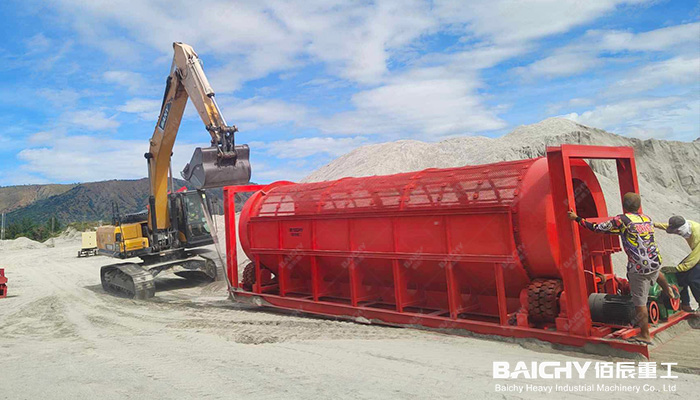
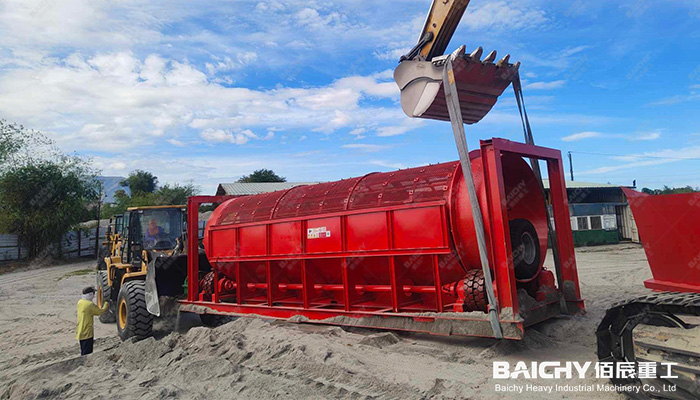
1. Feeding: Material is fed into the elevated end of a slightly inclined drum, which rotates continuously at a low speed (typically 10–20 rpm).
2. Lifting and Tumbling: Material is lifted to a certain height by the inner drum wall (often equipped with lifters or baffles) and then cascades down due to gravity; this action continuously loosens and mixes the material while the drum's inclination causes it to move slowly toward the lower end.
3. Screening and Classification: During the tumbling process, particles smaller than the screen apertures pass through and fall into a collection bin or onto a conveyor belt (undersize material), while particles larger than the apertures cannot pass through and continue moving toward the lower end.
4. Discharge: Coarse material is discharged from the end of the drum (oversize material). Screen plates with different aperture sizes can be installed in sections along the drum to yield 2–3 particle size grades in a single pass.
| Model | Drum Diameter(mm) | Drum Length (mm) | Capacity (t/h) | Power (kw) | Overall Dimension(mm) |
| GT1015 | 1000 | 1500 | 10-15 | 4 | 3000×1400×2145 |
| GT1020 | 1000 | 2000 | 15-25 | 5.5 | 3460×1400×2145 |
| GT1225 | 1200 | 2500 | 25-40 | 7.5 | 4146×1600×2680 |
| GT1530 | 1500 | 3000 | 60-80 | 11 | 4460×1900×2820 |
| GT1545 | 1500 | 4500 | 80-150 | 15 | 5960×1900×3080 |
| GT1848 | 1800 | 4800 | 150-200 | 18.5x2 | 6500×2300×4000 |
| GT1860 | 1800 | 6000 | 160-220 | 22x2 | 7700×2300×4000 |
| GT2055 | 2000 | 5500 | 200-260 | 30 | 7500×2500×4000 |
| GT2580 | 2500 | 8000 | 300-600 | 22×2 | 12250×2980×6200 |
Have Any Questions!
Don't Hesitate To Contact Us AnyTime.
A: It depends heavily on drum size. Small units (Φ1.0–1.2 m) handle about 10–30 t/h; mid-size units (Φ1.5–1.8 m) around 50–150 t/h; large shaftless trommels can reach 200–500 t/h. The real figure depends on material density, cut size, and moisture — always confirm with a trial on your own material.
A: For ordinary sand, gravel, and dry coal, a shafted trommel offers better value. For C&D waste, municipal solid waste, landfill mining, or feeds containing wire, plastic, wood, and wet sticky mud, choose shaftless — no central shaft means no jamming or wrapping, less maintenance, and a longer screen life, despite a slightly higher upfront cost.
A: Three fixes:
① use punched/steel-plate or wedge-wire panels instead of woven mesh — higher open area and less blinding;
② add brush, chain, or spray self-cleaning;
③ lengthen the drum and slow the feed so material has time to tumble loose. For heavy clay, add a pre-scalping trommel or washing step upstream.
A: Woven wire mesh typically lasts 3–6 months; manganese-steel or polyurethane panels last 1–2 years, depending on abrasiveness. Most modern trommels use modular quick-change panels — open the side door and slide panels out one by one; a single operator can finish in 1–2 hours without dismantling the drum.
A: Small static units range from tens of thousands to ~USD 10–20k; mid-size shaftless units are USD 20k–60k+; fully mobile integrated plants usually run USD 50k–200k+ depending on configuration. Reputable suppliers typically deliver the complete machine, provide on-site guidance, commissioning, and a 1-year warranty; civil works and power supply at site are usually extra. Always compare itemized quotes rather than a single lump sum.
If you need further information,please fill in your questions and comments in the form below.
Representatives from Baichy machinery will be back to you within the hour,thanking you for your support to Baichy machinery