
Selection Guide for Andesite Crushing in Indonesia
Indonesia is undergoing a wave of infrastructure expansion driven by the new capital, Nusantara (IKN), and National Strategic Projects (PSN). National aggregate demand is projected to reach 680 million tons by 2030, with manufactured sand accounting for over 45% of the total. Andesite—a volcanic rock of medium hardness (Mohs scale 5–6)—is a key construction material in Indonesia; it is abundant in supply and officially recognized by both the government and the industry as a primary material for railway ballast and road construction.
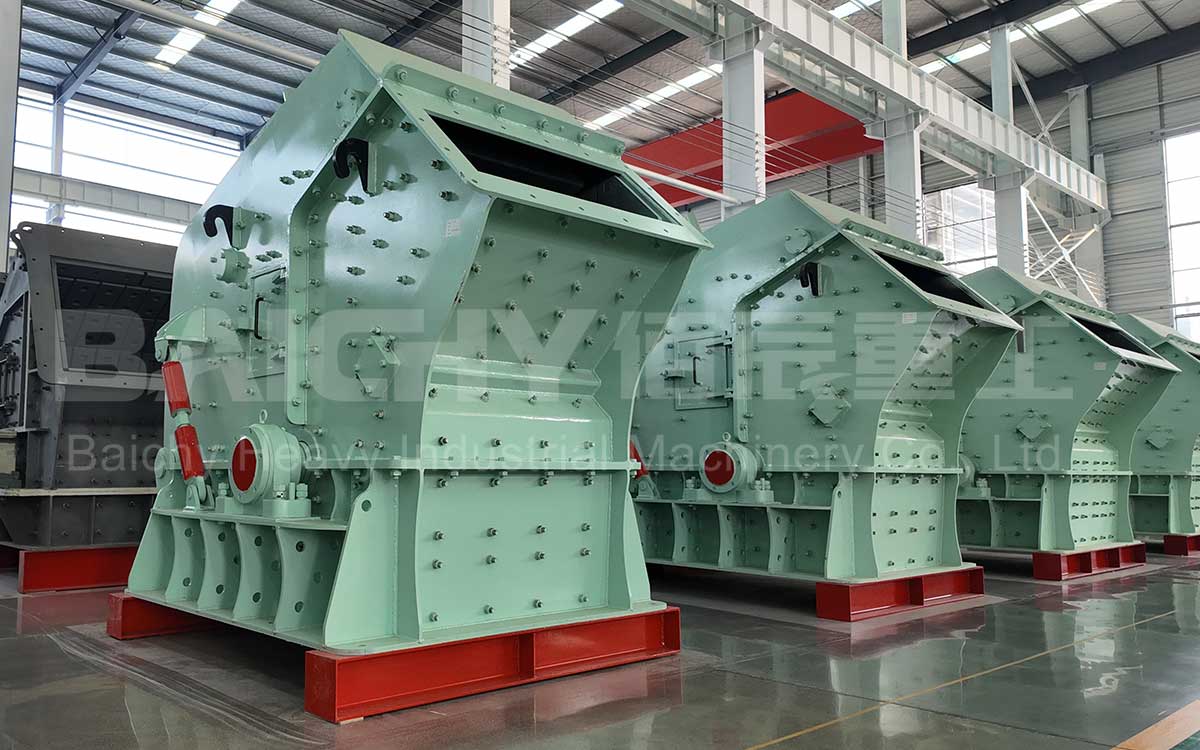
For processing andesite, the impact crusher offers the highest return on investment (ROI) as a secondary crushing solution. Compared to cone crushers, impact crushers require 20–40% less initial investment, produce better-shaped aggregate (with lower flaky and elongated particle content), and are easier to maintain; the trade-off is that blow bars wear out faster than cone crusher liners. Provided the operator selects the right model, controls the feed, and uses high-chrome blow bars, the impact crusher serves as the most cost-effective engine for an andesite production line. The following section explains the rationale using market data and operational logic, while also identifying specific scenarios where a cone crusher should be chosen over an impact crusher.
I. Market Context: Indonesia's Infrastructure Boom Puts Andesite in the Spotlight
1.1 Demand Side: Understanding Indonesia's Aggregate Supply Gap Through Three Key Figures
• Infrastructure Investment Volume: Indonesia's infrastructure market is valued at approximately US$101.2 billion in 2025 and is projected to grow to US$106.9 billion by 2026 (Mordor Intelligence). The national infrastructure budget for 2024 has already exceeded US$24 billion.
• New Capital Construction: Phase II of the Nusantara project (2025–2029) has secured a committed investment of IDR 48.8 trillion (approximately US$3.4 billion); the peak construction period for IKN (2025–2027) is expected to generate an additional annual demand for 25–35 million tons of aggregate.
• Total Aggregate Volume: Indonesia's aggregate consumption in 2023 was approximately 600–700 million tonnes (with a compound annual growth rate of 5–7%), and it is projected to reach 680 million tonnes by 2030. The share of manufactured sand is expected to rise from 25% in 2023 to over 45%. Java alone accounts for 51% of the national aggregate demand; the expansion of the Java Ring Road expressway alone consumes 80 million tonnes annually.
1.2 Supply Side: Depletion of River Sand; Manufactured Sand (Crushed Stone) Steps In
Natural river sand has traditionally been the primary aggregate in Indonesia, but its supply is being squeezed by both policy restrictions and resource depletion:
• In 2023, the issuance of new river sand mining permits was suspended in multiple regions of Java;
• Indonesia's sand production dropped from approximately 373 million m³ in 2015 to about 67.41 million m³ in 2021 (Statista), making resource constraints clearly visible;
• Large-scale manufactured sand production lines offer unit costs 10–20% lower than natural river sand and ensure stable supply, making them the preferred choice for major infrastructure projects.
• The conclusion regarding supply is straightforward: the growth in Indonesia's aggregate supply over the next five years will rely primarily on "crushed stone." The Jakarta-Bandung High-Speed Railway—which utilized over 3 million tonnes of aggregate and 2 million m³ of concrete, with extensive use of manufactured sand—serves as a prime example of this trend.
1.3 Andesite: Indonesia's "Golden Construction Material"
• Resource Distribution: Andesite deposits are primarily located in areas such as Jambi (Sumatra) and Pangkalan Bun (East Kalimantan); reserves are abundant, and extraction is convenient. • Strategic Context: The head of Caterpillar Indonesia’s aggregates business has explicitly identified andesite and basalt as two high-demand construction materials in Indonesia. Andesite is primarily used for railway ballast and road construction; with Indonesia planning to build 30,000 kilometers of roads and over 5,000 bridges by 2030, the demand curve for crushed andesite aggregate is clearly on the rise.
Market Summary: Infrastructure budgets are increasing, the new capital city is under construction, river sand is being phased out, and andesite is stepping in to fill the gap. Investing in an andesite crushing line now means capitalizing on the most certain growth opportunity of the next five years.
The True Cost-Performance Value of Impact Crushers
II. Andesite Material Properties: Tough in appearance, yet "crushable"
Before selecting crushing equipment, it is essential to understand the material's nature. Andesite is a classic example of a material that falls somewhere in the middle of the volcanic rock spectrum—harder than some, yet softer than others:
| Material | Mohs Hardness | Uniaxial Compressive Strength (Typical Range) | Abrasiveness | Crushing Difficulty |
| Limestone | 3 | 30–100 MPa | Low | Low |
| Andesite | 5–6 | 80–200 MPa (varies significantly by quarry) | Moderate | Moderate |
| Basalt | 6–7 | 200–300+ MPa | High | High |
| Granite/Quartzite | 6–7+ | 150–300+ MPa | High | High |
Key Conclusion:
1. Andesite falls within the optimal operating range for impact crushers. Impact crushers are suitable for medium-hard materials with a compressive strength of ≤200 MPa; andesite (typically 80–200 MPa) fits right within this limit—meaning it can be processed effectively and cost-efficiently.
2. Andesite is not basalt. Many customers worry about excessive hardness as soon as they hear "volcanic rock," but in reality, andesite is significantly less hard than basalt or quartzite. Blow bar wear is manageable, so there is absolutely no need to use a cone crusher—which would be like "using a sledgehammer to crack a nut."
3. Properties vary significantly between different quarry sites. Academic research (published in Springer journals) indicates significant variations in strength and abrasion resistance among different andesite lithofacies. Before selecting equipment, it is essential to submit samples for testing or provide data from the quarry, as these factors determine blow bar service life and actual production output.
3. Why Choose an Impact Crusher? Technical Logic and Comparative Analysis
3.1 Operational Principles: Impact Crushing vs. Inter-particle (Lamination) Crushing
• Impact Crusher: A rotor throws material at high speed; the material strikes impact plates, rebounds, and collides with other material, achieving "stone-on-stone" and "stone-on-metal" crushing. It offers a high reduction ratio (up to 1:15–1:20), producing multiple particle size fractions in a single pass.
• Cone Crusher: Relies on compression and inter-particle crushing between the moving and fixed cones. It is suitable for large-scale, continuous operations involving medium-hard to hard materials, but has a lower reduction ratio, often requiring two or more crushing stages.
3.2 Comparative Analysis for Andesite Applications (Secondary Crushing)
| Dimension | Impact Crusher | Cone Crusher |
| Product Shape | Excellent cubic shape; low flaky/elongated particle content (can be <10%); meets concrete/asphalt aggregate standards | Higher flaky/elongated particle content; often requires reshaping |
| Single-pass Sand Yield | High; some production lines may eliminate the need for a dedicated sand-making machine | Low |
| Investment Cost | 20–40% lower | Higher |
| Maintenance | Inpidual blow bar replacement; hydraulic lid opening; low operational complexity | Requires specialized hydraulic maintenance and lubrication management |
| Wear Part Lifespan (Andesite) | Blow bars last hundreds of hours; requires high-chrome material | Liners are more wear-resistant but have a higher unit cost |
| Suitable Materials | Medium-hard and softer (≤200 MPa) | Medium-hard and harder; highly abrasive materials |
| Ideal Scenarios | Small-to-medium lines; high shape quality requirements; budget-sensitive | Large-scale continuous production; highly abrasive materials |
3.3 Decision Matrix: Which One to Choose?
Choose an Impact Crusher (Recommended; covers the vast majority of andesite production lines in Indonesia):
• Production line capacity of 60–300 tons per hour;
• Output intended for concrete, asphalt, or railway ballast (prioritizing particle shape);
• Limited budget and desire for a quick return on investment (ROI);
• Moderate on-site maintenance capabilities (impact crushers have lower maintenance complexity). Choosing a Cone Crusher (Exceptions):
Measured compressive strength in the andesite quarry consistently exceeds 200 MPa, or SiO₂ content is high (dense andesite);
• Ultra-large-scale continuous production lines with hourly outputs exceeding 400 tons;
• Customer has zero tolerance for downtime required to replace blow bars.
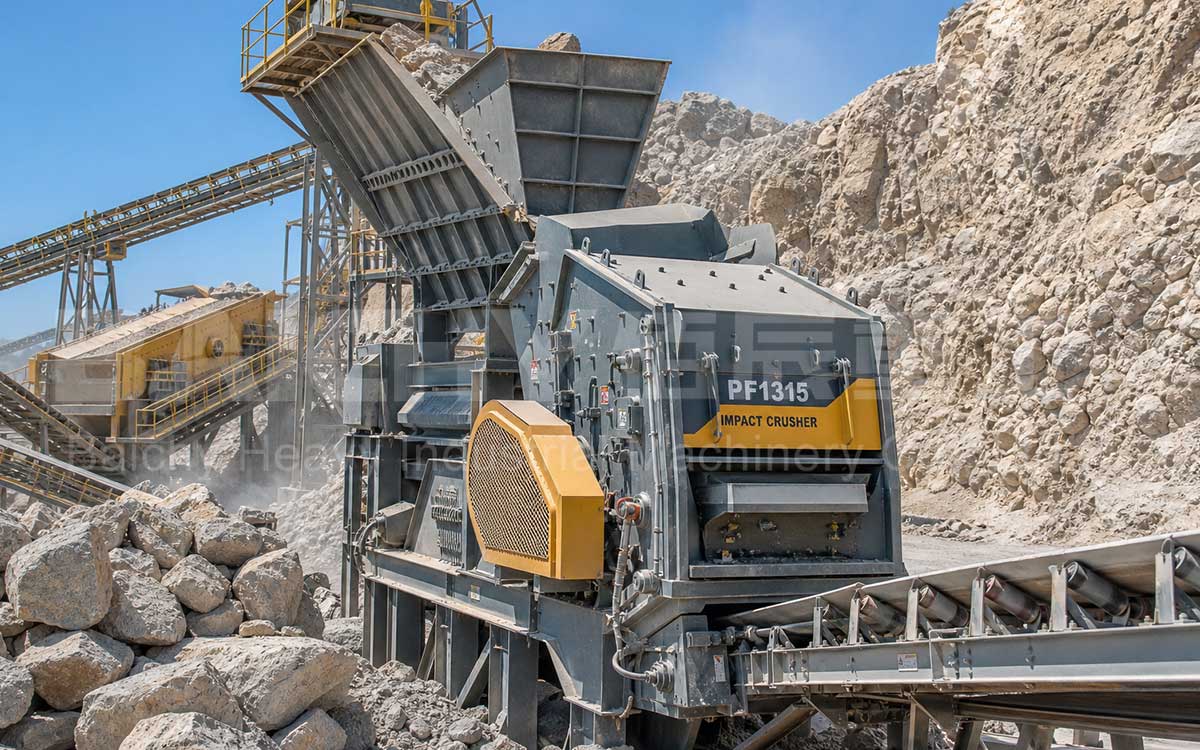
A candid note: When processing andesite, the service life of impact crusher blow bars is significantly shorter than when processing limestone. Taking the PF1315 model as an example, high-chrome blow bars can last over a thousand hours with limestone, whereas with andesite, this lifespan typically drops to the range of a few hundred hours. This is a "known cost" associated with impact crusher solutions; it must be factored into the quote to avoid unpleasant surprises after production begins.
IV. Core Parameters and Capacity Conversion
4.1 Key Model Parameters (Baichen Heavy Industry PF Series)
| Parameter | PF1214 | PF1315 |
| Rotor Specifications | Φ1250×1400 mm | Φ1320×1500 mm |
| Max. Feed Size | ≤350 mm | ≤350 mm |
| Processing Capacity (Limestone Standard) | 80–160 t/h | 130–250 t/h |
| Motor Power | 132 kW | 180–220 kW |
| Discharge Size Adjustment | Hydraulic/Mechanical | Hydraulic/Mechanical |
| Suitable Materials | Limestone, andesite, river stone, etc. (≤200 MPa) | Same as left; higher capacity |
Note: The table above reflects standard industry ranges; please refer to the Baichen Heavy Industry technical manual for specific details. The upgraded SC Series features reinforced blow bar materials and optimized crushing chamber designs for medium-hard materials, making it suitable for andesite applications; please contact the sales team for specific parameters.
4.2 Nominal Capacity vs. Actual Operational Capacity (Andesite Conversion Factor)
All crusher capacities are rated based on limestone (bulk density approx. 1.6 t/m³). Andesite has a higher bulk density and is harder to crush; therefore, actual production capacity must be adjusted downward:
Andesite operational adjustment factor: 0.7–0.85 (depending on hardness and clay content);
Example: PF1315 rated at 200 t/h; applying a 0.75 adjustment factor for andesite results in an actual stable capacity of approximately 150 t/h;
When selecting equipment, determine the production line scale based on the "adjusted capacity" rather than the nameplate rating—this is the most common mistake made during equipment selection at Indonesian sites.
V. Standard Production Line Configuration (Jaw Crusher + Impact Crusher)
Option A: Stationary andesite production line with an hourly output of 150–200 tons (mainstream)
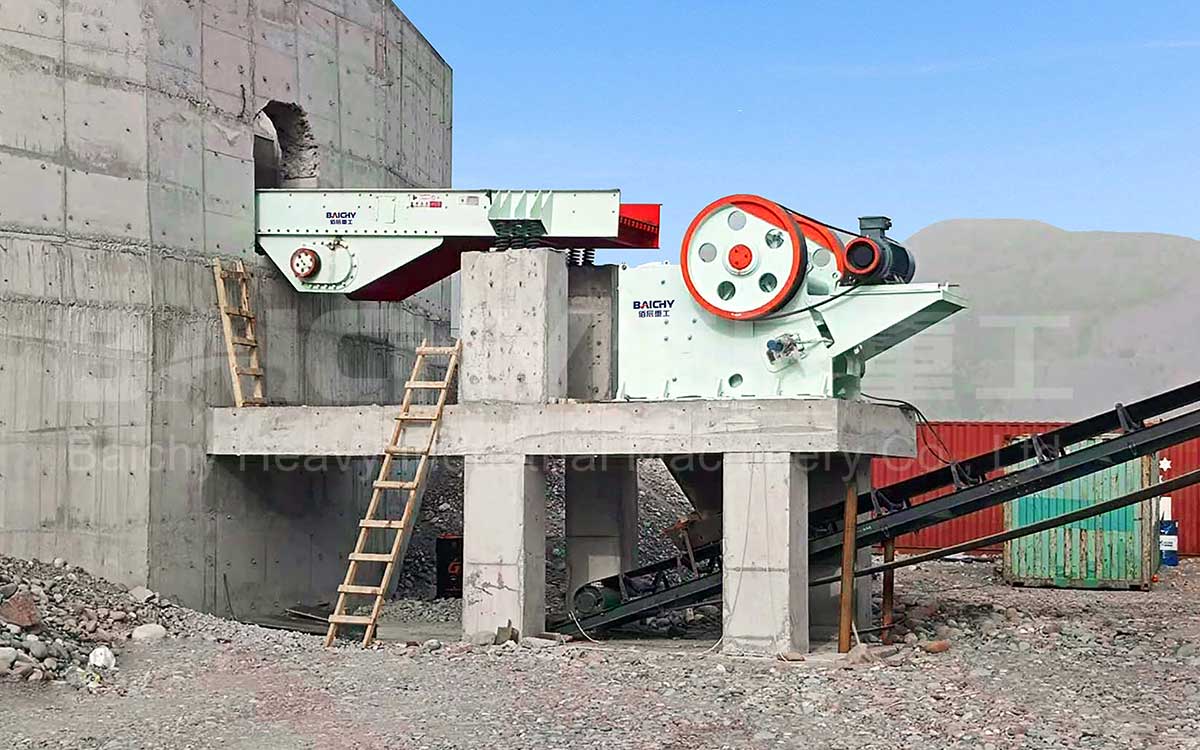
• Use a jaw crusher for primary crushing (feeding large material exceeding 500mm directly into a PF-series impact crusher would impact the blow bars and shorten their service life);
• The impact crusher performs the dual roles of "fine crushing" and "shaping," producing material suitable for direct use in concrete and roadbeds;
• If the line also needs to produce manufactured sand, simply add a VSI sand-making machine after the screening stage; the impact crusher's high initial sand yield helps reduce the load on the sand-making machine.
Option B: Small-scale production line with 80–120 t/h capacity (township level, low budget)
A line consisting of a PE600×900, PF1214, and 2YK2160 offers a low investment threshold, making it suitable for customers supplying local roads and ready-mix concrete plants.
Option C: Mobile Crushing Station (site transfers, open-pit mining of river stone/andesite)
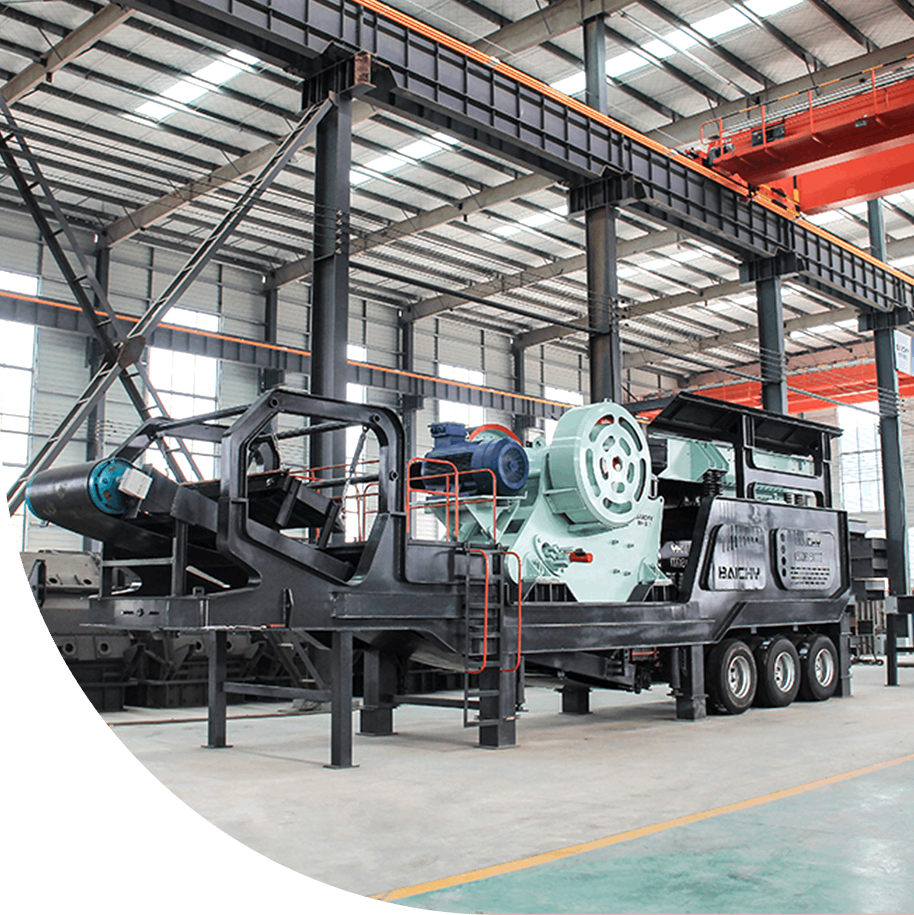
Andesite deposits are often small and scattered; wheeled mobile stations (a combination of mobile jaw and impact crushing units) can be relocated between sites, eliminating fixed infrastructure and relocation costs. This option is ideal for customers who lease mining rights and rotate operations across multiple sites.
VI. Investment Return Analysis (Transparent Estimation)
The following estimates are based on market conditions in Indonesia; actual figures depend on local selling prices and equipment quotes:
Calculation Basis (Scenario A):
| Item | Value | Notes |
| Rated capacity of impact crusher | 200 t/h | PF1315 |
| Actual capacity for andesite | 150 t/h | Conversion factor: 0.75 |
| Annual operation | 300 days × 10 h/day | Single-shift system; includes maintenance allowance |
| Annual aggregate output | Approx. 450,000 tons | 150 t/h × 3,000 h |
| Comprehensive cost per ton (electricity + wear parts + labor + amortization) | Approx. 1.5–2.5 USD/ton | Estimated range |
| Ex-factory price per ton (crushed stone, Indonesia market) | Approx. 6–12 USD/ton | Estimated range; varies by region and particle size |
Profitability Analysis (based on median values):
• Gross profit per ton (Price median 9 USD − Cost 2 USD): Approx. 7 USD/ton;
• Annual gross profit: 450,000 tons × 7 USD ≈ 3.15 million USD;
• Total production line investment (including jaw crusher, impact crusher, screening, conveying, and installation): In the range of several million RMB;
• Static payback period: Typically within 1.5–3 years (after deducting taxes and sales expenses).
Sensitivity Note: The calculation above is most sensitive to the "price per ton." Aggregate prices in the Java metropolitan areas (Jakarta, Surabaya) are significantly higher than on the outer islands, leading to a faster payback; for lines on outer islands, the transportation radius must be carefully calculated. We recommend that clients recalculate using the framework above with actual local selling prices; Baichen can provide a detailed CAPEX/OPEX calculation sheet.
VII. Pitfall Avoidance Guide (Five common mistakes made on-site)
1. Feeding oversized material into the impact crusher: Feeding blocks larger than 350mm directly into the impact crusher causes a drastic reduction in blow bar lifespan. Primary crushing must be handled by a jaw crusher.
2. Wet material clogging the crushing chamber during the rainy season: Indonesia has a long rainy season; when andesite has a high clay content, mud buildup can occur inside the impact crusher's chamber. Implement pre-screening before the vibrating screen feeds the material, and add a sand-washing stage if necessary.
3. Over-reliance on nameplate capacity: Apply a conversion factor of 0.7–0.85; base contracts and production scheduling on actual operational capacity.
Forcing an impact crusher to process high-silica, hard materials: Dense andesite, quartzite, and basalt (>200 MPa or high SiO₂ content) are best suited for cone crushers; forcing an impact crusher to handle them effectively turns the operator into nothing more than a "supplier of wear parts."
4. Overlooking power supply and spare parts: Indonesia's grid operates at 220V/380V, 50Hz; for high-power motors, verify local transformer capacity and voltage stability. Blow bars and impact plates are wear parts; ensure an initial batch is ordered with the equipment, as sea shipping takes 30–45 days.
VIII. FAQ (Common Buyer Questions)
Q1: Should andesite be processed with an impact crusher or a cone crusher?
A: An impact crusher is used in most cases. Andesite typically has a compressive strength of 80–200 MPa, falling within the impact crusher's applicable range (≤200 MPa); impact crushers offer better particle shape, require 20–40% less investment, and are easier to maintain. A cone crusher is recommended only if the measured strength of the rock consistently exceeds 200 MPa or the production line capacity exceeds 400 t/h.
Q2: How long do blow bars last when processing andesite in an impact crusher?
A: It depends on the andesite's SiO₂ content and the feed particle size. High-chrome blow bars can last over a thousand hours in limestone applications, whereas in andesite applications, the lifespan is typically in the range of several hundred hours. Choosing high-chrome alloy blow bars, limiting feed size to ≤350 mm, and removing clay can significantly extend service life. It is recommended to budget for spare parts based on a lifespan of 300–800 hours.
Q3: Can an impact crusher directly produce sand?
A: The discharge from an impact crusher contains a high proportion of 0–5mm fines (resulting in a high single-pass sand yield), allowing a portion of manufactured sand to be obtained directly through screening. If there are stricter requirements regarding sand gradation and particle shape, a VSI sand-making machine can be installed in series after the screening stage for shaping.
Q4: What is the timeline from purchasing in China to installation in Indonesia?
A: Typical process: Technical selection (1–2 weeks) → Production and shipping (30–45 days via sea freight) → On-site installation and commissioning (2–4 weeks; Baichen can dispatch engineers). Equipment is customized to Indonesia's 50Hz power standards, and operational training is provided in English or Indonesian.
Q5: What is the approximate budget for an andesite production line with an hourly capacity of 200 tons?
A: The investment for the complete line (feeding, jaw crushing, impact crushing, screening, conveying, and installation) is in the range of several million RMB. The exact cost depends on the level of automation, the type of steel structure (open-air vs. covered shed), and the equipment brands selected. We recommend requesting an itemized quotation and a CAPEX/OPEX analysis directly from Baichen.