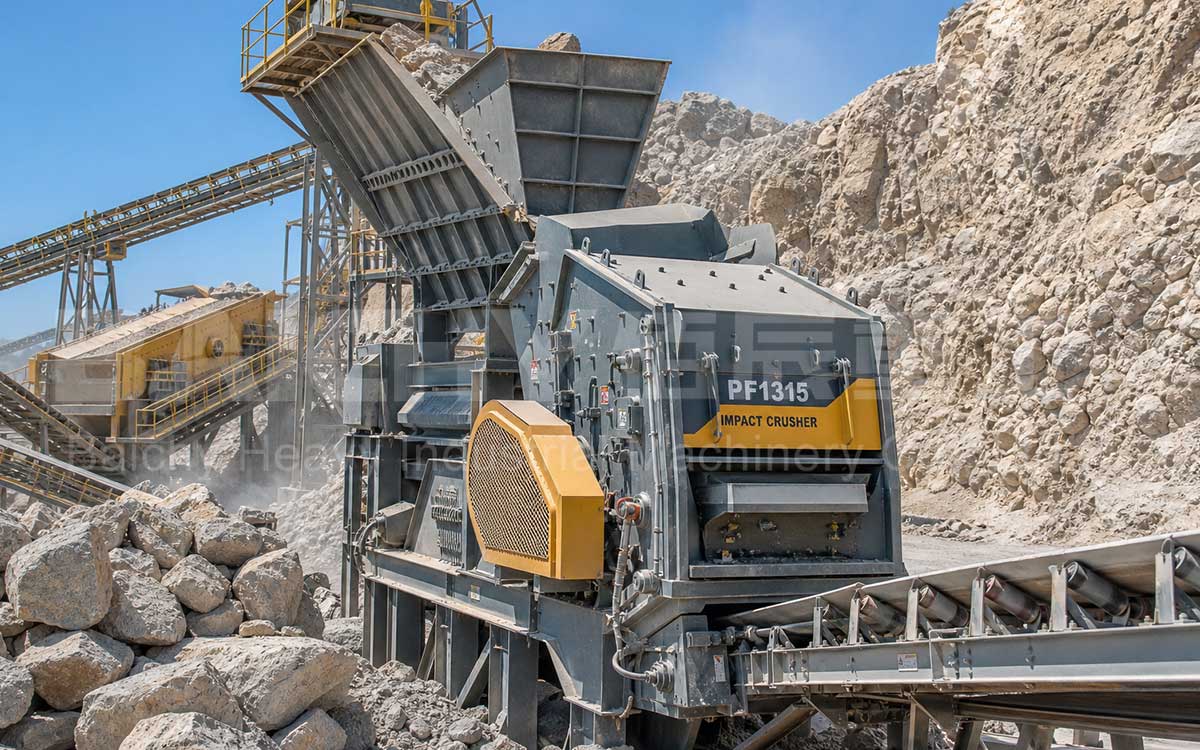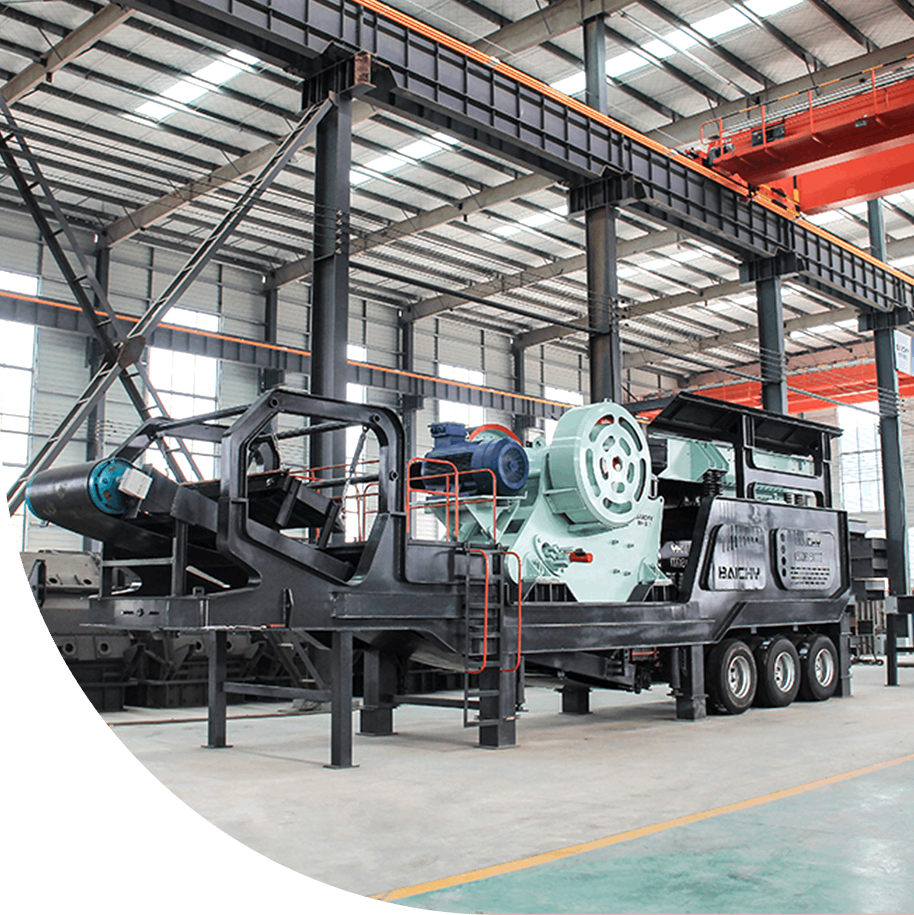

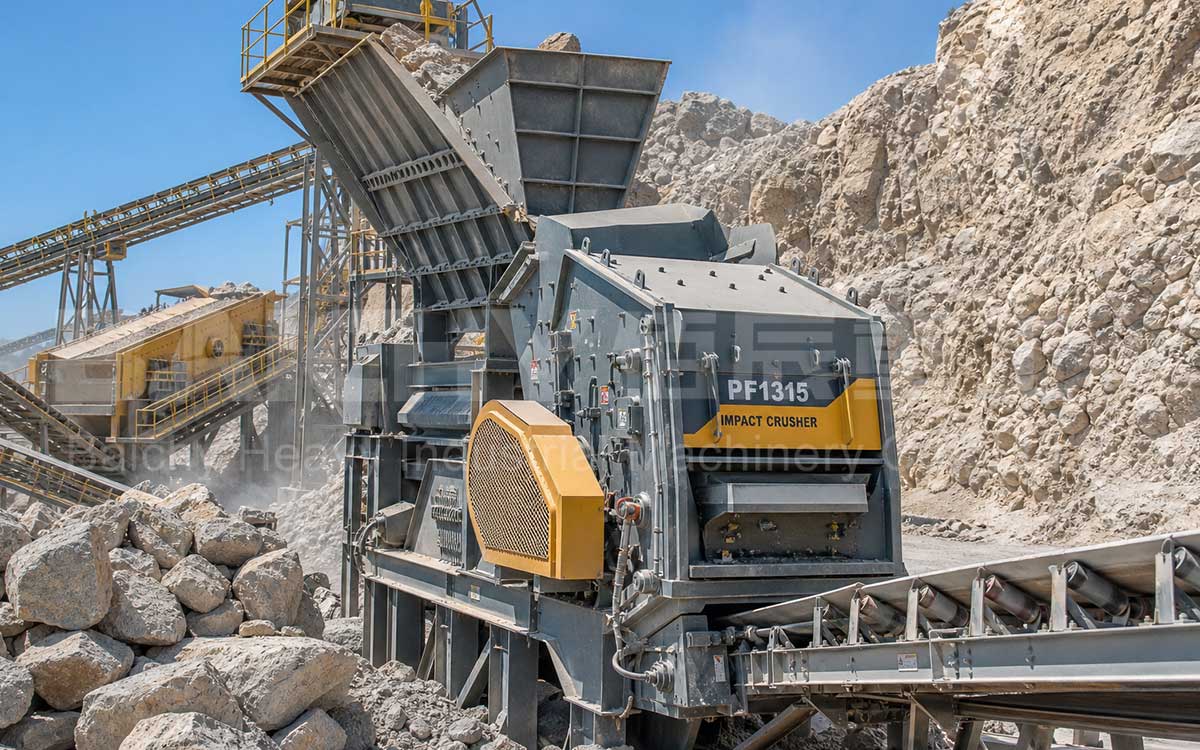
PF1315 Impact Crusher
For secondary crushing operations involving medium-hard materials like limestone and dolomite, the PF1315 strikes an optimal balance between return on investment and product quality. Featuring a heavy-duty Φ1320×1500mm rotor, a maximum feed size of 500mm, and a capacity of 100–280 t/h, it condenses the traditional three-stage process (primary, secondary, and tertiary crushing) into just two stages. The resulting product has a significantly lower flakiness and elongation index compared to output from cone crushers, making it suitable for direct supply to high-grade concrete and asphalt aggregate markets.
1. Where are the losses in production lines for medium-hard materials?
In quarries across Asia, Africa, and Latin America, using cone crushers to process limestone is a common case of "over-specification":
• Wasted Investment: The unit price of a cone crusher is 1.5 to 2 times that of an equivalent impact crusher, yet limestone (with a compressive strength of 60–200 MPa) falls far short of the cone crusher's design limit (350 MPa).
• Poor Particle Shape: Cone crushers rely on inter-particle (lamination) crushing, resulting in a higher content of flaky and elongated particles. This leads to price markdowns or even shipment rejections in applications requiring asphalt pavement aggregates (where national standards mandate a flakiness/elongation content of ≤15%) or pumped concrete.
• Downtime Losses: Replacing blow bars on standard impact crushers requires a total system shutdown of 6–8 hours; for a production line with a daily output of 3,000 tons, the direct financial loss from a single shutdown can reach thousands of US dollars.
2. Technical Specifications
| Technical Features | Customer Benefits |
| Heavy-duty, high-inertia rotor (Φ1320×1500mm) | Single-stage reduction ratio of 15–25:1; combines secondary and tertiary crushing in one machine, eliminating the need for an extra crushing stage and associated civil engineering costs |
| Max. feed size: 500mm | Direct interface with PE750×1060 jaw crusher; no intermediate screening required, simplifying the process flow |
| High-chrome alloy blow bars | 30%–50% longer wear life compared to standard manganese steel; reduces annual downtime for replacements by 5–8 times |
| Hydraulic housing opening & lifting system | Blow bar replacement time reduced from 6–8 hours to 1–2 hours; recovers approx. 3%–5% of annual production capacity |
| Cubical product shape | Low content of flaky/elongated particles; aggregates command a 10%–15% price premium; meets high-grade requirements for asphalt and concrete |
| Integrated motor base |
3. Core Specifications Table
PF Series (Secondary Crushing, International Standard Specifications)
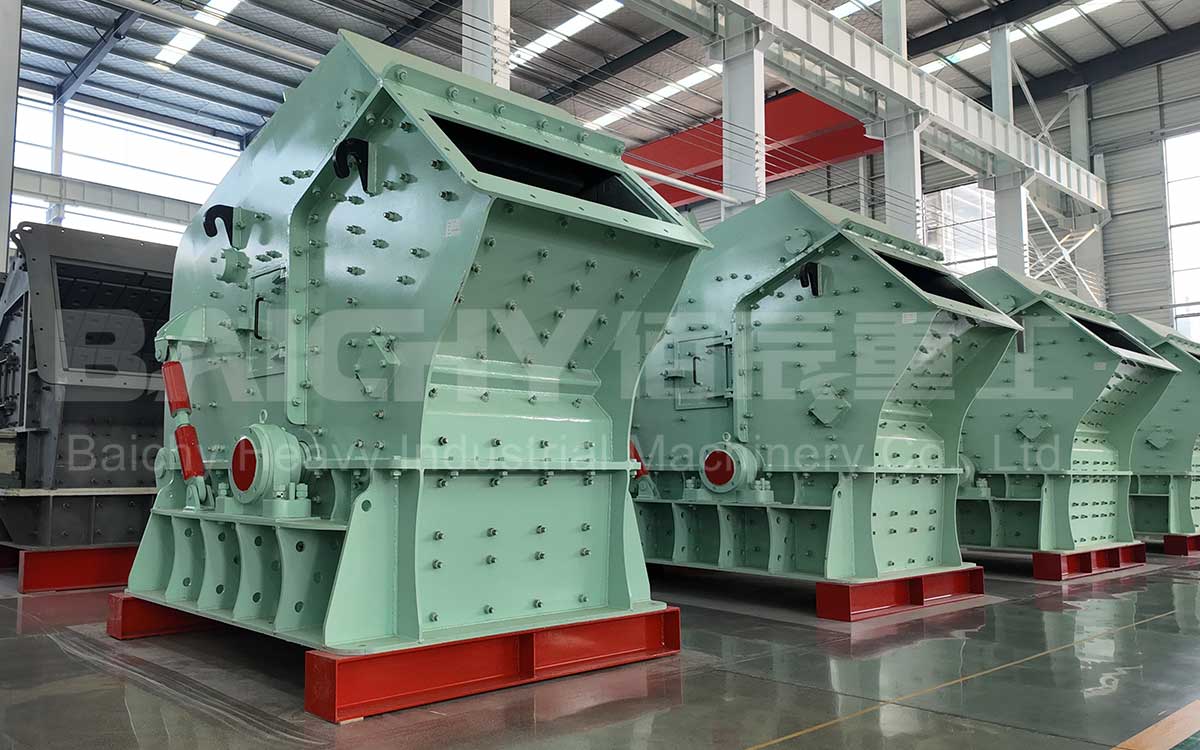
PF Series Impact Crusher
| Parameter Name | PF1214 | PF1315 | PF1320 |
| Rotor Specifications (mm) | Φ1250×1400 | Φ1320×1500 | Φ1320×2000 |
| Feed Opening Dimensions (mm) | 820×1450 | 860×1520 | 860×2030 |
| Max. Feed Size (mm) | ≤350 | ≤500 | ≤500 |
| Processing Capacity (t/h) | 80–180 | 100–280 | 160–350 |
| Motor Power (kW) | 132 | 180–260 | 315 |
| Compatible Production Line | 80–150 tph | 150–250 tph | 250–400 tph |
Note: Capacity is based on limestone (bulk density approx. 1.6 t/m³); adjustments using conversion factors are required if material density, hardness, or moisture content varies.
Baichy CI Series (European-style heavy-duty; official specifications)
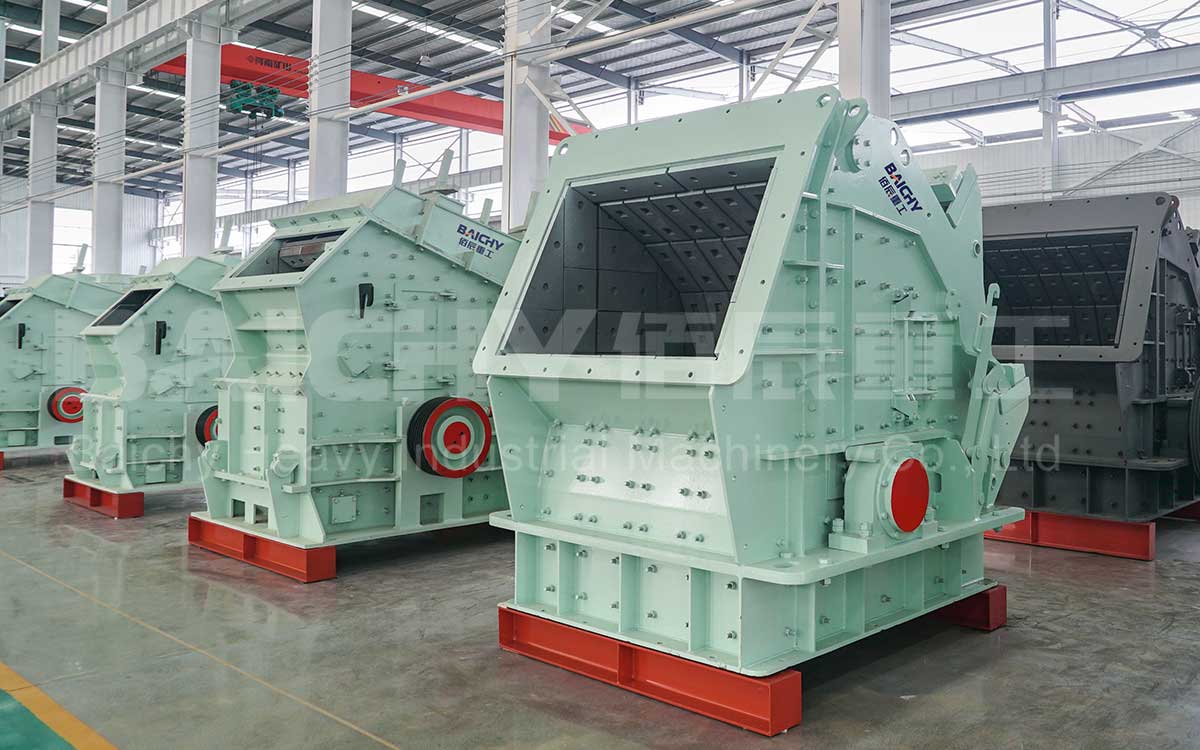
Limestone Crushing Equipment
| Parameter Name | CI1110 | CI1213 | CI1316 | CI1521 |
| Max. Feed Size (mm) | 250 | 300 | 300 | 350 |
| Motor Power (kW) | 160 | 250 | 280 | 200 × 2 |
| Processing Capacity (t/h) | 60–210 | 80–280 | 100–350 | 200–600 |
| Machine Dimensions (mm) | 2826×2087×2285 | 2903×2530×2411 | 3320×2770×2535 |
The CI Series also includes primary crushing specifications: CI1313 (feed 600mm / 100–480 t/h), CI1415 (600mm / 120–600 t/h), CI1620 (800mm / 220–900 t/h), and CI2023 (800mm / 400–2000 t/h)—featuring a large feed opening designed to accept 600–800mm raw ore directly, enabling a "Jaw Crusher + Impact Crusher" two-stage line or even a single-machine processing solution.
4. Suitable Applications for Impact Crushers
✅ Suitable for: Limestone, dolomite, gypsum, cement clinker (medium-hard, brittle materials with compressive strength ≤250 MPa); recycled construction waste aggregates; high-grade concrete/asphalt aggregates (where particle shape is critical); and budget-conscious medium-sized quarries seeking the fastest return on investment.
❌ Not suitable for: Highly abrasive hard rocks such as granite, basalt, or iron ore (compressive strength >250 MPa)—these cause rapid blow bar wear and skyrocketing per-ton costs; in such cases, Baichy’s CS/PY/HP series cone crushers should be used. If material moisture exceeds 10% and clay content is high, a pre-processing dewatering or desliming stage is required.
Selection Cheat Sheet: Hardness dictates the machine type (impact crusher for soft materials, cone crusher for hard materials); particle shape dictates the price premium (impact crushers are essential for asphalt aggregates); capacity dictates the specifications (calculated based on limestone standards; it is better to choose a rotor one size larger).
5. ROI Calculation for a 150–250 tph Limestone Production Line
| Item | Description |
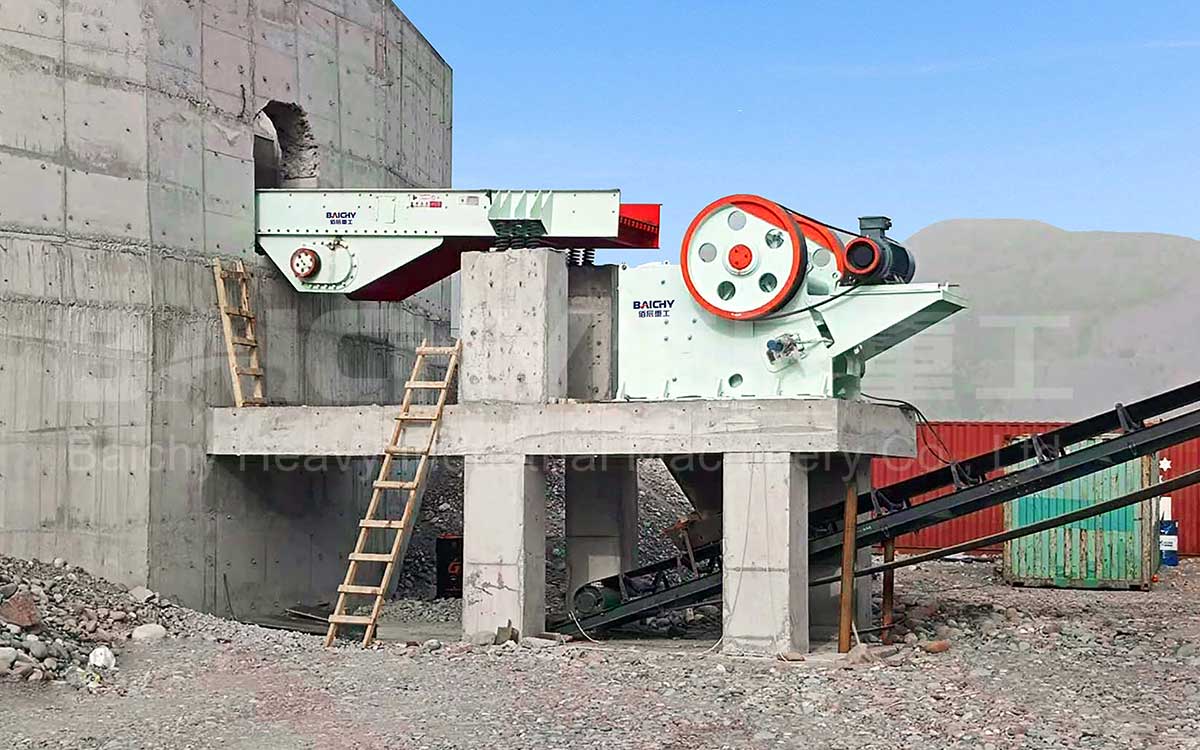
| Reference Configuration | ZSW490 Feeder + PE750×1060 Jaw Crusher + PF1315 Impact Crusher + 2YK2460 Circular Vibrating Screen |
| Nominal Capacity | 150–250 t/h (based on limestone) |
| Annual Operation | 300 days × 10 hours/day; annual output approx. 450,000–750,000 tons |
| Electricity Consumption/Ton | Impact crushing stage: approx. 1.5–2.5 kWh/t; electricity costs are slightly higher than cone crusher setups, but equipment investment is 30%–40% lower. |
| Static Payback Period | Depends on local aggregate selling prices ($8–25/t) and raw material costs; typically 12–24 months. |
Note: The above is a calculation framework. For actual quotes and ROI analysis, please provide material samples and target capacity; Baichy calculates figures based on both nominal and actual operational capacities.
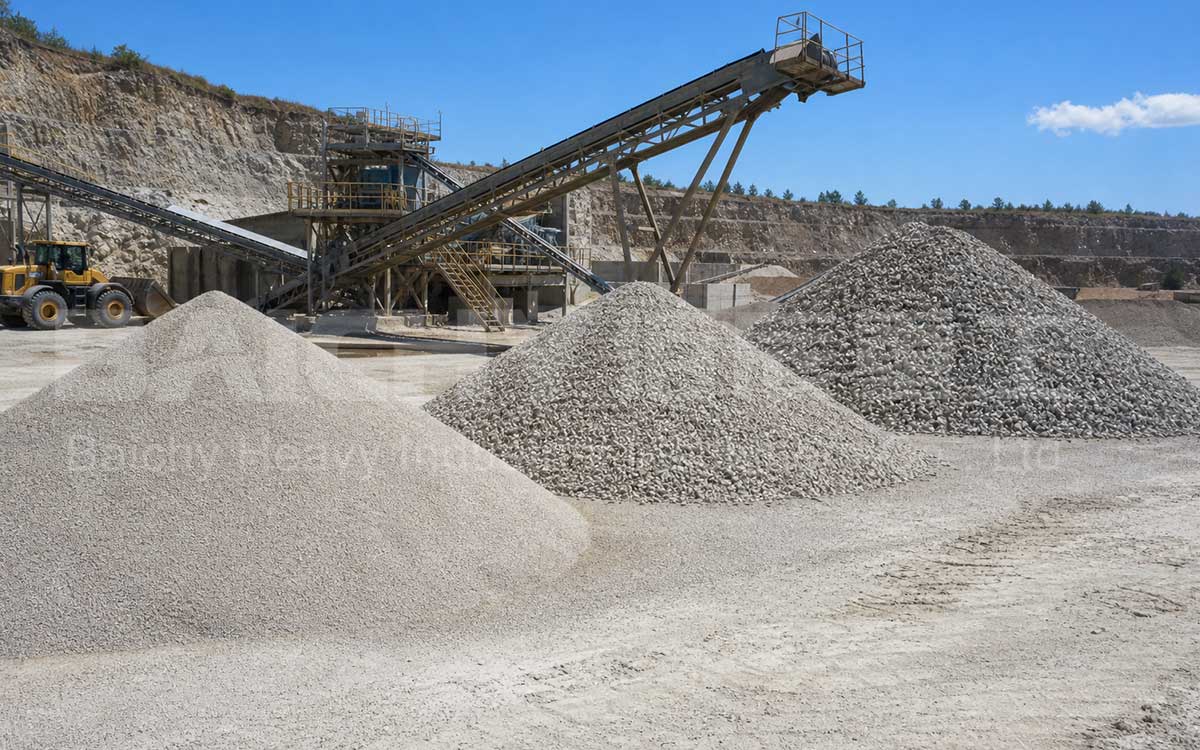
The Preferred Choice for Secondary Limestone Crushing
FAQs
Q1: How hard of a rock can an impact crusher handle?
A1: Impact crushers are suitable for medium-hard, brittle materials with a compressive strength of ≤250 MPa, such as limestone (60–200 MPa), dolomite, gypsum, river pebbles, and construction waste. For highly abrasive, hard rocks like granite or basalt, a cone crusher is recommended; otherwise, the blow bars will wear out too quickly, causing the cost per ton to rise sharply.
Q2: What is the hourly output of the PF1315 impact crusher?
A2: Based on limestone (bulk density approx. 1.6 t/m³), the PF1315 has a processing capacity of 100–280 t/h. Actual output depends on feed size distribution, moisture content, and discharge opening settings. Adjustments based on material density coefficients are required; we recommend providing samples for our engineers to calculate the actual operational capacity.
Q3: How often do the blow bars need to be replaced?
A3: High-chrome alloy blow bars offer a 30%–50% longer service life than standard manganese steel bars when processing limestone. The actual replacement interval depends on material abrasiveness and moisture content, typically ranging from several hundred to over a thousand hours. Baichy equipment comes standard with a hydraulic housing opening system, reducing the replacement time to just 1–2 hours.
Q4: How do I choose between an impact crusher and a cone crusher?
A4: Consider these three criteria:
① Hardness: Choose an impact crusher for ≤250 MPa and a cone crusher for >250 MPa.
② Particle Shape: Aggregates for asphalt or high-grade concrete require a cubic shape; impact crushers produce a lower percentage of flaky and elongated particles.
③ Budget: Impact crushers require 30%–40% less initial investment and involve a shorter process flow, leading to a faster return on investment.
Q5: Does Baichy provide after-sales service for its impact crushers?
A5: Baichy maintains service networks across Southeast Asia, Africa, Latin America, and the Middle East, stocking wear parts such as blow bars, impact liners, and rotor assemblies. We provide remote diagnostics and on-site commissioning at key project stages, and can configure motors to meet local grid standards (50Hz/60Hz).