+86-15093222637
Contact us for a quote and free process design
Baichy know what you are expecting from mining project and we are making it happen with unrivalled products and services.
Leave Message


The vertical compound crusher is a new type of fine crushing and coarse grinding equipment developed by integrating the technologies of similar crushers at home and abroad and optimizing the main technical parameters. It is mainly used for crushing in small and medium-sized production lines.
☛ Contact Us Now To Get A Customized Production Line Configuration Plan.
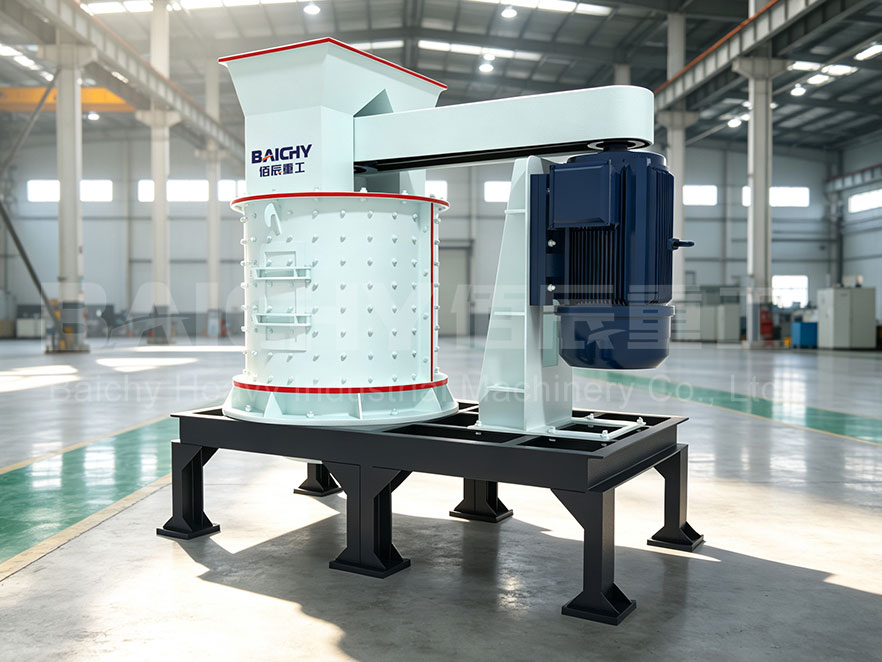
The vertical compound crusher has a large crushing ratio, low energy consumption, stable operation, simple structure, convenient operation, maintenance, etc.
Vertical shaft compound crusher is an efficient and multifunctional medium and fine crushing equipment. It adopts the principle of vertical shaft impact + grinding compound crushing. It is widely used in mining, building materials, metallurgy, chemical industry and other industries. It is suitable for crushing and sand making of high hardness materials (such as granite, basalt, iron ore, etc.).
Combined with the dual crushing methods of "stone hitting stone" (collision between materials) and "stone hitting iron" (collision between materials and wear-resistant parts), the crushing efficiency is high and the finished product particle size is uniform (usually 0-5mm adjustable).
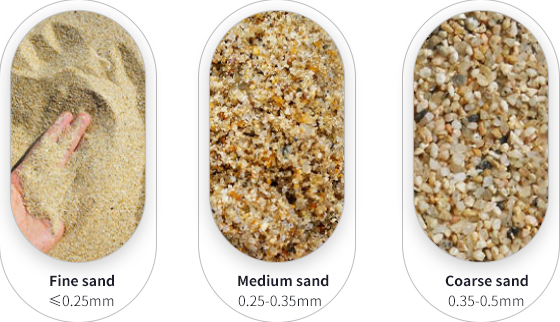
Applicable to the production of machine-made sand and can replace some traditional sand making machines.
Vertical main shaft + high-speed rotating rotor, the material hits and grinds multiple times in the crushing chamber to achieve fine crushing.
Multi-stage crushing chamber design to improve the crushing ratio (up to 15-40).
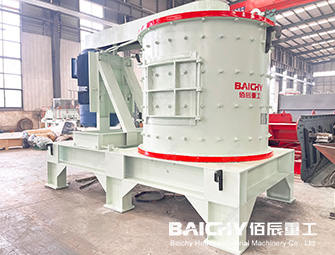
Mining Crushing Equipment
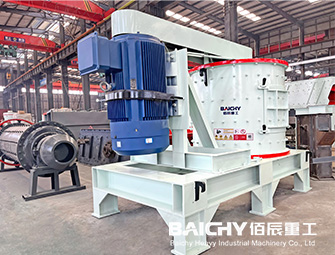
Machine-Made Sand Equipment
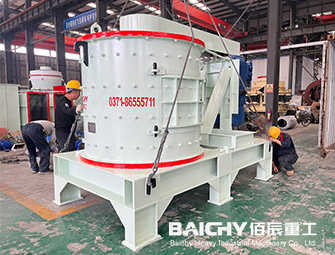
Stone Fine Crusher
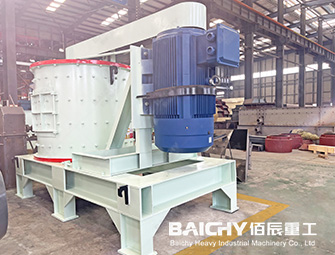
High-Efficiency Crusher
Vertical shaft compound crusher is mainly used for medium and fine crushing, taking into account the production of coarse sand. It is suitable for processing large-size (≤120mm) high-hardness materials, and the finished product has more edges and corners; while the sand making machine specializes in 0-5mm high-quality machine-made sand, which makes the grain shape more rounded through high-speed shaping, but the feed grain size is small (≤50mm).
Compound crusher has more comprehensive functions, while sand making machine focuses on sand particle optimization. The two are often used together to achieve efficient crushing and fine sand making.
The material has high hardness (such as basalt, iron ore), and it is necessary to take into account medium crushing and coarse sand production.
The budget is limited, and it is hoped that one machine can replace part of the cone crusher + sand making machine functions.
Specialized in producing high-quality machine-made sand of 0-5mm, with strict requirements on particle shape and powder content (such as sand for commercial mixing stations).
The raw material particle size is small (≤50mm), and no intermediate crushing is required.
Vertical compound crusher is now widely used in many industrial fields such as building materials, metallurgy, mining, chemical industry, electric power, coal, etc. With the in-depth development of the mining industry and the advancement of science and technology, its application in various fields is becoming more and more extensive, becoming one of the important equipment in the crushing production line and sand production line.
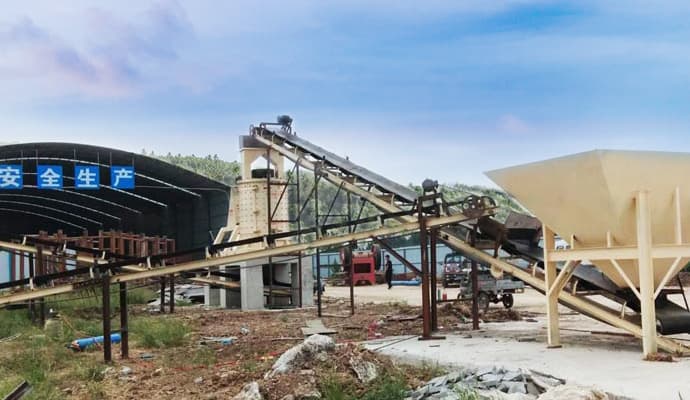
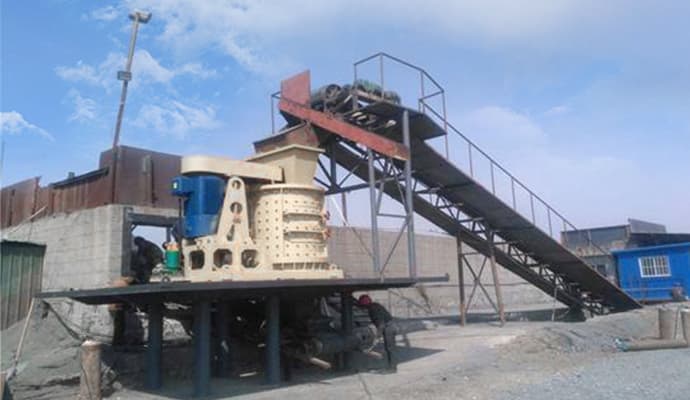
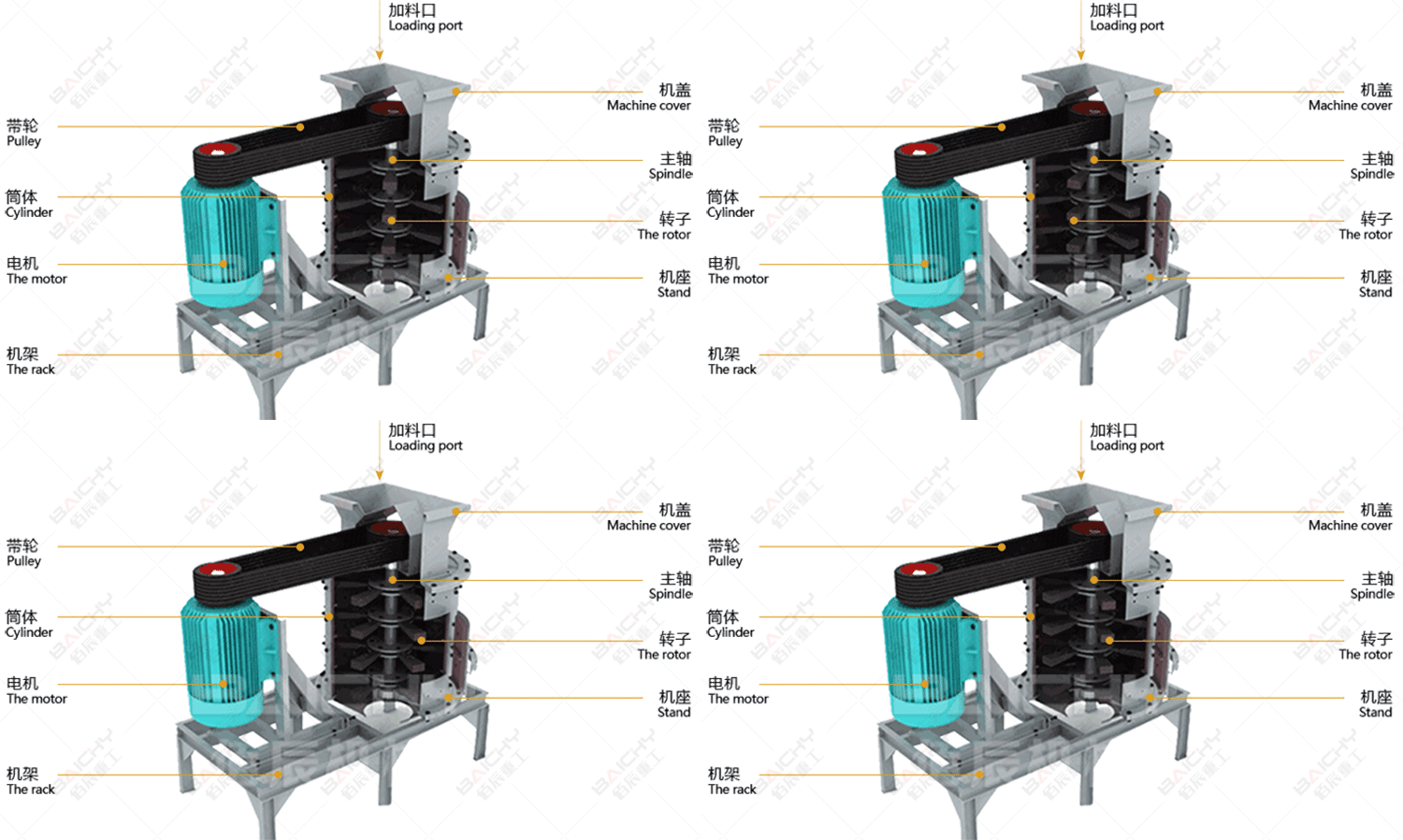
The working principle of the vertical compound crusher is divided into two layers of graded crushing. Specifically:
The upper turntable is fixed with plate hammers, which are sparsely distributed to form a larger crushing chamber, which is conducive to crushing large pieces of material. This layer is usually medium crushing operation, mostly using impact crushing, hard hitting the material, can utilize energy, fast crushing speed, and large crushing ratio.
The lower turntable is equipped with multiple rows of movable hammers, which are densely distributed to form a smaller crushing chamber, which can well control the discharge particle size requirements of the crushed material. This layer is mostly fine crushing operation, mostly using hammer crushing. The hammer can rotate freely radially. When hitting the material accumulation and flow, it can play a buffering role, making the material uniformly loose and tumbling, and the load is stable, which greatly reduces the instantaneous overload of the motor and avoids potential faults.
| Model | Feeding Size(mm) | Output Size(mm) | Capacity (t/h) | Power(kw) | Overall Dimension (L*W*H) |
| PFL-800 | < 50 | < 3-5 | 10-20 | 22-37 | 2100*1200*1700 |
| PFL-1000 | < 80 | 20-40 | 45-75 | 2600*1400*1900 | |
| PFL-1250 | < 150 | 40-70 | 75-132 | 2800*1600*2100 | |
| PFL-1500 | < 180 | 70-100 | 132-200 | 3100*1900*2200 | |
| PFL-1750 | < 200 | 130-190 | 200-315 | 3710*2360*2390 | |
| PFL-2000 | < 220 | 200-260 | 315-355 | 4100*2660*2620 |
Have Any Questions!
Don't Hesitate To Contact Us AnyTime.
A vertical shaft composite crusher, usually called a compound crusher, runs its rotor on a vertical shaft inside one open crushing chamber. Feed falls onto high-speed hammer faces, is thrown against the liner plates, then passes into a lower zone where particles collide with each other. That mix of impact, hammering and inter-particle crushing gives a finer product than a hammer crusher at lower energy use, while the single chamber keeps the machine simpler and cheaper to maintain than a two-stage circuit.
It is built for medium-hard and brittle material: cement raw meal and clinker, limestone, coal gangue, shale, gypsum, dolomite, blast-furnace slag, brick and concrete rubble. Published supplier specifications set the limit at a compressive strength of 140 MPa or below. Harder rock such as granite and basalt can be crushed, but wear-part life shortens sharply, so send a sample for a trial before we quote a machine for it.
Yes, within limits. There is no screen bar under the rotor, so damp fines have no aperture to plug and the material leaves the chamber by gravity once it is small enough — which is why this design is specified for wet limestone, raw coal and demolition waste. That said, most published datasheets still cap feed moisture at about 15%, with ideal flow below 10%. Above that, expect reduced output and more frequent cleaning; tell us your measured moisture and we will size the feeder and outlet hopper accordingly.
Standard discharge is 0–5 mm, with roughly 70–90% of the product under 3 mm, adjusted by rotor speed and the hammer-to-liner gap instead of swapping screens. It is therefore a fine-crushing stage: secondary crushing ahead of a ball mill, or pre-crushing ahead of a VSI sand machine. If you need strictly cubical aggregate for asphalt, let an impact crusher do the final shaping.
Size the machine from three numbers: real throughput in tonnes per hour, maximum lump feed size, and target discharge. The PFL range covers roughly 8–120 t/h, so a 30 t/h line and a 100 t/h line are different machines. Add a 15–20% margin for peak feeding, then check motor power against your existing switchgear. Hammer faces and liner plates are the consumables — order a spare set with the machine rather than stopping production to wait for one, and ask which wear-steel grade is fitted as standard.
If you need further information,please fill in your questions and comments in the form below.
Representatives from Baichy machinery will be back to you within the hour,thanking you for your support to Baichy machinery