 +86-15093222637
Contact us for a quote and free process design
Baichy know what you are expecting from mining project and we are making it happen with unrivalled products and services.
Leave Message


The pulse dust collector is applied in air purification and material recovery in metallurgy, electric power, building materials, mine, cement, chemical engineering, carbon black, asphalt concrete mixing, boiler, and other industries.
Contact Us Now To Get A Customized Production Line Configuration Plan.
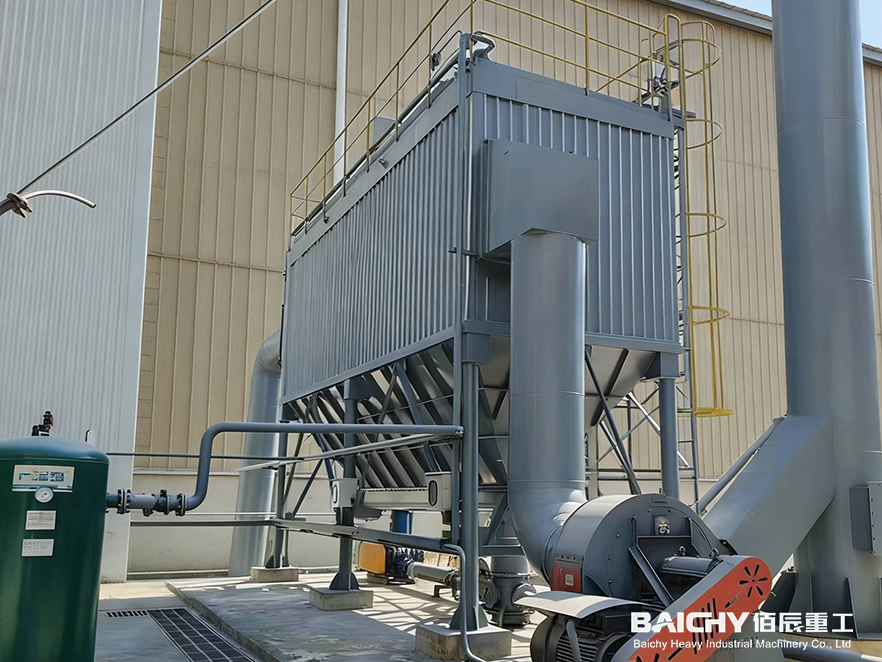
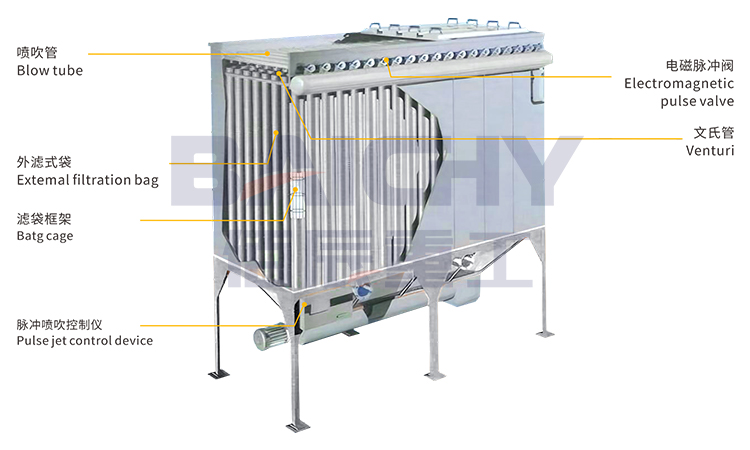
1. Filtration System: Includes filter bags (materials selected based on operating conditions, e.g., polyester, PPS, fiberglass, etc.) and supporting frames (filter cages).
2. Pulse Cleaning System: Includes pulse valves, air receivers, blowpipes, and a PLC controller.
3. Housing Structure: Includes the upper housing (clean air chamber), middle housing (filtration chamber), dust hopper, and air inlet/outlet ducts.
4. Ash Discharge System: Typically equipped with a discharge device (rotary airlock valve) or a screw conveyor.
1. Extremely High Dust Removal Efficiency: The capture rate for fine, micron-sized dust particles typically exceeds 99.9%.
2. Effective Cleaning Performance: The pulse jet pressure is high (typically 0.4–0.7 MPa), ensuring thorough cleaning; moreover, cleaning can be performed online while the equipment remains in operation.
3. Large Air Volume Capacity: Suitable for operating conditions involving high dust concentrations (up to 1000 g/m³) and large air flow volumes.
4. High Degree of Automation: Utilizes a PLC system to automatically control pulse intervals and pressure, resulting in relatively low maintenance requirements.
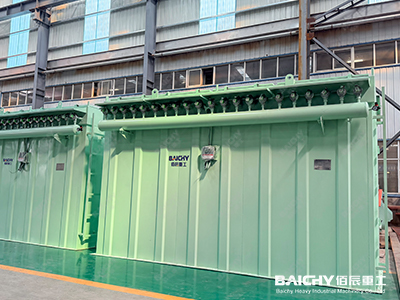
Bag Dust Collector
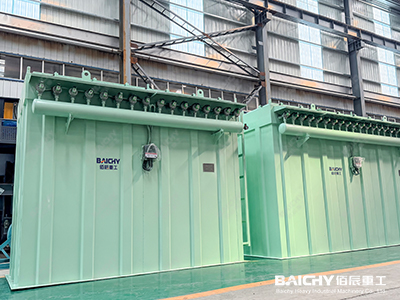
Industrial Dust Collector
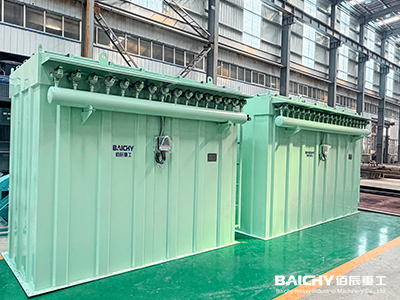
Pulse Bag Dust Collector
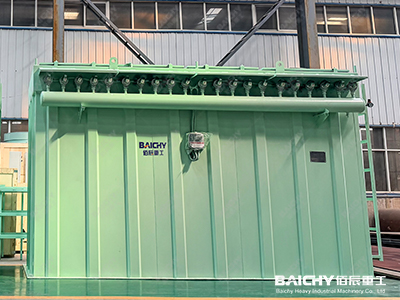
Pulse Bag Dust Collector
Pulse jet bag filters are widely utilized in industrial sectors with stringent air quality requirements:
• Metallurgy & Foundry: Dust removal in ironworks, steelworks, and electric arc furnace operations.
• Cement & Building Materials: Dust collection during crushing, packaging, silo top operations, and kiln tail processes.
• Power Industry: Flue gas purification for coal-fired boilers and biomass-fired boilers.
• Chemical & Woodworking Industries: Crushing of chemical raw materials and sawdust collection in furniture manufacturing plants.
• Grain Processing: Dust recovery in flour mills and feed production plants. Selection Recommendations for Pulse-Jet Baghouse Dust Collectors
• Filtration Velocity: Typically ranges between 0.6 and 1.2 m/min; excessively high velocities can significantly shorten the service life of the filter bags.
• Flue Gas Temperature: Select the appropriate filter bag material based on whether the operating environment involves normal temperatures (<120°C) or high temperatures (potentially exceeding 260°C).
• Dust Properties: Assess whether the dust is corrosive, sticky, or flammable/explosive (in which case, an explosion-proof dust collector would be required).
If you require a technical solution tailored to a specific scenario, selection calculations, or supplier information, please provide more specific details regarding your requirements (e.g., air volume to be processed, dust type), and I will conduct a further analysis to assist you.
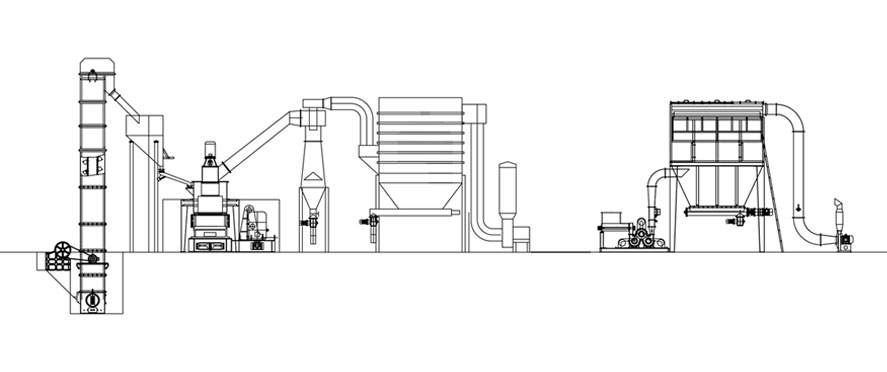
Key Advantage: Its dust removal efficiency typically exceeds 99.9%.
Technical Details: It demonstrates exceptional capture capabilities for fine dust particles at the sub-micron level (below 1 micron). By utilizing high-precision filter media (such as PTFE-laminated materials), outlet emission concentrations can be effectively controlled to below 10 mg/m³—or even as low as 5 mg/m³.
Key Advantage: Ensures thorough dust removal, and the cleaning process can be executed without requiring system shutdown.
Technical Details: It employs a momentary pulse of compressed air (0.4–0.7 MPa) to generate powerful mechanical vibrations and a reverse airflow, thereby rapidly dislodging the dust layer accumulated on the surface of the filter bags.
Key Advantage: Capable of directly processing gas streams with high dust concentrations, eliminating the need for preliminary dust removal stages.
Key Advantage: Offers stable operational performance, and its core components (specifically the filter bags) boast a long service life.
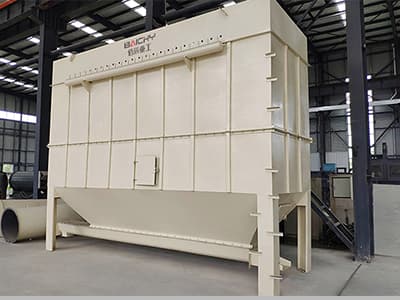
1. Filtration Process: Dust-laden gas enters the middle chamber of the dust collector through the inlet. As it passes through the filter bags, dust particles are captured and retained on the outer surfaces of the bags; the purified gas then flows into the upper chamber and is discharged through the outlet.
2. Dust Cleaning Process (Pulse Jet): When the dust layer accumulated on the surface of the filter bags reaches a certain thickness (causing an increase in resistance), the control system triggers the pulse valves. Compressed air is injected into the filter bags over a very brief duration (0.1–0.2 seconds), causing the bags to expand rapidly and vibrate instantaneously, thereby dislodging the surface dust into the hopper located below.

| Model | Total filter area (m2) | Filtering wind speed (m/s) | Input air (m³/h) | No. of filter bag (pc) | Specification of filter bag (mm) | Air consumption (m³/h) | Density of inlet (g/m³) | Density of outlet (mg/m³) |
| DMC-32 | 24/32 | 1.04-1.67 | 1500-2400 | 32 | ∅120x2000/∅130x2500 | 0.032 | 200 | 50 |
| DMC-48 | 36/48 | 1.15-1.62 | 2500-3500 | 48 | ∅120x2000/∅130x2500 | 0.048 | ||
| DMC-64 | 48/64 | 1.21-1.74 | 3500-5000 | 64 | ∅120x2000/∅130x2500 | 0.064 | ||
| DMC-80 | 60/80 | 1.25-1.67 | 4500-6000 | 80 | ∅120x2000/∅130x2500 | 0.08 | ||
| DMC-96 | 72/96 | 1.27-1.62 | 5500-7000 | 96 | ∅120x2000/∅130x2500 | 0.096 | ||
| DMC-112 | 84/112 | 1.28-1.68 | 6500-8500 | 112 | ∅120x2000/∅130x2500 | 0.11 | ||
| DMC-128 | 90/128 | 1.3-1.76 | 7500-9500 | 128 | ∅120x2000/∅130x2500 | 0.12 | ||
| DMC-168 | 126/168 | 2.54-2.87 | 9500-10500 | 168 | ∅120x2000/∅130x2500 | 0.168 | ||
| DMC-192 | 192 | 1.2-2.0 | 11520-17280 | 192 | ∅130x2500 | 0.3-0.8 | ||
| DMC-240 | 240 | 1.2-2.0 | 14400-21600 | 240 | ∅130x2500 | 0.5-0.8 |
A DMC pulse dust collector is a pulse-jet baghouse filter used for air purification and material recovery in industrial exhaust systems. Dust-laden gas passes through filter bags, where particles are captured on the outer surface, and compressed-air pulses clean the bags online. Baichy produces DMC models from DMC-32 to DMC-240 for metallurgy, cement, power, chemical and grain processing plants.
The DMC series covers ten models, from DMC-32 to DMC-240, with filter areas of 24–240 m² and air handling capacities of 1,500–21,600 m³/h. Each unit uses 32 to 240 filter bags in Ø120×2000 mm or Ø130×2500 mm sizes. Configuration is matched to the required air volume, dust type and discharge arrangement.
Capture efficiency for fine, micron-sized dust typically exceeds 99.9%. With standard filter media the outlet dust concentration is around 50 mg/m³; with high-precision media such as PTFE-laminated bags, outlet emissions can be controlled below 10 mg/m³ and as low as 5 mg/m³. Actual performance depends on dust properties, filtration velocity and bag selection.
When the dust layer on the filter bags reaches a set thickness, the PLC controller opens the pulse valves and injects compressed air at 0.4–0.7 MPa for 0.1–0.2 seconds. The bags expand and vibrate momentarily, releasing the dust cake into the hopper below. Cleaning runs online while the collector keeps operating, so no shutdown is required.
Sizing depends on the air volume to be treated, the filtration velocity (typically 0.6–1.2 m/min), flue gas temperature (below 120 °C for normal conditions, above 260 °C for high-temperature applications) and dust characteristics. Corrosive, sticky or flammable dust requires a different bag material and an explosion-proof design with rotary airlock valve or screw conveyor discharge.
If you need further information,please fill in your questions and comments in the form below.
Representatives from Baichy machinery will be back to you within the hour,thanking you for your support to Baichy machinery



