Baichy Heavy Industrial Machinery Co., Ltd

Phone/Wechat/Whatsapp:+86-15093222637

Email:[email protected]
24 hours online
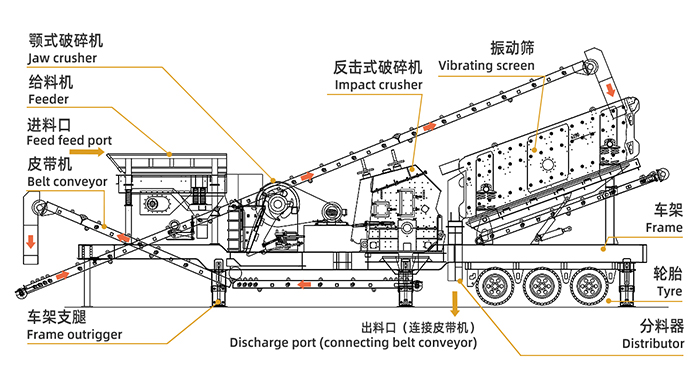
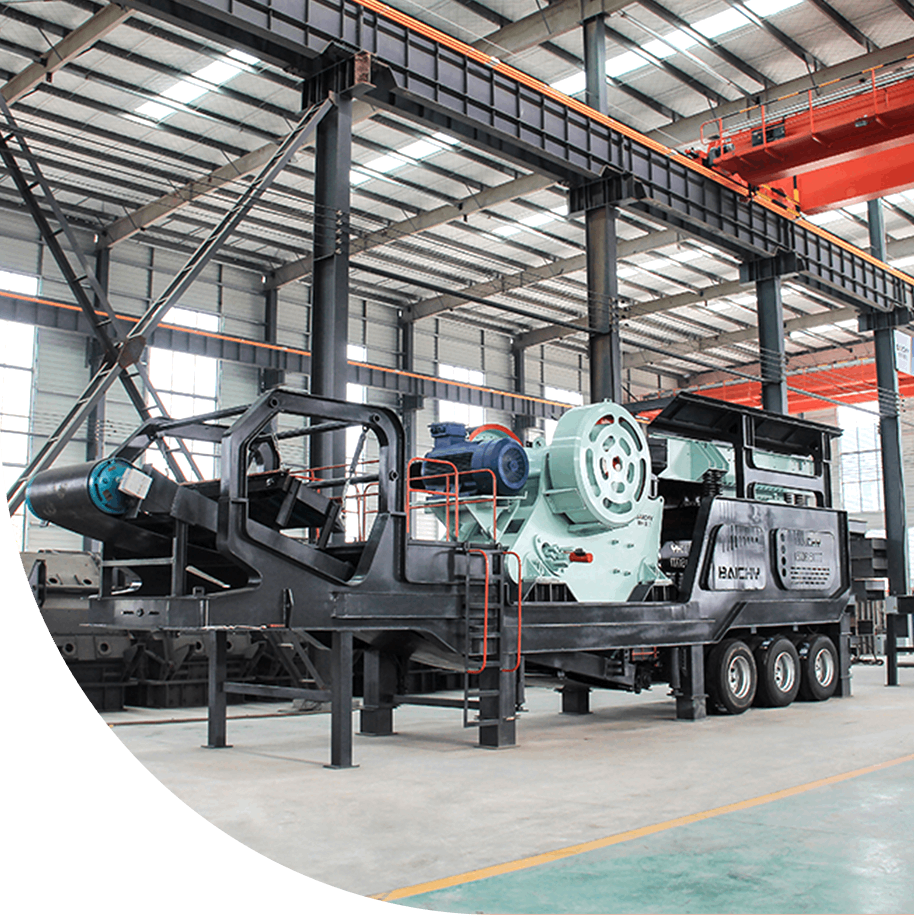
The feeder, jaw crusher, impact crusher, and vibrating screen are integrated into a frame to form a closed crushing production line, which is efficient and flexible. It is suitable for small-capacity stone-crushing equipment production lines and can independently meet the production needs of customers.
Contact Us Now To Get A Customized Production Line Configuration Plan.

A mobile crushing and screening plant is a movable production system that integrates crushing, screening and conveying equipment on a mobile frame. It can be transferred between suitable working sites and is designed for projects where production flexibility, reduced material haulage and shorter site preparation time are important.
A typical system may include a vibrating feeder, primary jaw crusher, secondary impact or cone crusher, vibrating screen and belt conveyor. Additional equipment, such as a pre-screen or magnetic separator, can be considered when the material contains soil, demolition debris or ferrous metal.
The equipment should not be selected by capacity alone. Material hardness, abrasiveness, moisture, feed gradation, final product sizes, screening requirements and site conditions all affect the recommended configuration and actual output.
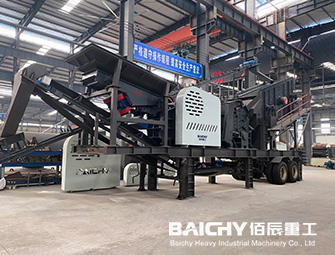
Modular Mobile Crushing Station
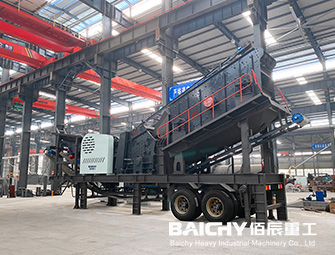
Construction Waste Crushing Equipment
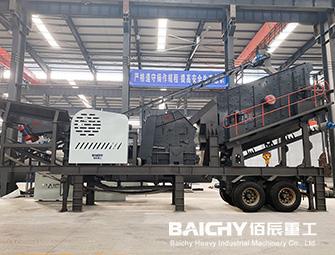
Impact Crusher Mobile Crusher
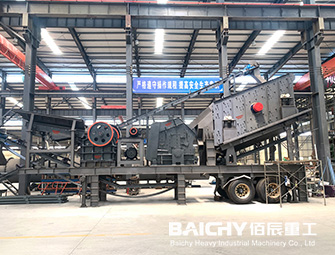
Stone Crushing And Screening Machine
A mobile plant is often considered for dispersed quarrying sites, short-term projects, road construction, aggregate production and construction-waste recycling. It can reduce the distance between the material source and the processing point, which may lower internal haulage requirements when the site layout is suitable.
It may be less economical than a fixed plant for long-term, high-volume production at a permanent site. For very hard or highly abrasive materials, a cone-crusher configuration may be more appropriate than an impact-crusher configuration. The final decision should be based on a process design rather than a general product label.
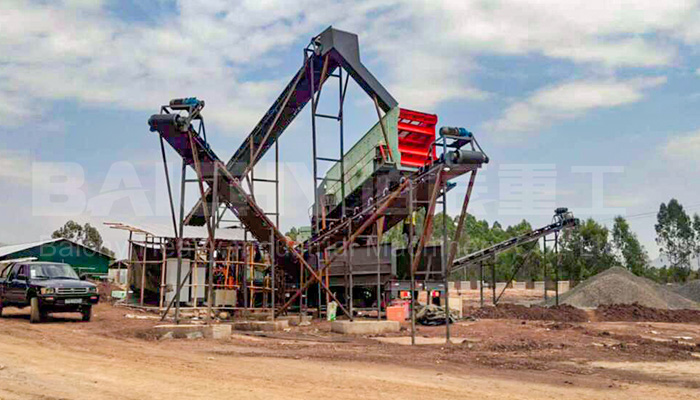
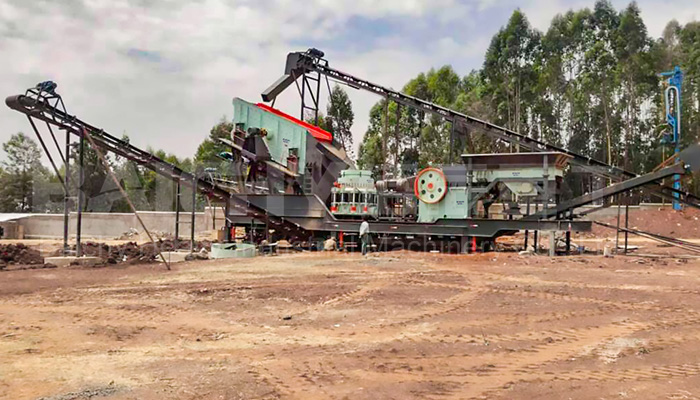
1. Feeding
The vibrating feeder regulates the material flow into the primary crusher and can help remove unsuitable fines when a suitable pre-screening arrangement is included.
2. Primary crushing
The jaw crusher reduces large feed material into a smaller size suitable for the next crushing stage. The actual feed limit depends on the selected model and configuration.
3. Secondary crushing
The impact crusher or cone crusher performs the secondary reduction stage. The correct choice depends on material hardness, abrasiveness, required particle shape and final product specifications.
4. Screening
The vibrating screen separates the crushed material into the required product fractions. Screen deck number, screen media and aperture size should be selected according to the required final products.
5. Conveying and stockpiling
Belt conveyors move the screened products to stockpiles or the next process stage. The effective plant output is limited by the complete process, not by the maximum theoretical capacity of one inpidual machine.
| Model | YDPZ46-1007 | YDPZ46-900 | YDPZ57-1210 | YDPZ57-75 | YDPZ96-1214 | YDPZ96-160 |
| Vibrating Feeder | ZSW0625 | ZSW0625 | ZSW8530 | ZSW8530 | ZSW9638 | ZSW9638 |
| Primary Jaw Crusher | PE400×600 | PE400×600 | PE500×750 | PE500×750 | CJ96 | CJ96 |
| Feeding Size (mm) | ≤350 | ≤350 | ≤425 | ≤425 | ≤480 | ≤480 |
| Feeding Size (mm) | 15-60 | 15-60 | 40-130 | 40-130 | 60-160 | 60-160 |
| Secondary Crusher | Impact crusher | Cone crusher | Impact crusher | Cone crusher | Impact crusher | Cone crusher |
| Model | PF1007 | PYB900 | PF1210 | CS75 | PFW1214 | CS160 |
| Feeding Size (mm) | ≤250 | ≤115 | ≤400 | ≤150 | ≤430 | ≤205 |
| Capacity (t/h) | 15-60 | 15-90 | 70-130 | 27-163 | 100-180 | 109-349 |
| Vibrating Screen | 2/3/4YK1237 | 2/3/4YK1237 | 2/3/4YK1848 | 2/3/4YK1848 | 2/3/4YK1860 | 2/3/4YK1860 |
| Belt Conveyor | B500x8m | B650 | B650 | B650 | B800 | B800 |
| Capacity (t/h) | 15-60 | 15-60 | 70-130 | 27-130 | 60-160 | 60-160 |
| Overall Size(mm) | 11500*2050*5400 | 11500*2050*5400 | 15800*2300*5850 | 15800*2300*5850 | 18000*2700*7650 | 18000*2700*7650 |
Have Any Questions!
Don't Hesitate To Contact Us AnyTime.
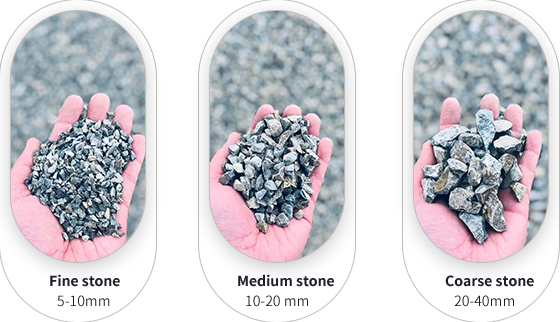
There is no single capacity or feed-size value for every mobile plant. The approved range depends on the selected model, crusher combination, screen arrangement and required final products. Use the model table above as a reference only and contact our engineers for a project-specific confirmation.
An impact crusher may be considered for many medium-hard, less-abrasive materials when a cubical product shape is required. A cone crusher may be considered for harder or more abrasive materials. The final choice should be based on material test data, feed size, required reduction ratio, wear-part requirements and final product specifications.
Selected configurations can be evaluated for concrete blocks, asphalt-based debris and other construction-waste applications. Depending on the feed, the process may require pre-screening, magnetic separation, dust suppression and a screen arrangement designed for the required recycled aggregate products.
Please send the material type, maximum feed size, target capacity, final product sizes, project country, site conditions and preferred mobility type. If available, include laboratory test data, material photos and the required operating schedule.
A mobile plant may be configured for materials such as limestone, bluestone, dolomite and selected construction waste. Hardness, abrasiveness, moisture, feed size and final product requirements determine whether an impact-crusher or cone-crusher configuration is more appropriate.
If you need further information,please fill in your questions and comments in the form below.
Representatives from Baichy machinery will be back to you within the hour,thanking you for your support to Baichy machinery



 +86-15093222637
