YGM190/160 Grinding Mill
For Mongolian mine owners seeking a stable output of 20 tons per hour, choosing the YGM190 or YGM160 high-pressure suspension roller mill essentially means opting for lower per-ton production costs and superior reliability in cold climates. Ores found in the Mongolian region—such as hard fluorite, high-sulfur coal, and iron concentrate—are typically characterized by high hardness and strong abrasiveness. Traditional Raymond mills, which rely solely on centrifugal force for grinding, often experience a decline in grinding force after just three months of operation, causing production capacity to plummet from 15 tons to a mere 8 tons per hour. In contrast, the YGM series features a built-in high-pressure spring boosting mechanism that applies an additional 800–1200 kg of pressure; this ensures that even during the mid-to-late stages of roller wear, the mill can still maintain a robust output exceeding 20 tons per hour.
Why Choose the YGM190/160 for Grinding Equipment with a 20 t/h Output?
In the field of industrial grinding, "20 tons per hour" represents a critical threshold. For outputs below this figure, a combination of multiple smaller units may suffice; however, to exceed the 20-ton mark while maintaining a product fineness of 200 mesh or finer, only a large-scale high-pressure grinding system can truly maximize the return on investment.
1. Grinding System: The YGM190 features six oversized grinding rollers, increasing the total grinding surface area by 30% compared to conventional 5R mills. This design ensures that the machine can effortlessly overcome production bottlenecks when processing materials to a fineness of 325 mesh.
2. Power Distribution: The system employs a high-efficiency variable-frequency main motor paired with a heavy-duty, double-helical gear reducer. This configuration delivers 18% more torque output than comparable equipment of the same specifications, ensuring that the machine never suffers from "stalling" or bogging down when processing Mongolia's hard ores.
3. Classification Efficiency: Equipped with a new-generation cage-type classifier, the system creates a more uniform powder flow field. This results in a 15% increase in the finished product pass rate, significantly reducing the volume of ineffective recirculated material and, consequently, lowering unit energy consumption by approximately 30%.
| Key Technical Specifications | YGM160 High-Pressure Grinder (Advanced Model) | YGM190 Super-Large Grinder (Flagship Model) |
| Stable Throughput (200 Mesh) | 12–22 tons/hour | 20–35 tons/hour |
| Grinding Roller Diameter × Height | Φ440 × 270 mm | Φ480 × 300 mm |
| Max. Feed Particle Size | ≤ 30 mm | ≤ 35 mm |
| Main Unit Power (Standard Version) | 132–160 kW | 200–245 kW |
| Finished Product Fineness Range | 0.613 – 0.033 mm (30–425 Mesh) | 0.613 – 0.033 mm (30–425 Mesh) |
| Total Equipment Weight | Approx. 28 tons | Approx. 42 tons |
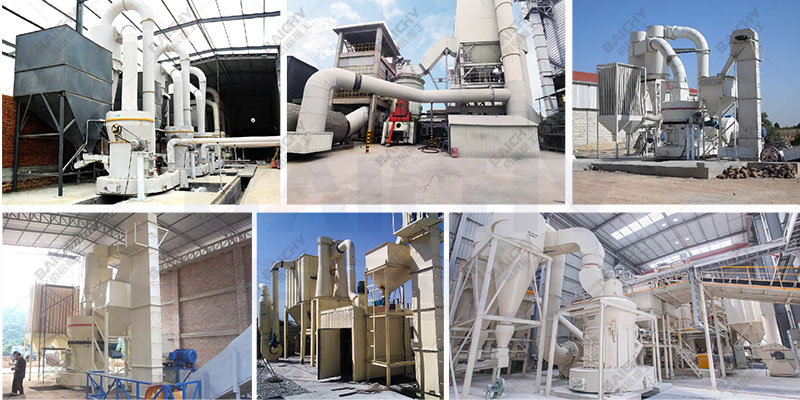
Grinding Production Line: Customer Case Studies
Case Study Review: From "Insufficient Output" to "Meeting Full Demand"—The Turnaround of the Sükhbaatar, Mongolia Fluorite Powder Project. This project originally utilized three old-model 4R3216 Raymond mills; the actual output per unit was a mere 4.5 tons, and the seals were highly prone to cracking and oil leakage in Mongolia's extremely cold winter environment. In March 2024, the client installed a YGM190 production line from Baichy Heavy Industry to replace the three original aging units.
• Throughput Performance: Actual measurements showed a stable output of 23.5 t/h. This not only met the baseline requirement of 20 tons but also provided a surplus capacity, allowing for flexible, off-peak production during night shifts.
• Revenue Comparison: Thanks to the YGM190's high-pressure system, which ensures exceptional powder consistency, the finished product qualification rate surged from 85% to 99.8%. This enabled the product to gain direct entry into the high-end fluorochemical supply chain.
• Energy Consumption Costs: Based on an equivalent hourly output of 20 tons, the project saves approximately 48,000 RMB (approx. 23 million Mongolian Tugriks) in electricity costs per month—meaning the cost of a single motor can be recouped in less than 10 months through energy savings alone. A "Pitfall Avoidance Guide" for the Mongolian Market: The Hidden Costs Behind Low-Price Traps. Many suppliers quote extremely low prices to Mongolian clients; however, as an evaluation expert, I must urge you to be wary of the following three points:
1. Steel Cold Brittleness: Winter temperatures in Mongolia frequently hover around -40°C. Under such extreme cold, standard Q235 steel is prone to brittle fracture under stress. Baichy Heavy Industry’s YGM series main unit base utilizes high-grade manganese steel alloy components, guaranteeing a crack-free service life of ten years.
2. Compromised Sealing Systems: Mining sites are inherently dusty environments; low-quality sealing components can fail after just 150 hours of operation. We employ an aviation-grade dual-composite sealing system, paired with specialized low-temperature-resistant lubricants, effectively tripling the maintenance cycle duration.
3. After-Sales Responsiveness: In Mongolia, a single day of downtime can cost you the profit equivalent of a pickup truck. We maintain a permanent inspection team stationed in Ulaanbaatar to provide "within-the-hour" response times—a level of service that the "small workshops" engaging in price wars simply cannot promise.
Environmental Protection and Sustainability: Green Mining Is No Longer Just a Slogan. As Mongolia tightens its environmental protection regulations, traditional open-style grinding mills are no longer viable. The YGM160/190 system features a three-stage dust removal solution: a large cyclone dust collector, a pulse-jet bag filter, and a fully enclosed negative-pressure circulation system. Even amidst the strong winds of the Mongolian Plateau, this system ensures that no visible dust escapes the plant area, thereby completely eliminating the environmental assessment risks that concern mine owners.
Frequently Asked Questions (FAQ)
Q1: Can the YGM190 grinding mill achieve a product fineness of 325 mesh when processing fluorite in Mongolia?
A1: The answer is a resounding yes. By adjusting the variable-frequency speed of the classifier, the YGM190 can seamlessly switch between fineness levels ranging from 80 to 425 mesh. When processing the hard fluorite found in Mongolia, it can maintain a stable output capacity of approximately 18–22 tons per hour at a fineness of 325 mesh.
Q2: What is the approximate infrastructure cost for a production line with a capacity of 20 tons per hour?
A2: This depends on the hardness of your foundation base. Generally speaking, the cost for concrete foundation construction for a single YGM190 system is approximately 50,000 to 80,000 RMB. For regions in Mongolia characterized by permafrost, we recommend utilizing a deepened reinforced concrete foundation and incorporating a reserved vibration-isolation trench for the main unit.
Q3: How often do the grinding rollers and rings need to be replaced? Are spare parts available for purchase in Mongolia?
A3: Based on wear rates, the service life is approximately 1,000 to 1,500 hours when processing medium-hard ores. Baichy Heavy Industry maintains a spare parts transit warehouse in Mongolia, allowing for the delivery of common wear parts—such as grinding rollers, rings, and scraper blades—to mining sites within 48 hours.
Q4: How was the claim that the YGM high-pressure grinding mill saves 30% more electricity than a traditional Raymond mill calculated?
A4: This efficiency stems from improvements in grinding efficiency. To achieve the same output volume, the YGM series utilizes the additional grinding force provided by high-pressure springs; this allows the main motor to complete the crushing process without requiring excessively high rotational speeds, thereby significantly reducing electricity consumption per ton of processed powder.
Q5: Given Mongolia's extremely cold climate, do the electrical control cabinets require any special treatment?
A5: Yes, special treatment is mandatory. For our Mongolian clients, we provide electrical control cabinets equipped with a standard self-heating function to prevent electronic components from failing during startup in ultra-low temperatures; we also offer optional Variable Frequency Drives (VFDs) featuring low-temperature protection.
Q6: Does the quoted price include installation and commissioning services?
A6: Our quotations typically cover a "turnkey" project solution. This encompasses the comprehensive system design, installation guidance, on-site commissioning, and technical skills training for local operators in Mongolia.
Q7: Can the equipment process ores with a moisture content of 10%?
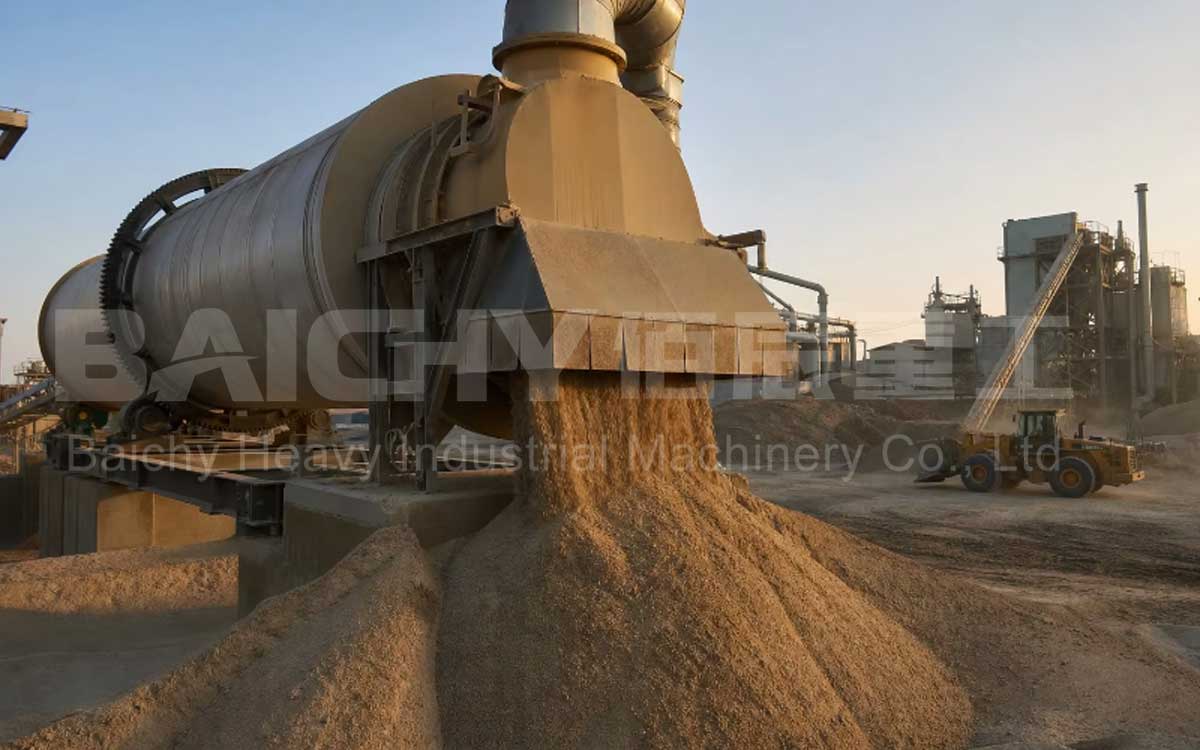
A7: We do not recommend it. The grinding mill requires the moisture content of the feed material to be controlled at 6% or less; otherwise, issues such as material sticking to the walls or clogging may occur. If the ore is relatively wet, we recommend installing a Baichy Heavy Industry high-efficiency dryer upstream of the grinding mill.
Q8: Is the equipment noisy? What measures are taken if there are residential areas located near the mining site?
A8: Noise levels are controlled to remain within 85 decibels. We offer optional add-ons—such as intake and exhaust silencers, as well as soundproof enclosures—to ensure full compliance with local noise emission standards for residential areas.