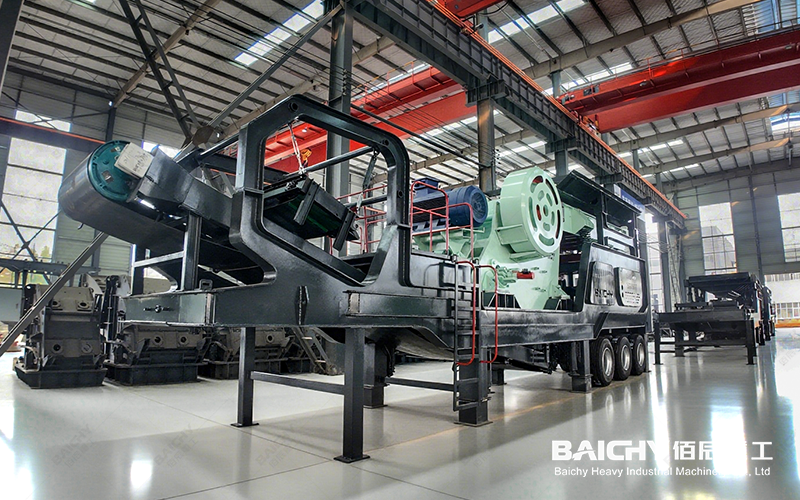
Mobile Crushing Plant - Mobile Tire-type Jaw Crusher
Overview of Mobile Crushing Stations
As the name suggests, a mobile crushing station is an integrated crushing and screening production line capable of self-propulsion or convenient relocation with the aid of towing equipment. It has fundamentally revolutionized the traditional model of fixed production lines, which typically require complex civil engineering foundations, intricate installation procedures, and cumbersome relocation processes. A standard mobile crushing station typically integrates a feeder, crusher, vibrating screen, conveyors, and an electrical control system onto one or more mobile chassis, effectively creating a "mobile crushing plant." The core philosophy behind this design is to "bring the equipment to the material, rather than transporting the material over long distances to a fixed facility," thereby achieving revolutionary gains in efficiency across fields such as mining, construction waste processing, and road construction.
Core Application Scenarios
Thanks to their unparalleled flexibility, mobile crushing stations are widely utilized in the following scenarios:
1. Multi-Site Mining and Sand & Aggregate Production
In situations involving multiple dispersed quarrying sites or mining areas with complex terrain, the use of fixed production lines can be prohibitively expensive. Mobile crushing equipment allows for easy site-to-site relocation and on-site crushing, significantly reducing material transportation costs; this makes it particularly well-suited for small-to-medium-scale sand and aggregate projects.
2. Resource Utilization of Construction Waste
In urban renewal and demolition/renovation projects, the generation points for construction waste are often scattered and temporary. Mobile crushing stations can be deployed directly to demolition sites to crush and screen construction debris—such as concrete and bricks—on-site, producing reusable recycled aggregates. As such, they serve as critical equipment for the circular economy.
3. Large-Scale Engineering Projects and Road Construction
In linear engineering projects—such as highways, railways, and water conservancy works—construction fronts often span vast distances, necessitating stone crushing operations at various sections along the route. Track-mounted mobile crushing stations can flexibly follow the construction line, directly supplying the project with the required aggregates of various specifications, thereby ensuring project timelines are met and costs are minimized.
4. Special Areas with Harsh Environments or Site Constraints
For regions with underdeveloped infrastructure—such as mountainous terrain or wetlands—constructing fixed production lines presents significant difficulties. Mobile crushing equipment imposes minimal requirements on the operating site; it can be rapidly deployed and put into operation, effectively overcoming the limitations imposed by challenging geographical environments.
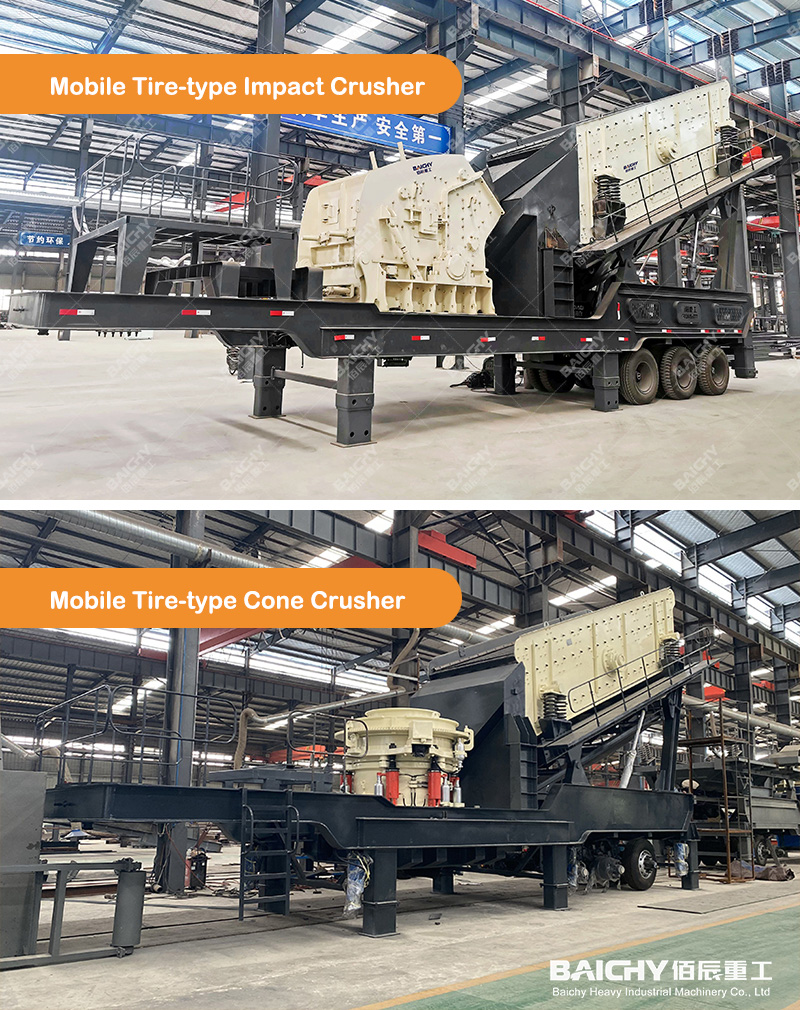
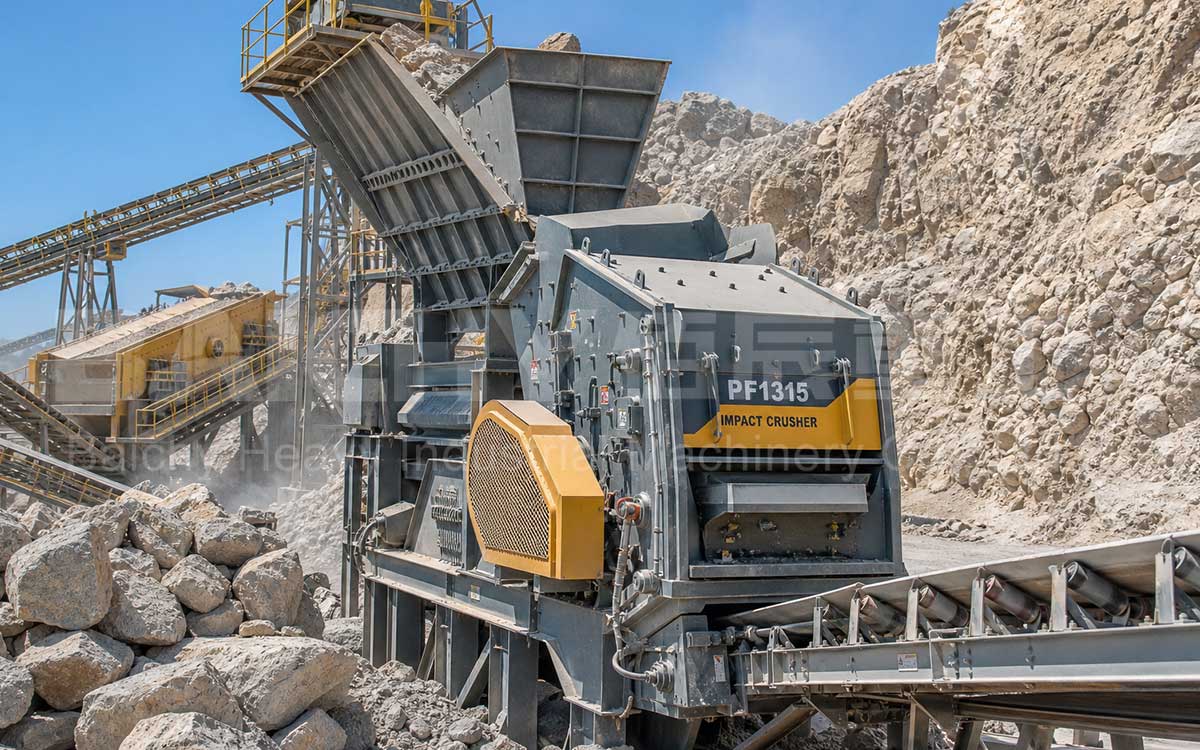
Mobile Tire-type Impact Crusher and Cone Crusher
Key Advantages of the Equipment
Compared to traditional fixed production lines, the advantages of mobile crushing stations are comprehensive and decisive:
• Exceptional Flexibility: Enables rapid site transfers, shortens project cycles, and allows for quick responses to the production demands of various job sites.
• Significant Cost-Effectiveness: Saves substantial costs on civil engineering works, installation, and long-distance material transport, ensuring a rapid return on investment.
• Integrated Intelligent Control: An integrated electrical control system enables one-touch control over the entire process—including feeding, crushing, screening, and conveying—resulting in simple operation and reduced labor requirements.
• Environmental Friendliness: Supports on-site processing at the source, thereby minimizing dust, noise, and fuel consumption associated with material transport, and delivering significant environmental benefits in construction waste management.
• Rapid Deployment: Upon arrival at the site, the equipment can be put into production with virtually no complex installation required, truly embodying a "ready-to-use upon arrival" capability.
Comparison of Common Types and Technical Parameters
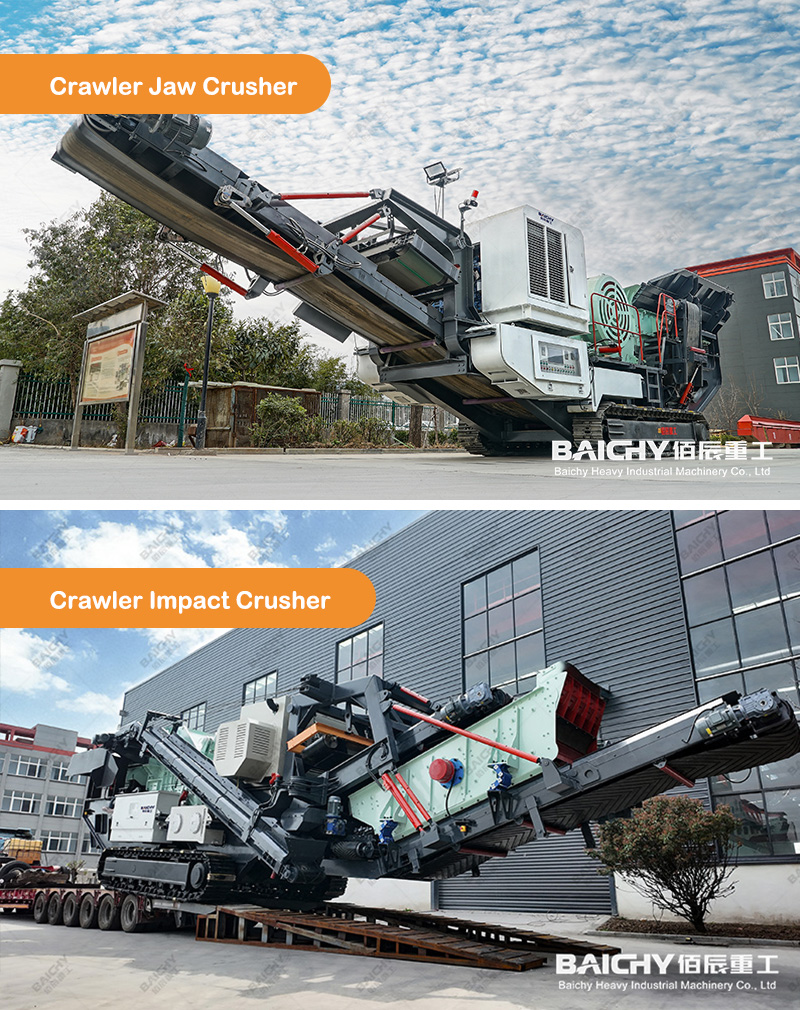
Crawler Jaw and Impact Crusher
Mobile crushing stations are primarily categorized into two types: wheel-mounted mobile crushing stations and crawler-mounted mobile crushing stations. Users can select the appropriate type based on their specific operating conditions.
| Parameter / Type | Wheel-Mounted Mobile Crushing Station | Crawler-Mounted Mobile Crushing Station |
| Mobility Method | Towed by a semi-trailer tractor; requires a flatbed truck for long-distance transfers | Self-propelled via crawler tracks; supports remote control operation for independent movement within the site |
| Transfer Speed | Road-legal for highway travel; enables rapid long-distance transfers | Highly agile for movement within the site; requires truck transport for long-distance transfers |
| Site Adaptability | Requires a relatively level and stable ground surface; utilizes hydraulic outriggers for stabilization | Highly adaptable to complex terrains (e.g., mountainous areas, wetlands); features excellent climbing capabilities |
| Power Source | External power supply or equipped with an on-board diesel generator set | Typically equipped with a diesel-hydraulic drive system; offers robust power and requires no external power source |
| Applicable Scenarios | Projects involving relatively fixed sites or requiring transfers between multiple fixed locations | Projects involving complex terrain, harsh operating conditions, or requiring frequent movement within the job site |
| Investment Cost | Relatively Low | Relatively High |
Success Story: Turning Construction Waste into Valuable Resources
A construction waste resource utilization center in a city in North China recently introduced a wheel-mounted mobile crushing station manufactured by our company (configured with a jaw crusher and an impact crusher). This equipment operates directly at demolition sites, subjecting large blocks of waste concrete and bricks to two stages of crushing and multiple stages of screening. The process ultimately yields high-quality recycled aggregates in various specifications—such as 0–5 mm, 5–10 mm, and 10–31.5 mm—suitable for use as sub-base material in municipal roads and for brick manufacturing. Within a single year, the system processed over 500,000 tons of construction waste, saving nearly 100 *mu* (approx. 6.7 hectares) of landfill space and generating substantial economic and social benefits.
Recommended Equipment
Based on varying crushing requirements and operational scenarios, we recommend the following core mobile crushing equipment:
1. Track-mounted Mobile Jaw Crusher: As the pioneer in coarse crushing, this unit handles large blocks of stone and hard materials, serving as the "trailblazer" of the production line.
2. Wheel-mounted Mobile Impact Crusher / Cone Crusher: These units are suitable for the medium-to-fine crushing of medium-hard materials (Impact Crusher) and the fine crushing of ultra-hard materials (Cone Crusher), respectively. Producing aggregates with excellent particle shape, they form the core of high-quality aggregate production.
3. Mobile Screening Station: Capable of operating independently or in conjunction with crushing stations, this unit achieves precise material classification and can be configured to form a closed-circuit processing system.
Frequently Asked Questions (FAQ)
Q1: Which offers higher output: a mobile crushing station or a fixed production line?
A1: In terms of the absolute maximum capacity of a single machine, large-scale fixed production lines typically offer higher output. However, the core advantage of mobile crushing stations lies in their system flexibility and overall economic efficiency. For projects involving multiple locations, phased operations, or medium-scale requirements, their comprehensive efficiency—including time savings related to site relocation and infrastructure setup—is often more advantageous. Furthermore, the single-unit output of modern large-scale mobile crushing equipment is now quite substantial, capable of reaching several hundred tons per hour.
Q2: Should I choose a wheel-mounted or a track-mounted unit?
A2: This choice depends primarily on your specific operating conditions. If your material sources are dispersed but located on flat terrain, and if they are situated far apart—requiring road transport between sites—a wheel-mounted unit is generally more cost-effective. Conversely, if you are working within a single, large construction site characterized by complex or rugged terrain, and require frequent equipment relocation within that site, the superior maneuverability and self-propulsion capabilities of a track-mounted unit make it the ideal choice.
Q3: Are the maintenance costs for mobile crushing stations high?
A3: Modern mobile crushing equipment is designed with ease of maintenance as a key priority. Critical components are sourced from reputable brands, ensuring high reliability. The integrated design centralizes routine maintenance points, making operations easy and straightforward. Although the inherent complexity of a single mobile unit exceeds that of a standalone stationary machine, the resulting reduction in overall operating costs—particularly savings in logistics and infrastructure—typically fully offsets this complexity, ultimately yielding a lower cost per ton.
Conclusion
A mobile crushing station is more than just a piece of machinery; it represents an advanced, flexible, and highly efficient solution for material processing. With its exceptional adaptability, it is driving a transformative shift in operational paradigms across the mining, construction materials, and environmental protection industries.