
At every stage of mining—from crushing and grinding to beneficiation—do you face challenges such as final product particle sizes failing to meet specifications, excessive impurities compromising market value, or bottlenecks in the screening process that restrict overall line capacity and drive up costs?
The root of these issues often lies in the "Persion hub" of the process workflow: the mining vibrating screen.
Far more than a mere "sieve," this machine serves as the precise classifier and efficiency gatekeeper of your production line. A properly selected and efficiently operating vibrating screen ensures that every particle finds its exact place; it directly determines the purity, gradation, and market competitiveness of your final product, while fundamentally influencing your return on equipment investment and cost per ton of output.
We fully understand that your primary objective is never simply to purchase a piece of equipment, but rather to secure a stable, high-yield, and energy-efficient sustainable production capability. Therefore, we offer not merely vibrating screens, but comprehensive screening solutions—ranging from material property analysis to long-term performance assurance.
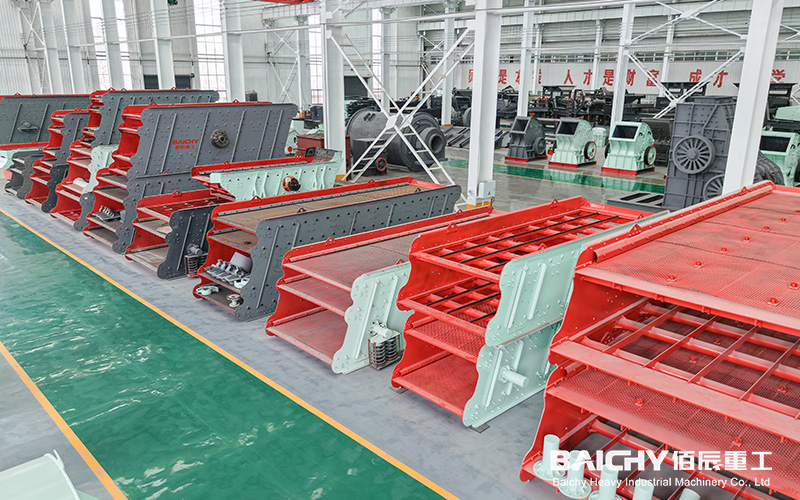
Mining Vibrating Screen
Overview of Mining Vibrating Screens
A mining vibrating screen is a mechanical device that utilizes vibration motors or exciters to generate an excitation force, causing the screen surface to undergo periodic vibration. This action lifts and loosens the material resting on the screen, facilitating its stratification by particle size and subsequent passage through the mesh. Its core objective is to achieve the "screening" and "classification" of materials, thereby supplying raw materials of the requisite particle size to the subsequent stages of the processing workflow. Based on their motion trajectory, structural form, and application characteristics, common mining vibrating screens are primarily classified into the following categories:
| Type | Motion Trajectory | Key Features | Applicable Scenarios |
| Circular Vibrating Screen | Circular or Elliptical | High screening efficiency, robust structure, large processing capacity | Screening of coarse to medium-grained materials (e.g., raw ore, crushed stone) |
| Linear Vibrating Screen | Linear or Nearly Linear | Stable operation; suitable for dewatering, desliming, and desliming/dewatering | Screening of fine-grained materials, sand and gravel dewatering, desliming/dewatering in coal preparation plants |
| High-Frequency Vibrating Screen | High Frequency, Small Amplitude | High efficiency; particularly suitable for screening fine particles | Fine sand recovery, tailings dewatering, slurry filtration |
| Banana Screen | Linear; Multi-angled Screen Deck | High utilization rate of the screen deck; extremely high processing capacity | Classification of medium to fine-grained materials requiring exceptionally high processing volumes |
Key Application Scenarios
The application of mining vibrating screens spans the entire mineral processing workflow:
• Pre-screening before crushing: Separating out qualified particle sizes that do not require crushing, thereby improving crusher efficiency and reducing energy consumption.
• Check screening after crushing: Ensuring that the particle size of crushed products meets specifications, and returning oversized materials to the crusher.
• Classification during mineral processing: Forming a closed-circuit loop within the grinding circuit to control grinding fineness.
• Washing, beneficiation, and dewatering operations: Used for the dewatering, desliming, and desliming/dewatering of coal, metallic ores, and non-metallic ores.
• Classification of finished products: Screening final products (such as sand and gravel aggregates) into various commercial-grade specifications.
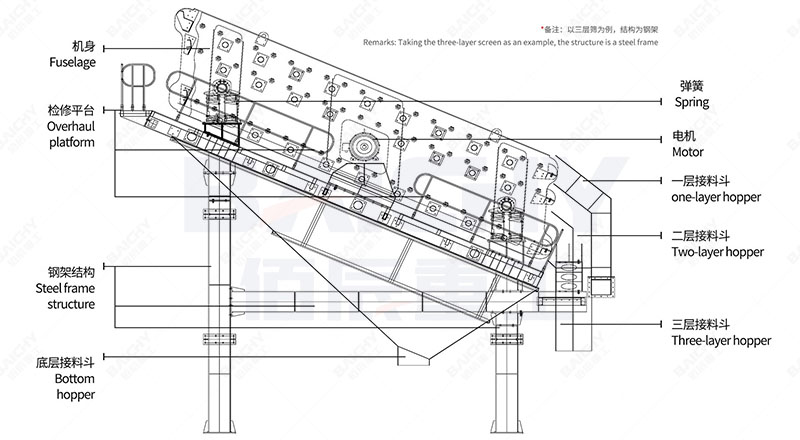
Mining Vibrating Screen Structure Diagram
Core Equipment Advantages
The mining vibrating screens we manufacture integrate years of R&D and field experience, offering the following significant advantages:
1. High Efficiency and Reliability; Large Processing Capacity: Optimized dynamic parameters and a robust screen box structure ensure stable operation under heavy loads and continuous working conditions, with screening efficiency reaching over 95%.
2. Low Maintenance Costs: Utilizing high-quality bearings and fatigue-resistant springs—along with vibration motors or exciters featuring excellent sealing and long service life—significantly reduces maintenance frequency and spare parts consumption.
3. High Screening Accuracy, Low Clogging Rate: Featuring a unique screen surface fastening technology—along with optional bouncing balls and ultrasonic screen-cleaning devices—the equipment effectively resolves the persistent challenge of screen clogging caused by wet and sticky materials, thereby ensuring high screening accuracy.
4. Eco-friendly and Energy-Efficient: The equipment operates with low noise levels, while its sealed, dust-proof design effectively prevents dust dispersion. It utilizes high-efficiency, energy-saving motors to significantly reduce operating costs.
5. Strong Customization Capabilities: We offer extensive customization options based on the client's specific material characteristics (including moisture content, viscosity, particle size, and specific gravity) and throughput requirements. Customizable parameters include screen surface dimensions, number of layers, inclination angle, and material types (e.g., polyurethane, rubber, or stainless steel screen plates).
Successful Case Studies
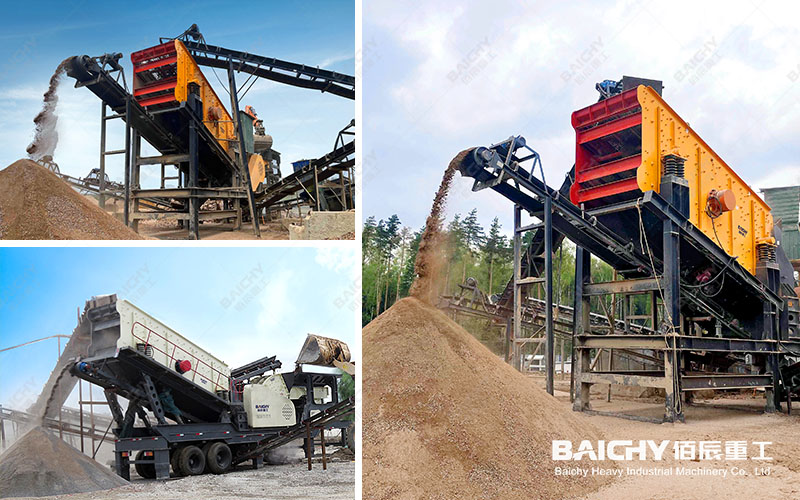
Mining Vibrating Screen — Customer Site
Case Study 1: Large-scale Iron Ore Beneficiation Plant in Mexico
◦ Challenge: The client's original screening machinery suffered from severe screen clogging when processing iron concentrate fines, resulting in a screening efficiency of less than 85%. This inefficiency negatively impacted both the grade and yield of the final concentrate.
◦ Solution: We recommended and installed two large-scale linear vibrating screens, equipped with specialized anti-clogging polyurethane screen plates.
◦ Results: Screening efficiency improved to 96%, the clogging issue was virtually eliminated, and concentrate yield increased by 15%. Furthermore, the client realized annual savings of over 200,000 RMB in screen plate replacement and maintenance costs.
Case Study 2: Granite Aggregate Production Line in Southeast Asia
◦ Challenge: The client required the precise classification of crushed mixed materials into four distinct commercial aggregate grades: 0–5mm, 5–10mm, 10–20mm, and 20–31.5mm. This process demanded exceptionally high standards for both screening accuracy and production capacity.
◦ Solution: We configured the system with one three-layer, four-outlet circular vibrating screen and one double-layer dewatering screen.
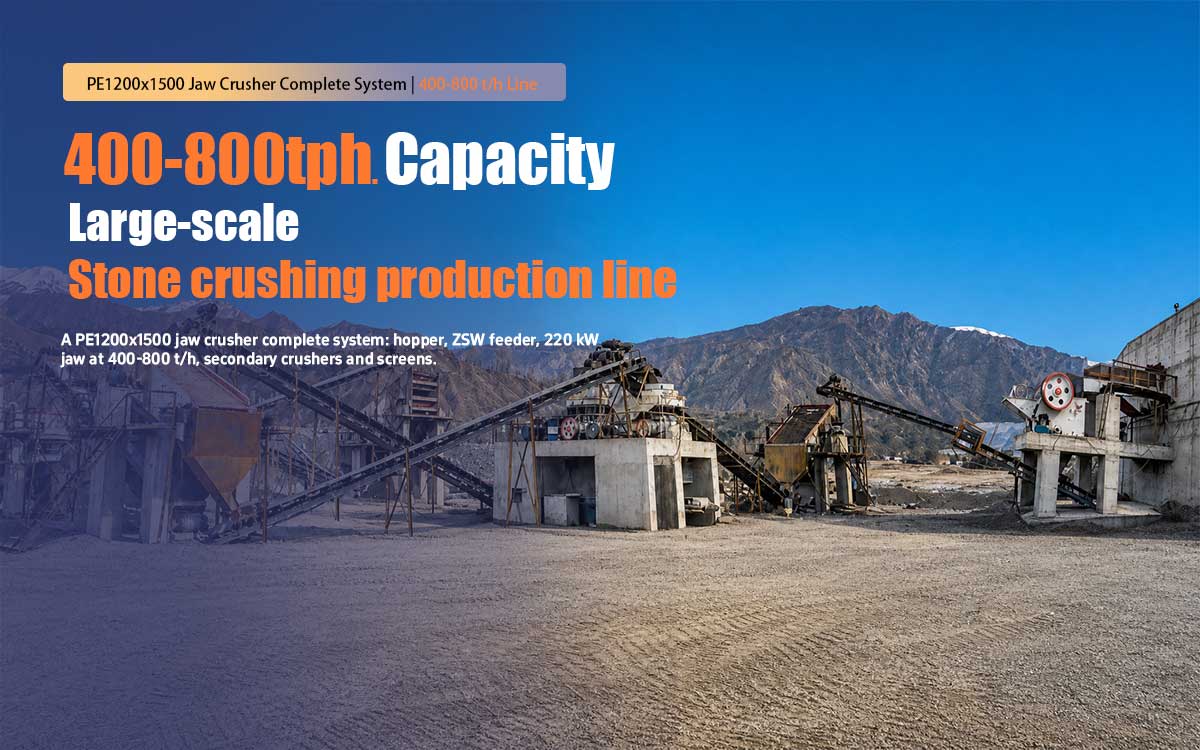
◦ Results: The entire production line achieved a throughput capacity of 500 tons per hour. The finished aggregates featured precise gradation and low fines content, fully meeting the rigorous standards for high-grade construction materials—a success that enabled the client to secure orders within the premium market segment.
Recommended Related Equipment
A complete crushing and screening system relies on the synergistic operation of various interconnected equipment components. In addition to our core mining vibrating screens, we also recommend the following key equipment to help you assemble a highly efficient production line:
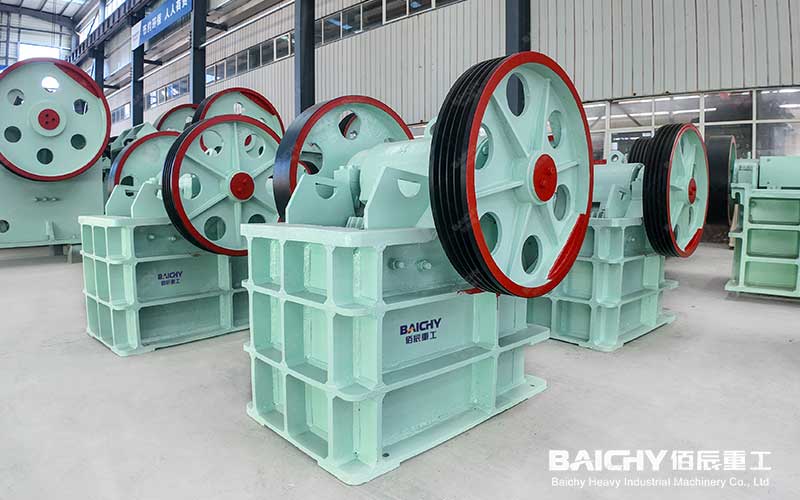
1. Jaw Crusher: Acting as the "workhorse" of primary crushing, it processes large blocks of raw ore, providing material of the appropriate particle size for subsequent screening and crushing stages.
2. Cone Crusher: Used for the medium and fine crushing stages, it produces high-quality aggregates with excellent particle shape. When paired with a vibrating screen to form a closed-circuit loop, it ensures precise control over the final product's particle size.
3. Sand Making Machine (Vertical Shaft Impact Crusher): Specifically designed for the production of manufactured sand. When paired with high-frequency vibrating screens or dewatering screens, it allows for precise control over the fineness modulus and stone powder content of the finished sand product.
Frequently Asked Questions (FAQ)
Q1: How do I choose between a circular vibrating screen and a linear vibrating screen?
A1: The choice depends primarily on your specific screening objective and the characteristics of the material being processed. Circular vibrating screens generate strong throwing forces, making them better suited for grading coarse-to-medium-grained materials such as crushed stone and ores. Linear vibrating screens feature a straight-line material trajectory, making them ideal for the dewatering, desliming, desanding, or precision screening of fine-grained and powdery materials.
Q2: What should I do if the vibrating screen mesh frequently gets damaged or clogged?
A2: First, verify that the screen mesh material is compatible with the characteristics of your material (e.g., corrosiveness, abrasiveness); upgrading to polyurethane, rubber, or stainless steel screen panels may offer greater durability. To address clogging, you can install screen-cleaning devices (such as a bouncing ball system) or adjust the vibration parameters (such as amplitude and frequency). For wet or sticky materials, consider heating the screen surface or opting for a flip-flow screen.
Q3: How can I mitigate excessive noise and dust generated during the vibrating screen's operation?
A3: To reduce noise, select a vibrating motor with a low-noise design and install vibration-damping pads beneath the equipment's base. Dust issues can be resolved by installing sealing rubber strips at the feed and discharge ports, as well as along the joints of the screen box side panels. Alternatively, you can enclose the entire unit within a sealed hood and connect it to a dust extraction duct system to achieve dust suppression at the source.