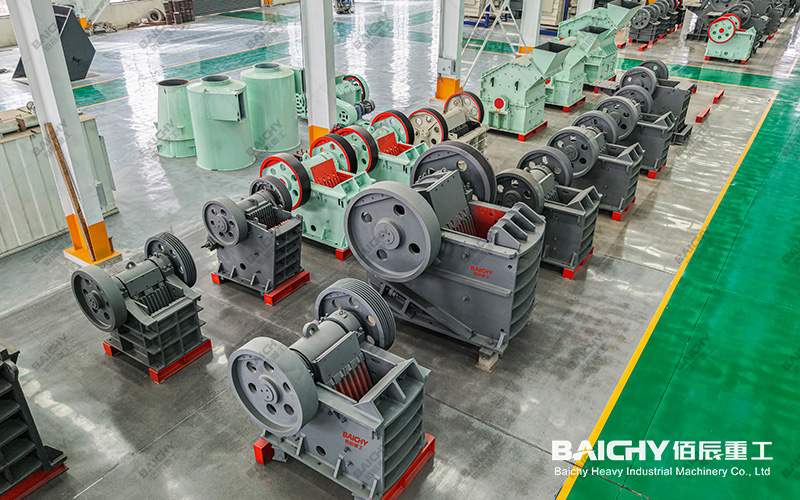
Mining Jaw Crusher
The Cornerstone of Efficient Primary Crushing: A Comprehensive Analysis of Mining Jaw Crushers
In the initial stages of mining operations, stone processing, and large-scale infrastructure projects, the mining jaw crusher plays a pivotal role. Serving as the "first gateway" and "critical choke point" of any crushing production line, its performance directly determines the processing efficiency of subsequent stages and the ultimate quality of the final product. This article delves deeply into this classic piece of equipment, offering detailed insights to serve as a comprehensive reference for your equipment selection needs.
I. What is a Mining Jaw Crusher?
The mining jaw crusher—colloquially known as the "Tiger's Mouth"—is a robust crushing machine designed to perform primary (coarse) or secondary (medium) crushing operations by utilizing the compressive and bending forces exerted by two jaw plates upon the material. Characterized by its sturdy construction, its operating principle is both simple and highly efficient: a movable jaw periodically advances toward and retracts away from a fixed jaw. As ore enters the crushing chamber, it is fractured through a combined action of compression, splitting, and bending; material that meets the specified size requirements is then discharged through the outlet located at the bottom of the machine.
It is particularly well-suited for processing a wide variety of ores and rocks with a compressive strength not exceeding 320 MPa—such as granite, basalt, river pebbles, iron ore, and copper ore—making it the veritable "workhorse" of mining crushing operations.
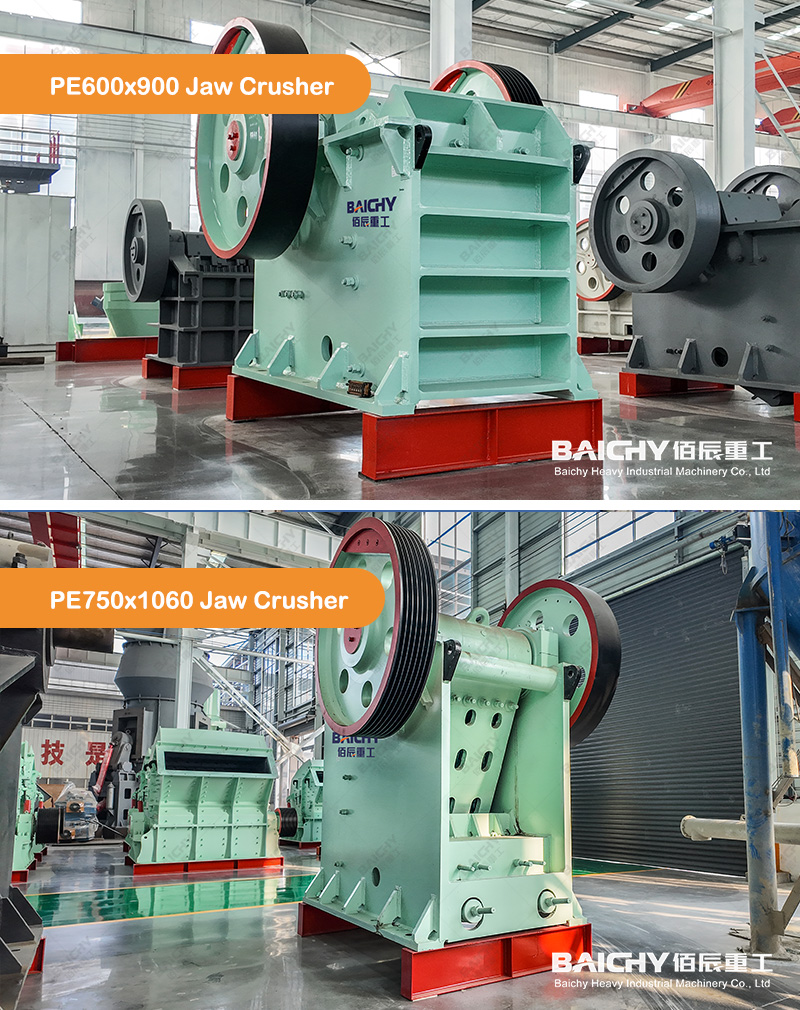
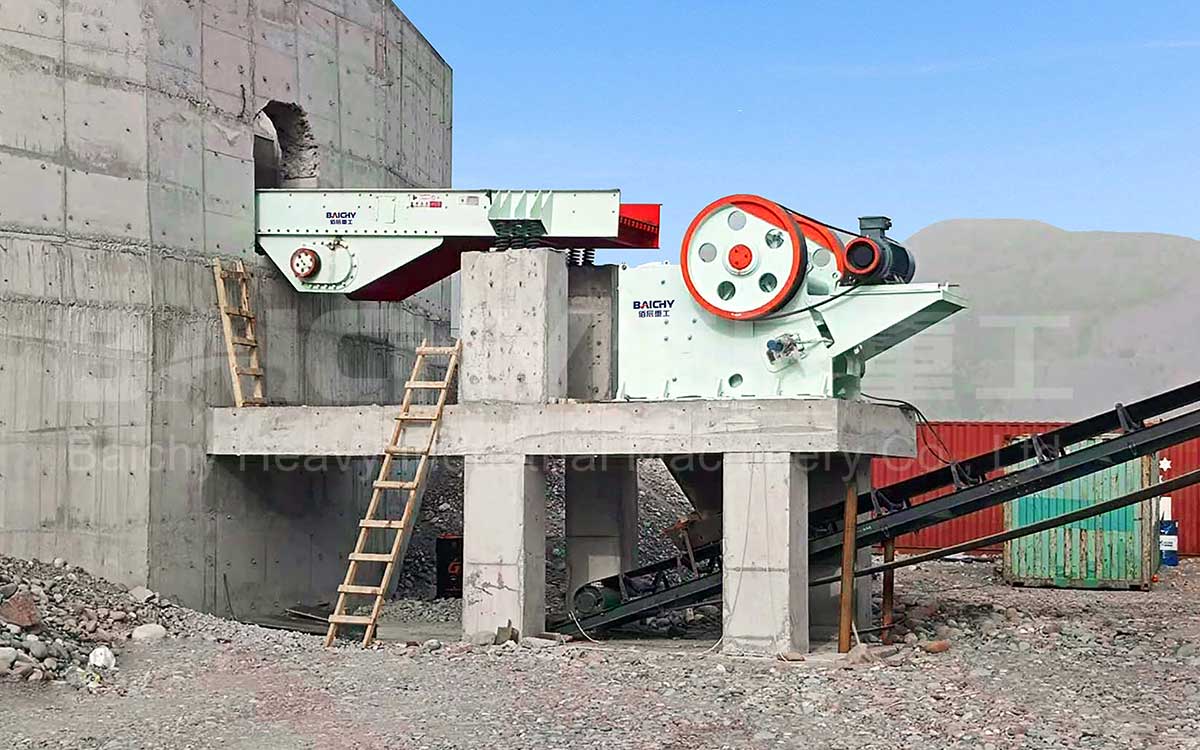
PE600x900 and PE750x1060 Jaw Crusher
II. Core Application Scenarios
• Primary Crushing (Coarse Crushing): At the extraction sites of metallic and non-metallic mines, the mining jaw crusher typically serves as the initial crushing device, reducing large blocks of raw ore—recovered after blasting—to a particle size suitable for feeding into the next stage of crushing equipment (e.g., a cone crusher).
• Stone Production Lines: In the production of sand and gravel aggregates, it is employed to perform the initial crushing of mountain rock or large river stones, thereby providing raw material feedstock for sand-making machines or secondary crushing stages.
• Construction Waste Processing: Specially designed jaw crushers can be utilized to crush construction waste—such as concrete blocks and masonry rubble—facilitating their recycling and resource utilization.
• Other Industrial Fields: It is also applied across various industries—including metallurgy, chemical manufacturing, and building materials—to perform the preliminary crushing of raw materials.
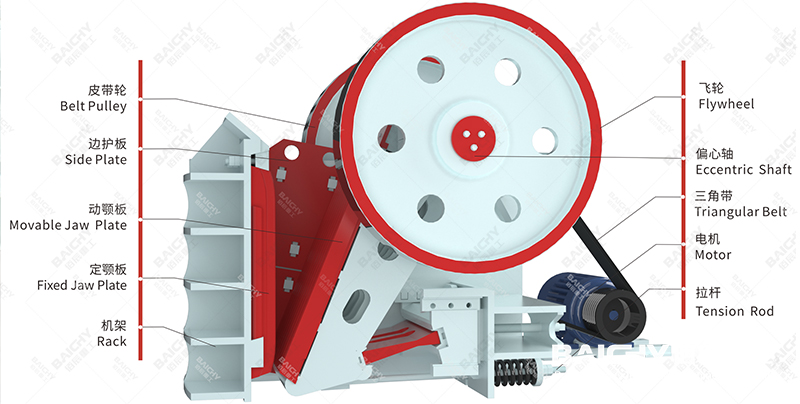
Mining Jaw Crusher Structural Diagram
III. Core Advantages of the Equipment
Compared to other types of crushers, the mining jaw crusher possesses distinct and irreplaceable advantages:
1. Robust Structure and High Durability: Featuring an integral steel frame structure, a heavy-duty eccentric shaft, and high-manganese steel jaw plates, the equipment ensures long-term, stable operation even under harsh working conditions.
2. Strong Adaptability and Wide Processing Range: Capable of processing materials of varying hardness, moisture levels, and viscosity; it places minimal requirements on material moisture content and is highly resistant to clogging.
3. High Crushing Ratio and Efficiency: The crushing chamber is deep and free of dead zones, offering strong feed intake capabilities and high throughput; it can effectively reduce large blocks of material to medium-sized particles in a single pass.
4. Simple Maintenance and Low Operating Costs: Characterized by a simple structure, the machine is easy to operate and maintain. Key wear parts (such as jaw plates) are easily replaceable, effectively reducing long-term operating costs.
5. Safe and Reliable: Equipped with an advanced tramp iron protection device, the system automatically releases when uncrushable objects (such as iron blocks) enter the crushing chamber, thereby preventing damage to the equipment.
IV. Overview of Key Performance Parameters
Different models of mining jaw crushers are designed to suit production requirements of varying scales.
Below is a reference guide to the specifications for select models within our PE series:
| Model | Max. Feed Size (mm) | Discharge Opening Adjustment Range (mm) | Processing Capacity (t/h) | Motor Power (kW) |
| PE-600×900 | 500 | 65–160 | 50–160 | 55–75 |
| PE-750×1060 | 630 | 80–140 | 110–320 | 90–110 |
| PE-900×1200 | 750 | 95–165 | 220–450 | 132–160 |
| PE-1200×1500 | 1020 | 150–300 | 400–800 | 160–220 |
Note: The processing capacities listed above may vary depending on material properties, feeding methods, and discharge opening settings.
V. Case Study Sharing
Case Study: A Large-Scale Granite Quarry in Shandong
This quarry previously utilized outdated crushing equipment, resulting in low output, high energy consumption, and a high proportion of flaky and needle-like particles in the final product. In 2023, our company installed a PE-1200×1500 mining jaw crusher at the head of their production line.
• Results: The average daily throughput of raw ore increased by approximately 35%. The discharge particle size was uniform, perfectly meeting the feed requirements for the downstream cone crusher. The equipment operated stably; the service life of wear parts was extended by 40%; and overall operating costs decreased significantly. The client was highly satisfied with their return on investment.
VI. Recommended Related Equipment
An efficient crushing production line requires the collaborative operation of various machines—not just an excellent mining jaw crusher. We recommend the following:
1. Single-Cylinder Hydraulic Cone Crusher: Serving as a secondary or tertiary crushing device, this machine is suitable for crushing high-hardness ores. It produces a higher proportion of cubical particles, making it an ideal choice for the production of high-quality aggregates.
2. Multi-cylinder Hydraulic Cone Crusher: Building upon the single-cylinder design, this machine further optimizes the laminated crushing process. It produces finished products with superior particle shape and allows for precise control over fine powder content, making it ideal for ultra-fine crushing operations with extremely high product quality requirements.
3. Vertical Shaft Impact Crusher (VSI Sand Maker): Used for "stone-on-stone" or "stone-on-iron" crushing applications, this is the core equipment for producing manufactured sand. The resulting sand features a rounded particle shape and a continuously adjustable gradation.
4. Circular Vibrating Screen: Used for the classification and screening of crushed materials, this ensures that the final products meet various size specifications and serves as a critical link in guaranteeing product quality.
VII. Frequently Asked Questions (FAQ)
Q1: How often do the jaw plates (liners) of a jaw crusher typically need to be replaced?
A1: The lifespan of jaw plates depends on the hardness and abrasiveness of the material being crushed, as well as the equipment's production volume. Typically, when crushing medium-hardness granite, a set of high-manganese steel jaw plates can be used continuously for 3 to 6 months. It is recommended to regularly inspect the jaw plates for wear; if production output drops significantly or the discharge particle size increases, the plates should be adjusted or replaced promptly.
Q2: Is it normal for the equipment to generate significant vibration and noise during operation?
A2: It is normal for a mining jaw crusher to generate a certain amount of vibration and noise during operation, as its working principle involves immense compressive forces. However, if the vibration becomes abnormally severe or is accompanied by unusual metallic knocking sounds, it may indicate loose anchor bolts, damaged bearings, or the entry of uncrushable foreign objects into the crushing chamber; in such cases, the machine must be shut down immediately for inspection.
Q3: How do I select the appropriate model based on my production capacity requirements?
A3: Model selection requires a comprehensive assessment of four core factors:
① Material characteristics (hardness, moisture content, and clay content);
② Maximum feed size;
③ Desired final product particle size;
④ Target hourly production output. We recommend providing us with detailed material samples and your specific production requirements; our engineers will then provide you with a professional model selection proposal and production line configuration plan.