Common Tertiary Crusher
The tertiary crusher is a critical piece of equipment in industries such as mining, construction materials, and metallurgy, serving to achieve the fine crushing of materials. However, during continuous, high-load operation, the equipment inevitably encounters various issues. This article systematically analyzes common faults associated with tertiary crushers—such as material clogging, abnormal noise, bearing overheating, and uneven discharge—and provides a set of practical, actionable troubleshooting and resolution methods. These solutions aim to help you quickly pinpoint problems, minimize unplanned downtime, and ensure the stable and efficient operation of your production line.
I. Overview and Application Advantages of Tertiary Crushers
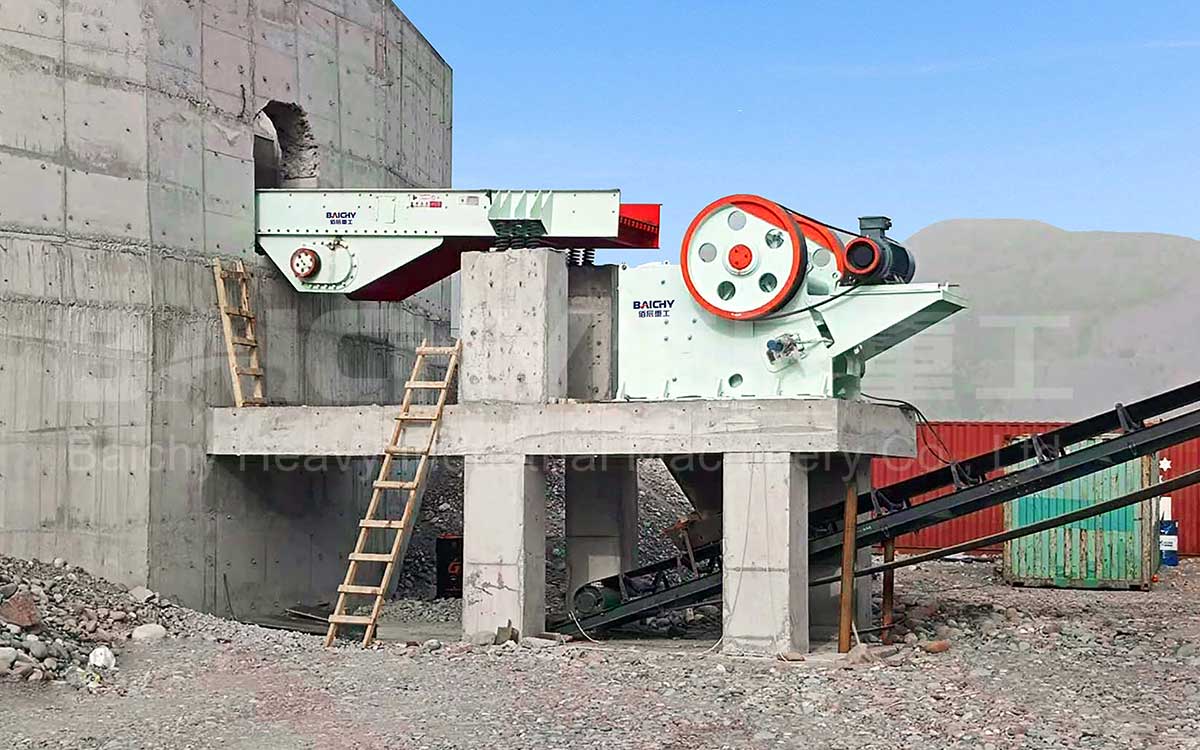
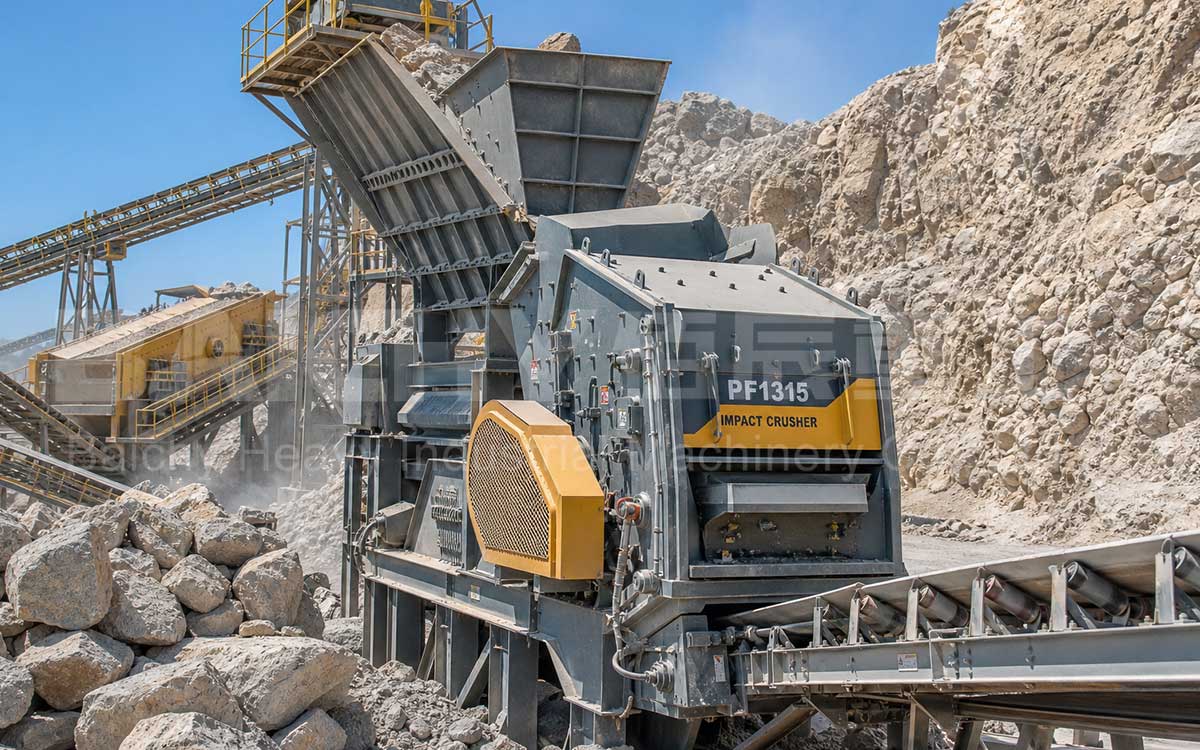
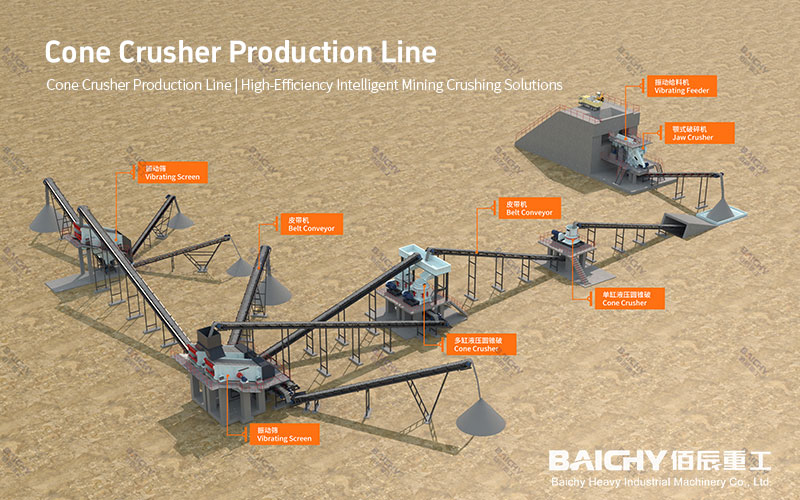
A tertiary crusher typically refers to the equipment responsible for the third stage of crushing within a crushing production line—examples include fine jaw crushers, cone crushers, or impact crushers. Its primary objective is to further reduce materials—which have already undergone coarse and secondary crushing—to the required fineness, thereby meeting the specific particle size requirements for subsequent grinding processes or direct end-use applications.
Key application scenarios include:
• Sand and Aggregate Production: Preparing high-standard sand and aggregate materials for high-speed railways, highways, and general construction projects.
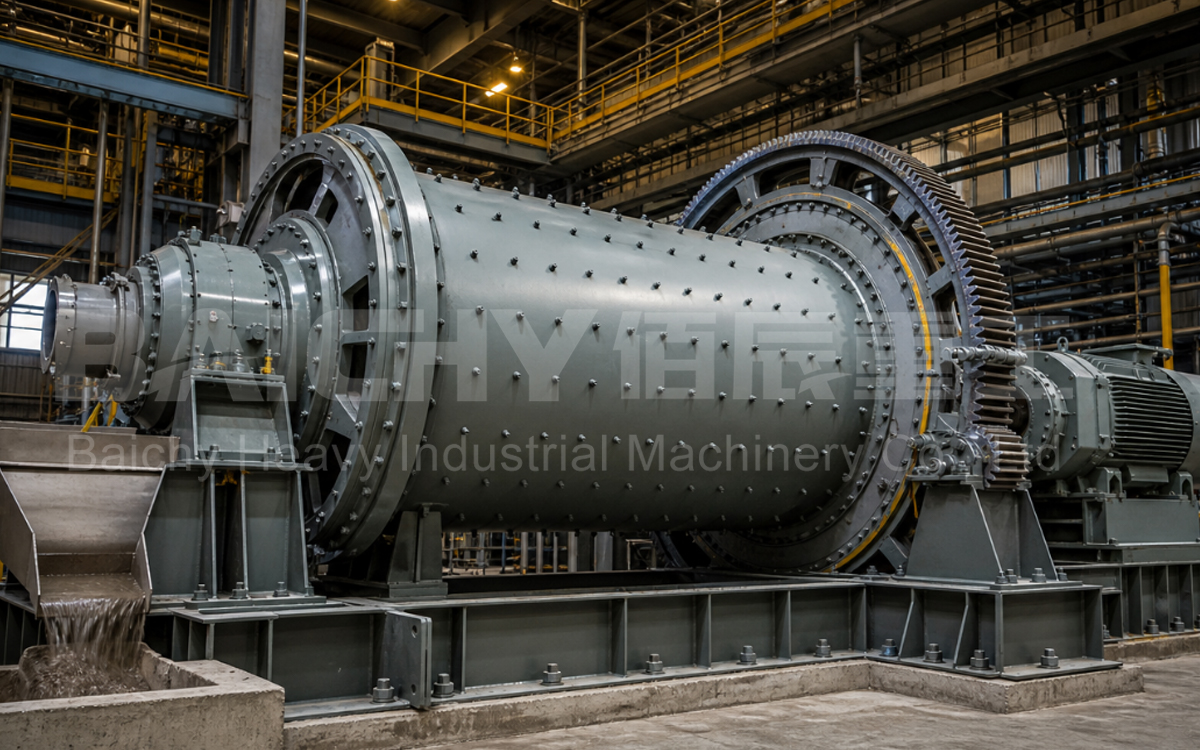
• Metal Ore Beneficiation: Providing properly sized feed material for ball mills, thereby enhancing grinding efficiency.
• Construction Materials Industry: Pre-crushing of cement raw meal and clinker.
• Metallurgical Auxiliaries: Preparing powdered raw materials required for the production of refractory materials and metallurgical fluxes.
Compared to simpler crushing workflows, the adoption of a specialized tertiary crushing process offers significant advantages:
1. Superior Product Shape: The resulting aggregate particles exhibit excellent shape characteristics with low content of needle-like or flaky particles, thereby enhancing the market value of the aggregate products.
2. High System Throughput: Multi-stage crushing allows for a rational distribution of the crushing ratio across stages, reducing the load on inPidual machines and resulting in higher overall throughput and efficiency.
3. Economical Energy Consumption: By optimizing the crushing chamber profile and utilizing the principle of inter-particle crushing (laminated crushing), the process achieves a "crush more, grind less" outcome, thereby reducing overall energy consumption.
4. Enhanced Operational Stability: Specialized tertiary crushing equipment features more precise engineering and is designed to operate effectively under full-chamber conditions, resulting in superior stability and reliability.
II. Common Faults, Causes, and Troubleshooting Methods for Tertiary Crushers
Presented below are the most common fault phenomena observed in the field regarding tertiary crushers, accompanied by in-depth analyses of their root causes and step-by-step procedures for troubleshooting and resolution.
1. Fault Material Clogging in the Crushing Chamber
• Fault Symptoms: Material accumulates at the feed inlet or within the crushing chamber; the main motor current rises abnormally, potentially leading to the equipment stalling and shutting down.
• Causes:
◦ The feed particle size exceeds the maximum limit permitted by the equipment.
◦ The feed contains an excessive amount of sticky material with high moisture and/or clay content.
◦ The feeding rate is too fast or uneven, resulting in excessive instantaneous load.
◦ The discharge opening is improperly adjusted, causing poor material discharge and subsequent clogging.
• Troubleshooting and Resolution:
1. Immediately shut down the machine, cut off the power supply, and clear the clogged material.
2. Inspect the recent feed material to ensure its particle size and moisture content comply with equipment requirements (refer to the specifications).
3. Check and adjust the size of the discharge opening to ensure it falls within the appropriate operating range.
4. When resuming operation, ensure the feed is supplied evenly and continuously, avoiding intermittent or fluctuating feeding rates.
2. Fault Abnormal Noises During Operation
• Fault Symptoms: During operation, the equipment produces sharp metallic impact sounds, grinding noises, or irregular dull thumping sounds.
• Causes:
◦ Uncrushable foreign objects (such as iron blocks, drill bits, etc.) have entered the crushing chamber.
◦ The fastening bolts for the liners or other equipment connection components have become loose or broken.
◦ The moving cone or fixed cone liners are severely worn or have become dislodged, resulting in direct metal-to-metal contact.
• Troubleshooting and Resolution:
1. After shutting down, thoroughly inspect the crushing chamber and remove any foreign objects.
2. Check the tightness of all liners and guard plates; tighten or replace bolts as required.
3. Measure the degree of liner wear; if wear exceeds the allowable limit (typically when the remaining thickness is less than one-third of the original thickness), the moving cone and fixed cone liners must be replaced as a complete set to maintain balance.
3. Fault Abnormal Rise in Bearing Temperature
• Fault Symptoms: The temperature of the bearing housing exceeds 70°C—feeling hot to the touch—and may be accompanied by abnormal noises and increased vibration.
• Causes of Failure:
◦ Poor lubrication (insufficient, excessive, or deteriorated lubricant; or incorrect lubricant grade).
◦ Improper bearing installation, wear, or damage.
◦ Excessively tight belts, resulting in excessive additional load.
◦ Prolonged operation under overload conditions or poor heat dissipation.
• Troubleshooting and Resolution:
1. Check the lubrication system: Verify the lubricant level and quality; replace the lubricant with fresh oil of the specified grade at the prescribed intervals.
2. Inspect bearing assembly: Verify proper installation and check for signs of wear or pitting; replace the bearings if necessary.
3. Adjust belt tension: Set the belt tension to the appropriate level.
4. Ensure adequate ventilation and heat dissipation: Verify that the equipment has proper airflow for cooling and avoid operating under overload conditions.
4. Failure Uneven Discharge Particle Size
• Symptoms: The crushed product contains a mixture of excessively coarse particles and excessively fine fines, resulting in a discontinuous particle size distribution.
• Causes of Failure:
◦ Uneven wear of the liner plates, causing a deformation in the geometry of the crushing chamber.
◦ Malfunction of the discharge opening adjustment mechanism, or a discrepancy between the actual opening size and the scale indication.
◦ Excessive fluctuation in the particle size distribution of the feed material, or uneven feeding (material biased toward one side).
• Troubleshooting and Resolution:
1. Shut down and inspect the liner plates: Check for wear, paying particular attention to the lower sections; replace the liners if necessary.
2. Recalibrate and adjust the discharge opening: Ensure that the opening is set to the correct, specified position.
3. Optimize the feeding system: Utilize a steady-flow feeder to ensure that material is fed into the crushing chamber continuously, uniformly, and centrally.
III. Reference Table for Key Operating Parameters
To ensure the tertiary crusher operates at its optimal state, the following core parameters should be closely monitored during daily operations:
| Parameter Name | Normal Range/Standard | Inspection Frequency | Action for Abnormalities |
| Bearing Temperature | ≤ 70°C | Twice per shift | If exceeding 70°C, shut down the machine to inspect lubrication and bearing condition. |
| Main Motor Operating Current | 85%–95% of Rated Value | Continuous Monitoring | If consistently too high (potential material blockage) or too low (insufficient feed), make necessary adjustments. |
| Vibration Level | ≤ 4.5 mm/s | Once daily | If significantly increased, inspect fasteners, liners, and the foundation. |
| Lubricating Oil Temperature | Return Oil Temp ≤ 50°C | Once per shift | If temperature differential is excessive, inspect the cooling system or oil quality. |
| Discharge Particle Size | Meets Process Requirements | Sample every 4 hours | If out of specification, inspect liner wear and the discharge opening. |
IV. Prevention is Better than Cure: Key Points for Daily Maintenance
The most effective method to prevent malfunctions in the tertiary crusher is to strictly adhere to a preventive maintenance schedule.
Key points include:
• Regular Lubrication: Use the specified grade of lubricating oil and replace it according to the prescribed schedule.
• Fastener Inspection: Weekly check the tightness of anchor bolts for the main unit and motor, as well as all connection points.
• Wear Parts Management: Regularly measure the thickness of wear parts (such as liners), establish a replacement forecast, and prevent sudden shutdowns.
• Cleaning and Record-Keeping: Keep the equipment clean—particularly the lubrication system and heat dissipation components—and maintain comprehensive records of operating data and maintenance history.
V. Recommended Ancillary Equipment
To achieve efficient and stable tertiary crushing, we recommend the following market-proven equipment combination:
1. HP Series Multi-Cylinder Hydraulic Cone Crusher
◦ Reasons for Recommendation: Utilizes the principle of inter-particle crushing (lamination) to produce excellent discharge particle shape; features fully automatic hydraulic control for convenient cavity clearing, adjustment, and tramp iron protection; and is the ideal choice for the fine crushing of high-quality aggregates and minerals.
2. CI Series Impact Crusher
◦ Recommended for: Features a heavy-duty rotor design, a high crushing ratio, and produces cubical-shaped products. It is particularly suitable for the fine crushing and shaping of materials with medium-to-low hardness, and offers ease of maintenance.
3. VSI6X Vertical Shaft Impact Crusher
◦ Recommended for: Combines "stone-on-stone" and "stone-on-iron" crushing modes, serving dual functions of crushing and sand shaping. The fineness modulus (gradation) of the finished sand is adjustable, making it the core equipment for manufactured sand production lines.
Comprehensive Troubleshooting Guide for Tertiary Crushers
VI. Frequently Asked Questions (FAQ)
Q1: What is considered a normal operating temperature for the bearings in a tertiary crusher? What should be done if the temperature suddenly rises?
A1: Under normal operating conditions, the bearing temperature should remain stable between 50°C and 70°C. If the temperature suddenly and sharply increases, the machine must be shut down immediately. First, check the level and quality of the lubricating oil; second, verify that the cooling water system is flowing freely; and finally, check the tension of the drive belts and ensure the equipment is not overloaded. If these self-checks do not resolve the issue, contact a professional technician to inspect the bearings for potential damage.
Q2: How can one determine if a crusher's liner plates (wear parts) need to be replaced?
A2: Focus on two main indicators: First, the degree of wear—when the thinnest section of the liner plate has worn down to two-thirds (2/3) of its original thickness, plans for replacement should be initiated. Second, the discharge granularity—if the required output size cannot be achieved even after adjusting the discharge opening to its minimum setting, it indicates that the liner plates are excessively worn and must be replaced.
Q3: What specific precautions should be taken during the initial operation of new equipment?
A3: For new equipment—or equipment that has recently undergone a major overhaul—it is mandatory to conduct a no-load trial run (lasting at least 2 hours) followed by a light-load trial run (gradually increasing the load over a period of 8 to 24 hours). During this period, pay close attention to checking for loose fasteners, monitoring the stability of the bearing temperature rise, and listening for any abnormal vibrations or noises. Once the break-in period is complete, it is essential to replace all lubricating oil and filter elements.
Summary
Mastering the troubleshooting methods for tertiary crushers is an essential skill for ensuring the continuous operation of a production line. From preventing material blockages to monitoring bearing temperatures, meticulous maintenance at every stage can significantly extend the equipment's service life and enhance overall operational efficiency. Remember: preventive maintenance is always more economical and effective than reactive repairs.
About of Baichy Heavy Industry
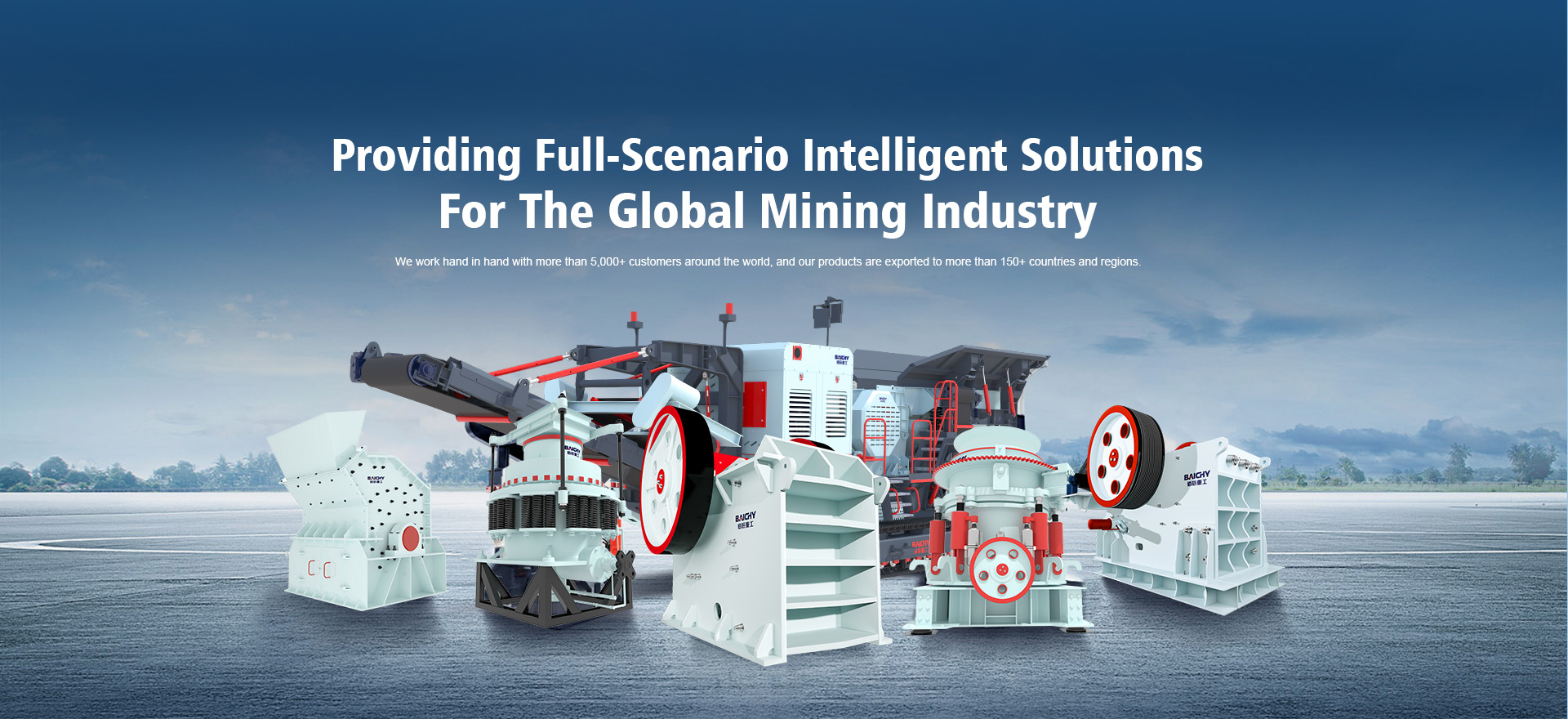
Baichy Heavy Industry is a high-tech mining equipment company integrating R&D, manufacturing, sales, and after-sales service. Focusing on crushing, grinding, and mineral processing equipment, we provide professional solutions to our customers. We are ISO9001:2015 、certified, and our products include mobile crushing palnts, crawler crushing plant, construction waste crushing plants, jaw crushers, sand making machines, cone crushers, fine crushers, grinding mills, ball mills, etc., all with reliable performance to meet diverse project needs.
Our advantages:
• Professional pre-sales support: Free project design and comprehensive solutions to help you accurately select the right equipment;
• Comprehensive on-site service: Providing installation guidance and worker training to ensure smooth equipment commissioning;
• Reliable after-sales guarantee: A complete after-sales system, timely response to technical inquiries and equipment maintenance, ensuring long-term stable operation.
To protect your rights, please contact us through the following official channels for professional service:
Official Website Customer Service
https://wa.me/+8615093222637
Email: [email protected]
We are committed to providing high-quality equipment and full-cycle services to deliver comprehensive intelligent solutions for the global mining industry!