
Tertiary Crushing Process in Mining & Quarry Operations
Tertiary crushing constitutes the core operation in mining and quarrying production. Immediately following secondary crushing, it undertakes the critical task of reducing materials to their final product size. A well-designed and efficiently operating tertiary crushing process acts as the "finishing workshop" of the entire crushing line; its performance directly determines the final product's particle size distribution, particle shape quality, as well as the overall system's throughput and economic returns. This article will provide an in-depth analysis of the complete workflow and key equipment selection criteria for modern tertiary crushing, while also sharing our company's specialized solutions in this field.
A Detailed Explanation of the Complete Tertiary Crushing Process
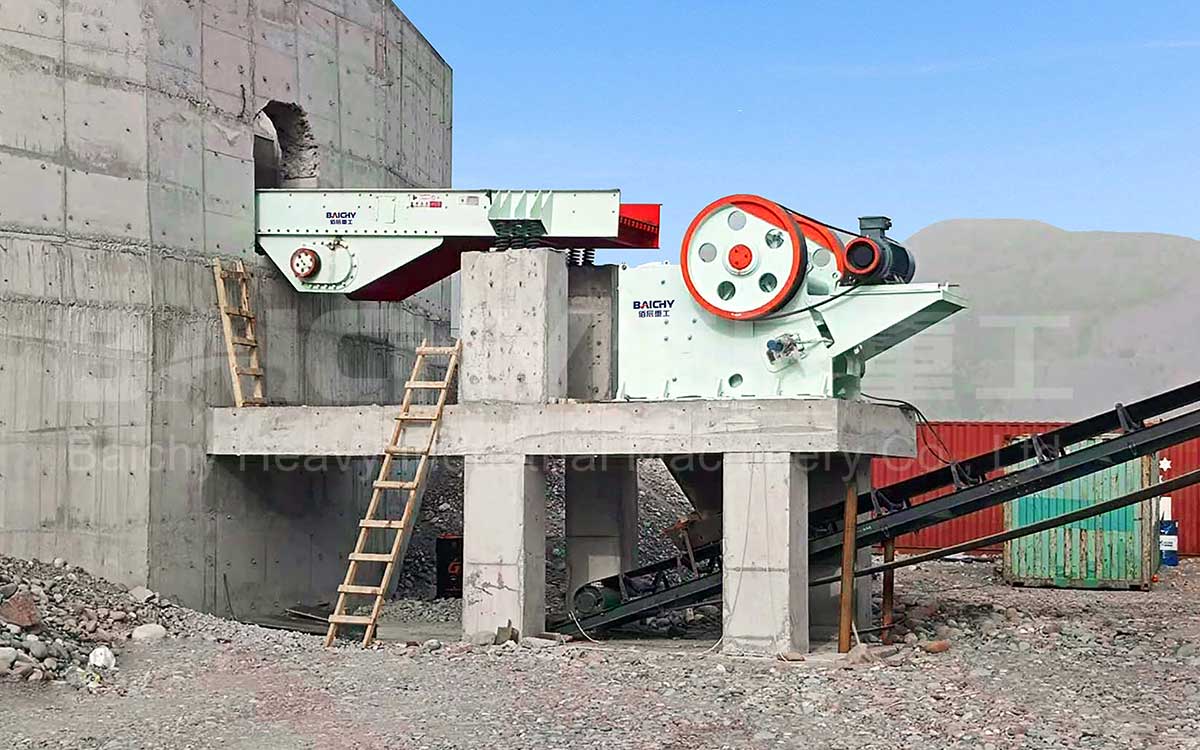
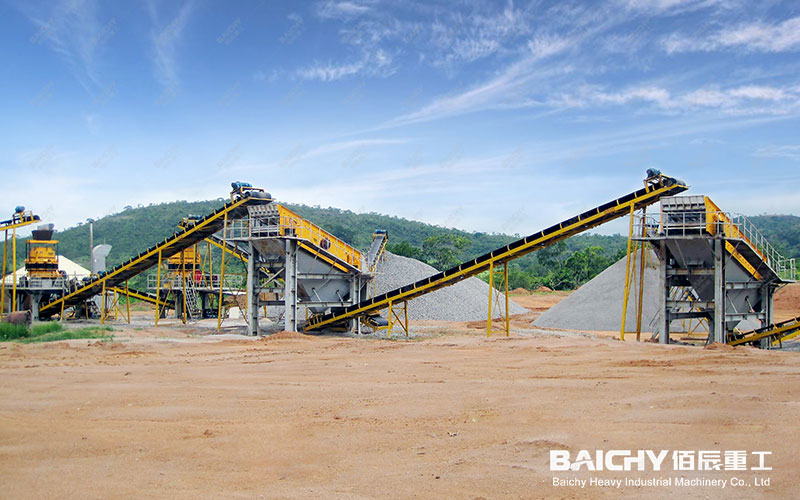
A standard tertiary crushing process typically serves as the final stage within a "three-stage, one-closed-circuit" configuration, establishing a highly efficient circulatory system. Its primary objective is to further reduce materials—which have already undergone secondary crushing (typically with a particle size of ≤80mm)—to specific target specifications (e.g., ≤31.5mm, ≤20mm, or even finer manufactured sand).
Tertiary Crushing Process in Mining & Quarry Operations
Process Workflow Steps
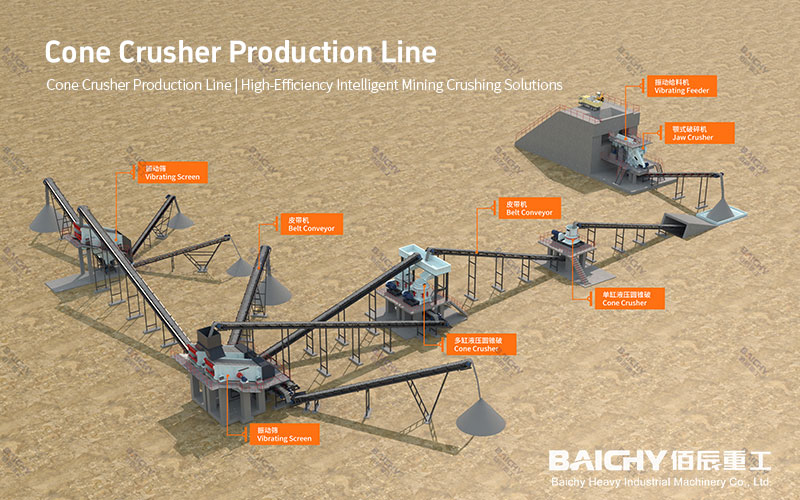
1. Feeding and Distribution: Materials processed during secondary crushing are conveyed via belt conveyors and fed uniformly into the hopper of the tertiary crusher. Consistent and even feeding is the foundation for ensuring high-efficiency crushing in the subsequent stages.
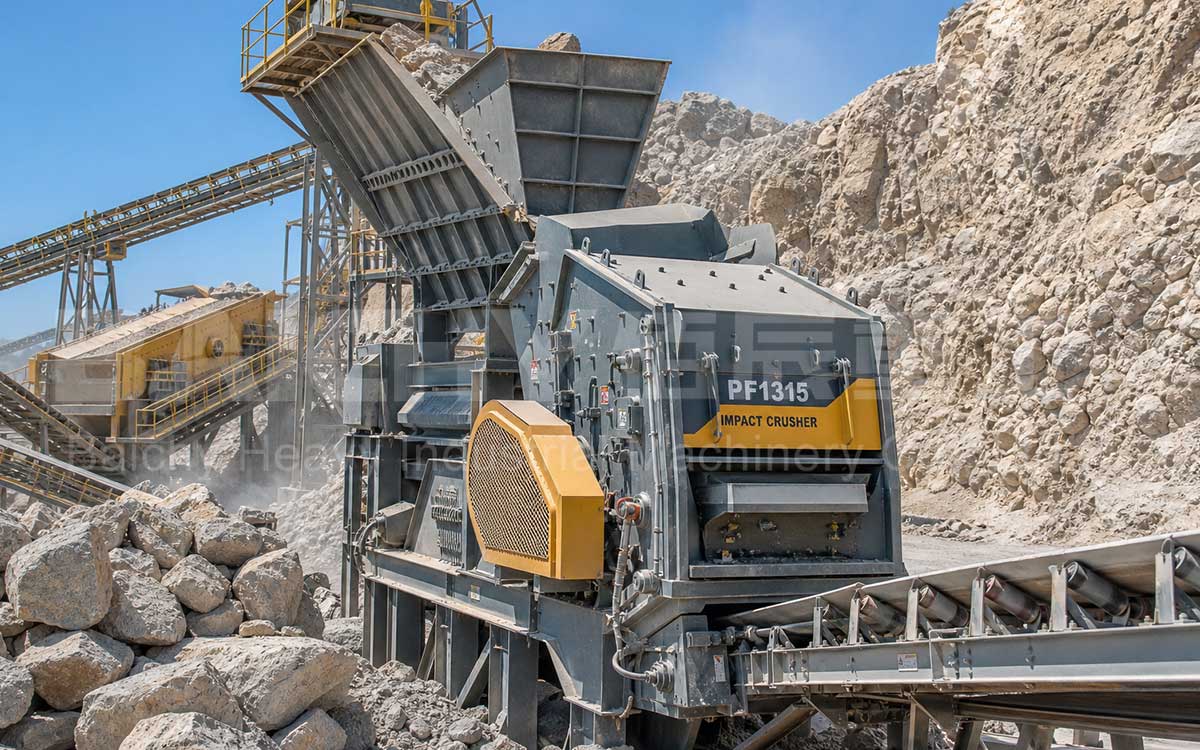
2. Fine Crushing Operation: The materials enter the core equipment—the tertiary crusher (such as a multi-cylinder hydraulic cone crusher, impact crusher, or vertical shaft impact crusher)—where they undergo fine reduction through powerful impact, compression, or grinding forces.
3. Screening and Classification: The mixture of crushed materials is transported to vibrating screens for rigorous classification. This serves as the critical "quality control checkpoint" for ensuring the quality of the final product.
4. Closed-Circuit Circulation: Coarse materials retained on the screens—which do not meet the required particle size specifications (known as "overs" or "return feed")—are conveyed back to the tertiary crusher via return belt conveyors for re-crushing. This establishes a closed-circuit loop, guaranteeing that 100% of the output meets the required particle size standards.
5. Finished Product Output: The qualified finished products passing through the screens (which can be classified into various specifications depending on the mesh size used) are directed to their respective finished product stockpiles or conveyed to the next downstream process (such as sand washing or dust removal).
Comparison of Key Parameters for Tertiary Crushing Equipment
| Equipment Type | Applicable Material Hardness | Product Particle Shape Characteristics | Typical Discharge Size Range | Key Advantages |
| Multi-Cylinder Hydraulic Cone Crusher | Medium-to-High Hardness and Above (Granite, River Pebbles, Iron Ore) | Uniform particle shape; low content of needle-like and flaky particles | 5–40 mm | Excellent wear resistance; stable operation; suitable for large-scale hard rock crushing |
| Impact Crusher | Medium-to-Low Hardness (Limestone, Sandstone, Construction Waste) | Excellent particle shape (cubic); minimal stone dust | 10–50 mm | Superior product particle shape; easy maintenance; high crushing ratio |
| Vertical Shaft Impact Crusher (VSI) | Various Hardness Levels (Commonly used for sand making and shaping) | Rounded particle shape; adjustable gradation | 0–5 mm (Sand Making), 5–10 mm | Combines crushing, shaping, and sand-making functions; multi-purpose machine |
Application Scenarios: Comprehensive Coverage from Aggregates to Mineral Processing
Production of Construction Aggregates and Manufactured Sand
In the field of quarrying for the production of construction gravel and manufactured sand, the tertiary crushing process is critical for ensuring that finished products meet the high-standard construction requirements of high-rise buildings, high-speed railways, highways, and similar projects. For instance, in a limestone processing line, impact crushers or vertical shaft impact crushers are frequently selected for the tertiary stage to produce high-quality aggregates with superior particle shapes.
Processing of Metallic and Non-Metallic Minerals
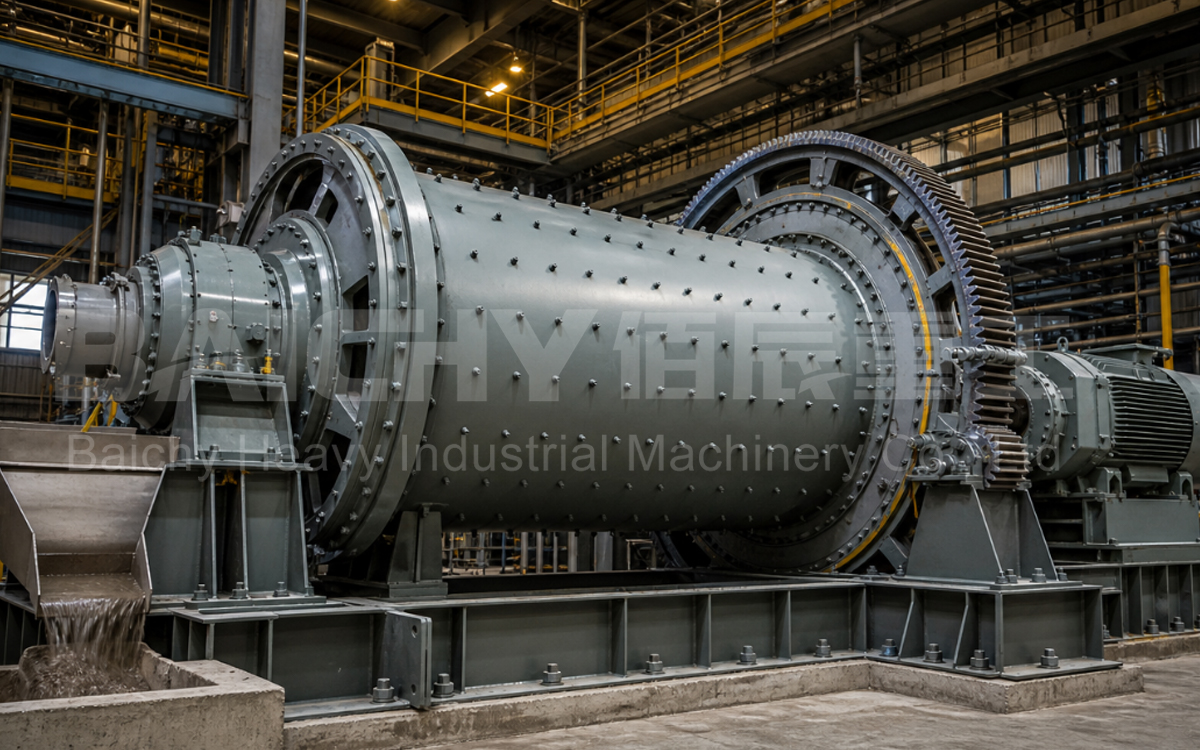
In the mining sector—specifically prior to the beneficiation of ores such as iron ore and copper ore—raw materials must be crushed to a fineness suitable for feeding into ball mills (typically ≤15 mm). In this context, tertiary crushing operations often utilize cone crushers, which feature exceptional wear resistance. These machines effectively achieve fine crushing while simultaneously minimizing over-crushing, thereby creating optimal conditions for subsequent grinding and beneficiation processes.
Advantages of Our Tertiary Crushing Solutions
1. High-Efficiency and Energy-Saving Design: Our equipment employs the principle of inter-particle crushing (laminated crushing) and features optimized crushing chamber profiles. This design allows for increased throughput at equivalent power consumption levels, thereby reducing the cost per ton of processed material.
2. Intelligent Control System: Equipped with an advanced automatic control system (such as ASRi), it monitors parameters—including spindle position, power consumption, and discharge opening settings—in real-time. This enables automatic adjustment to maintain optimal production status.
3. Exceptional Wear Resistance and Reliability: Key components are manufactured using high-strength alloy materials and subjected to specialized heat treatment processes. This ensures a long service life, minimizes downtime for component replacement, and guarantees production continuity in mining and quarrying operations.
4. Flexible Configuration Options: Based on your specific material characteristics, capacity requirements, and finished product specifications, we offer customized design solutions ranging from standalone units to complete three-stage crushing process workflows.
Relevant Success Stories
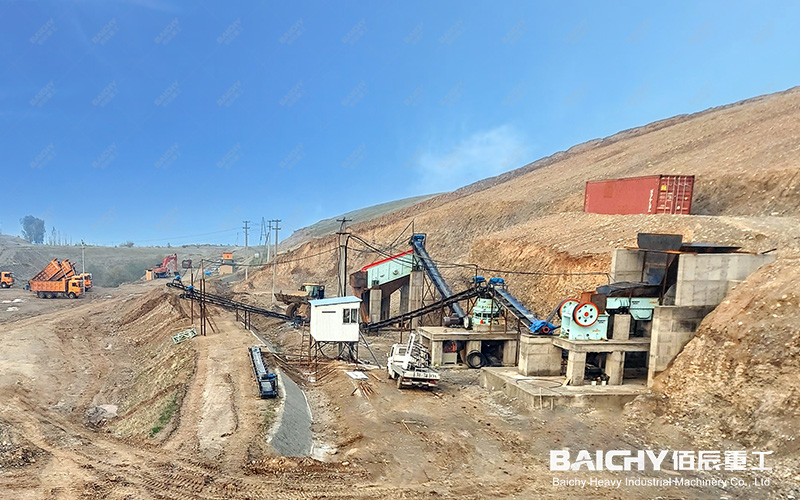
Aggregate Crushing Plant
Case Study 1: Large-scale Granite Quarry Project in East China
◦ Challenge: The original production line produced finished aggregates with a high content of needle-like and flaky particles, making it difficult to meet the stringent quality standards required by commercial concrete mixing plants.
◦ Solution: We implemented a process flow consisting of a "Jaw Crusher + Single-cylinder Cone Crusher (Secondary Crushing) + Our HPM Multi-cylinder Hydraulic Cone Crusher (Tertiary Crushing)." Thanks to its superior chamber design and hydraulic cavity-clearing function, our cone crusher significantly improved the particle shape of the finished aggregates.
◦ Results: The needle-like and flaky particle content in the finished aggregates was reduced from 12% to below 8%. System throughput increased by approximately 15%, and the client's ability to command a premium price for their products was significantly enhanced.
Case Study 2: Iron Ore Beneficiation Plant Upgrade Project in North China
◦ Challenge: The existing tertiary crushing equipment suffered from rapid wear and low efficiency; furthermore, the feed size entering the grinding mills was inconsistent, which negatively impacted the efficiency of the ball mills.
◦ Solution: We selected our GYS series high-performance hydraulic cone crushers to replace the outdated equipment and optimized the closed-circuit screening system.
◦ Results: The feed size entering the grinding mills was stabilized at below 12mm. The service life of the equipment's wear parts was extended by 40%, resulting in an overall improvement in the grinding and beneficiation efficiency of the plant.
Recommended Core Equipment
Based on the aforementioned processes, we recommend the following core equipment specifically designed for the tertiary crushing stage:
1. HP Series Multi-cylinder Hydraulic Cone Crusher: Engineered specifically for the fine crushing of hard rock, this machine features a high degree of intelligent automation and serves as the ideal choice for producing high-quality aggregates and for the fine crushing of metallic ores.
2. PFQ Series Powerful Vortex Impact Crusher: Suitable for medium-hard materials, this machine achieves the effect of "crushing replacing grinding." Its finished product particle shape is considered an industry benchmark, making it an excellent choice for the tertiary crushing of materials such as limestone.
3. VSI Series Vertical Shaft Impact Crusher: If your operation involves sand making or requires extremely high standards for aggregate particle shaping, this equipment is the unrivaled choice for simultaneously performing tertiary crushing and sand making/shaping.
Frequently Asked Questions (FAQ)
Q1: What are the differences and connections between tertiary crushing and sand making?
A1: Tertiary crushing primarily focuses on reducing materials to a target particle size (e.g., below 31.5 mm); its core function is "crushing." Sand making, conversely, involves further crushing and shaping small-sized stones into manufactured sand ranging from 0 to 5 mm; its core functions are "sand formation" and "shaping." A vertical shaft impact crusher can fulfill the roles of both tertiary crushing and sand making simultaneously, whereas cone crushers and impact crushers typically complete the tertiary crushing stage, after which a dedicated sand-making machine is used to produce sand.
Q2: How do I select the appropriate secondary crushing equipment based on my specific materials?
A2: The selection process depends primarily on the material's hardness, abrasiveness, and the required particle shape of the finished product. For high-hardness, highly abrasive materials (such as granite, basalt, or iron ore), a cone crusher is the preferred choice. For medium-to-low hardness materials (such as limestone or dolomite) where superior particle shape is desired, an impact crusher is more suitable. If the finished product requires a significant quantity of manufactured sand, priority should be given to a vertical shaft impact crusher.
Q3: What constitutes a reasonable recirculation ratio in a closed-circuit system? How is it controlled?
A3: A reasonable recirculation ratio (the ratio of returned material to new feed material) typically falls between 100% and 150%. A ratio that is too high increases equipment load and energy consumption, while a ratio that is too low may compromise the quality of the finished product. The key to control lies in selecting the appropriate screening area and screen mesh size, as well as adjusting the discharge opening of the tertiary crusher; through the coordinated operation of these components, the system can achieve a state of dynamic equilibrium.
About of Baichy Heavy Industry
Baichy Heavy Industry is a high-tech mining equipment company integrating R&D, manufacturing, sales, and after-sales service. Focusing on crushing, grinding, and mineral processing equipment, we provide professional solutions to our customers. We are ISO9001:2015 、certified, and our products include mobile crushing palnts, crawler crushing plant, construction waste crushing plants, jaw crushers, sand making machines, cone crushers, fine crushers, grinding mills, ball mills, etc., all with reliable performance to meet diverse project needs.
Our advantages:
• Professional pre-sales support: Free project design and comprehensive solutions to help you accurately select the right equipment;
• Comprehensive on-site service: Providing installation guidance and worker training to ensure smooth equipment commissioning;
• Reliable after-sales guarantee: A complete after-sales system, timely response to technical inquiries and equipment maintenance, ensuring long-term stable operation.
To protect your rights, please contact us through the following official channels for professional service:
Official Website Customer Service
https://wa.me/+8615093222637
Email: [email protected]
We are committed to providing high-quality equipment and full-cycle services to deliver comprehensive intelligent solutions for the global mining industry!