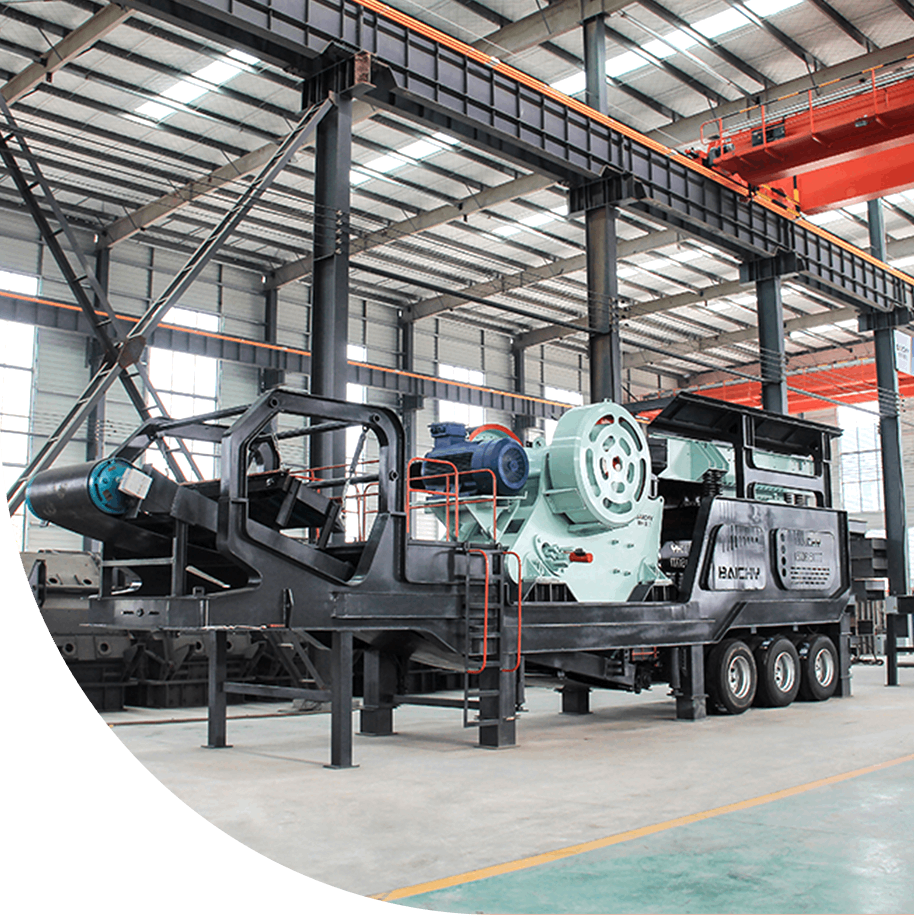

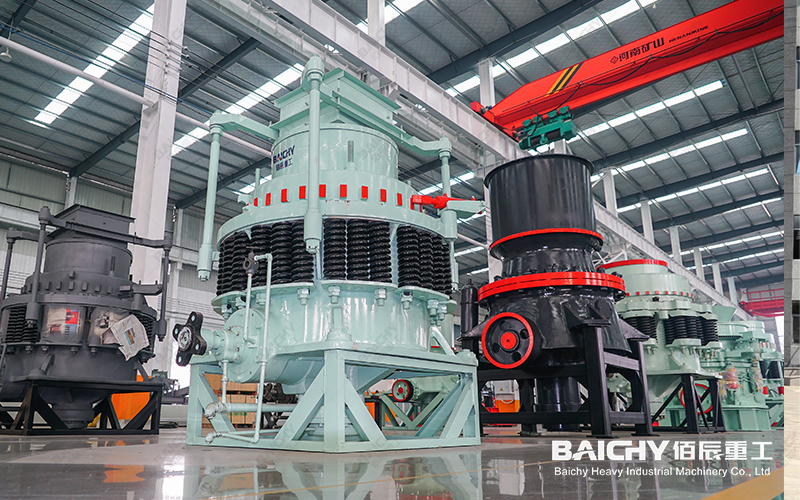
PYB900 spring cone crusher
A Peru copper mine planning to purchase a PYB900 is not simply choosing a machine to reduce rock. The more important question is whether the crusher can provide a stable feed for the next stage, such as screening, fine crushing or grinding.
Copper ore may vary between mining zones. Hardness, abrasiveness, moisture, clay content and natural fines can change as the working face moves. These changes influence crusher wear, screen performance, circulating load and the operating conditions of downstream grinding equipment.
A PYB900 spring cone crusher may be evaluated as a secondary or medium-crushing unit after a jaw crusher. In a suitable circuit, it can reduce copper ore and control oversize before the next processing stage. Its suitability must be confirmed from actual feed and process data; a model number alone is not enough.
Where Does PYB900 Fit in a Copper Ore Plant?
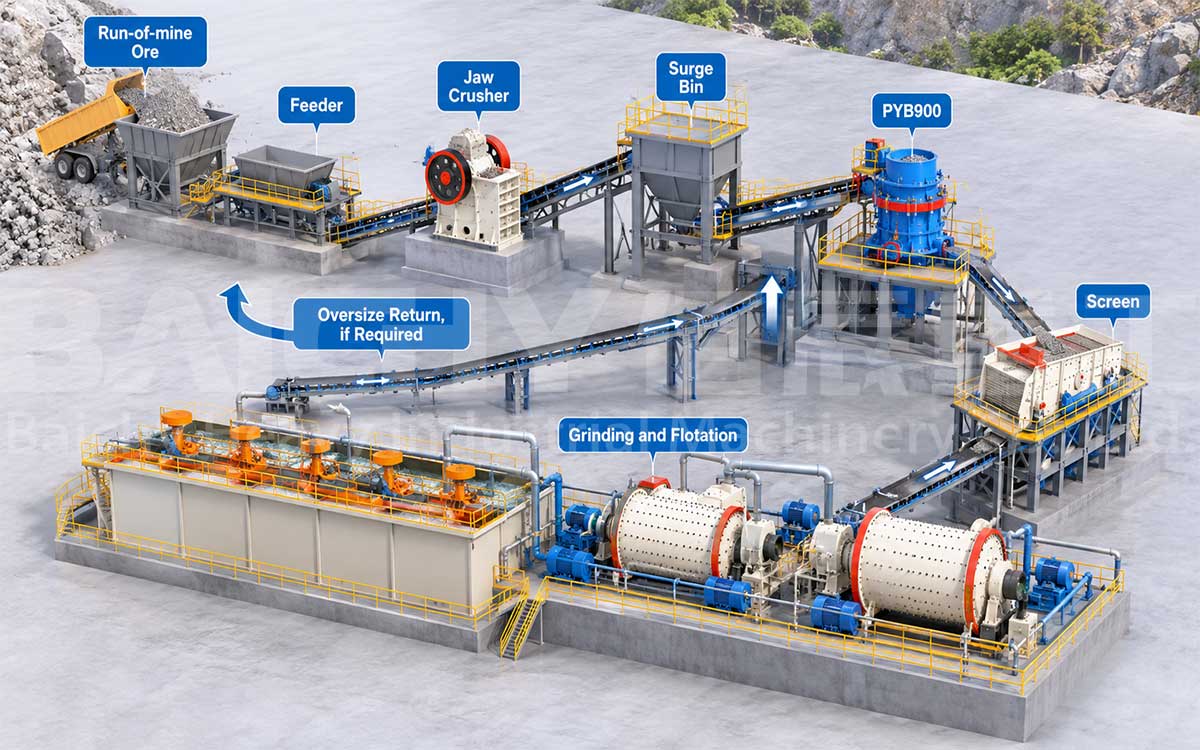
A typical arrangement may follow this route:
PYB900 Cone Crusher for Peru Copper Ore Processing
The jaw crusher normally handles larger run-of-mine rocks. After primary reduction, PYB900 can be considered for further crushing. A vibrating screen may separate material that meets the downstream requirement from oversize particles. In a closed circuit, oversize returns to the cone crusher; in an open circuit, material continues forward without a dedicated return loop.
PYB900 should be viewed as a crushing and feed-conditioning stage. It does not replace a ball mill, determine the liberation size of copper minerals or guarantee higher flotation recovery. Those results depend on ore mineralogy, grindability, liberation requirements and the complete beneficiation process.
What Makes Copper Ore Different from Ordinary Hard Rock?
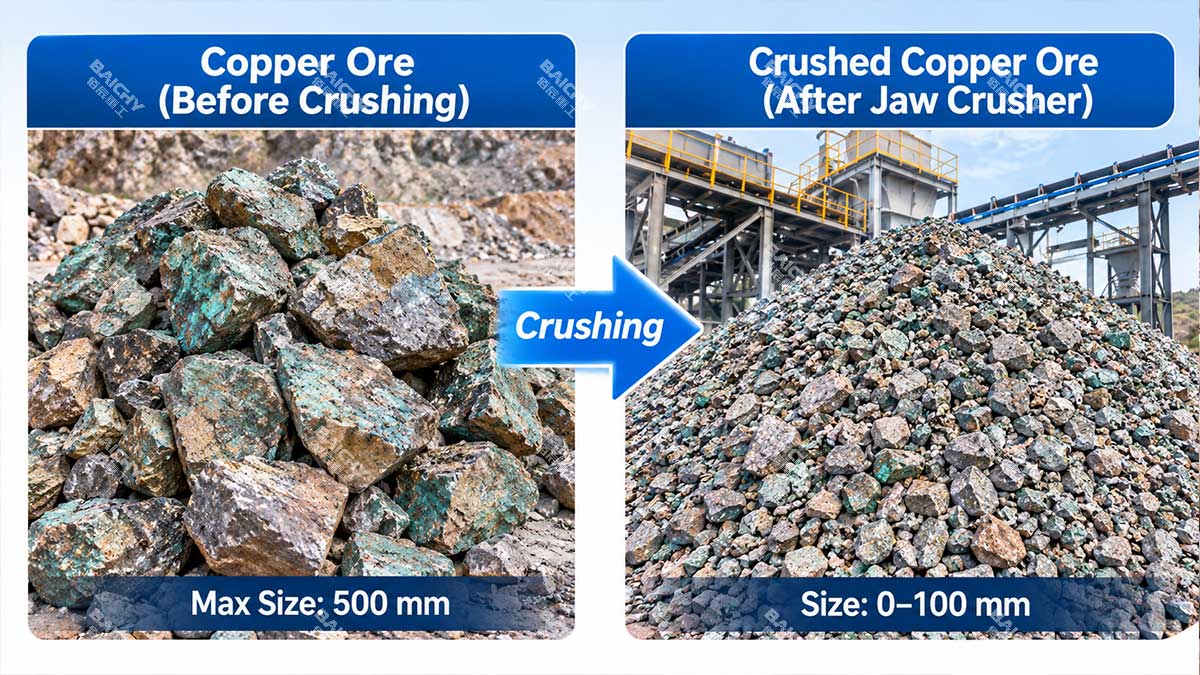
copper ore crushing
Variable hardness
Ore from different benches or mining areas may have different breakage characteristics. A setting that works for one feed condition may not provide the same result when the ore becomes harder. The circuit should therefore be reviewed against a realistic range of feed conditions rather than one ideal sample.
Abrasive gangue
Some copper ores contain abrasive gangue minerals that accelerate wear on the mantle and concave. Wear can affect maintenance cost, product grading and chamber stability. Actual wear observations and laboratory data, when available, are more useful than a general assumption about service life.
Moisture, clay and fines
Wet or clay-rich ore can adhere to feeder surfaces, block screen openings and increase circulating load. Excessive fines can also change how the crushing chamber is filled. If clay is significant, the project may need to evaluate pre-screening, washing or another feed-preparation method instead of trying to solve the issue only by changing the crusher setting.
The Main Objective: Stabilizing the Grinding Feed
The value of a secondary crusher in a copper plant is closely related to its connection with the grinding stage. Oversize feed can increase the burden on the mill, while large fluctuations in feed size can make process control more difficult.
A properly integrated PYB900 circuit may help by:
• Reducing material after primary crushing.
• Providing an adjustable crushing stage before grinding.
• Separating oversize with a screen.
• Returning oversize in a closed circuit when required.
• Creating a clearer size transition between coarse crushing and grinding.
The result should be checked through operating indicators rather than broad claims. Useful indicators include actual tonnes per hour, the percentage within the target size range, circulating load, wear-part consumption and unplanned downtime. PYB900 cannot independently determine the optimum grinding feed; that decision must be connected to mill design, ore grindability and the flotation target.
Key Data to Confirm Before Selecting PYB900
A mine should provide more than the material name and a target capacity. The following information helps determine whether PYB900 fits the proposed circuit.
| Data to confirm | Example information | Why it matters |
|---|---|---|
| Ore type | Sulfide, oxide or mixed copper ore | Feed characteristics may change |
| Maximum feed size | Customer-provided value | Confirms upstream crushing needs |
| Required capacity | Target tonnes per hour | Matches crusher, feeder and conveyors |
| Target discharge size | Required grinding-feed size | Influences setting and screening |
| Moisture and clay | Laboratory or operating data | Indicates blockage and screening risks |
| Abrasiveness | Test result or observed wear | Supports wear-part planning |
| Grindability | Bond work index or other test | Links crushing with grinding |
| Circuit arrangement | Open or closed circuit | Determines return-load requirements |
| Site conditions | Altitude, power and layout | Supports installation planning |
Capacity should always be stated with feed conditions. A capacity figure without information about feed size, moisture, fines and product requirements is difficult to use for a reliable evaluation.
Open-Circuit or Closed-Circuit Crushing?
Open-circuit operation
An open circuit is simpler because material leaves the crushing stage without a dedicated oversize return. It may be considered when the downstream process can accept the resulting size distribution or when another stage provides further reduction. Its limitation is less direct control over oversize entering the next stage.
Closed-circuit operation
In a closed circuit, a screen separates qualified material from oversize. Qualified material moves forward, while oversize returns to PYB900. This can provide tighter control of the grinding feed, but it also creates circulating load. The screen, conveyors, surge bin and cone crusher must therefore be sized as one system.
If the screen is too small or the ore contains excessive moisture and clay, the return load may rise and reduce plant stability. A closed circuit controls oversize, but it also makes plant balance more important.
Designing the Jaw Crusher–PYB900 Interface
The performance of PYB900 depends on the material delivered by the upstream system. Key interface points include:
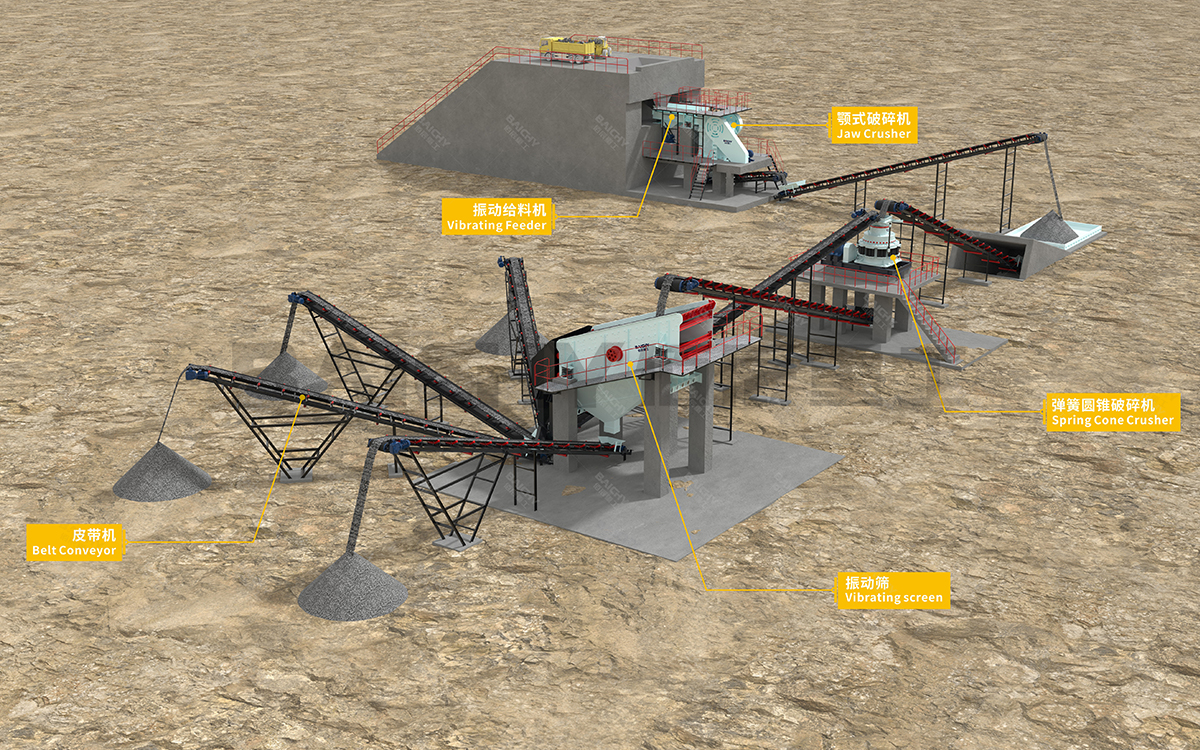
Process Flowchart of a Spring Cone Crusher
• Jaw crusher discharge must be compatible with the PYB900 feed requirement.
• A surge bin or intermediate stockpile can reduce short-term fluctuations.
• The feeder should deliver a continuous and reasonably even flow.
• Pre-screening may be useful when natural fines are high.
• A metal detector or magnetic separation arrangement may be considered where uncrushable metal is a risk.
• The return conveyor must handle the expected circulating load.
A cone crusher supplied with irregular or interrupted feed may not deliver the same product consistency as one supplied with stable feed. The feeder, surge arrangement and conveyors are therefore part of the PYB900 evaluation.
Wear Protection and Difficult Ore Conditions
Copper ore plants should plan for routine wear and unexpected uncrushable material. Steel pieces, drill rods and tools can enter the ore stream during mining and loading. Metal detection, magnetic separation, visual inspection and a clear shutdown procedure may be considered according to site conditions.
For wear management, record operating hours, wear-part condition, product-size changes and the ore source. Replacing parts only on a fixed calendar schedule may be less accurate than using actual wear observations. Spare-parts planning is especially important for remote mine sites where transport and service time can affect availability.
Three conditions deserve extra attention:
• High-clay ore: May cause sticky material, screen blinding and increased return load. Feed preparation may be required.
• Highly abrasive ore: Requires closer monitoring of the mantle, concave and other wear components.
• Changing ore zones: Record power draw, vibration, product grading, screen performance and circulating load for each source.
How Should PYB900 Performance Be Evaluated?
A practical evaluation should compare performance under clearly defined feed conditions.
| Performance area | Practical indicator |
|---|---|
| Throughput | Actual tonnes per hour at defined feed conditions |
| Product control | Percentage within the required size range |
| Wear | Wear-part consumption per tonne or operating hour |
| Availability | Planned versus unplanned downtime |
| Circuit stability | Feed fluctuation and circulating-load changes |
These measures show whether the main limitation is the cone crusher, screen, feeder, conveyors or changing ore properties.
Frequently Asked Questions
1. Can PYB900 be used for copper ore?
It may be evaluated for suitable copper ore in a secondary or medium-crushing application. The decision depends on hardness, abrasiveness, maximum feed size, capacity, moisture, clay content and target discharge size.
2. Is PYB900 a replacement for a ball mill?
No. PYB900 is a crushing machine, while a ball mill performs fine grinding. The cone crusher may prepare a more controlled feed for grinding, but it does not replace the grinding stage or determine mineral liberation by itself.
3. Should a screen be installed after PYB900?
A screen should be evaluated when the process requires control of material entering the next stage. It can separate qualified material from oversize and return oversize to the cone crusher in a closed circuit. The final decision depends on the flowsheet and target feed size.
4. How does wet or clay-rich copper ore affect the circuit?
Wet or clay-rich ore may adhere to equipment, blind screen openings, increase circulating load and reduce effective capacity. The project should review moisture, clay content and possible feed-preparation measures before finalizing the circuit.
5. What should a Peru copper mine provide before ordering?
The mine should provide ore type, maximum feed size, target capacity, discharge size, moisture and clay content, abrasiveness, grindability information, grinding-feed requirements, site altitude, power supply and the proposed circuit arrangement.

Baichy Heavy Industry
Baichy Heavy Industry is a high-tech mining equipment company integrating R&D, manufacturing, sales, and after-sales service. Focusing on crushing, grinding, and mineral processing equipment, we provide professional solutions to our customers. We are ISO9001:2015 Certified, and our products include mobile crushing palnts, crawler crushing plant, construction waste crushing plants, jaw crushers, sand making machines, cone crushers, fine crushers, grinding mills, ball mills, etc., all with reliable performance to meet diverse project needs.
Baichy Heavy Industry – Your Trusted Partner
To ensure optimal performance of your equipment, Baichy Heavy Industry offers:
- Professional on-site installation guidance
- Comprehensive operator training
- 24/7 technical support & maintenance services
Our complete after-sales service system guarantees long-term, stable operation of your machinery with minimal downtime.
Protect Your Rights – Only Use Official Channels
To avoid scams and ensure authentic support, contact us exclusively through:
• Official Website: www.baichychina.com
• WhatsApp: +8615093222637
• Email: [email protected]
Your satisfaction is our priority – expect prompt, professional service every time.
(Note: Beware of unauthorized third parties claiming to represent Baichy. Always verify through official contacts.)