
Designing a 1,000-ton-per-day copper-silver flotation plant requires more than calculating the nominal feed rate. Every machine must match the ore characteristics, process flow, slurry volume, operating schedule, and maintenance conditions. A well-matched equipment configuration helps the plant maintain stable production, recover valuable metals, and control energy, water, reagent, and maintenance costs.
A typical plant includes ore receiving, crushing, screening, fine-ore storage, grinding, classification, flotation, concentrate dewatering, tailings treatment, water recovery, electrical systems, and process control. The final equipment list should be based on representative ore samples, laboratory or pilot testwork, mass balance, water balance, and site conditions.
This guide explains the main equipment required for a 1,000 TPD copper-silver flotation plant and the selection points that should be reviewed before procurement.
1. Start with the Process Design
The equipment should be selected after the basic flowsheet is understood. A typical copper-silver sulfide ore route may include:
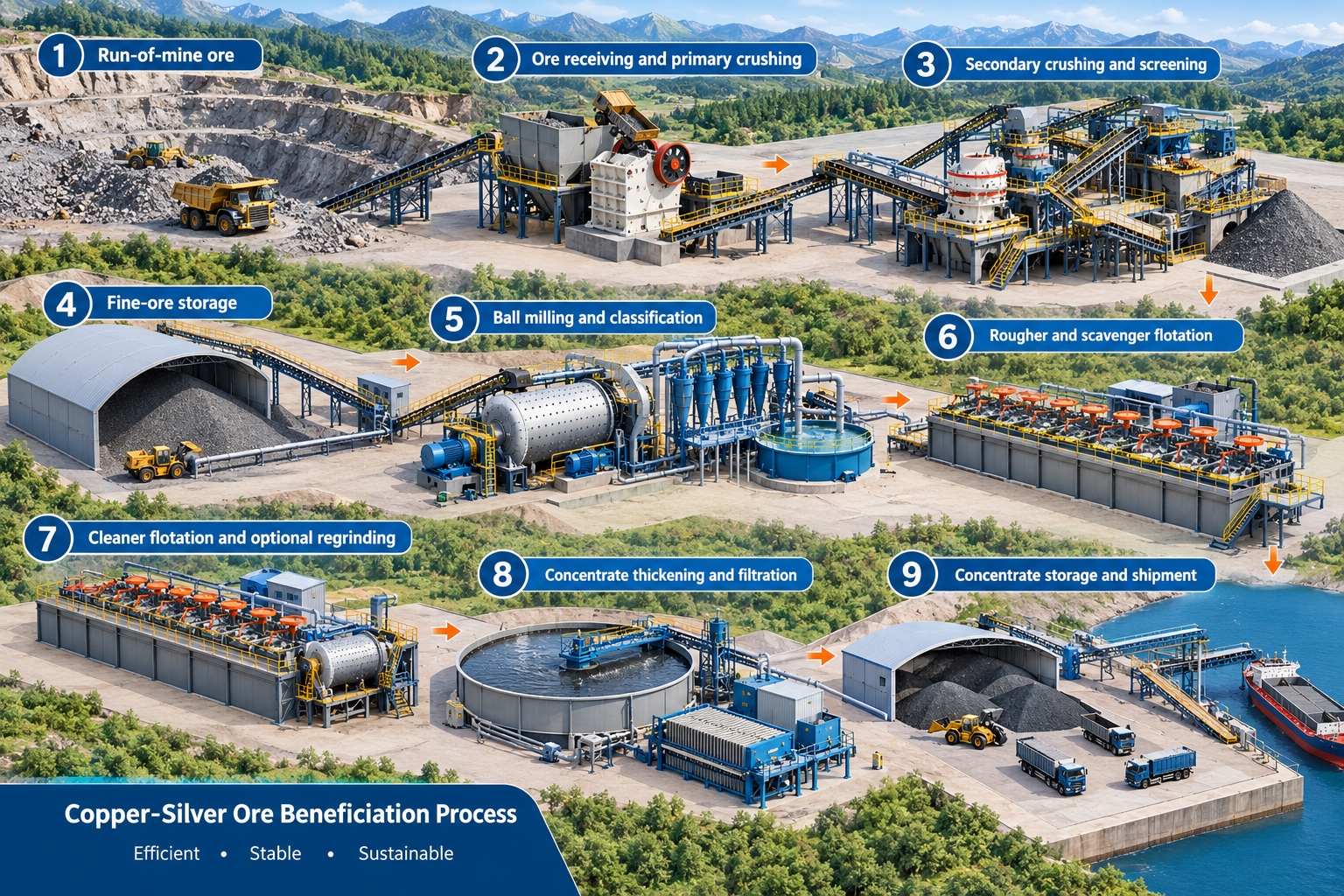
1,000 TPD Copper-Silver Flotation Plant Equipment Guide
The final circuit may change if the ore contains a high proportion of oxide minerals, clay, coarse gold, excessive pyrite, or very fine silver minerals. Equipment should never be selected by throughput alone. Ore hardness, liberation size, slurry density, moisture, abrasiveness, and required concentrate quality are equally important.
2. Main Equipment Configuration
The following table summarizes the principal equipment groups for a 1,000 TPD plant. The actual model, quantity, and duty should be confirmed by engineering calculations.
| Plant section | Typical equipment | Selection focus |
|---|---|---|
| Ore receiving | Hopper, grizzly, vibrating feeder | Maximum lump size and steady feed rate |
| Crushing | Jaw crusher, secondary crusher, screen | Reduction ratio, hardness, and product size |
| Conveying | Belt conveyors, transfer chutes, magnets | Capacity, dust control, and maintenance access |
| Grinding | Ball mill, motor, liner, lubrication system | Grindability, product size, and operating hours |
| Classification | Hydrocyclone cluster, slurry pump | Cut size, pressure, and circulating load |
| Flotation | Agitation tank, rougher, scavenger, cleaner cells | Residence time, pulp volume, and recovery target |
| Reagents | Mixing tanks, dosing pumps, storage tanks | Compatibility, dosage accuracy, and safety |
| Concentrate | Thickener, filter, concentrate bin | Final moisture, filtration rate, and handling |
| Tailings | Thickener, pumps, pipeline, storage or filter system | Settling, water recovery, and environmental control |
3. Ore Receiving and Crushing Equipment
The ore receiving section controls how consistently material enters the plant. It normally includes a receiving hopper, static or vibrating grizzly, feeder, and a safety arrangement for removing tramp metal. The hopper should provide enough live volume to prevent short interruptions in mine delivery from stopping the crushing circuit.
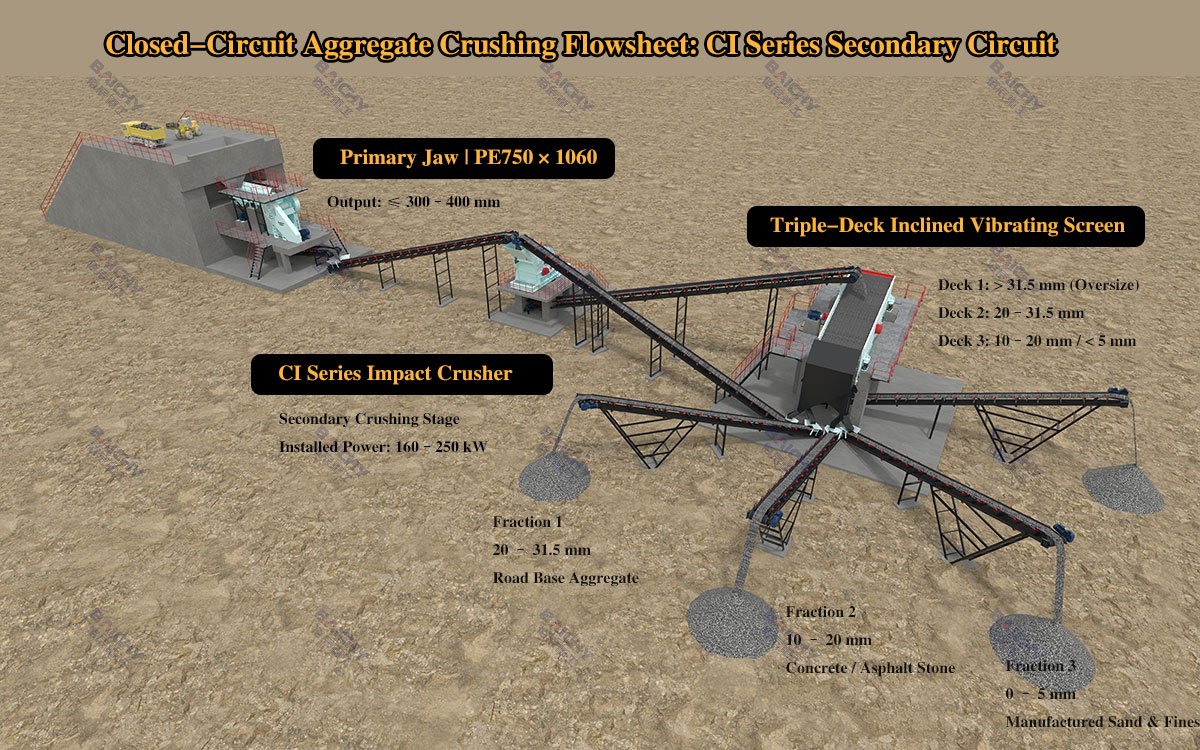
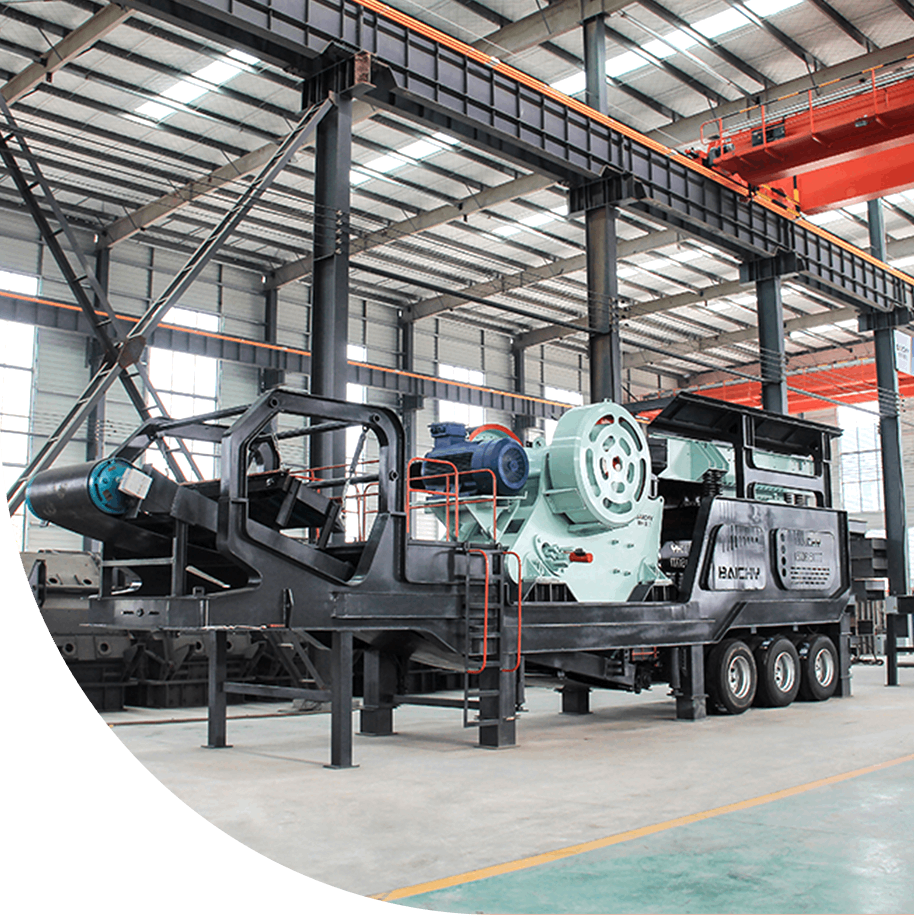
A jaw crusher is commonly used for primary size reduction because it can handle large and tough run-of-mine material. Depending on the required product size and ore properties, a cone crusher or another secondary crusher may be installed after the primary stage. A vibrating screen separates correctly sized material from oversize particles, which are returned for further crushing.
Key selection questions include:
• What is the maximum feed lump size?
• What is the ore compressive strength and abrasiveness?
• What product size is required for grinding?
• Is the ore sticky, wet, or clay-rich?
• How will dust and spillage be controlled?
A metal detector and magnetic separator can protect downstream equipment from steel or other tramp metal. Chutes should be designed to limit impact wear, plugging, and excessive dust.
4. Conveyors and Fine-Ore Storage
Belt conveyors transfer crushed ore between the crusher, screen, stockpile, and mill feed system. Their design should consider belt width, loading rate, incline, moisture, transfer-point height, and emergency stopping requirements.
A fine-ore bin or stockpile provides buffer capacity between crushing and grinding. This is important because the crusher may operate on a different schedule from the mill. A properly designed storage system allows the mill to continue operating during short crushing interruptions and supports more stable feed control.
Dust covers, skirt boards, belt cleaners, access platforms, sampling points, and emergency pull-cords should be included in the conveyor design. Good access reduces inspection time and improves plant safety.
5. Grinding and Classification Equipment
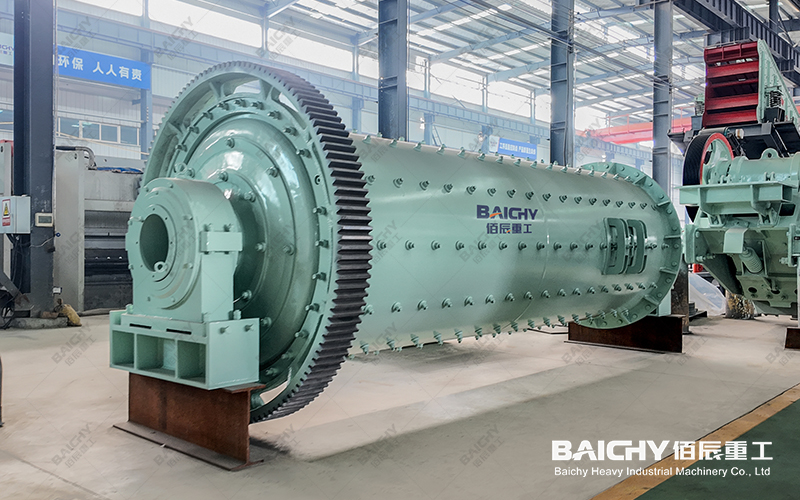
wet ball mill
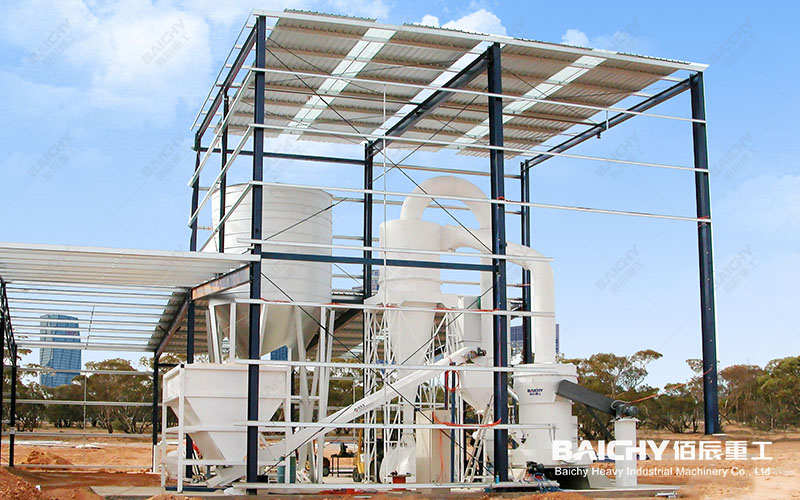
The grinding circuit usually represents one of the largest energy consumers in the plant. For a 1,000 TPD copper-silver operation, a ball mill may be used with a cyclone classification circuit. The mill reduces particle size, while the cyclone separates fine material from coarse material.
Cyclone overflow proceeds to flotation, while coarse underflow returns to the mill. The equipment must be selected using the ore work index, feed size, target grind size, pulp density, circulating load, and required operating availability.
Important grinding equipment includes:
• Mill feed chute and feeder;
• Ball mill and drive motor;
• Mill liners and grinding media;
• Lubrication and cooling system;
• Slurry pump and pump box;
• Hydrocyclone cluster;
• Density and particle-size instruments.
A mill that is too small may limit plant throughput. A mill that is unnecessarily large can increase capital cost and cause inefficient operation at a lower feed rate. Testwork is therefore essential for selecting the correct duty.
6. Flotation Equipment
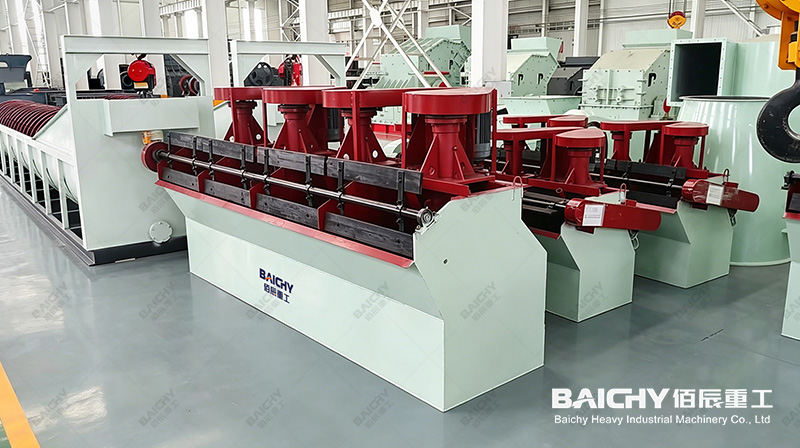
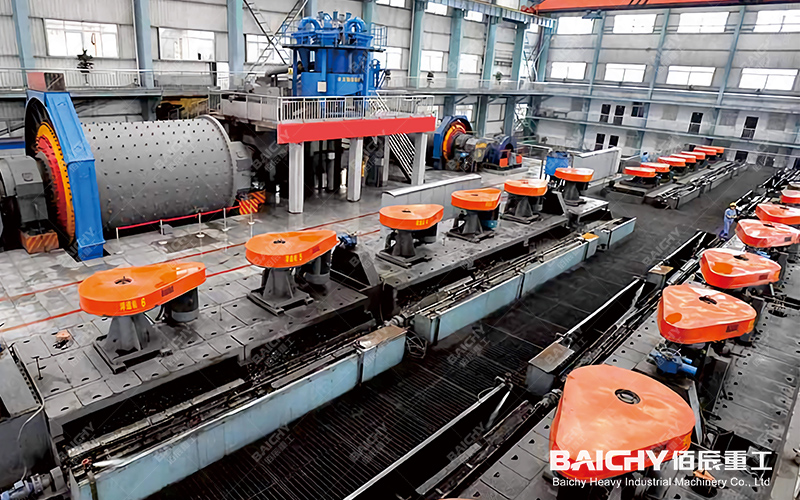
Flotation machine
The flotation circuit normally includes conditioning tanks, rougher cells, scavenger cells, cleaner cells, air supply, level-control equipment, and slurry transfer pumps. Conditioning tanks provide time for reagents to interact with the mineral surfaces before flotation begins.
Rougher cells recover the majority of the floatable copper and silver minerals. Scavenger cells recover additional values from rougher tailings. Cleaner cells remove part of the gangue and unwanted sulfide minerals to produce a higher-grade concentrate.
The required number and volume of flotation cells depend on slurry flow, pulp density, residence time, flotation kinetics, and the target recovery. The design should also consider whether the rougher concentrate needs regrinding before cleaning.
When selecting flotation machines, review:
• Effective cell volume;
• Required residence time;
• Air dispersion and bubble size;
• Froth handling and launder design;
• Level-control accuracy;
• Impeller and stator wear;
• Access for inspection and replacement.
The best cell configuration is the one that provides sufficient recovery and stable froth performance without excessive power or maintenance demand.
7. Reagent Preparation and Dosing Equipment
The reagent system may include collector, frother, pH modifier, activator, depressant, or dispersant preparation facilities. It normally consists of storage tanks, mixing tanks, agitators, dosing pumps, pipelines, valves, ventilation, and spill-control measures.
Accurate dosing is important because under-dosing may reduce recovery, while over-dosing can increase cost, raise entrainment, or lower concentrate selectivity. Reagent addition may occur in the grinding circuit, conditioning tanks, rougher feed, or cleaner stages.
The system should be designed around reagent properties, storage time, required dosage range, operator safety, and local supply conditions. Separate storage and clear labeling are essential for incompatible chemicals.
8. Concentrate Dewatering Equipment
Flotation concentrate normally enters a thickener before filtration. The thickener increases underflow density and reduces the water load on the filter. A pressure filter, vacuum filter, or ceramic filter may then be selected according to concentrate characteristics and required moisture.
The dewatering system should provide:
• Stable thickener underflow density;
• Adequate filter capacity;
• Reliable filtrate recovery;
• Easy cloth or element maintenance;
• Safe concentrate discharge;
• Sufficient storage before shipment.
Concentrate moisture affects transport weight, handling, and sales conditions. The final filtration target should therefore be agreed with the concentrate buyer or smelter where possible.
9. Tailings and Water-Recovery Equipment
Tailings equipment is essential for both environmental management and water conservation. A typical system may include a tailings pump, pipeline, thickener, return-water pump, monitoring instruments, and a tailings storage or filtration facility.
The appropriate solution depends on tailings settling behavior, particle size, climate, water availability, site topography, foundation conditions, and regulatory requirements. Thickened tailings or filtered dry stacking may reduce water loss, but they require suitable testwork and supporting infrastructure.
A water-recovery system can return clarified water to grinding and flotation. Before finalizing the water circuit, test recycled water for dissolved salts, residual reagents, suspended solids, and its effect on flotation performance.
10. Electrical, Instrumentation, and Utility Systems
Stable operation depends on more than mechanical equipment. The plant also needs electrical distribution, motor control centers, transformers, cabling, lighting, compressed air, process water, gland water, drainage, and instrumentation.
A control system can monitor mill power, pump status, cyclone pressure, pulp density, flotation levels, pH, reagent flow, and thickener bed level. Automatic control improves consistency, but regular sampling and laboratory assays remain necessary.
The design should include emergency stops, equipment interlocks, backup arrangements for critical pumps, and protection against dust, moisture, and temperature. Spare-parts planning should cover liners, pump components, valves, flotation mechanisms, filter cloths, and instrumentation items.
11. How to Select the Right Equipment
Before requesting final quotations, the project team should prepare a clear equipment data sheet for every major machine. It should include feed conditions, capacity, duty, material characteristics, power requirements, materials of construction, wear parts, utilities, and installation conditions.
Equipment suppliers should receive representative technical data rather than only the phrase “1,000 TPD plant.” Two ores with the same daily capacity may require very different mills, pumps, flotation volumes, and tailings systems.
The selection review should compare total value, including purchase price, energy use, wear rate, spare-parts availability, service support, installation requirements, and expected operating life.
Frequently Asked Questions
1. What are the most important machines in a 1,000 TPD copper-silver plant?
The main machines are the crusher, screen, ball mill, hydrocyclone, slurry pump, flotation cells, thickener, filter, and tailings equipment. Their duties must be matched to the ore and final flowsheet.
2. Is one ball mill enough for a 1,000 TPD plant?
It may be enough in some designs, but the answer depends on ore hardness, feed size, target grind, operating hours, and required availability. A second mill, standby arrangement, or different circuit may be justified after testwork and engineering review.
3. How many flotation cells are required?
The number depends on slurry volume, residence time, flotation kinetics, pulp density, and the number of rougher, scavenger, and cleaner stages. It cannot be determined accurately from daily tonnage alone.
4. What equipment is used to reduce concentrate moisture?
A concentrate thickener is commonly followed by a pressure filter, vacuum filter, or another suitable filtration system. The final choice depends on concentrate particle size, throughput, required moisture, and maintenance conditions.
5. Why is testwork necessary before equipment procurement?
Testwork provides the information needed to select grinding power, grind size, flotation residence time, reagent conditions, concentrate quality, and tailings behavior. It reduces the risk of purchasing equipment that cannot achieve the required plant performance.
Baichy Heavy Industry
Baichy Heavy Industry is a high-tech mining equipment company integrating R&D, manufacturing, sales, and after-sales service. Focusing on crushing, grinding, and mineral processing equipment, we provide professional solutions to our customers. We are ISO9001:2015 Certified, and our products include mobile crushing palnts, crawler crushing plant, construction waste crushing plants, jaw crushers, sand making machines, cone crushers, fine crushers, grinding mills, ball mills, etc., all with reliable performance to meet diverse project needs.
Baichy Heavy Industry – Your Trusted Partner
To ensure optimal performance of your equipment, Baichy Heavy Industry offers:
- Professional on-site installation guidance
- Comprehensive operator training
- 24/7 technical support & maintenance services
Our complete after-sales service system guarantees long-term, stable operation of your machinery with minimal downtime.
Protect Your Rights – Only Use Official Channels
To avoid scams and ensure authentic support, contact us exclusively through:
• Official Website: www.baichychina.com
• WhatsApp: +8615093222637
• Email: [email protected]
Your satisfaction is our priority – expect prompt, professional service every time.
(Note: Beware of unauthorized third parties claiming to represent Baichy. Always verify through official contacts.)