
A 1,000-ton-per-day copper-silver flotation plant in Morocco must be designed around the actual ore, not only the target capacity. Copper and silver may occur as sulfide minerals, oxide minerals, or complex associations with pyrite and gangue. Their mineralogy, liberation size, oxidation level, hardness, and slime content will determine the most suitable flowsheet.
A typical project may include crushing, grinding, classification, copper-silver flotation, concentrate thickening, filtration, tailings treatment, and process-water recovery. The purpose is to produce a stable, saleable concentrate while controlling energy, reagent, water, and maintenance costs.
The final recovery, concentrate grade, equipment size, and reagent dosage should be confirmed through representative ore sampling and beneficiation tests. Daily throughput alone is not enough to predict plant performance.
1. Design Basis for a 1,000 TPD Plant
A 1,000 TPD plant is planned to process approximately 1,000 metric tons of run-of-mine ore per day. Annual output depends on operating days, maintenance time, mining supply, and plant availability. The design basis should include:
• Copper and silver head grades;
• Sulfide and oxide proportions;
• Mineral composition and silver deportment;
• Ore hardness, abrasion, and grindability;
• Mineral liberation and dissemination size;
• Clay and slimes content;
• Required concentrate grade and moisture;
• Water quality and available process water;
• Power supply, roads, elevation, and tailings conditions.
These data help determine whether the plant should produce a copper-silver bulk concentrate or use a more complex separation circuit.
2. Recommended Process Flow
For a copper-silver sulfide ore, a practical starting flowsheet is:
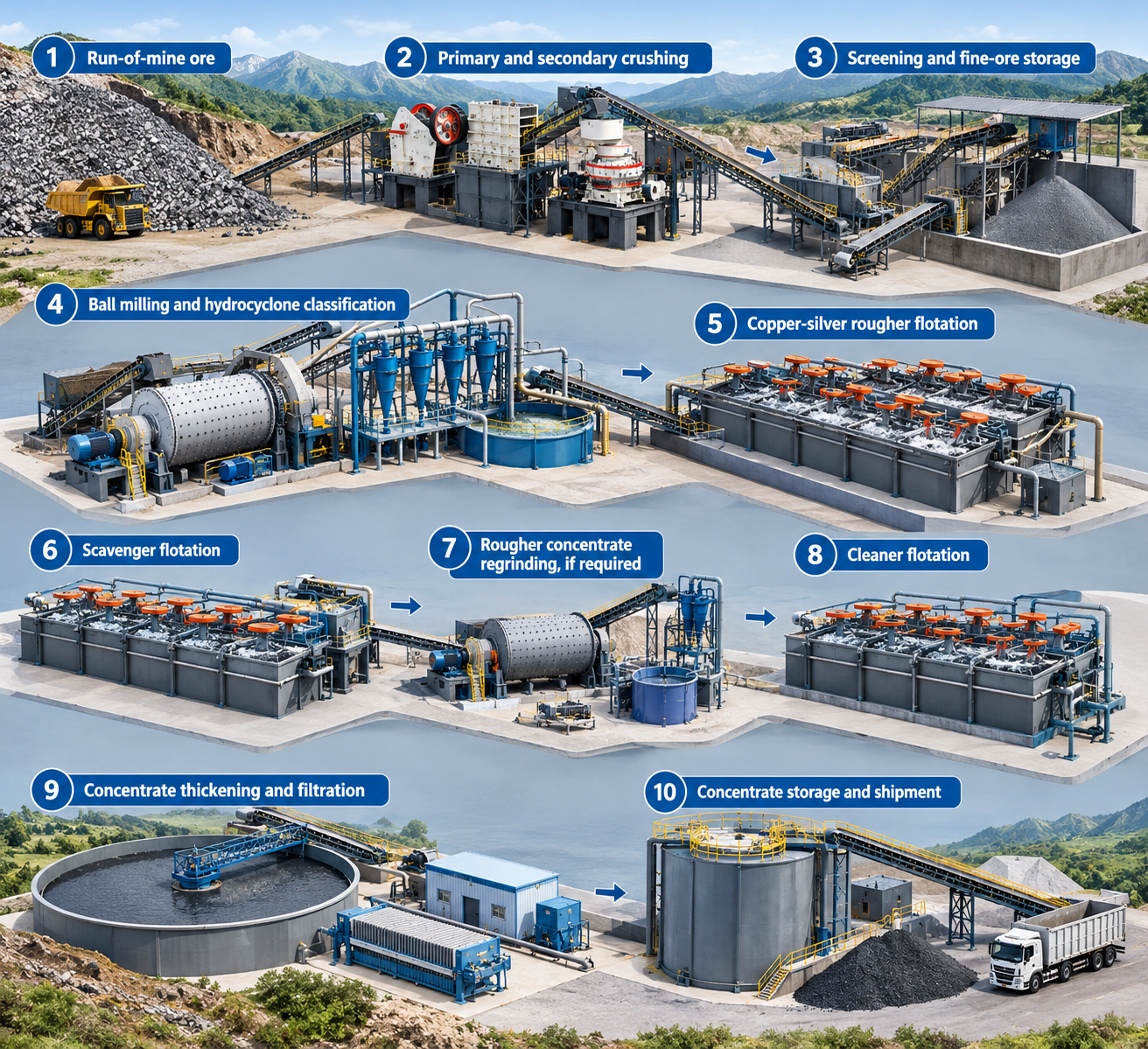
copper-silver sulfide ore, a practical starting flowsheet
Flotation tailings can be sent to a tailings thickener, storage facility, or filtration and dry-stacking system. Clarified water may be returned to grinding and flotation, subject to water-quality and metallurgical tests.
Crushing and Screening
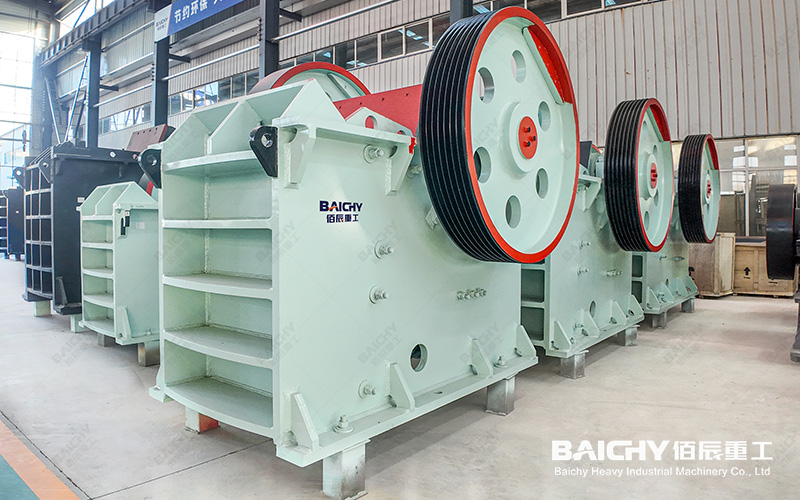
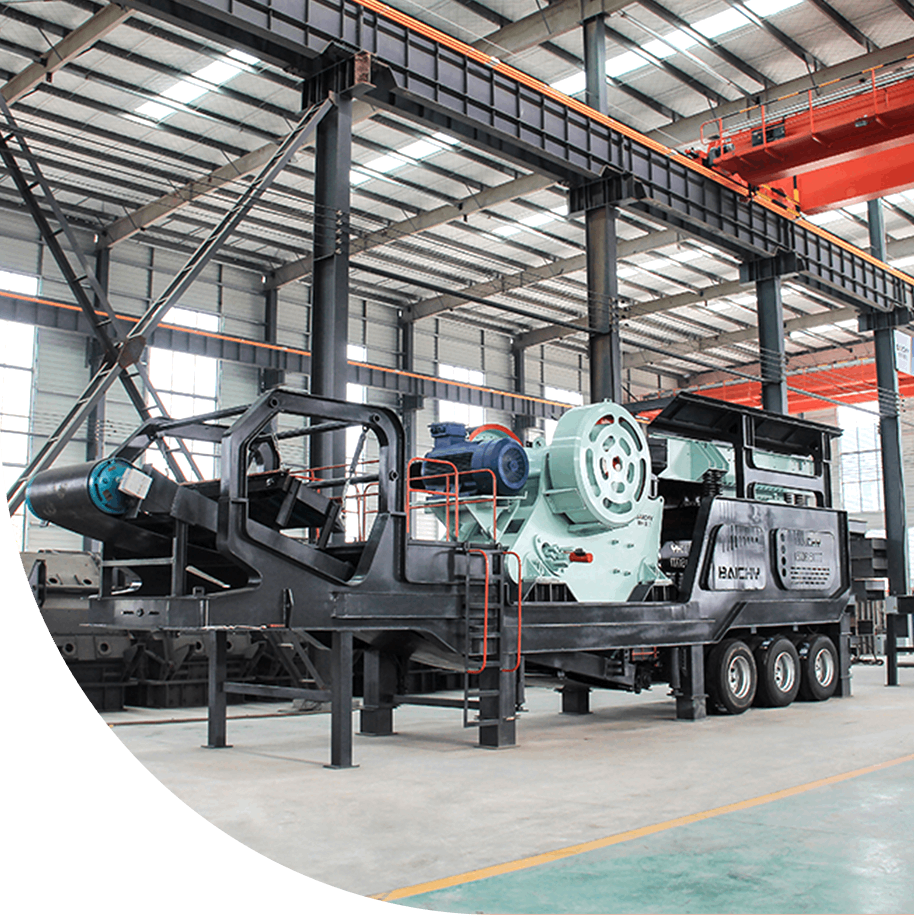
PE Jaw Crusher
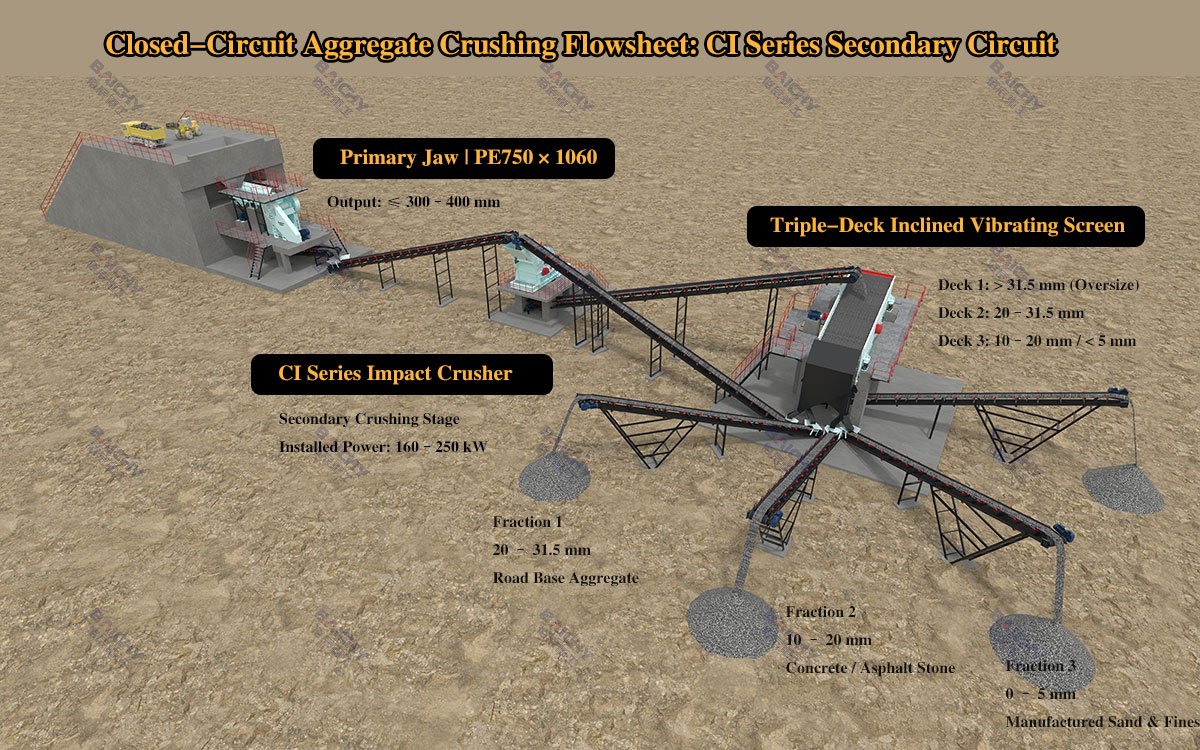
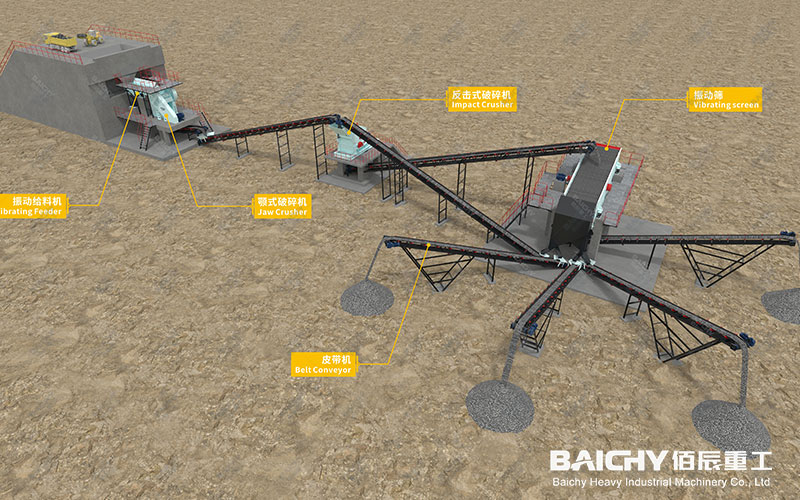
The crushing section reduces run-of-mine ore to a size suitable for grinding. It may contain a receiving hopper, vibrating feeder, jaw crusher, secondary crusher, vibrating screen, belt conveyors, dust-control equipment, and tramp-metal protection.
A consistent crushing product supports stable mill feed. A fine-ore bin or stockpile can also buffer short-term changes in mining output and reduce interruptions to the grinding circuit.
Grinding and Classification
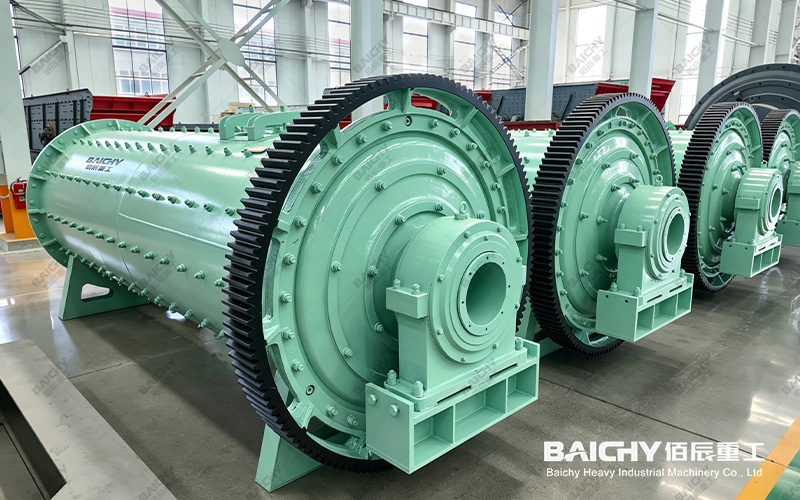
Wet Ball Mill
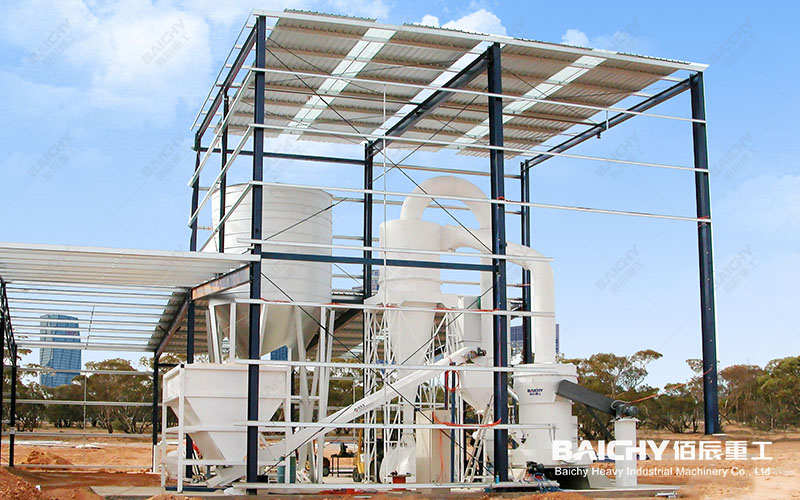
Grinding releases valuable minerals from gangue. A ball mill and hydrocyclone cluster are commonly used, with cyclone overflow sent to flotation and coarse underflow returned to the mill.
The target grind size must come from testwork. Overgrinding can create slimes, increase energy use, and reduce flotation selectivity. Undergrinding may leave copper and silver locked with gangue. The final grinding design should therefore be based on liberation and flotation results.
Copper-Silver Flotation
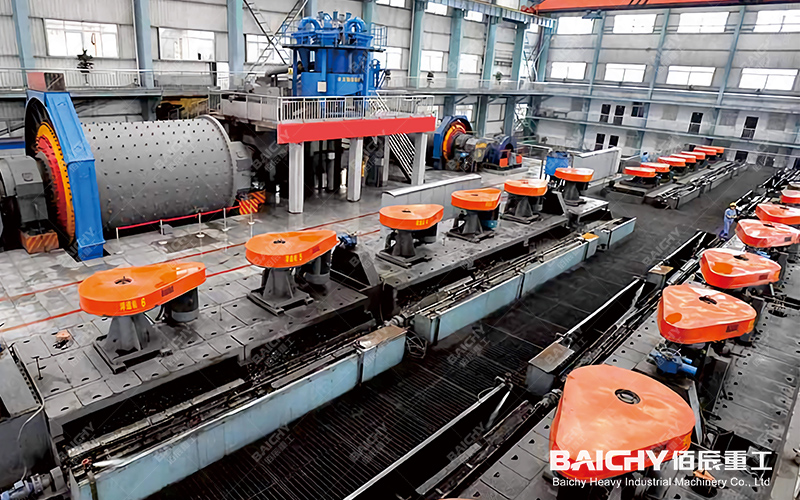
Copper-Silver Flotation
The flotation section normally includes rougher, scavenger, and cleaner stages. Rougher flotation recovers most floatable copper and silver minerals. Scavenger flotation reduces valuable-metal losses in tailings, while cleaner stages improve concentrate grade.
If silver is mainly associated with copper sulfides, bulk copper-silver flotation may be a suitable starting point. If silver occurs as a separate mineral or responds differently to reagents, additional separation or silver-recovery testing may be necessary.
3. Bulk Flotation or Copper-Silver Separation?
The choice should be based on mineralogy, testwork, concentrate value, and smelter requirements.
| Option | Suitable condition | Main advantage | Key consideration |
|---|---|---|---|
| Copper-silver bulk flotation | Silver is closely associated with copper sulfides | Simpler circuit and operation | Mixed concentrate quality must be acceptable |
| Copper-silver separation | Copper and silver show different flotation behavior | Better control of individual products | Higher complexity and reagent control |
| Copper flotation with silver in concentrate | Silver is mainly carried by copper minerals | Uses the main copper circuit | Silver recovery depends on copper recovery |
Bulk flotation is often evaluated first because it can reduce circuit complexity. However, it is not automatically the best solution. The project team should compare metal recovery, concentrate grade, impurities, reagent consumption, treatment terms, and operating cost.
4. Main Equipment Configuration
Equipment should be selected from the final flowsheet, mass balance, slurry volume, and duty calculations. A typical equipment structure is shown below.
| Section | Main equipment | Function |
|---|---|---|
| Ore receiving | Hopper, vibrating feeder, conveyor | Feed and transfer run-of-mine ore |
| Crushing | Jaw crusher, secondary crusher, screen | Reduce ore size |
| Grinding | Ball mill, cyclone, slurry pump | Grind and classify ore |
| Flotation | Agitated tank, rougher, scavenger, cleaner cells | Recover and upgrade minerals |
| Reagents | Mixing tanks, storage tanks, dosing pumps | Prepare and control reagents |
| Concentrate | Thickener, filter, concentrate bin | Remove water and store product |
| Tailings | Thickener, pumps, pipeline, storage or filter system | Manage tailings and recover water |
The plant should include suitable operating margins without excessive oversizing. Critical pumps, liners, valves, instruments, and other wear parts should be reviewed according to local maintenance and supply conditions.
5. Reagent and Process Control
The reagent scheme has a direct effect on copper recovery, silver recovery, concentrate grade, and operating cost. Common reagent groups include collectors, frothers, pH modifiers, activators, depressants, and dispersants. Exact products and dosages should be established through flotation tests rather than copied from another mine.
Important control points include grinding density, flotation pH, reagent addition location, air rate, froth depth, residence time, and pulp level. Operators should monitor feed grade, particle size, slurry density, pH, concentrate grade, froth condition, and tailings losses.
Pyrite, clay, and other gangue minerals require special attention. Excessive pyrite or gangue in the concentrate can lower its commercial value, while excessive depression can reduce copper or silver recovery. The best reagent scheme balances recovery and product quality.
6. Concentrate, Tailings, and Water Management
After flotation, the concentrate is normally thickened and filtered. Lower moisture makes the product easier and less expensive to transport. The selected filter depends on concentrate characteristics, required moisture, throughput, and maintenance capability.
Tailings design should be developed together with the main plant. Key factors include particle-size distribution, settling behavior, water balance, site topography, foundation conditions, seepage control, stormwater management, and closure planning.
A recirculating water system can return clarified water to the process and reduce fresh-water demand. However, recycled water may contain dissolved ions or residual reagents that affect flotation. Its influence should be checked during metallurgical testing.
7. Key Considerations for a Moroccan Site
A practical design should reflect the actual conditions of the project location. The feasibility review should cover access roads, heavy-equipment transport, electrical reliability, water sources, climate, dust control, construction resources, and spare-parts logistics.
The layout should minimize slurry-pumping distances and use natural elevation where possible. Crushing transfer points may require enclosure and dust suppression. Electrical cabinets and instruments should be protected from local dust and temperature conditions. Adequate space should be reserved for a laboratory, maintenance workshop, reagent storage, emergency equipment, concentrate handling, and future expansion.
A layout that is easy to inspect and maintain can reduce downtime after commissioning. This is especially important for pumps, flotation cells, filters, conveyors, and other continuously operating equipment.
8. Frequently Asked Questions
1. How much concentrate can a 1,000 TPD plant produce?
It depends on head grade, concentrate grade, recovery, and operating time. Throughput alone cannot determine concentrate production. A mass balance based on representative testwork is required.
2. Is bulk copper-silver flotation suitable for every ore?
No. It may be suitable when silver is closely associated with copper minerals. Separate or additional recovery stages may be needed when silver occurs independently or has a different flotation response.
3. Does the plant always need regrinding?
No. Regrinding is considered when rougher concentrate contains locked valuable minerals or excessive gangue. Its necessity should be confirmed by mineralogical and flotation results.
4. What is important when selecting flotation equipment?
The equipment must match slurry volume, residence time, pulp characteristics, air dispersion, maintenance conditions, and the final process design. Capacity should be checked against the mass balance.
5. What should be completed before equipment purchase?
The project should complete representative sampling, chemical analysis, mineralogical study, grinding tests, flotation tests, and a preliminary engineering review. This reduces the risk of selecting equipment that cannot meet recovery or concentrate-quality targets.
Baichy Heavy Industry
Baichy Heavy Industry is a high-tech mining equipment company integrating R&D, manufacturing, sales, and after-sales service. Focusing on crushing, grinding, and mineral processing equipment, we provide professional solutions to our customers. We are ISO9001:2015 Certified, and our products include mobile crushing palnts, crawler crushing plant, construction waste crushing plants, jaw crushers, sand making machines, cone crushers, fine crushers, grinding mills, ball mills, etc., all with reliable performance to meet diverse project needs.
Baichy Heavy Industry – Your Trusted Partner
To ensure optimal performance of your equipment, Baichy Heavy Industry offers:
- Professional on-site installation guidance
- Comprehensive operator training
- 24/7 technical support & maintenance services
Our complete after-sales service system guarantees long-term, stable operation of your machinery with minimal downtime.
Protect Your Rights – Only Use Official Channels
To avoid scams and ensure authentic support, contact us exclusively through:
• Official Website: www.baichychina.com
• WhatsApp: +8615093222637
• Email: [email protected]
Your satisfaction is our priority – expect prompt, professional service every time.
(Note: Beware of unauthorized third parties claiming to represent Baichy. Always verify through official contacts.)