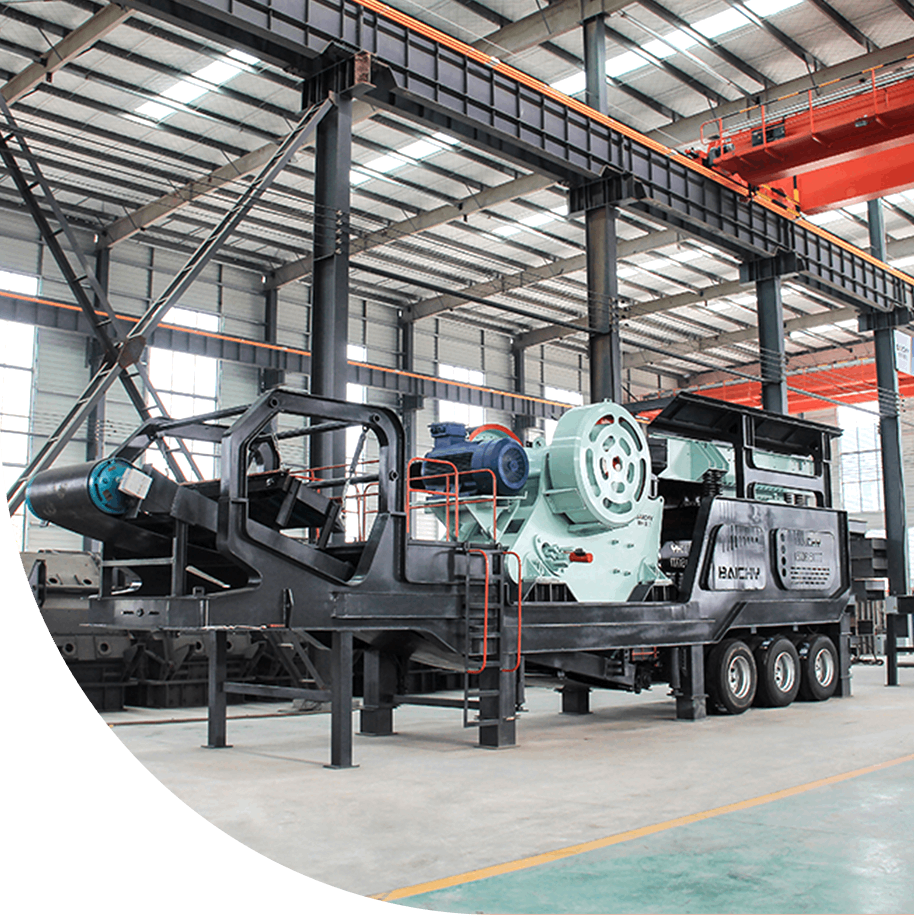

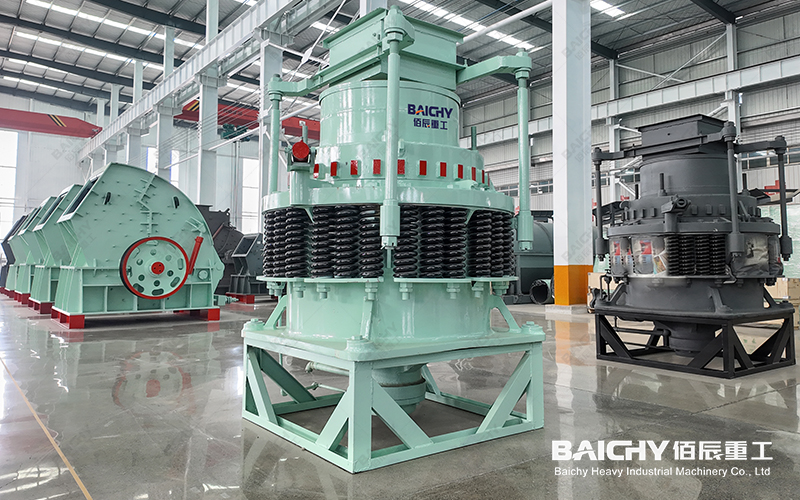
PYB900 Cone Crusher for Hard Rock Aggregates
Peru’s quarry and construction projects need reliable equipment to produce road base, concrete aggregate, asphalt material and other crushed-stone products. The feed may include andesite, granite, basalt, river pebble or other hard rock, all of which require controlled reduction and screening.
A PYB900 spring cone crusher can be evaluated for the secondary or medium-crushing stage after a jaw crusher and before a vibrating screen. Its suitability depends on the confirmed material properties, feed size, capacity, product sizes and complete plant layout—not on the model name alone.
What Hard Rock Materials Can Be Used for Aggregates?
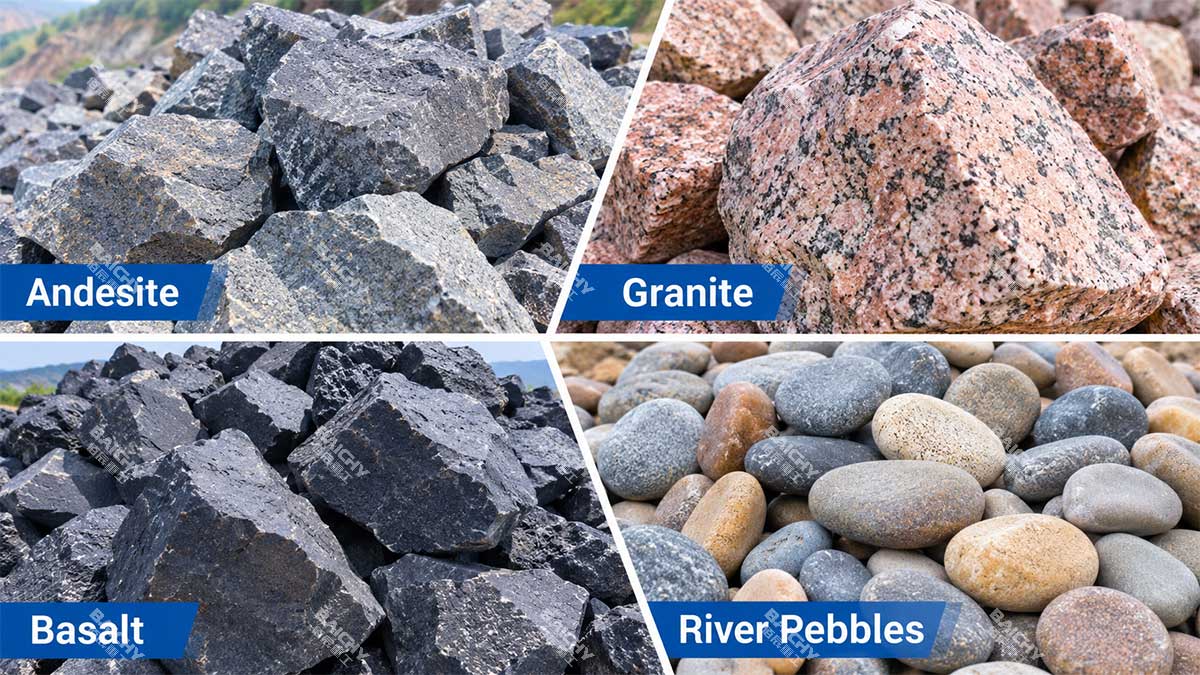
Andesite, granite, basalt, and raw river pebbles
Andesite
Andesite is a volcanic rock that may be used in road construction, concrete aggregate and other infrastructure applications when its physical properties meet the project requirements. Because the material can be hard and abrasive, the crushing plant should be designed with suitable wear parts and stable feeding conditions.
Granite
Granite is a strong and abrasive rock commonly found in quarry applications. It can produce durable aggregate, but the plant must allow for wear-part inspection and replacement. Consistent feeding is also important because sudden changes in feed size can affect crusher performance and final product grading.
Basalt
Basalt is dense and hard, making it suitable for demanding aggregate applications when the finished material meets local specifications. A jaw crusher is generally used for the primary stage, while a cone crusher can be used to produce smaller and more uniform fractions.
River Pebble and Other Rocks
River pebble, quartzite, limestone and other locally available rocks may also be processed, depending on their hardness, shape, moisture content and abrasiveness. Before recommending a PYB900, the supplier should review a complete material sample or receive accurate information about the feed properties.
Why Use a PYB900 After a Jaw Crusher?
A jaw crusher and a cone crusher perform different jobs in a crushing plant. The jaw crusher accepts larger rocks and reduces them to a size suitable for downstream equipment. The PYB900 then performs further reduction, helping the plant approach the required aggregate sizes.
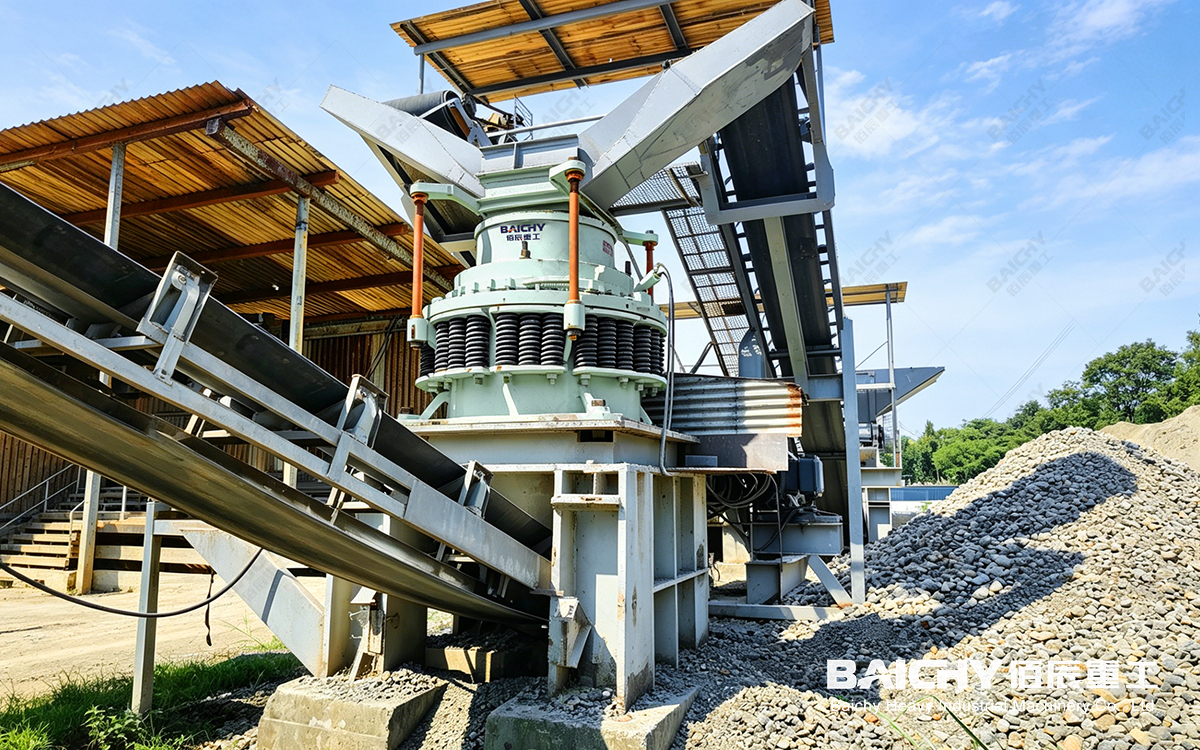
PYB900 Spring Cone Crusher Operating at a River Pebble Crushing Site
This two-stage arrangement offers several practical benefits:
• It separates primary crushing from secondary or medium crushing.
• It allows the jaw crusher and cone crusher to operate within more suitable feed ranges.
• It can improve control over the final product when combined with screening.
• It provides a practical layout for quarry and road-aggregate applications.
• It makes it possible to return oversize material to the cone crusher in a closed circuit.
However, the complete line must be matched. If the feeder, jaw crusher, screen or conveyors have insufficient capacity, increasing the cone crusher size alone will not solve the production problem.
Typical Hard Rock Aggregate Crushing Process
A typical process for a Peru quarry may follow this arrangement:
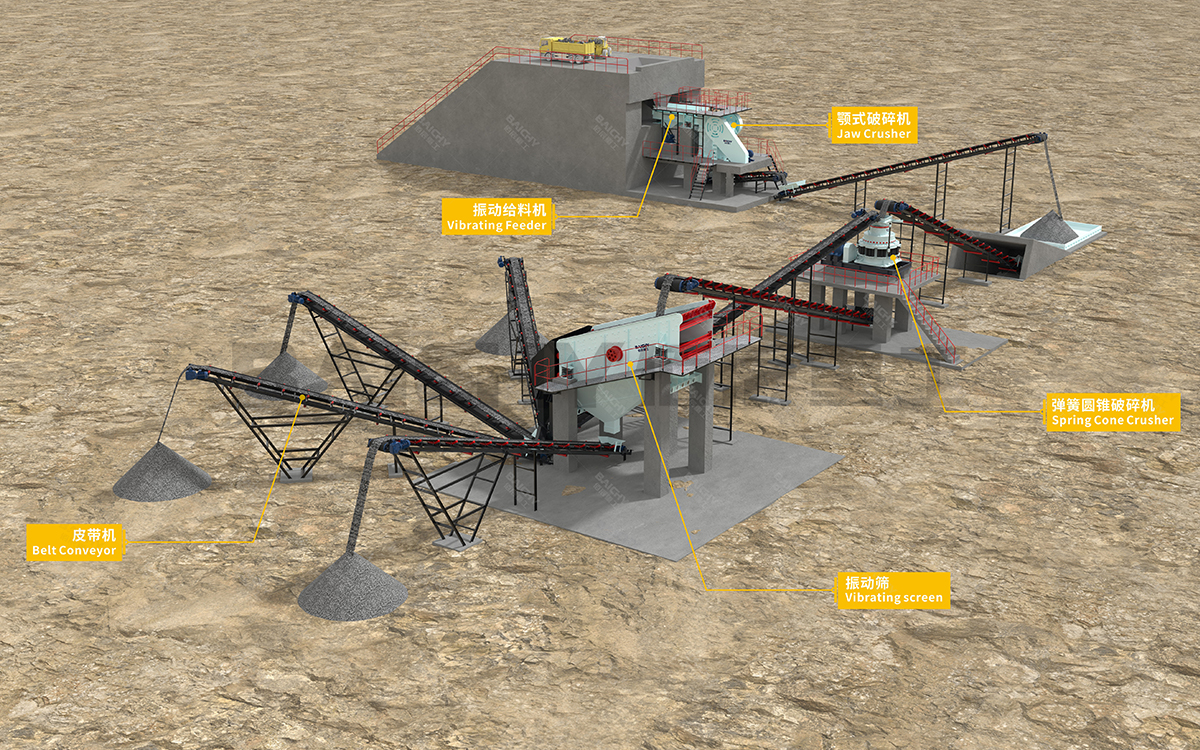
Schematic Diagram of the Crushing Process Using a PYB900 Spring Cone Crusher
1. Dump trucks or loaders deliver blasted rock to the feed hopper.
2. A vibrating feeder controls the feed and may remove some natural fines.
3. A jaw crusher performs primary crushing.
4. The crushed material is transferred to the PYB900 cone crusher.
5. The cone crusher reduces the material to a smaller size.
6. A vibrating screen separates the required aggregate fractions.
7. Oversize material returns to the PYB900 for further crushing when a closed circuit is used.
8. Belt conveyors transfer each finished product to a stockpile or loading area.
The final arrangement depends on the customer’s required products. A plant producing one broad-size road material may use a simpler layout, while a plant producing several fractions may require a multi-deck screen and additional conveyors.
Key Selection Data for a PYB900 Project
The following information should be confirmed before preparing a quotation or technical proposal:
| Selection item | Information to confirm | Why it matters |
|---|---|---|
| Feed material | Andesite, granite, basalt, pebble or another rock | Determines crushing and wear characteristics |
| Maximum feed size | Largest rock entering the cone crusher | Confirms whether upstream crushing is adequate |
| Required capacity | Target tonnes per hour | Helps match the crusher, feeder and conveyors |
| Product sizes | For example, 0–5 mm, 5–10 mm or 10–20 mm | Influences discharge setting and screen design |
| Abrasiveness | Low, medium or high; laboratory data if available | Supports wear-part and maintenance planning |
| Circuit type | Open circuit or closed circuit | Affects product control and circulating load |
| Site conditions | Altitude, power supply, layout and access | Influences installation and operating conditions |
Capacity and product size should be treated as project-specific values. They depend on the rock properties, feed distribution, crusher setting, moisture, operating method and screening efficiency. A supplier should confirm the expected performance from the complete operating data rather than applying a general figure to every installation.
Open-Circuit or Closed-Circuit Crushing?
Open-Circuit Operation
In an open circuit, material passes through the cone crusher and continues to the next process or stockpile without returning oversize material. This arrangement is relatively simple and may be suitable when the product-size requirement is less strict or when the plant is producing a general-purpose crushed material.
The main limitation is that the final size distribution may contain more oversize particles. The customer should confirm whether this grading is acceptable for the intended road, concrete or asphalt application.
Closed-Circuit Operation
In a closed circuit, the vibrating screen separates the material after crushing. Oversize particles return to the PYB900, while correctly sized products are discharged to stockpiles. This arrangement can provide better control of the finished aggregate size.
Closed-circuit operation also creates a circulating load, so the screen, conveyor and crusher must be designed as a balanced system. If the screen is too small or the feed contains excessive fines and moisture, the return load may increase and reduce overall plant stability.
Wear and Maintenance Considerations
Hard rock aggregate production can place significant demands on the crushing chamber and wear parts. Granite, basalt, and some andesite deposits may be particularly abrasive. The maintenance plan should include regular inspection of the mantle, concave, lubrication system, drive components, fasteners and foundation.
Recommended practices include:
• Keep the feed as consistent as possible.
• Prevent steel, tools and other uncrushable objects from entering the chamber.
• Check lubrication condition, oil level and operating temperature according to the equipment manual.
• Inspect wear parts before their condition affects product size or chamber protection.
• Monitor unusual vibration, noise or changes in power draw.
• Keep spare wear parts available when the quarry is far from a service center.
• Check the screen and conveyors because a bottleneck after the cone crusher can reduce the whole plant’s output.
The replacement interval should be determined by actual wear conditions rather than by a fixed assumption. Rock abrasiveness, operating hours, feed gradation and crusher setting all affect service life.
Common Problems in Hard Rock Aggregate Plants
Unstable Product Size
Product grading may change when the feed is irregular, the discharge setting is not maintained, or the screen is blocked or damaged. Regular setting checks and screen inspections can help maintain more consistent products.
High Wear-Part Consumption
Rapid wear may result from abrasive rock, excessive fines, an unsuitable chamber configuration, uncrushable metal or an operating condition that produces high pressure in the crushing chamber. The feed material and wear pattern should be reviewed before selecting replacement parts.
Low Plant Capacity
Low output is not always caused by the cone crusher. Wet feed, high clay content, inadequate screening, undersized conveyors, irregular feeding or insufficient upstream crushing can all limit production. A plant-level review is more useful than evaluating one machine in isolation.
Is PYB900 Suitable for Your Peru Quarry?
The PYB900 may be a practical option for a hard rock aggregate line when the feed size, capacity, product requirements and site conditions match its operating range. It is especially important to confirm the role of the machine in the complete circuit: primary crushing, secondary crushing, screening, return of oversize and stockpile handling should be considered together.
For a preliminary technical assessment, the customer should provide the material name, maximum feed size, desired capacity, target products, expected daily operating hours and available power supply. Photos of the quarry material, laboratory test results and a simple flow diagram can also help clarify the application.
A properly matched jaw crusher, PYB900 cone crusher and vibrating screen can provide a clear process route for producing controlled hard rock aggregates. The final equipment configuration, however, should be confirmed from the customer’s actual material and production data.
Frequently Asked Questions
1. What materials can a PYB900 cone crusher process?
It may be used for medium or fine crushing of suitable hard and medium-hard materials, including andesite, granite, basalt, river pebble, quartzite and selected ores. The actual application depends on the material’s hardness, abrasiveness, feed size and moisture.
2. Is the PYB900 suitable for hard rock aggregate production?
It can be considered for hard rock aggregate production when the feed and product requirements are within the crusher’s operating range. A technical review is needed before confirming the model and the crushing chamber configuration.
3. Can the PYB900 work after a jaw crusher?
Yes. A jaw crusher can perform primary reduction, and the PYB900 can be arranged as a downstream crushing stage. A vibrating screen can then separate the finished products and return oversize material when a closed circuit is required.
4. What information should a Peru customer provide?
The most important information includes material type, maximum feed size, required tonnes per hour, final product sizes, abrasiveness, moisture or clay content, available power, site altitude and whether the plant will use an open or closed circuit.
5. Should the plant use an open or closed circuit?
An open circuit is simpler and may be adequate for less strict grading requirements. A closed circuit generally offers better control of oversize material, but it requires a correctly sized screen, conveyors and sufficient capacity to handle the circulating load.
Baichy Heavy Industry
Baichy Heavy Industry is a high-tech mining equipment company integrating R&D, manufacturing, sales, and after-sales service. Focusing on crushing, grinding, and mineral processing equipment, we provide professional solutions to our customers. We are ISO9001:2015 Certified, and our products include mobile crushing palnts, crawler crushing plant, construction waste crushing plants, jaw crushers, sand making machines, cone crushers, fine crushers, grinding mills, ball mills, etc., all with reliable performance to meet diverse project needs.
Baichy Heavy Industry – Your Trusted Partner
To ensure optimal performance of your equipment, Baichy Heavy Industry offers:
- Professional on-site installation guidance
- Comprehensive operator training
- 24/7 technical support & maintenance services
Our complete after-sales service system guarantees long-term, stable operation of your machinery with minimal downtime.
Protect Your Rights – Only Use Official Channels
To avoid scams and ensure authentic support, contact us exclusively through:
• Official Website: www.baichychina.com
• WhatsApp: +8615093222637
• Email: [email protected]
Your satisfaction is our priority – expect prompt, professional service every time.
(Note: Beware of unauthorized third parties claiming to represent Baichy. Always verify through official contacts.)