
River Stone Crushing Plant
With the ongoing "Build, Better, More" initiative in the Philippines, the demand for high-quality sand and gravel aggregates for highway, bridge, and airport projects in Luzon, Visayas, and Mindanao has reached unprecedented levels. However, the Philippines' unique geographical environment—scattered islands, high transportation and logistics costs, and the abundance of extremely hard and abrasive river stones/rocks in riverbeds—poses significant challenges to traditional stationary crushing production lines.
For small and medium-sized contractors or mining areas in remote locations with unstable power supply, portable stone crushers are no longer just an option, but a crucial asset for improving project profitability.
Chapter 1: Why are Philippine River Stones the "Likelstone" for Crusher Industry?
River stones are primarily formed from hard rocks such as basalt, granite, and quartzite through long-term erosion by flowing water. Its smooth, rounded surface, seemingly docile, actually presents three major challenges to the crushing process:
1. Extremely high hardness and high silica content: Philippine river stones typically have extremely low crushing values, meaning they are incredibly hard. Simultaneously, the high silica content translates to extremely high abrasiveness. If the alloy ratio of the crusher's wear-resistant parts is substandard, the liners may wear out within just two weeks.
2. "Slippage" phenomenon: Due to the smooth surface of the river stones, they are prone to upward bouncing or "slipping" when entering the crushing chamber of a jaw crusher, leading to low crushing efficiency and even damage to the feeding system.
3. Strict particle shape requirements: Philippine road construction standards (DPWH specifications) have strict requirements for the particle shape of concrete aggregates. The needle-like and flaky content of river stones after primary crushing is often high, necessitating proper shaping through appropriate process configuration.
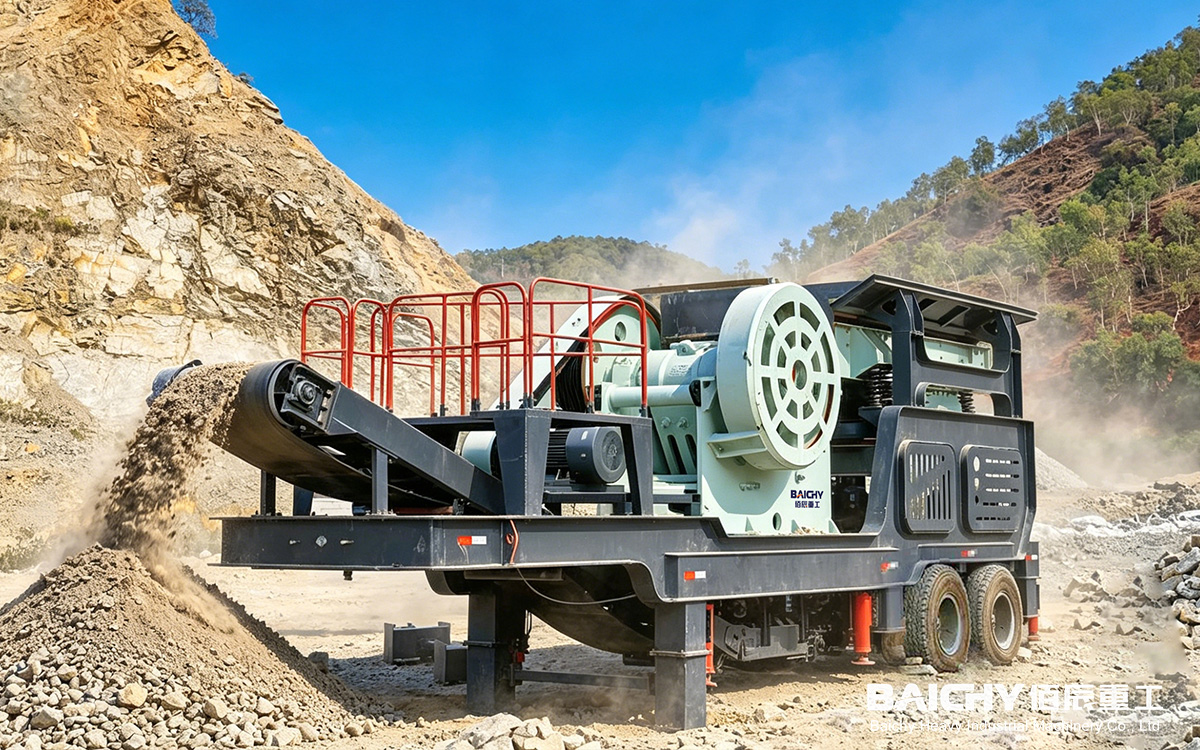
Portable-Stone-Crusher-Philippines
Chapter 2: Exclusively Designed "Hardcore" Configuration for the Philippines – Baichy's Technological Moat
To address the challenges mentioned above, Baichy's portable crusher, customized for the Philippine market, is not simply "equipment plus wheels," but a comprehensive industry solution.
1. Critical Detail: Deep Adaptation to the 60Hz Power Standard
This is the main reason why many exported equipment from China fails in the Philippines. The Philippine industrial power grid standard is 220V/230V 60Hz.
• Baichy Solution
We refuse to force 50Hz motors to operate via frequency converters. Instead, we directly equip them with high-efficiency 60Hz motors customized by Siemens or WEG. This ensures that the motor will not overheat due to frequency mismatch in the high-temperature and high-humidity environment of the Philippines, extending the life of the power system and ensuring continuous operation.
2. Materials Science: Mn18Cr2 High-Manganese Alloy Liners
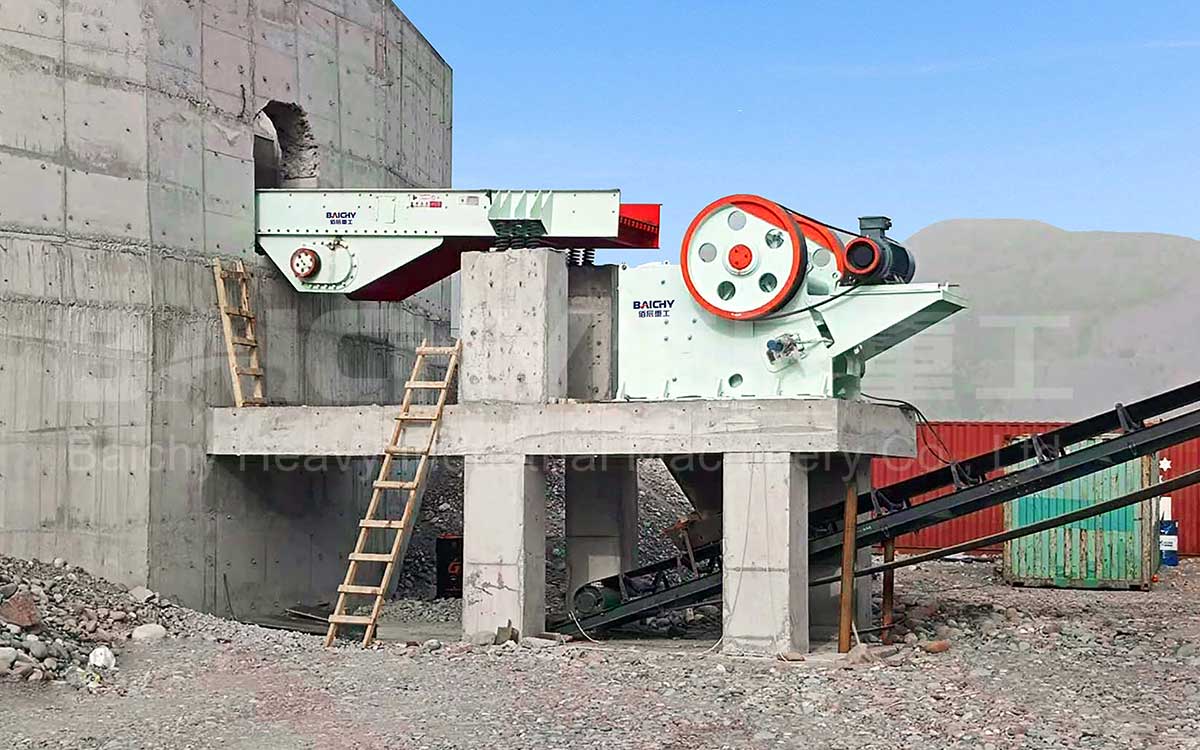
To address the high abrasiveness of river rocks, the moving and fixed jaw plates of the Baichy portable jaw crusher utilize a special Mn18Cr2 (high-manganese chromium alloy) casting process. Compared to the commonly used Mn13 material in China, its wear resistance life is increased by more than 30%. We have added high-strength buffer pads to the back of the liner plates, effectively absorbing the intense impact force when crushing hard rock and protecting the machine structure.
3. Inter-Island Logistics: Ultimate Mobility Design
The Philippines consists of 7,641 islands. If equipment is too heavy or difficult to disassemble, inter-island transportation costs will devour all profits.
• Baichy Solution
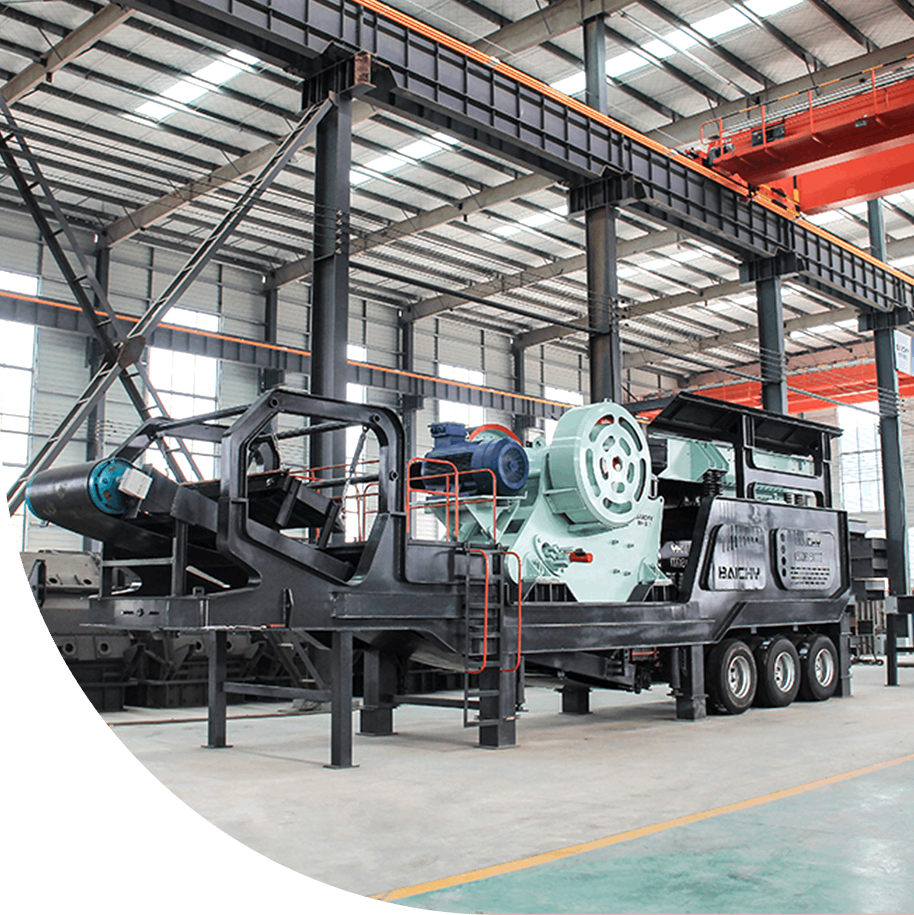
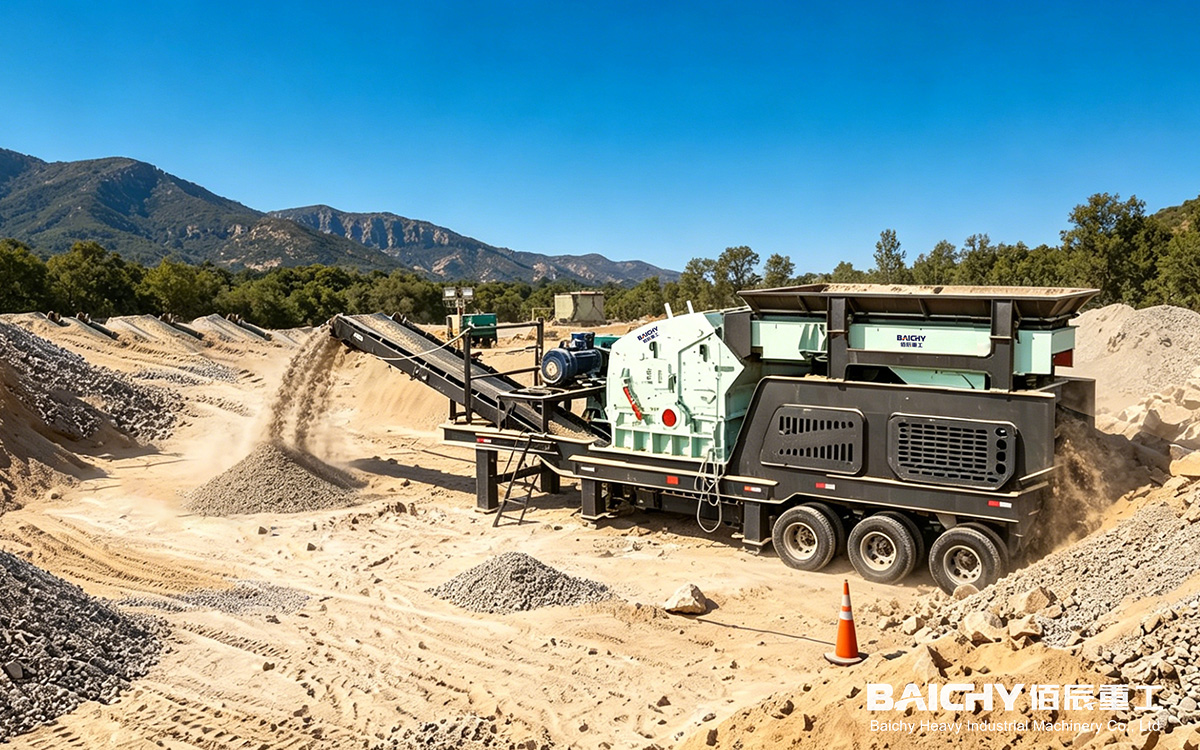
Our portable unit uses a high-strength I-beam integrated frame and is equipped with heavy-duty tires. It does not require complex concrete foundation construction and can be quickly moved between the rugged mountain roads of Luzon or the narrow construction sites of Cebu by a tractor.
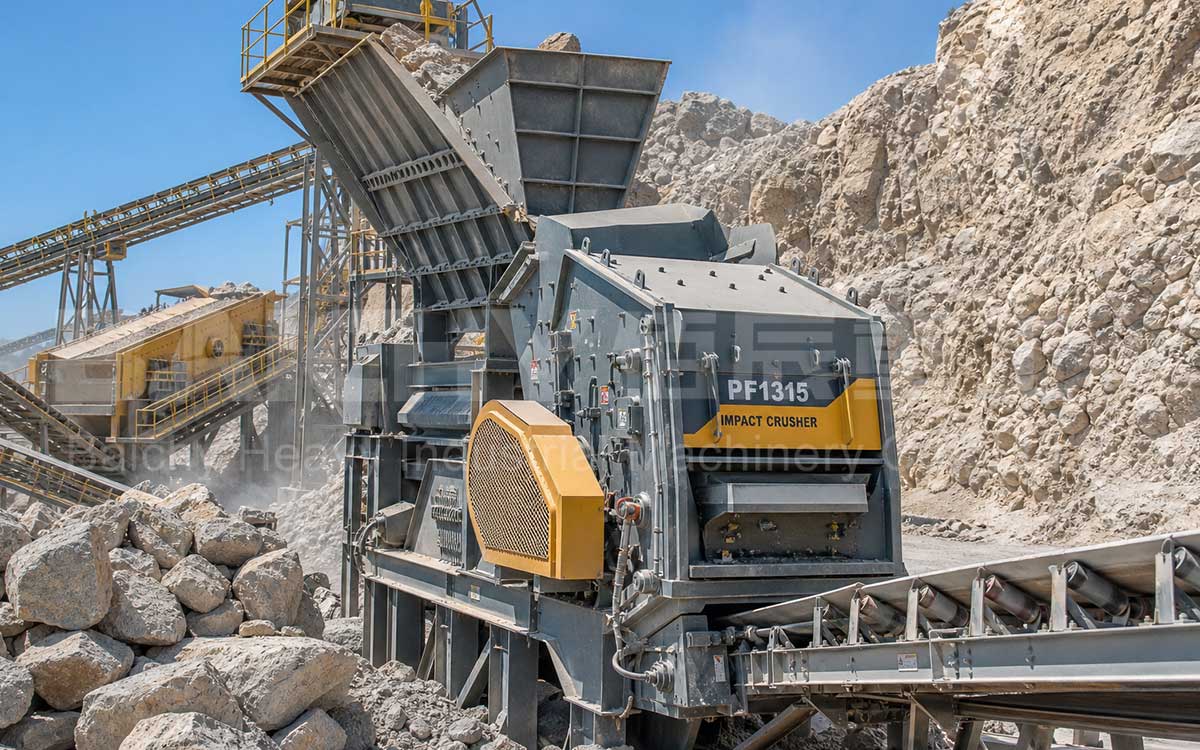
mobile-impact-crusher
Chapter 3: Practical Selection Recommendations – Process Configurations for Different Output Levels
Option 1: 30-50 TPH (tons/hour) – Preferred for Small to Medium-Sized Infrastructure Projects
• Core Configuration: Portable PE400×600 Jaw Crusher + Vibrating Feeder + Circular Vibrating Screen.
• Applicable Scenarios: Rural road construction, small concrete mixing plants, on-site crushing for river dredging.
• Advantages: Small investment, payback period typically 4-6 months.
Option 2: 80-150 TPH – Professional Quarries and Large Road and Bridge Projects
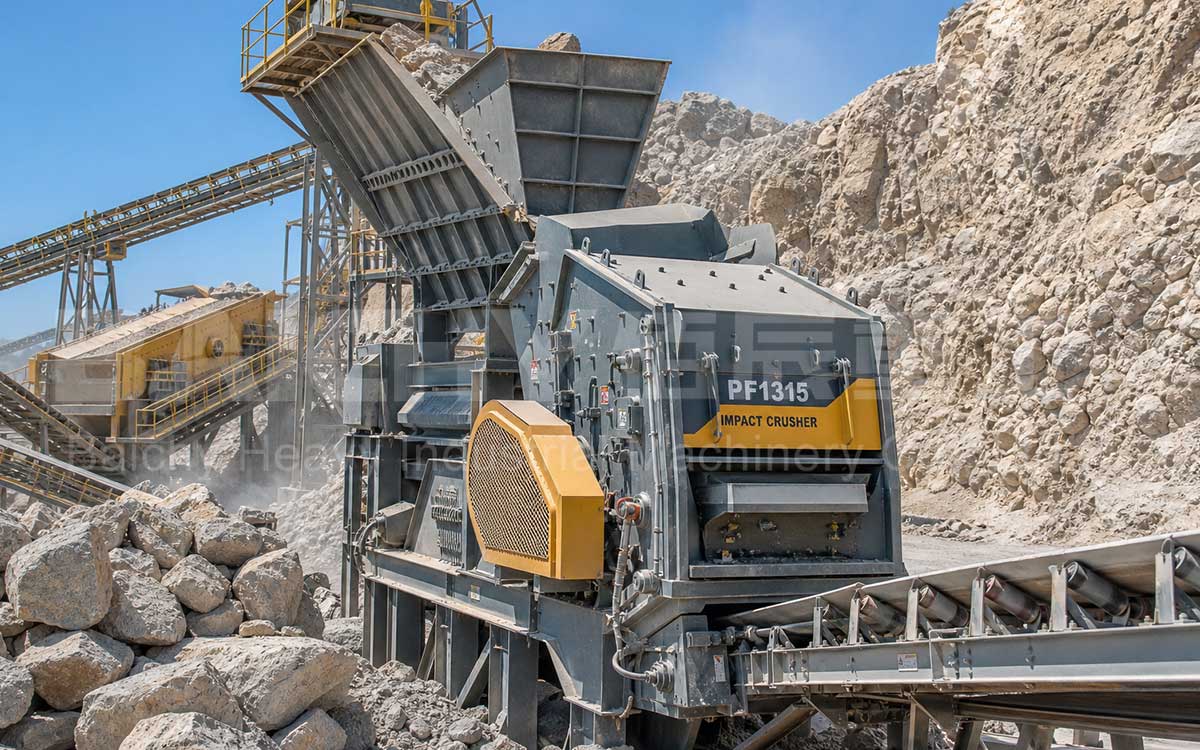
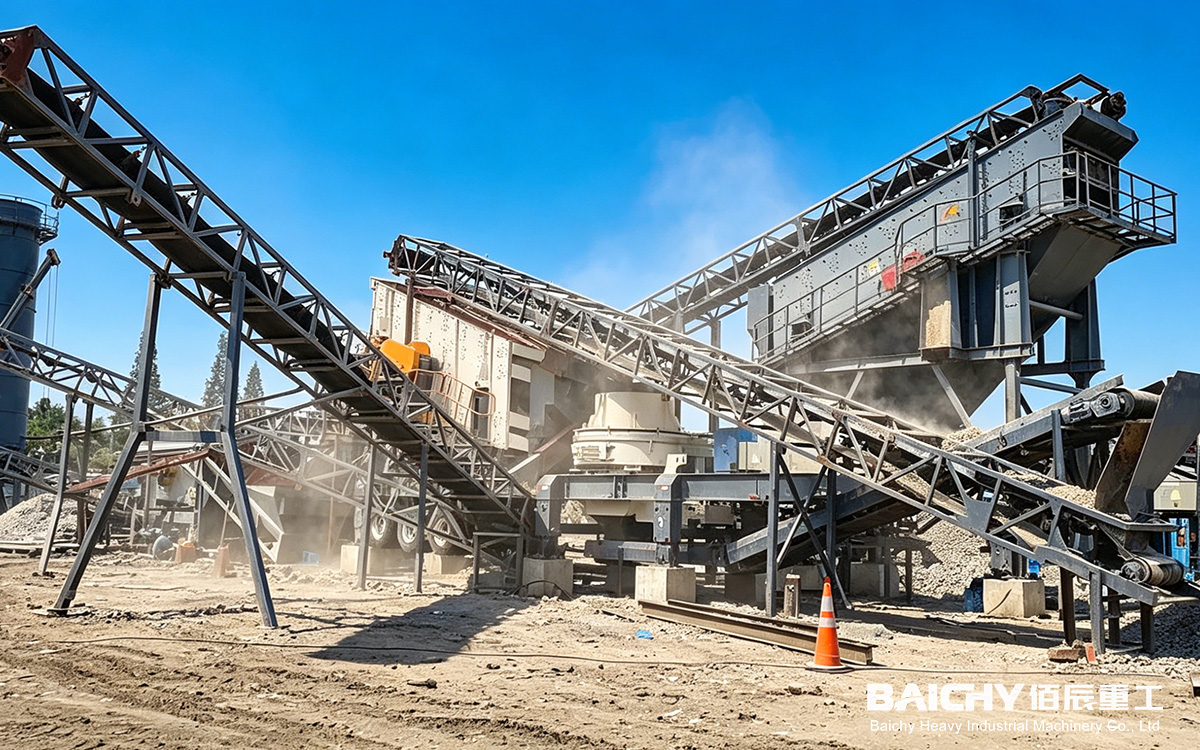
• Core Configuration: Portable PE600×900 Jaw Crusher (Primary Crushing) + Portable Cone Crusher (Secondary Shaping).
• Applicable Scenarios: Due to the high hardness of river stones, a cone crusher must be added if high-standard aggregates of 0-5mm/5-10mm/10-20mm are required.
• Technical Highlights: The cone crusher employs a hydraulic clearing system, enabling rapid clearing even when sudden thunderstorms in the Philippines cause material to become damp and clogged, eliminating the need for manual excavation.
Portable Stone Crushing Unit Selection Reference Table for River Rock in the Philippines
| Project Scale | Target Output (TPH) | Core Equipment Configuration (Primary + Secondary) | Output Material Specifications (mm) | Suggested Application Scenarios |
| Small and Flexible | 30-50 | Portable PE400x600 Jaw Crusher | 0-10, 10-25 | Rural Roads (FMR), Small Precast Plants |
| Medium and High-Efficiency | 80-120 | Portable PE600x900 + Cone Crusher | 0-5, 10-20, 20-40 | Cross-Sea Bridge Foundations, Provincial Highway Projects |
| Heavy-Duty Combined Operation | 150-250 | Three-Combination Mobile Station (Jaw Crusher + Cone Crusher + Screening) | All Sizes of Sand and Gravel | Large Industrial Park Construction, Commercial Quarries |
Chapter 4: ROI and After-Sales Guarantee Most Concerned by Philippine Customers
1. Economic Benefit Analysis (based on 50 TPH) (Taking the production line as an example)
The price of finished crushed stone purchased around Manila typically includes high transportation costs. By utilizing local river stone resources for crushing on-site at the project site, the cost per ton of aggregate can be directly reduced by $4-6. Based on 8 hours of operation per day, this can generate an additional net profit of approximately $2,000 per day.
2. A "Zero-Distance" After-Sales Service System
Baichy Heavy Industries understands that for Philippine customers, "one day of downtime means a loss of 10,000 pesos."
• Spare Parts Guarantee: We have long-term partners in Manila and Davao, maintaining a stock of easily damaged parts (liners, belts, bearings).
• Remote Technical Support: All 60Hz control cabinets have pre-installed diagnostic interfaces, allowing our engineers to guide local electricians through real-time video to resolve over 90% of common circuit problems.
Philippine River Stone Crushing FAQ
Q1: Can portable stone crushers operate off-grid in the Philippines without industrial power?
Answer: Absolutely. Baichy offers integrated diesel generator set solutions or diesel engine-driven jaw crusher solutions. For areas with unstable power supply, such as Mindanao, we recommend using Cummins or Yuchai engines to ensure operation even in remote areas.
Q2: How long does it take to ship from our Chinese factory to major ports in the Philippines?
A: The typical production cycle is 15-20 days. Sea freight to Manila takes approximately 10 days, and to Cebu or Davao approximately 14 days. We have extensive experience with RORO (Roll-on/Roll-off) shipping to ensure equipment arrives at the port undamaged.
Q3: What if the river stones are too round and the feed inlet can't handle the material?
A: Baichy's PE series jaw crushers feature an optimized nip angle design. By adjusting the stroke of the eccentric shaft and the geometry of the crushing chamber, we have increased the "gripping force" of the liners on smooth river stones, fundamentally solving the slippage problem.