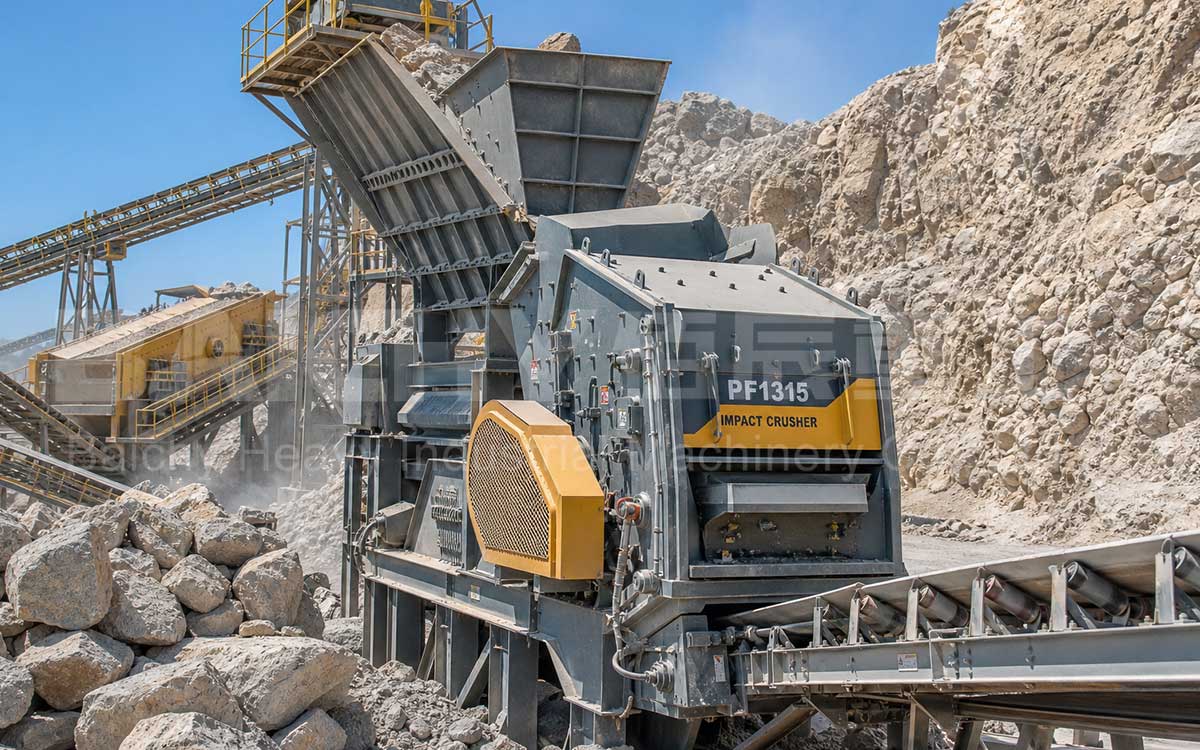

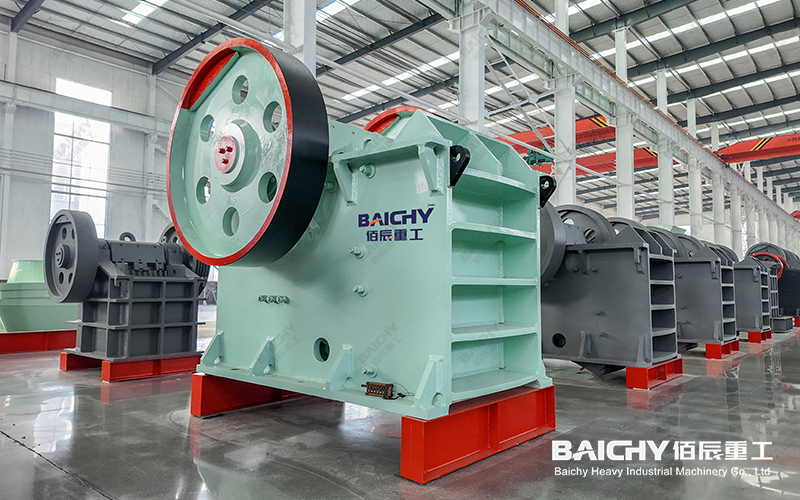
PE series Jaw Crusher
The jaw crusher serves as the initial stage in sand, aggregate, and mineral processing lines, handling over 80% of the primary crushing workload; its performance directly dictates the entire line's processing efficiency and cost-per-ton. Selecting the right jaw crusher saves you more than just the initial purchase price difference—it yields long-term savings on electricity, wear parts, and downtime losses over the next 5 to 10 years. The bottom line is simple: for the primary crushing stage, choosing the right jaw crusher model is far more important than merely securing a low purchase price. The following guide helps you identify the ideal jaw crusher in just five minutes by examining three key aspects: operational pain points, technical specifications, and model selection criteria.
I. Is Your Production Line Suffering from "Chronic Hemorrhage"?
Frequent jamming when processing high-hardness materials forces repeated shutdowns for clearing; jaw plates wear out prematurely—requiring replacement every 3–4 months, with each instance causing 2–3 days of production stoppage; uneven output particle size leads to oversized material being recirculated and downstream equipment operating under long-term overload; electricity costs account for over 40% of the crushing stage's total expenses and are rising annually; long lead times for spare parts and slow after-sales responses mean a single breakdown can result in the loss of several days' worth of output. The root cause of these issues lies not with the operators, but with the equipment's structural design and the logic behind model selection. When the machine stops, the entire line grinds to a halt—the primary crusher is the "throat" of the production line; its reliability directly determines the availability of the entire system.
II. Translating Specifications into Benefits
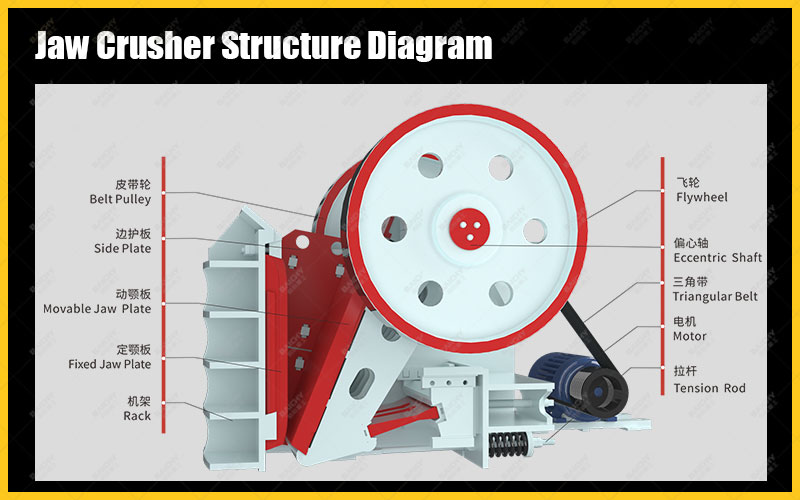
PE jaw crusher structure diagram
• Deep V-shaped crushing chamber: Smoother material intake and reduced clogging risk; throughput increases by 15–20% at the same power level—effectively a free capacity upgrade;
• High-manganese steel jaw plates: Extended wear life (replacement cycle increased from 3 months to over 6 months), reducing wear costs per ton by approximately 30%;
• Flywheel energy storage design: Balances load fluctuations and lowers peak motor stress; saves 8–12% on electricity costs per ton, amounting to annual savings of tens of thousands of yuan;
• Hydraulic/wedge discharge opening adjustment (select models): Adjust output size in 5 minutes without stopping the machine, adding 1–2 hours of effective daily operating time;
• Modular frame structure: Easy assembly and disassembly; reduces both maintenance labor and spare parts inventory, while shortening maintenance downtime;
• Toggle plate overload protection: The toggle plate breaks first to protect the main unit when encountering uncrushable objects (like tramp iron), preventing damage to core components and drastically cutting repair costs.
III. Quick Overview of Key Specifications
The table below shows reference capacities for medium-hard materials (e.g., limestone with a bulk density of 1.6 t/m³); for hard materials like granite, apply a 0.7–0.8 conversion factor. Actual capacity depends on material properties and site conditions.
| Model |
Feeder Opening Size(mm) |
Max. Feeding Size (mm) |
Outlet adjusting Size(mm) |
Capacity (t/h) |
Motor Power (kw) |
Overall Dimension (mm) |
| PE250x400 | 250x400 | 210 | 25-60 | 5-20 | 15 | 1215x1240x1210 |
| PE400x600 | 400x600 | 350 | 40-90 | 15-60 | 30 | 1700x1750x1680 |
| PE500x750 | 500x750 | 425 | 50-100 | 40-130 | 45 | 2150x1900x1950 |
| PE600x900 | 600x900 | 500 | 60-125 | 90-180 | 55 | 2500x2010x2350 |
| PE750x1060 | 750x1060 | 630 | 60-150 | 110-380 | 110 | 2630x2310x3110 |
| PE900x1200 | 900x1200 | 750 | 95-165 | 220-450 | 132 | 3720x2850x3250 |
| PE1000x1200 | 1000x1200 | 850 | 200-300 | 280-560 | 160 | 3820x2850x3250 |
| PE1200x1500 | 1200x1500 | 1020 | 150-300 | 400-800 | 220 | 4590×3342×3553 |
| PE1500x1800 | 1500x1800 | 1200 | 210-360 | 520-1100 | 280 | 5100x4700x4300 |
IV. Model Selection Guide: Pitfalls to Avoid
• Match model to material: Choose large-chamber designs and high-manganese steel jaw plates for hard materials; for softer materials, power specifications can be adjusted downward to avoid waste;
• Build in a 20% capacity margin: Plan the production line based on 80% of the nominal capacity to prevent machine damage from overloading during peak seasons and energy waste during off-peak periods;
• Focus on three key factors: Jaw plate material and supply lead times, ease of discharge opening adjustment, and local after-sales service coverage;
• Confirm power standards in advance: The entire series supports 50Hz/60Hz dual-frequency customization (380V/400V/440V), avoiding the need for transformer modifications after equipment delivery.
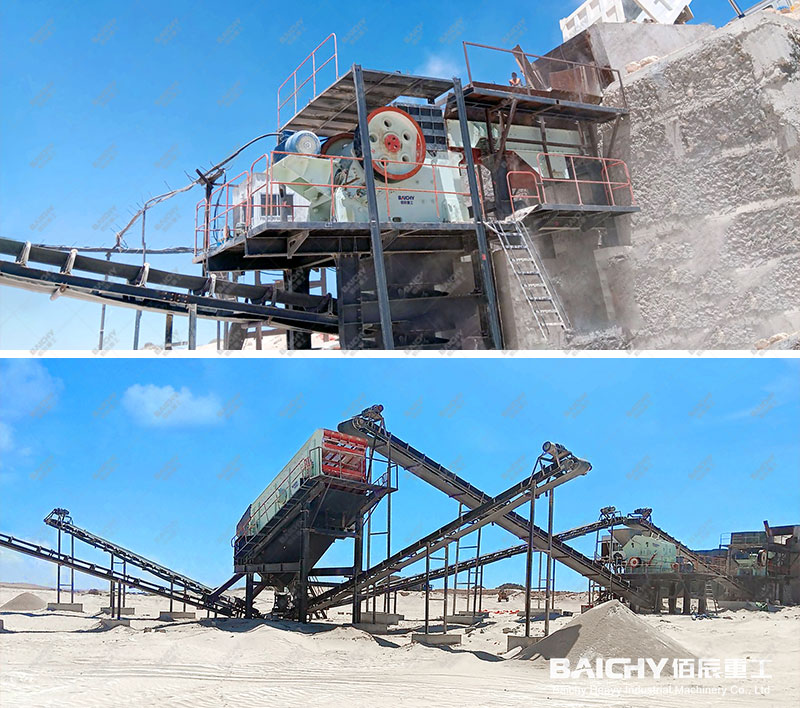
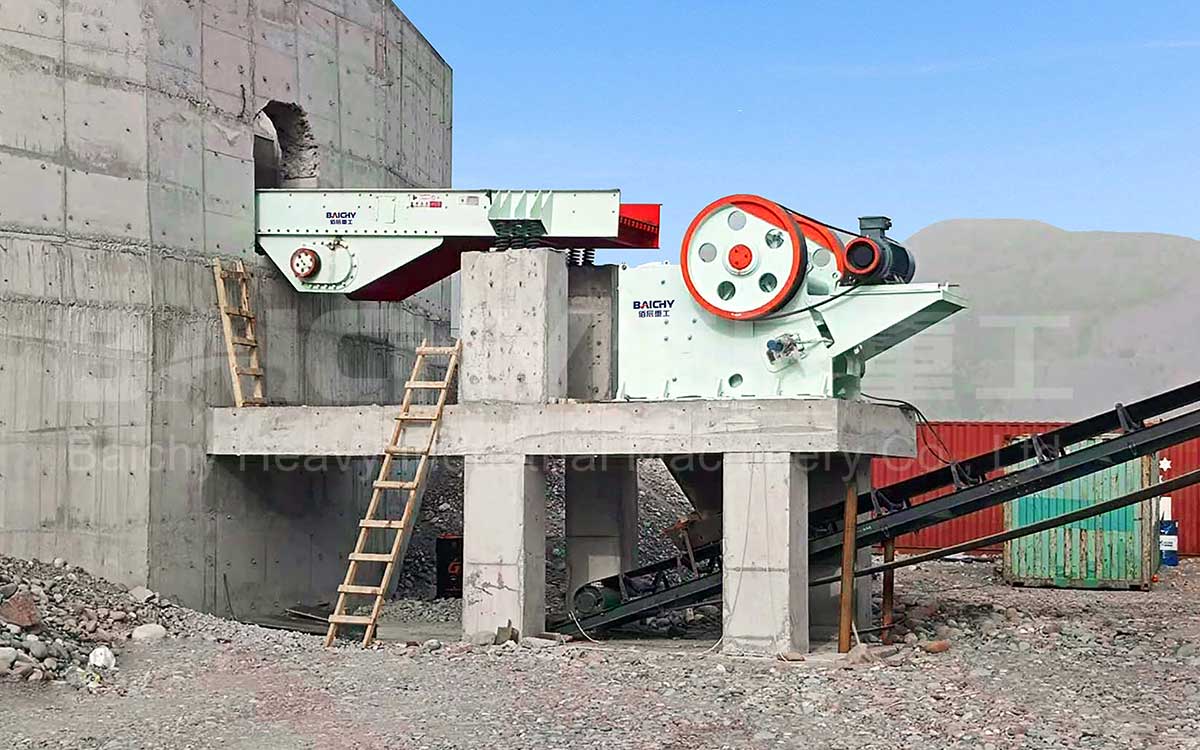
Stationary-crushing-production-line
V. FAQ
Q1: How do I choose between a jaw crusher and an impact crusher?
Choose a jaw crusher for hard, highly abrasive materials (such as granite, basalt, or iron ore); choose an impact crusher for medium-soft materials where high-quality particle shape is required. The standard configuration uses a jaw crusher for primary crushing and an impact crusher for secondary crushing.
Q2: What is the difference between nominal throughput and actual capacity?
Nominal values are based on medium-hard materials. Adjust capacity by a factor of 0.7–0.8 for hard materials and 0.85 for loose materials; it is recommended to plan based on 80% of the nominal capacity.
Q3: How often do jaw plates need to be replaced?
It depends on the material's abrasiveness and the jaw plate material. High-manganese steel jaw plates typically last 4–6 months when crushing granite and 8–12 months for limestone; reversible jaw plates allow for use on both sides, effectively doubling their service life.
Q4: Can a jaw crusher be mounted on a mobile crushing station?
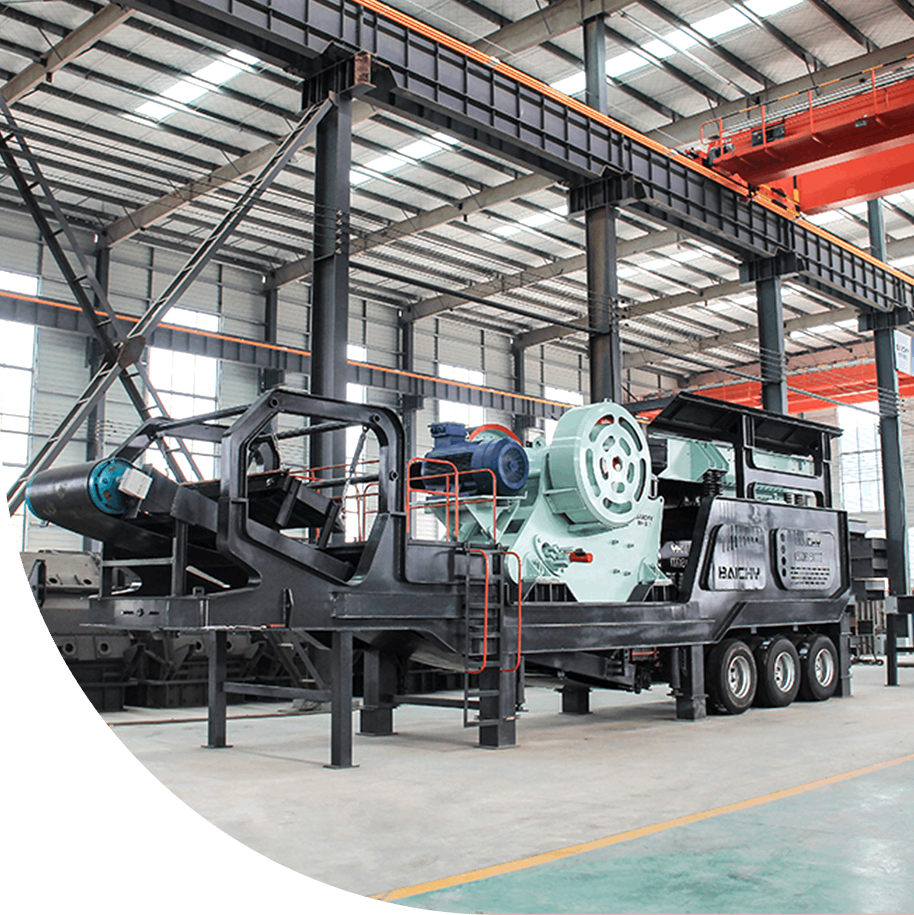
Yes. The YDPZ series mobile station features a jaw crusher unit; it eliminates the need for concrete foundations and offers flexible relocation. It is ideal for projects with dispersed sites or where on-site material processing is required, allowing for immediate operation upon arrival. It is suitable for mining, road construction, and construction waste recycling applications.