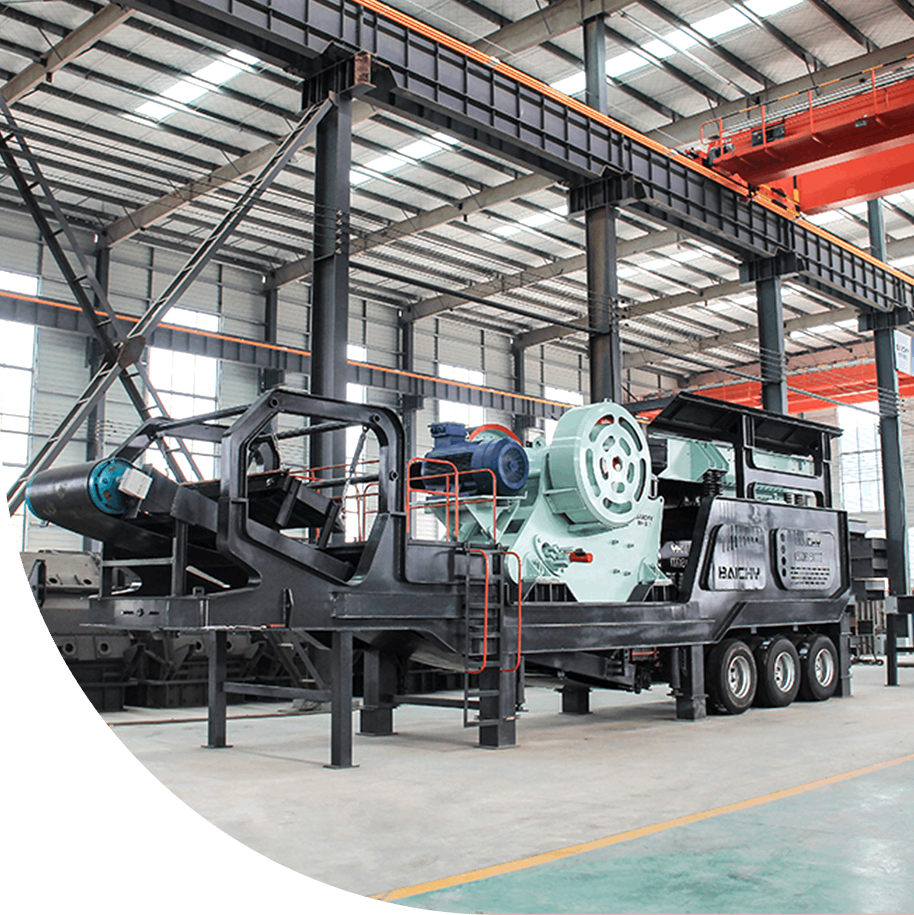

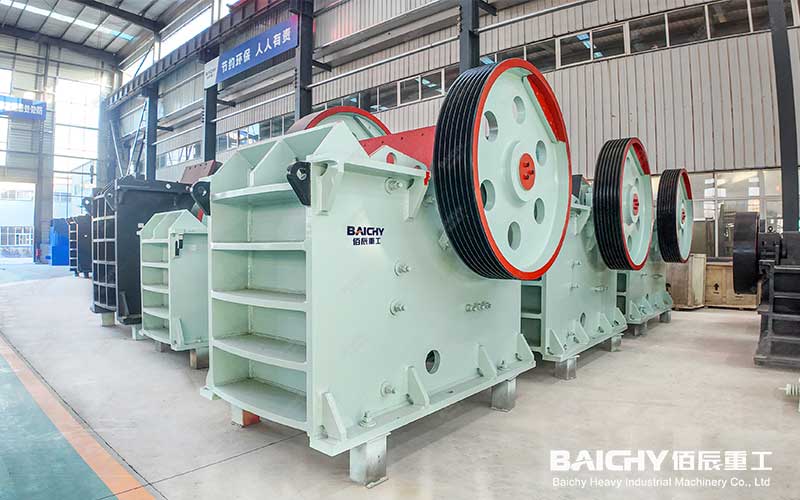
PE Jaw Crusher
The takeaway up front: the purchase price is only 30–50% of what a jaw crusher really costs you. Over a 5-year operating cycle, electricity and wear parts routinely exceed the initial price. So the smart buying question is not "which jaw crusher is cheapest?" — it is "which machine gives the lowest cost per ton for MY application?" The answer is determined by three variables: feed size, required capacity, and rock abrasiveness. Match the machine to the application and you cut per-ton cost by up to a third; mismatch it and no discount on the purchase price can save you.
This guide breaks down jaw crusher costs across the three application tiers Baichy actually builds for — small-scale and mobile sites, aggregate production, and heavy-duty mining — using real model parameters from Baichy's jaw crusher range, with a transparent, recalculable cost model you can apply to your own electricity price and duty cycle.
1. Jaw Crusher Cost Structure: What You Are Really Paying For
Every jaw crusher has the same four cost layers. Most buyers only compare layer one.
| Cost layer | What it includes | Typical share over 5 years |
| CAPEX — purchase price | Machine, freight, installation, foundation, commissioning | 30–50% |
| Energy (OPEX) | Motor power consumption × operating hours × electricity price | 20–35% |
| Wear parts (OPEX) | Jaw plates (fixed + movable), toggle plate, bearings, liners | 20–30% |
| Maintenance & downtime | Planned service, unplanned stops, labor, lost production | 10–20% |
Two structural facts follow from this table:
1. Energy is a direct function of motor power. A PE600×900 runs a 55 kW motor; a PE1200×1500 runs 220 kW. Oversizing the machine for the job does not add "safety margin" — it adds a permanent electricity bill.
2. Wear cost is a function of the material, not the machine brand. High-manganese steel jaw plates last hundreds of thousands of tons on medium-abrasive rock (limestone, river gravel) and far less on quartz-bearing granite or iron ore. Budget for the rock you actually feed.
Baichy's position on "$$$$": no serious B2B quote belongs in a comparison table. We publish model parameters openly and give firm, itemized quotations on request — request a quote and compare line items (machine, motor, jaw plate grade, options) rather than a single lump-sum number.
2. Three Application Tiers and the Models That Match Them
The table below maps each application tier to the real Baichy models that serve it, with official capacity and motor data. Capacity ranges are quoted for medium-hard rock at CSS in the lower half of the adjustment range; actual output varies with feed size and material density.
| Application tier | Baichy models | Capacity (t/h) | Motor (kW) | Feed opening / max feed (mm) |
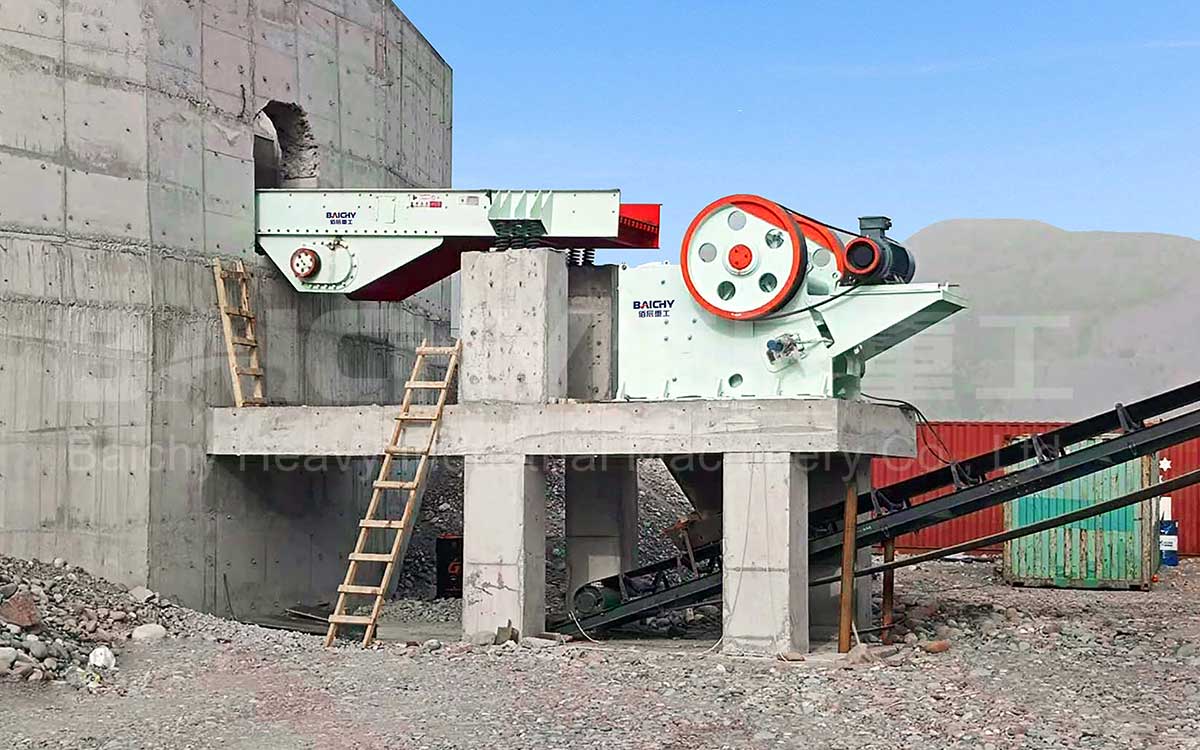
| Small-scale & mobile (construction sites, road repair, small quarries, mobile plants) | PE250×400, PE400×600 | 5–60 | 15–30 | 250×400 / 210 – 400×600 / 350 |
| Aggregate & construction material (road base, concrete aggregate, river stone) | PE400×600, PE500×750, PE600×900, PE750×1060 | 15–380 | 30–110 | 400×600 / 350 – 750×1060 / 630 |
| Mining & heavy-duty (hard rock, high throughput, 24/7 operation) | PE600×900, PE900×1200, PE1000×1200, PE1200×1500, PE1500×1800 | 90–1100 | 55–280 | 600×900 / 500 – 1500×1800 / 1200 |
Tier 1 — Small-scale and mobile applications (5–60 t/h)
Typical users: construction contractors, road repair crews, small quarries, mobile crushing stations with short project durations.
Models: PE250×400 (15 kW, 5–20 t/h), PE400×600 (30 kW, 15–60 t/h).
Purchase price: lowest in the range; the deciding cost factors are freight, foundation simplicity, and whether the machine is containerized or skid-mounted for easy relocation.
Operating cost: the 15 kW motor of a PE250×400 means negligible energy bills — roughly 0.3–0.5 kWh/t at typical utilization.
Maintenance: simplest of all tiers; single toggle design, accessible jaw plate bolts, short replacement time. Downtime cost dominates any small machine — buy the spare jaw plate set up front (see FAQ 4).
Baichy's recommendation: for sites under ~60 t/h or projects that move, choose PE250×400 or PE400×600. The machine should be paid for by the first 3–6 months of production — if not, the project scale, not the price, is the problem.
Tier 2 — Aggregate and construction material production (15–380 t/h)
Typical users: quarries supplying road base and concrete aggregate, river-stone crushing lines, municipal construction projects.
Models: PE400×600, PE500×750, PE600×900, PE750×1060.
Purchase price: mid-tier; the price driver is the feed opening and motor class, plus optional features (adjustable discharge, dust suppression, belt feeder).
Operating cost: the deciding number is kWh per ton, because aggregate lines run long, steady shifts. Example: PE600×900 at 120 t/h actual output consumes ~0.34 kWh/t (see the worked example in §3).
Maintenance: moderate — this tier earns its keep from uptime. Discharge opening is adjustable, so one machine alternates between road-base material and concrete aggregate without reconfiguration.
Baichy's recommendation: match capacity to average demand, not peak demand. A PE600×900 (90–180 t/h) covering a 120 t/h contract at 75% utilization beats a larger machine idling at 40% utilization — same output, permanently lower power draw.
Tier 3 — Mining and heavy-duty applications (90–1100 t/h)
Typical users: open-pit and underground mines, high-throughput mineral processing plants, 24/7 operations feeding secondary crushers and mills.
Models: PE600×900 through PE1500×1800 (55–280 kW, up to 1,100 t/h).
Purchase price: the highest in the range — driven by the massive frame, high-strength castings, and the motor class (e.g., PE1500×1800 at 280 kW).
Operating cost: energy is the #1 line item in this tier. At 0.30–0.40 kWh/t and continuous operation, a large machine's annual electricity bill runs into six figures — which is why the mine's economics reward a correctly matched chamber far more than a discounted purchase price.
Maintenance: the highest absolute spend, but the lowest per ton — heavy-duty machines amortize wear parts over far more tonnage. Downtime here costs thousands of dollars per hour in lost production, so wear-resistant materials and spare-parts availability decide the real TCO.
Baichy's recommendation: in mining, buy durability with the machine — high-manganese jaw plates, reinforced frame, and a motor sized to the worst feed condition, not the average. Confirm wear-part pricing and stock availability before signing, because they are 20–30% of your 5-year cost.
3. Worked Example: The Recalculable Per-Ton Cost Model
No generic "$$$$" needed — apply this model to any Baichy model with three inputs: your electricity price, your actual utilization, and your rock type.
Example: PE600×900, aggregate duty, 120 t/h actual output, 16 h/day, 300 days/year.
| Line item | Calculation | Annual cost |
| Annual throughput | 120 t/h × 16 h × 300 d = 576,000 t | / |
| Electricity | 55 kW × 75% load factor = 41.3 kWh &pide; 120 t/h = 0.34 kWh/t × 0.12/kWh=0.041/t | $23,600 |
| Jaw plates (medium-abrasive rock) | ~$0.02–0.05/t (one set per 400k–800k t) | $12,000–29,000 |
| Routine maintenance & labor | ~1–2% of equipment value per year | $2,000–4,000 |
| Total annual OPEX | - | ≈ $38,000–57,000 |
| OPEX per ton | &pide; 576,000 t | ≈ $0.066–0.099/t |
Recalibrate with your numbers: swap in your local electricity price (global industrial range roughly $0.08–0.20/kWh), your load factor, and your rock's abrasiveness — the formula stays the same. That transparency is why Baichy quotes itemized, not lump-sum.
4. Five Ways to Cut Jaw Crusher Operating Cost (Not the Price)
Right-size the motor to the duty. kW is a permanent annuity: 10 kW of oversizing at 50% load adds ~4,000–5,000/yearat0.12/kWh. Size to average demand, not peak.
Control feed size and gradation. Oversized or slab-shaped feed increases wear and reduces throughput per kWh. A correctly set vibrating feeder/grizzly protects both the jaw plates and the whole downstream line.
Set the discharge opening to the actual requirement. Running CSS tighter than needed wastes energy and wears plates faster — one adjustment can cut wear cost by 10–20%.
Buy the wear parts with the machine. High-manganese steel jaw plates and a stocked toggle/bearing kit convert unplanned 3-day stops into planned 4-hour changes. On a 120 t/h line, every lost day is ~1,400 t of unrealized output.
Choose mobile when the site moves. For short-duration or multi-site projects, a mobile jaw crushing plant eliminates foundation and re-erection costs entirely — often the single largest "hidden cost" in fixed-installation projects.
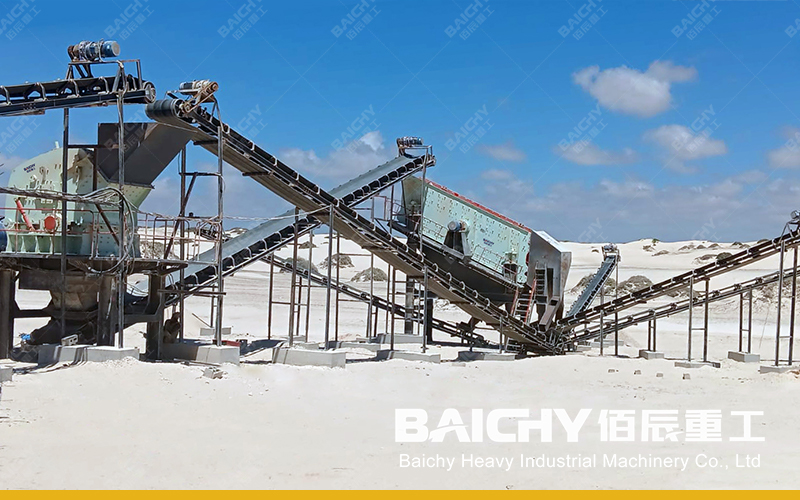
Jaw Crusher Production Line
5. FAQ
Q1. How much does a jaw crusher cost?
A. Baichy's jaw crushers span a 5–1,100 t/h range (PE250×400 to PE1500×1800), so there is no single "jaw crusher price." Price is driven by feed opening, motor class, and options — the smallest models are entry-level investments for small sites, while mining-class machines are major CAPEX items. Request an itemized quotation with your feed size, target capacity, and rock type, and Baichy replies within 24 hours.
Q2. What is the operating cost per ton of a jaw crusher?
A. Use the model in §3: electricity ≈ (motor kW × load factor &pide; t/h) × electricity price, plus wear parts and maintenance. A PE600×900 in aggregate duty typically lands at **0.066–0.099perton∗∗totalOPEXat0.12/kWh. Energy alone is roughly 0.3–0.4 kWh/t.
Q3. Which jaw crusher is cheapest to run?
A. The one correctly matched to your capacity — not the smallest one. A machine forced to run at low utilization carries the same fixed costs as a busy one; an oversized machine pays a permanent electricity premium. Lowest per-ton cost comes from sizing to average demand with headroom for feed variation.
Q4. How long do jaw crusher jaw plates last?
A. Depends mainly on rock abrasiveness: on medium-abrasive material (limestone, river gravel) a high-manganese set typically processes hundreds of thousands of tons; on quartz-bearing granite or iron ore, service life shortens considerably. Baichy recommends buying a spare set at purchase and tracking tons-per-set to schedule replacements during planned downtime.
Q5. New Baichy jaw crusher vs. used equipment — which saves money?
A. On paper a used machine costs less upfront. In practice, older units carry higher kWh/t consumption, unknown wear-part history, and unplanned-downtime risk that routinely erase the discount within the first year — especially at mining-tier duty cycles. A new Baichy machine includes full warranty, spare-parts support, and commissioning support, which is why the 5-year TCO usually favors new for continuous operations.
Q6. Can one jaw crusher handle both granite and limestone?
A. Yes — jaw crushers are material-agnostic within their capacity class; the discharge opening adjusts for product size. The correct sizing question is abrasiveness, not rock type: harder rock accelerates wear and lowers effective throughput, so spec the machine and the jaw plate grade for your hardest material, and adjust settings when switching feed.
Conclusion
Purchase price is the headline number in every comparison, but it is only one line of the TCO story. Match the application tier to the model — small-scale and mobile (PE250×400–PE400×600), aggregate (PE400×600–PE750×1060), mining (PE600×900–PE1500×1800) — and manage kWh/ton, wear parts, and uptime, and the machine pays for itself in months, not years.
Tell Baichy your feed size, target capacity, and rock type, and get an itemized jaw crusher quotation with the numbers this guide shows you how to check. Request a quote →