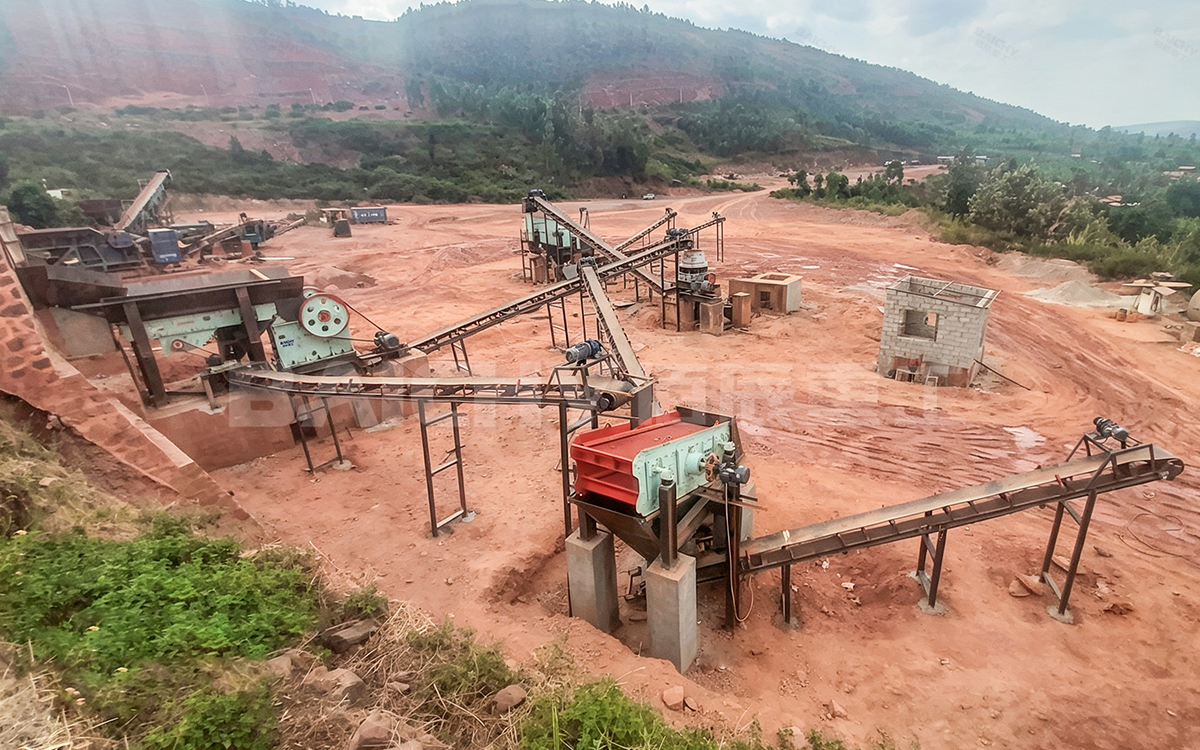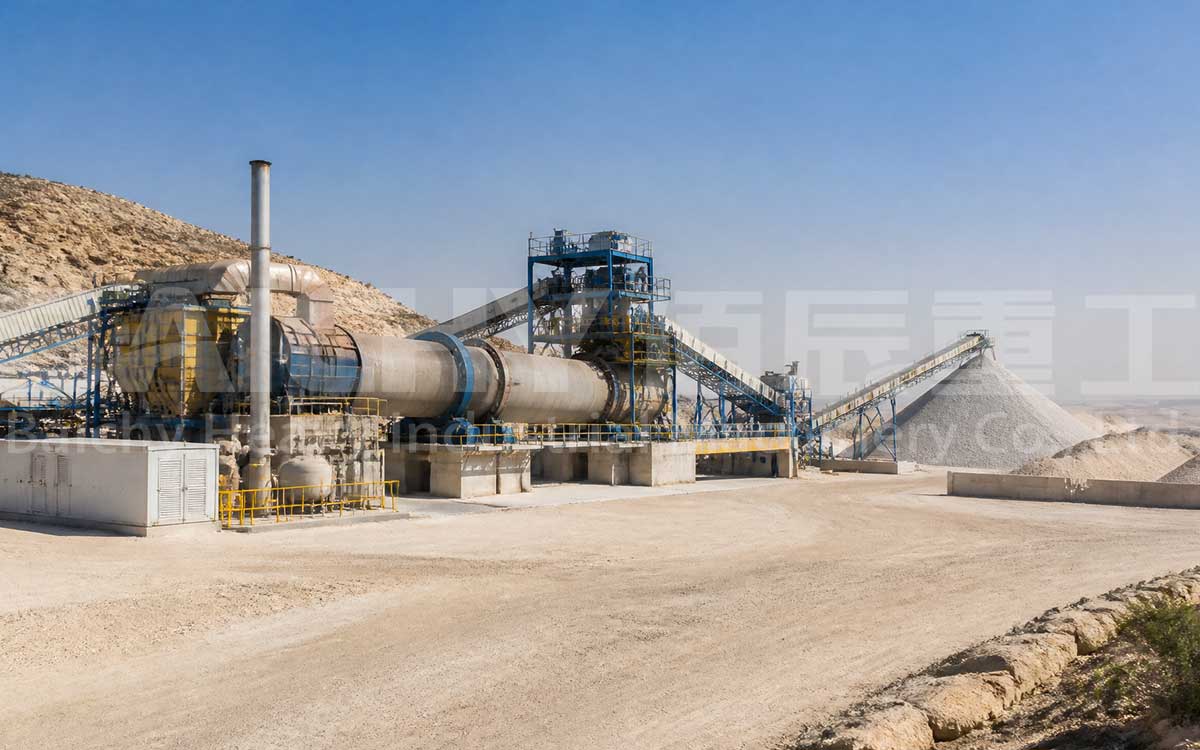

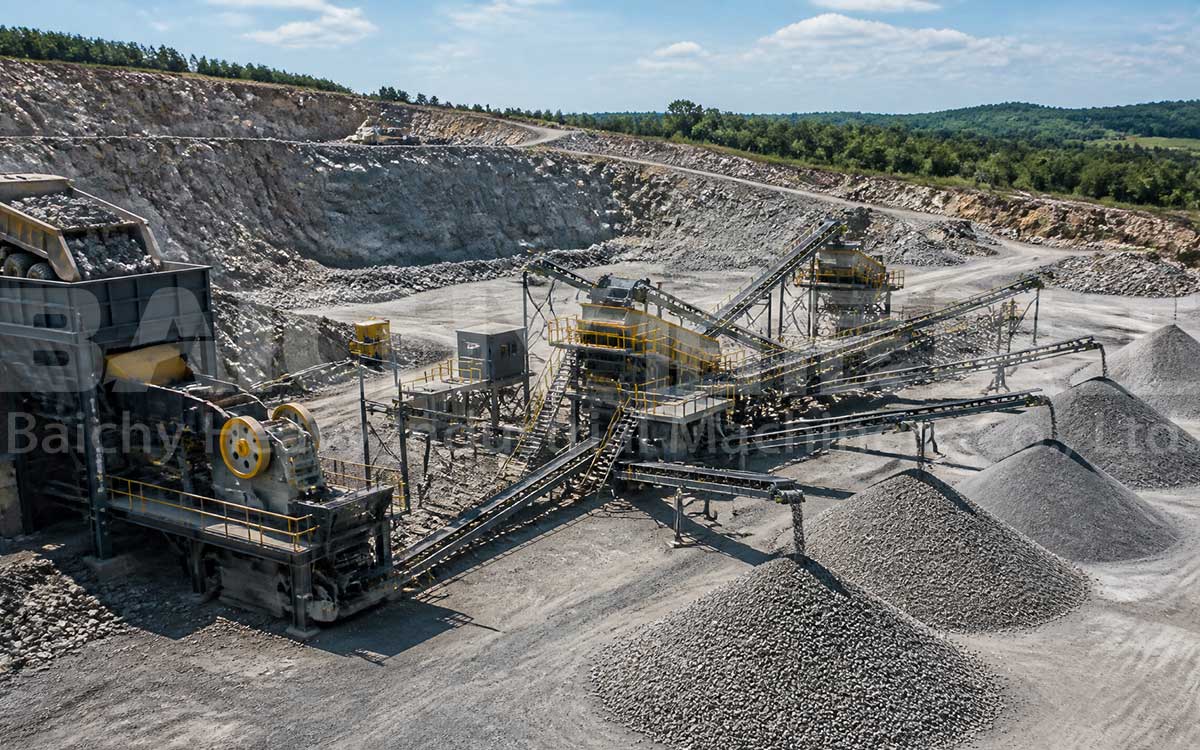
200–250 TPH Hard Rock Plant for 5 Aggregate Products
One Feed Source, Five Marketable Products
A quarry does not always need separate equipment for every customer requirement. With a balanced crushing, screening, and conveying system, one 200–250 tons per hour (TPH) plant can process medium-hard to hard rock and produce five useful aggregate products:
• Sand: 0–1/4 inch
• Fine gravel: 1/4–1/2 inch
• Gravel: 1/2–3/4 inch
• Base material: 0–1.5 inches
• Subbase material: 0–2.5 inches
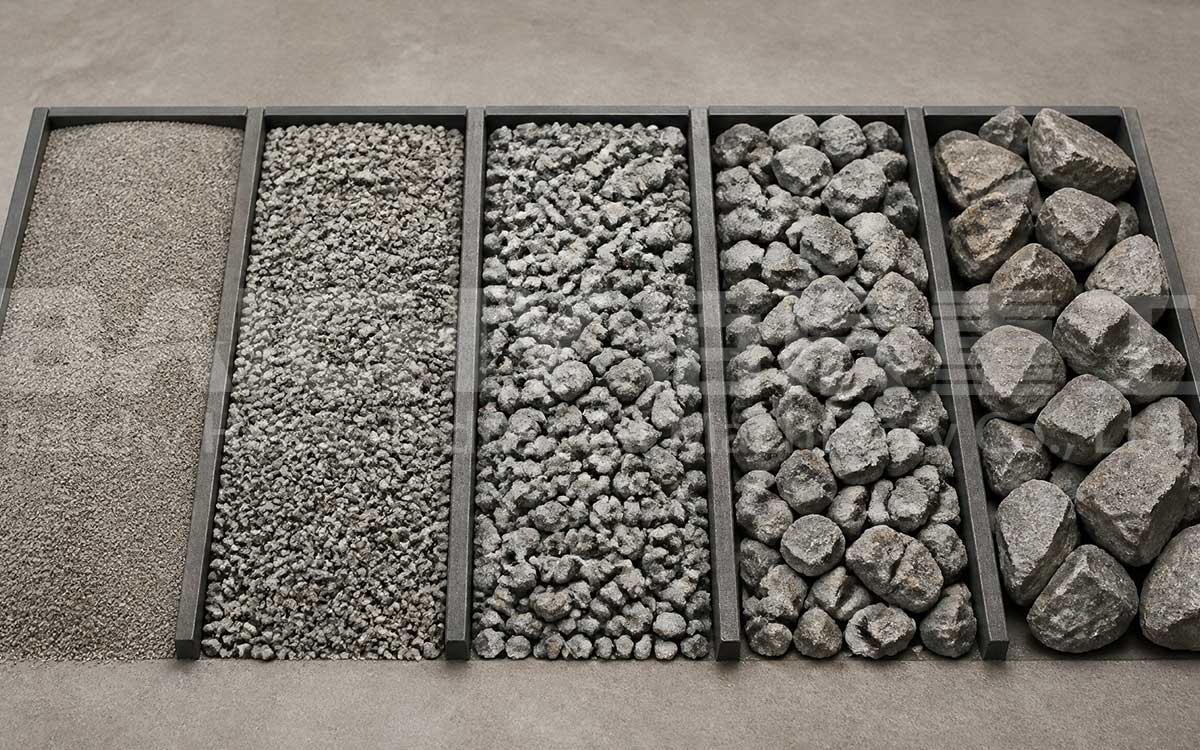
Sand 0–1/4", fine gravel 1/4"–1/2", gravel 1/2"–3/4", base 0–1.5", sub-base 0–2.5"
The challenge is not simply reducing rock size. The plant must accept feed up to 30 inches, maintain a continuous flow, and separate the output into sizes suitable for concrete, asphalt, road construction, and earthworks. Therefore, screen design and product routing are as important as crusher selection.
Project Requirements
| Item | Requirement | Design focus |
|---|---|---|
| Feed material | Medium-hard to hard rock | Heavy-duty crushing and wear protection |
| Maximum feed | Up to 30 inches | Large hopper, feeder, and primary opening |
| Capacity | 200–250 TPH | Balanced crushers, screens, conveyors, and stockpiles |
| Fine product | 0–1/4-inch sand | Fine screening and optional shaping |
| Gravel products | 1/4–1/2 and 1/2–3/4 inch | Multi-deck screening and accurate cut points |
| Road products | 0–1.5-inch base; 0–2.5-inch subbase | Flexible routing and controlled blending |
How the 200–250 TPH Process Works
1. Feed reception and controlled loading
Run-of-quarry rock enters a heavy-duty hopper or feed bin. A vibrating feeder delivers material at a steady rate to the primary crusher, reducing surges and helping loading equipment work consistently. The feeder must be selected for the 30-inch maximum feed size, natural fines, and the quarry's loading method.
If the raw material contains many fines, a grizzly or prescreen can remove part of them before primary crushing. This may lower unnecessary crushing work, but the opening should be selected according to the desired base and subbase grading as well as capacity.
2. Primary crushing for large hard rock
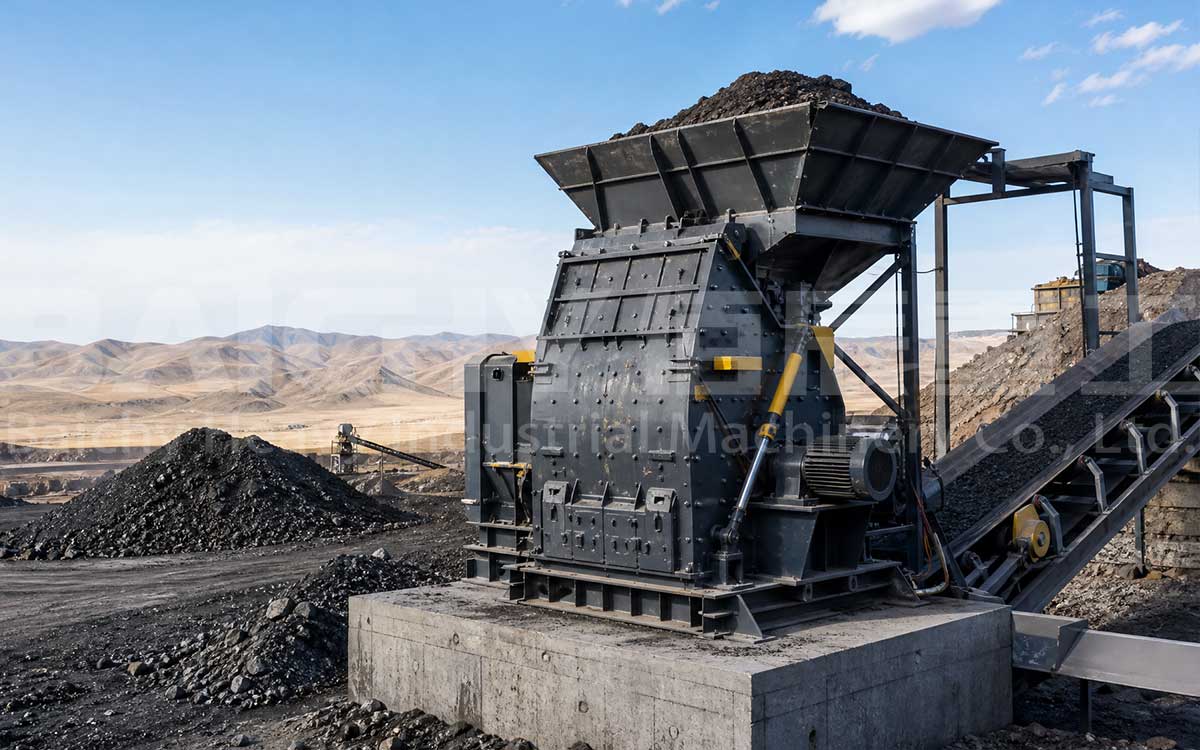
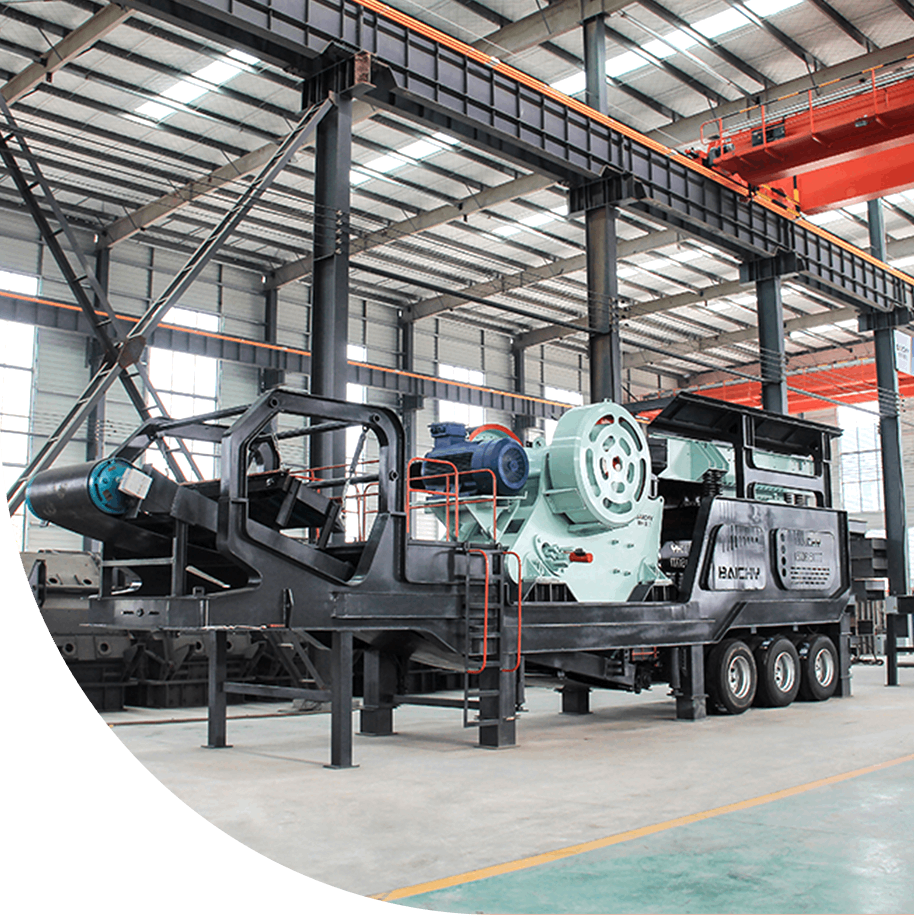
The primary crusher performs the first major size reduction. A heavy-duty jaw crusher is commonly evaluated for large hard-rock feed because it can accept large lumps and prepare a manageable product for the secondary stage. Selection must match feed shape, rock properties, and discharge size.
3. Secondary crushing and product control
The secondary stage reduces the primary product and controls final gradation. A cone crusher is often considered for abrasive hard rock, while another type may suit different particle-shape or fine-product requirements.
Crusher selection should follow the product mix. A project focused on base and subbase may use a controlled coarse route to reduce recirculation. A project requiring more sand and narrow gravel sizes may need additional fine reduction, screening area, or an optional shaping stage.
4. Multi-deck screening for five products
The multi-deck vibrating screen separates the crushed material into the requested ranges. A practical arrangement may include a coarse route for 0–2.5-inch subbase, a route for 0–1.5-inch base, intermediate decks for 1/2–3/4-inch gravel and 1/4–1/2-inch fine gravel, and a fine deck for 0–1/4-inch sand.
Oversize can return to the secondary crusher through a closed circuit. Exact apertures and deck areas should be confirmed after testing the rock because particle shape, moisture, feed gradation, and target output ratio all affect performance. The five products will not necessarily be produced in equal quantities.
Flexible Product Routing for Different Markets
A five-product plant should not be locked into one setting. Demand may shift from road materials to concrete or asphalt aggregates. Adjustable chutes, independent discharge conveyors, and separated stockpiles allow operators to change the product balance without rebuilding the line.
Base and subbase materials contain both coarse particles and fines. They can be produced by directing compatible screened fractions to dedicated stockpiles or by controlled blending. Sand and narrow gravel products require tighter separation because contamination from adjacent sizes can affect their specification.
A combined circuit may be practical: use closed-circuit crushing for sand and intermediate gravel, while routing selected coarse material directly to base or subbase stockpiles. The return conveyor must be sized for the circulating load; otherwise, recirculation can become the production bottleneck.
Equipment Groups to Consider
| Process section | Equipment group | Selection focus |
|---|---|---|
| Feed reception | Hopper and vibrating feeder | 30-inch feed, steady flow, fines separation |
| Primary reduction | Jaw crusher or equivalent | Feed opening, reduction ratio, durability |
| Secondary reduction | Cone or suitable secondary crusher | Gradation, wear rate, circulating load |
| Optional shaping | Fine crusher or VSI | Sand output and particle shape |
| Classification | Multi-deck vibrating screen | Five cut points, area, moisture |
| Transfer and storage | Conveyors, chutes, stockpiles | Capacity, segregation, wear resistance |
| Environmental control | Water sprays or dust collector | Local dust and noise requirements |
This is a process framework, not a final equipment list. Confirm machine quantity, model, power, and belt capacity through mass balance, rock testing, and site review.
How to Maintain the 200–250 TPH Target
Stable production depends on the complete circuit. Keep feed continuous, prevent oversize beyond the design limit, and match every transfer point. Monitor screen loading because blinding or overload can send incorrect sizes to finished stockpiles.
Wear parts also influence production. Jaw plates, cone liners, screen media, belts, and transfer chutes change crushing and screening conditions over time. Inspection and planned replacement help maintain grading and avoid downtime. Review feed rate, motor load, screen efficiency, tonnage, and recirculating load together.
Hard rock can be highly abrasive, especially when it contains quartz or other hard minerals. Moisture and clay can reduce screen efficiency, block apertures, and increase conveyor carryback. If sticky material is present, prescreening, washing, or another preparation step may be considered, subject to water availability and environmental requirements.
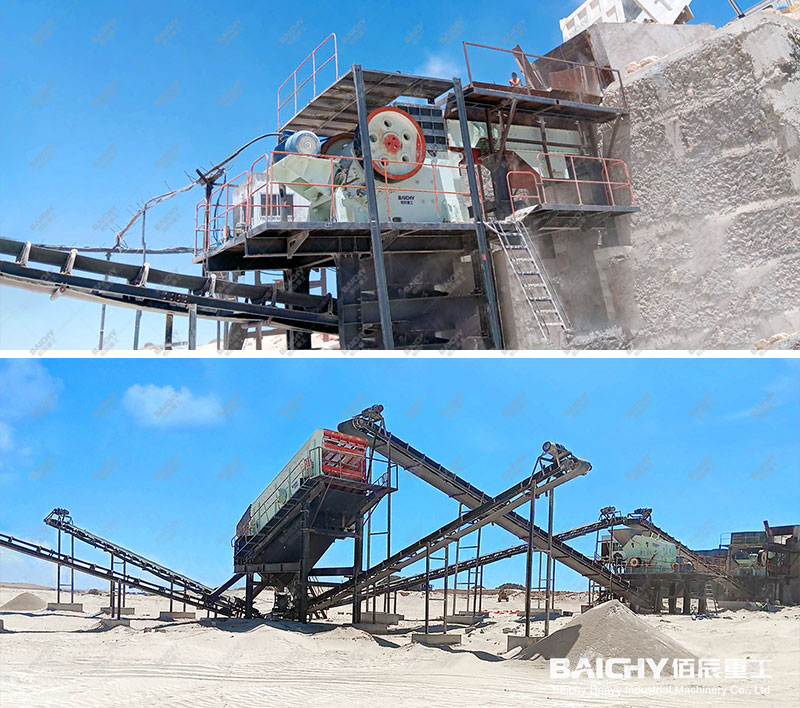
200–250 TPH Hard Rock Plant for 5 Aggregate Products
Quality Control and Conclusion
Sample at the screen discharge and stockpile or loading point. Check particle-size distribution, fines, moisture, clay contamination, and oversize. For base and subbase, verify grading and compaction against the project specification. Samples should represent the production period, not one scoop.
A 200–250 TPH hard rock crushing and screening plant can process rock up to 30 inches and produce sand, fine gravel, gravel, base material, and subbase material. The result depends on process balance: the primary stage must accept large feed, the secondary stage must provide controllable reduction, and the multi-deck screen must separate products with minimal cross-contamination. The most effective design starts with the required product mix, rock properties, feed gradation, output ratio, and site conditions.
Frequently Asked Questions
1. Can this plant process rock up to 30 inches?
Yes. The hopper, feeder, primary crusher opening, and loading system must all be selected for feed up to 30 inches. Irregular or oversized rocks should also be considered during site planning.
2. Can one line produce all five products at the same time?
Yes. A multi-deck screen and separate conveying routes can produce all five size ranges. Output quantities depend on feed gradation, screen design, crusher settings, and market requirements.
3. Is a sand-making machine always required?
No. The 0–1/4-inch fraction may be produced through crushing and fine screening. An additional shaping or fine-crushing stage may help when higher sand output, improved particle shape, or tighter grading is required.
4. What information is needed for final equipment selection?
Key data includes rock type, compressive strength, abrasion, moisture, clay content, feed-size distribution, required product ratio, operating hours, site space, and environmental conditions.
5. How can production remain stable between 200 and 250 TPH?
Use continuous feeding, correctly set crushers, adequate screen area, matched conveyors, controlled recirculation, and scheduled wear-part replacement. Test the complete circuit with representative rock before fixing operating settings.
Baichy Heavy Industry
Baichy Heavy Industry is a high-tech mining equipment company integrating R&D, manufacturing, sales, and after-sales service. Focusing on crushing, grinding, and mineral processing equipment, we provide professional solutions to our customers. We are ISO9001:2015 Certified, and our products include mobile crushing palnts, crawler crushing plant, construction waste crushing plants, jaw crushers, sand making machines, cone crushers, fine crushers, grinding mills, ball mills, etc., all with reliable performance to meet diverse project needs.
Baichy Heavy Industry – Your Trusted Partner
To ensure optimal performance of your equipment, Baichy Heavy Industry offers:
- Professional on-site installation guidance
- Comprehensive operator training
- 24/7 technical support & maintenance services
Our complete after-sales service system guarantees long-term, stable operation of your machinery with minimal downtime.
Protect Your Rights – Only Use Official Channels
To avoid scams and ensure authentic support, contact us exclusively through:
• Official Website: www.baichychina.com
• WhatsApp: +8615093222637
• Email: [email protected]
Your satisfaction is our priority – expect prompt, professional service every time.
(Note: Beware of unauthorized third parties claiming to represent Baichy. Always verify through official contacts.)