
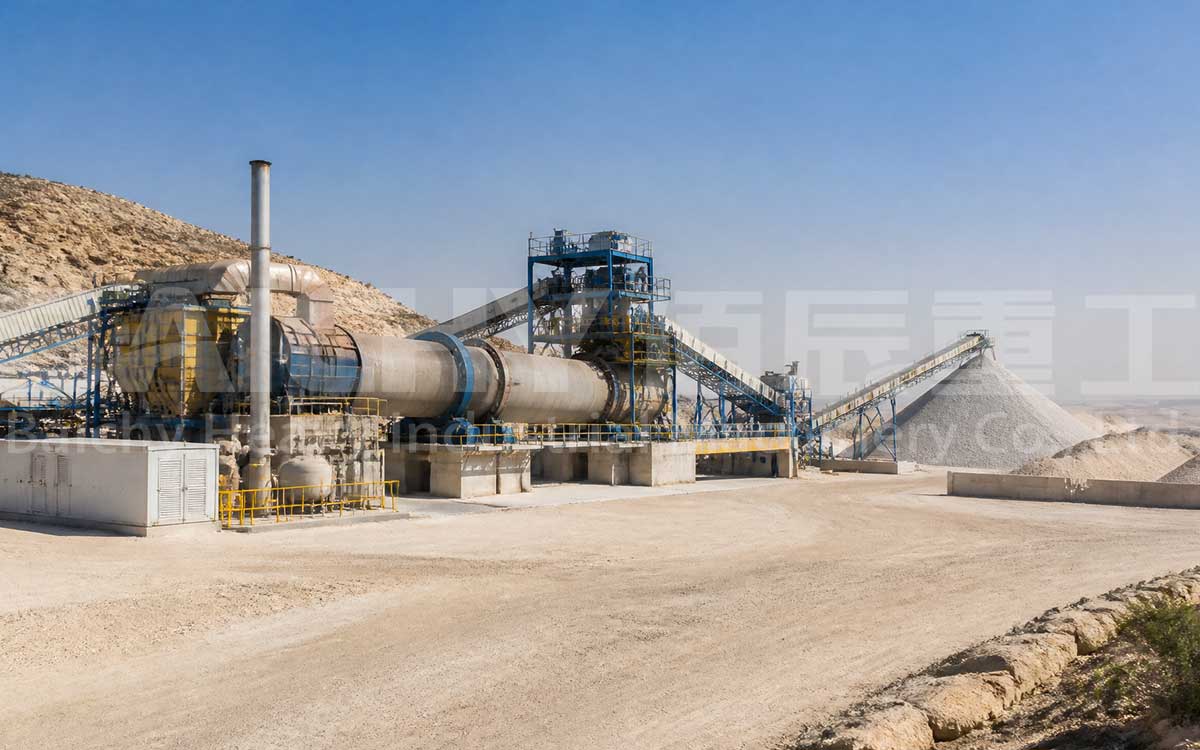
30 TPH silica sand dryer
For silica sand processors in Tunisia, moisture control is not simply a matter of heating the material. A plant handling sand with approximately 99% SiO₂, a 0–0.7 mm feed size and 10–15% moisture must balance drying capacity, product purity, dust recovery and fuel consumption at the same time.
A diesel-fired rotary drying system can be engineered for this duty when the capacity is defined correctly and the thermal system is matched to the actual feed. The proposed solution is intended for continuous processing at a nominal 30 tonnes per hour, with a target final moisture below 0.5%. The final dryer size, burner rating and fuel consumption should be confirmed with a representative sand test before the equipment is manufactured.
A Drying Solution Built Around the Tunisian Feed Conditions
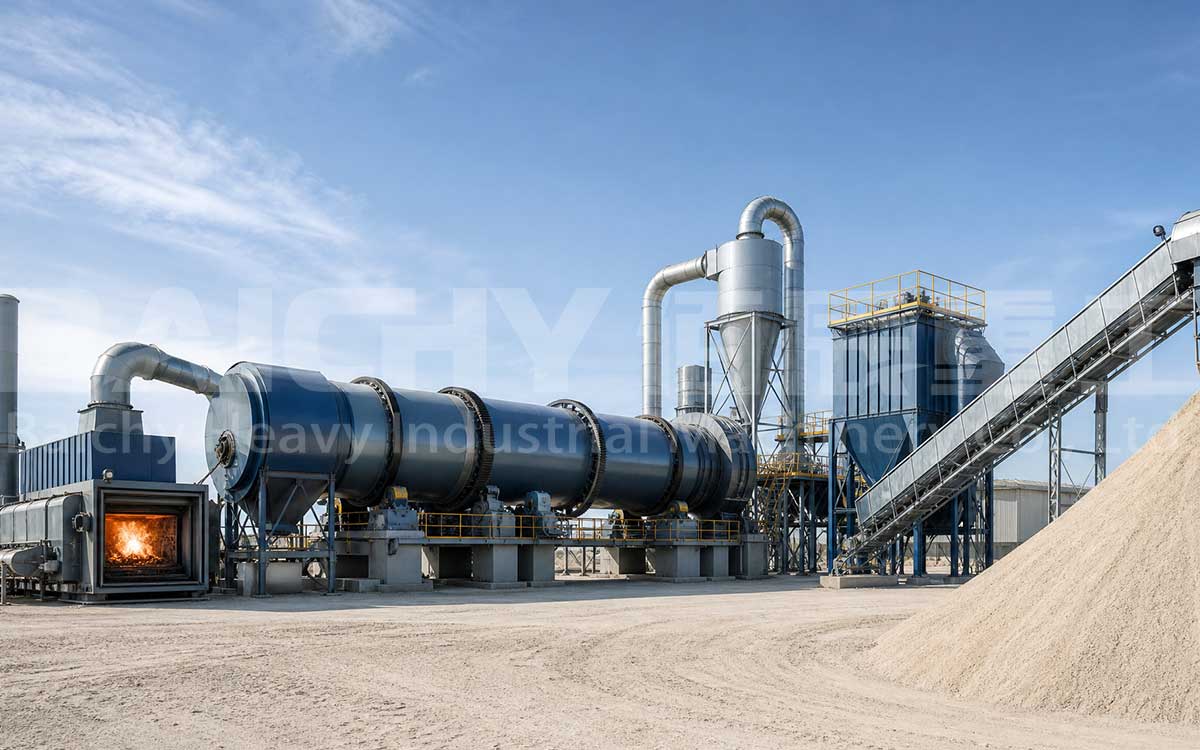
The proposed system uses a three-pass rotary sand dryer, a diesel hot-air furnace, a controlled feeding unit and a two-stage dust collection system. Unlike a basic drum that is selected only by its diameter, this design considers the quantity of water that must be removed, the amount of fine material carried by the air stream and the downstream requirements of the finished sand.
The main process sequence is:
Feed hopper → metered feeder → diesel hot-air furnace → three-pass rotary dryer → cyclone separator → pulse bag filter → enclosed product conveyor
diesel sand dryer Tunisia
This arrangement provides several adjustment points. Feed rate can be controlled at the inlet, drum speed can be adjusted with a variable-frequency drive, and the hot-air volume can be coordinated with the burner and induced-draft fan. These controls help the operator respond when feed moisture changes from one stockpile or working day to another.
Key Project Parameters
| Parameter | Design Requirement or Initial Basis |
|---|---|
| Material | High-purity silica sand |
| Approximate SiO₂ content | 99% |
| Feed size | 0–0.7 mm |
| Nominal capacity | 30 TPH; confirm whether wet feed or dry product |
| Feed moisture | 10–15% |
| Target final moisture | Below 0.5% |
| Fuel | Diesel |
| Dryer type | Three-pass rotary dryer |
| Dust collection | Cyclone plus pulse bag filter |
| Control | PLC, temperature monitoring and variable-frequency drives |
Why Capacity Definition Matters Before Quotation?
The phrase “30 tonnes per hour” can describe either wet feed capacity or dry product capacity. These are not interchangeable specifications.
If 30 TPH means wet sand entering the dryer at 15% moisture, the feed contains approximately 25.5 tonnes per hour of dry solids. To reach a final moisture below 0.5%, the system must remove approximately 4.37 tonnes of water per hour, subject to the selected moisture measurement basis and operating conditions.
If 30 TPH means finished dry sand, the plant must feed more than 30 TPH of wet material. At 15% feed moisture, the required wet feed rate is approximately 35 TPH before considering operating margin. The drum, burner, fan, ducts, cyclone and bag filter must all be sized for this higher duty.
This distinction should appear clearly in the technical offer. It prevents a common project problem: a dryer that appears to meet the nominal capacity but produces less saleable dry sand than expected. For a preliminary budget, the system can be based on 30 TPH wet feed at the maximum stated moisture, while a separate option can be provided for 30 TPH dry product.
rotary sand drying equipment
Three-Pass Rotary Dryer for Fine 0–0.7 mm Sand
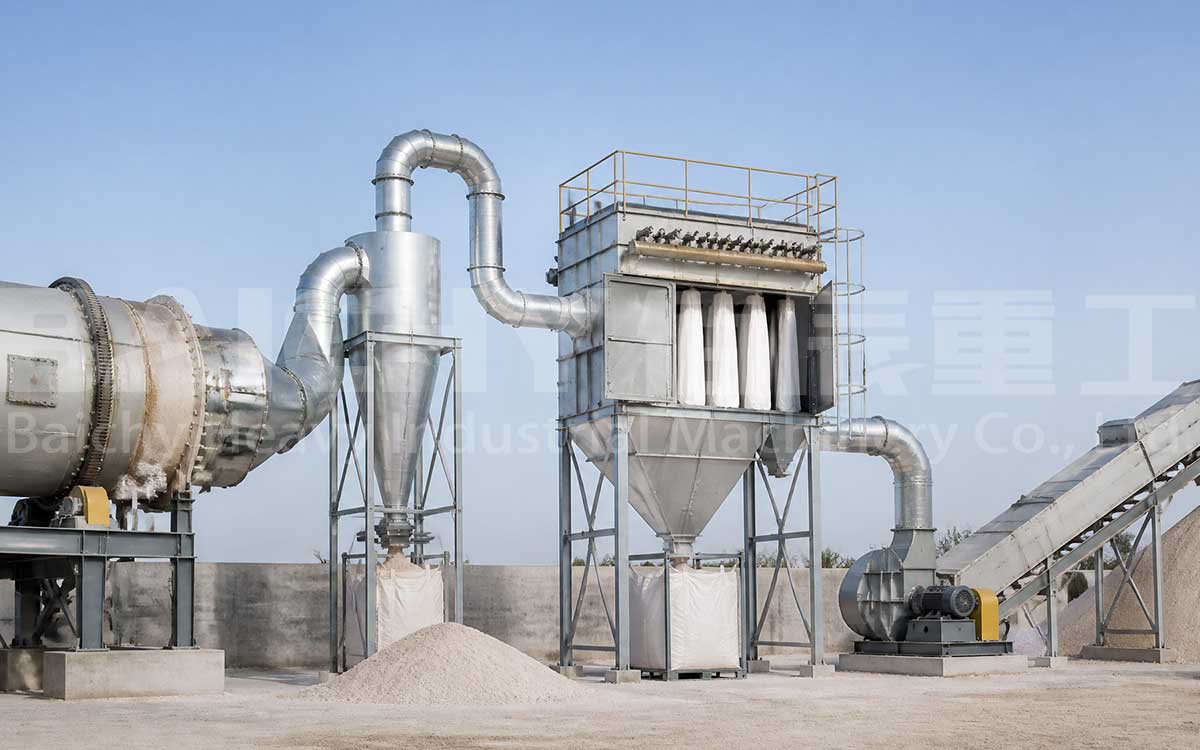
Fine silica sand transfers heat quickly, but it can also be carried out of the drum if the airflow is excessive. The three-pass configuration increases the contact path between hot air and material while keeping the overall equipment footprint manageable. Internal lifting flights distribute the sand through the hot gas stream and support more consistent drying across the drum.
• For this application, the operating parameters should be adjustable rather than fixed. The recommended design features include:
• Variable drum speed to control residence time;
• A metered feeder to maintain a stable material curtain;
• Wear-resistant internal flights in high-abrasion areas;
• Inspection doors for checking flights, seals and liners;
• Thermal insulation to reduce heat loss and protect operators;
• Sealed transfer points to reduce moisture re-absorption after drying.
The equipment should be selected from the actual particle-size distribution, not only the upper size of 0.7 mm. The percentage below 0.075 mm is especially important because it influences dust loading, product recovery and bag-filter sizing.
Diesel Heating: Direct or Indirect?
A diesel-fired system can be supplied in two basic configurations.
Clean Direct Heating
In a direct-heating arrangement, the diesel burner produces hot air that enters the dryer and contacts the sand. This option generally offers a simpler layout and efficient heat transfer. It is suitable when the burner provides stable combustion and the customer’s product specification permits controlled contact with the hot gas.
The burner, combustion chamber and air-distribution section should be designed to reduce the risk of incomplete combustion. The finished sand should be tested for moisture, SiO₂ and any customer-specified impurity limits after commissioning.
Indirect Heating
In an indirect system, the combustion gas is separated from the process air by a heat exchanger. This configuration reduces the chance of combustion products contacting the silica sand and may be preferred when ash, iron or other contamination limits are strict.
Indirect heating usually requires a larger investment and may have additional heat-transfer losses. The appropriate selection depends on the end use of the sand, the customer’s quality standard and the required acceptance criteria. A customized quotation can show both options instead of assuming that one heating method fits every Tunisian project.
Dust Collection Is Part of the Production Line
A fine-sand dryer cannot be evaluated separately from its dust system. A high airflow may improve evaporation but also increase the amount of fine silica carried toward the exhaust. An undersized dust collector can cause product loss, unstable fan operation, rapid filter loading and poor workshop conditions.
The recommended process is a cyclone separator followed by a pulse-jet bag filter. The cyclone removes a portion of the heavier entrained particles and can return recoverable material to the product stream. The bag filter then captures finer dust before the exhaust reaches the induced-draft fan and stack.
The final selection should be based on gas temperature, actual air volume, dust concentration, required emission level and local installation conditions. For worker protection, the system should also minimize leaks at the dryer outlet, duct joints, inspection doors and conveyor transfer points. Local Tunisian environmental requirements should be reviewed before the final filter and stack design is approved.
Maintaining 99% Silica Sand Quality
Drying should reduce moisture without introducing avoidable contamination. This is particularly important for glass, foundry, filtration or other applications where the buyer specifies chemical composition or iron content.
The equipment design can support quality control through low-contamination material-contact surfaces, a stable burner, wear-resistant flights and regular inspection of the drum interior. Paint flakes, loose scale, excessive metal wear and poorly maintained seals should not be allowed to enter the product stream.
A practical commissioning plan should compare samples taken before and after drying. Recommended checks include final moisture, SiO₂ content, iron content where relevant, particle-size distribution and dust loss. These results provide a more reliable basis for accepting the system than a nominal equipment capacity alone.
Automatic Control for More Consistent Moisture
A PLC-based control cabinet can coordinate the feeder, burner, drum drive, exhaust fan and pulse-cleaning system. Temperature sensors at the hot-air inlet and dryer outlet provide operators with information about changing process conditions. Pressure monitoring can help identify a blocked filter, abnormal airflow or a leak in the system.
The control system may include:
• Feed-rate adjustment;
• Burner start-up and shutdown sequence;
• High-temperature protection;
• Low-fuel-pressure and flame-failure alarms;
• Drum-speed control;
• Fan frequency control;
• Filter pulse-cleaning control;
• Emergency stop and interlock functions.
Automation does not remove the need for correct feed preparation, but it gives operators a practical way to stabilize the process when moisture varies between 10% and 15%.
What the Complete Quotation Can Include?
A project quotation can be prepared as a complete line or pided into equipment packages. The main package may include the feed hopper, feeder, diesel storage and supply unit, burner, hot-air furnace, rotary dryer, cyclone, pulse bag filter, induced-draft fan, ducting, stack, product conveyor and PLC cabinet.
Optional items may include a product cooler, enclosed storage bin, weighing system, spare wear parts, installation supervision, commissioning support, operator training and performance testing. Clearly separating standard equipment from optional items helps the Tunisian customer compare offers and plan the site budget more accurately.
Information Needed for a Final Technical Offer
Before confirming the dryer model and commercial price, the customer should provide:
1. Confirmation that 30 TPH means wet feed or dry product;
2. The moisture basis and test method for both feed and product;
3. A representative particle-size distribution;
4. Bulk density and the percentage below 0.075 mm;
5. Any clay, organic matter or other contaminants in the feed;
6. Required limits for SiO₂, iron, ash or other impurities;
7. Site voltage, frequency, elevation and ambient conditions;
8. Available diesel quality and fuel-storage requirements;
9. Local dust-emission and workplace requirements;
10. The required supply scope, installation support and acceptance test.
A representative sand sample is strongly recommended. A test can help establish the actual evaporation duty, residence time, outlet temperature, product recovery and fuel requirement before the final order is placed.
Frequently Asked Questions
1. Can this dryer handle 0–0.7 mm silica sand?
Yes, the rotary dryer can be configured for fine silica sand. Airflow, drum speed, internal flights and dust collection must be selected according to the complete particle-size distribution, especially the percentage of very fine material.
2. Can the final moisture be below 0.5%?
The system can be designed for this target, but performance depends on feed moisture, feed temperature, material flow, heat load, residence time and sealing. A test with the customer’s sand is the best way to confirm the operating window.
3. Does the system use diesel as the heat source?
Yes. The line can include a diesel burner, combustion chamber, fuel pump, filter, tank connection and safety controls. The final burner rating should be calculated from the confirmed wet-feed or dry-product capacity.
4. Will direct diesel heating reduce the silica content?
A correctly operated burner does not automatically change the silica content, but combustion quality, dust carryover and equipment wear must be controlled. If contamination limits are especially strict, indirect heating can be evaluated and the dried product should be tested.
5. Is 30 TPH guaranteed as dry sand output?
Not unless the quotation explicitly defines it as dry-product capacity. If the requirement is 30 TPH of saleable dry sand, the wet feed rate and evaporation duty will be higher than for a 30 TPH wet-feed design. This point should be fixed before commercial acceptance.
Baichy Heavy Industry
Baichy Heavy Industry is a high-tech mining equipment company integrating R&D, manufacturing, sales, and after-sales service. Focusing on crushing, grinding, and mineral processing equipment, we provide professional solutions to our customers. We are ISO9001:2015 Certified, and our products include mobile crushing palnts, crawler crushing plant, construction waste crushing plants, jaw crushers, sand making machines, cone crushers, fine crushers, grinding mills, ball mills, etc., all with reliable performance to meet diverse project needs.
Baichy Heavy Industry – Your Trusted Partner
To ensure optimal performance of your equipment, Baichy Heavy Industry offers:
- Professional on-site installation guidance
- Comprehensive operator training
- 24/7 technical support & maintenance services
Our complete after-sales service system guarantees long-term, stable operation of your machinery with minimal downtime.
Protect Your Rights – Only Use Official Channels
To avoid scams and ensure authentic support, contact us exclusively through:
• Official Website: www.baichychina.com
• WhatsApp: +8615093222637
• Email: [email protected]
Your satisfaction is our priority – expect prompt, professional service every time.
(Note: Beware of unauthorized third parties claiming to represent Baichy. Always verify through official contacts.)