
Introduction
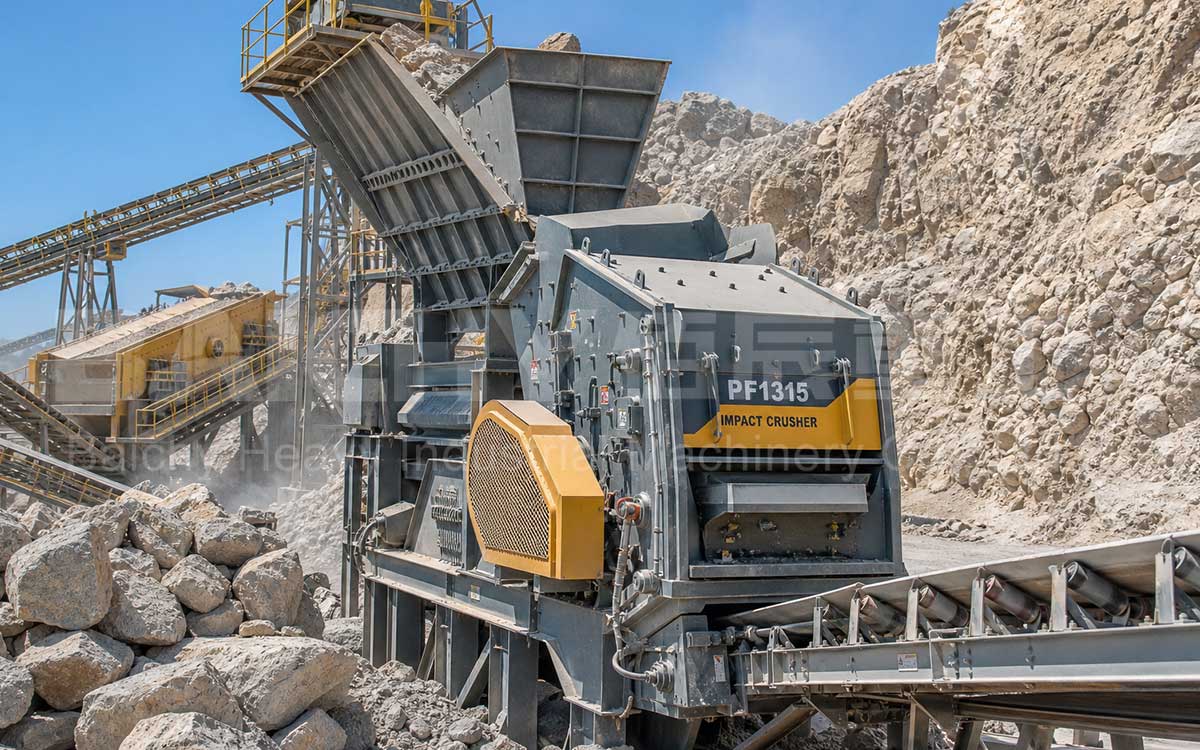
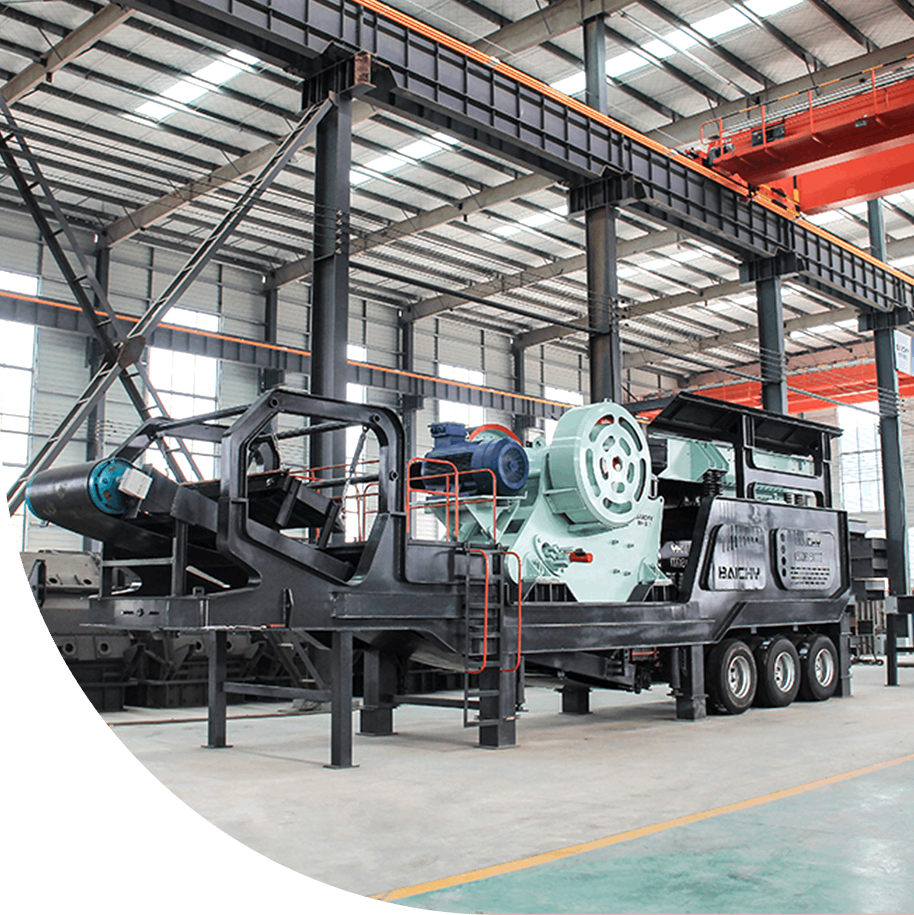
Aggregate production is the backbone of infrastructure — concrete for highways and dams, asphalt for road surfacing, railway ballast and building materials all start with rock crushing. For projects demanding 100-600 TPH of consistent, spec-compliant aggregate, Baichy recommends a three-stage crushing circuit: a PE-series jaw crusher for primary reduction (feed up to 1200 mm), a CS-series cone crusher (or CI impact crusher for limestone) in secondary stage, and a VSI crusher for final cubical shaping, with YK vibrating screens running closed-circuit classification.
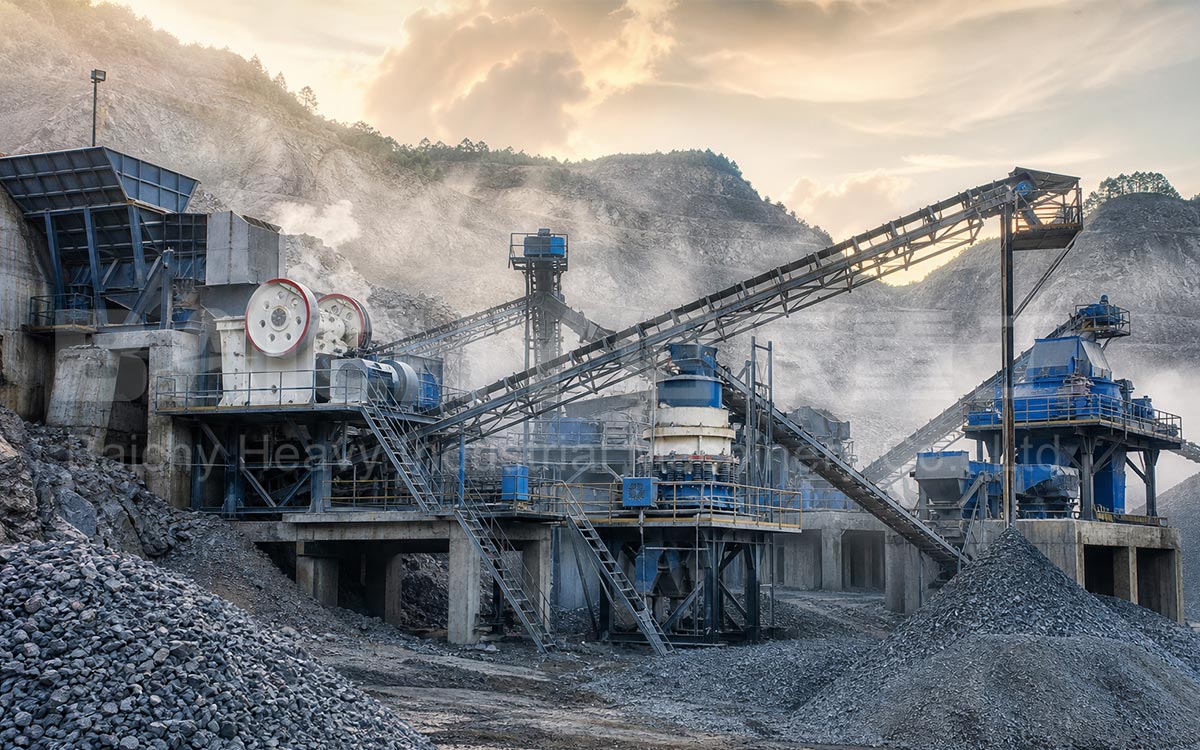
Complete three-stage crushing production line
This configuration produces finished aggregate of 0-5 / 5-15 / 15-31.5 mm with a flakiness index below 10%, meeting concrete and asphalt specifications. Every Baichy plant is factory-engineered in Jiaozuo, China, and globally deployed in 80+ countries — from granite quarries in Malaysia to limestone aggregate lines in Chile. Read on for the recommended circuit, technical parameters, and selection logic for your project.
Recommended Crushing Circuit — Three Stages for 100-600 TPH
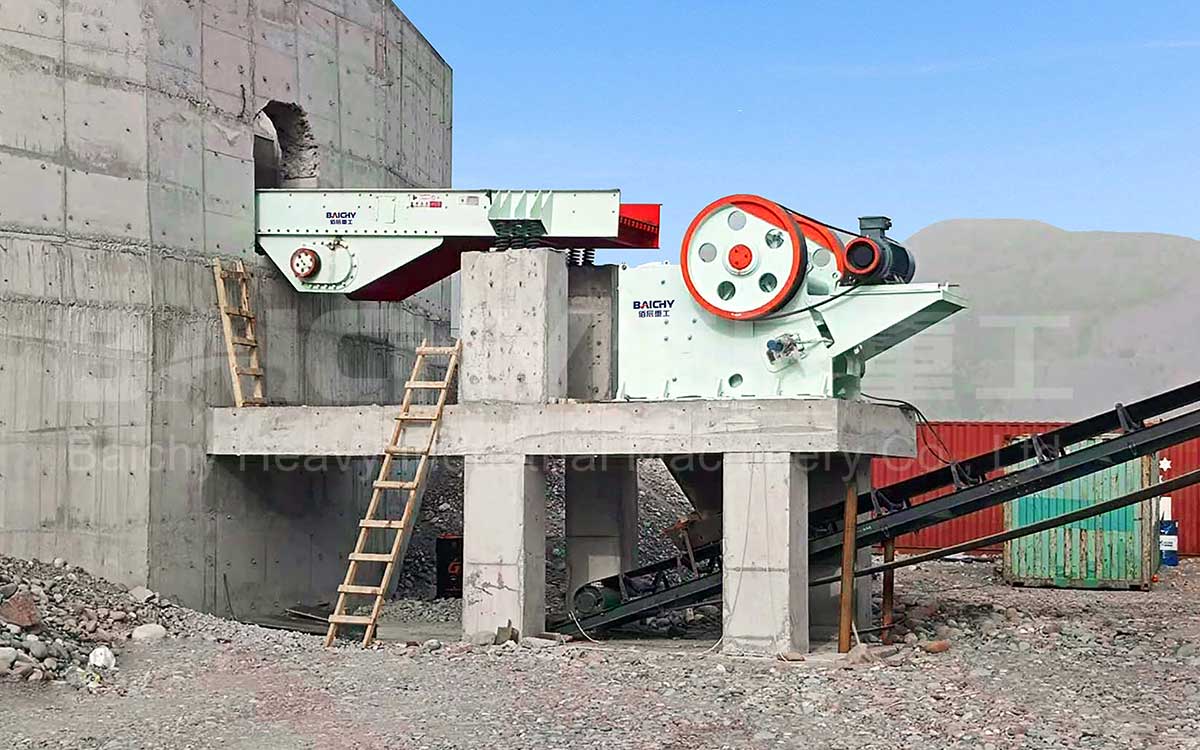
Stage 1 — Primary Crushing: PE Series Jaw Crusher
The PE jaw crusher handles run-of-quarry feed up to 1200 mm and reduces it to 150-300 mm for downstream stages. With compression crushing — not impact — the PE series processes the hardest rock (granite, basalt, compressive strength up to 320 MPa) with the lowest wear cost per ton.
Models: PE-600×900 (50-120 t/h) to PE-1200×1500 (400-800 t/h)
Adjustable CSS: 75-200 mm, matched to the secondary crusher feed opening
Selection rule: feed size &pide; CSS ≥ 4:1 reduction per stage
Stage 2 — Secondary Crushing: CS Cone or CI Impact Crusher
For hard rock (granite, basalt, quartzite), the CS-series cone crusher delivers 45-600 t/h with high crushing ratio and low flakiness. For medium-hard, low-abrasion material (limestone, dolomite), the CI-series impact crusher is more economical — it produces a better cubic shape in one pass and costs less per ton on non-abrasive feed.
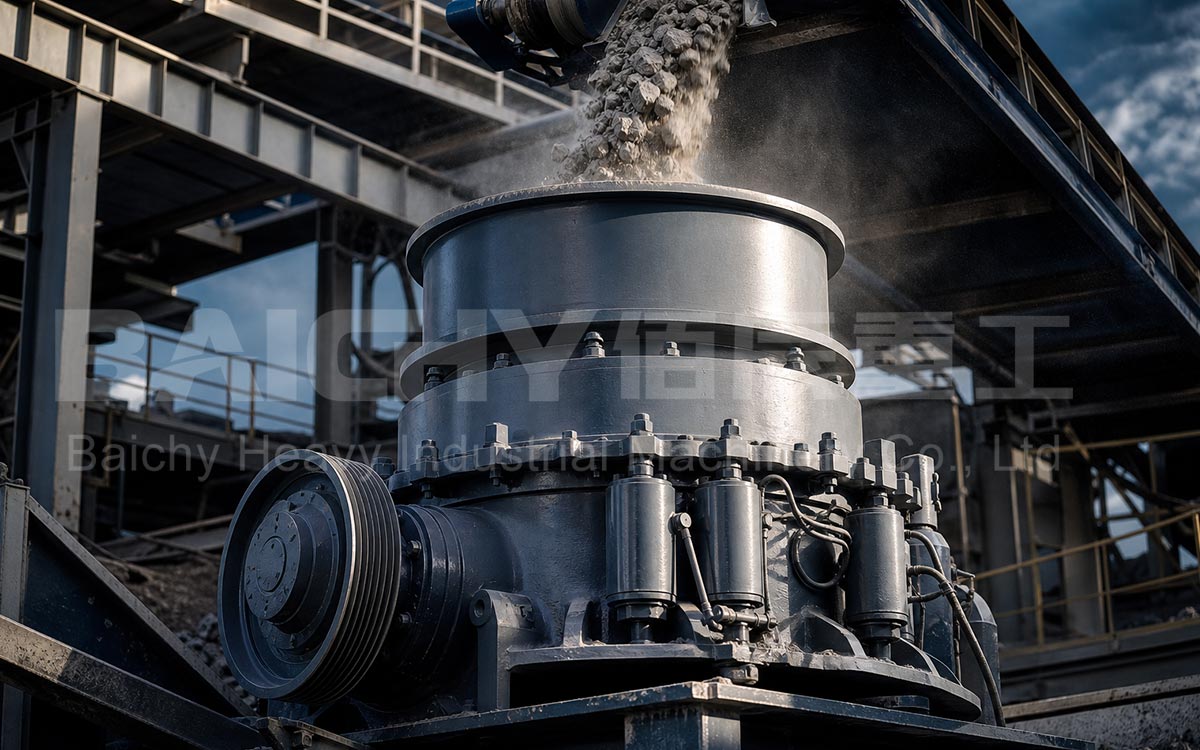
Secondary breakage on the hard rock line
| Material | Recommended Secondary | Why |
| Granite / Basalt / River pebble | CS Cone Crusher | Compression crushing, wear cost control |
| Limestone / Dolomite / Gypsum | CI Impact Crusher | Lower capital, better shape, higher reduction |
Stage 3 — Tertiary Shaping: VSI Crusher
The VSI (vertical shaft impact) crusher is the finishing stage that separates a good plant from a great one. Stone-on-stone crushing in the VSI chamber produces cubical particles with flakiness below 10% — the shape requirement for high-grade concrete and asphalt aggregate. VSI models cover 120-520 t/h with dual motors from 2×75 kW to 2×200 kW, and operating with the rotor in "rock on rock" mode keeps wear costs low on abrasive feed.
Screening & Closed-Circuit Classification — YK Vibrating Screen
YK circular vibrating screens classify the crushed material into 0-5 / 5-15 / 15-31.5 mm fractions. Oversize material is returned to the crusher via the return conveyor — the closed circuit that defines the plant's efficiency. Controlling the recirculating load to 15-25% is the key operating lever: a balanced closed circuit maximizes throughput while minimizing wasted energy on re-crushing, directly improving the cost per ton of finished aggregate.
Recommended Configurations & Technical Parameters
Output varies with feed material, feed size and crusher settings.
200-300 TPH Granite / Basalt Line(Three-stage + Shaping)
| Stage | Equipment | Model | Feed Size | Capacity | Power |
| Primary | Jaw Crusher | PE-750×1060 | ≤630 mm | 130-260 t/h | 90-110 kW |
| Secondary | Cone Crusher | CS-160 | ≤220 mm | 180-330 t/h | 160 kW |
| Tertiary | VSI Crusher | VSI-9526 | ≤50 mm | 200-260 t/h | 2×132 kW |
| Screening | Vibrating Screen | YK-2460 ×2 | - | 150-400 t/h | 2×30 kW |
Total installed power: ~640 kW · Return belt (closed circuit): B800-1200 mm · Finished fractions: 0-5 / 5-15 / 15-31.5 mm
300-450 TPH Limestone Line(Jaw Crusher + Impact Crusher Configuration)
| Stage | Equipment | Model | Feed Size | Capacity | Power |
| Primary | Jaw Crusher | PE-900×1200 | ≤750 mm | 220-450 t/h | 110-132 kW |
| Secondary | Impact Crusher | CI-1315 | ≤350 mm | 130-250 t/h | 180-220 kW |
| Screening | Vibrating Screen | YK-3070 ×2 | / | 200-600 t/h | 2×37 kW |
Total installed power: ~560 kW · Solution for non-abrasive limestone: Impact crushers deliver excellent particle shaping and lower electricity consumption per ton.
Materials & Application Scenarios
Commercial Concrete Aggregate (Ready-Mix)
High-grade concrete (C30-C60) requires aggregate with strict grading and cubical shape. A jaw + cone + VSI circuit produces 5-15 mm and 15-31.5 mm fractions with flakiness <10%, matching the grading envelopes of GB/T 14685 and ASTM C33 — the difference between passing and failing a concrete plant's quality audit.
Highway & Asphalt Base
Asphalt mixtures demand cubical coarse aggregate with low flat-and-elongated particle content. VSI shaping in the final stage delivers it, extending pavement life and reducing binder consumption by up to 5% — a direct saving on the project's bitumen budget.
Railway Ballast & Hydropower Infrastructure
Large-capacity plants (400-600 TPH) supply railway ballast and dam concrete for infrastructure megaprojects. Baichy has deployed crushing plants for these applications across Southeast Asia, Latin America and Africa, with site-specific layouts engineered for local feed material and climate.
Manufactured Sand Co-production
By adding a VSI and washing stage, the same plant co-produces manufactured sand (0-5 mm, MB value <1.0) — replacing natural river sand for concrete at 30-50% lower material cost in many regions where river sand is restricted.
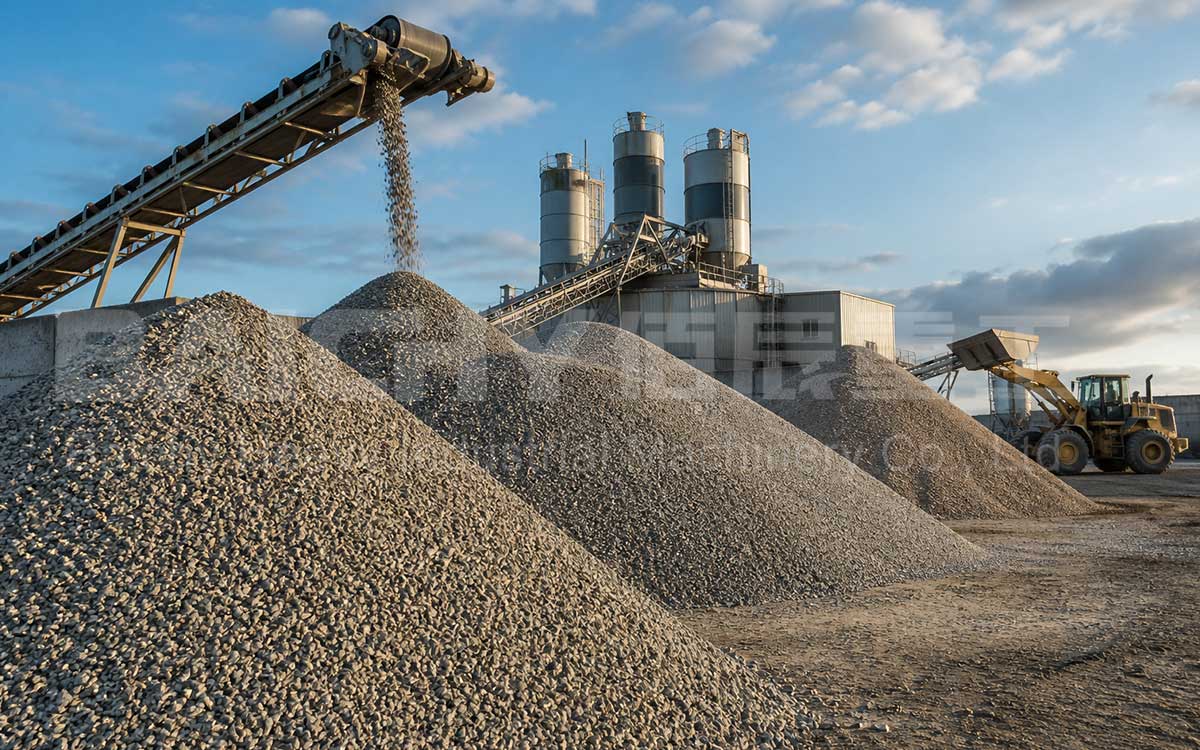
Finished aggregate stockpile
Why This Configuration — ROI & Operating Cost Logic
Cost Structure of a 200-300 TPH Plant
Total operating cost per ton of aggregate is distributed across four levers:
| Cost Lever | Share of OPEX | Baichy Design Countermeasure |
| Electricity | 35-45% | VSI "rock on rock" mode cuts power per ton up to 30% vs hammer-type shaping |
| Wear parts | 20-30% | High-chrome liners, Mn18Cr2 jaw plates; wear cost matched to material |
| Maintenance & labor | 10-15% | Hydraulic CSS adjustment, accessible crushing chambers |
| Fixed cost (depreciation) | 15-25% | Factory-direct pricing lowers initial capital 15-30% vs branded imports |
Recirculating Load — The Hidden Cost Leak
Every percentage point of recirculating load above optimum re-crushes material that already passed the screen — burning electricity and wear with zero new output. At 200-300 TPH, a 10% increase in recirculating load adds roughly ¥0.3-0.5 per ton in power cost alone. Correct screen sizing, matched crusher CSS, and balanced stage ratios keep the loop at 15-25%, which is why the full-circuit design — not the inpidual crusher — determines profitability.
Shape Matters — Flakiness vs Selling Price
Cubical aggregate (flakiness <10%) commands a 10-20% price premium in most aggregate markets because it improves concrete strength and asphalt durability. The VSI shaping stage converts 15-25% of total output into premium product, typically paying for the VSI's capital cost within 12-18 months at full production.
Stone Crusher Plant vs Alternatives — Quick Comparison
| Dimension | Baichy 3-Stage Plant (Jaw+Cone+VSI) | Jaw+Impact 2-Stage | Single Hammer Crusher |
| Max Feed Size | ≤1200 mm | ≤750 mm | ≤1200 mm |
| Best Material | All rock, incl. granite/basalt | Limestone, medium-hard | Limestone ≤200 MPa |
| Output Shape | Excellent (flakiness <10%) | Good | Good |
| Capacity Range | 100-600 TPH | 80-400 TPH | 50-800 TPH |
| Wear Cost on Hard Rock | ★★★★★ | ★★★ | ★★ |
| Capital Cost | ★★★ | ★★★★ | ★★★★★ |
| Flexibility (spec change) | ★★★★★ | ★★★ | ★★ |
Selection rule of thumb: Granite or basalt with ≥250 MPa compressive strength → jaw + cone + VSI three-stage circuit. Limestone and dolomite ≤200 MPa → jaw + impact, or a single PCZ heavy hammer crusher for the most capital-efficient option. Contact Baichy for a flowsheet matched to your material test report.
FAQ — Large-Scale Aggregate Production Questions
What is the best crusher configuration for a 200-300 TPH aggregate plant?
A PE750×1060 jaw crusher (130-260 t/h) for primary crushing, one CS160 cone crusher (180-330 t/h) for secondary crushing, a VSI-9526 (200-260 t/h) for final shaping, and two YK-2460 vibrating screens for closed-circuit classification — a proven three-stage circuit for granite and basalt with total installed power of approximately 640 kW.
Can stone crushers handle hard rock like granite and basalt?
Yes. PE jaw crushers crush materials with compressive strength up to 320 MPa, and CS cone crushers are designed for medium-hard to hard rock at 45-600 t/h. For granite and basalt aggregate, compression crushing (jaw + cone) is recommended over impact crushing to control wear-part cost.
What aggregate sizes can a typical Baichy plant produce?
Standard output fractions are 0-5 mm, 5-15 mm and 15-31.5 mm, adjustable via crusher CSS settings and screen mesh selection. Larger single-size products (40-80 mm railway ballast) can be produced by re-configuring screens and crusher settings.
How much power does a complete aggregate crushing plant consume?
A 200-300 TPH plant has roughly 600-900 kW of total installed power including crushers, screens, feeders and conveyors. Actual consumption depends on material hardness and recirculating load; VSI-based shaping adds 150-400 kW depending on model.
How long does delivery and installation take?
Standard timeline from signed contract to full production is 6-10 weeks: 4-6 weeks of manufacturing, 2-4 weeks for installation and commissioning, with Baichy engineers available on site and 24/7 remote support for the first 12 months.
Contact Baichy for a Custom Flowsheet
Every aggregate project starts with different rock, different targets, and a different budget. Baichy's engineering team provides free process design and equipment selection based on:
• Material test report (compressive strength, abrasion index, silica content)
• Target capacity and finished product specification
• Site constraints (footprint, power availability, climate)
Budget and payback period targets
📞 WhatsApp/Phone: +86-15093222637
📧 Email: [email protected]
🏭 Factory: Yuntai Avenue Industry District, Jiaozuo City, Henan, China
FACTORY-ENGINEERED, GLOBALLY DEPLOYED — 60-second response · 30-minute technical proposal · 24-hour flowsheet design