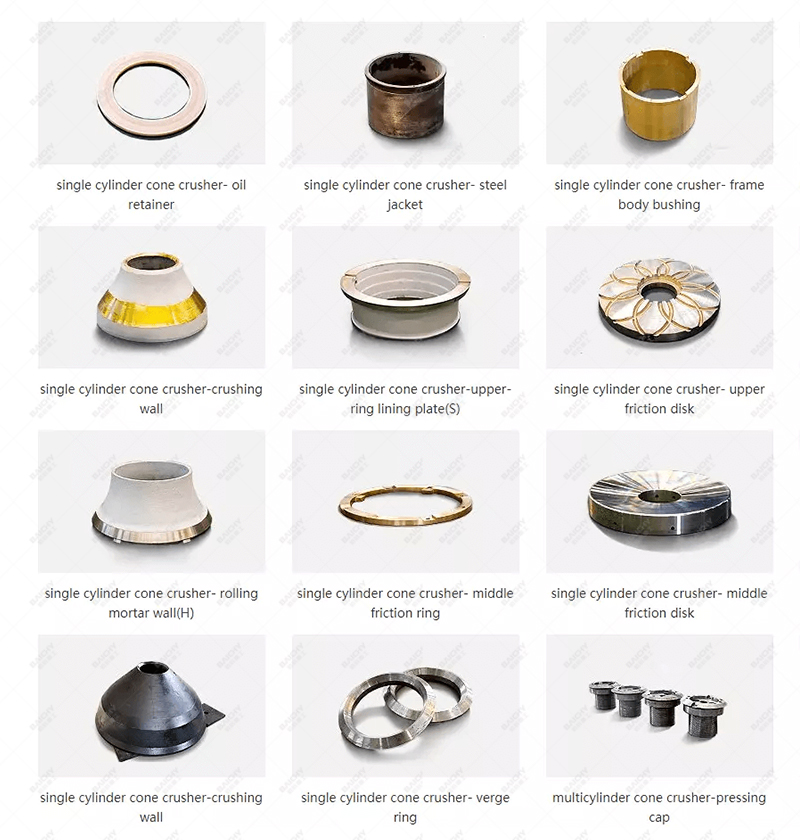
Tertiary Crusher Consumables
Wear parts—such as liners, bowl liners, mantles, and blow bars—constitute a major component of the operating costs for tertiary cone crushers. When crushing hard rock, producing high-quality manufactured sand, or shaping aggregates, these components are subjected to high-intensity, high-frequency impact and abrasion. Reducing their wear rate and extending their service life directly minimizes the frequency of downtime for replacements as well as material input costs; this is a pivotal factor in enhancing the overall profitability of the entire production line. As a professional equipment manufacturer, we will share systematic cost-control strategies spanning multiple dimensions: equipment selection, operation, and maintenance.
Core Strategy: Six Methods to Reduce Wear and Control Comprehensive Costs
1. Scientific Selection and Rational Matching: Controlling Wear at the Source
Different material characteristics result in distinct wear mechanisms for tertiary crusher wear parts. When selecting equipment for highly abrasive hard rocks—such as granite or basalt—priority should be given to hydraulic cone crushers, which utilize the principle of inter-particle crushing (lamination). In these machines, the force exerted on the liners is distributed more evenly; consequently, compared to the blow bars found in impact crushers, the wear rate is typically much more controllable. Ensuring that the feed size and hardness are appropriately matched to the design of the crushing chamber—thereby avoiding scenarios where the machine is undersized for the task or subjected to overloading—is the critical first step in extending the service life of wear parts.
Internal Link Recommendation: To gain a deeper understanding of equipment characteristics, please read: [Recommended Tertiary Crushers for Hard Rock, Granite, and Basalt].

Stone Crushing Plant PDF,Download ↓↓↓
2. Optimized Feeding and Pre-Screening
Ensuring a uniform and continuous "choke feed" (filling the chamber to capacity) creates an effective "rock-on-rock" protective layer within the crushing chamber, thereby significantly reducing direct contact wear between the liners and the material. Furthermore, installing high-efficiency pre-screening equipment prior to tertiary crushing allows for the early removal of fine materials that already meet final product specifications. This effectively minimizes over-crushing and unnecessary friction within the crushing chamber, ultimately lowering wear part costs.
3. Strict Adherence to Standardized Operations and Parameter Monitoring
Improper operation is the "number one killer" responsible for abnormal wear in wear parts. It is imperative to strictly control the moisture content of the feed material (excessively wet material is prone to clogging) and to prevent the ingress of tramp iron or other uncrushable objects. Additionally, operators must closely monitor key operating parameters, such as the main motor current, crushing chamber pressure, and discharge port temperature. For instance, the hydraulic chamber-clearing system in a hydraulic cone crusher can rapidly clear jammed material, thereby preventing the abnormal stress damage to the liners that typically results from a choked chamber.
4. Implement Periodic Maintenance and Condition Monitoring
Establish a preventive maintenance schedule based on operating hours. Regularly inspect the liners and blow bars for wear, utilizing specialized measuring tools to monitor changes in their thickness. Symmetrically mounted components (such as blow bars) should be replaced in pairs to maintain the dynamic balance of the rotor and prevent additional wear caused by vibrations resulting from imbalance. Promptly replace worn seals to prevent dust ingress into the lubrication system, which would otherwise exacerbate internal wear.
Internal Link Recommendation: For a comprehensive maintenance guide, please refer to [Key Points for Daily Maintenance and Upkeep of Tertiary Cone Crushers].
5. Select High-Quality and Material-Specific Wear-Resistant Materials
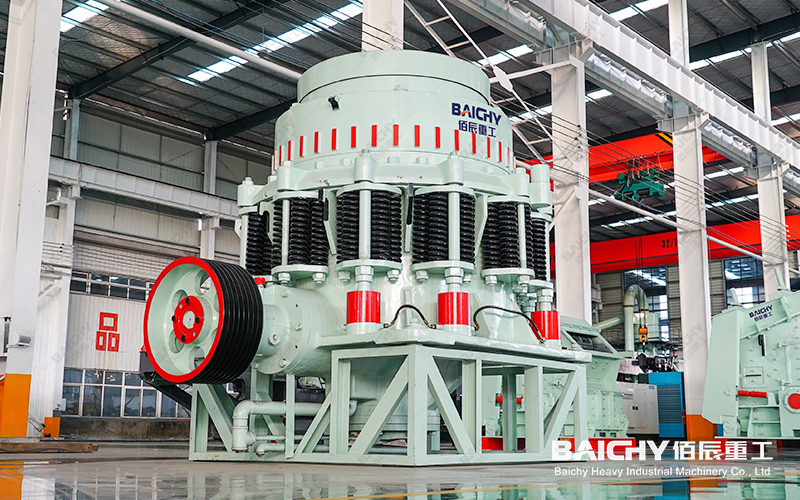
Symons Cone Crusher
The wear resistance of consumable parts varies significantly depending on their material composition. We recommend selecting appropriate materials—such as high-manganese steel, ultra-high-manganese steel, alloy steel, or composite ceramics—based on the specific properties of the material being crushed (e.g., its SiO2 content). Although the initial procurement cost may be slightly higher, the significantly extended service life offered by these materials ultimately results in a lower cost per ton of processed material.
The table below compares the typical performance of liners made from different materials when crushing granite:
| Consumable Part Material | Key Characteristics | Estimated Service Life (Crushing Granite) | Recommended Application Scenarios |
| Standard High-Manganese Steel | Good toughness; moderate initial hardness; requires work hardening | 300–500 hours | Materials requiring high impact resistance with moderate abrasiveness |
| Ultra-High-Manganese Steel | Higher Mn and Cr content; superior work-hardening capability | 500–800 hours | Crushing of hard rock involving high strength and high impact forces |
| Alloy Steel / Special Steel | High initial hardness; excellent wear resistance; moderate toughness | 600–1000+ hours | Preferred choice for highly abrasive conditions with moderate-to-high impact loads |
| Composite Ceramic Inserts | Extremely high localized wear resistance; excellent abrasion resistance | Varies depending on the specific insert location | Reinforcement of specific zones subject to particularly severe wear |
6. Systematic Data Analysis and Service Life Prediction
Leverage the data-logging capabilities of modern intelligent control systems to analyze the correlation curves between consumable part costs and key operational parameters, such as production output, power consumption, and material hardness. By establishing predictive models for the service life of wear parts, we enable precise spare parts planning and inventory management. This prevents unplanned downtime caused by a lack of available spare parts—or, at the very least, minimizes such downtime.
Internal Link Recommendation: To understand the impact of system optimization on efficiency and wear, please see [How to Optimize the Tertiary Crushing Stage to Boost Overall Production Line Efficiency].
Recommended Equipment: Providing the Hardware Foundation for Long-Term, Low-Cost Operation
Based on the strategies outlined above, our company has developed the following two tertiary crushing machines. These units excel in both the wear-resistant design of their components and overall cost control, making them particularly well-suited for applications with stringent requirements regarding product particle shape and operating costs.
1. HP Multi-Cylinder Hydraulic Cone Crusher
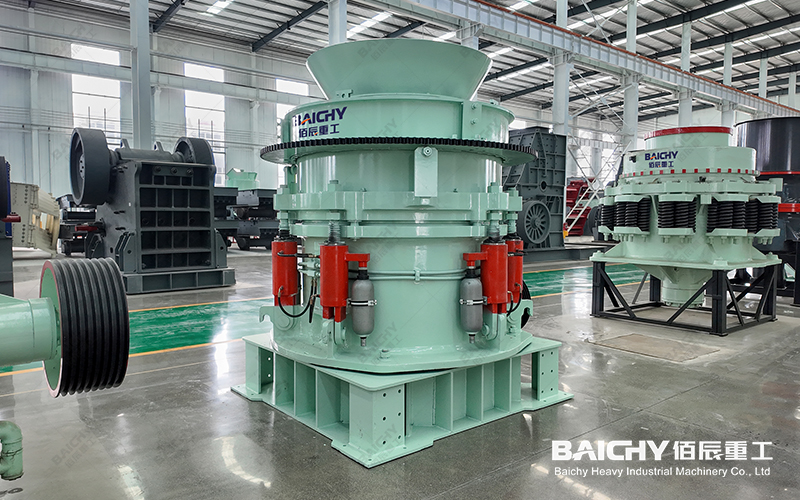
HP Multi-Cylinder Hydraulic Cone Crusher
• Core Advantages: Utilizes the principle of inter-particle crushing (lamination) to produce superior particle shapes; features hydraulic adjustment and tramp iron protection systems, offering a high degree of automation that effectively prevents equipment damage; incorporates a floating main shaft design for the moving cone, allowing for higher rotational speeds and increased throughput; wear parts—such as the crushing liner (mantle) and bowl liner—feature a modular design for easier replacement, and can be optionally upgraded to top-grade alloy steel, extending their wear life by over 30%.
• Applicable Scenarios: Tertiary crushing (medium to fine reduction) of medium-hard to hard ores and rocks—specifically granite, basalt, and river pebbles—for sand production or high-quality aggregate shaping.
2. VSI6X Vertical Shaft Impact Crusher (Sand Maker)
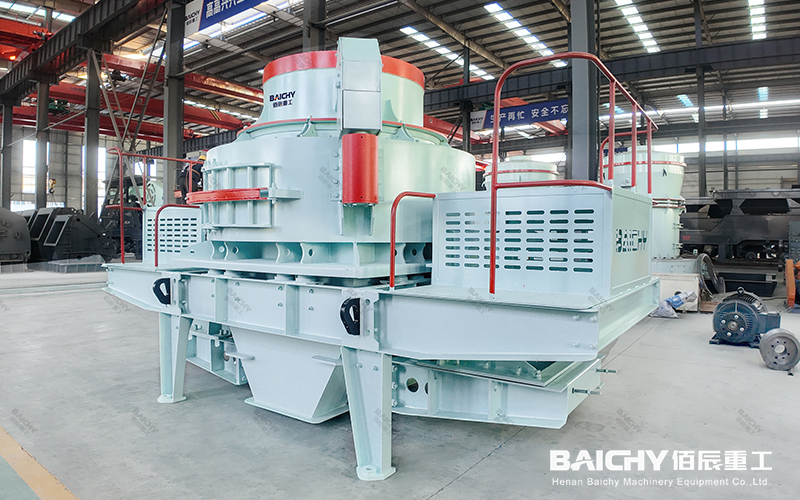
VSI6X Vertical Shaft Impact Crusher (Sand Maker)
• Core Advantages: Offers flexible switching between "stone-on-stone" and "stone-on-iron" crushing modes to accommodate various material types and particle shape requirements; features a deep-cavity rotor design that delivers higher throughput; the impact hammers utilize an embedded mounting system for superior stability and are reversible (usable on all four sides), effectively doubling their utilization rate; the peripheral guard plates feature a hydraulic opening mechanism, facilitating convenient replacement and maintenance.
• Applicable Scenarios: Primarily designed for sand production, while also capable of fine crushing; ideal for engineering projects and commercial concrete mixing plants with strict requirements regarding aggregate particle shape and gradation.
Success Story: Cost Control Practices in a Granite Aggregate Production Line
Project Background: A large-scale sand and aggregate plant in East China was utilizing traditional equipment for its tertiary crushing stage to process granite. The average service life of the liners was merely 450 hours, resulting in persistently high wear-part costs per ton of aggregate produced. Solution: We replaced the existing equipment with our company's HP315 hydraulic cone crusher and implemented a comprehensive set of supporting measures, including uniform feeding, full-chamber operation, and the selection of alloy steel liners.
Implementation Results: The service life of the liners increased to 820 hours, and the cost of wear parts per ton of aggregate produced decreased by over 40%. Additionally, thanks to more stable discharge and reduced downtime, the overall production line capacity increased by approximately 15%.
Frequently Asked Questions (FAQ)
Q1: How can I determine if the liners in a tertiary crusher need to be replaced?
A1: The primary criteria are measurements of wear volume and changes in the discharge particle size. Typically, replacement should be scheduled when the wear depth of the stationary liner (bowl liner) exceeds 60% of its original thickness, or when the wear on the lower section of the moving cone liner (mantle) exceeds two-thirds of its height. Furthermore, if the discharge opening has been adjusted to its minimum setting yet still fails to produce the target particle size, it indicates that the liner wear has reached its operational limit.
Q2: Can worn-out blow bars or liners be repaired via hardfacing (overlay welding) and reused?
A2: For materials such as high-manganese steel—provided the wear is not severe and no cracks are present—scientific hardfacing repairs performed by a professional manufacturer are feasible; this can restore partial dimensions and extend the service life to some extent. However, for components exhibiting fatigue cracks or wear exceeding safety limits, repair is not recommended. Since their internal metallographic structure has already been compromised, forcing them back into service poses a risk of fracture, thereby endangering the safety of the main crushing unit.
Q3: To save costs, is it acceptable to mix wear parts from different brands or made of different materials?
A3: This is strongly discouraged. Wear parts produced by different manufacturers often differ in dimensions, weight, material composition, and dynamic balance precision. Mixing these parts can lead to uneven force distribution within the crushing chamber, causing the rotor or moving cone to lose its dynamic balance. This can trigger abnormal equipment vibration, bearing overheating, or even mechanical failure; the resulting costs for repairs and lost production time will far exceed the price difference of the wear parts themselves. It is imperative to use only original manufacturer parts or components certified by the original manufacturer.
Summary
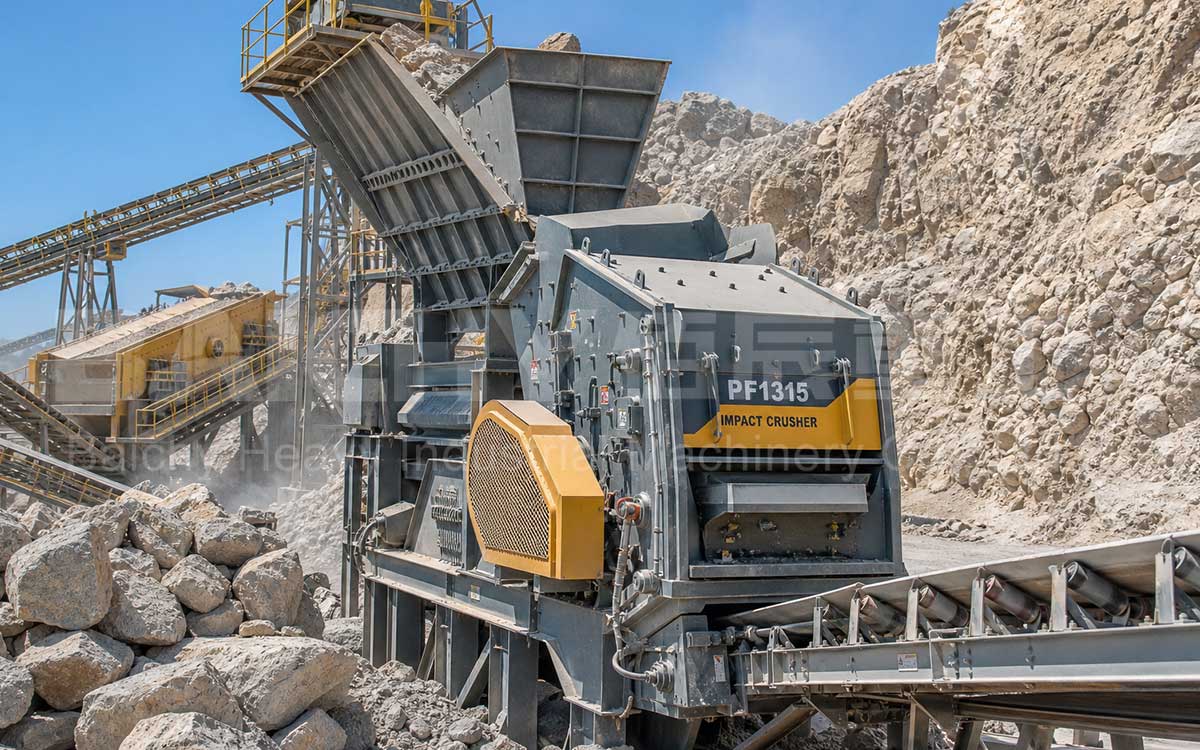
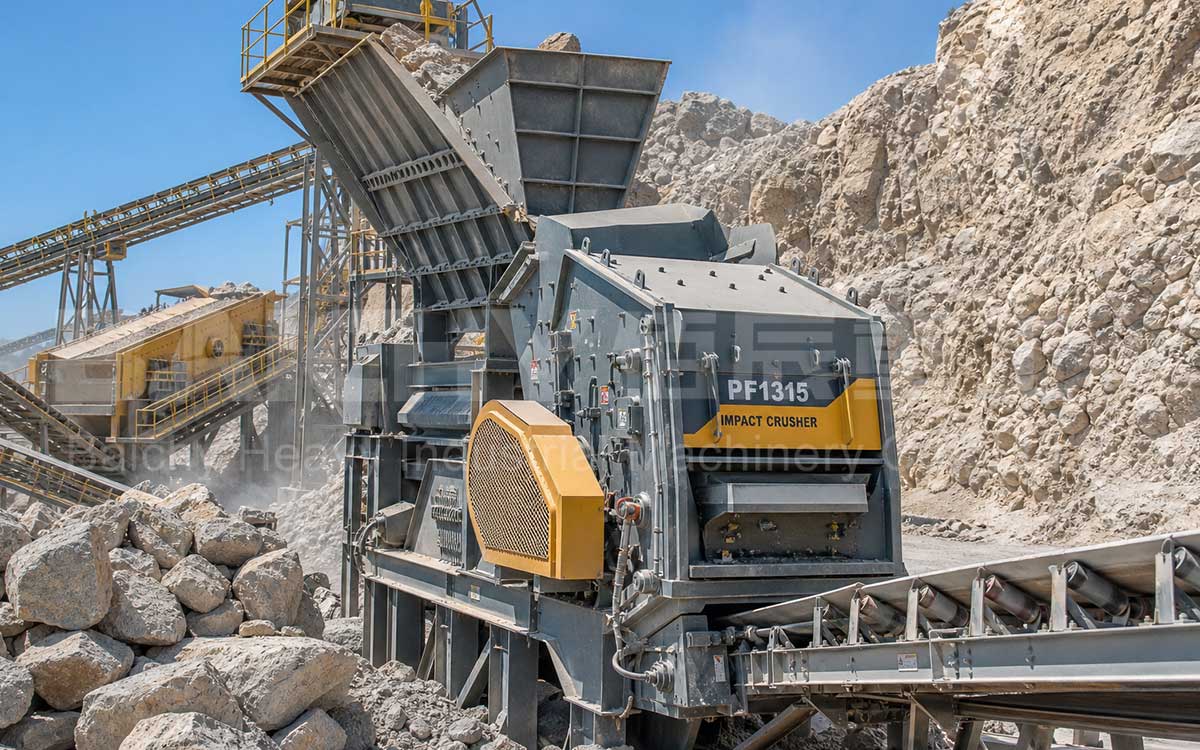
Effectively reducing wear and operating costs for tertiary crushers is a comprehensive, system-wide undertaking that encompasses equipment selection, operation, maintenance, materials, and management. It begins with the choice of a well-engineered machine—such as the HPT multi-cylinder hydraulic cone crusher—which features superior wear resistance. By combining such equipment with scientific, standardized operational practices and meticulous maintenance, you can truly achieve long-term, stable, and low-wear performance, thereby maximizing your return on investment. As your partner in equipment and technical services, we stand ready to provide you with optimized solutions ranging from inPidual machines to complete production lines.
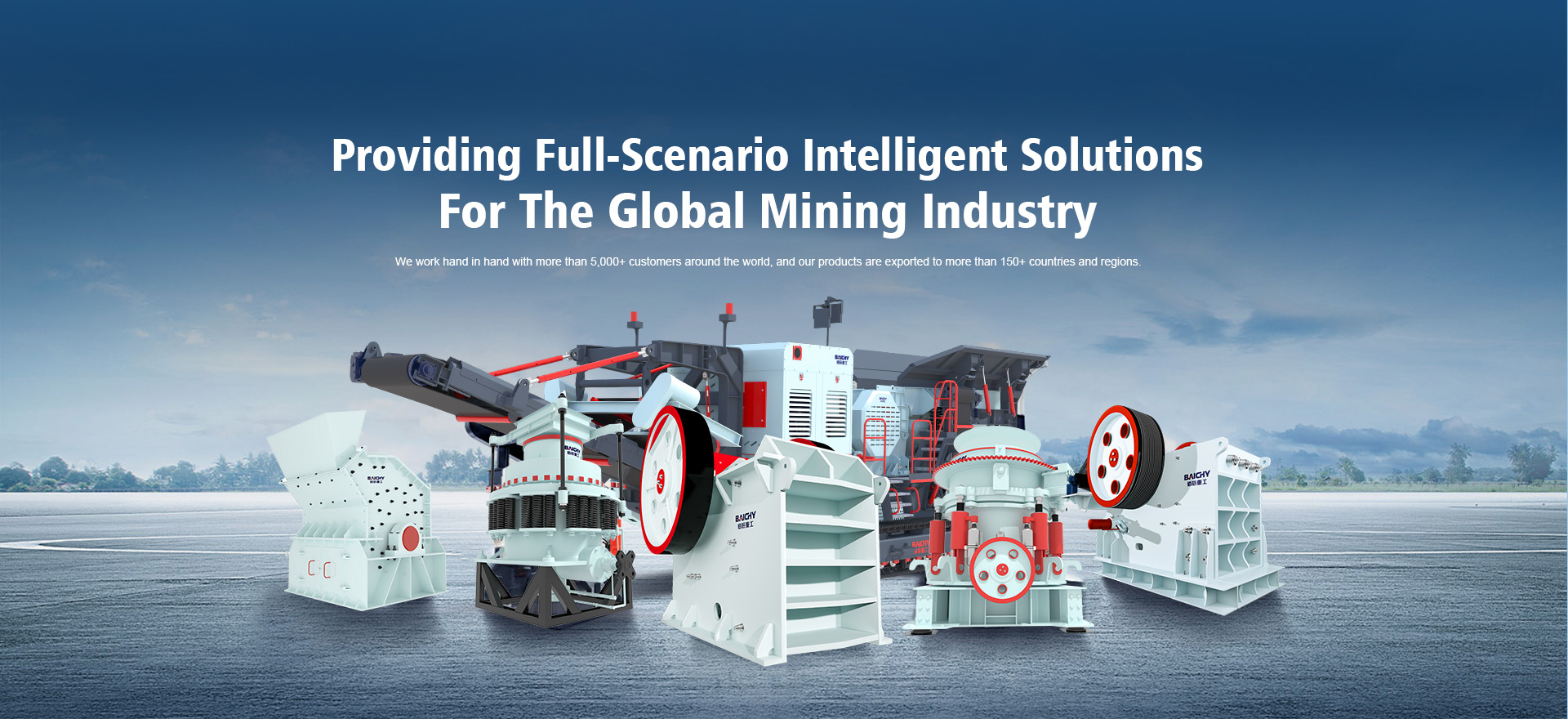
About of Baichy Heavy Industry
Baichy Heavy Industry is a high-tech mining equipment company integrating R&D, manufacturing, sales, and after-sales service. Focusing on crushing, grinding, and mineral processing equipment, we provide professional solutions to our customers. We are ISO9001:2015 、certified, and our products include mobile crushing palnts, crawler crushing plant, construction waste crushing plants, jaw crushers, sand making machines, cone crushers, fine crushers, grinding mills, ball mills, etc., all with reliable performance to meet diverse project needs.
Our advantages:
• Professional pre-sales support: Free project design and comprehensive solutions to help you accurately select the right equipment;
• Comprehensive on-site service: Providing installation guidance and worker training to ensure smooth equipment commissioning;
• Reliable after-sales guarantee: A complete after-sales system, timely response to technical inquiries and equipment maintenance, ensuring long-term stable operation.
To protect your rights, please contact us through the following official channels for professional service:
Official Website Customer Service
https://wa.me/+8615093222637
Email: [email protected]
We are committed to providing high-quality equipment and full-cycle services to deliver comprehensive intelligent solutions for the global mining industry!