
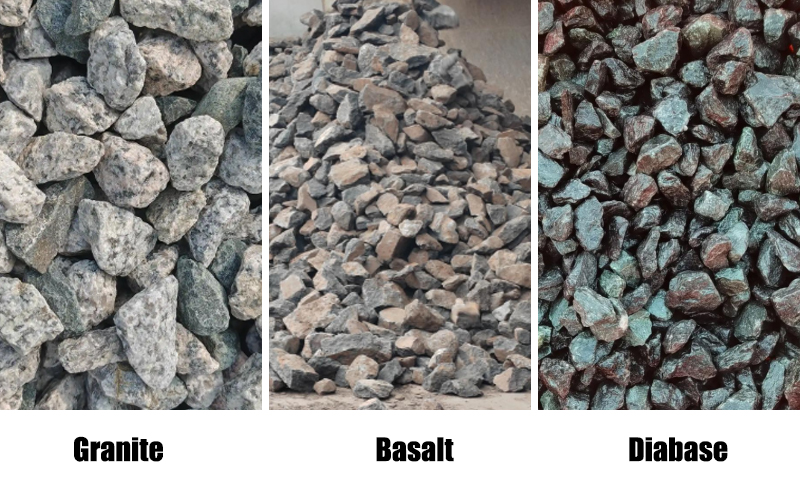
Granite, Basalt, Diabase
Hard rock materials—such as granite, basalt, and diabase—are characterized by their high hardness and strong abrasiveness; consequently, they impose extremely rigorous demands on the crushing force and wear resistance of tertiary crushers. Improper equipment selection in such contexts often leads to issues such as accelerated wear, low throughput, and frequent mechanical failures—problems that directly result in skyrocketing production costs and diminished operational efficiency. As a professional manufacturer of mining equipment, we possess a profound understanding of the specific pain points associated with hard rock crushing. This article aims to recommend high-performance tertiary crusher models and core configuration schemes specifically tailored for hard rock applications, thereby ensuring that your production line operates with stability, efficiency, and longevity—even when processing the toughest of materials.
The essence of hard rock crushing lies in the principles of "meeting force with force" and "overcoming abrasion with toughness." This implies that the equipment must generate sufficient crushing force to effectively fracture the rock, while simultaneously ensuring that its critical components possess exceptional wear resistance to withstand the rapid deterioration caused by highly abrasive materials. A superior tertiary crushing solution represents the perfect synergy between sheer power and enduring durability.
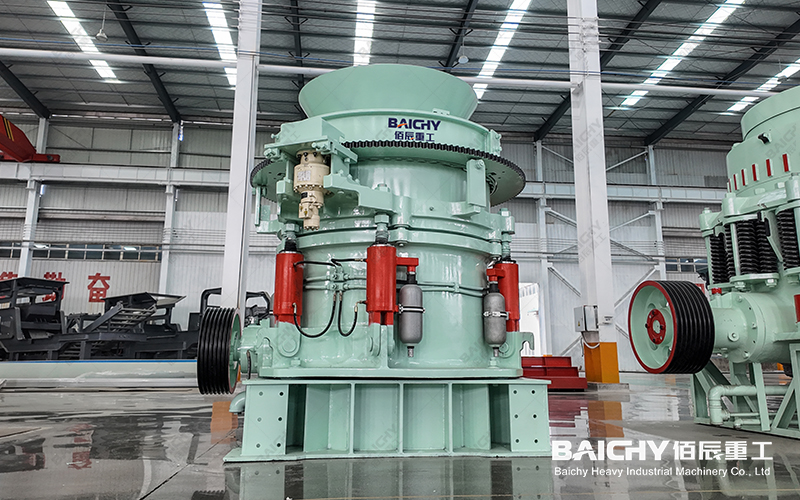
Tertiary crushers - cone crusher
Application Scenarios: Which Projects Require Specialized Hard Rock Tertiary Crushers?
While specialized hard rock tertiary crushers are not a standard requirement for every production line, they transition from being a mere "option" to an absolute "necessity" in the following scenarios:
1. High-Grade Aggregate Production Lines: Supplying high-standard crushed stone aggregates for projects such as expressways, railway subgrades, and large-scale hydroelectric power plants. The raw materials typically consist of granite or basalt, and there are stringent requirements regarding the finished product's particle shape and compressive strength.
2. Auxiliary Crushing for Metal Mines: Within mineral processing plants for iron, copper, and similar ores, there is a need to finely crush extremely hard host rocks or ore bodies to meet the specific feed size requirements for subsequent grinding operations.
3. Manufactured Sand Production: Utilizing hard rocks (such as basalt) to produce high-quality manufactured sand. This product offers superior particle shape, gradation, and wear resistance compared to natural sand, making it ideal for use in high-strength concrete mixes.
4. Construction Aggregate Upgrades: Upgrading existing production lines—which were originally designed to process medium-hard materials like limestone—to handle significantly harder materials such as granite, thereby enhancing the product's added value and market competitiveness.
In these specific scenarios, general-purpose crushers often prove inadequate; conversely, specialized hard rock tertiary crushers are able to leverage their core strengths to ensure the long-term profitability of the project.
Core Equipment Advantages: Why Does Our Three-Stage Hard Rock Crusher Stand Out?
Tailored specifically to the characteristics of hard rock, our recommended three-stage crushing solution focuses on three core advantages:
• Exceptional Wear Resistance: By employing cutting-edge technologies—such as multi-layer composite casting, embedded ultra-hard alloy inserts, and optimized heat treatment processes—we extend the service life of core wear parts (including the concave, mantle, blow bar, and impact plate) by over 50%. This significantly reduces replacement frequency and lowers spare parts costs.
• Powerful Crushing Force & High Energy Efficiency: Through optimized crushing chamber profiles and spindle speeds, we ensure ample crushing force while simultaneously achieving "laminated crushing." This not only boosts the single-unit output but also produces superior, multi-faceted aggregate particles, thereby enhancing product value. Furthermore, our highly efficient power system leads to a significant reduction in energy consumption per ton of material processed.
• Superior Stability & Intelligent Maintenance: A heavy-duty frame design, combined with an advanced iron-release protection system, ensures stable operation even when the equipment is subjected to high-impact loads. An integrated intelligent monitoring system allows for real-time tracking of critical parameters—such as bearing temperature, vibration levels, and hydraulic pressure—enabling predictive maintenance and preventing unexpected downtime.
Recommended Models & Parameter Configurations
For three-stage hard rock crushing applications, multi-cylinder hydraulic cone crushers are typically the preferred choice due to their laminated crushing principle, high power output, and exceptional stability.
Below is a comparison of key parameters for two of our flagship models:
| Model | Max. Feed Size (mm) | Discharge Opening Range (mm) | Processing Capacity (t/h) | Motor Power (kW) | Primary Applicable Materials |
| HPC-300 | 240 | 13-51 | 120-440 | 220 | Granite, Diabase |
| HPC-500 | 315 | 20-60 | 300-900 | 400 | Basalt, Andesite |
Selection Tips:
• HPC-300 Series: Ideal for medium-scale hard rock aggregate production lines or manufactured sand production lines; it represents a balanced choice that optimizes both investment costs and operational efficiency.
• HPC-500 Series: Designed for large-scale, intensive hard rock crushing projects, prioritizing high single-unit output and minimized operating costs.
Specific equipment selection requires a comprehensive assessment of your feed size, target output, finished product specifications, and budget. We offer a professional equipment selection guide service via a dedicated link; alternatively, you may draw upon the experience documented in our case studies to help us tailor a solution specifically for your needs.
Further Reading: If you are currently weighing the choice between a cone crusher and an impact crusher, please consult our detailed comparison article: [Link to Model Comparison]. For hard rock applications, cone crushers typically offer superior advantages in terms of wear resistance and operational stability.
Success Story Showcase
Case Study: A Large-Scale Granite Aggregate Project in East China
• Material: Granite; Compressive Strength > 180 MPa
• Challenges: The original equipment suffered from extremely rapid wear—requiring hammer plate replacements every two weeks—failed to meet output targets, and exhibited a high rate of mechanical failure.
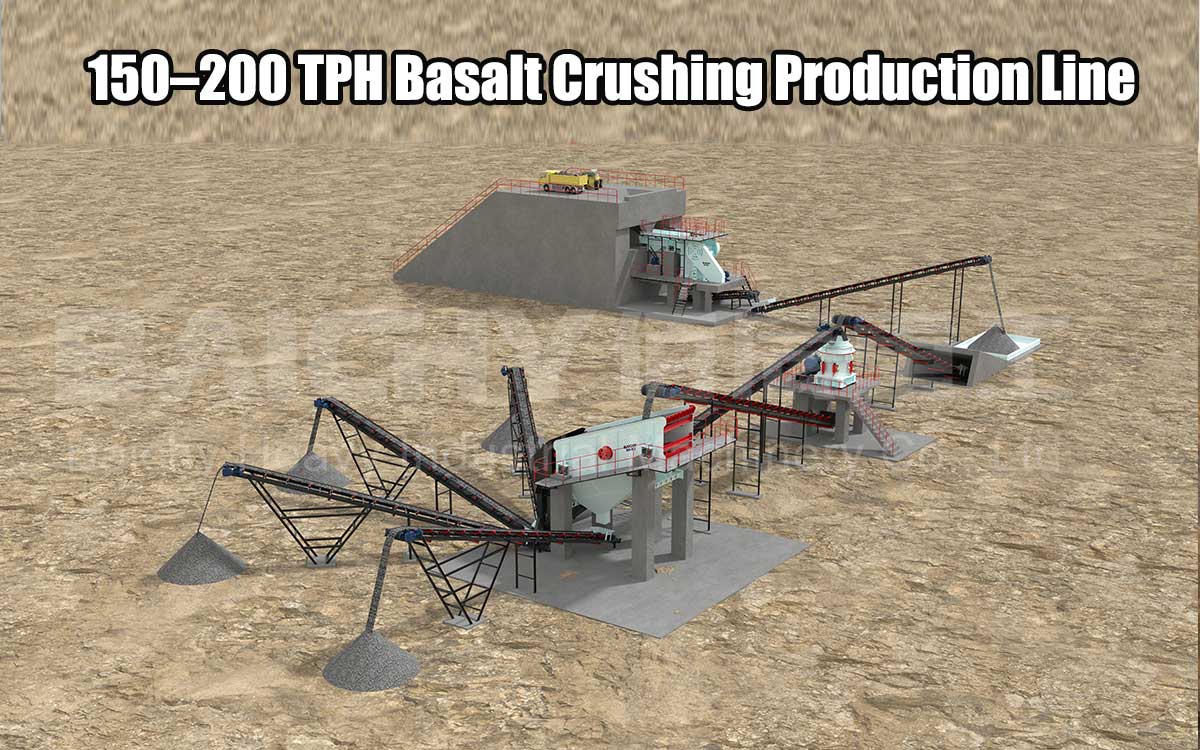
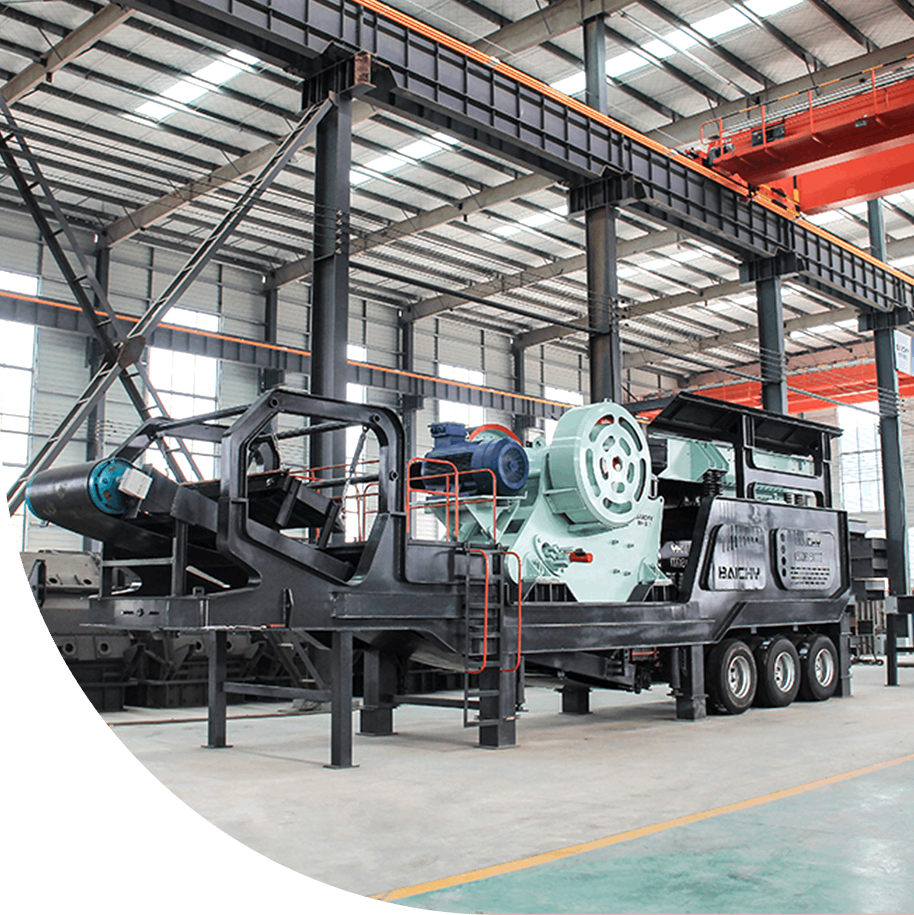
• Solution: We implemented a three-stage, closed-circuit crushing process consisting of: "Jaw Crusher (Primary Crushing) + Single-Cylinder Cone Crusher (Secondary Crushing) + HPC-300 Multi-Cylinder Hydraulic Cone Crusher (Tertiary/Fine Crushing)." Specifically, the tertiary crushing stage was configured with two HPC-300 units operating in parallel.
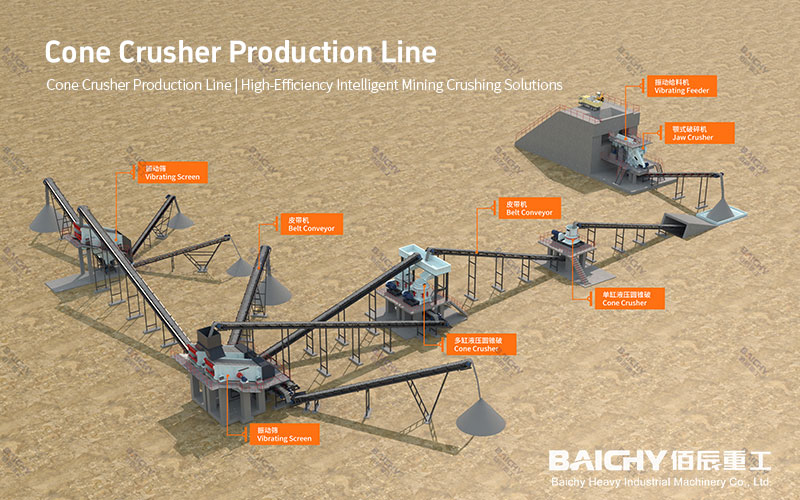
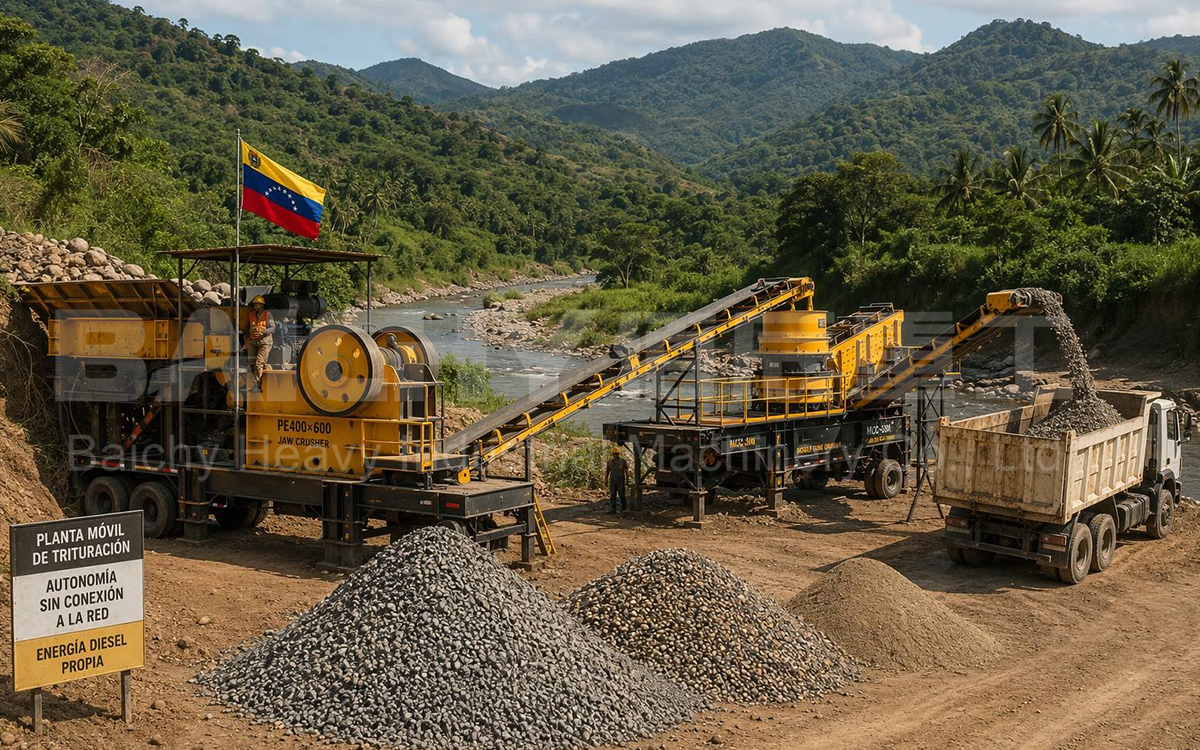
stone crushing plant
• Results:
◦ The service life of core wear parts was extended from 2 weeks to over 2 months.
◦ The tertiary crushing system achieved a stable output of 580 t/h, exceeding the original design target.
◦ The finished aggregate product (12–25 mm) exhibited excellent particle shape, with a flakiness and elongation index below 8%; consequently, it was designated as the approved material for a local high-speed rail project.
◦ Thanks to the equipment's high operational stability and intelligent control systems, annual unplanned downtime was reduced by 85%.
Frequently Asked Questions (FAQ)
Q1: What are the main differences in equipment configuration when processing basalt versus granite?
A1: Both are classified as hard rocks; however, basalt possesses higher toughness and is significantly more abrasive. When configuring the system, greater emphasis should be placed on selecting appropriate wear-resistant materials (such as alloys with higher chromium content) when processing basalt; additionally, it may be necessary to slightly reduce the main shaft speed to minimize wear. Conversely, when processing granite—which is characterized by its distinct cleavage properties—the focus can shift toward optimizing the crushing chamber profile to achieve higher throughput and superior particle shape.
Q2: Is the replacement of wear parts complicated for the tertiary crushers you recommend for hard rock applications? Does it result in significant downtime?
A2: Our equipment is designed with ease of maintenance as a primary consideration. For instance, our multi-cylinder hydraulic cone crushers feature hydraulic locking and top-mounted hydraulic adjustment mechanisms. Replacing wear liners does not require the use of epoxy resin backing, and all maintenance tasks can be performed from above or from the sides of the machine. Typically, a complete set of major wear parts can be replaced within 8 to 12 hours, thereby minimizing production losses due to downtime.
Q3: Aside from the main crushing unit, what other measures can be implemented in the production line design to effectively handle hard rock?
A3: This is a comprehensive systems engineering challenge. In addition to selecting the appropriate tertiary crusher, the following factors should be considered: 1) The upstream crushing stages (primary and secondary) must effectively "offload" the burden by reducing the material feed size entering the tertiary crusher as much as possible; 2) The feeding process must be continuous and uniform to prevent the equipment from running empty or becoming overloaded; and 3) The screening system should be equipped with high-efficiency, wear-resistant screens, and consideration should be given to incorporating a pre-screening stage to separate qualified fine materials in advance, thereby reducing the circulating load on the tertiary crusher.
Summary
Facing the formidable challenges posed by hard rocks such as granite and basalt, an optimized solution centered on high-performance, highly wear-resistant tertiary crushers is the key to unlocking efficient and sustainable production. This represents not merely an upgrade of a single piece of equipment, but rather an evolution of the entire production philosophy toward a paradigm defined by "cost reduction, efficiency enhancement, durability, and intelligence."