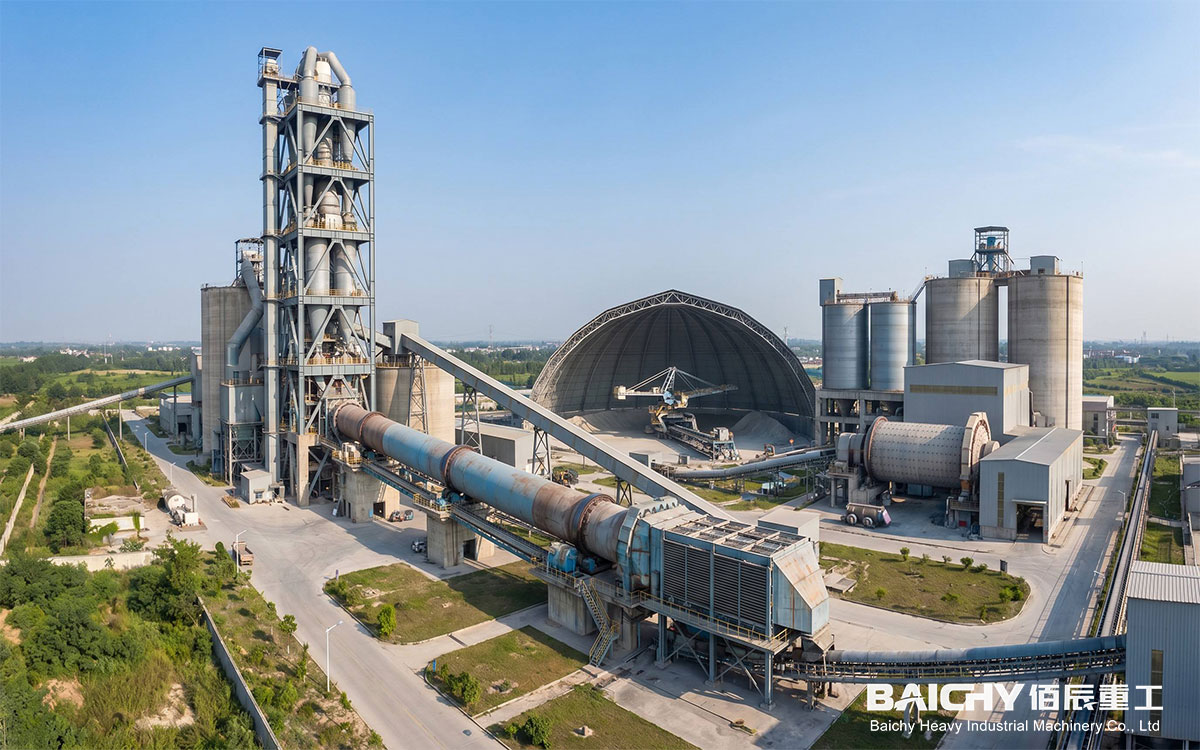
2,000 tpd Cement Production Line: Equipment Configuration, Investment Budget, and Commissioning Guide
For a cement production line with a daily capacity of 2,000 tons, errors in equipment selection or improper process integration can result in an annual production loss of 60,000 to 100,000 tons, translating to a revenue shortfall exceeding US$30 million. This is no exaggeration; in actual projects across Sub-Saharan Africa and Southeast Asia, it is not uncommon to see downstream kiln systems forced to idle while waiting for feed material due to insufficient capacity in the crushing section.
Based on standards for the modern dry-process cement method, this article breaks down the complete equipment configuration, investment distribution across process stages, and key selection logic for a 2,000 tpd (tons per day) line; all data cited are verifiable industry benchmarks.
I. Market Scenarios Suitable for a 2,000 tpd Production Line
| Scenario Type | Applicable Conditions | Typical Markets |
| New Cement Plant | Regional cement supply gap ≥ 300,000 tons/year | Sub-Saharan Africa, Central Asia, Myanmar |
| Capacity Expansion | Existing capacity < 1,000 tpd; demand growth > 8%/year | South Asia, Middle East |
| Technical Retrofitting/Upgrading | Conversion from wet/semi-dry to modern dry process | Latin America, Pakistan |
| Slag/Fly Ash Utilization | Proximity to steel mills/power plants; local raw material sourcing | India, Turkey |
The 2,000 tpd scale falls within the "sweet spot" for medium-sized cement plants: the investment ranges from US$40 million to US$60 million, with a per-ton investment cost (approx. US$200–300 per ton of capacity) that is significantly more favorable than that of small-scale lines. At the same time, it offers greater flexibility than large 5,000 tpd lines—production can commence after a construction period of just 12–18 months, and the thresholds for land use and raw material supply are lower.
II. End-to-End Equipment Configuration (6 Major Process Stages)
The core logic of the modern dry-process cement method is "two grinding stages and one burning stage": raw meal grinding → clinker calcination → cement grinding. Below are the standard main equipment configurations and selection highlights for a 2,000 tpd production line.
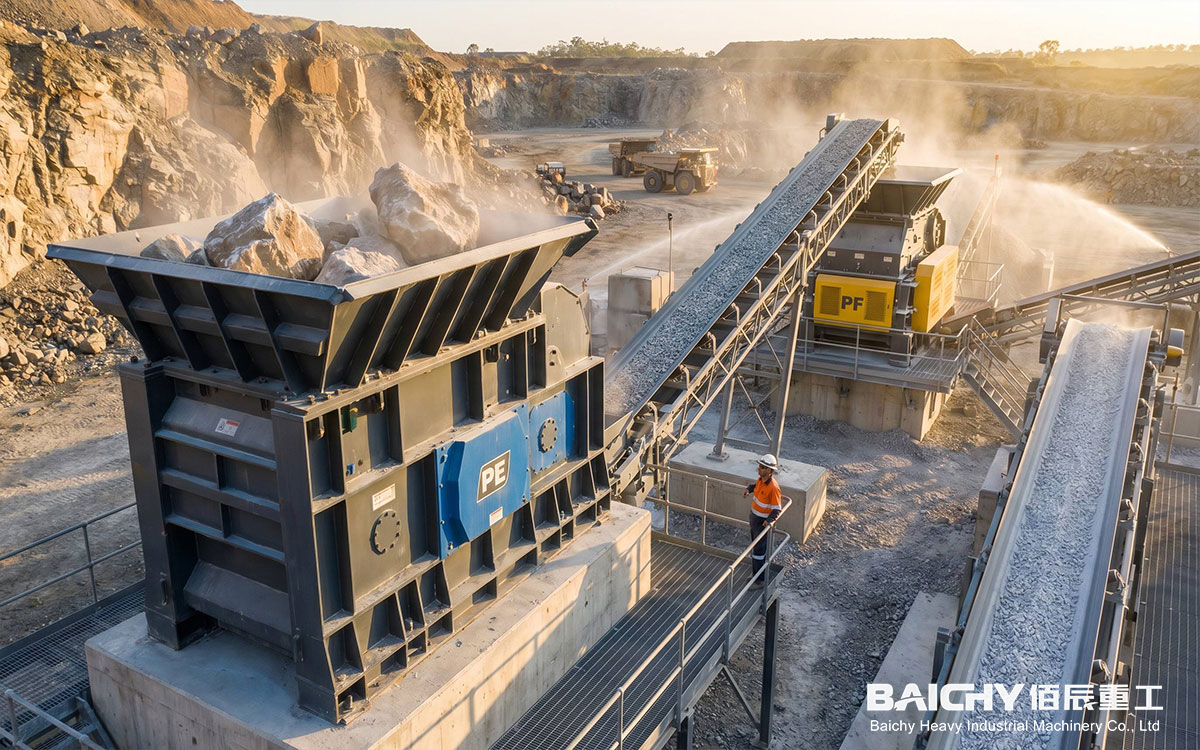
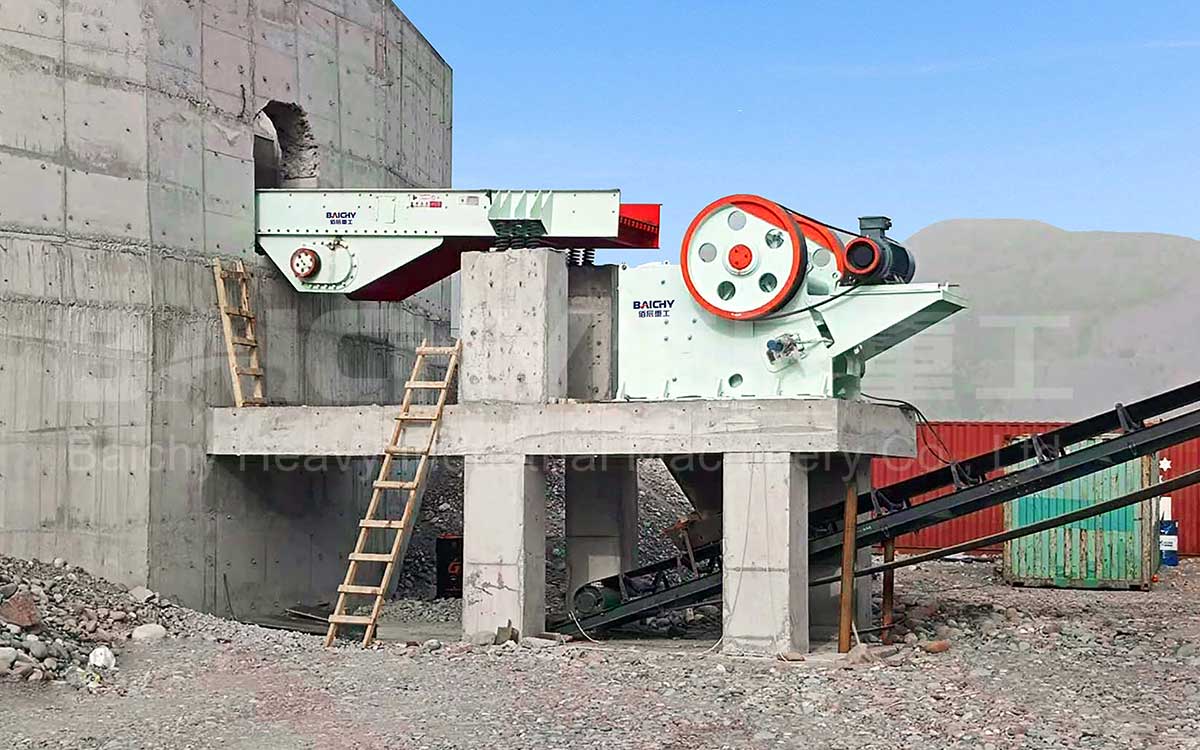
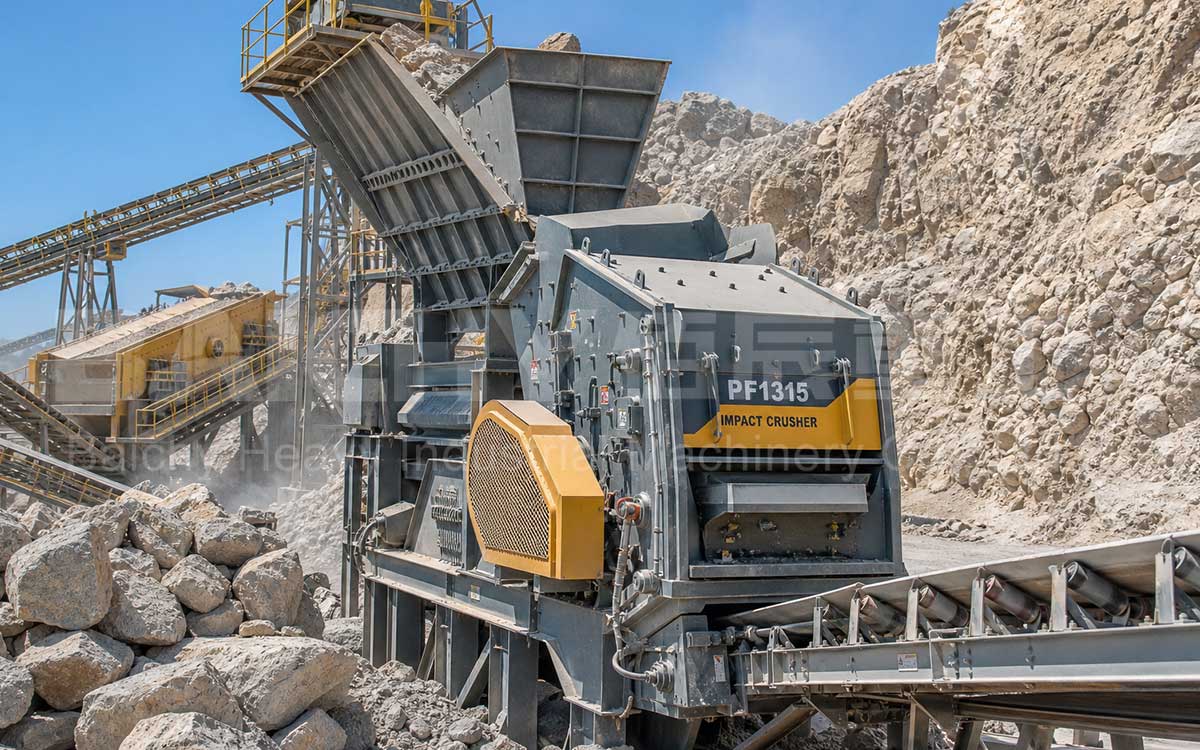
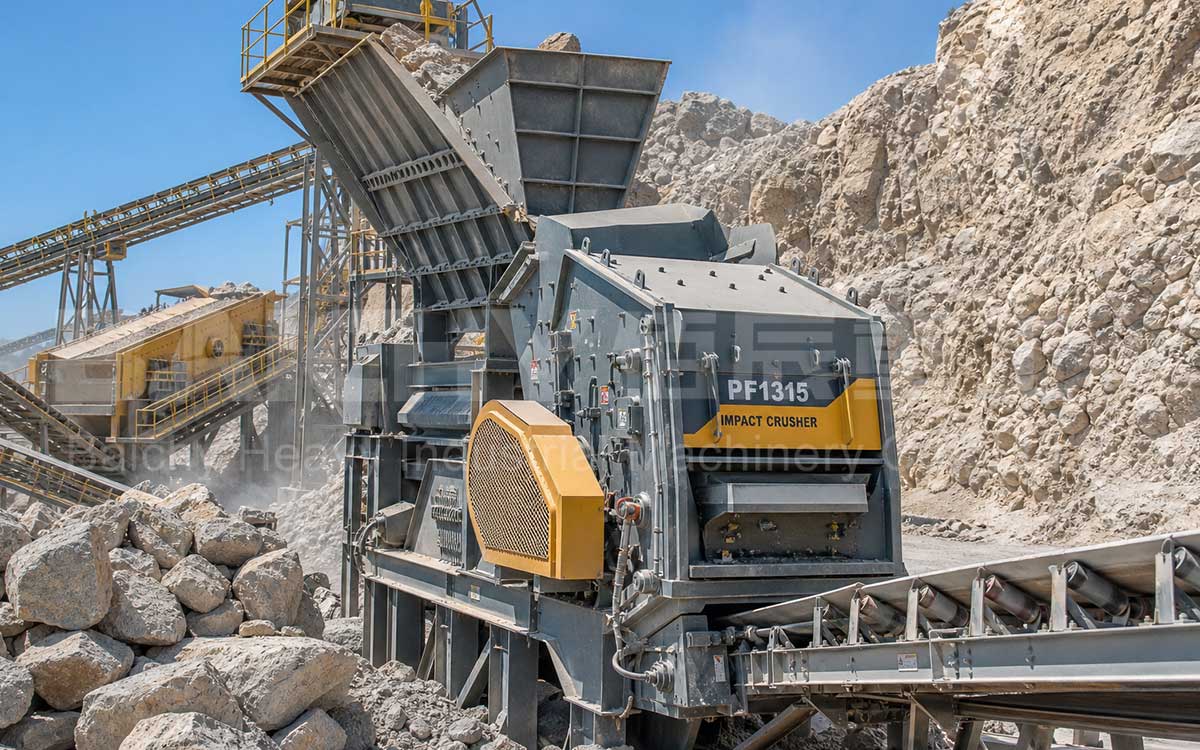
Raw material crushing section: On-site view of the two-stage crushing operation featuring a PE jaw crusher and a PF impact crusher.
1. Raw Material Crushing and Pre-homogenization
| Equipment | Recommended Specs | Qty | Key Parameters | Baichy Supply |
| Jaw Crusher (Primary) | PE-900×1200 / PE-750×1060 | 1 unit | Feed size ≤750mm, Output ≤150mm | ✅ |
| Impact Crusher (Secondary) | PF-1315 / PF-1520 | 1 unit | Feed ≤300mm, Output ≤50mm | ✅ |
| Hammer Crusher (Optional Alternative) | PC-1609 (Single-stage) | 1 unit | Feed ≤1000mm, Output ≤75mm | ✅ |
| Vibrating Feeder | GZD-1300×4900 | 1 unit | Uniform feeding | ✅ |
| Stacker/Reclaimer | Cantilever side-stacker + Bridge-type scraper reclaimer | 1 unit each | Homogenization factor ≥8 |
Selection Logic: Limestone hardness determines the crushing scheme. For medium-to-low hardness (Mohs hardness ≤5), a single-stage hammer crusher can be used to reduce the number of machines; for high-hardness limestone, a two-stage "Jaw Crusher + Impact Crusher" route is mandatory, otherwise the service life of the impact crusher's blow bars will plummet to 500–800 hours.
2. Raw Material Proportioning and Grinding
| Equipment | Recommended Specs | Qty | Key Parameters |
| Vertical Raw Mill (Recommended) | Capacity 180–220 t/h | 1 unit | Feed ≤80mm, Output fineness (80μm sieve residue) ≤12% |
| Ball Mill (Alternative) | Φ3.8×7.5m | 1 unit | Capacity 80–100 t/h; system power consumption 30%–40% higher than vertical mill |
| Proportioning System | Quantitative feeder scales (4–6 lines) | 1 set | Proportioning error ≤±1% |
Key Decision: Vertical Mill vs. Ball Mill. For a production line with a daily capacity of 2,000 tons, a vertical raw material mill is recommended. The reason is straightforward: the power consumption of a vertical mill system is 14–18 kWh/t of raw meal, whereas a ball mill system consumes 20–24 kWh/t. Based on an annual output of 600,000 tons of raw meal, the vertical mill saves approximately US$250,000–$400,000 in annual electricity costs (calculated at an electricity price of US$0.08/kWh).
3. Preheating, Calcination, and Clinker Burning
| Equipment | Specification Recommendation | Quantity | Key Parameters |
| Five-stage cyclone preheater + calciner | C1–C5 cyclones + in-line calciner | 1 set | Kiln-inlet calcination rate ≥90% |
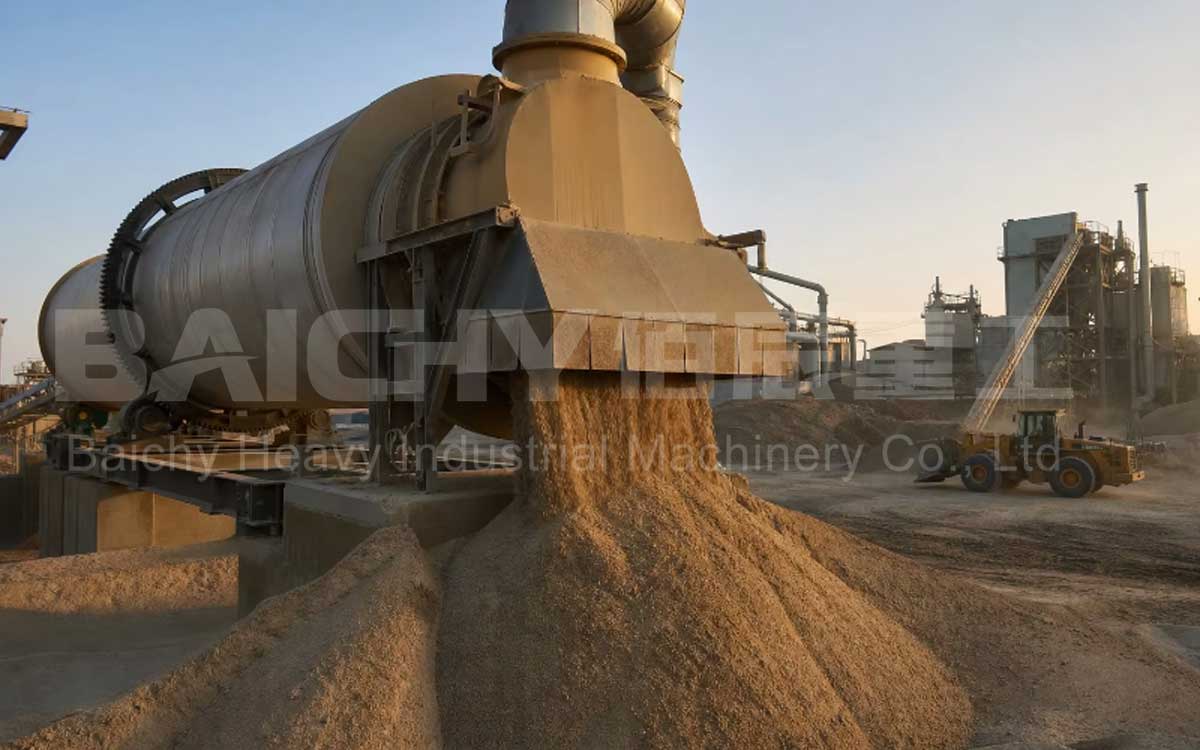
| Rotary kiln | Φ4.0×56m / Φ4.0×60m | 1 unit | Slope 3.5%, rotation speed 0.4–4.0 rpm |
| Grate cooler | Effective area ≥50 m² | 1 unit | Discharge temperature ≤65°C + ambient temperature |
| Kiln-head burner | Multi-channel pulverized coal burner | 1 unit | Primary air volume 6%–8% |
The kiln system is the heart of the entire production line, and equipment selection determines the upper limit of energy consumption. For a 2,000 t/d line, the heat consumption for clinker burning should fall within the range of 730–780 kcal/kg. The heat recovery efficiency of the grate cooler directly affects the temperature of the secondary air entering the kiln; a temperature below 1,000°C implies an additional consumption of 20–30 kcal per kilogram of clinker, resulting in an extra annual consumption of approximately 1,800–2,700 tons of standard coal.
4. Cement Grinding
| Equipment | Specification Recommendation | Quantity | Key Parameters | Baichy Supply |
| Cement Ball Mill | Φ3.8×13m / Φ4.2×13m | 1–2 units | Capacity 45–80 t/h (P·O 42.5) | ✅ |
| Roller Press (Combined Grinding) | Φ1600×1500 | 1 unit | Pre-grinding; system output increased by 30%–50% | ✅ |
Open-circuit grinding is strictly not recommended. A production line with a daily output of 2,000 tons should utilize a combined system of closed-circuit grinding and a roller press. Closed-circuit grinding results in a finished product temperature 15–20°C lower than open-circuit grinding, preventing gypsum dehydration and ensuring stable cement strength and setting times. Roller press pre-grinding reduces ball mill power consumption by 25%–35% and offers the shortest return on investment (ROI) period for technical upgrades (typically 12–18 months).
5. Finished Product Storage and Packaging
| Equipment | Specification | Quantity | Remarks |
| Cement Silos | 4×Φ12m | 4 silos | Total capacity approx. 10,000 tons (5 days' output) |
| 8-Spout Rotary Packer | 8RS | 1 unit | 80–120 t/h |
| Bulk Loader | SZ-200 | 2 units | 200 t/h |
6. Dust Collection and Environmental Protection Systems
Each main machine is equipped with an independent bag-type dust collector; emission concentration ≤30 mg/Nm³ (compliant with GB 4915-2013 "Emission Standard of Air Pollutants for Cement Industry," equivalent to EU 2010/75/EU standards). Kiln tail exhaust gas is treated using a combined "SNCR denitrification + bag dust collection" process, with NOx emissions ≤400 mg/Nm³.
III. Investment Budget Breakdown
The total investment range for a new dry-process cement production line with a daily capacity of 2,000 tons is US$40 million to US$60 million (excluding land costs and mining rights). The following table outlines the reference investment proportions for each process section:
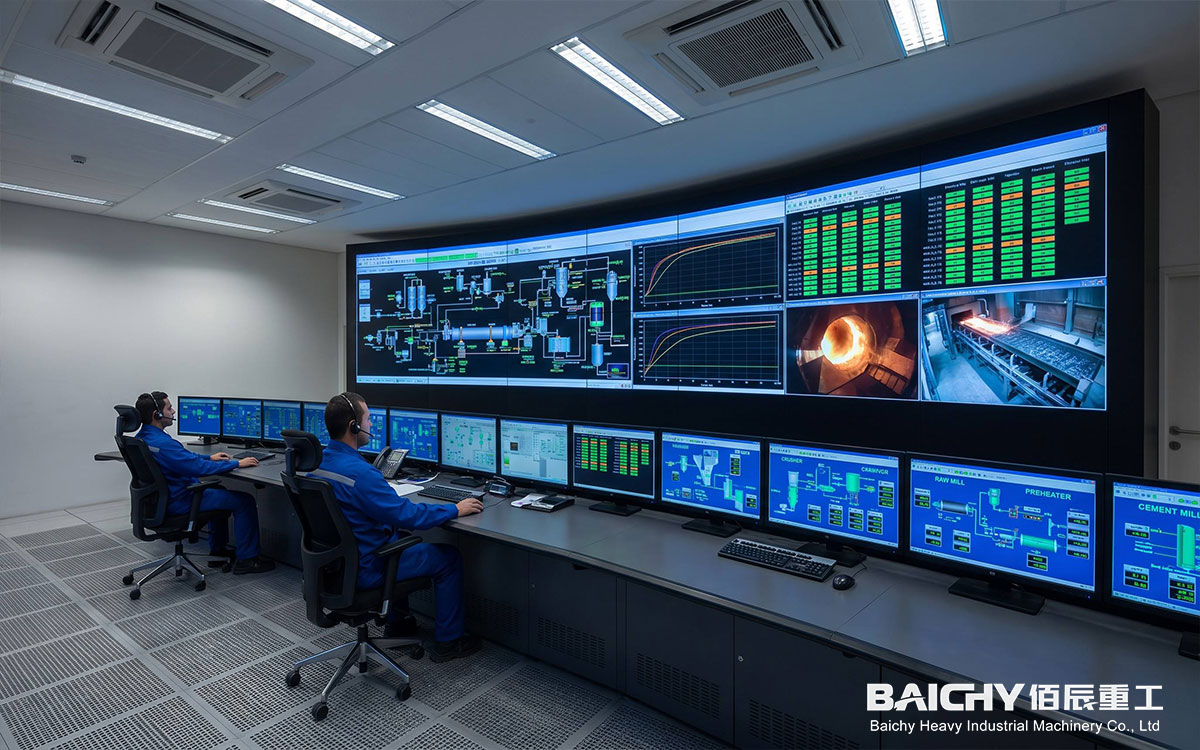
DCS central control room: Fully automated process monitoring and real-time scheduling by dual operators.
| Process Section | Investment Proportion | Amount Range (M USD) | Description |
| Raw Material Crushing & Homogenization | 8%–12% | 3.2–7.2 | Includes crushers, stacker-reclaimers, and conveyor galleries |
| Raw Meal Grinding | 10%–15% | 4.0–9.0 | Vertical mill and auxiliary fans/dust collection |
| Clinker Calcination (Kiln System) | 25%–30% | 10.0–18.0 | Preheater, rotary kiln, grate cooler, and burner |
| Cement Grinding | 12%–18% | 4.8–10.8 | Ball mill, roller press, and separator |
| Finished Product Storage/Packaging | 8%–10% | 3.2–6.0 | Storage silos, packaging machines, and bulk loading systems |
| Environmental Protection Systems | 5%–8% | 2.0–4.8 | Bag-type dust collectors, SNCR denitrification, and online monitoring |
| Electrical & Automation (DCS) | 8%–10% | 3.2–6.0 | DCS control, high/low-voltage power distribution, and instrumentation |
| Civil Works & Installation | 15%–20% | 6.0–12.0 | Factory buildings, foundations, steel structures, and installation costs |
Do not cut corners on critical equipment. "Saving" money on crushers and cement mills will ultimately result in electricity and maintenance costs that are more than three times the initial savings. The real opportunity for cost optimization lies in civil works: adopting steel structural frames instead of concrete frames can reduce civil construction costs by 15%–20%.
IV. Project Timeline and Payback Analysis
| Stage | Duration |
| Feasibility Study & EIA | 3–4 months |
| Design (Conceptual & Construction Drawings) | 3–4 months |
| Civil Construction | 5–7 months |
| Equipment Installation | 3–5 months |
| Commissioning & Trial Production | 2–3 months |
| Total | 16–23 months |
Payback Period: Based on an annual cement output of 600,000 tons and an average market price of $60/ton, annual revenue is approximately $36 million. After deducting comprehensive costs—including raw materials, fuel, electricity, labor, and depreciation (approx. $35–40/ton)—the annual net profit is approximately $12–15 million. The static investment payback period is roughly 3.5–5 years. A key variable is the local cement selling price; in some parts of Sub-Saharan Africa, retail prices can reach $120–150/ton (50kg bags), significantly shortening the payback period to 2–3 years.
V. What Baichy Heavy Industry Can Do for You
Baichy Heavy Industry specializes in core equipment for the crushing and grinding stages of cement production lines:
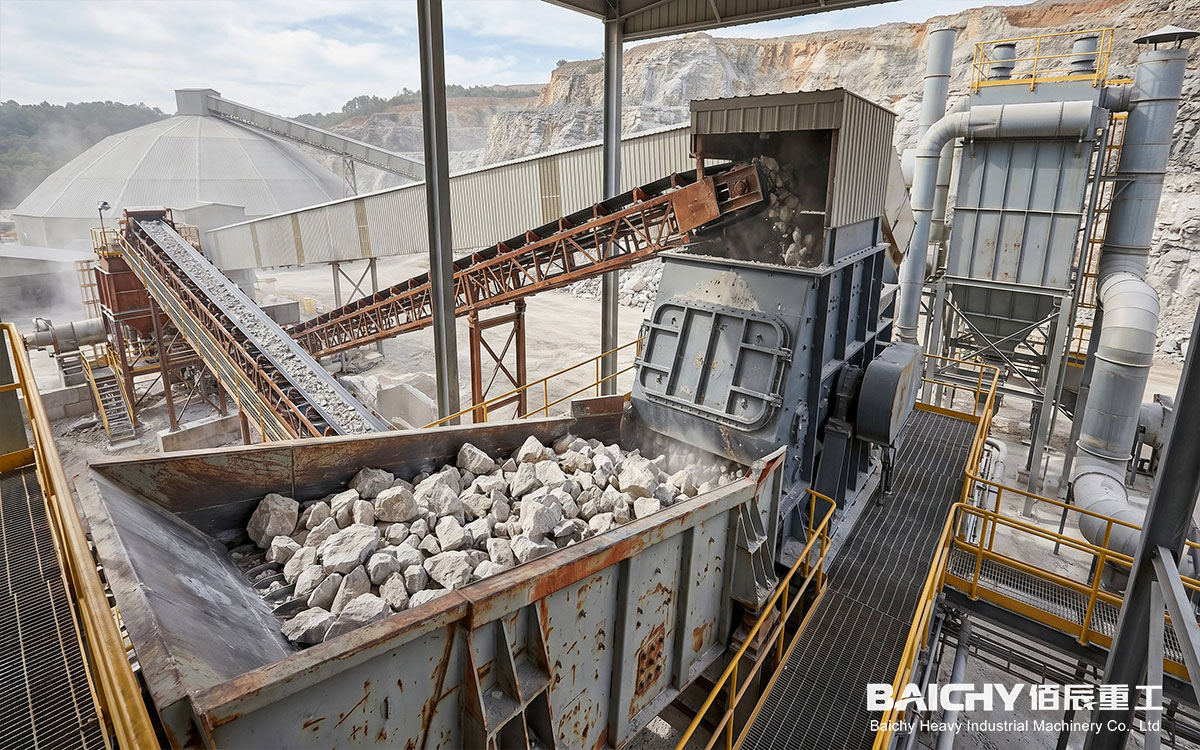
Raw material crushing and conveying system: Vibrating feeder, hammer crusher, enclosed steel-truss belt conveyor gallery, and bag-type dust collection system.
• Raw Material Crushing: PE series jaw crushers + PF series impact crushers (or PC series hammer crushers), covering processing capacities of 50–800 t/h.
• Cement Grinding: Φ2.2–4.6m ball mill series, supporting open-circuit/closed-circuit processes and equipped with roller press pre-grinding systems.
• Auxiliary Equipment: Full-process conveying equipment including vibrating feeders, belt conveyors, bucket elevators, and screw conveyors.
For kiln systems (preheater, rotary kiln, and grate cooler) and plant-wide DCS automation, Baichy delivers EPC solutions in collaboration with long-term domestic design institutes and OEMs. This ensures seamless equipment interface matching, coordinated installation sequencing, and successful completion of 72-hour load trial runs. Our products serve over 150 countries and regions worldwide, with numerous successful project deliveries—specifically for the crushing and grinding sections of cement production lines with daily capacities of 1,000–3,000 tons—across markets in Africa, Southeast Asia, and Central Asia.
Delivery is not the end of the journey. Following the delivery of each set of crushing and grinding equipment, Baichy provides: on-site installation guidance; operator training (available in Chinese, English, or French); free O&M guidance during the 12-month warranty period; and full-lifecycle spare parts supply (with ready stock of Mn18Cr2 wear-resistant jaw plates, high-chrome cast iron hammer heads, and wear-resistant liners).
Get a customized proposal for your 2,000tpd cement production line.
Submit details regarding your raw material type, target market, and site conditions, and we will provide a free equipment list and a preliminary process flow chart within 24 hours.
FAQ
Q1: What is the total investment for a cement production line with a daily capacity of 2,000 tons?
A1: The total investment ranges from USD 40 million to USD 60 million, excluding land costs and mining rights. Equipment accounts for 50%–60% of the investment, while civil engineering accounts for 15%–20%. The exact figure depends on local geological conditions, the level of automation, and environmental standards.
Q2: What core equipment is required for a 2,000 tpd cement plant?
A2: Core equipment includes: limestone crushers (jaw crusher + impact crusher, or single-stage hammer crusher); raw material vertical mill or ball mill; five-stage cyclone preheater and calciner; rotary kiln (Φ4.0×56–60m); grate cooler; cement ball mill + roller press; packing machine; as well as a comprehensive bag-type dust collection system and DCS control system.
Q3: Is a vertical mill or a ball mill better for a cement production line?
A3: For raw material grinding, a vertical mill (VRM) is recommended; it consumes 14–18 kWh/t of electricity compared to 20–24 kWh/t for a ball mill, offering overall energy savings of 25%–35%. For cement grinding, a combined "roller press + ball mill" system is recommended to balance product particle size distribution quality with electricity consumption control.
Q4: How long does it take for a 2,000 tpd cement plant to go from the start of construction to commissioning?
A4: The standard project cycle is 16–23 months: feasibility study and EIA (3–4 months), design (3–4 months), civil works (5–7 months), installation (3–5 months), and commissioning (2–3 months). If modular design and prefabricated steel structures are used, this can be compressed to 12–14 months.
Q5: How many years does it take to recoup the investment for a 2,000 tpd (tons per day) cement production line?
A5: The static payback period is approximately 3.5–5 years (based on an average cement price of $60/ton). In markets with higher cement prices (such as Sub-Saharan Africa, where prices exceed $120/ton), the payback period can be shortened to 2–3 years.
Q6: How much limestone raw material is required for an annual output of 600,000 tons of cement?
A6: Based on a material consumption ratio of 1.5–1.6, producing 600,000 tons of cement annually requires approximately 900,000–960,000 tons of limestone (including impurities and losses). A supporting mining system is required; the mine's service life should ideally be at least 30 years, requiring limestone reserves of ≥30 million tons.
Q7: New dry process vs. wet process—which should be chosen for a 2,000 tpd capacity?
A7: The new dry process must be chosen. The heat consumption for clinker calcination is 1,300–1,500 kcal/kg for the wet process, whereas the new dry process requires only 730–780 kcal/kg, saving approximately 80–100 kg of standard coal per ton of clinker. A 2,000 tpd line saves about 60,000–75,000 tons of standard coal annually; at a cost of $120 per ton of standard coal, this results in annual fuel cost savings of approximately $7.2 million–$9 million. The wet process is no longer economically viable at the 2,000 tpd scale.
Q8: Should a jaw crusher or a hammer crusher be selected for the cement plant?
A8: It depends on the hardness of the limestone. When the compressive strength of limestone is ≤120 MPa, a single-stage hammer crusher can reduce the material directly from 1,000 mm to under 75 mm, eliminating the need for secondary crushing. If the hardness exceeds 120 MPa, a two-stage crushing process—either "jaw crusher + impact crusher" or "jaw crusher + cone crusher"—is required; otherwise, the service life of the hammer crusher's hammers would fall below 1,000 hours, resulting in unsustainable replacement frequency and costs.
Q9: What environmental emission standards must cement plants meet?
A9: Key emission limits (GB 4915-2013 / EU 2010/75/EU) are: Particulate Matter (PM) ≤30 mg/Nm³ (kiln tail) / ≤20 mg/Nm³ (other emission points), SO₂ ≤200 mg/Nm³, and NOx ≤400 mg/Nm³ (achievable via SNCR denitrification). For new projects, it is recommended to design bag-type dust collectors for PM emissions of ≤10 mg/Nm³ to provide a buffer for future standard upgrades.
Q10: Can Baichy Heavy Industry supply an entire cement production line?
A10: Baichy Heavy Industry primarily supplies equipment for the crushing stage (jaw crushers, impact crushers, hammer crushers) and the grinding stage (ball mills, roller presses). Regarding the kiln system (preheater, rotary kiln, grate cooler) and plant-wide automation, we provide collaborative EPC delivery through partner design institutes and OEMs, ensuring equipment interface compatibility and unified quality control standards across the entire process.