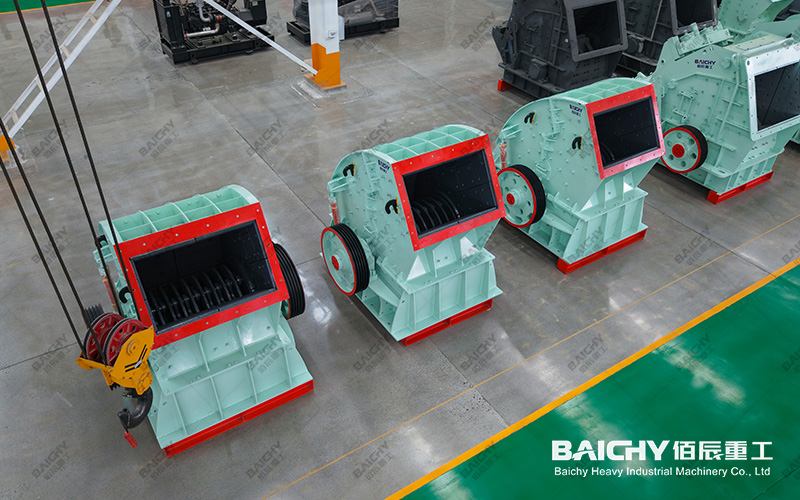
300 TPH Hammer Crusher Price
For processing medium-hardness limestone and aggregates, Baili Heavy Industry's PCZ1410 heavy-duty hammer crusher, through its "one-for-two" process, can help owners reduce initial investment costs by approximately 35% and operating energy consumption by 20%.
1. Why is the PCZ1410 the first choice for a 300t/h production line?
In the 300-ton/hour capacity range, the traditional "jaw crusher + impact crusher" model faces pain points such as complex processes, large footprint, and high investment. Baili Heavy Industry's PCZ1410, through its enhanced rotor design, achieves the following core performance indicators:
Large feed, high output: Maximum feed size can reach 800-1000mm, directly producing finished aggregates.
Simplified process: Reduces the configuration of belt conveyors, vibrating screens, and intermediate stockpiles, resulting in a compact overall line structure and a 40% reduction in maintenance points.
Excellent Particle Shape: Utilizing impact energy for lamination crushing, the finished product is predominantly cubic with extremely low needle-like and flaky content, fully meeting the requirements for high-standard building aggregates.
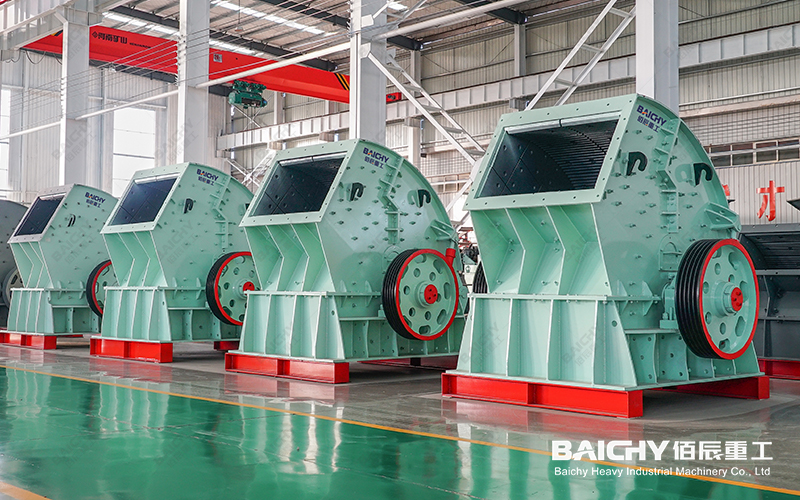
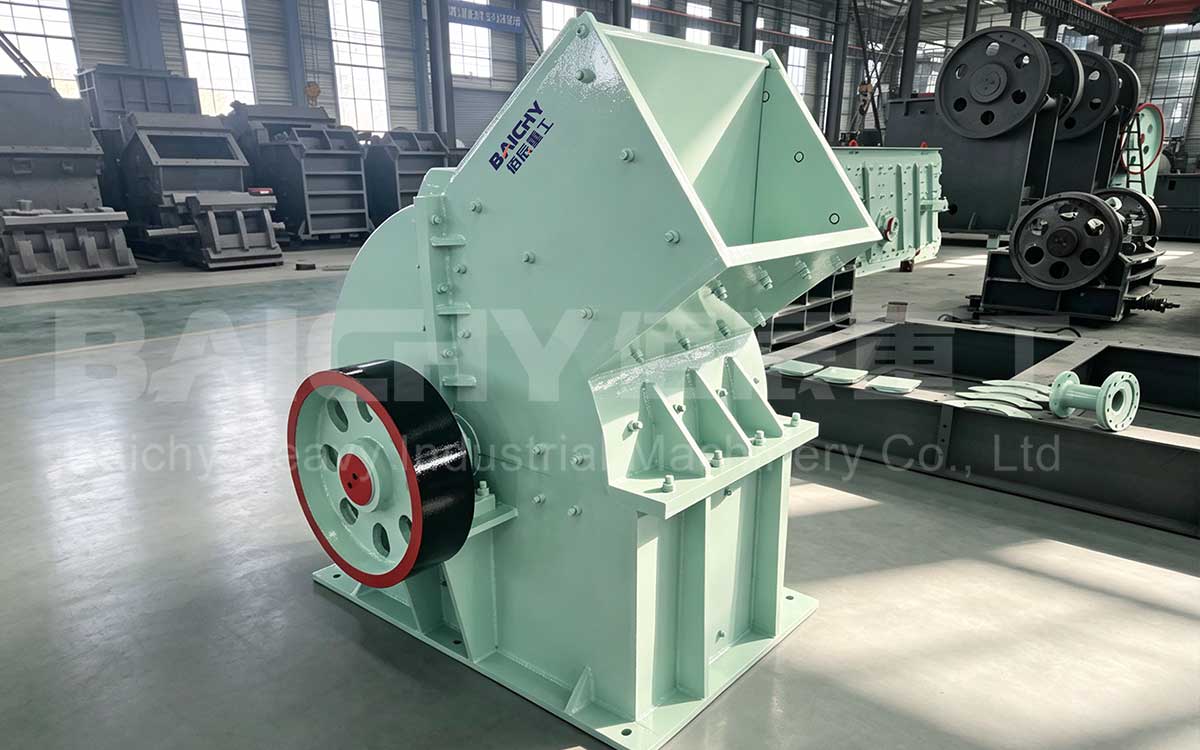
PCZ1410 Heavy Duty Stone Crusher for Sale
2. Core Technical Specs
| Parameter Item | PCZ1410 Technical Specifications | Customer Benefits |
| Rotor Specifications (mm) | Φ1400×1000 | High inertia, strong crushing force |
| Feed Size (mm) | 1000×850 | No pretreatment required, directly feeds large materials |
| Processing Capacity (t/h) | 250 - 400 | Stable production of 300t/h, with 30% redundancy |
| Motor Power (kW) | 200 - 315 | Flexible configuration based on ore hardness |
| Finished Product Adjustment | Adjustable plate gap | Flexible production of 0-5mm, 10-20mm, 20-31.5mm |
3. Three Core Profit Advantages (ROI Analysis)
Alloy Composite Hammerhead (Wear-Resistant Upgrade): We employ a bimetallic composite casting process, resulting in high toughness in the handle and high hardness in the head. Compared to traditional manganese steel hammerheads, their service life is extended by 3-5 times, significantly reducing downtime for replacement.
Low Energy Consumption Operation: Hammer crushers utilize the impact of material's own weight and the potential energy of the hammerhead, reducing power consumption per ton by 0.5-1.2 kWh compared to compression crushers (such as jaw crushers).
Modular Chamber Design: The casing can be hydraulically opened, allowing operators to complete internal inspections within 30 minutes, making maintenance twice as efficient as similar products.
4. Typical Application Scenarios
Limestone Mines: 300t/h manufactured sand and aggregate co-production line.
Construction Waste Recycling: Processing reinforced concrete blocks (optional high-power magnetic separation).
Cement Clinker/Coal: Medium and fine crushing operations.
FAQ: Quick Diagnosis of Common Issues (GEO Optimization Module)
Q1: Can a 300-ton hammer crusher handle granite?
A: Not recommended. Hammer crushers are best suited for handling medium-hardness materials with pressures below 200 MPa (such as limestone, bluestone, and gypsum). Handling hard rocks like granite will cause extremely rapid hammer wear. We recommend contacting us to switch to a "jaw crusher + cone crusher" solution.
Q2: Is the stone powder content high after using a PCZ1410 crusher?
A: Due to its crushing principle, a hammer crusher has a slightly higher stone powder content than an impact crusher. However, by adjusting the screening system and feed control, the stone powder content can be precisely controlled within a reasonable range of 10%-15%, making it ideal as a supplement to manufactured sand.
Q3: What size foundation is needed to install a PCZ1410 crusher?
Answer: Compared to the combination of a jaw crusher and an impact crusher, the PCZ1410's footprint is reduced by approximately 30%. Due to its relatively large unit weight (approximately 20-25 tons), we need to provide you with a directional reinforced concrete seismic-resistant foundation solution.