If your project is located in Mongolia, involves processing medium-to-high hardness rock (such as granite, basalt, or quartzite), and requires both concrete aggregates and manufactured sand, this four-stage processing line offers the most cost-effective solution currently on the market. The configuration comprises: PE600×900 (primary jaw crushing) → PEX250×1200 (secondary jaw crushing) → CS160D (tertiary spring cone crushing) → VSI8518 (quaternary vertical shaft impact crushing for sand making and shaping). The line has a nominal output capacity of 80-100 tph (producing 0–5 mm manufactured sand and 5–20/20–40 mm crushed stone, depending on raw material and screening configuration). Crucially, the design specifically addresses three realities of the Mongolian market: the harsh winter climate, rising electricity costs, and the need for on-site integration with mining operations.
This is not merely a pitch for a single piece of equipment, but a complete production line configured to meet the operational logic of mines and aggregate yards. It provides direct answers to the three questions Mongolian project owners ask most frequently: "Where will the sand and aggregate come from?", "Can costs be kept under control?", and "Will operations have to shut down in winter?"
Four Realities of the Mongolian Sand and Aggregate Supply
Reality 1: Rapidly expanding demand.
The World Bank’s economic outlook (May 2025) forecasts Mongolia’s economic growth at 6.3% for 2025, driven by a surge in copper production and agricultural recovery (following 5% growth in 2024). Copper concentrate output has continued to climb following the expansion of underground mining at Oyu Tolgoi; mine development, processing plant construction, and the building of access roads and supporting facilities all require cement, concrete, and aggregates. Regarding Ulaanbaatar, the World Bank’s transport investment plan includes the construction of 64.6 km of light rail and urban railway lines. Coupled with the ongoing development of major projects like the Altanbulag railway (151.5 km), the demand curve for manufactured sand and crushed stone is clearly on the rise.
Reality 2: Shrinking supply of natural sand.
River sand extraction in Mongolia is subject to increasingly strict environmental and aquatic ecosystem regulations. The resulting shortage of river sand has driven up the delivered cost of sand and aggregates for construction sites in Ulaanbaatar and the surrounding areas. There are only two alternatives: transporting sand from afar (where shipping costs devour profits) or establishing a local manufactured sand production line (requiring an upfront investment but locking in costs for the long term). Under this logic, manufactured sand is not merely an "optional upgrade" but a "remedy for high costs."
Reality 3: Electricity prices are rising, and there is a supply gap.
Mongolia’s average electricity price climbed from approximately US$46/MWh in 2023 to about US$82/MWh in 2024 (Global ClimateScope); effective May 2025, the average rate is set to rise from 216 MNT/kWh to 280 MNT/kWh (Mongolian Mining Journal), all while the grid faces a generation deficit. For sand and aggregate plants, electricity is a fixed cost second only to labor; reducing power consumption by just 1 kWh per ton—at a rate of 280 MNT/kWh—saves a production line with an annual output of 150,000 tons approximately 42 million MNT (over US$12,000) per year. This production line utilizes inter-particle crushing (via cone crushers) and the "rock-on-rock" principle (via VSI crushers), both specifically designed for low unit power consumption.
Reality 4: Winter is not a "shutdown season," but a "cost season."
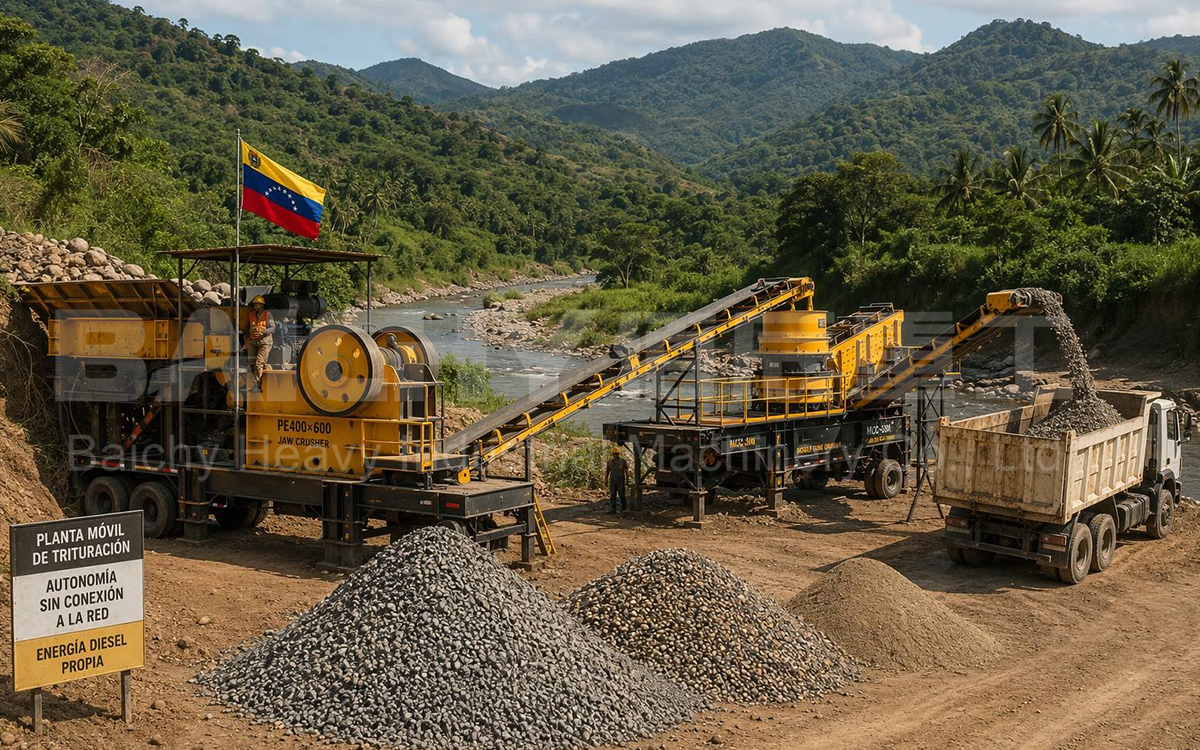
Mongolian winter temperatures can plummet below -40°C; while many construction sites halt operations, mines and concrete batching plants often need to stockpile materials during this time. Equipment reliability during cold-weather startups—specifically regarding lubricant flow, motor protection, and the low-temperature brittleness of steel structures—directly determines winter production capacity. This line offers customizable low-temperature configurations, such as cold-weather grade lubricants, motor heating belts, and freeze-protected electrical control cabinets, enabling continued production rather than merely incurring depreciation costs during the winter months.
Key Equipment Specifications:
PE600×900 Jaw Crusher (Primary Crushing)
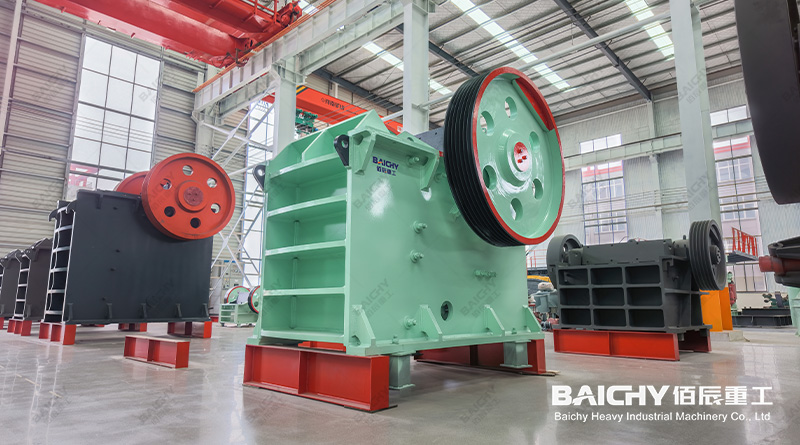
PE600×900 Jaw Crusher (Primary Crushing)
| Feed opening | Max feed size | Discharge opening | Capacity | Motor |
| 600×900 mm | ≤500 mm | 65–160 mm | 50–160 tph (limestone application) | 75 kW |
Accepts blasted mine rock or large quarry blocks directly, eliminating the need for a preliminary crushing stage and the investment in an extra machine; hydraulic/mechanical discharge adjustment matches the feed requirements of the downstream secondary crusher, reducing inefficient recirculation.
PEX250×1200 Fine Jaw Crusher (Secondary Crushing)
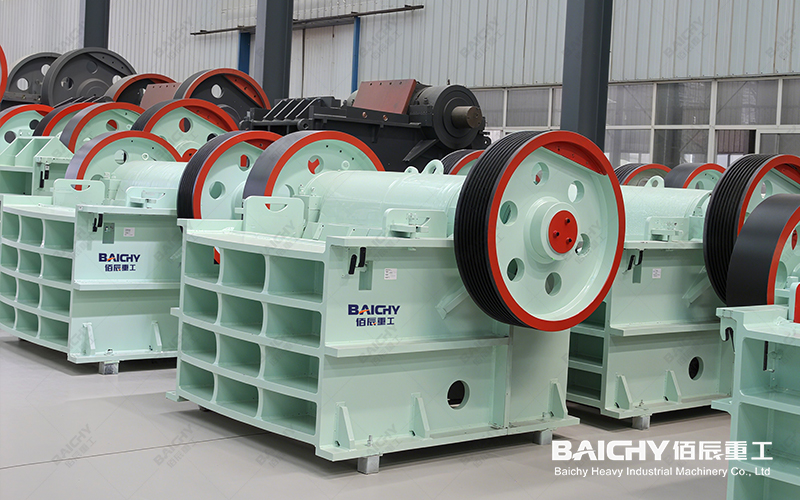
PEX250×1200 Fine Jaw Crusher (Secondary Crushing)
| Feed opening | Discharge opening | Capacity | Motor |
| 250×1200 mm | 25–60 mm | 20–60 tph | 37 kW |
Performs intermediate crushing with low power consumption; reduces primary crusher output to the ideal feed range for the cone crusher, preventing premature liner wear caused by the cone crusher processing oversized material—liner cost savings translate directly into profit.
CS160D Spring Cone Crusher (Tertiary Crushing)
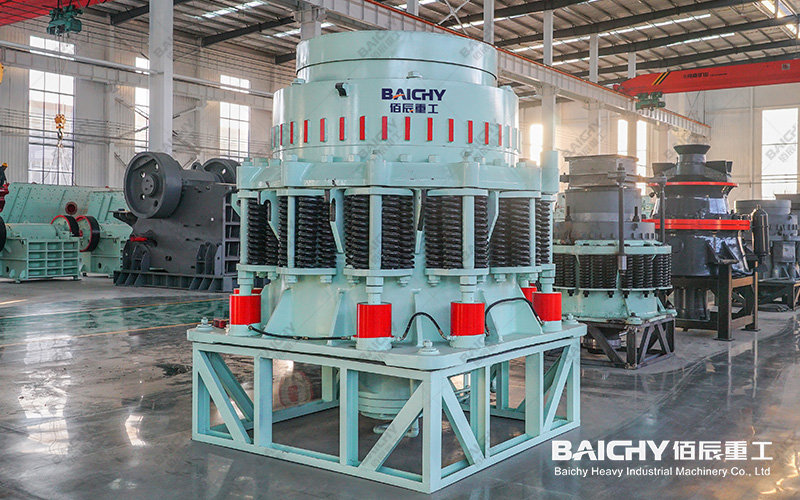
CS160D Spring Cone Crusher (Tertiary Crushing)
| Feed size | Discharge opening | Capacity | Motor |
| ≤180 mm | 16–38 mm | 60–160 tph (depending on discharge setting and material) | 160 kW |
Inter-particle (lamination) crushing principle causes stone to break along natural fracture planes, resulting in low flaky/elongated particle content and superior shape—aggregates for high-grade concrete and asphalt paving command premium prices based on particle shape; spring-based tramp iron protection safeguards the main unit against iron contaminants common in Mongolian mining operations.
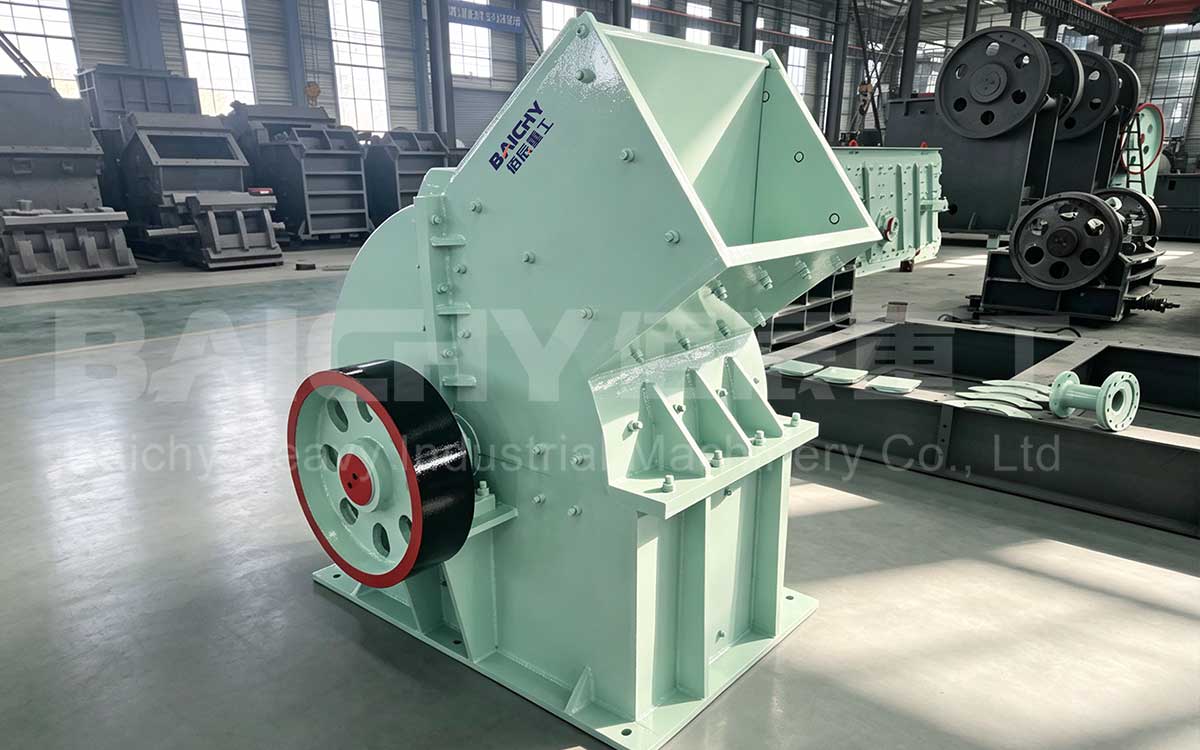
VSI8518 Sand-Making Machine (Sand Making & Shaping)
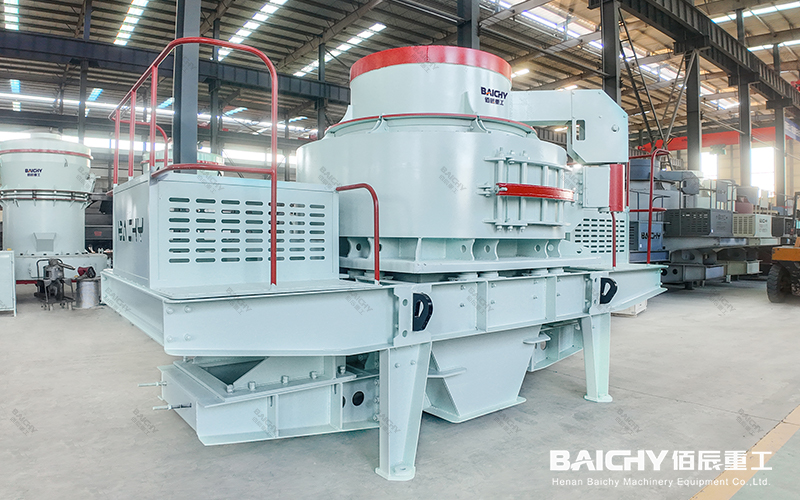
VSI8518 Sand-Making Machine (Sand Making & Shaping)
| Max feed size | Motor | Throughput | Dual modes |
| ≤50 mm | 2×90 kW | 90–180 tph | "Rock-on-Rock" and "Rock-on-Iron" |
A single machine simultaneously performs "sand making + "Shaping" effect: The "rock-on-rock" mode yields a high sand output with rounded particle shapes, directly rivaling the quality of river sand; the "rock-on-iron" mode boosts production rates when processing extremely hard materials like quartzite or basalt. In the Mongolian market, manufactured sand generally commands a higher price than natural sand; the sand-making stage acts as the profit multiplier for the entire production line.
Production Capacity Clarification (Transparency): The capacities mentioned above are nominal values for inpidual machines (based on standard operating conditions, medium-hard material, and a bulk density of 1.6 t/m³). The actual finished product capacity of the entire line depends on raw material hardness, feed size, screening configuration, and discharge settings. We calculate capacity based on your actual material samples and report nominal and operational capacities separately—we do not use peak single-machine output to make promises for the entire line.
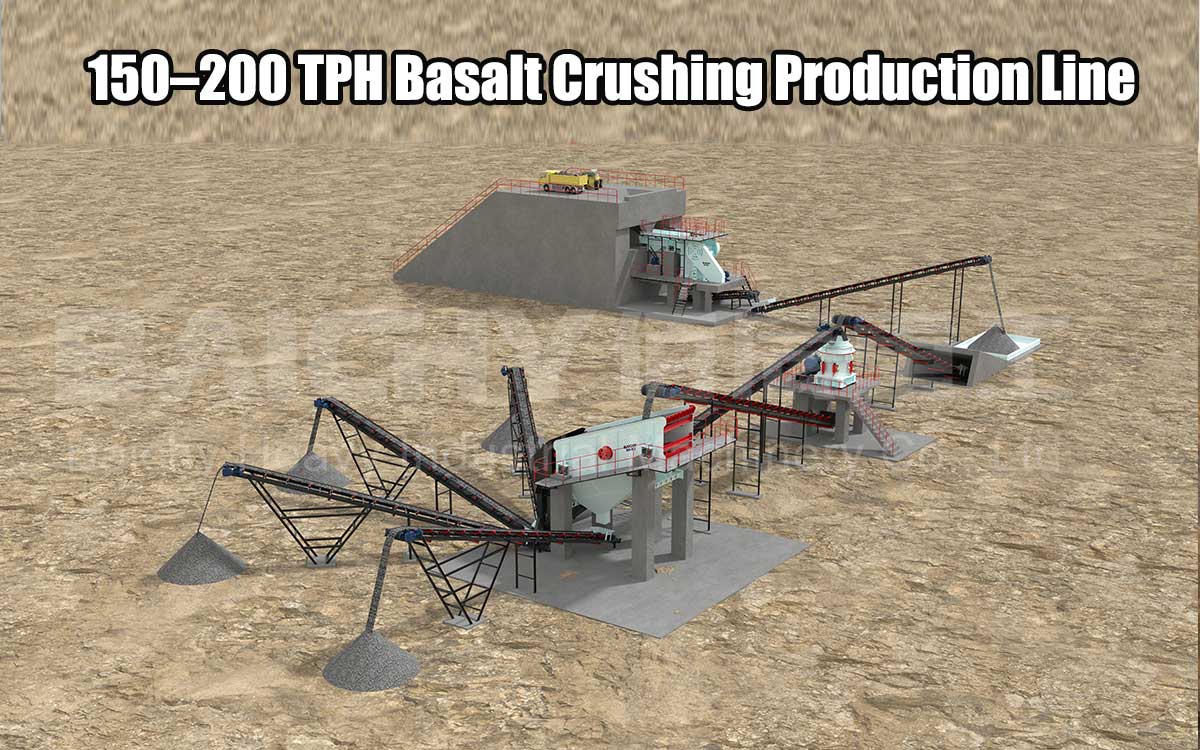
Process Flowchart
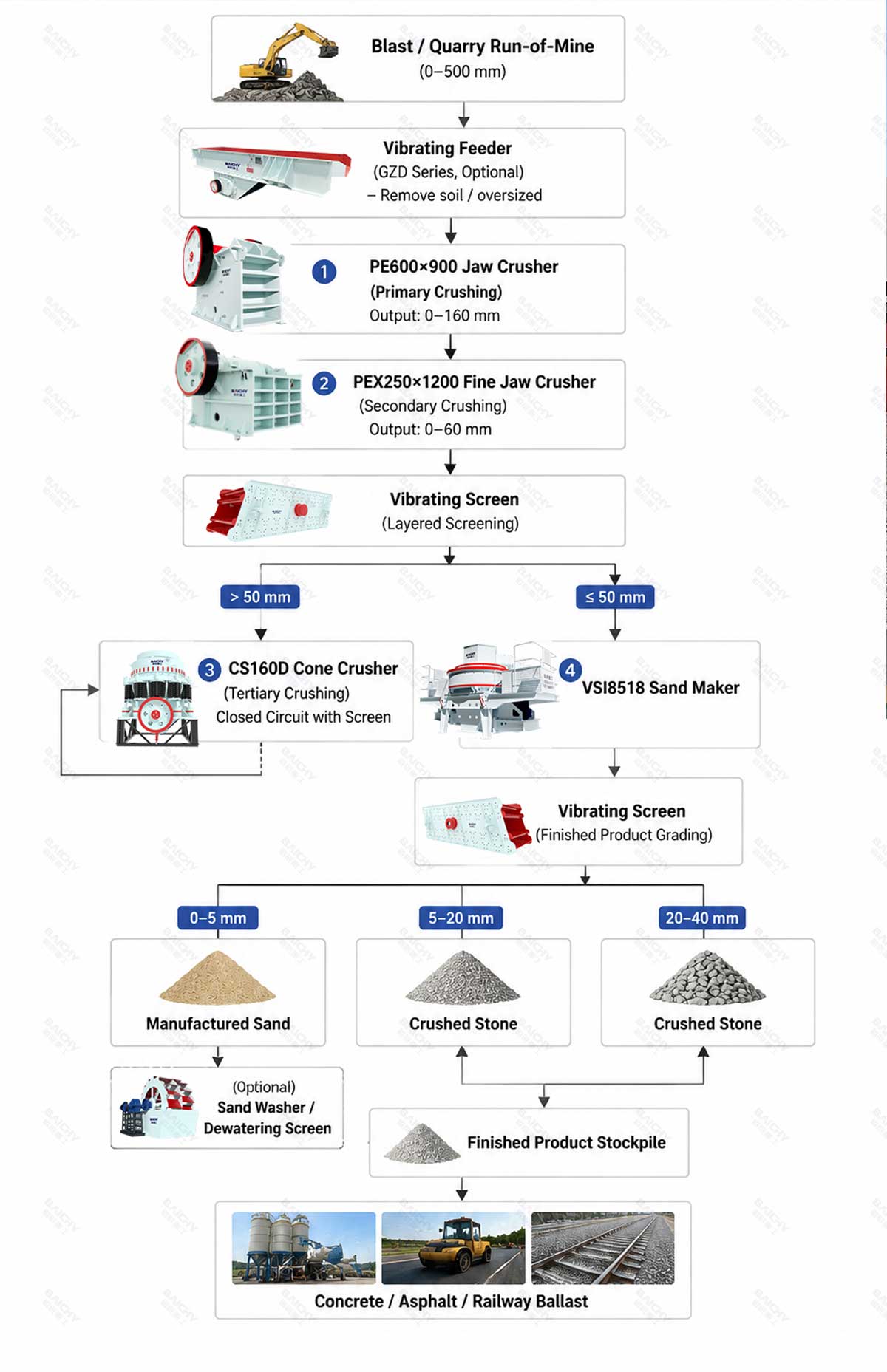
Process Flow Diagram of a 100 tph Crushing Production Line
Optional Accessories: Given Mongolia's dry climate, a dry sand-making process is recommended (VSI units feature built-in dust extraction points and require no water washing), which saves water and prevents pipes from freezing and bursting in winter. If the final product requires strict control over silt/clay content, a sand washer and fine sand recovery unit can be added.
Selection Advice & Pitfalls
1. Do not simply sum up inpidual machine capacities to determine the total line capacity.
Bottlenecks in this line usually occur at the screening stage or arise from a mismatch between the secondary crusher's feed size and the upstream output. We work backward from the "target product size mix" to determine discharge settings for each machine, avoiding configuration errors such as the primary crusher being overloaded while the secondary crusher is starved, or screening blockages.
2. Material hardness dictates the choice of crushing chamber.
The "D" in CS160D denotes a standard coarse crushing chamber, suitable for typical operations involving medium-hard to hard rock. If your raw material is ultra-hard quartzite or highly abrasive, we should evaluate combinations of fine/medium chambers and liner materials (manganese steel vs. high-chrome alloy). This line is configured for hard rock, but please send a 5–10 kg material sample for crushability testing first.
3. Finalize electrical configurations for winter operations in advance.
Mongolia's low winter temperatures result in high motor starting currents and increased lubricant viscosity. We recommend opting for low-temperature lubricants, motor heating belts, and control cabinet heaters—specifying these during the quotation stage is far more cost-effective than retrofitting them on-site later.
4. Proximity advantage for spare parts and service.
The Baichy factory is located near the Erenhot border crossing; commonly used spare parts (jaw plates, concave liners, mantle liners, VSI rotor tips/wear liners) can be rapidly transported by road to major Mongolian mining areas and Ulaanbaatar. This offers a massive advantage in lead times compared to European or American brands. We suggest ordering a set of wear parts with the initial equipment purchase to avoid downtime while waiting for replacements.
5. Alignment of electrical specifications.
Mongolia's industrial grid standard is 50 Hz, with most mining sites utilizing 380 V or 6 kV/10 kV high-voltage power inputs. Please provide site voltage, frequency, and transformer capacity during the inquiry stage; we will configure the motors and control systems based on actual grid parameters to avoid the need for derating after delivery.
FAQ (Frequently Asked Questions)
Q1: What is the daily output of this production line?
A: Based on a nominal line capacity of 60 tph and 16 hours of effective daily operation, the estimated daily output of finished products (sand plus crushed stone) is approximately 900–960 tonnes. Actual figures depend on raw material hardness and the desired product size distribution; we will calculate capacity using your material samples before providing a quote, distinguishing clearly between nominal capacity and actual operational capacity.
Q2: Can it process copper mine waste rock or country rock?
A: Yes. Waste rock and country rock (such as granite and altered rock) from mines near Oyu Tolgoi and Erdenet typically range from medium to high hardness, making them ideal for a "Jaw Crusher + Jaw Crusher + Cone Crusher + Sand Maker" configuration. Many Mongolian mining companies use such lines to convert waste rock into concrete aggregate for on-site use, thereby solving waste disposal issues and saving on the transportation costs of purchasing aggregate externally.
Q3: Can the equipment operate in winter temperatures of -40°C?
A: With the standard configuration, a direct cold start is not recommended at temperatures below -25°C. With the optional inclusion of low-temperature lubricants, motor heating belts, and control cabinet heaters, the system can start reliably in freezing conditions. We provide winter operation guidelines and train your operators during the commissioning phase.
Q4: Electricity is expensive; is this production line cost-effective?
A: Cost-effectiveness depends on specific energy consumption. Both the inter-particle crushing process used in cone crushers and the "rock-on-rock" principle used in VSI crushers are low-energy processes. Based on Mongolia's current electricity rate of 280 MNT/kWh, the specific energy consumption for the entire line is approximately 2.5–3.5 kWh per tonne of finished product (estimated under typical operating conditions), resulting in an electricity cost of roughly 700–980 MNT per tonne. When comparing this against the delivered cost and freight charges of purchased aggregates, the equipment investment for an in-house production line can typically be recouped within 1.5 to 3 years (actual payback depends on capacity utilization and local aggregate prices; specific calculations require actual data).
Q5: What site preparations are required?
A: You will need a leveled site of approximately 40×60 m (including stockpile areas) that is either paved or compacted, a three-phase power connection, and a water supply (not required for dry-process sand making). We provide foundation drawings and equipment layout plans for you to coordinate with your local construction contractor.