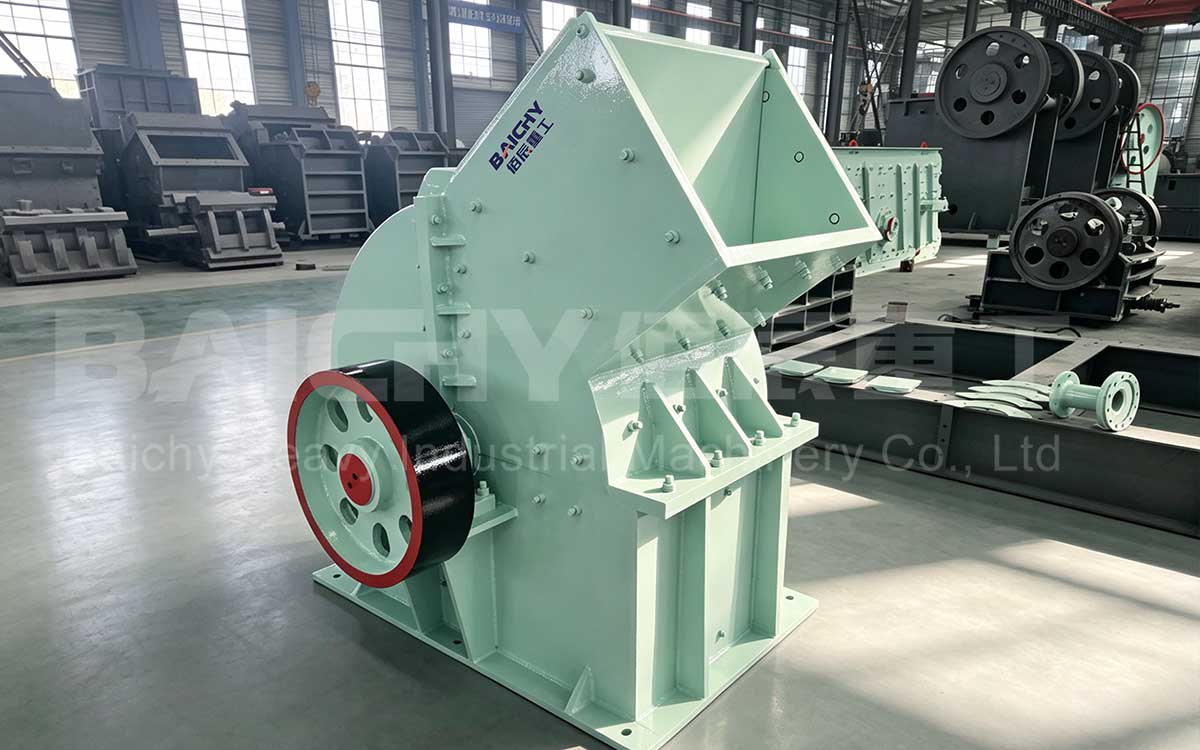
gold hammer crusher
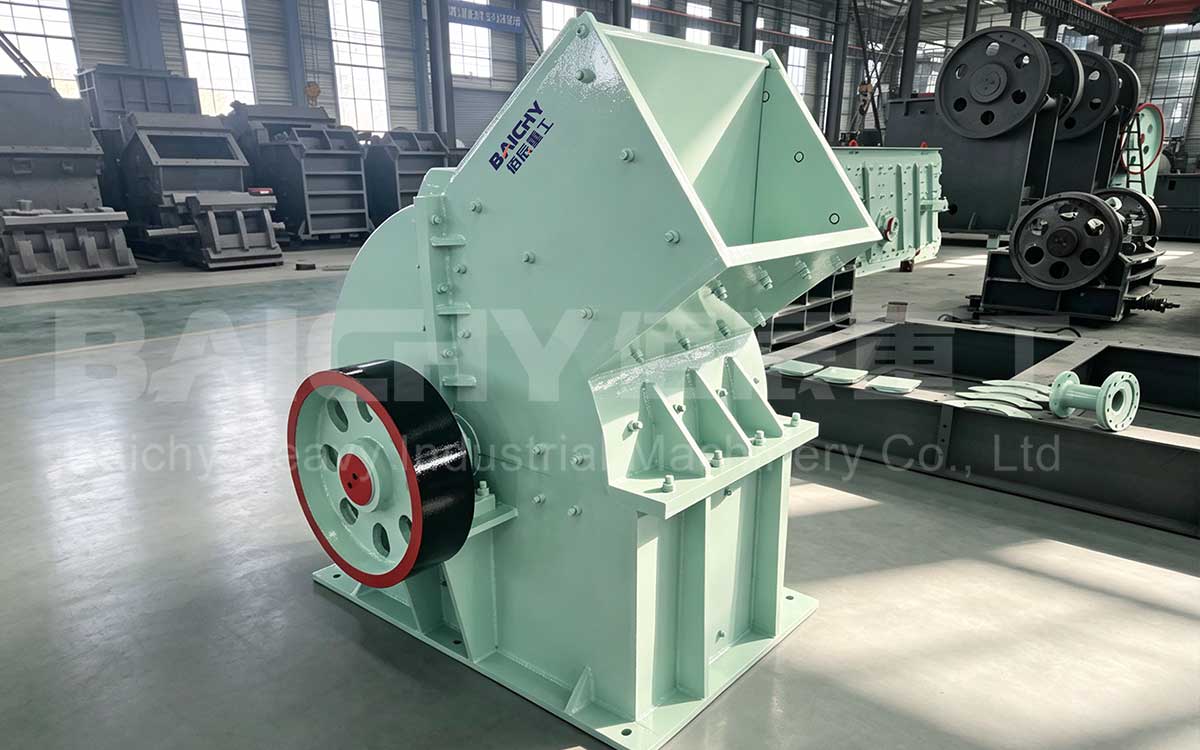
For small-scale gold processing plants with a daily capacity of 10–200 tons, the PC series hammer crusher is positioned as the "fine crushing stage following the jaw crusher." It reduces coarse material (50–120 mm) from the jaw crusher to ≤30 mm in a single pass, providing ideal feed size directly to wet pan mills or ball mills.
The PC series hammer crusher is not a primary (coarse) crushing unit; rather, it serves as the critical link bridging the gap in particle size reduction between "coarse crushing" and "grinding."
The Real Dilemma Facing Small-Scale Gold Mine Owners in the Crushing Stage
The global small-scale gold mining industry spans over 70 countries and involves more than 20 million direct workers (World Bank, 2024). However, mine owners commonly face three structural issues during the crushing stage:
Pain Point 1: Feeding jaw crusher output directly into a wet pan mill → Production capacity slashed by half.
The classic equipment combination for small-scale gold mining is "jaw crusher + wet pan mill + shaking table." The output size from PE200×300 or PE250×400 jaw crushers is typically 50–80 mm, whereas the optimal feed size for 1100/1200-model wet pan mills is ≤30 mm.
When 50 mm ore is fed into a wet pan mill, the grinding wheels require 2–3 times longer to grind it down—meaning a mill with a nominal daily capacity of 8 tons might actually process only 3–5 tons. This represents not only a loss in production capacity but also a waste of diesel fuel for the generator.
Pain Point 2: Ball mills "starved" of feed—oversized feed causes a drastic drop in grinding efficiency.
Ball mill grinding efficiency is inversely proportional to feed size; for every 5 mm reduction in feed size, the mill's specific energy consumption (kWh per ton) decreases by 8–12% (according to the *Mineral Processing Engineering Handbook*). For small-scale gold mine ball mills (ranging from φ900×1800 to φ1500×3000), the recommended feed size is ≤20–25 mm. If a hammer crusher is not used for intermediate fine crushing—meaning the 50–80 mm output from a jaw crusher is fed directly into the ball mill—the actual grinding capacity may fall 30–40% short of the design value.
Pain Point 3: Purchasing an extra piece of equipment for a remote mine site turns logistics and maintenance into a nightmare.
"Add a cone crusher or impact crusher for intermediate crushing"—this advice holds true for large processing plants but is impractical for small-scale gold mining operations. In the Darfur region of Sudan, transporting cargo involves a 1,200 km journey over dirt roads; in the Geita mining area of Tanzania, diesel transport costs reach $1.5 per liter. A 20-ton cone crusher entails the logistics of crane assembly and disassembly, flatbed truck transport, and the need to stock a full inventory of wear parts—costs that mine owners simply cannot afford. What they need is a machine weighing between 500 kg and 3 tons that can be shipped in a wooden crate and is ready for immediate use upon arrival.
II. How the PC Series Hammer Crusher Precisely Addresses These Three Major Pain Points
2.1 Bridging the particle size gap between "jaw crusher output" and "gold grinding mill input"
The screen plate aperture of the PC series hammer crusher can be selected within the range of φ6 mm to φ30 mm. For the upstream section of the wet gold grinding mill, a screen plate with φ20–25mm apertures is recommended to ensure a discharge size of ≤25mm—perfectly matching the mill's optimal feed range:
Jaw Crusher (Direct Feed) → Gold Grinding Mill (Without Hammer Crusher):
• Mill feed size: 50–80mm
• Actual mill capacity (Model 1100): 3–5 t/d
• Energy consumption: 2.8–3.5 kWh/tonne of gold ore
• Grinding wheel/base lifespan: 2–3 months
Jaw Crusher → PC Hammer Crusher → Gold Grinding Mill (With Hammer Crusher):
• Mill feed size: ≤25mm
• Actual mill capacity (Model 1100): 7–9 t/d
• Energy consumption: 1.6–2.0 kWh/tonne of gold ore
• Grinding wheel/base lifespan: 4–6 months
Adding a PC400×300 unit ($1,200–1,800) increases the mill's capacity by 60–80% and doubles the lifespan of the grinding wheels. The equipment investment can be recouped within 2–3 weeks through reduced diesel consumption and increased gold output.
2.2 Supplies uniform feed (≤20mm) to the ball mill, boosting grinding circuit efficiency by 25–35%
Jaw Crusher → Ball Mill (without Hammer Crusher):
• Feed size: 50–80mm
• Ball mill throughput: 60–70% of design capacity
• Specific power consumption: 18–22 kWh/t
• Steel ball consumption: 1.5–2.0 kg/t
Jaw Crusher → PC Hammer Crusher → Ball Mill (with Hammer Crusher):
• Feed size: ≤20mm
• Ball mill throughput: 95–105% of design capacity
• Specific power consumption: 12–15 kWh/t
• Steel ball consumption: 0.8–1.2 kg/t
For a 50 tpd ball milling line, adding a hammer crusher saves approximately 4,000–6,000 in annual electricity costs and 3,000–5,000 in annual steel ball costs. The investment in the hammer crusher (3,000–8,000) is fully recouped within 1–2 years.
2.3 Ultra-lightweight and portable—ideal for African mining sites ("Shipped in one crate, installed in 4 hours")
A key advantage of the PC series hammer crusher is its light weight—a feature that offers a major competitive edge in remote mining areas:
• PC400×300: Total weight ~0.8 tons; standard wooden crate packaging; transportable by pickup truck; installation takes only 2–3 hours; operated by 1–2 people.
• PC600×400: Total weight ~1.5 tons; wooden crate or steel frame packaging; transportable by light truck; installation takes 3–4 hours; operated by 2 people.
• PC800×600: Total weight ~2.8 tons; steel frame/container packaging; transportable by truck; installation takes 4–6 hours; operated by 2–3 people.
• PC1000×800: Total unit weight ~5.5 tons; ships in a standard 20GP container or via flatbed truck; 1-day installation; operated by a team of 3–4 people.
For a PC400×300 unit shipped from Qingdao Port, China, to Dar es Salaam, Tanzania, the ocean freight is $120–180; subsequent inland transport by light truck to the mine site (1,000 km) costs $200–300. The total logistics cost to the mine site is $400–500—less than one-tenth of the logistics cost for a cone crusher of equivalent capacity.
III. Core Specifications: PC Series Hammer Crusher for Fine Crushing of Gold Ore
Capacity figures are based on medium-hardness oxidized gold ore (bulk density: 1.6–2.0 t/m³); for high-hardness quartz vein gold ore (Mohs hardness 6–7), multiply capacity by 0.65–0.75.
| Model | Rotor Size (mm) | Max. Feed Size (mm) | Discharge Size | Capacity (t/h) | Power (kW) | Machine Weight (t) | Number of Hammers |
| PC400×300 | φ400×300 | ≤100 | ≤25mm | 5–10 | 11 | ~0.8 | 12 |
| PC600×400 | φ600×400 | ≤120 | ≤25mm | 10–22 | 22 | ~1.5 | 16 |
| PC800×600 | φ800×600 | ≤150 | ≤25mm | 18–40 | 55 | ~2.8 | 20 |
| PC1000×800 | φ1000×800 | ≤200 | ≤30mm | 35–80 | 90 | ~5.5 | 28 |
Key Parameter Notes
• Discharge Size: Adjustable by changing the aperture of the bottom screen plate. φ10mm screen → ≤10mm discharge (pre-ball mill); φ20mm screen → ≤20mm (pre-gold grinding mill); φ30mm screen → ≤30mm (pre-coarse gold gravity separation).
• Capacity Correction Factor: The data above is based on medium-hardness oxidized gold ore. When processing high-hardness quartz vein gold ore (Mohs 6–7), capacity is approximately 65–75% of the listed value, and hammer wear rates double. When processing soft, highly weathered/oxidized gold ore (Mohs 3–4), capacity can reach 1.2–1.4 times the listed value.
IV. Hammer Material Selection: Wear-Part Solutions for Gold Mining Operations
Gold ores vary significantly in hardness and abrasiveness—ranging from weathered/oxidized ore (Mohs 3–4, low abrasiveness) to quartz vein ore (Mohs 7, high abrasiveness). Hammer selection directly impacts cost-per-ton and the frequency of downtime:
ZGMn13 High-Manganese Steel: Suitable for oxidized and weathered gold ores (Mohs 3–5); service life of 400–600 hours per set; cost of $0.06–$0.10/ton; price of $180–$350 per set.
Mn13Cr2 High-Manganese Steel (⭐ Recommended): Suitable for mixed gold ores (Mohs 4–6); service life of 350–500 hours per set; cost of $0.08–$0.15/ton; price of $250–$500 per set.
Cr20 High-Chromium Cast Iron: Suitable for quartz vein gold ores (Mohs 6–7); service life of 200–350 hours per set; cost of $0.15–$0.30/ton; price of $400–$800 per set.
Important Note: Hammer crushers are not suitable for the long-term processing of ultra-hard quartz vein gold ores (silica content >70%) with a hardness exceeding Mohs 7. Such materials drastically accelerate the wear of hammers and screen plates; using a cone crusher (CS/PYZ series) for secondary and tertiary crushing is recommended instead. In the small-scale gold mining market, the optimal role for a hammer crusher is: primary fine-crushing equipment for oxidized/weathered ores, or "transitional fine-crushing" (not primary crushing) for quartz vein ores between the jaw crusher and the gold grinding mill.
V. Typical Small-Scale Gold Mining Production Line Configurations
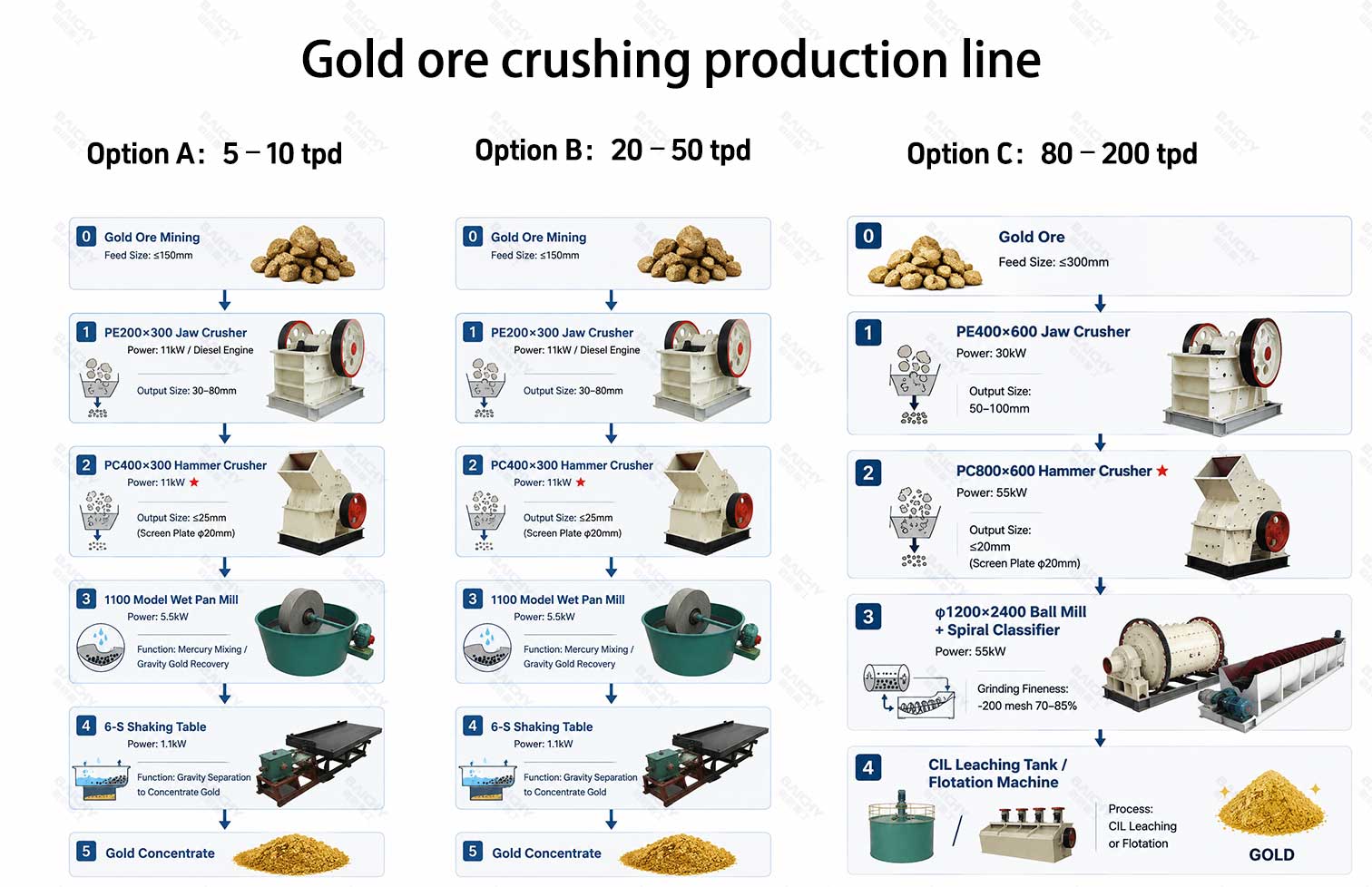
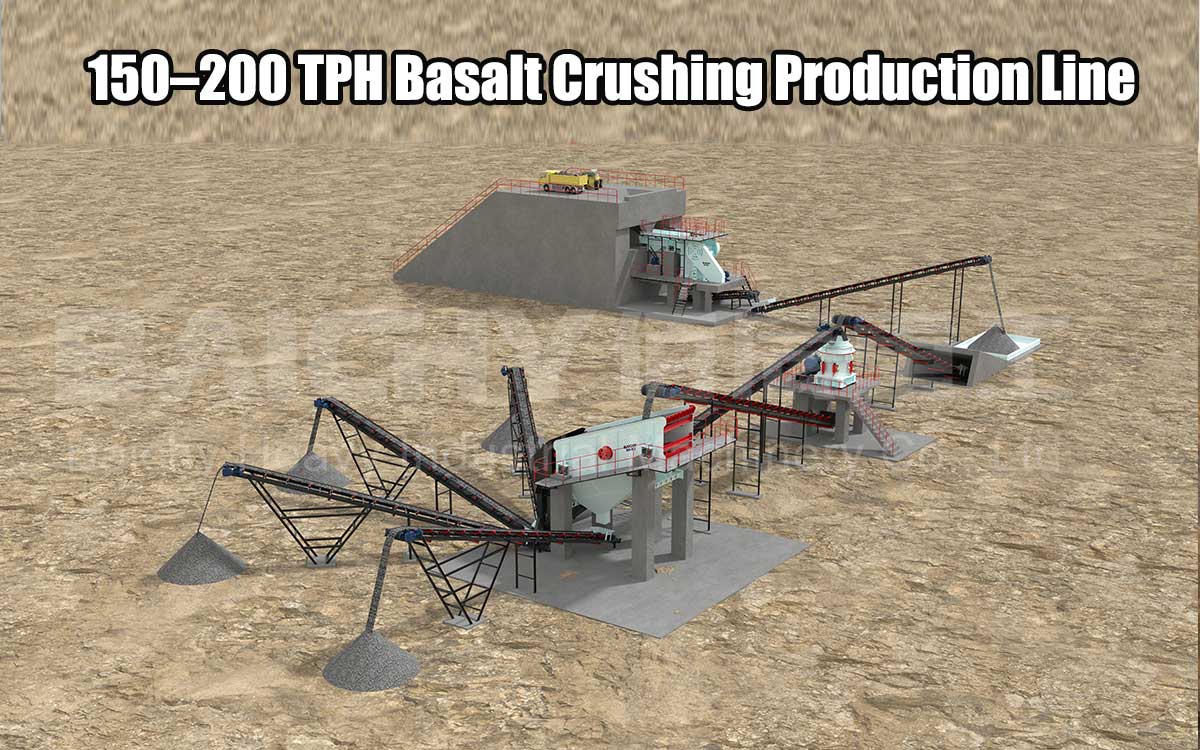
Gold ore crushing production line
Option A: 5–10 tpd Ultra-Small Gold Mine (Sudan, Ghana, and Mali Model)
Investment Metrics: Equipment investment of approx. $8,000–$12,000; daily processing capacity of 5–8 tons; total power requirement of approx. 28 kW (a 40 kVA diesel generator suffices); the complete set of equipment and wear parts fits into a single 20GP container; requires a crew of 3–4 operators.
Option B: 20–50 tpd Small-Scale Gold Processing Plant (Tanzania, Zimbabwe, and Peru Model)
Investment Metrics: Equipment investment of approx. $45,000–$65,000; daily processing capacity of 20–40 tons; total power requirement of approx. 160 kW; gold recovery rate of 85–92% (CIL process).
Option C: 80–200 tpd Medium-Scale Gold Mine ("Jaw Crusher + Hammer Crusher" Two-Stage Setup)
Investment Metrics: Equipment investment of approx. $150,000–$220,000; daily processing capacity of 80–150 tons.
VI. FAQ
Q1: Can a hammer crusher directly crush run-of-mine gold ore? (Without using a jaw crusher for primary crushing)
No. The maximum feed size for PC series hammer crushers is 100–200 mm, whereas run-of-mine gold ore—typically obtained via blasting or excavator mining—can have lump sizes reaching 300–500 mm. Hammer crushers are designed for medium-to-fine crushing; a jaw crusher is required upstream for primary (coarse) crushing. If you need a single machine to process large raw ore lumps, consider the Baichy PCZ heavy-duty hammer crusher series (max. feed size: 1200 mm).
Q2: Gold ore is very hard (quartz veins); will the hammer crusher's hammers wear out in just a few days?
Quartz vein gold ore (Mohs hardness 6–7) does indeed accelerate hammer wear. Under these operating conditions:
① It is recommended to use Cr20 high-chromium cast iron hammerheads, with a service life of approximately 200–350 hours per set;
② The hammer crusher is positioned for "transitional fine crushing"—accepting higher wear costs compared to processing oxidized ore in exchange for an overall increase in production capacity and grinding efficiency;
③ If used as the primary medium-to-fine crushing equipment for ore with a silica content >70%, upgrading to a cone crusher (CS/PYZ series) is advised, as hammerhead wear costs would otherwise rise exponentially.
Q3: Can the hammer crusher be driven by a diesel engine? There is no power grid at the mining site.
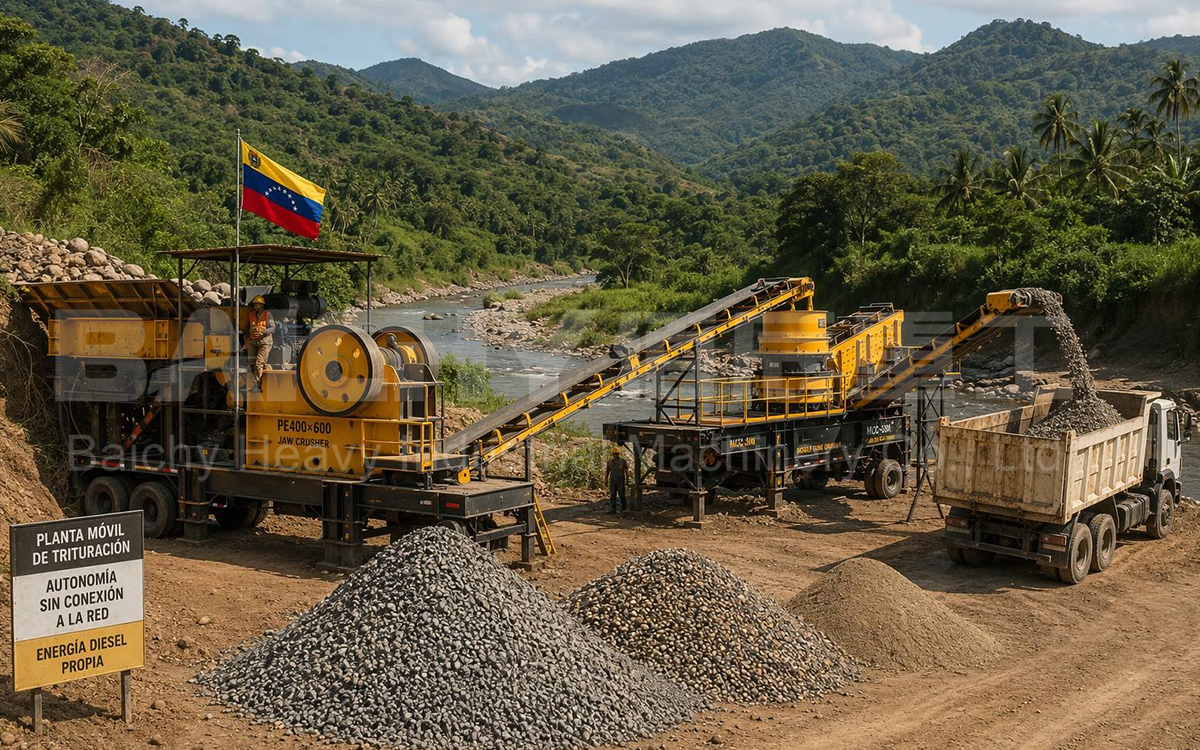
Absolutely. The PC400×300 and PC600×400 models require only 11–22 kW and can be powered by a 25–40 kVA diesel generator—precisely meeting the core needs of the small-scale gold mining market. The PC800×600 (55 kW) and PC1000×800 (90 kW) models require higher-capacity generators (80–120 kVA). Our standard pulley sizes are designed to match diesel engine speeds (1500–1800 rpm).
Q4: What is the difference between the standard PC hammer crusher and the PCK reversible hammer crusher? Which one should be chosen for gold mining?
Comparison criteria:
• Rotor: PC rotates in one direction; PCK rotates in both directions (forward and reverse).
• Hammerhead life: PC offers 250–400 hours per side; PCK offers 500–700 hours across both sides (doubled service life).
• Wet material anti-clogging: PC lacks this feature; PCK supports self-cleaning via reverse rotation.
• Price: PC ranges from approx. 1,500–10,000; PCK ranges from approx. 12,000–60,000.
• Applicable capacity: PC covers 5–80 t/h; PCK covers 25–350 t/h. For small-scale gold mining projects with limited budgets (daily output under 30 tons), the standard PC hammer crusher offers far superior cost-effectiveness compared to the PCK model. The PCK model’s advantages—such as extended hammer lifespan and clog resistance—make it better suited for large-scale production lines (daily output exceeding 100 tons).
Q5: What should be done if the hammer crusher's screen plate gets clogged?
Shut down the machine, open the casing, and use a crowbar to clear the screen holes—cleaning a PC400×300 model takes only 5–10 minutes. If high ore moisture content causes frequent clogging, we recommend:
① Switching to a screen plate with larger apertures (e.g., upgrading from 25mm to 30mm);
② Adding a pre-screening stage to remove fines and soil before the ore enters the hammer crusher;
③ Upgrading to a PCK reversible hammer crusher (which automatically clears clogs by reversing rotation) if production volume and investment capacity allow.
Q6: How do Baichen’s PC hammer crushers differ from those of other manufacturers?
① Hammers come standard with Mn13Cr2 alloy (superior to standard Mn13); the addition of Chromium (Cr) increases wear resistance by 30%;
② Rotors undergo dynamic balancing (meeting G6.3 standards), ensuring vibration levels remain ≤0.05mm during high-speed rotation to maximize bearing lifespan;
③ Casing liners are made of replaceable high-manganese steel castings; inpidual liners can be replaced when worn, eliminating the need to scrap the entire machine;
④ Each unit undergoes a 4-hour no-load test run before leaving the factory, ensuring it is ready for immediate operation upon arrival at the mine site.