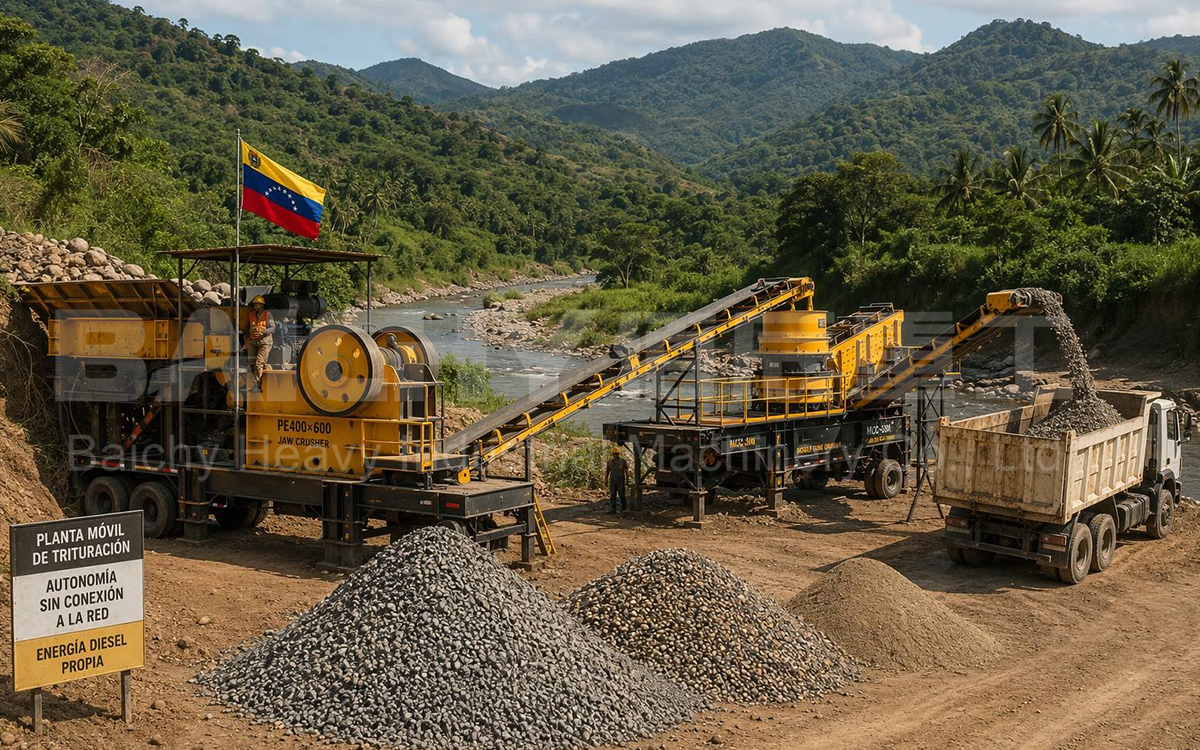
In Ethiopia, the equipment investment for a well-configured 150–200 TPH basalt crushing line can be recouped within 8 to 12 months.
Ethiopian basalt (from the Termaber Formation) exhibits a uniaxial compressive strength of up to 130–351 MPa and a Mohs hardness of 6–7, classifying it as a typical high-hardness, highly abrasive volcanic rock. This renders impact crusher configurations economically unviable; blow bar service life falls short of 150 hours, and the shape of the final product cannot be guaranteed. A combination of jaw crushing and cone crushing is the only configuration that simultaneously meets requirements for production capacity, product shape, and wear-part longevity.
Ethiopia's construction sector grew by 9% in 2025, with a projected annual growth rate of 7.8% for 2026–2029, and the market size has reached USD 8.57 billion. Following the scheduled completion and commissioning of the Grand Ethiopian Renaissance Dam (GERD) in September 2025, associated infrastructure projects—such as power transmission corridors, irrigation canal systems, and resettlement area construction—are generating a new wave of demand for aggregates. Ethiopia is undergoing a decade-long infrastructure boom, creating a prime window for aggregate suppliers to expand their production capacity.
<<What is the Total Investment Cost for a 200TPH Stone Crusher Plant in Ethiopia?>>
I. Why must basalt be processed using "Jaw Crusher + Cone Crusher"?
Basalt is a mafic extrusive volcanic rock characterized by high hardness, high toughness, and high abrasiveness. Three key data points illustrate the equipment selection logic:
• Uniaxial Compressive Strength (UCS) of 130–351 MPa: The upper-end strength of Termaber basalt far exceeds the optimal operating range for impact crushers (≤120 MPa). Blow bars wear out extremely quickly with this material—requiring replacement 1–2 times per month—and frequent downtime would erode all profits.
• Mohs Hardness of 6–7: Approaching that of quartz (7), this requires wear parts to be made of at least Mn18Cr2-grade alloy. Furthermore, the crushing chamber must utilize the principle of "compression crushing" rather than "impact crushing."
• Bulk Density of approx. 1.6–1.8 t/m³: Higher than that of limestone (1.4–1.5 t/m³), meaning the material is heavier for a given volume, thereby placing greater demands on the equipment's structural integrity and motor power reserves.
Industry Consensus: In major global basalt-producing regions—such as the Ethiopian Highlands, the East African Rift Valley, and the Deccan Plateau in India—there is only one proven crushing solution: a heavy-duty jaw crusher for primary crushing, followed by a hydraulic cone crusher for secondary crushing and shaping.
II. 150–200 TPH Basalt Crushing Line: Core Equipment Configuration
Key Assumptions: The following configuration is based on a basalt bulk density of 1.6 t/m³, a feed size of ≤580 mm, and a three-stage product grading of 0–5 mm, 5–16 mm, and 16–31.5 mm. All equipment motors are compatible with Ethiopia’s 380V/50Hz three-phase industrial power standard.
| Process | Equipment Model | Quantity | Power per Unit (kW) | Key Specifications | Function Description |
| Feeding | ZSW490×110 Vibrating Feeder | 1 | 15 | Trough: 4900×1100mm; Capacity: 180-400 t/h | Grizzly bar pre-screening removes fines and soil, reducing ineffective load on the jaw crusher. |
| Primary Crushing | PE750×1060 Jaw Crusher | 1 | 90 | Inlet: 750×1060mm; Max feed: 630mm; Discharge setting: 80-200mm; Capacity: 100-220 t/h | Processes large basalt raw material (≤580mm); output size ≤200mm. |
| Secondary Crushing | HP300 Hydraulic Cone Crusher | 1 | 220 | Medium-crushing cavity; Feed ≤241mm; Discharge setting: 10-45mm; Capacity: 125-485 t/h | Crushes material <200mm down to <45mm; inter-particle crushing ensures good particle shape. |
| Screening | 3YK2160 Triple-deck Circular Vibrating Screen | 1 | 30 | Screen surface: 2100×6000mm; 3 decks; Capacity: 150-400 t/h | 3-stage classification: 0-5/5-16/16-31.5mm; >31.5mm material returned for re-crushing. |
| Conveying | B800-B1000 Belt Conveyor | 5 | Total approx. 55 | Belt width: 800-1000mm; Conveying distance customized to site | Finished aggregate stockpiling and closed-loop material return. |
Total Installed Power: Approx. 410 kW. Actual operating power consumption is approximately 280–310 kW (at a load factor of 68–75%), equating to an energy consumption of roughly 1.5–1.8 kWh per tonne of material processed.
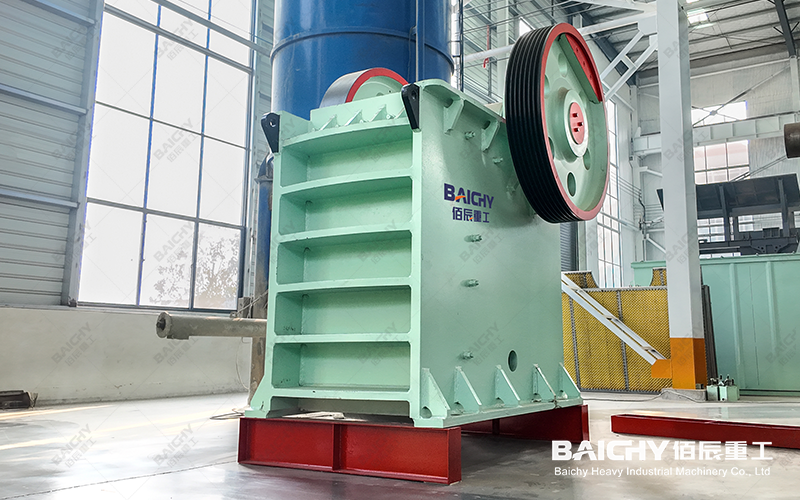
PE750x1060 Jaw Crusher
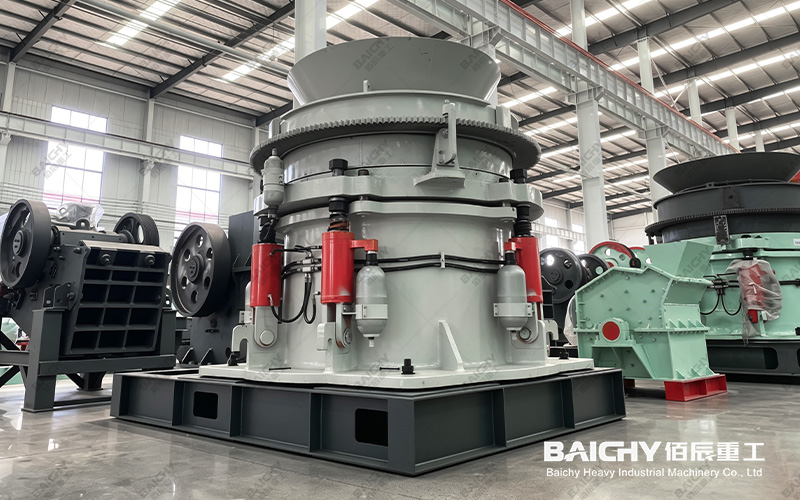
Hydraulic Cone Crusher
Production Capacity Calculation Logic
• PE750×1060 processing basalt (hardness correction factor: 0.70): Theoretical capacity is 100–220 tph × 0.70 = 70–154 tph; with a closed-side setting (CSS) of 120 mm, the stable output is approximately 140–170 tph.
• HP300 secondary crushing (feed size ≤200 mm → product size ≤45 mm): 160–220 tph (matched to the jaw crusher's capacity; involves a minor circulating load of approximately 10–15%).
• Finished aggregate after screening: 150–200 tph (including a closed-loop circuit with <12% recirculating material).
PE750x1060 Jaw Crusher Details
HP300 Hydraulic Cone Crusher Details
III. Where is the money spent? A transparent cost breakdown
For buyers in the Ethiopian market, the following is an investment estimate based on CIF Djibouti terms (Port of Djibouti, the primary maritime gateway to Ethiopia).
Note: As Ethiopia is a landlocked country, equipment must be transported by road from the Port of Djibouti to Addis Ababa or the project site—a distance of approximately 700–900 km—so inland transportation costs must be calculated separately.
Total Equipment Delivery Budget
| Item | Estimated Amount (USD) | Description |
| Core Equipment (FOB) | 250,000–300,000 | Complete set: Jaw crusher + cone crusher + feeder + screening + conveying systems |
| Sea Freight (CIF Djibouti) | 10,000–15,000 | 2×40HQ containers or break-bulk; Shanghai/Tianjin → Port of Djibouti |
| Inland Transport (Djibouti → Site) | 8,000–15,000 | 700–900 km road transport, depending on destination |
| Installation & Commissioning | 12,000–20,000 | Includes foundation construction, electrical installation, and no-load/load testing (10–12 days) |
| Total Delivery Budget | 280,000–350,000 | From order to production: 25–35 day lead time; 18–22 day sea transit |
Quick Calculation of Daily Profit
• Daily Output: 10h × 160 tph × 0.85 (overall utilization rate) = 1,360 tons of finished aggregate
• Market Price in Ethiopia: ETB 1,200–1,800/m³ (approx. USD 10–15/t; lower for 0–5mm, higher for 5–16mm/16–31.5mm)
• Weighted Average Selling Price: Approx. USD 12/t
• Production Cost per Ton (Electricity + Wear Parts + Labor + Inland Transport): Approx. USD 3.5–4.5/t
• Daily Gross Profit: 1,360 × (12 – 4.0) ≈ USD 10,880
• Monthly Gross Profit (25 days): ≈ USD 272,000
• Equipment Payback Period: Approx. 26–32 working days (≈ 1–1.3 months at full capacity; actual 8–12 months) ...months, including the initial break-in and market ramp-up period)
<<Bishoftu Airport: How Baichy Crushers Power Ethiopia's $6B Mega-Project>>
IV. Process Flowchart
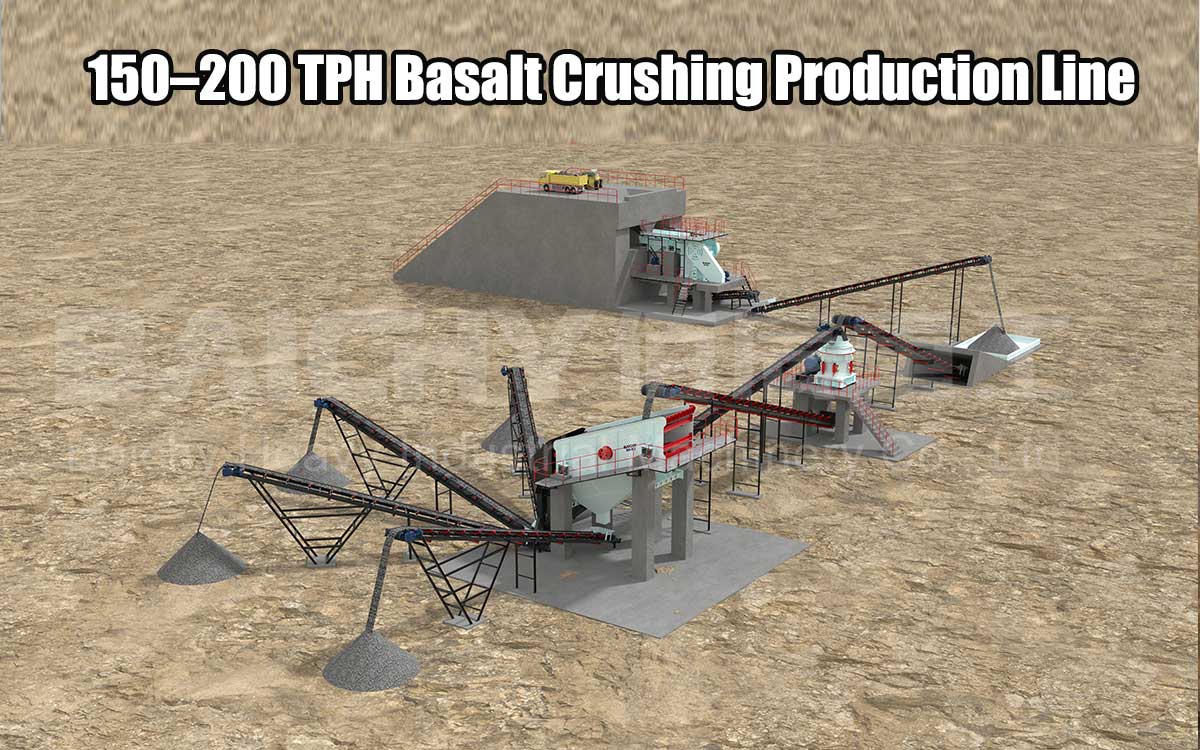
Schematic diagram of a basalt crushing production line with an hourly capacity of 150–200 tons.
Closed-loop design: Material retained on the >31.5mm screen is returned via conveyor belt to the HP300 cone crusher for re-crushing, maximizing the yield of finished products and achieving essentially zero tailings.
V. Estimated Service Life of Key Wear Parts (Basalt application, 25mm discharge setting)
| Component | Material | Expected Life | Replacement Frequency | Remarks |
| Jaw Plate (PE750×1060) | Mn18Cr2 High-Manganese Steel | 1,500–2,200 hours | 6–9 months | Basalt is more abrasive than granite; service life is approx. 25% shorter than with granite. |
| Bowl Liner/Mantle (HP300) | Mn18Cr2 High-Manganese Steel | 900–1,500 hours | 4–6 months | Recommend keeping a spare set in stock; local procurement lead time in Ethiopia is 2–4 weeks. |
| Screen Mesh (3YK2160) | 65Mn Spring Steel / Polyurethane | 500–800 hrs (Spring Steel); 900–1,500 hrs (Polyurethane) | 2–3 months / 4–6 months | Polyurethane screens strongly recommended; service life is nearly doubled. |
Africa Spare Parts Management Tip: Local supply of high-quality wear parts in Ethiopia is limited. Sea freight from China to the Port of Djibouti takes 18–22 days, plus 3–5 days for inland transport. It is recommended to purchase a spare parts package covering 12 months of consumption (1 set of jaw plates + 2 sets of cone liners + 3 sets of screen meshes) during the initial order to avoid production line downtime while waiting for parts.
VI. Ethiopian Market—Why is now the optimal window of opportunity? Three Key Signals:
1. GERD-related infrastructure projects are generating massive demand for aggregates
The Grand Ethiopian Renaissance Dam (GERD) is set to become fully operational in September 2025 with an installed capacity of 5.15 GW. However, the dam's completion is not the end; the associated 500kV transmission corridors, irrigation canal systems (covering a planned 500,000 hectares), resettlement area construction, and service road networks will be the primary long-term drivers of aggregate consumption. While the dam structure itself consumed approximately 10 million m³ of concrete, subsequent auxiliary projects are expected to span another 3–5 years.
2. National infrastructure investment is entering a cycle of accelerated growth
The construction sector is projected to grow by 9% in 2025, with a forecast CAGR of 7.8% for 2026–2029 (ResearchAndMarkets, February 2026);
Market size is expected to rise from $8.57 billion in 2025 to a projected $13.16 billion by 2034 (IMARC Group);
Over 25 major development projects are advancing in 2026, spanning the transport, energy, and urban development sectors;
The road network expanded from 26,550 km in 1997 to 171,176 km in 2024 (World Bank) and continues to grow.
3. Basalt serves as Ethiopia's "natural aggregate reservoir"
The Ethiopian Highlands are extensively covered by Cenozoic volcanic rocks; basalt from the Termaber Formation is the primary source of construction material in the central region (including the area surrounding Addis Ababa). Academic studies (Engidasew & Barbieri, 2014) confirm that this basalt meets all engineering specifications required by ASTM and BS standards for concrete aggregates. Materials can be sourced locally, transport distances are short, and the barriers to obtaining mining rights are relatively manageable.
Conclusion: The period from 2026 to 2029 represents a golden window for aggregate suppliers in Ethiopia to expand their production capacity. The completion of the GERD has unlocked infrastructure demands associated with the "post-dam era," while nationwide road network upgrades and urbanization are creating a market for sustained, incremental aggregate demand.
VII. Equipment Selection & Pitfall Avoidance
Recommendation 1: Never use impact crushers for basalt.
The blow bars of impact crushers last less than 150 hours when processing material with a compressive strength exceeding 200 MPa, requiring replacement 1–2 times a month. With a 3–4 week lead time for spare parts in Ethiopia, frequent downtime means actual output may drop to just 40–50% of design capacity. This isn't "saving money"—it's "throwing money away."
Recommendation 2: Opt for hydraulic cone crushers (HP Series).
Features like the HP300’s hydraulic tramp release (overload protection) and one-touch chamber clearing are essential for basalt operations. Basalt deposits often contain denser basic rock veins, posing a significant risk of material jamming. A single jam in a spring-type cone crusher can cause half a day of downtime; cumulative annual losses from such stoppages can easily exceed the price difference between the two types of crushers.
Recommendation 3: Use polyurethane screens; don't skimp by choosing spring steel.
Polyurethane screens cost roughly twice as much upfront as spring steel ones, but when processing basalt—which is highly abrasive and angular—they last nearly twice as long and are less prone to clogging. In the long run, the cost per ton screened is lower with polyurethane.
Recommendation 4: Ensure compatibility with Ethiopia’s 380V/50Hz power grid.
Ethiopia’s grid standards (220V/380V, 50Hz) align with the native design of Chinese equipment, so no motor frequency modification is required. However, note that some remote quarries in Ethiopia may rely on diesel generators; it is advisable to incorporate generator interfaces and voltage stabilization devices into the electrical system.
Recommendation 5: Build a 20% buffer into production capacity planning.
Ethiopia’s infrastructure sector is in a phase of rapid expansion, and aggregate demand is highly likely to exceed expectations over the next 2–3 years. It is recommended to reserve a foundation site and conveyor interface for a second cone crusher (configured in parallel) during the site layout phase; this facilitates a cost-effective capacity expansion to 300–350 tph in the future.
VIII. Frequently Asked Questions (FAQ)
Q1: Between Ethiopian basalt and granite, which causes more equipment wear?
Basalt. Although both materials fall within the same compressive strength range (130–350 MPa), basalt has a lower SiO₂ content (45–52%) than granite (65–75%), which theoretically suggests lower abrasiveness. However, due to the presence of olivine phenocrysts and a micro-vesicular structure, Ethiopian basalt exhibits an actual abrasiveness index comparable to—or even slightly higher than—that of granite. This perges from the simplified textbook conclusion that "acidic rocks are more abrasive than basic rocks." In actual operation, jaw plate service life is approximately 20–25% shorter when processing basalt compared to granite.
Q2: How should one choose between the PE750×1060 and PE600×900 models for the Ethiopian market?
If your target capacity is ≥ 120 tph and the blasted raw material features large lump sizes (400mm+), go directly for the PE750×1060. The differences in feed opening dimensions (750×1060mm vs. 600×900mm) and motor power (90kW vs. 75kW) are further amplified when processing basalt, as high-hardness materials demand a higher reduction ratio and a deeper crushing chamber. The PE600×900 offers a stable actual capacity of approximately 60–90 tph when processing basalt, making it suitable for small-scale quarries.
Q3: How should one choose between the HP300 cone crusher and the PF1315 impact crusher for basalt applications?
Choose the cone crusher. There is no other viable option. The reasons are as follows:
The service life of impact crusher blow bars when processing basalt (compressive strength >200 MPa) is less than 150 hours; given the lead times for spare parts in Africa, the resulting monthly replacement frequency entails an unacceptably high risk of downtime.
In contrast, the service life of cone crusher concave liners ranges from 900 to 1,500 hours, meaning the frequency of wear-part replacement is 6 to 10 times lower.
Although the product shape from an impact crusher is superior to that of a cone crusher (elongated and flaky particle content ≤5% vs. ≤10%), the vast disparity in service life means the long-term total costs are on completely different scales.
Q4: Is this configuration compatible with 60Hz power standards?
Ethiopia utilizes 220V/380V, 50Hz power standards, which align with the original design of the Chinese equipment; therefore, no modifications are required. If exporting to neighboring countries that use 60Hz standards (such as Saudi Arabia), the motors and electrical control systems would need to be replaced. Baichy offers optional 50Hz/60Hz dual-frequency configurations; please specify this when placing an order.will suffice.
Q5: Is the proportion of 0–5mm manufactured sand produced by the 3YK2160 adjustable?
Yes. Adjusting the discharge opening size of the HP300 cone crusher directly affects the proportion of the 0–5mm fraction; a smaller discharge opening results in a higher percentage of fines. Under typical basalt processing conditions (discharge opening of 20–25mm), the 0–5mm fraction accounts for approximately 20–28% of the output. To increase the proportion of manufactured sand, reduce the HP300 discharge opening to 12–15mm and simultaneously change the aperture of the top screen deck to less than 5mm.
Q6: How is after-sales support handled for equipment in Ethiopia?
Baichy Heavy Industry provides:
① A 12-month spare parts package for wear parts included with the equipment (1 set of jaw plates, 2 sets of cone liners, 3 sets of polyurethane screen meshes, bearings, belts, and grease);
② Remote video technical support (WhatsApp access with Chinese/English-speaking engineers online);
③ On-site engineering support for installation and commissioning (15–20 days);
④ A partner logistics agent at the Port of Djibouti, with a shipping time of 18–22 days for subsequent spare parts replenishment.