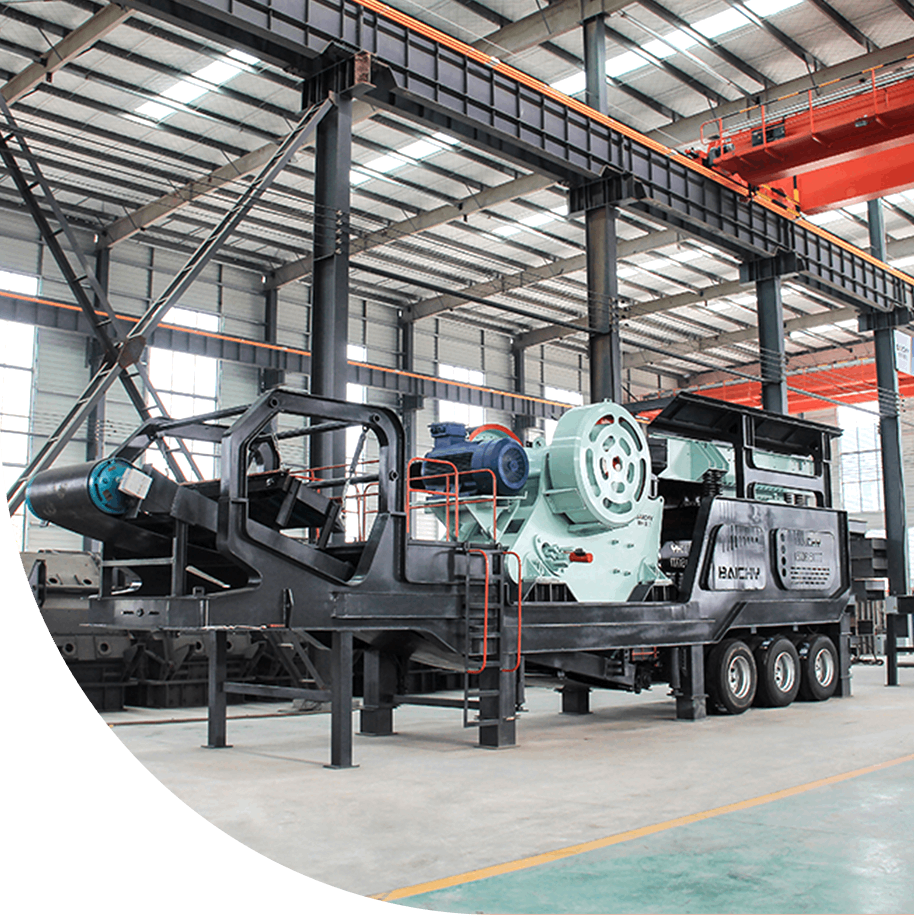

Groupe Djaf SARL supplies gypsum to cement plants and gypsum-product manufacturers in Niger. The company is now considering a small processing plant for a natural gypsum and clay mixture, with a target product purity of 90% or higher.
At first sight, the project may appear to require only a crusher, screen and washing machine. In practice, the central challenge is different: the plant must remove clay without losing too much gypsum, while maintaining a stable product quality under local water, power, road and operating conditions.
A practical design should therefore be built around ore testing, purity control and water recovery, not around a fixed equipment list. For a planned output of approximately 200 tonnes per day, the plant can be developed as a compact crushing, screening, washing, dewatering and drying system, with room for future expansion.
Project Basis: Capacity, Product and Operating Assumptions
The stated production target is approximately 200 tonnes per day, or about 5,000 tonnes per month. The monthly figure corresponds to roughly 25 operating days. If the plant runs every day, the nominal monthly capacity would be higher, so the final design must confirm the expected working schedule, maintenance time and seasonal interruptions.
The most important product definition is the meaning of “90% purity.” It may refer to the proportion of gypsum in the finished material, the dihydrate gypsum content, or a buyer-specific chemical specification. These definitions are not interchangeable. The plant should be designed only after the customer confirms the laboratory method used by the cement or gypsum-product buyer.
The feed material is described as a mixture of natural gypsum and clay. The treatment method will depend on whether the clay is:
• loosely attached to the gypsum surface;
• present as fine clay between gypsum particles;
• chemically or physically interlocked with the gypsum; or
• concentrated in a fine fraction that can be removed by screening and classification.
This distinction determines whether washing alone is sufficient or whether the project needs more intensive scrubbing, classification or an additional recovery stage.
Recommended Process Flow
A suitable preliminary flow sheet is:
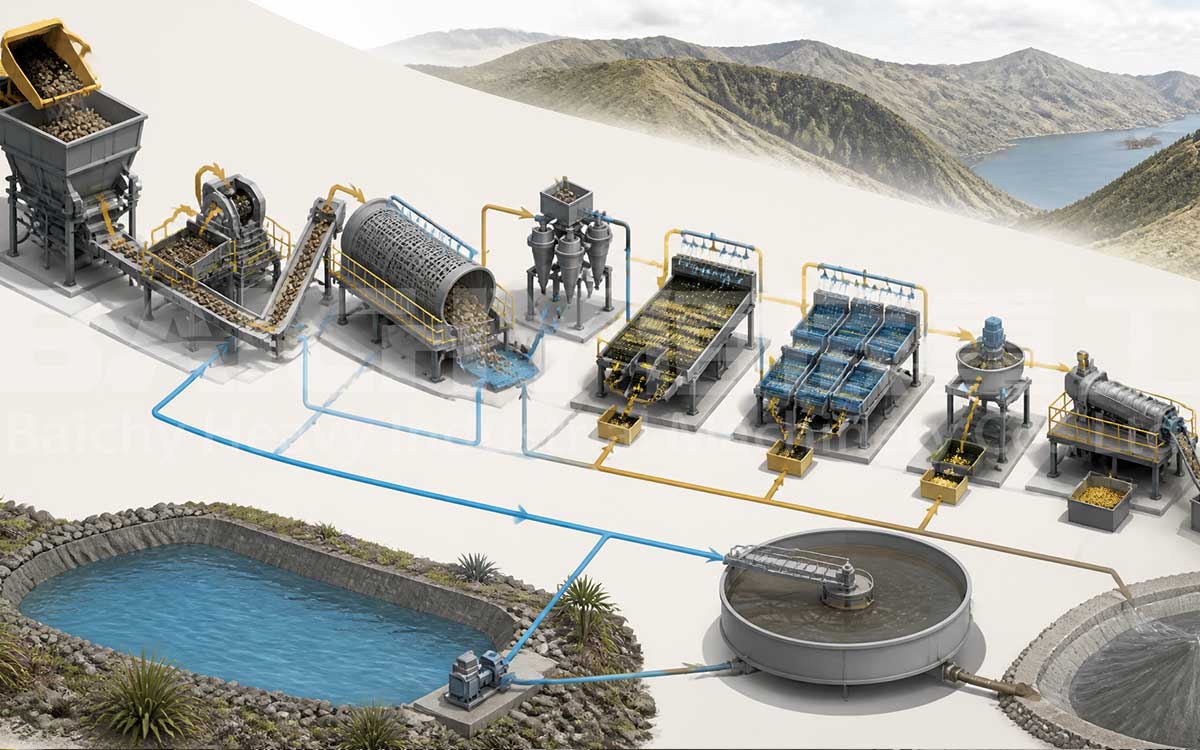
Receiving and feeding → primary crushing → secondary sizing → screening → scrubbing and washing → desliming/classification → dewatering → drying → finished-product storage
1. Receiving and controlled feeding
A receiving hopper and vibrating feeder can provide a consistent feed rate to the crusher. This protects downstream equipment from sudden surges and makes it easier to monitor the tonnes processed per hour.
2. Crushing and screening
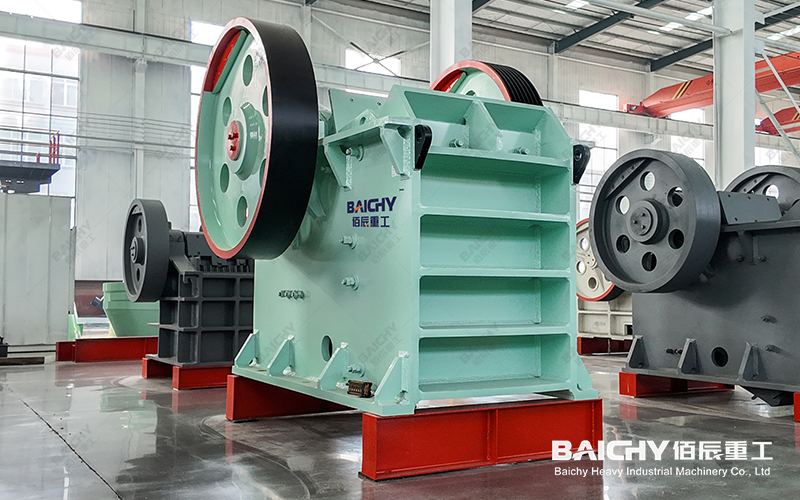
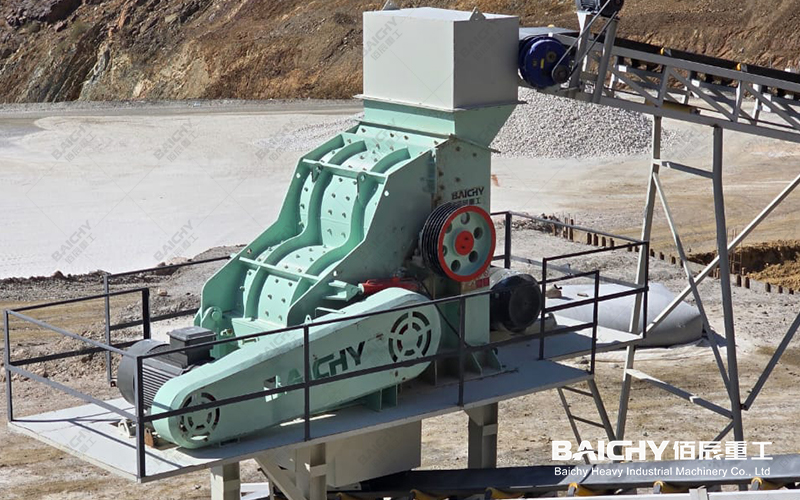
The crushing circuit should reduce oversized gypsum without producing unnecessary fines. A jaw crusher may be suitable for primary reduction, while a secondary impact or hammer crusher can be considered when a smaller feed size is required. The final choice depends on feed size, hardness, moisture and the desired product size.
A vibrating screen can separate oversized pieces, saleable fractions and clay-rich fines. Pre-screening is particularly valuable because it can remove part of the waste before water is introduced, reducing water consumption and the load on the washing circuit.
3. Scrubbing and washing
If the clay is mainly surface contamination, a rotary scrubber or attrition-style washing unit may provide effective cleaning. The washing stage should be designed to release clay while limiting the breakage of gypsum into very fine particles.
A single washing machine should not automatically be assumed to achieve the required purity. The plant may need a combination of scrubbing, wet screening and desliming. The correct arrangement can be determined through a laboratory or pilot washing test using representative samples from the mining area.
4. Dewatering and drying
Washed gypsum normally carries significant surface moisture. A dewatering screen, settling system or other solid-liquid separation equipment can reduce the water load before drying. A simple rotary dryer or hot-air drying system may then be used to meet the buyer’s moisture requirement.
Drying capacity must be calculated from the actual washed-product moisture, not only from the nominal 200 TPD capacity. If the product is sold to a nearby customer and a higher moisture level is acceptable, partial drying may reduce fuel consumption and simplify plant operation.
Equipment Plan for a Compact 200 TPD Plant
| Section | Preliminary equipment | Main design purpose | Data still required |
|---|---|---|---|
| Feeding | Hopper and vibrating feeder | Stable material flow | Maximum lump size and feed rate |
| Crushing | Jaw crusher plus secondary crusher | Reduce oversized gypsum | Feed hardness, moisture and target size |
| Screening | Multi-deck vibrating screen | Remove oversize and clay-rich fines | Required product size and split points |
| Washing | Rotary scrubber or washing unit | Release attached clay | Clay bonding and wash-test results |
| Classification | Wet screen, hydrocyclone or classifier | Separate fine clay from gypsum | Slurry density and particle-size distribution |
| Water recovery | Settling pond, thickener or filter | Recycle process water | Available land, water quality and discharge rules |
| Dewatering | Dewatering screen or filter | Reduce moisture before drying | Final moisture specification |
| Drying | Small rotary dryer or hot-air unit | Stabilise product moisture | Fuel availability and operating hours |
| Material handling | Conveyor, stockpile and loader | Move raw and finished material | Layout and stockpile volume |
| Mobile equipment | Two trucks and one wheel loader | Transport and loading | Haul distance and payload |
This list is a preliminary configuration, not a final equipment specification. Crusher size, screen area, pump capacity, dryer size and motor power should be confirmed after testing and site data collection.
Purity Control: The Project’s Main Decision Point
A target of 90% or higher should be treated as a performance objective to be verified, not as an automatic result of installing a washing machine. The recommended validation sequence is:
1. Collect representative samples from different mining zones and depths.
2. Test moisture, particle size, gypsum content and clay-related impurities.
3. Conduct crushing, screening and washing tests at different water and retention conditions.
4. Measure gypsum recovery, final purity, product moisture and waste volume.
5. Select the flow sheet that offers the best balance between purity, recovery and operating cost.
6. Run a pilot campaign before approving the final plant design.
The customer should also define an acceptable gypsum recovery rate. A process that reaches high purity but loses a large percentage of the gypsum in the clay slurry may not be commercially attractive. The preferred design is the one that meets the buyer’s quality requirement while preserving a reasonable saleable-product yield.
Water Recycling for a More Reliable Operation
Water management is essential for a washing plant in a dry-region operating environment. A basic closed-loop system may include a process-water tank, slurry collection channel, settling pond or thickener, clarified-water tank and transfer pumps.
The recycled water may still contain fine solids, so the process should distinguish between water suitable for washing and water suitable only for dust control or other low-demand uses. Fresh make-up water will be required to replace evaporation, moisture carried out with the product, and water removed with the clay waste.
The design should also address:
• lining and seepage control for settling areas;
• safe storage of clay-rich sludge;
• rainwater management during seasonal storms;
• pump redundancy for continuous production; and
• regular removal of accumulated solids from the settling system.
Power Strategy: Generator, Solar or a Hybrid System?
A generator can provide dependable power when grid supply is unavailable, but fuel cost and maintenance may become major operating expenses. A solar system can reduce daytime fuel consumption, yet it may not independently support crushers, pumps and dryers throughout the full operating cycle.
• For this project, a hybrid approach may be more practical:
• generator power for heavy crushing, pumping and emergency operation;
• solar power for daytime auxiliary loads and selected process equipment;
• battery storage only where it offers a clear operational benefit; and
• a separate thermal-energy plan for drying.
Solar electricity should not be confused with solar heat. If drying is required, the project must calculate the thermal energy needed to remove the actual quantity of water from the washed gypsum. Fuel selection, dryer insulation and partial drying may have a larger effect on operating cost than the electrical power source alone.
Trucks, Loader and Site Logistics
The planned two trucks and one wheel loader can support a compact operation, but their adequacy depends on the distance between the mine, plant and customers. A simple transport review should calculate:
• one-way haul distance;
• truck payload and loading time;
• cycle time per trip;
• road condition and seasonal accessibility;
• daily raw-material requirement; and
• finished-product dispatch volume.
If the mine is close to the plant, the two trucks may support internal raw-material and product movements. If the haul distance is long, additional hired transport may be needed to avoid interrupting plant production. The wheel loader should be selected not only for bucket capacity, but also for stockpile management, hopper feeding and loading safety.
Commercial Value for Cement and Gypsum-Product Buyers
The plant should not sell only a generic “washed gypsum” product. It should establish product grades based on customer requirements, such as:
• controlled particle size for cement blending;
• lower clay content for gypsum-board or plaster applications;
• controlled moisture for transport and storage; and
• regular laboratory certificates for each production lot.
A consistent product specification can help Groupe Djaf SARL move from raw-material supply toward value-added mineral processing. Before construction, the company should obtain written quality requirements from its main cement and gypsum-product customers. Those documents can guide the wash-test criteria, screen configuration and drying target.
Recommended Next Steps
The most efficient development sequence is:
• Confirm the target purity definition and final product size.
• Collect representative raw-ore samples.
• Complete chemical, moisture and particle-size analysis.
• Perform bench-scale and, if necessary, pilot washing tests.
• Prepare a mass balance and water balance for 200 TPD.
• Compare generator, solar and hybrid power scenarios.
• Confirm mine-to-plant and plant-to-customer logistics.
• Request a technical and commercial proposal based on verified data.
• Install and commission the plant with product-quality acceptance testing.
Conclusion
A 200 TPD gypsum processing plant in Niger is technically best approached as a quality-control and water-management project, not simply as a crushing-equipment purchase. The proposed system should combine controlled crushing, selective screening, clay release, desliming, water recycling, dewatering and fit-for-purpose drying.
The key investment decision should follow the washing test. If representative samples demonstrate that 90% or higher purity can be reached with acceptable gypsum recovery and manageable water consumption, Groupe Djaf SARL can proceed toward a compact modular plant. If the clay and gypsum are too closely interlocked, the process design may need to be adjusted before equipment is ordered.
Frequently Asked Questions
1. Can a gypsum washing plant reliably produce 90% purity?
It may be possible, but it cannot be guaranteed from the raw-material description alone. The result depends on clay content, mineral liberation, particle size and gypsum losses during washing. Representative laboratory or pilot tests are required before making a performance commitment.
2. What capacity should the equipment have for a 200 TPD target?
The equipment should be sized above the average production rate to allow for maintenance, feed variation and operating interruptions. The exact design rate depends on daily working hours, plant availability, raw-ore moisture and the expected recovery rate.
3. Is a rotary scrubber enough for this project?
A rotary scrubber may be suitable when clay is loosely attached to the gypsum. If the clay is finely interlocked or present in a difficult particle-size range, additional wet screening, classification or desliming may be necessary.
4. Can solar power run the entire plant?
Solar power can reduce daytime electricity consumption, but a complete solution must account for crushers, pumps, screens, batteries and drying energy. A generator-solar hybrid system is often easier to operate continuously when grid power is limited.
5. What information should be sent to an equipment supplier first?
The supplier should receive raw-ore test results, representative samples, maximum feed size, target product size, purity definition, final moisture requirement, planned working hours, available water, site location, power conditions and haul distances. These details are essential for a meaningful technical proposal.