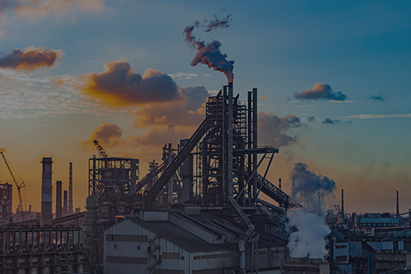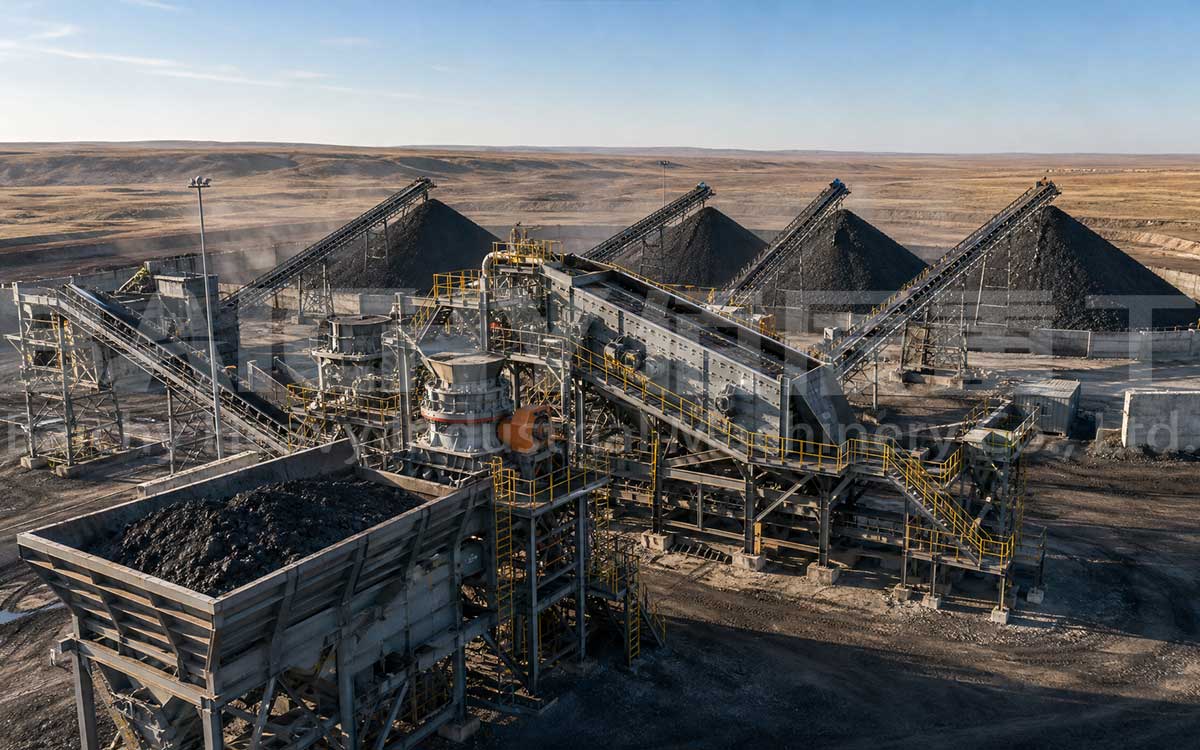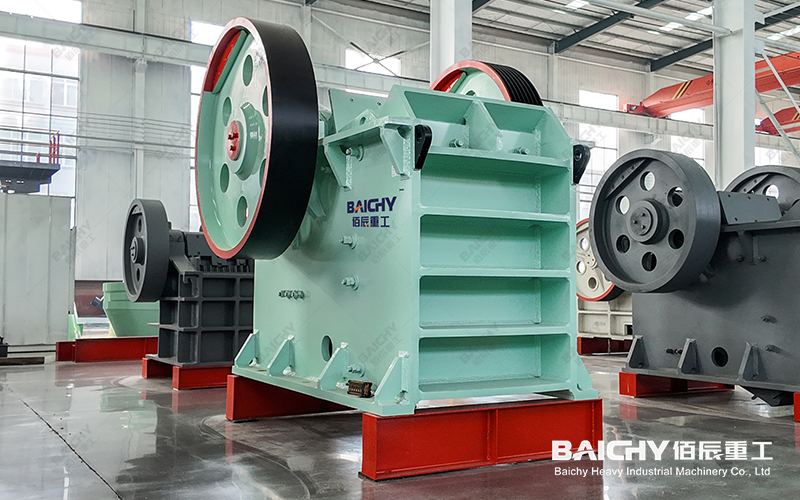

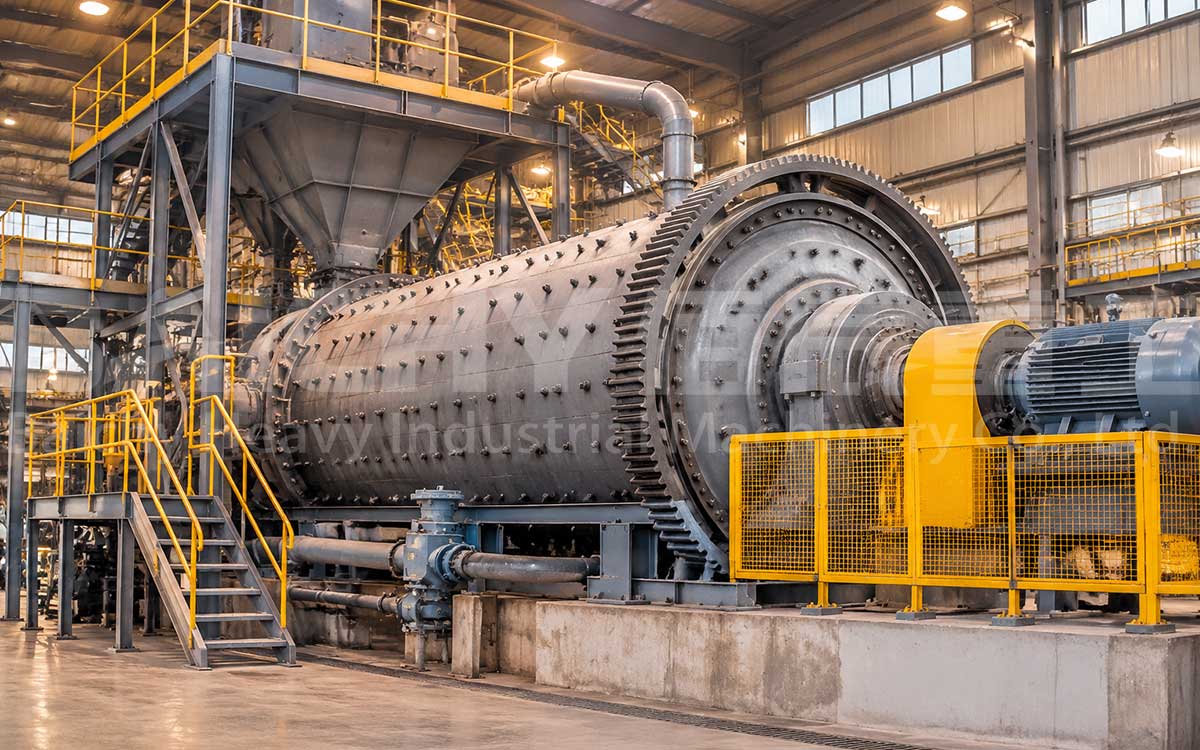
Main image of a ball mill at an industrial gold ore processing plant
Ball Mill for Gold Mining: Improve Recovery
A ball mill does more than make gold ore smaller. Its purpose is to create the right particle size and mineral liberation for the recovery stage that follows. If gold remains locked inside quartz, sulfides, or other host rock, a gravity concentrator, flotation cell, or leaching circuit cannot recover its full value. If the ore is ground too fine, the plant may waste power, create excess slime, and reduce separation efficiency.
The best grinding target is not the finest possible product. It is the most economical grind that gives the recovery circuit the liberation it needs. This guide explains how a ball mill is used in gold mining, how it works with the rest of the plant, and what buyers should check before selecting equipment.
What Does a Ball Mill Do in a Gold Plant?
A ball mill is a rotating cylinder partly filled with steel balls. Crushed ore and, in wet operation, process water enter the mill. As the cylinder rotates, the balls lift and fall, breaking the ore through impact and abrasion.
In a gold-processing plant, the mill normally:
• reduces crushed ore to a controlled grinding size;
• liberates gold from quartz, sulfides, and gangue minerals;
• produces a pumpable slurry for classification; and
• provides a stable feed for gravity, flotation, leaching, or a combined process.
A ball mill is not a complete recovery plant. Its result must be evaluated with the crusher, classifier, pumps, concentration equipment, water system, and tailings facilities.
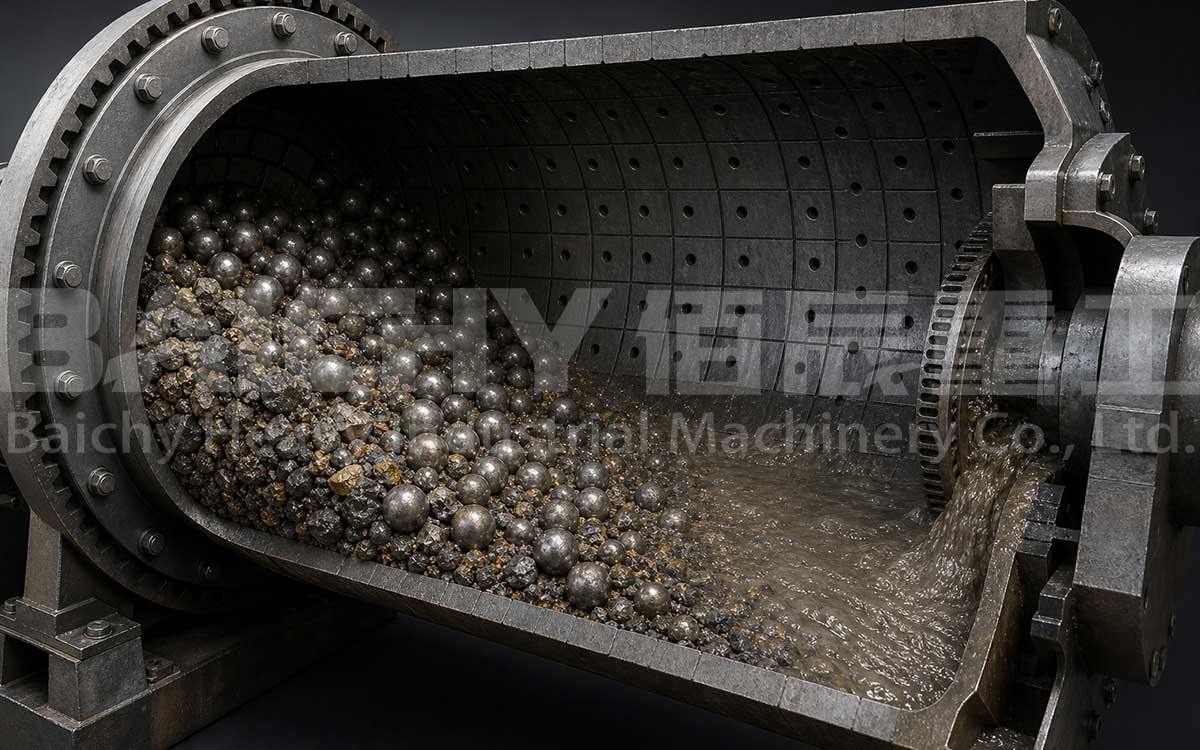
Detailed diagram of the internal grinding structure of a wet ball mill
Where It Fits in the Gold-Mining Process
A typical hard-rock gold flowsheet is:
ROM ore → crushing → screening or fine crushing → ball-mill grinding → classification → gravity concentration, flotation, leaching, or a combined process
The crusher prepares feed that the mill can accept. The classifier separates fine particles from coarse particles. Fine material moves to recovery, while coarse material returns to the mill. This closed-circuit arrangement controls product size and reduces unnecessary over-grinding.
The recovery method depends on mineralogy. Coarse free gold may respond well to gravity concentration. Fine gold associated with sulfides may need flotation or another treatment route. A mill improves liberation, but it cannot guarantee a recovery rate on its own.
Applications for Different Gold Ores
Free-milling gold ore
The ball mill can prepare free-milling ore for gravity concentration or conventional leaching. The target grind should expose the gold without producing more fines than the recovery circuit can handle.
Quartz-vein gold ore
Gold in quartz may be coarse, fine, or unevenly distributed. Crushing, grinding, and gravity recovery should be tested together because some gold may be recovered early, while the remainder requires finer grinding or another process.
Sulfide-associated gold ore
When gold is locked in pyrite, arsenopyrite, or other sulfides, the mill may need to produce a finer and more consistent product before flotation. The required grind must come from metallurgical testing.
Oxidized, clay-rich, or alluvial ore
Weathered ore may generate fines or clay that affect classification and pumping. If alluvial gold is already liberated in gravel or sand, washing, screening, sluicing, or gravity equipment may be more economical than fine grinding.
Why Wet Ball Milling Is Common
Wet milling is widely used because the ground product must normally move as slurry to classification and recovery equipment. It can:
• integrate with pumps and hydrocyclones;
• support continuous material transfer;
• suit gravity, flotation, and leaching circuits; and
• reduce dry dust in the grinding area.
Water addition must be controlled. Too little water can create a thick, unstable slurry; too much can dilute the circuit and affect classification. A reliable water supply, suitable pumps, and recycling plan should be included in the design.
Reference Technical Parameters for a Gold Ball Mill
The table below is a preliminary project reference, not a performance guarantee. Final values should be confirmed by ore testing and process design.
| Parameter | Design consideration | Why it matters |
|---|---|---|
| Mill type | Wet overflow or grate-discharge ball mill | Influences residence time and discharge behaviour |
| Throughput | Tonnes per hour under defined ore conditions | Connects mill size with production targets |
| Feed size | Controlled crushed feed; top size to be confirmed | Oversize feed reduces capacity and increases wear |
| Product size | Target P80 based on liberation testing | Determines whether recovery can work effectively |
| Mill dimensions | Diameter and length selected for grinding duty | Controls volume and residence time |
| Motor and drive | Sized for ore hardness and mill load | Affects reliability and power cost |
| Grinding media | Steel balls with planned size distribution | Controls impact, abrasion, and consumption |
| Liners | Replaceable shell liners and lifters | Protects the shell and controls charge motion |
| Classification | Hydrocyclone, spiral classifier, or equivalent | Controls circulating load and product size |
| Slurry system | Water, pump, pipeline, and recycling arrangement | Supports continuous operation |
A supplier should state the assumptions behind every capacity claim, including ore hardness, feed size, moisture, product size, power, and operating hours.
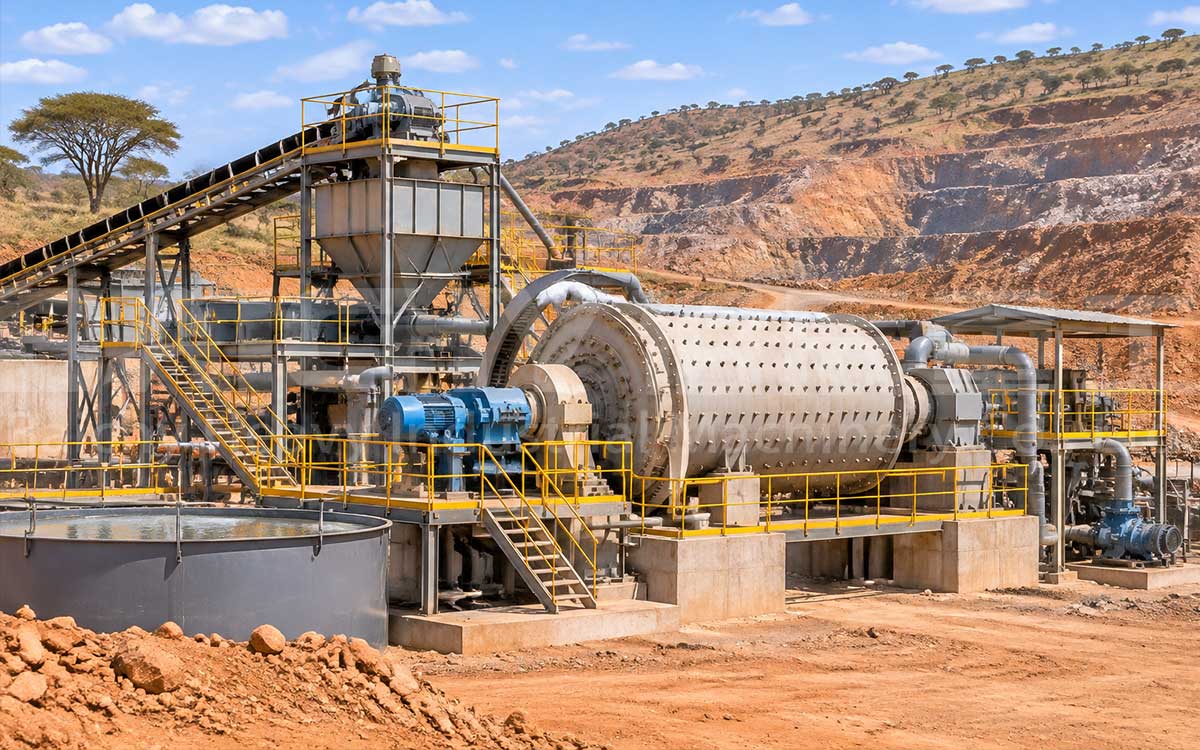
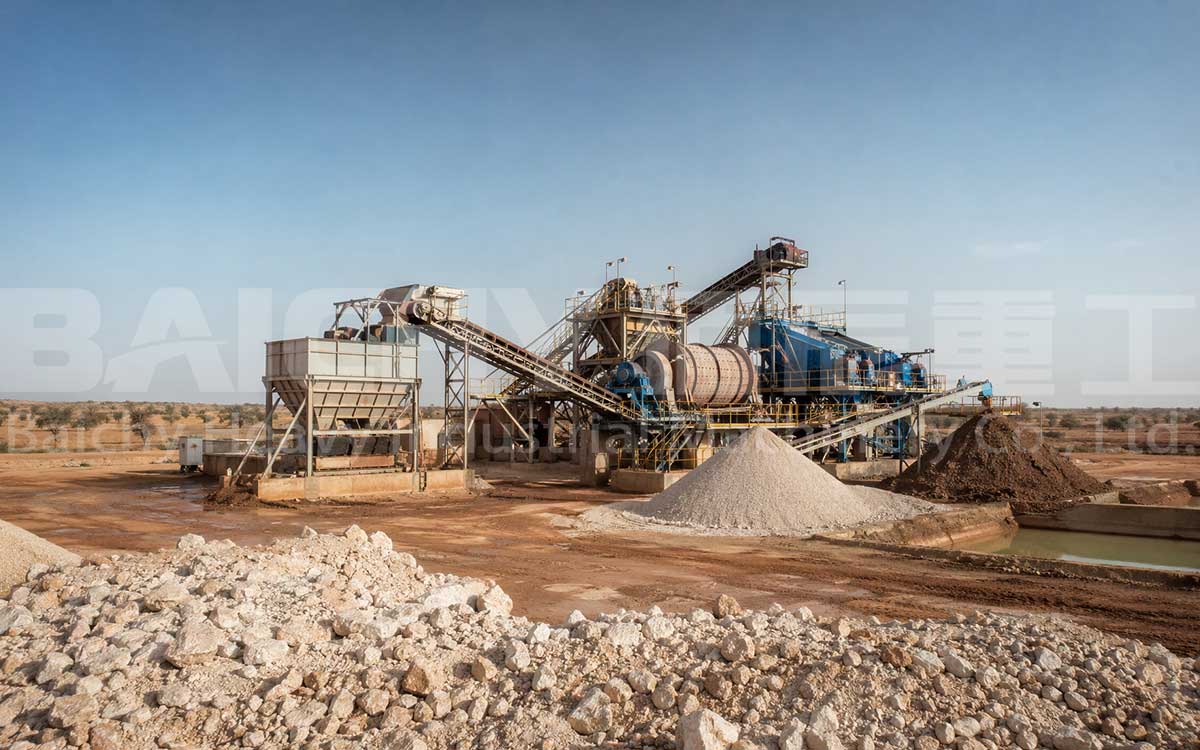
Application scenario of a ball mill for gold mining in Tanzania
How Grinding Influences Gold Recovery
Under-grinding: Gold-bearing particles remain locked in the host mineral, so fine or enclosed gold can report to tailings.
Correct grinding: The product reaches the liberation range required by the selected recovery method, while the plant maintains a stable circulating load.
Over-grinding: Excessive fines may increase power consumption, reduce gravity-separation efficiency, complicate thickening, and change reagent demand.
The optimum product size must be confirmed through laboratory or pilot testing. Compare recovery, concentrate grade, energy, media consumption, and tailings losses—not particle size alone.
What Determines Ball-Mill Performance?
Ore hardness and abrasiveness: Hard or abrasive ore generally requires more energy and may shorten liner and media life.
Feed stability: Sudden changes in tonnage or feed size disturb mill load and classification.
Ball charge and media size: An unsuitable media mix can increase consumption without improving liberation.
Slurry density: Water affects transport, residence time, classification, and recovery.
Liners and classification: Worn lifters, a weak pump, or an undersized classifier can become the real bottleneck.
Ball-Mill Selection Checklist
Before requesting a quotation, prepare the ore type, representative sample, feed size, moisture, hardness data, target throughput, operating hours, target P80, gold mineralogy, recovery method, power, water, site access, and maintenance conditions.
Ask the supplier for the capacity basis, mill dimensions, motor data, ball-charge recommendation, liner material, classifier and pump specifications, foundation drawings, critical spares, commissioning scope, training, warranty, and technical-support terms. A quotation containing only the mill shell and motor may not represent the cost of a working plant.
For remote mines, plan initial liners, grinding media, critical mechanical and electrical spares, installation guidance, and operator training before commissioning.
Common Operating Problems
Low throughput: Check feed size, ore hardness, ball charge, circulating load, slurry density, and classifier performance before assuming the mill is undersized.
Unstable product size: Review feed rate, water addition, classifier settings, pump performance, media condition, and discharge lines.
Fast liner wear: Investigate ore abrasiveness, liner material, ball size, impact conditions, and slurry level.
Lower recovery after increasing capacity: More tonnes per hour can send poorly liberated or poorly classified material to tailings. Throughput and recovery must be optimized together.
Conclusion: Grinding Is a Recovery Decision
The role of a ball mill in gold mining is to create the liberation and slurry conditions required by the recovery process. The correct equipment depends on ore type, gold association, target product size, throughput, power, water, classification, and maintenance capability.
Start with representative ore testing and a complete flowsheet. Select the ball mill together with the crusher, classifier, pump, recovery equipment, and spare-parts strategy. When these elements are balanced, the mill can improve plant stability, protect recovery, and control the cost per tonne.
For Tanzania projects, buyers can review the Mining Commission’s mineral-production information and the official list of gold buying centres for regional market context. These sources do not replace ore testing or a site-specific feasibility study.
Frequently Asked Questions
1. What is the main purpose of a ball mill in gold mining?
Its main purpose is to grind crushed gold ore to a controlled size so that gold-bearing minerals are liberated for gravity, flotation, leaching, or a combined recovery process.
2. Is a ball mill suitable for every type of gold ore?
No. It is common for hard-rock and sulfide-associated ores, while alluvial ore may need washing, screening, sluicing, or gravity equipment instead. Mineralogy and test results should guide the choice.
3. Does finer grinding always produce higher gold recovery?
No. Under-grinding can leave gold locked in host minerals, while over-grinding can create excess fines and increase energy use. The optimum grind must be tested.
4. Why is wet milling common in gold processing?
Wet milling produces a pumpable slurry that can move to classification and recovery equipment. It suits many gravity, flotation, and leaching circuits when water and slurry density are controlled.
5. What information is needed to select a gold ball mill?
The supplier should review ore hardness, feed size, moisture, target throughput, target P80, gold liberation, recovery method, power, water, site access, and maintenance requirements.
Baichy Heavy Industry
Baichy Heavy Industry is a high-tech mining equipment company integrating R&D, manufacturing, sales, and after-sales service. Focusing on crushing, grinding, and mineral processing equipment, we provide professional solutions to our customers. We are ISO9001:2015 Certified, and our products include mobile crushing palnts, crawler crushing plant, construction waste crushing plants, jaw crushers, sand making machines, cone crushers, fine crushers, grinding mills, ball mills, etc., all with reliable performance to meet diverse project needs.
Baichy Heavy Industry – Your Trusted Partner
To ensure optimal performance of your equipment, Baichy Heavy Industry offers:
- Professional on-site installation guidance
- Comprehensive operator training
- 24/7 technical support & maintenance services
Our complete after-sales service system guarantees long-term, stable operation of your machinery with minimal downtime.
Protect Your Rights – Only Use Official Channels
To avoid scams and ensure authentic support, contact us exclusively through:
• Official Website: www.baichychina.com
• WhatsApp: +8615093222637
• Email: [email protected]
Your satisfaction is our priority – expect prompt, professional service every time.
(Note: Beware of unauthorized third parties claiming to represent Baichy. Always verify through official contacts.)