
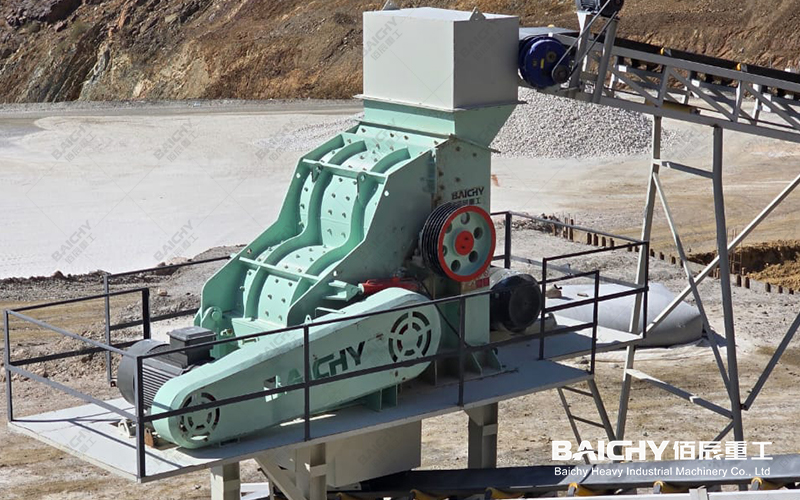
Small Double Stage Hammer Crusher in Burkina Faso
Small Double Stage Hammer Crusher for a Practical Project Start
For a small quarry, aggregate business, or mineral-processing project in Burkina Faso, the best first investment is not always the largest crushing plant. A large plant can provide high capacity, but it also brings a larger budget, more conveyors, more foundations, and a more complicated maintenance system.
A small double stage hammer crusher offers a different starting point. It is designed for projects that need material to be reduced through two crushing stages in one machine. This approach can be attractive when the customer wants a compact layout, a relatively simple operation, and a finer product without immediately building a large multi-machine plant.
The right question is not simply, “What is the cheapest crusher?” A better question is: Which crushing configuration can produce the required material size while matching the raw material, power supply, maintenance ability, and future production plan?
Why a Double Stage Design May Fit a Small Project
A conventional small crushing line may require a primary crusher, a secondary crusher, conveyors, and screening equipment. The final arrangement depends on the material and product specification, but every additional machine affects the investment and operating process.
A double stage hammer crusher combines two impact-crushing stages in a single crushing unit. Material is first reduced in the initial crushing chamber and then receives further impact in the second stage. This can help a small project pursue a finer product with a shorter process route.
The main advantages to evaluate include:
• A more compact layout: Fewer main crushing units may reduce space and foundation requirements.
• Two-stage reduction: The material receives a second crushing action before discharge.
• Simpler project planning: A smaller number of major machines can make installation and operator training easier.
• Flexible project entry: The customer can begin with a modest configuration and add feeding, conveying, or screening equipment as the business grows.
• Convenient access to wear parts: Hammers, liners, bearings, and other wear components can be planned as part of the initial spare-parts package.
These are configuration benefits, not universal promises. The final result depends on the material properties, feed size, moisture, abrasiveness, machine model, and required product size.
Key Parameters
| Parameter | Range / Specification |
|---|---|
| Machine Type | Double-Stage Hammer Crusher |
| Maximum Feed Size | ≤200 mm |
| Motor Power | 22–355 kW |
| Capacity | 15–300 t/h |
| Finished Product Size | Approximately 3–8 mm, adjustable |
| Crushing Structure | Double rotor and dual crushing chambers |
| Crushing Method | Two-stage impact crushing |
| Applicable Material Compressive Strength | ≤150 MPa |
| Recommended Material Moisture | Generally below 12% |
| Design Type | Screenless crushing structure |
| Suitable Materials | Limestone, dolomite, gypsum, coal, coal gangue, shale, construction waste, and other medium-hard materials |
Which Materials Should Be Evaluated First?
A small double stage hammer crusher is generally considered for medium-hard and relatively brittle materials such as limestone, dolomite, gypsum, coal, coal gangue, clay-related materials, and selected industrial residues.
Material name alone is not enough for selection. Hardness, abrasiveness, moisture, clay content, maximum feed size, and required product size all affect capacity, wear, and power demand. Granite, quartz-rich rock, hard basalt, highly abrasive gold ore, and wet sticky feed require special review. Baichy engineers may recommend another crusher type or a combined circuit when the material is too hard or abrasive.
Electric or Diesel Power for Burkina Faso?
The power option should be selected from the project conditions rather than from the machine name. A stationary electric configuration can be a practical choice when the site has stable industrial electricity. A diesel-powered option may be considered when the project is remote, the grid connection is limited, or the equipment must operate independently of a fixed power source.
| Project condition | Electric configuration | Diesel or mobile-oriented configuration |
|---|---|---|
| Site arrangement | Best for a fixed plant | Useful for remote or changing sites |
| Power source | Requires a suitable electrical supply | Uses an engine and fuel system |
| Operating consideration | Review voltage, frequency, cabling, and transformer capacity | Review fuel availability, consumption, and service access |
| Layout | Suitable for a planned stationary line | Can support a more flexible installation plan |
| Recommended next step | Confirm motor power and site electricity | Confirm engine size, transport, and fuel conditions |
Before quotation, the customer should confirm local voltage and frequency, available power capacity, operating hours per day, fuel access, and whether the machine will remain in one location. These details help avoid selecting a crusher that cannot be operated efficiently after delivery.
A Practical Configuration for a Small Crushing Business
The crusher is the central unit, but a reliable project also needs a suitable material-feeding and discharge arrangement. A basic configuration can include a feed hopper, vibrating feeder, double stage hammer crusher, discharge conveyor, and optional screening equipment.
The feeder controls the material flow and helps reduce irregular loading. A discharge conveyor moves finished material away from the crusher, while screening separates product sizes when a controlled aggregate gradation is required.
A typical planning sequence is:
1. Identify the raw material and measure or estimate its maximum feed size.
2. Define the required hourly capacity and final product size.
3. Confirm whether the material is wet, sticky, hard, or abrasive.
4. Select electric or diesel power according to the site.
5. Decide whether the project needs feeding, conveying, and screening equipment.
6. Prepare a spare-parts list for the expected operating period.
7. Review installation, operator training, and after-sales support before shipment.
This sequence gives the buyer a complete project view instead of comparing crusher prices in isolation.
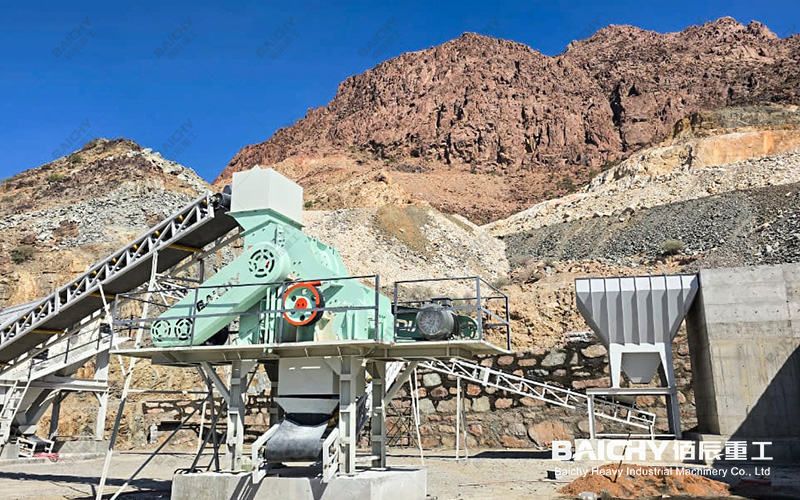
hammer crusher Burkina Faso
How to Select the Correct Model?
The correct model cannot be selected from the customer’s country alone. It must be matched to the production target and material conditions. A small crusher for limestone and a small crusher for hard, abrasive ore may require very different wear protection and process arrangements.
Send the following information when requesting a technical proposal:
• Raw material name and source;
• Maximum feed size;
• Required capacity in tons per hour;
• Desired discharge size or product sizes;
• Moisture and clay content, if known;
• Material hardness or abrasiveness, if available;
• Electricity details or diesel preference;
• Stationary or mobile installation requirement;
• Expected working hours per day;
• Whether a complete crushing line is required.
If the final product must meet a strict aggregate grading, the proposal should also consider screening. If the customer needs manufactured sand, a crusher alone may not be enough; screening, washing, or shaping equipment may be required depending on the specification.
Why Baichy Can Support the Full Process?
Baichy Heavy Industrial Machinery presents itself as a manufacturer and engineering partner rather than only a single-machine seller. Its website describes services covering raw-material analysis, process and layout design, equipment manufacturing, installation, commissioning, operator training, and spare-parts support.
That service model is important for an overseas small-scale project. The customer may need help with more than the crusher selection: the feed arrangement, motor or engine configuration, shipping preparation, installation method, and maintenance plan all influence the final operating result.
Baichy also displays global crushing-project experience and turnkey plant services on its official website. Project figures, equipment models, delivery scope, and installation arrangements should be confirmed in the formal technical proposal rather than assumed from a general product description.
A Better Way to Request a Quotation
A useful quotation should answer more than the machine price. Ask the supplier to specify:
• Recommended model and reason for selection;
• Maximum feed size and expected output range;
• Motor or diesel-engine requirements;
• Included and excluded equipment;
• Wear-part materials and initial spare-parts package;
• Delivery scope and installation support;
• Operator training and remote technical assistance;
• Warranty terms and after-sales response;
• Estimated shipping dimensions and weight;
• Any raw-material testing required before final confirmation.
This information allows the customer to compare the total project value, not just the purchase price of the main crusher.
Frequently Asked Questions
1. Is a small double stage hammer crusher suitable for a Burkina Faso project?
It can be suitable for a small quarry, aggregate, or selected mineral project when the material is compatible and the required capacity is moderate. The final recommendation should be based on feed size, hardness, abrasiveness, moisture, and product size rather than location alone.
2. Can it crush gold ore?
Some ores may be processed after a technical review, but gold ore can vary significantly in hardness and abrasiveness. Customers should provide ore information or a sample. For highly abrasive or hard ore, another crusher type or a combined crushing circuit may be more appropriate.
3. Can the machine run without grid electricity?
A diesel-driven configuration may be considered for a site without reliable grid power. The project team should compare fuel availability, operating cost, engine maintenance, transport requirements, and the expected daily working hours before making the decision.
4. Does the crusher produce a fine product in one pass?
The two-stage structure is intended to provide further size reduction in one machine, but the actual product size and distribution depend on the model, raw material, feed size, rotor configuration, and discharge arrangement. A final product specification should be confirmed with the supplier.
5. What information is needed for a Baichy quotation?
Provide the raw material, maximum feed size, desired capacity, final product size, power condition, installation type, and project location. Photos, videos, laboratory data, and information about moisture or abrasiveness can improve the technical recommendation.
Baichy Heavy Industry
Baichy Heavy Industry is a high-tech mining equipment company integrating R&D, manufacturing, sales, and after-sales service. Focusing on crushing, grinding, and mineral processing equipment, we provide professional solutions to our customers. We are ISO9001:2015 Certified, and our products include mobile crushing palnts, crawler crushing plant, construction waste crushing plants, jaw crushers, sand making machines, cone crushers, fine crushers, grinding mills, ball mills, etc., all with reliable performance to meet diverse project needs.
Baichy Heavy Industry – Your Trusted Partner
To ensure optimal performance of your equipment, Baichy Heavy Industry offers:
- Professional on-site installation guidance
- Comprehensive operator training
- 24/7 technical support & maintenance services
Our complete after-sales service system guarantees long-term, stable operation of your machinery with minimal downtime.
Protect Your Rights – Only Use Official Channels
To avoid scams and ensure authentic support, contact us exclusively through:
• Official Website: www.baichychina.com
• WhatsApp: +8615093222637
• Email: [email protected]
Your satisfaction is our priority – expect prompt, professional service every time.
(Note: Beware of unauthorized third parties claiming to represent Baichy. Always verify through official contacts.)