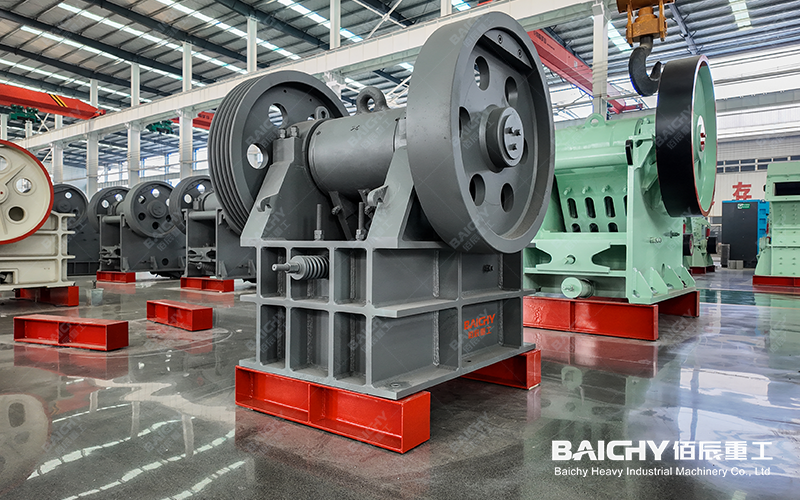
PE400×600 Jaw Crusher
Small mines and private quarries often need compact, affordable, and easy-to-operate crushers. The PE400×600 jaw crusher meets all these demands with moderate capacity, small footprint, and low investment cost.
In the field of resource development, owners of small-to-medium-sized mines and private quarries consistently face a core challenge: how to achieve efficient, stable, and highly profitable primary crushing operations within the constraints of limited investment budgets and site conditions. The PE400×600 jaw crusher—a classic model within the jaw crusher family—has for decades remained the preferred equipment choice globally for small-scale mines, quarries, construction waste recycling facilities, and laboratory crushing applications. It strikes a perfect balance between processing capacity, capital investment, and operating costs, offering a solid and reliable starting point for enterprises entering the field of ore processing or handling medium-scale materials. Renowned for its simple structure, ease of maintenance, and rugged durability, this jaw crusher has earned the reputation of being the "cornerstone of small-scale production lines."
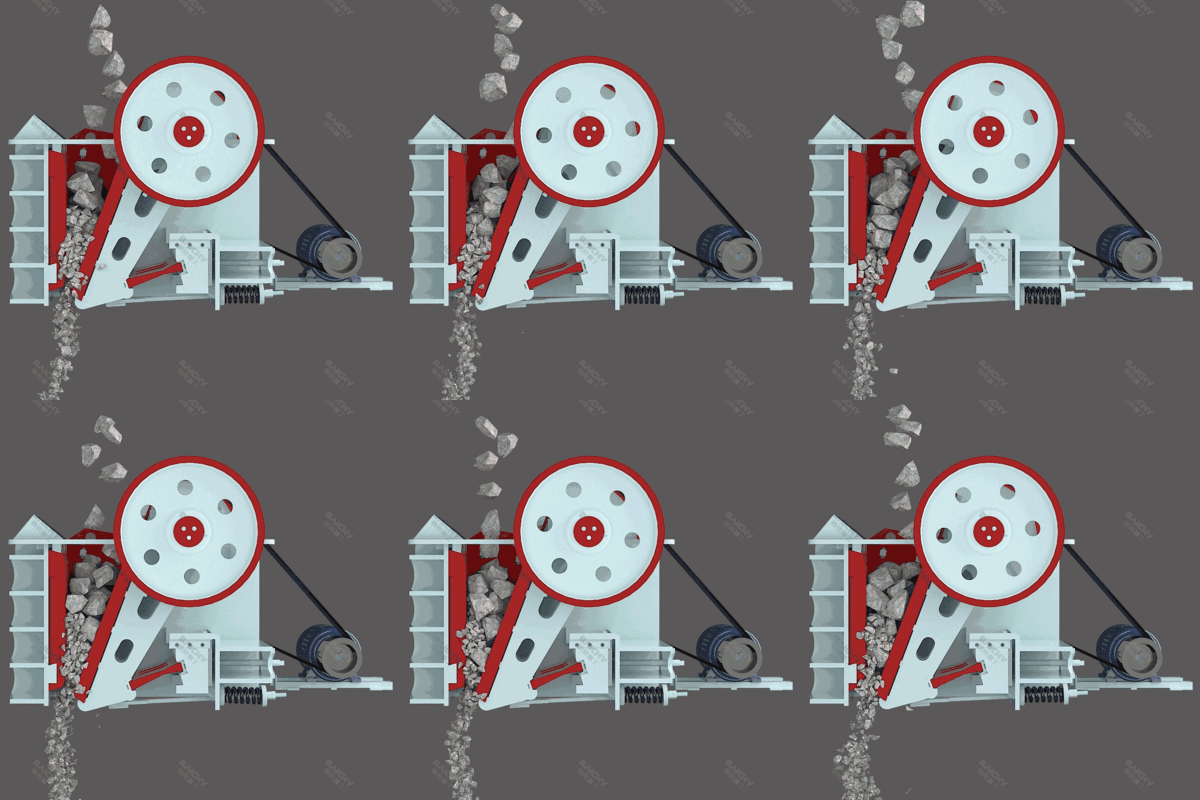
The jaw crusher employs the classic principle of curved-motion extrusion, utilizing the periodic movement of the movable jaw plate—approaching and receding from the stationary jaw plate—to achieve a combined crushing effect involving compression, splitting, and bending of the material.
Moving jaw swings backward → Discharge opening widens → Crushed material is discharged → New material enters
Moving jaw swings forward → Crushing chamber volume decreases → Jaw plates contact material → Fixed gripping
Typical Application Scenarios: Where Does the PE400×600 Excel?
The PE400×600 jaw crusher boasts exceptional adaptability, with application scenarios spanning a wide array of fields:
• Small-to-Medium-Sized Metal/Non-Metal Mines: Used for the primary crushing of ores such as gold, silver, copper, iron, lead, and zinc, as well as limestone, granite, and marble; it prepares raw materials of the appropriate particle size for subsequent grinding and beneficiation processes.
• Private Quarries and Stone Processing Plants: Crushes large blocks of blasted rock down to sizes of 100–200 mm or less, producing construction aggregates and roadbed materials.
• Urban Construction and Demolition: Processes construction waste—such as concrete blocks and asphalt pavement—facilitating resource recovery and recycling.
• Infrastructure Construction (Roads, Railways, etc.): Performs on-site material crushing directly at construction sites, thereby reducing transportation costs.
• Laboratories and Pilot Facilities: Due to its moderate size, it is frequently utilized for sample preparation in mineral research and for pilot-scale production lines.
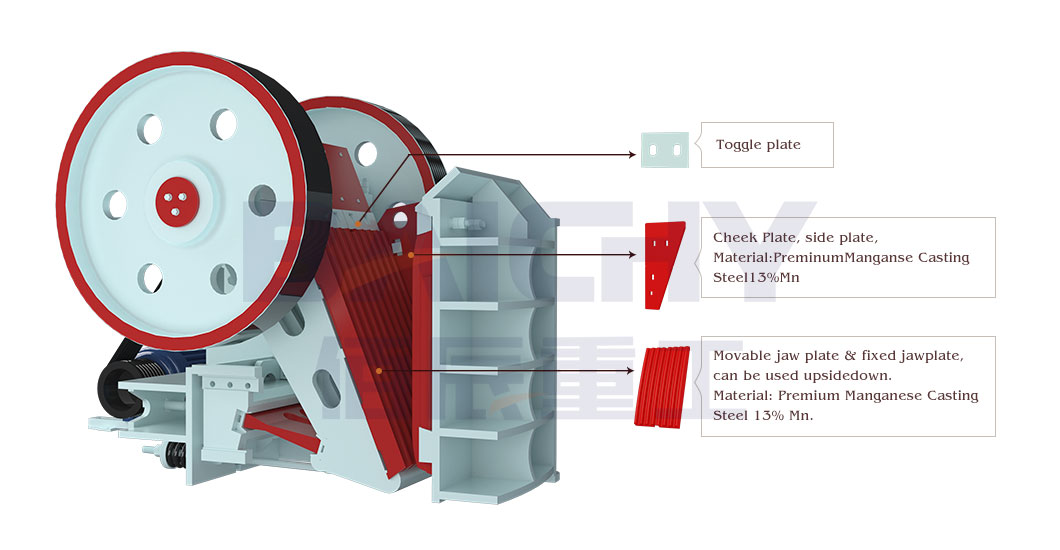
Structural-Diagram-of-the-PE400x600-Jaw-Crusher
Analysis of Core Advantages: Why Is It the "Ideal Choice"?
The advantages of the PE400×600 jaw crusher are multifaceted, precisely addressing the pain points faced by small-scale mining operators.
1. Low Investment Cost, Short Payback Period: As a technically mature, standard model, its manufacturing costs have been optimized. The initial purchase price is significantly lower than that of large, complex equipment, thereby greatly lowering the entry barrier and investment risk for small-scale mine owners.
2. Robust Structure, Reliable Operation: Featuring a high-quality cast steel frame and high-manganese steel jaw plates, the unit's core transmission components boast a compact structure and a low failure rate. It is capable of continuously withstanding the impact and abrasion caused by various types of hard rock, ensuring the uninterrupted operation of the production line.
3. Small Footprint, Flexible Installation: The entire machine features a compact design, making it particularly well-suited for small mines with limited space or for mobile crushing operations. It can be installed as a stationary unit or conveniently integrated into a mobile crushing station.
4. Simple Operation and Maintenance: The mechanical structure is simple and intuitive, with few points requiring daily lubrication or maintenance. General laborers can operate and maintain the machine after undergoing only basic training, thereby saving on labor costs typically associated with skilled technicians.
5. Flexible and Adjustable Discharge Size: By adjusting the wedges or shims located at the bottom of the jaw plates, the discharge opening size can be easily regulated to control the product granularity, thereby meeting the specific requirements of various downstream processing stages.
PE400×600 Jaw Crusher: Key Parameters at a Glance
| Parameter | Detailed Description |
| Feed Opening Size | 400 × 600 mm |
| Max. Feed Size | ≤ 340 mm |
| Discharge Opening Adjustment Range | 40 – 100 mm |
| Processing Capacity | 16 – 64 t/h (Varies depending on material properties and discharge settings) |
| Main Shaft Speed | ~275 r/min |
| Motor Power | 30 – 37 kW (Approx. 6-pole motor) |
| Overall Dimensions (L × W × H) | 1700 × 1732 × 1653 mm (For reference only; may vary by manufacturer) |
| Equipment Weight | ~6.5 tons (Excluding motor) |
Real-World Case Study: Witnessing Efficiency
Case Study 1: A Small-Scale Limestone Quarry in Southeast Asia
This quarry primarily supplies raw materials to a local cement plant. Previously, the site relied on manual rock splitting—a method characterized by extremely low efficiency. Following the introduction of a PE400×600 jaw crusher, raw stones measuring 500–600 mm were directly crushed down to less than 100 mm. Production capacity stabilized at 25–30 tons per hour, and the investment in the equipment was recouped in less than six months, while significantly boosting supply capabilities.
Case Study 2: A Construction Waste Recycling Project in China
During the initial phase of the project—aimed at processing concrete blocks, bricks, and tiles generated by demolition work—a mobile crushing line was configured with a PE400×600 unit serving as the primary crusher. Its powerful crushing force allowed it to effortlessly "chew through" reinforced concrete blocks. After undergoing iron removal and screening, the output material was transformed into high-quality recycled aggregate, achieving a win-win outcome in terms of both environmental protection and economic benefits.
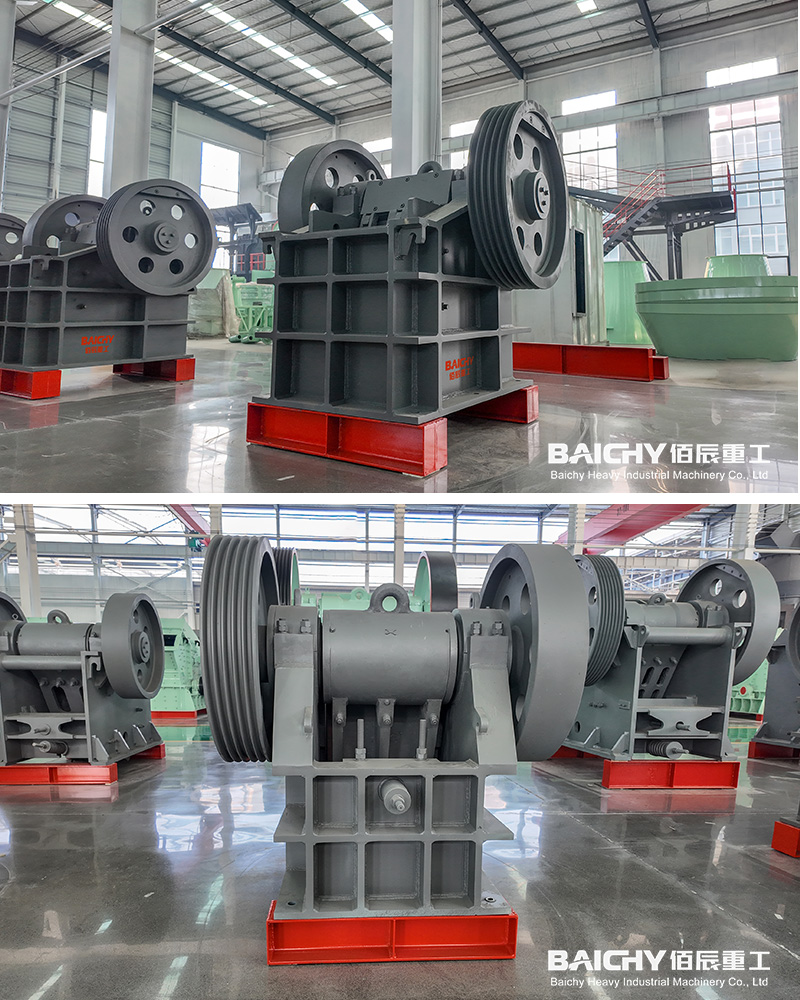
PE400×600 Jaw Crusher
Recommended Ancillary Equipment
A complete crushing production line for small-scale mining operations typically requires more than just a single jaw crusher. Depending on your specific process requirements (Crushing + Screening, or Crushing + Grinding + Mineral Processing), we recommend the following ancillary equipment to maximize the operational efficiency of the PE400×600 unit:
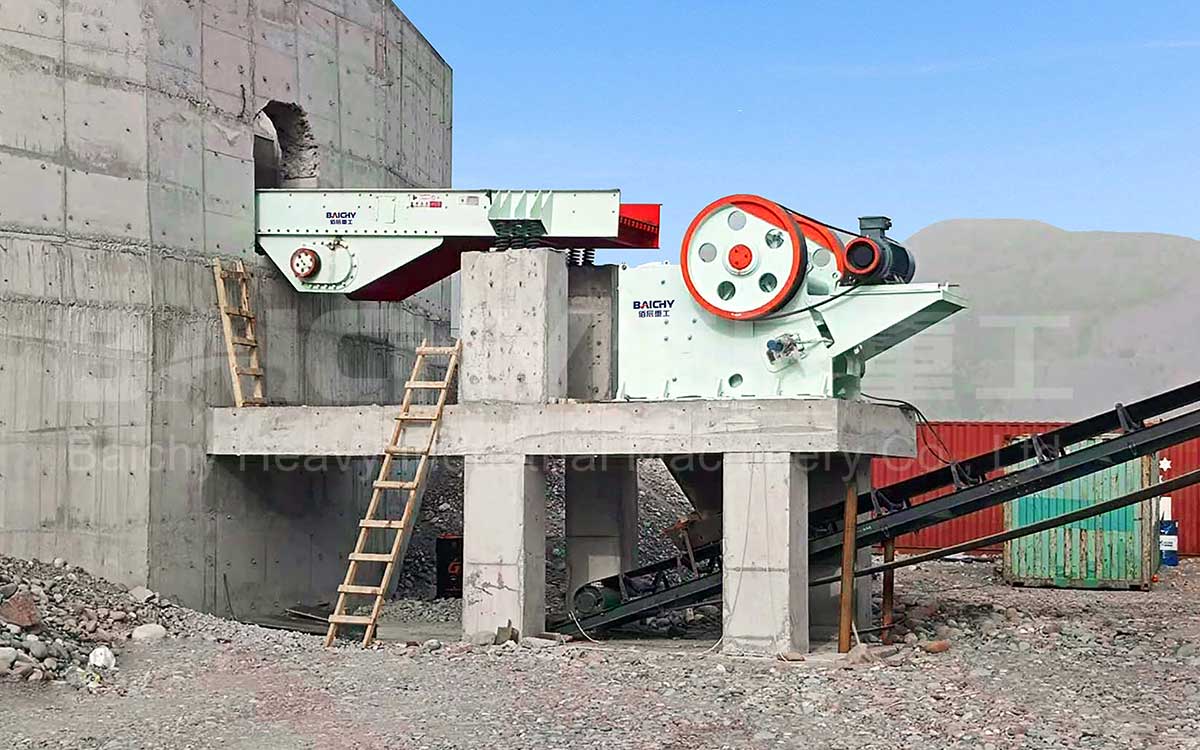
1. Feeding Equipment: ZG Series Vibrating Feeders. These ensure that material is fed into the jaw crusher uniformly and continuously, preventing blockages and protecting the equipment.
2. Secondary & Fine Crushing Equipment:
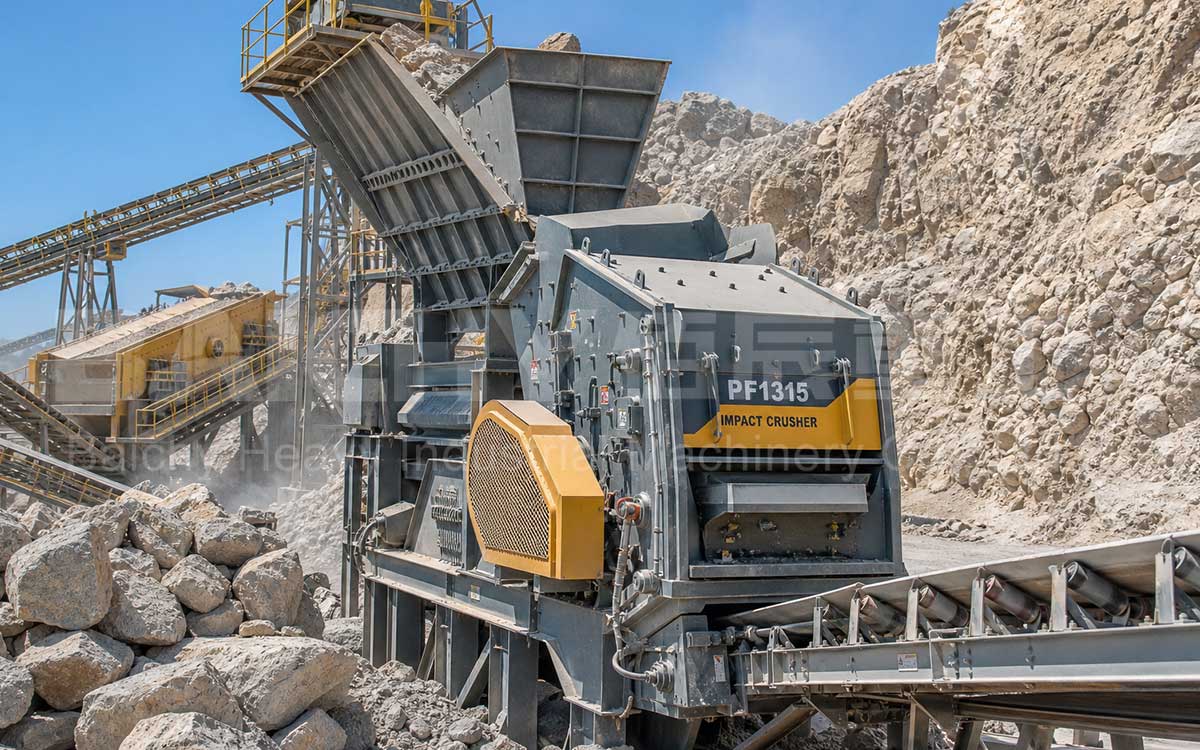
◦ For Aggregate Production Lines: We recommend the PYB600/PYD600 Cone Crusher or the PF1007/1010 Impact Crusher to further crush the material discharged from the jaw crusher into finished aggregates of various specifications.
◦ For Grinding Production Lines: A PEX250×1000 Fine Jaw Crusher can be configured for secondary fine crushing, resulting in a smaller feed size for the subsequent grinding stage.
3. Screening Equipment: YK Series Circular Vibrating Screens. Used to classify the crushed material according to particle size; oversized material (retained on the screen) is returned for further crushing, while undersized material (passing through the screen) constitutes the finished product.
4. Conveying Equipment: TD Series Belt Conveyors. These connect the various pieces of equipment to form a fully automated production line.
Frequently Asked Questions (FAQ)
Q1: Can the PE400×600 jaw crusher process granite with a Mohs hardness of 7 or higher?
A1: Absolutely. The PE400×600 is designed to crush a wide variety of ores and rocks with a compressive strength not exceeding 320 MPa; granite (with a Mohs hardness of 6–7) falls well within its effective operating range. The key is to select jaw plates made from wear-resistant materials—such as high-manganese steel—and to inspect them regularly for signs of wear.
Q2: Is this equipment energy-intensive? What are the primary operating costs involved?
A2: The main motor has a power output of 30–37 kW, placing it in the medium energy consumption category. Given its production capacity of several tens of tons per hour, it offers a very high energy efficiency ratio. The primary operating costs include electricity charges, the cost of periodically replacing wear parts (primarily the jaw plates for both the moving and fixed jaws), and the cost of lubricants. Overall, its operating costs are highly competitive compared to similar equipment in its class.
Q3: Our work site is located in a rather remote area; is the equipment easy to maintain and repair?
A3: The PE400×600 features a simple structure, and ease of maintenance is one of its core advantages. Routine maintenance primarily involves lubrication and tightening fasteners. Even when wear parts require replacement, the standardized design allows for quick disassembly and installation. Furthermore, as a globally recognized model, spare parts are readily available on the market. Our company also provides remote technical guidance and a global spare parts supply service to ensure you have complete peace of mind.