
Overflow Wet Ball Mill
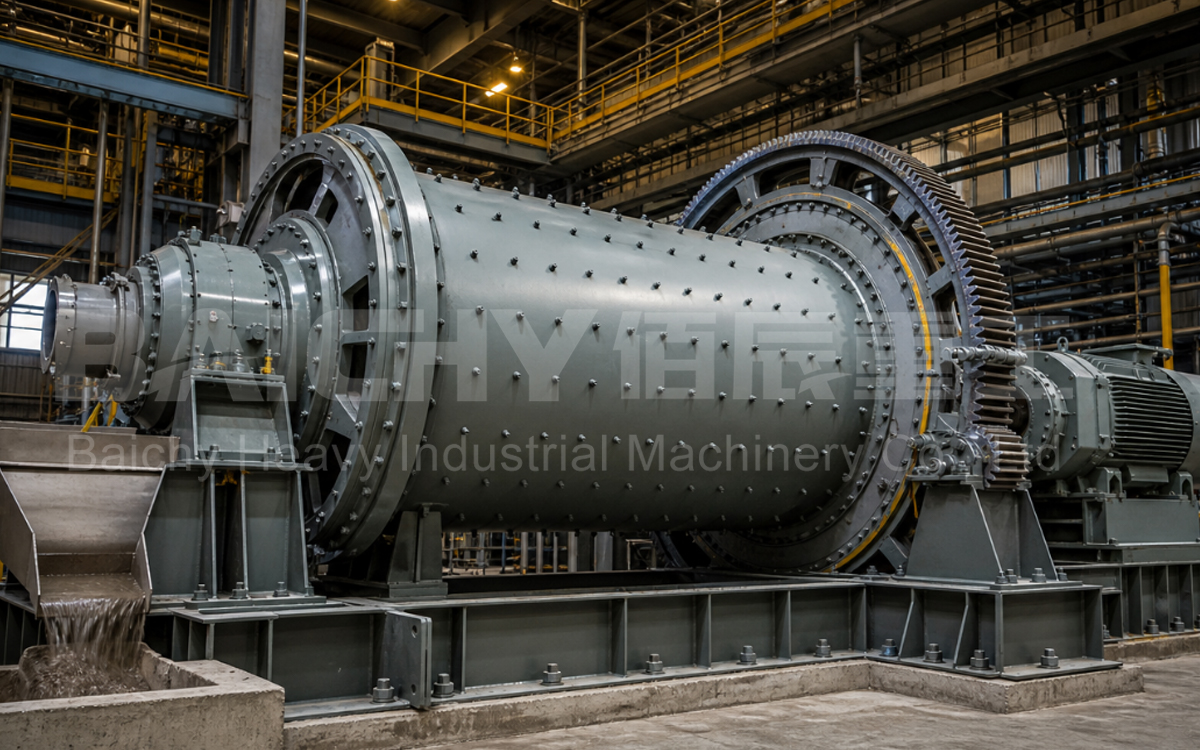
The Overflow Wet Ball Mill is the most mature and reliable wet grinding equipment used for fine grinding and regrinding stages in mineral processing plants. The 1500×3000 and 1500×4500 models collectively cover a capacity range of approximately 3–8 tons per hour. Their throughput, product fineness, and investment scale align perfectly with the practical needs of small-to-medium-sized processing plants (handling gold, copper, lead-zinc ores, etc.) and regrinding workshops, making them ideal entry-level models with an excellent return on investment.
Working Principle: Overflow via liquid level difference; no forced discharge mechanism required.
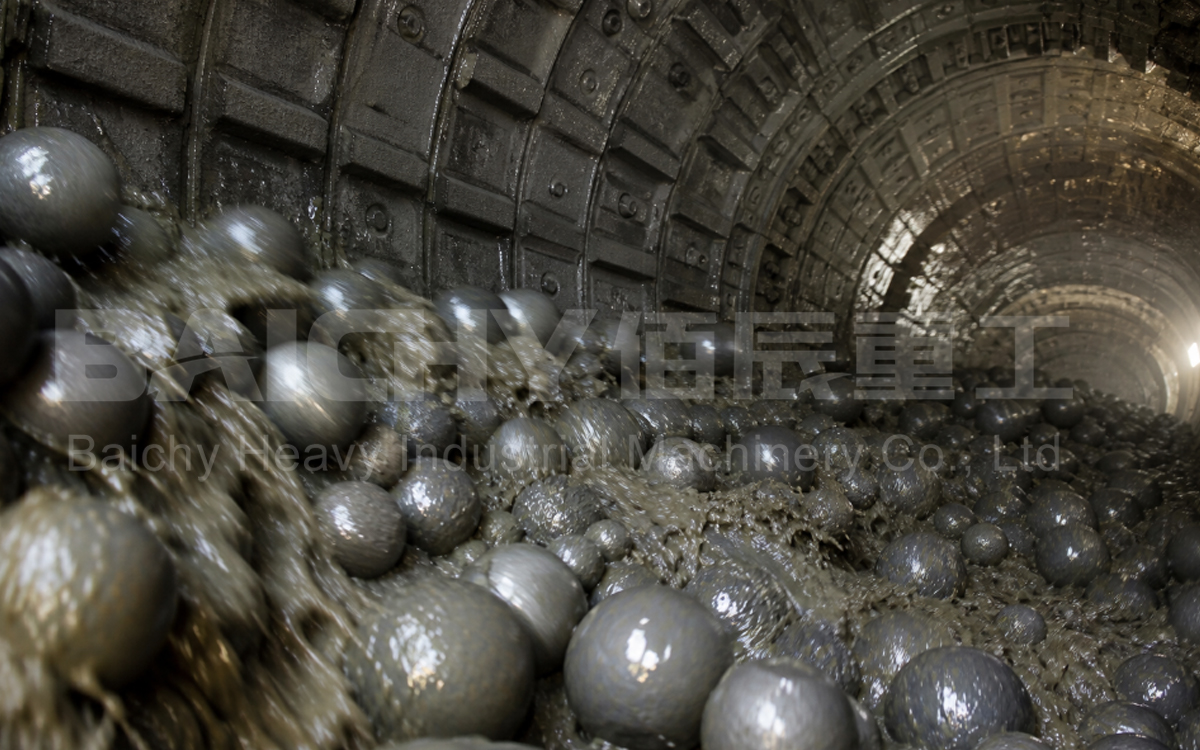
Internal working principle of a ball mill
Material enters the horizontal shell through the feed-end hollow trunnion, accompanied by the addition of water and grinding media (steel balls). As the shell rotates, the steel balls are lifted to a certain height before cascading down; the material is continuously comminuted by the combined impact and grinding forces of the balls. The slurry level rises, and the fine product automatically overflows through the discharge-end hollow trunnion—ensuring continuous, stable operation without the need for forced discharge mechanisms. This "liquid level difference overflow" design gives the model its name and serves as the key technical feature distinguishing it from grate-discharge ball mills.
I. Why the 1500×3000 and 1500×4500 Models?
Both models share the same shell diameter (1.5 m) but differ in length: the 3000 model (3 m long) is designed for single-stage fine grinding and products of moderate fineness; the 4500 model (4.5 m long), offering a longer material residence time, is suited for two-stage grinding, regrinding, and applications requiring high product fineness. A longer shell results in more grinding cycles and a finer product—this is the most intuitive physical logic guiding model selection.
II. Application Scenarios: What Overflow Wet Ball Mills Are Suitable For
2.1 Metal Ore Beneficiation (Gold, Copper, Lead-Zinc, Iron)
The overflow wet ball mill is standard grinding equipment used prior to flotation, gravity separation, and magnetic separation processes. It grinds crushed ore to a liberation size of 0.074–0.4 mm, providing suitable feed for subsequent separation stages.
2.2 Gold Mine CIL/CIP Processes
Gold extraction via Carbon-in-Leach (CIL) or Carbon-in-Pulp (CIP) processes imposes strict requirements on slurry fineness and density. The 1500×3000 model is frequently paired with a spiral classifier in a closed-circuit configuration to consistently produce slurry with 65%–75% passing -200 mesh, feeding directly into the leaching stage; it is a standard choice for small-to-medium-scale gold mining projects.
2.3 Wet Grinding of Non-Metallic Minerals
In applications such as limestone slurry preparation for wet flue-gas desulfurization (FGD), the preparation of ceramic and glass raw materials, and the wet grinding of ground calcium carbonate (GCC), wet ball mills consistently produce slurries with a high percentage of -325 mesh particles, all while ensuring zero dust emissions.
2.4 Tailings Regrinding and Fine-Particle Recovery
Regrinding flotation tailings or middlings to liberate composite particles and release encapsulated valuable minerals is a cost-effective method for improving overall recovery rates; this is particularly suitable for complex polymetallic ores containing copper, lead, and zinc.
III. Core Parameter Comparison Table
| Technical Parameters | Φ1500×3000 | Φ1500×4500 |
| Shell Specifications (Diameter × Length) | Φ1500×3000 mm | Φ1500×4500 mm |
| Shell Rotation Speed | 27.5 r/min | 27.5 r/min |
| Grinding Media Charge | ≈8 t | ≈11 t |
| Feed Particle Size | ≤25 mm | ≤25 mm |
| Discharge Particle Size | 0.074–0.4 mm | 0.074–0.4 mm |
| Processing Capacity (Wet, material-dependent) | 2.8–6.5 t/h | 3.0–8.0 t/h |
| Motor Power | 75 kW | 110 kW |
| Total Equipment Weight | ≈17 t | ≈21 t |
| Feeding Method | Hollow Trunnion Feed | Hollow Trunnion Feed |
| Discharge Method | Overflow Discharge | Overflow Discharge |
Note: The above are typical configuration parameters; actual processing capacity varies based on ore hardness, feed size, and target fineness. Please refer to the process design for model selection.
IV. Equipment Advantages: Translating Parameters into Profit
4.1 Simple Overflow Discharge Structure Reduces Maintenance Downtime
With no grate plates or forced discharge components, wear parts are limited to liners and steel balls. A simple structure means lower spare parts inventory, shorter maintenance times, and fewer unplanned shutdowns—critical for continuous-operation mineral processing plants, where downtime translates directly to lost profit.
4.2 Uniform, Controllable Fineness; Excellent Suitability for Closed-Circuit Grinding
When paired with a spiral classifier or hydrocyclone for closed-circuit grinding, coarse material (sand return) is automatically sent back for regrinding. This minimizes fluctuations in product fineness, ensuring more consistent flotation recovery rates and concentrate grades—as stable fineness is the prerequisite for stable mineral processing performance.
4.3 Dust-free wet grinding ensures a safe working environment
The wet process operates with the material fully submerged in slurry, preventing dust emissions. This not only meets increasingly stringent occupational health and environmental standards but also eliminates the need for the costly dust collection systems (often requiring investments of tens of thousands of dollars) associated with dry grinding.
4.4 Flexible combination of two models offers process versatility
The 3000-series model serves as a baseline, while the 4500-series model supports capacity expansion or regrinding operations. Sharing the same shell diameter allows for the reuse of established steel ball grading protocols and spare parts inventories. This provides a clear pathway for scaling up production capacity, avoiding the excessive investment associated with "jumping straight to full capacity" from the start.
4.5 Strong power adaptability for global markets
Motors can be configured to standard specifications such as 380 V/400 V/440 V and 50 Hz/60 Hz, ensuring compatibility with the power grids in target markets like Southeast Asia, Africa, and Latin America. No additional voltage reduction or variable-frequency drive (VFD) modifications are required; the equipment is ready for immediate operation upon arrival.
V. Typical Configuration Cases
The following are reference configurations based on standard industry processes. Parameters reflect typical engineering values; specific project designs should be tailored to the actual ore characteristics at the site.
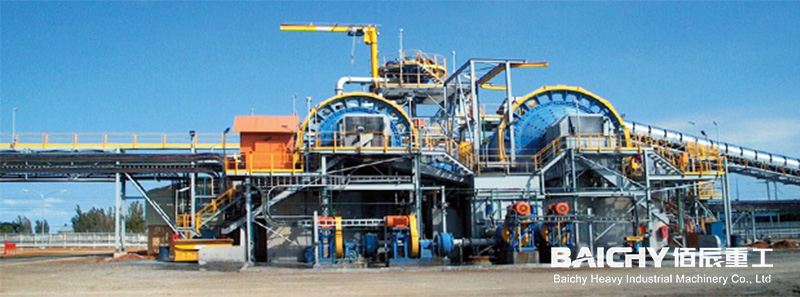
Ball Mill Mineral Processing Production Line
Case 1: West African Gold Mine CIL Production Line (1500×3000 Primary Grinding)
Ore is crushed to ≤25 mm by a PE jaw crusher before entering the mill. The 1500×3000 mill operates in a closed circuit with an FG spiral classifier, achieving a throughput of approximately 4–5 t/h. The product slurry reaches a fineness of ~70% passing -200 mesh and proceeds directly to the CIL leaching system. With manageable investment costs and a short commissioning period, this is a highly cost-effective starting solution for small-to-medium-sized gold mining projects.
Case 2: Southeast Asian Lead-Zinc Mine Regrinding Workshop (1500×4500 Secondary Grinding)
After primary grinding produces a middlings product, the 1500×4500 mill handles the regrinding stage. The extended residence time increases fineness to over 85% passing -200 mesh, ensuring more thorough dissociation of composite particles and boosting flotation recovery rates by 3–5 percentage points. In regrinding processes, "fineness" equates to recovery, and recovery equates to profit.
Case Study 3: Limestone Slurry Preparation for Wet Desulfurization (1500×3000 Closed-Circuit)
A 1500×3000 mill is utilized in the FGD (Flue Gas Desulfurization) system of a power or steel plant. Operating in a closed-circuit configuration with a hydrocyclone cluster, it produces limestone slurry with ≥90% passing through a 325-mesh screen, ensuring a stable supply for the desulfurization tower while maintaining high desulfurization efficiency and reducing energy consumption during slurry preparation.
VI. Recommended Auxiliary Equipment
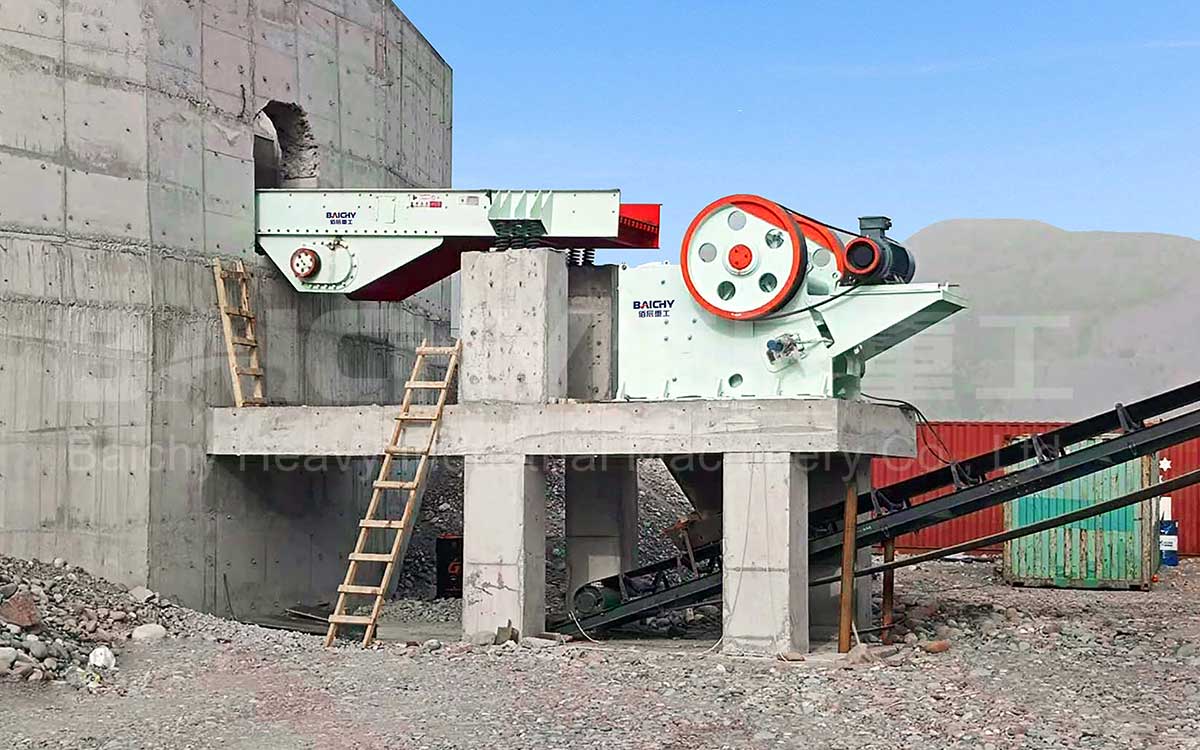
6.1 Pre-grinding Crushing: PE Series Jaw Crusher
Crushing raw ore to a mill feed size of ≤25 mm is essential for increasing mill capacity and reducing specific steel ball consumption. Small-to-medium jaw crushers, such as the PE 400×600 or PE 500×750, are recommended; they precisely match the capacity of two mills, establishing a complete "crushing-grinding" process chain.
6.2 Closed-Circuit Classification: FG Series Spiral Classifier
Paired with an overflow-type wet ball mill, this forms a classic closed-circuit grinding system. It features a simple structure and easy maintenance, with sand returns flowing back to the mill by gravity, making it the preferred classification solution for small-to-medium mineral processing plants.
6.3 Downstream Beneficiation: SF Series Flotation Machine
Standard equipment for processing sulfide ores (such as gold, copper, lead, and zinc). It connects directly to the ball mill discharge, forming a complete "crushing-grinding-flotation" production line to achieve one-stop processing from raw ore to concentrate.
6.4 Extended Solutions: Grate-Discharge Ball Mills and Dry Grinding Mills
Grate-discharge ball mills are selected when high capacity is required and ultra-fine product size is not the primary goal. For dry fine powder production from non-metallic minerals (e.g., calcium carbonate, gypsum), Raymond mills or ultrafine grinding mills are used; these complement wet processing methods, allowing for a broader range of product forms.
VII. FAQ
7.1 How do I choose between an overflow-type ball mill and a grate-discharge ball mill?
It depends on the priority given to product fineness versus production capacity. The grate-discharge type features a discharge grate and forced discharge; it offers higher capacity and minimizes over-grinding, making it suitable for coarse grinding or high-throughput operations. The overflow type has a simpler structure without a grate; it produces a finer, more uniform grind, making it ideal for secondary grinding, regrinding, and processes requiring high product fineness. Choose the overflow type if you prioritize fineness and low maintenance costs; choose the grate-discharge type if you prioritize high capacity and have less stringent requirements for product particle size.
7.2 How to choose between 1500×3000 and 1500×4500 models?
Base the decision on target capacity and fineness: choose the 1500×3000 model for a throughput of 3–6 t/h and standard fineness requirements (65%–75% passing -200 mesh); choose the 1500×4500 model for a throughput of 5–8 t/h, or when a finer product or regrinding capability is required. If conditions permit, a staged configuration can be adopted—using the 3000 model for primary grinding and the 4500 model for regrinding or capacity expansion—to balance current needs with future growth.
7.3 How to adjust discharge fineness?
Adjust in the following order of priority:
① Control feed particle size (crush to ≤25 mm; finer feed results in higher capacity);
② Adjust ball charge quantity and size distribution (large balls enhance impact, small balls enhance grinding);
③ Control slurry concentration (typically 60%–80% solids content);
④ Adjust closed-circuit load via the classifier's sand return ratio. By combining these adjustments, product fineness can be stably controlled within the 0.074–0.4 mm range.
VIII. Contact Us
Baichy specializes in the manufacture of mining equipment for crushing, grinding, and mineral processing. We offer 1500×3000 and 1500×4500 overflow-type wet ball mills as well as complete process design services. Please submit details regarding ore properties (hardness, clay content, target fineness) and capacity requirements, and we will provide a preliminary proposal and quotation within 24 hours.
Official Website: www.baichychina.com
Product Range: Jaw crushers, cone crushers, impact crushers, ball mills, spiral classifiers, flotation machines, dryers, mobile crushing stations.