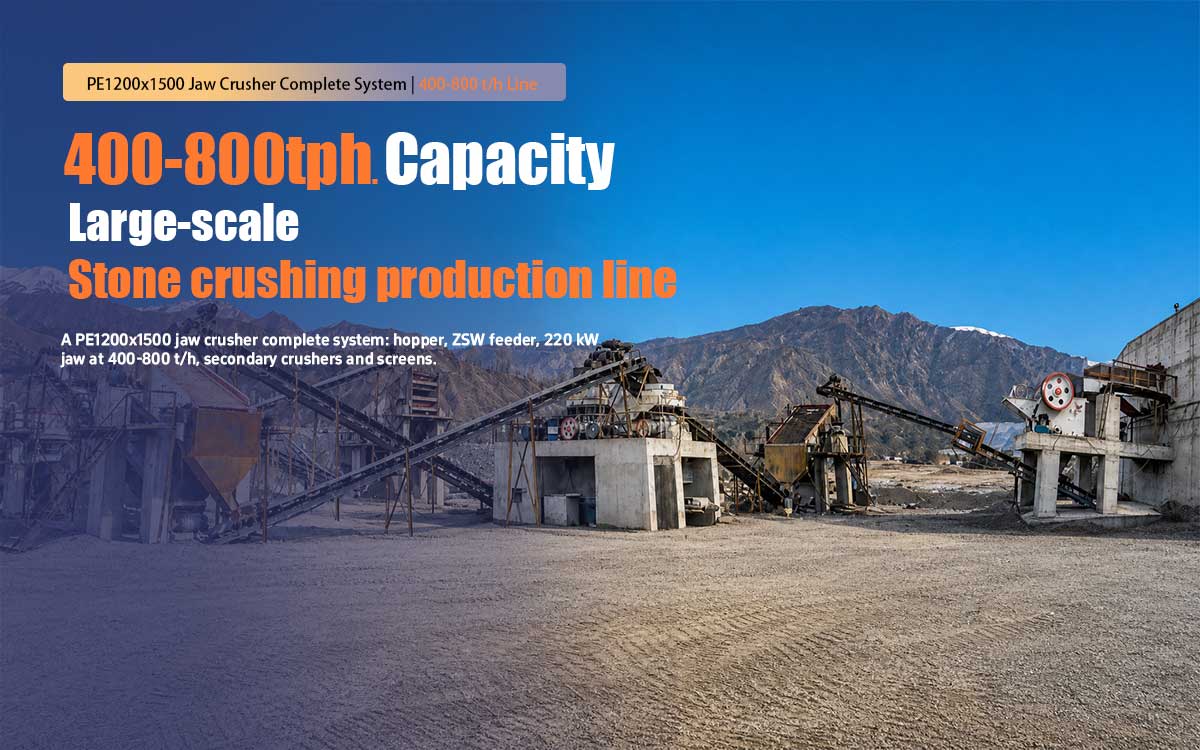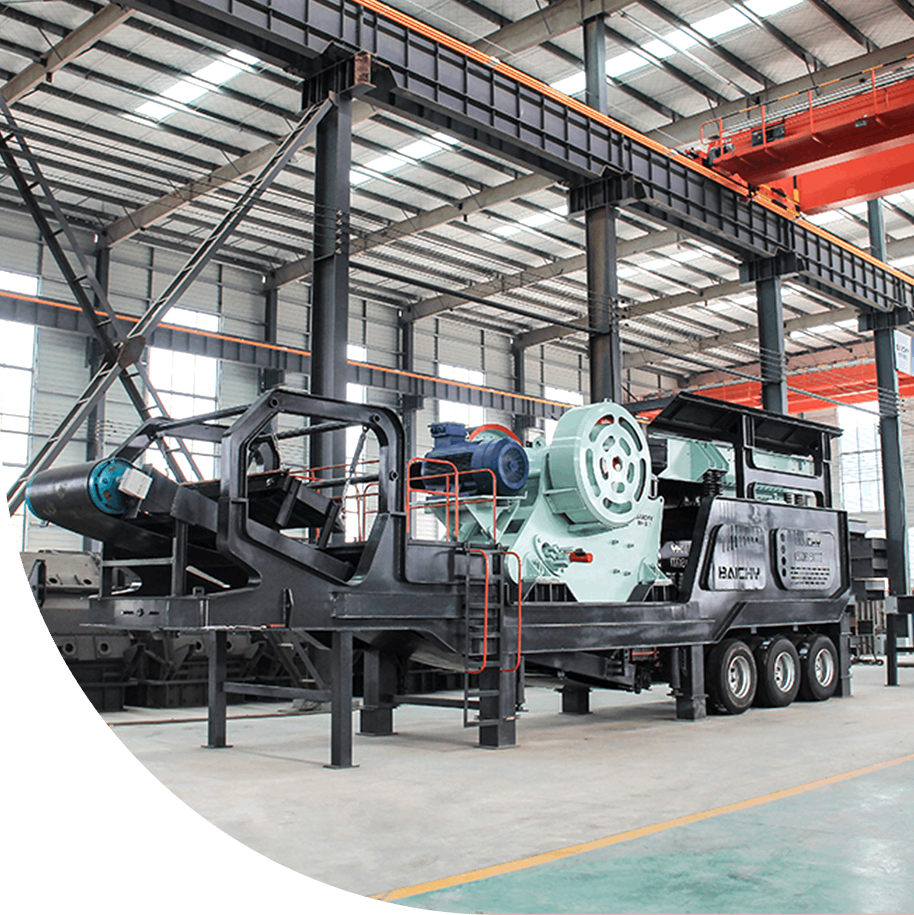

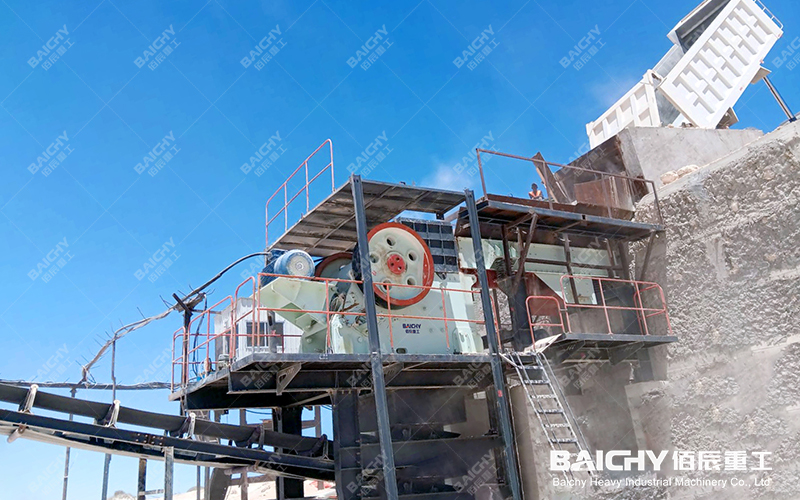
Somalia Jaw Crusher Production Line
Primary crushing is the initial stage of the crushing process, handling the largest, hardest, and most abrasive feed material resulting from mining or blasting operations. Among the four mainstream machine types—jaw crushers, gyratory crushers, impact crushers, and hammer crushers—why is the jaw crusher considered the default choice in the industry? Conversely, under what circumstances is it *not* the optimal solution?
| Primary Crushing Candidates | Suitable Operating Conditions | Conclusion |
| Jaw Crusher (PE/C Series) | Various hard rocks, highly abrasive materials; suitable for almost all primary crushing scenarios | ✅ Universal first choice |
| Gyratory Crusher | Primary crushing for ultra-large mines (3,000 tph class) | ⚠️ Cost-effective only at massive scales |
| Impact Crusher | Medium-soft materials, construction waste recycling | ⚠️ Application-specific |
| Double-Rotor Hammer Crusher | High-volume processing of brittle materials (limestone, coal, etc.) | ⚠️ Application-specific |
| Cone Crusher | -- | ❌ Not a primary crushing machine |
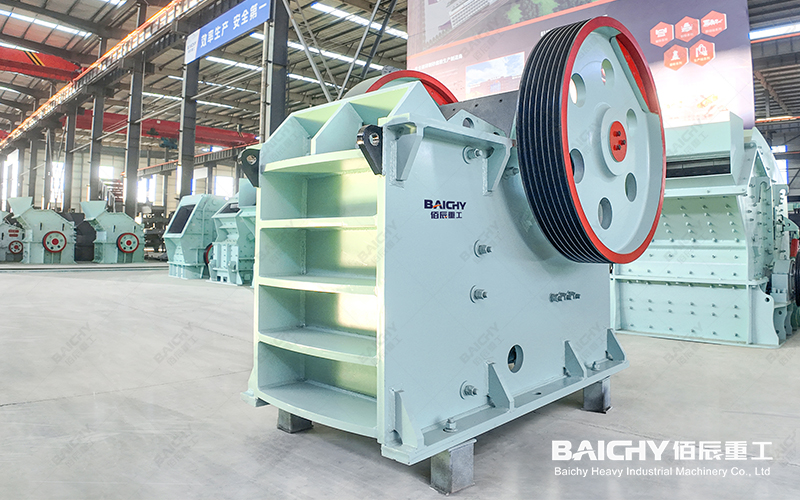
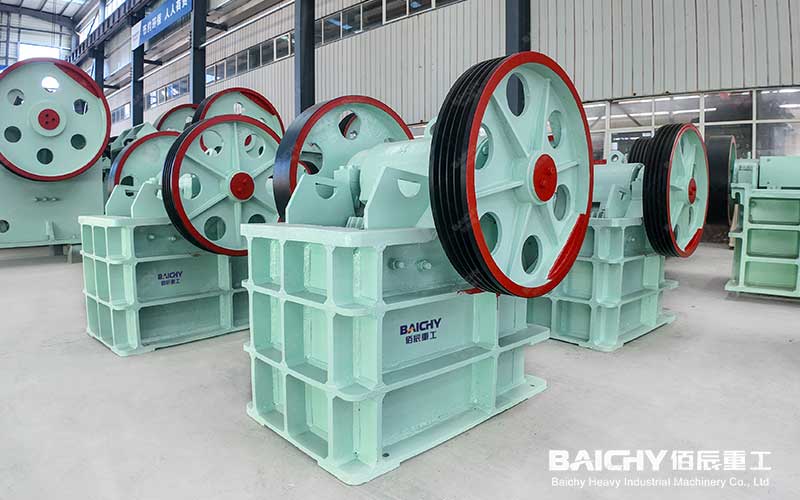
Primary Jaw Crusher
I. Why the Jaw Crusher?
Primary crushers must pass three rigorous tests: handling feed size, managing abrasiveness, and minimizing downtime costs. The jaw crusher is the only machine type that scores highly in all three areas.
1.1 Feed Size—Who Can Handle Rocks Dumped by Mining Trucks?
Feed material for primary crushing typically consists of blasted rock ranging from 300 to 800 mm—or even larger. Jaw crusher feed openings range from 340 mm (PE400×600 model) up to 700 mm (C110 model), allowing direct unloading from feeders or mining trucks without the need for secondary blasting or manual breaking of oversized rocks. In contrast, cone crushers generally have feed openings of only 150–300 mm—far too small to handle primary crushing loads—while impact crushers have an upper limit of around 350 mm and are prone to jamming when encountering oversized rocks.
1.2 Abrasiveness—Which machine's wear parts hold up better against hard rock?
Jaw crushers operate on the principle of compression, crushing material between a moving jaw and a fixed jaw; there is minimal relative sliding between the jaw plates and the material, so the wear mechanism is primarily compression fatigue. When processing highly abrasive materials like granite, basalt, or iron ore, high-manganese steel jaw plates typically last 800–1,500 hours. In contrast, impact crushers break material via high-speed impact, with wear driven by direct erosion; under identical operating conditions, their blow bars last only 300–500 hours—meaning wear parts are consumed 3 to 5 times faster than in jaw crushers. Wear part costs usually account for 30–40% of total crushing operation costs, a factor that directly determines the cost per ton.
1.3 Downtime costs—How long is the production line halted to replace wear parts?
Replacing jaw plates involves opening the frame and loosening wedge blocks—a task a skilled crew can complete in 2–4 hours. Replacing blow bars on an impact crusher requires dismantling rotor guards and impact plates, taking 4–8 hours per instance. For a production line with a 150 tph (tons per hour) capacity, every extra hour of downtime results in a loss of 150 tons of finished product. Based on an annual operating time of 3,000 hours and five wear-part replacements per year, the impact crusher primary crushing setup incurs a loss of dozens of hours of production capacity annually due to replacement downtime alone.
Conclusion: The jaw crusher passes all three tests. This is the fundamental reason it has become the default choice for primary crushing: it is not necessarily the most technologically advanced machine, but it offers the highest tolerance for the challenges of large feed sizes, hard materials, and the need to minimize frequent downtime.
II. The Data Speaks: A 3-Year Cost Comparison of Jaw Crushers vs. Impact Crushers for Hard Rock Primary Crushing
Taking a 150 tph granite production line as an example—using a PE600×900 jaw crusher versus a PF1315 impact crusher for the primary crushing stage—and based on industry benchmarks (3,000 operating hours per year; wear parts accounting for 30–40% of total crushing costs):
| Comparison Dimension | PE600×900 Jaw Crusher | PF1315 Impact Crusher (Hard Rock Primary Crushing) |
| Max. Feed Size (mm) | ≤500 | ≤350 |
| Output Size (mm) | 65–160 | 30–100 |
| Core Wear Part Lifespan | Jaw plates: ~800–1,500 hrs | Blow bars: ~300–500 hrs |
| Annual Wear Part Replacements | 2–4 times | 6–10 times |
| Downtime per Replacement | 2–4 hours | 4–8 hours |
| Annual Downtime Loss | ~8–16 hours | ~24–80 hours |
| 3-Year Combined Cost (Wear Parts + Downtime) | Baseline | ~25–35% higher |
Note: Wear part lifespan is estimated based on granite processing conditions; actual lifespan varies with material abrasiveness. Impact crusher blow bar lifespan is significantly longer when processing medium-soft materials like limestone, drastically narrowing the cost disadvantage in such scenarios.
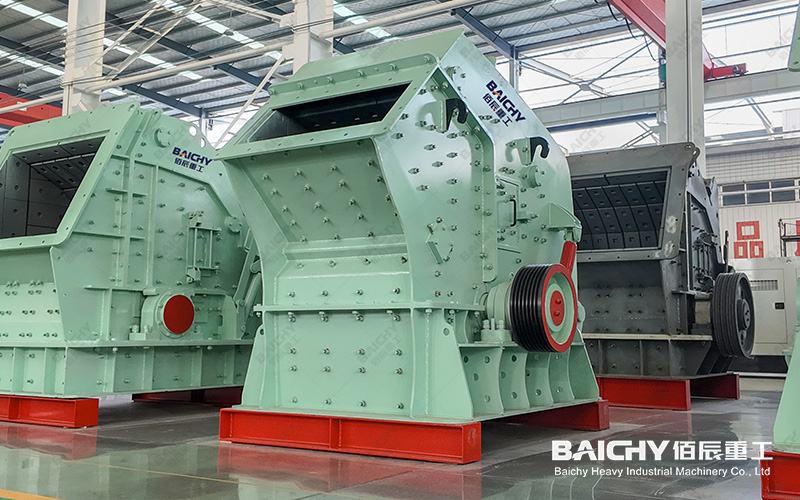
PF Impact Crusher
III. When Should You Not Choose a Jaw Crusher?
The jaw crusher is a versatile solution, but for the following three operating scenarios, consider other options:
3.1 Brittle Materials + High Throughput → 2PC Double-Rotor Hammer Crusher.
Examples include limestone for cement plants or coal for power plants, where feed size is ≤400mm and the requirement is to crush down to ≤25mm in a single stage. A hammer crusher replaces the "jaw crusher + impact crusher" two-stage setup with a single machine, saving on investment, footprint, and power consumption—resulting in a total cost saving of approximately 40%.
3.2 Ultra-large mines (3,000 tph+) → Gyratory crusher.
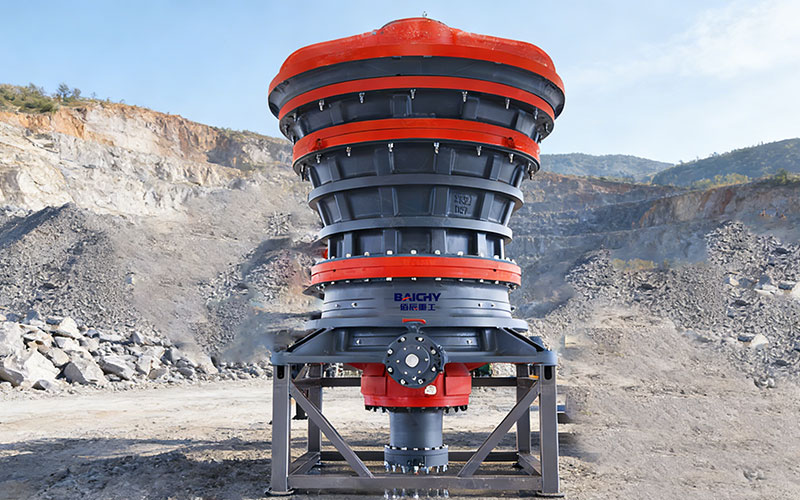
Gyratory Crusher
Offers continuous crushing with no idle return stroke and vastly superior single-unit capacity compared to jaw crushers; ideal for long-life mines with massive output requirements. While the initial investment is 2–3 times that of a jaw crusher, the cost per ton of capacity is actually lower.
3.3 Medium-soft materials + aggregate shape premium → PF Impact Crusher.
For limestone and construction waste recycling lines, cubical particle shape and low flake/elongation content are key. Impact crushers achieve the desired shape in a single pass, commanding a higher market price for the aggregate—a premium that easily offsets the cost of wear parts.
IV. Four Steps to Select the Right Primary Crushing Solution
4.1 Consider material hardness. Hard/abrasive rock (granite, basalt, iron ore, river pebbles) → Jaw crusher; medium-soft material (limestone, gypsum, construction waste) → Impact crusher or hammer crusher; brittle, high-volume material (cement limestone, coal) → Hammer crusher.
4.2 Consider feed size. Measure the maximum incoming lump size; the crusher's feed opening must be at least 20% larger. For sizes ≤500mm, use PE600×900; for ≤630mm, use PE750×1060; for larger sizes, opt for the C-series.
4.3 Consider capacity requirements. Remember that all nominal capacities are rated based on limestone (density: 1.6 t/m³). Apply a multiplier of approx. 0.7–0.8 for iron ore and 0.85–0.9 for hard basalt; the solution is only viable if it meets the target capacity after these adjustments.
4.4 Consider TCO (Total Cost of Ownership), not just purchase price. True cost is the sum of the purchase price, 3 years of wear parts, electricity consumption, and losses due to downtime. The essence of selecting primary crushing equipment is finding the solution with the lowest cost per ton across the entire production line, not simply choosing the cheapest machine.
V. FAQ
Q1: Which crusher is best for primary (coarse) crushing?
A: The standard answer is the jaw crusher. Its compression-based crushing principle is ideal for highly abrasive materials; it offers long jaw plate life, low failure rates, and simple maintenance, making it the top choice for primary crushing of hard rock. Exceptions: Choose a double-rotor hammer crusher for brittle, high-volume materials; a gyratory crusher for massive mining operations exceeding 3,000 tph; and an impact crusher for medium-soft materials where particle shape is a priority.
Q2: Can an impact crusher be used for primary crushing?
A: Yes, but with a condition: the material must be medium-soft (e.g., limestone, gypsum, concrete blocks). When used for primary crushing of hard rock, the blow bar lifespan is only 300–500 hours, and wear part costs are roughly 3–5 times higher than those of a jaw crusher; the total cost of ownership (TCO) over three years is 25–35% higher, so it is not recommended.
Q3: Is a gyratory crusher better than a jaw crusher?
A: In terms of performance, the gyratory crusher offers continuous crushing and a higher maximum capacity. However, the initial investment for the same capacity is about 2–3 times that of a jaw crusher, and maintenance and spare part costs are significantly higher. A gyratory crusher is only cost-effective for ultra-large projects requiring capacities in the 3,000 tph range and a mine lifespan exceeding 10 years.
Q4: Can a cone crusher be used for primary crushing?
A: No. Mainstream cone crushers have feed openings of only 150–300 mm, making them standard equipment for secondary (intermediate) crushing. Placing one in the primary crushing position would likely cause feed jams and shut down the entire production line. Use a jaw crusher for primary crushing and reserve the cone crusher for secondary crushing.
Q5: What is most often overlooked when selecting a primary crusher?
A: Two things. First, nominal capacity ratings are based on limestone density; if the material is heavier, the rating must be adjusted (e.g., multiply by 0.7–0.8 for iron ore). Second, focusing on the purchase price while ignoring TCO—wear parts typically account for 30–40% of total crushing operation costs, representing the bulk of long-term expenses.