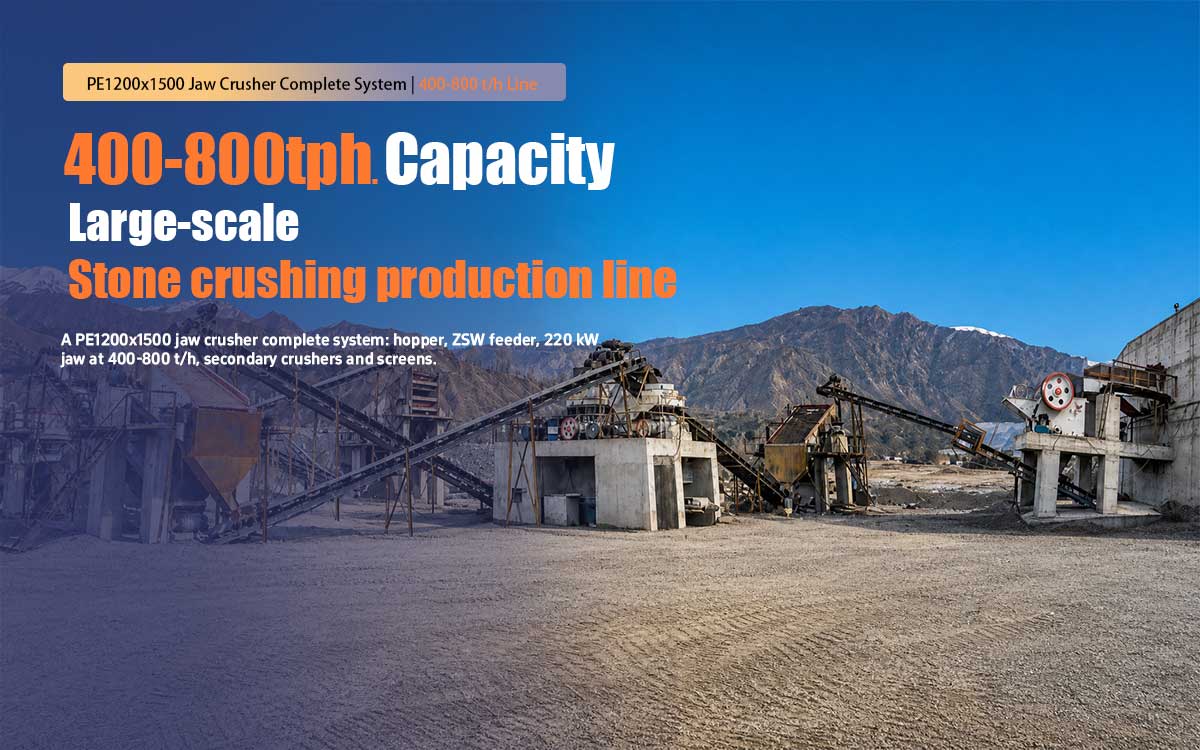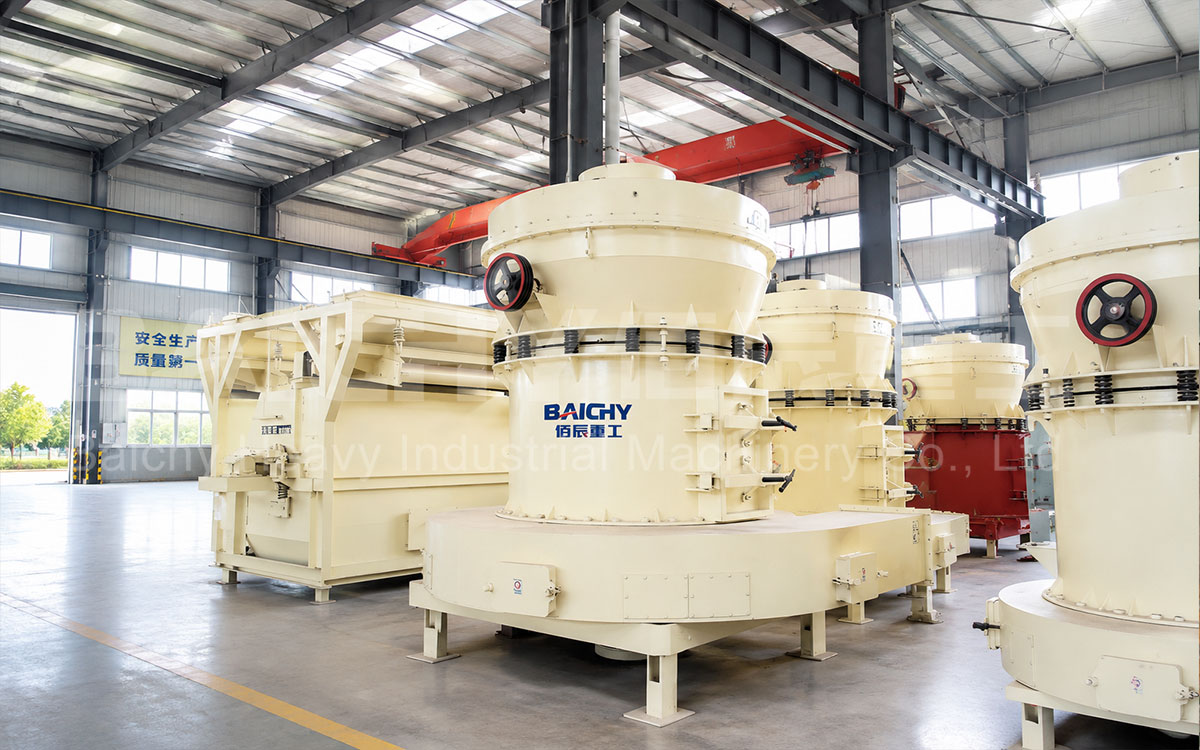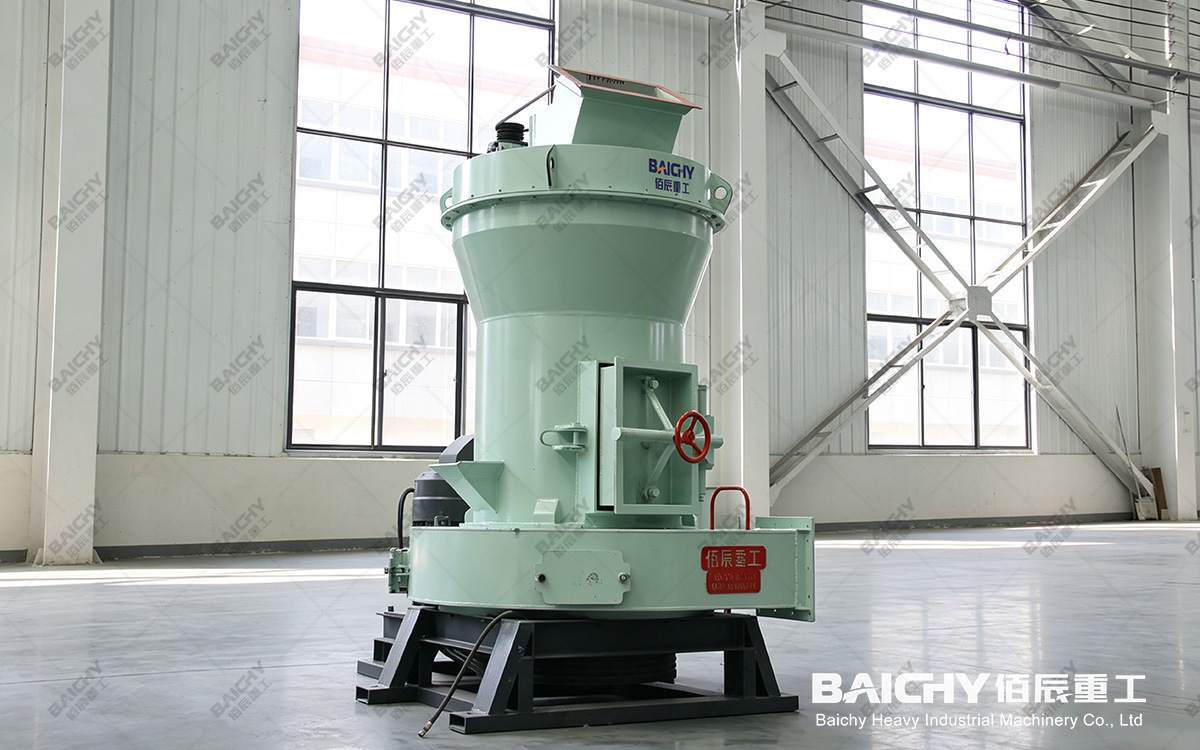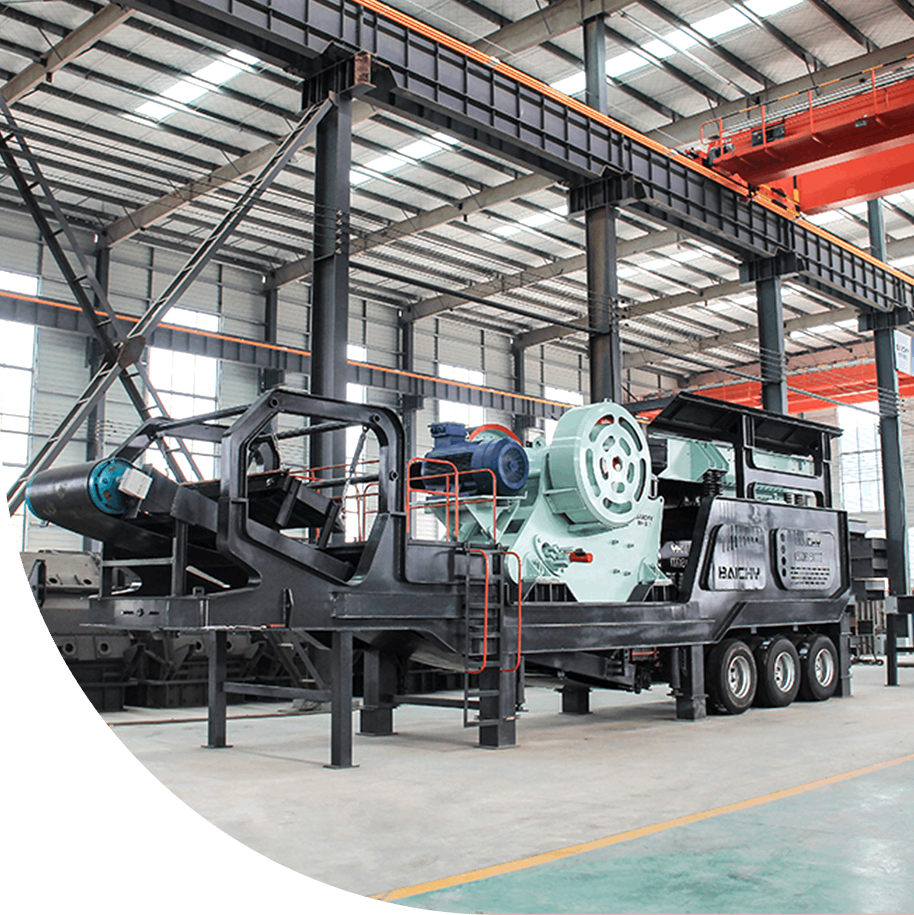

A Zimbabwe gold ore processing plant built by Baichy treats 5–100 t/h of quartz-vein ore or alluvial gravel through gravity, flotation or CIL/CIP circuits. A 5 t/h line starts with a PE400x600 jaw crusher and a Ф1500×3000 ball mill; a 100 t/h line uses HP300 cone crushing with a Ф3200×4500 gold ore ball mill.
How Does a Zimbabwe Gold Ore Processing Line Work?
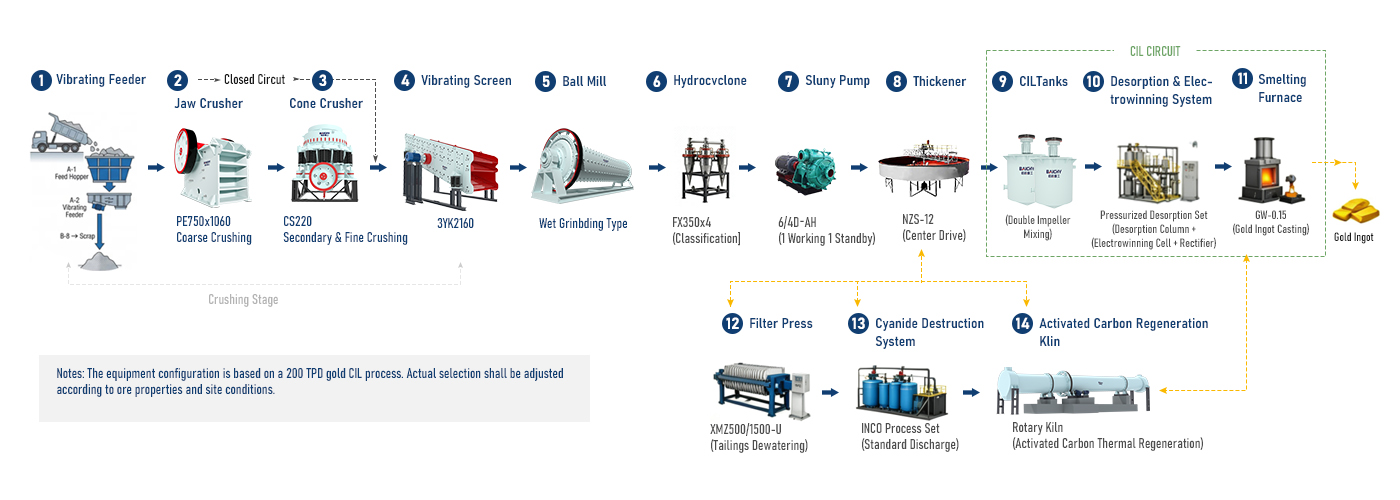
Zimbabwe Gold Ore Processing Plant for Rock and Alluvial Gold
A Zimbabwe gold ore processing line reduces 500–800 mm run-of-mine ore to 20–30 mm, grinds it to 200–400 mesh, then recovers gold by gravity, flotation or cyanidation. Each stage sets the feed size for the next one, so ore hardness propagates through the whole plant.
Stage 1: Crushing to 20–30 mm
The jaw crushers take the primary cut; multi-cylinder hydraulic cone crushers close the circuit behind a vibrating screen. Published Baichy figures put the PE range at 5–1,100 t/h and the HP range at 35–1,200 t/h, so the crushing stage alone can cover a small scale gold processing plant or a 100 t/h line.
Stage 2: Grinding and Classification
The energy saving ball mill grinds the crushed ore to a pulp, and a spiral classifier returns oversize back to the mill in a closed circuit. Cyanidation circuits are typically ground to 200–400 mesh, gravity circuits to 200–325 mesh, because gravity recovery needs a coarser, better-liberated feed.
Stage 3: Recovery — Gravity, Flotation or CIL/CIP
Gravity recovers free gold early and cheaply: a gold gravity separation plant uses a gold concentrator plus shaking tables, and centrifugal units capture particles down to 1–5 μm. A gold CIL/CIP plant dissolves the remaining gold in cyanide and adsorbs it on activated carbon, with recovery often above 90%. Where the gold sits inside sulfides, a gold flotation processing plant floats a concentrate and recovers 85–95% of fine gold.
Stage 4: Dewatering, Doré and Tailings
Flotation concentrate is thickened and filter-pressed to 10–15% moisture before it leaves site. Cyanide-bearing tailings are detoxified before they reach the tailings dam, and process water is recycled to cut fresh-water draw.
Which Machines Make Up a Zimbabwe Gold Ore Processing Line?
The table below gives the published model and capacity range for every stage of a Zimbabwe gold ore processing plant. Model ranges are the manufacturer's published spans, not a quotation — the model you need is fixed by ore hardness, feed size and target tonnage.
Published equipment ranges by process stage
| Process stage | Machine | Published model range | Published capacity | Motor power |
|---|---|---|---|---|
| Primary crushing | PE jaw crusher | PE250×400 – PE1500×1800 | 5–1,100 t/h | 15–280 kW |
| Secondary and tertiary crushing | Multi-cylinder hydraulic cone crusher | HP100 – HP800 | 35–1,200 t/h | 90–630 kW |
| Grinding | Energy saving ball mill | Ф900×1800 – Ф5500×8500 | 0.65–615 t/h | 18.5–4,500 kW |
| Classification | FG spiral classifier | FG500 – FG2000 | 6–230 t/h sand return | 1.1–15 kW |
| Conditioning | XB agitator tank | XB-500 – XB-3500 | 0.098–30 m³ | 1.1–22 kW |
| Gravity roughing | Spiral chute | 5LL-400 – 5LL-1500 | 0.15–8 t/h | Gravity feed, no drive |
| Gravity concentration | Gold concentrator | BC-19 – BC-100 | 0.25–120 t/h | 0.75–18.5 kW |
| Gravity cleaning | Shaking table | Coarse sand, fine sand and slurry beds | 10–60 t/h | 1.1 kW |
| Flotation | SF and XJK flotation cell | SF0.37 – SF4; XJK-0.13 – XJK-2.8 | 0.2–4 m³/min | 1.5–15 kW |
| Concentrate drying | Rotary dryer | Φ600×6000 – Φ3200×25000 | 0.5–53.6 t/h | 3–110 kW |
Table A note: capacity values are the ranges published on the linked Baichy equipment pages and assume a dry, continuously fed circuit. Spiral chute feed density is published at 25–55% solids, and shaking table feed density differs by bed type — 25–30% for the coarse sand bed, 20–25% for fine sand and 15–25% for slurry.
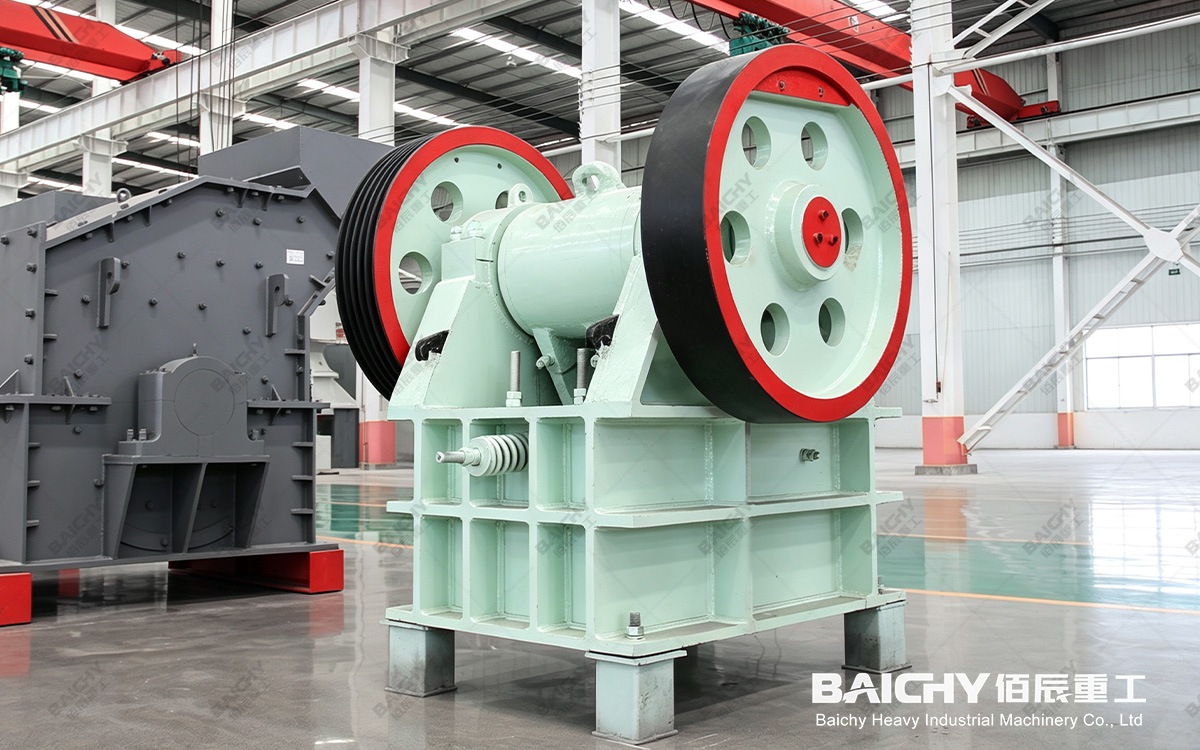
PE400x600 Jaw Crusher
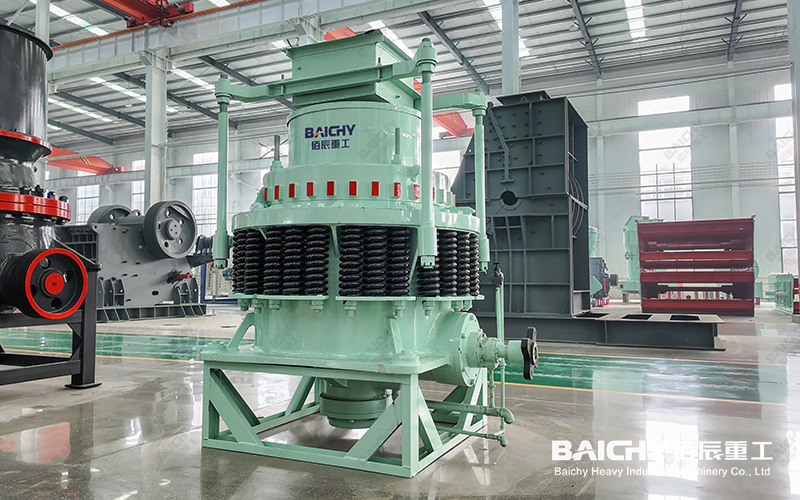
PYB Cone Crusher
CIL/CIP circuit duty list
| No. | Equipment | Duty in the circuit |
|---|---|---|
| 1 | Jaw and cone crushers | Primary and secondary ore crushing |
| 2 | Ball mills | Fine grinding of ore into pulp |
| 3 | Conditioning tanks | Adjust pulp pH and mix cyanide |
| 4 | Leach and adsorption tanks (CIL) | Simultaneous leaching and adsorption |
| 5 | Leach tanks and adsorption tanks (CIP) | Separate leaching and adsorption |
| 6 | Carbon screening equipment | Separate loaded carbon from pulp |
| 7 | Desorption column | Strip gold from loaded carbon |
| 8 | Electrowinning cells | Recover gold from solution |
| 9 | Cyanide destruction systems | Neutralise residual cyanide |
Which Gold Ore Types in Zimbabwe Suit Which Processing Route?
Zimbabwe gold is mined from Archaean greenstone-belt quartz veins and shear zones, and from alluvial gravel in modern and ancient river systems. The route is chosen by where the gold physically sits in the ore, not by the country.
Quartz-vein and shear-zone deposits in the Mutare, Mazowe and Midlands greenstone belts are structurally controlled quartz (±sulfide) reefs, as described in published Geological Survey Department work on the Mutare Greenstone Belt. Alluvial deposits need no crushing at all, because nature has already liberated the gold.
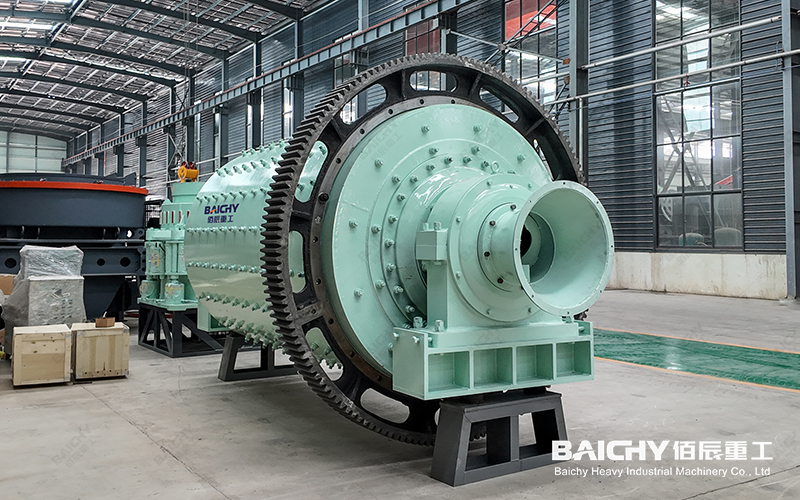
gold ball mill
Ore type, route and key machines
| Ore or deposit type | Gold occurrence | Recommended route | Key machines | Typical scale |
|---|---|---|---|---|
| Quartz-vein, shear-zone hosted hard rock | Free gold, coarse to medium | Gravity plus CIL | Jaw and cone crushers, ball mill, centrifugal concentrator, shaking table, CIL tanks | 5–100 t/h |
| Sulfide-associated ore (pyrite, arsenopyrite) | Gold locked inside sulfides | Flotation, pre-treatment, then cyanidation | Ball mill, SF or XJK flotation cells, thickener, filter press | 5–100 t/h |
| Alluvial and placer gravel | Free gold flakes, already liberated | Gravity only | Trommel screen, spiral chute, shaking table, gold pan mill | 5–50 t/h |
| Magnetite-bearing or iron-rich ore | Gold with magnetite | Gravity, magnetic separation, then CIL | CTB magnetic separator, gold concentrator, ball mill | 5–100 t/h |
| Refractory ore with submicroscopic gold | Gold encapsulated in sulfides | Flotation, then roasting or bio-oxidation, then cyanidation | Flotation cell, thickener, filter press | 5–100 t/h |
Refractory ore is the case where a gravity-only alluvial gold processing plant will not work: the gold is too finely locked to liberate by density alone. Test the ore before you commit to a route.
How Do You Size Each Stage to Your Target Capacity?
Size the grinding circuit first, because the mill sets the tonnage ceiling for the whole plant, then work outward to crushing and recovery. Zimbabwe's 2024 gold deliveries show why the middle of the range matters: small-scale producers delivered 23.7 t of the 36.5 t total, so most operators are sizing small scale gold processing plant equipment rather than 500 t/h circuits.
Worked sizing references
| Target output | Feed size | Primary crushing | Secondary crushing | Grinding | Gravity recovery |
|---|---|---|---|---|---|
| 5 t/h | ≤320 mm | PE400×600 jaw, 15–60 t/h, 30 kW | Not required for alluvial gravel; PE250×400 jaw for hard rock, 5–20 t/h, 15 kW | Φ1500×3000 ball mill, 2–5 t/h, 75 kW | BC-60 concentrator, 10–15 t/h, 5.5 kW |
| 20 t/h | ≤480 mm | PE600×900 jaw, 90–180 t/h, 55 kW | HP100 cone, 35–140 t/h, 90 kW | Φ2100×3000 ball mill, 6.5–36 t/h, 210 kW | BC-80 concentrator, 35–40 t/h, 11 kW |
| 50 t/h | ≤600 mm | PE750×1060 jaw, 110–380 t/h, 110 kW | HP200 cone, 81–250 t/h, 160 kW | Φ2700×4500 ball mill, 26–90 t/h, 480 kW | Shaking table, coarse sand bed, 30–60 t/h, 1.1 kW |
| 100 t/h | ≤720 mm | PE900×1200 jaw, 220–450 t/h, 132 kW | HP300 cone, 110–445 t/h, 220 kW | Φ3200×4500 ball mill, 95–110 t/h, 630 kW | Shaking table plus BC-100 concentrator, 80–120 t/h, 18.5 kW |
Three checks decide the final model. First, feed size should stay under 80% of the feed opening — the feed sizes in Table D come from applying that rule to the published feed openings of 400, 600, 750 and 900 mm, and the cone capacities are the span across each model's published cavity types rather than one cavity. Second, the mill's published capacity range must bracket your target at the fineness you actually need, because the same mill does 2–5 t/h at one grind and less at a finer grind. Third, confirm the site transformer capacity before motor ratings are fixed.
Zimbabwe Site Conditions: Power Supply, Water and Tailings
Grid reliability is the single biggest design constraint for a Zimbabwe gold ore processing plant. Zimbabwe's generation capacity is too small to meet industrial demand and load shedding is used on a routine basis, with the Zimbabwean share of Kariba South at about 750 MW and Hwange at about 920 MW of theoretical capacity.
Practical consequences for equipment selection:
Specify motors and starters for a plant that will stop and restart often, and confirm the site transformer rating before locking motor sizes.
Size any standby generator for the connected motor load of the whole line, not just the mill.
Budget the water circuit early: a closed grinding-classification loop and a tailings water-recycling system cut fresh-water draw, which matters in dry seasons.
Plan cyanide detoxification and tailings storage from the start — cyanide and heavy metals in tailings must be treated before the slurry reaches the dam.
FAQ: Zimbabwe Gold Ore Processing Plant
1. What gold grade does a Zimbabwe gold ore processing plant need to be profitable?
Ore grade is measured in grams per tonne. As a working reference, an open-pit hard rock operation can be profitable at 1–2 g/t when the plant is large, while underground operations generally need 5–8 g/t because extraction costs are higher.
Profitability also depends on the gold price and on how easily the gold liberates from your specific rock, so confirm the grade with a metallurgical test before selecting equipment.
2. How much does a 5 t/h gold processing plant cost in Zimbabwe?
There is no single figure, because cost tracks capacity, ore hardness and the chosen route. Published guidance from Baichy puts a small gravity plant in the low hundreds of thousands of US dollars and a full CIP facility in the tens of millions. A 5 t/h line built around a PE400x600 jaw crusher and a Ф1500×3000 ball mill sits at the low end, and the motors alone account for 105 kW (30 kW plus 75 kW).
3. What is the difference between a CIL and a CIP gold plant?
In CIL, carbon is added directly to the leach tanks, so dissolving and adsorbing happen in the same tanks. In CIP, leaching happens first in dedicated tanks and the pulp then moves to separate adsorption tanks. CIL needs fewer tanks and suits ore that naturally contains carbon, while CIP is more flexible when ore grade fluctuates. Both are cyanidation routes with recovery often above 90%.
4. Can a gold processing plant in Zimbabwe run without cyanide?
Yes, on free-milling ore. A gravity-only circuit uses water and vibration, with no cyanide or mercury: centrifugal concentrators capture particles down to 1–5 μm, and shaking tables clean the concentrate. This suits alluvial gravel and coarse quartz-vein gold. It does not work when gold is submicroscopic or locked inside sulfides, where flotation or cyanidation is required instead.
5. How much power does the line draw, and how do I allow for load shedding?
Motor ratings come straight from the published tables: a 5 t/h line's two main drives are a 30 kW jaw crusher and a 75 kW gold ore ball mill. Add auxiliary loads for feeders, conveyors, classifiers and pumps on top of that. Because load shedding is routine on the Zimbabwe grid, size standby generation for the full connected motor load and simplify restart sequences.
Baichy Heavy Industry
Baichy Heavy Industry is a high-tech mining equipment company integrating R&D, manufacturing, sales, and after-sales service. Focusing on crushing, grinding, and mineral processing equipment, we provide professional solutions to our customers. We are ISO9001:2015 、certified, and our products include mobile crushing palnts, crawler crushing plant, construction waste crushing plants, jaw crushers, sand making machines, cone crushers, fine crushers, grinding mills, ball mills, etc., all with reliable performance to meet diverse project needs.
Baichy Heavy Industry – Your Trusted Partner
To ensure optimal performance of your equipment, Baichy Heavy Industry offers:
- Professional on-site installation guidance
- Comprehensive operator training
- 24/7 technical support & maintenance services
Our complete after-sales service system guarantees long-term, stable operation of your machinery with minimal downtime.
Protect Your Rights – Only Use Official Channels
To avoid scams and ensure authentic support, contact us exclusively through:
• Official Website: www.baichychina.com
• WhatsApp: +8615093222637
• Email: [email protected]
Your satisfaction is our priority – expect prompt, professional service every time.
(Note: Beware of unauthorized third parties claiming to represent Baichy. Always verify through official contacts.)