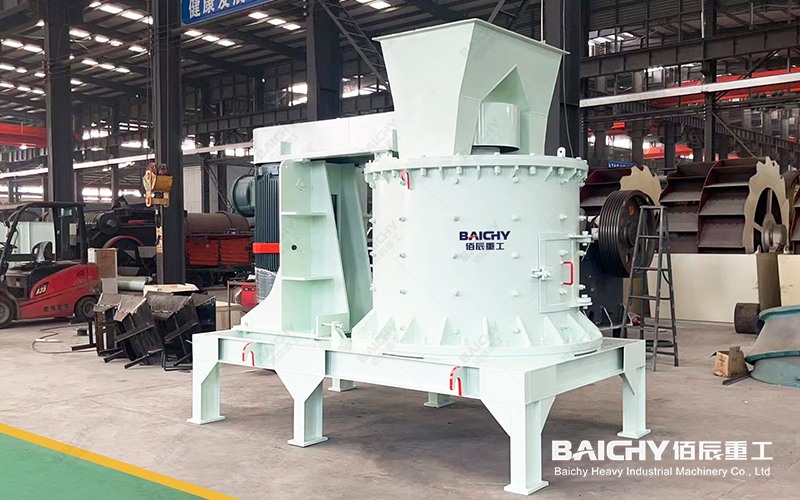
Vertical Compound Crusher
The Vertical Compound Crusher (PFL Series) offers a "one-machine-replaces-two-stages" solution for the fine crushing of low-to-medium hardness materials—such as limestone, gypsum, coal gangue, shale, slag, and cement clinker. With a feed size of ≤80mm, it produces a 0–5mm output (with ≥80% of the product falling within this range) in a single pass, thereby eliminating the need for a secondary crusher, a conveyor belt, an intermediate hopper, and the associated civil engineering work.
I. Pain Point Analysis: The hidden costs of two-stage crushing are higher than they appear
1. Process Redundancy: A two-stage setup (e.g., jaw crusher followed by impact or hammer crusher) involves extra equipment, conveyors, and hoppers, leading to additional civil engineering requirements, maintenance needs, and potential points of failure.
2. Over-crushing and Material Recirculation: Hammer crushers rely on grate bars to control particle size, but wet, sticky material often clogs the bars, causing frequent downtime; impact crushers produce inconsistent fine-powder rates, and the screening/recirculation system consumes capacity and electricity.
3. Footprint and Foundations: Horizontal impact crushers require a large footprint and deep foundations; the resulting lengthy civil engineering phase delays the start of production—representing a direct capital-tie-up cost for projects aiming for rapid commissioning.
II. Core Specifications (Typical PFL Series Configurations)
| Model | Feed Size | Output Size | Capacity | Power |
| PFL-800 | ≤50mm | ≤5mm (0–5mm ≥80%) | 10–20 t/h | 37–45 kW |
| PFL-1000 | ≤60mm | ≤5mm | 20–40 t/h | 55–75 kW |
| PFL-1250 | ≤80mm | ≤5mm | 30–60 t/h | 90–110 kW |
| PFL-1500 | ≤100mm | ≤8mm | 60–100 t/h | 132–160 kW |
| PFL-1750 | ≤120mm | ≤8mm | 100–150 t/h | 185–220 kW |
| PFL-2000 | ≤150mm | ≤10mm | 150–250 t/h | 250–315 kW |
Note: Capacities are rated based on limestone (1.6 t/m³); for lightweight materials like coal gangue and shale, apply a conversion factor of 0.8–1.0; for slag, apply 0.7–0.85. The table above reflects typical industry configurations; specific parameters should be based on the latest selection data from the Technical Department.
III. Working Principle (Combined Impact and Counter-attack Crushing; Single-pass Shaping)
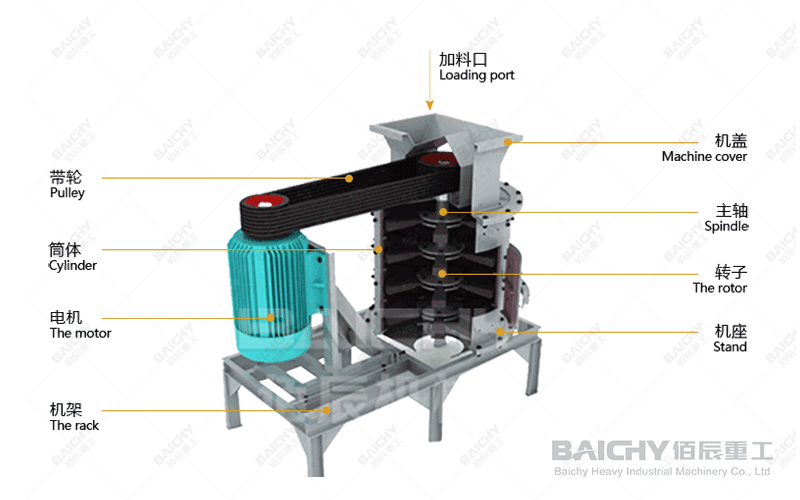
Structural diagram of a vertical compound crusher
Output size is controlled by rotor speed and liner clearance—there are no bottom grate bars. This is the fundamental difference between a compound crusher and a hammer crusher, and the structural reason why the machine does not clog when processing wet or sticky materials.
IV. Selection Recommendations and Pitfalls to Avoid
1. Consider Hardness Limits: Suitable only for low-to-medium hardness materials with a compressive strength of ≤150 MPa (e.g., limestone, gypsum, coal gangue, shale, furnace slag, cement clinker, phosphogypsum). Hard rocks such as granite, basalt, and quartzite are unsuitable; please select a combination of a jaw crusher and a cone crusher instead.
2. Check feed compatibility: Feed particle size must be ≤ the selected model's upper limit (50–150mm); oversized chunks can damage the rotor. A jaw crusher or grizzly screen is required upstream to control feed size.
3. Check moisture content: ≤12% allows for normal continuous operation; >15% requires upstream pre-drying or an alternative process to prevent material adhesion from reducing throughput.
4. Check abrasiveness: For highly abrasive materials (e.g., high-silica limestone), choose a configuration with high-chromium alloy hammers and wear-resistant liners; do not sacrifice equipment lifespan to save on initial purchase costs.
5. Implement iron protection: Install an iron remover (permanent magnet or electromagnetic) upstream. Metal contaminants entering the rotor zone can directly damage hammers and liners—this is the most common cause of accidents on-site.
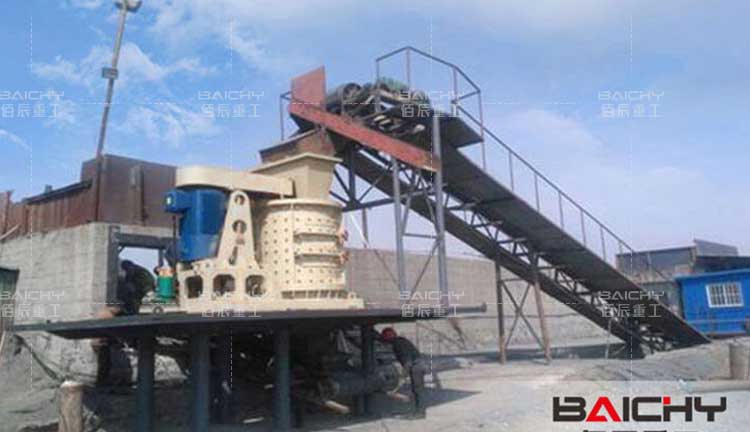
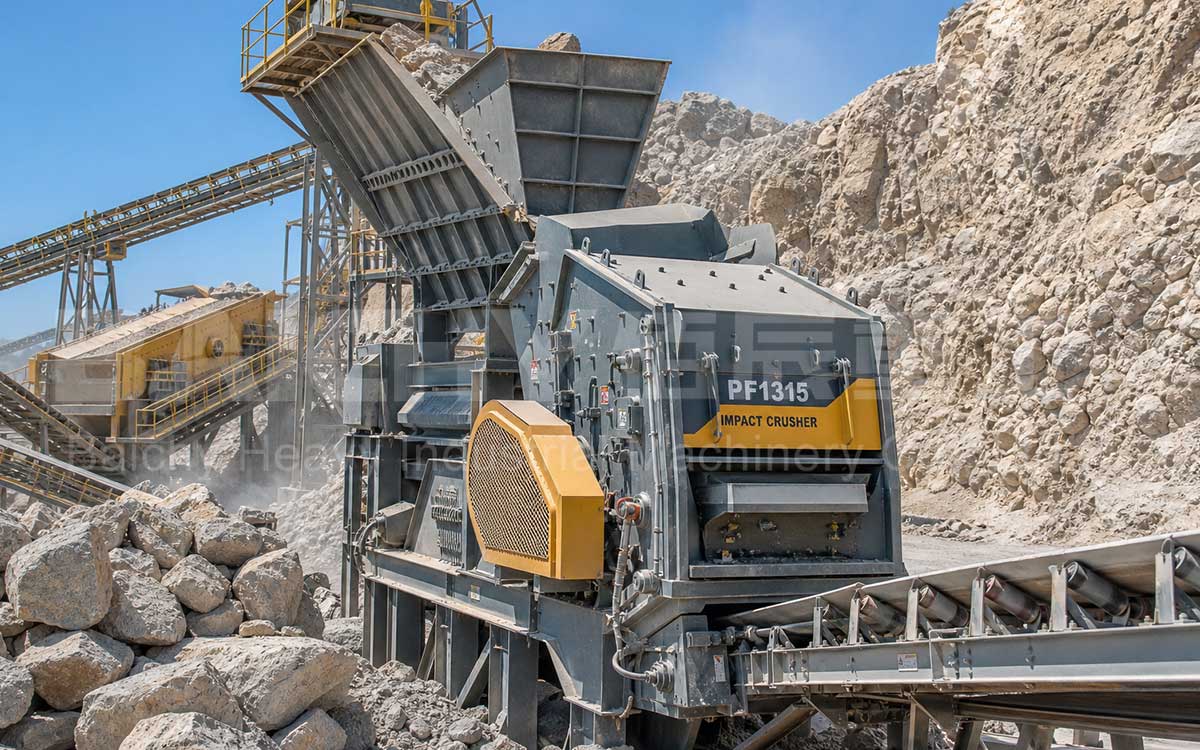
On-site crushing with a vertical compound crusher
V. FAQ
Q1: What is the difference between a vertical compound crusher and a hammer crusher?
A: The core difference lies in the discharge method. Hammer crushers rely on bottom grate bars to control particle size; wet, sticky material tends to clog the grates, leading to frequent shutdowns for clearing. Compound crushers have no grate bars; they rely on the rotor and impact liners for cyclic impact and single-pass shaping. They do not clog with wet material, and their vertical structure offers a smaller footprint, shallower foundation requirements, and faster installation.
Q2: Can it crush hard rocks like granite or basalt?
A: No. Compound crushers are suitable for materials of low to medium hardness with a compressive strength of ≤150 MPa. For hard rocks like granite and basalt, a combination of a jaw crusher and a cone crusher should be used.
Q3: What is the discharge particle size? Can it really achieve shaping in a single pass?
A: With standard configuration, the 0–5mm fraction accounts for ≥80% of the output (0–8mm or 0–10mm for larger models). When the feed size is ≤80mm, secondary crushing is unnecessary; the finished product can go directly to milling, brick making, or sand making processes—this is the basis for the "one machine replaces two stages" capability.
Q4: Will wet or sticky materials clog the machine?
A: No. The grate-free design structurally eliminates screen clogging, enabling continuous, trouble-free operation with materials like limestone and coal gangue—even with moisture content up to 12%—which is a key advantage of the compound crusher during rainy seasons.
Q5: How do I select the right model? What is the turnaround time for a quote?
A: The model can be determined based on four parameters: material hardness, feed size, target production capacity, and moisture content. For standard inquiries, we provide a technical specification confirmation, an FOB/CIF quote, and a production line layout within 48 hours.