
In fields such as mining, aggregate production, and construction waste processing, stone crushers serve as the heart of the production line. Different types of crushing equipment are designed to address specific material characteristics, feed sizes, and finished product requirements. As a professional manufacturer of mining crushing and beneficiation equipment, we fully understand that selecting the right crusher is critical to the success and profitability of any project. This article provides a systematic overview of the major types of stone crushers available, helping you make an informed decision.
I. Overview: Basic Principles and Stages of Crushing
Stone crushing is a multi-stage process designed to reduce large blocks of raw ore or rock to a desired size. It is typically Pided into three stages:
1. Primary Crushing Stage: Processes large blocks of raw ore; the output size typically ranges from 150 mm to 350 mm.
2. Secondary Crushing Stage: Further crushes the material processed in the primary stage; the output size typically ranges from 20 mm to 100 mm.
3. Tertiary Crushing and Sand Making Stage: Produces the final high-quality aggregates or manufactured sand; the output size is typically below 5 mm.
Each stage utilizes specific crushing equipment best suited to that phase, ensuring maximum efficiency and optimal product shape.
II. Detailed Analysis of Mainstream Stone Crusher Types
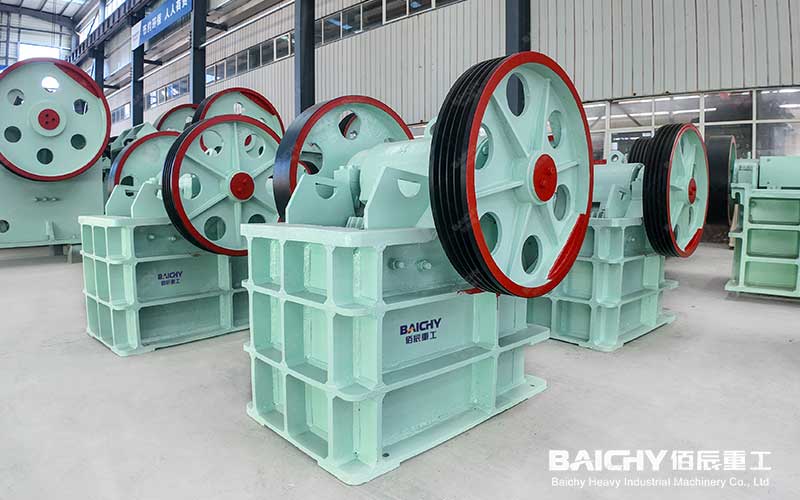
1. Jaw Crusher
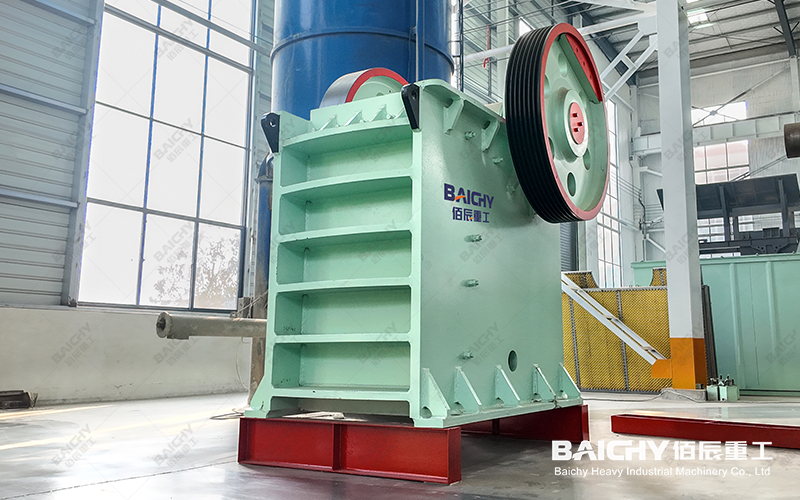
Jaw Crusher
• Overview: As the most classic and versatile type of stone crusher, it breaks down materials through a compressive action generated between a "moving jaw" and a "fixed jaw."
• Applications: It is the preferred choice for the primary crushing stage in almost all production lines. It is suitable for various hard and medium-hard materials with a compressive strength not exceeding 320 MPa—such as granite, basalt, river pebbles, and more.
• Advantages: Simple structure, reliable operation, easy maintenance, strong adaptability, and a large feed opening.
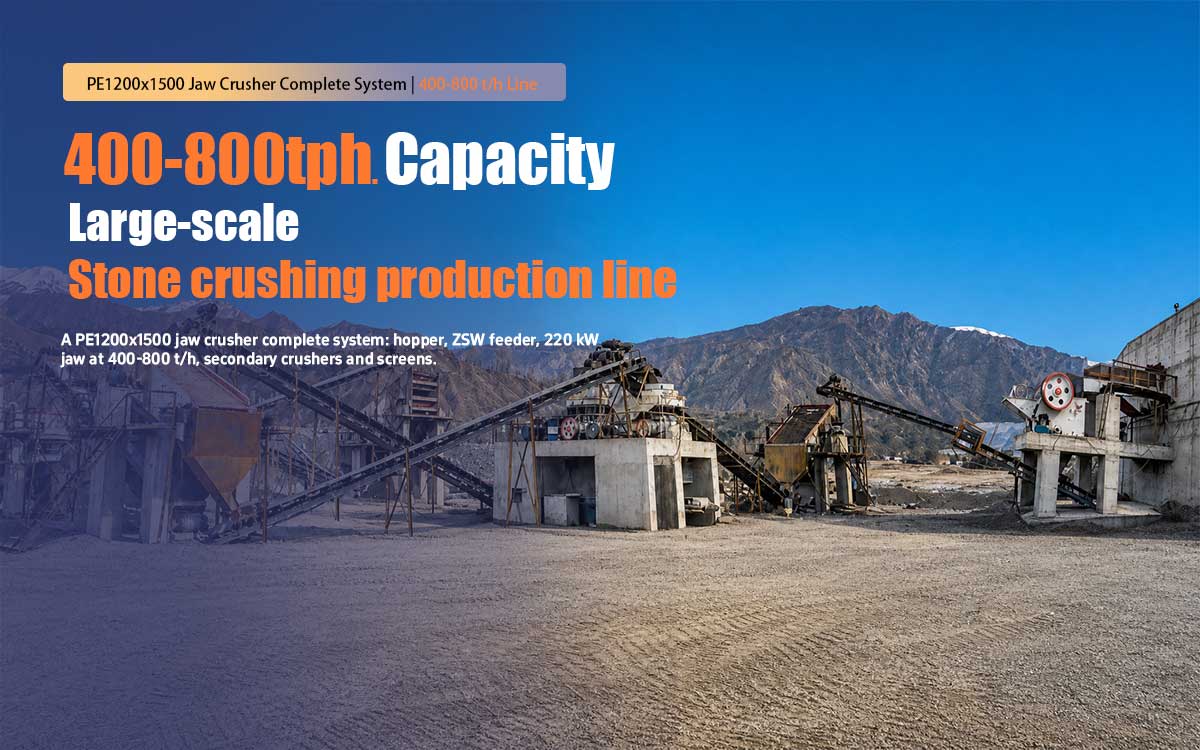
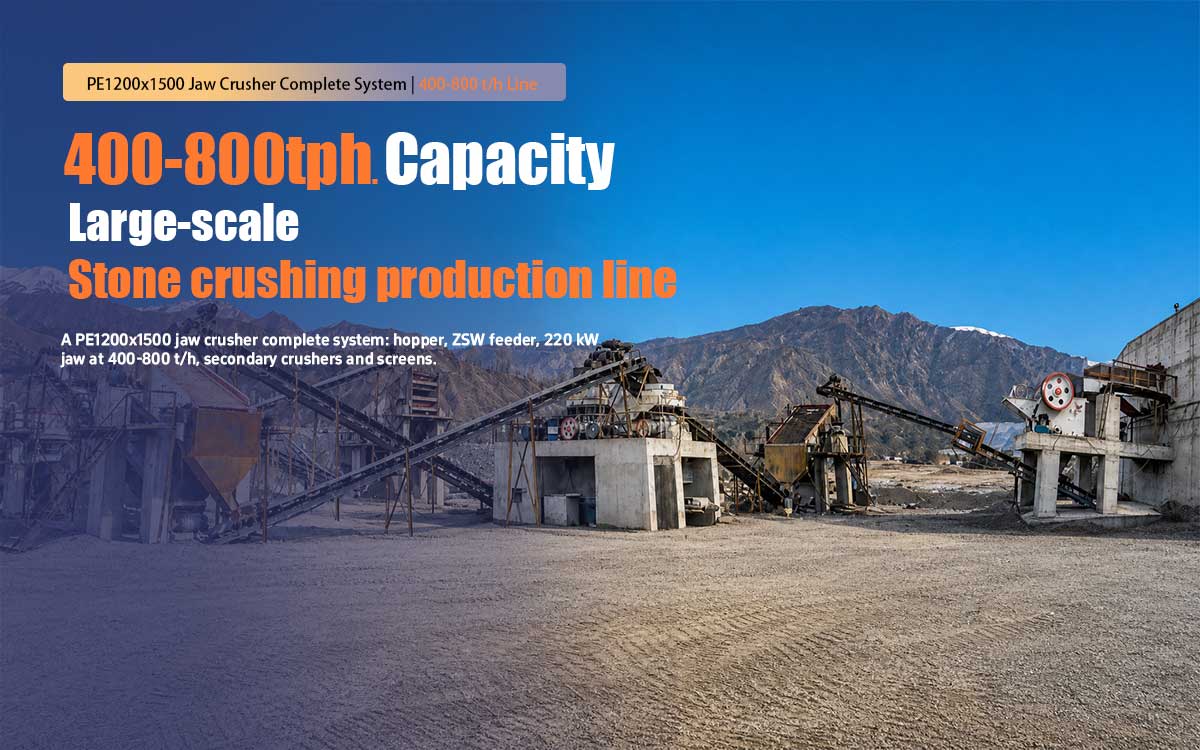
• Typical Case Study: At a large-scale granite quarry, a PE1200×1500 jaw crusher was deployed as the primary crusher. With a processing capacity of 800–1000 tons per hour, it provided a stable and consistent feed supply for the subsequent secondary and tertiary crushing stages.
2. Cone Crusher
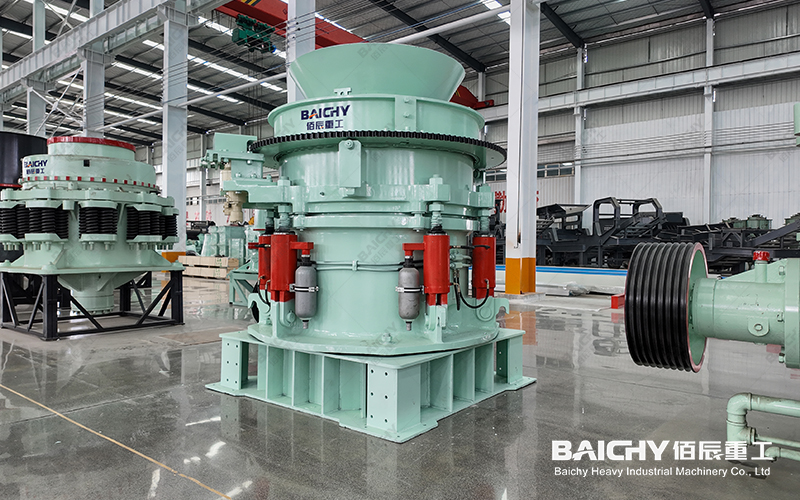
Hydraulic Cone Crusher
• Overview: Employs the principle of laminated crushing, wherein a moving cone rotates eccentrically within a stationary cone, subjecting the material to continuous compression, fracturing, and impact.
• Applications: Primarily utilized for the secondary and tertiary (fine) crushing stages of high-hardness materials (such as granite, diabase, and pebbles). It is also frequently used in applications where strict requirements exist regarding the shape of the final product particles.
• Advantages: High crushing efficiency, low energy consumption, long service life for wear parts, uniform product particle size, and stable operation.
• Typical Case Study: In an aggregate production project for a high-speed railway construction site, a multi-cylinder hydraulic cone crusher was deployed for secondary crushing. This ensured that the finished aggregates possessed a high cubic content and a low flakiness/elongation ratio, thereby meeting the stringent aggregate quality standards required for high-speed railway construction.
3. Impact Crusher
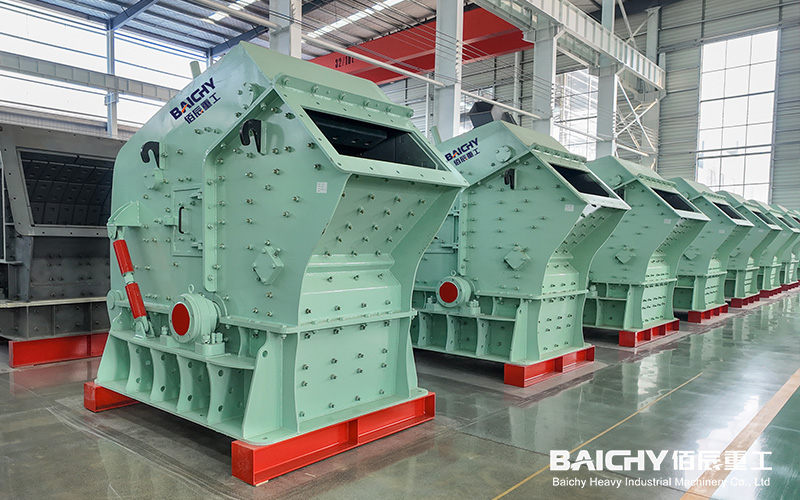
Impact Crusher
• Overview: Utilizes a high-speed rotating rotor to impact the material, causing it to fracture either by striking against impact plates or through inter-particle collision.
• Applications: Suitable for the secondary and tertiary crushing of medium-hardness (or softer) and low-abrasion materials (such as limestone, dolomite, and concrete blocks). It performs exceptionally well in the recycling and resource utilization of construction waste.
• Advantages: Produces aggregates with excellent cubic particle shape; offers a wide adjustable range for discharge particle size; and involves relatively lower equipment investment costs.
• Typical Case Study: At a construction waste processing facility, a heavy-duty impact crusher was used to process demolished concrete blocks, producing high-quality recycled aggregates suitable for use as road base layers.
4. Vertical Shaft Impact Crusher (Sand Making Machine)
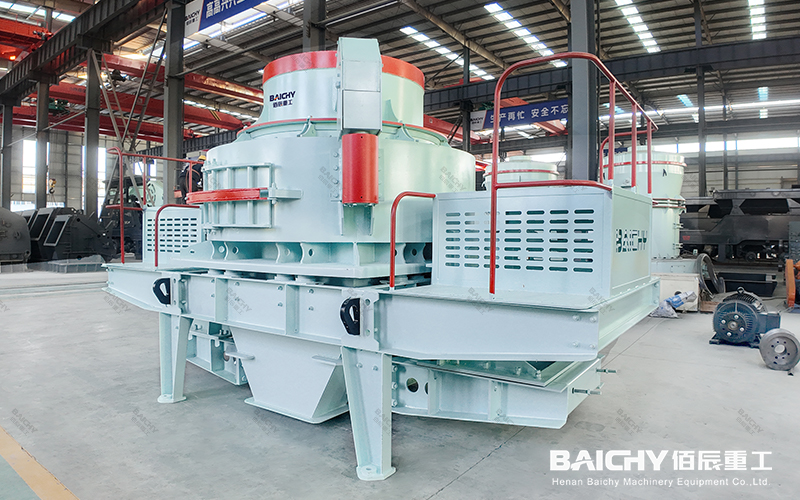
Sand Making Machine
• Overview: Operates based on the "stone-on-stone" or "stone-on-iron" principle, in which material is thrown at high velocity to impact either naturally falling material or wear-resistant liners, resulting in fracture.
• Applications: Specifically designed for sand production and aggregate shaping. It is used to produce high-quality manufactured sand or to shape existing aggregates to improve their particle morphology.
• Advantages: Produces manufactured sand with a rational gradation curve, rounded particle shape, and an adjustable fineness modulus, making it an ideal substitute for natural sand.
• Typical Case: A sand-making project supporting a large-scale commercial concrete batching plant utilized VSI6X impact crushers for sand production; the particle size and gradation of the finished sand fully met the standards for high-performance concrete aggregates.
5. Hammer Crusher
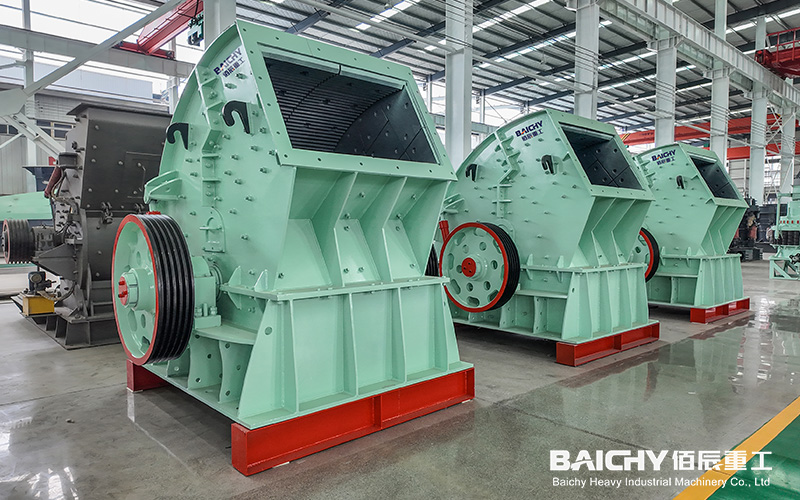
Hammer Crusher
• Overview: Crushes materials through impact force generated by hammerheads hinged to a rotor.
• Application Scenarios: Suitable for the one-step crushing (single-stage crushing) of brittle materials with a compressive strength of less than 100 MPa and low abrasiveness (e.g., limestone, gypsum, coal).
• Advantages: High crushing ratio, high output, capable of producing qualified finished products in a single pass, and features a simple process flow.
• Typical Case: The limestone crushing workshop at a cement plant employed a single-stage hammer crusher to reduce limestone with a particle size of ≤800 mm down to ≤25 mm in a single pass, feeding it directly into the subsequent processing stage.
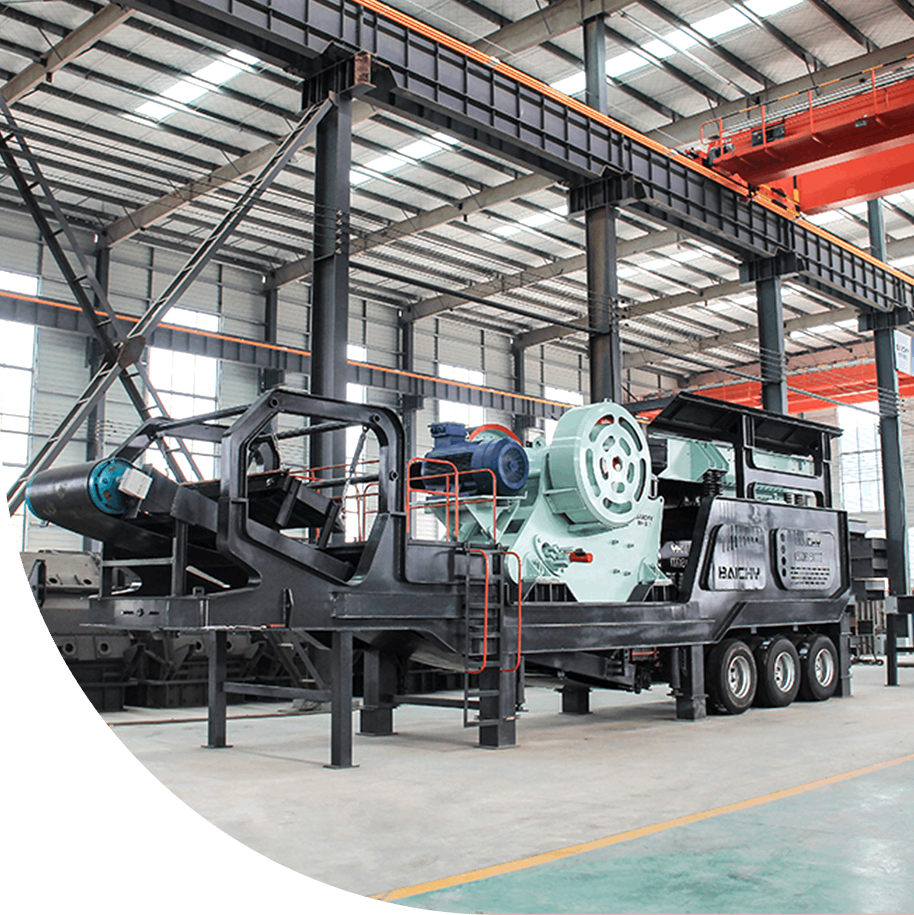
6. Mobile Crushing Station
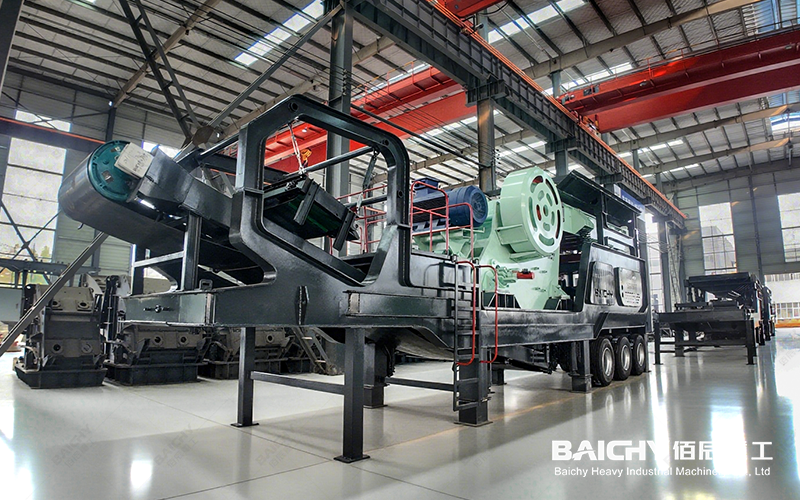
Mobile Jaw Crusher
• Overview: Integrates equipment for feeding, crushing, screening, and conveying onto a wheeled or tracked chassis, creating a fully mobile crushing production line.
• Application Scenarios: Ideal for working environments characterized by confined spaces, dispersed project sites, or the need for frequent relocation—such as urban construction waste processing, small-scale quarries, and road and bridge construction projects.
• Advantages: Highly mobile and flexible, allows for rapid site relocation, requires no fixed foundation piling, enables quick startup of production, and reduces material transportation costs.
• Typical Case: An urban ring road renovation project utilized a wheeled mobile impact crushing unit; by moving flexibly between multiple construction points to process construction waste on-site, the project achieved highly efficient and environmentally friendly construction operations.
III. Reference Table: Comparison of Core Equipment Parameters
The table below presents a comparison of key parameters for several mainstream stone crushers, serving as a reference guide for equipment selection.
| Equipment Type | Typical Feed Size (mm) | Typical Discharge Size (mm) | Compressive Strength Range | Primary Crushing Stage |
| Jaw Crusher | ≤1200 | 150–350 | ≤320 MPa | Coarse Crushing |
| Multi-cylinder Hydraulic Cone Crusher | ≤300 | 10–60 | ≤350 MPa | Medium & Fine Crushing |
| Impact Crusher | ≤800 | 10–50 | ≤350 MPa | Medium & Fine Crushing |
| VSI Sand Making Machine | ≤60 | 0–5 (Sand Making) | ≤360 MPa | Fine Crushing & Sand Making |
| Hammer Crusher | ≤800 | ≤25 | ≤100 MPa | Single-stage Crushing |
| Mobile Crushing Station | Varies by Main Unit | Varies by Main Unit | Varies by Main Unit | All Stages |
IV. High-Performance Crushing Equipment Recommended for You
Based on the analysis above, we recommend the following market-proven, high-performance crushing equipment:
1. C-Series Jaw Crusher: Features a deeper crushing chamber and optimized motion parameters, delivering higher throughput and lower wear rates; it serves as a reliable cornerstone for coarse crushing operations.
2. HP Multi-cylinder Hydraulic Cone Crusher: Offers fully hydraulic operation and a high degree of automation; its laminated crushing principle ensures excellent product shape and output, making it particularly suitable for the fine crushing of high-hardness materials.
3. VSI-Series Sand Making Machine: Features a deep-cavity impeller design that boosts throughput by approximately 30%; capable of operating in both "stone-on-stone" and "stone-on-iron" modes, this versatile machine is the preferred choice for producing high-quality manufactured sand.
4. Wheel-mounted / Crawler-mounted Mobile Crushing Station: Can be flexibly configured with any of the aforementioned main units to suit specific requirements, providing a "turnkey" mobile crushing solution that maximizes your operational flexibility.
V. Frequently Asked Questions (FAQ)
Q1: How do I select the right stone crusher based on my specific material?
A1: Four primary factors should be considered:
① Material hardness and abrasiveness (cone crushers are recommended for high-hardness materials, while impact crushers are suitable for medium-to-low hardness materials);
② Feed and discharge particle sizes (which determine the crushing stage and specific equipment model required);
③ Required production capacity; and
④ Desired finished product shape (high-grade aggregates typically require a cone crusher or impact crusher for shaping/cubicity enhancement). We recommend providing us with material samples for a complimentary analysis and testing.
Q2: What are the differences between cone crushers and impact crushers in fine crushing applications?
A2: Cone crushers utilize a compressive crushing mechanism, making them better suited for materials with high hardness and strong abrasiveness (such as granite). They produce a uniform particle size distribution and offer a long service life for wear parts, though the initial equipment investment and maintenance costs are relatively higher. Impact crushers, conversely, employ an impact crushing mechanism; they yield a superior product shape (producing a higher proportion of cubical particles) and are suitable for materials of medium hardness or lower. Their structure and maintenance requirements are relatively simple, but their wear parts tend to abrade more rapidly when processing highly abrasive materials.
Q3: What unique advantages do mobile crushing stations offer compared to fixed production lines?
A3: The core advantages lie in their flexibility and overall cost-effectiveness. They can be driven directly to the material stockpile or job site, thereby eliminating the need for extensive civil engineering foundations and significantly reducing material transportation costs. They are particularly well-suited for processing dispersed material sources, urban demolition projects, and linear infrastructure projects (such as highway and railway construction) where the crushing operation needs to advance alongside the progress of the engineering work.
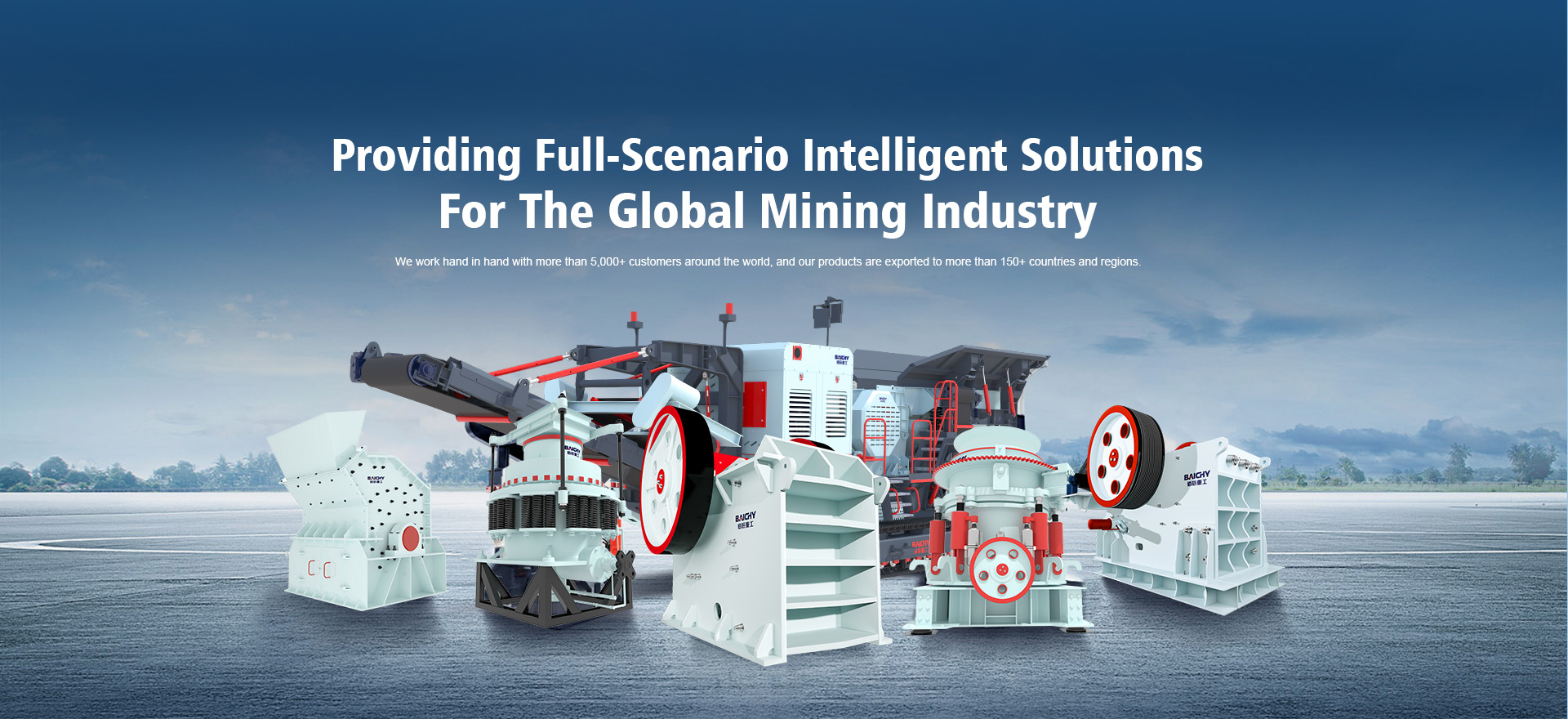
About of Baichy Heavy Industry
Baichy Heavy Industry is a high-tech mining equipment company integrating R&D, manufacturing, sales, and after-sales service. Focusing on crushing, grinding, and mineral processing equipment, we provide professional solutions to our customers. We are ISO9001:2015 、certified, and our products include mobile crushing palnts, crawler crushing plant, construction waste crushing plants, jaw crushers, sand making machines, cone crushers, fine crushers, grinding mills, ball mills, etc., all with reliable performance to meet diverse project needs.
Our advantages:
• Professional pre-sales support: Free project design and comprehensive solutions to help you accurately select the right equipment;
• Comprehensive on-site service: Providing installation guidance and worker training to ensure smooth equipment commissioning;
• Reliable after-sales guarantee: A complete after-sales system, timely response to technical inquiries and equipment maintenance, ensuring long-term stable operation.
To protect your rights, please contact us through the following official channels for professional service:
Official Website Customer Service
https://wa.me/+8615093222637
Email: [email protected]
We are committed to providing high-quality equipment and full-cycle services to deliver comprehensive intelligent solutions for the global mining industry!