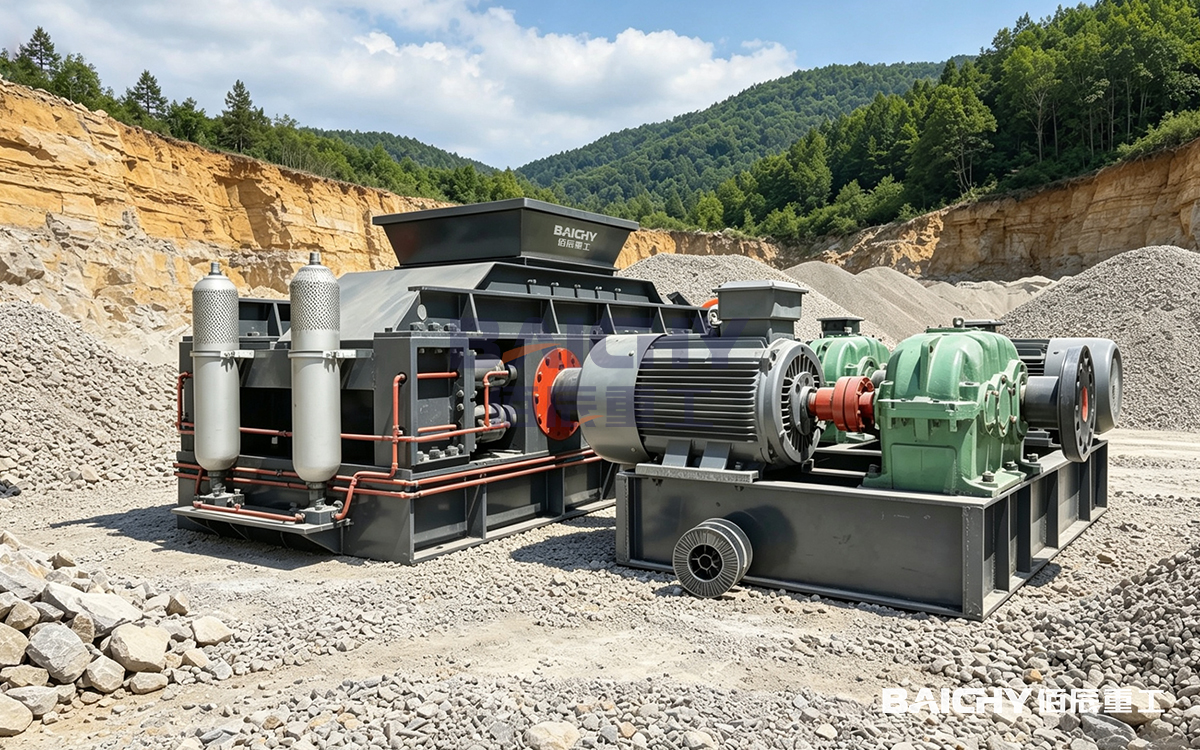
Toothed roll types
The type of toothed roll determines the equipment's capacity to grip large or hard material, the fineness of the output, and its resistance to wear. For the same toothed roll crusher, simply changing the tooth profile can double the production capacity or alter the particle shape; an incorrect choice of roll type can lead to issues ranging from slippage and jamming to frequent tooth breakage and roll replacement. Toothed rolls are classified in the industry along three dimensions: by the number of rolls (single, double, or quadruple), by tooth profile (wolf-tooth, square-tooth, or fine-tooth), and by structure and manufacturing process (integral casting, modular tooth rings, or hard-facing repair).
I. Overview of Toothed Roll Types: Why "Toothed Roll" Isn't Enough
The toothed roll is the core working component of the crusher: rolls with surface teeth rotate towards each other, gripping material and drawing it into the gap, where it splits along natural fractures under the forces of shearing and wedging. This mechanism relies on "splitting" and "shearing," resulting in significantly less fine dust generation compared to jaw or hammer crushers.
Many buyers simply ask for a "toothed roll crusher" without specifying material hardness or target output size. In reality, the roll type directly determines three aspects of on-site performance: gripping capability (ability to grab large or wet lumps without spinning idly), output gradation and over-crushing rate (tooth spacing and shape determine the size distribution), and operating costs (structural design determines whether a full roll or just a tooth ring needs replacement upon damage). Clarifying the roll type is more critical to finding the right solution than focusing solely on model specifications.
II. Classification by Number of Rolls: Single, Double, and Quadruple
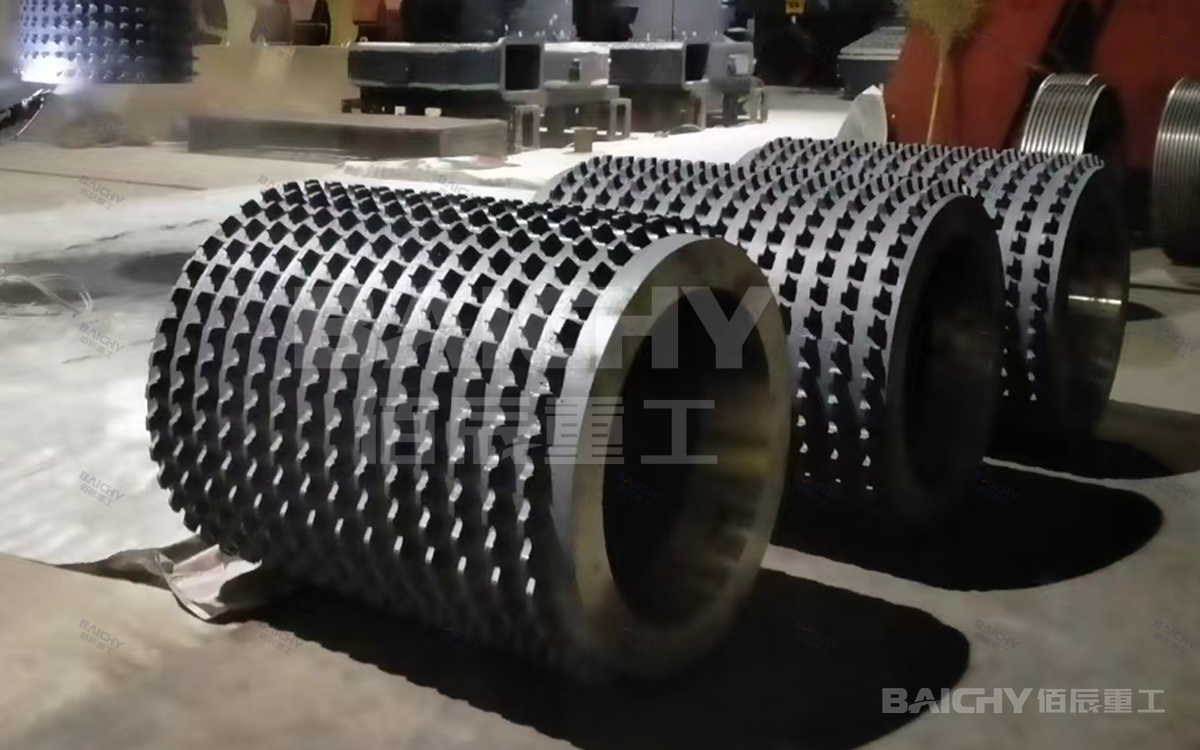
Toothed Roll for Double-Roll Crusher
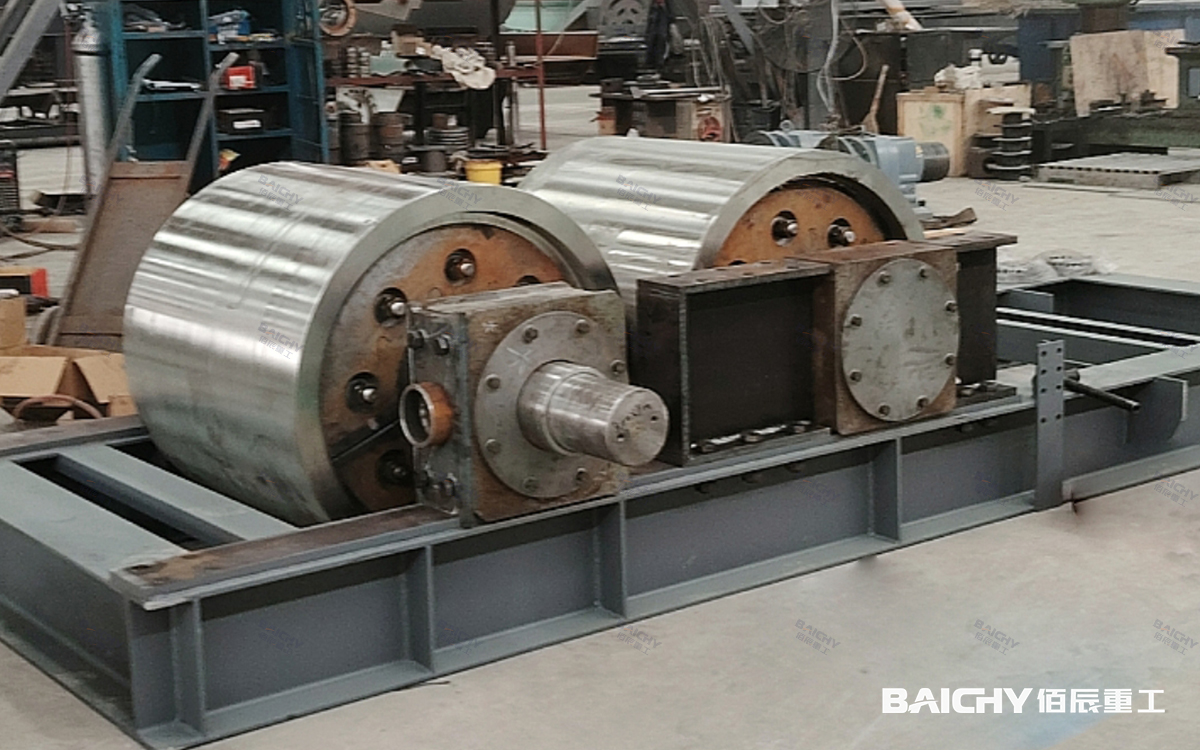
Smooth Roll for Double-Roll Crusher
Single Roll Crusher: Features one toothed roll paired with a fixed jaw plate; material is gripped and split between the roll and the plate. With a large intake gap, it is suitable for the primary crushing of extra-large lumps of coal, oil shale, or limestone, typically producing an output size of 50–200 mm. Its simple structure and compact footprint make it a common choice for primary crushing of run-of-mine coal at mine portals.
Double Roll Crusher: Features two toothed rolls rotating towards each other with interlocking teeth; the discharge size is controlled by the gap between the rolls and the tooth profile. Covering a capacity range of 10–300 t/h with an adjustable discharge size of 25–150 mm, it is a primary choice for the coarse and medium crushing of coal, coal gangue, coke, limestone, and weathered rock. Baichy Heavy Industry’s 2PGC series falls into this category; its grate-free design allows high-moisture, sticky materials to pass through continuously without clogging.
Four-Roll Crusher: Consists of two sets of rolls (upper and lower) arranged in series; material undergoes pre-crushing in the coarse-tooth section followed by shaping in the fine-tooth section. A single pass yields a finer, more uniform product. It is suitable for the precise sizing of coke and sintered ore, though its structural and maintenance costs are higher than those of the double-roll crusher.
| Comparison Criteria | Single-Roll Crusher | Double-Roll Crusher | Four-Roll Crusher |
|---|---|---|---|
| Crushing Mechanism | Toothed roll against fixed jaw plate (compression/splitting) | Counter-rotating rolls (shearing/splitting) | Two-stage series (coarse + fine crushing) |
| Typical Feed Size | ≤600 mm | ≤300–800 mm | ≤300 mm |
| Typical Discharge Size | 50–200 mm | 25–150 mm | 6–50 mm |
| Representative Applications | Coarse crushing of run-of-mine coal | Coarse/medium crushing for coal washing, coking, and building materials | Sizing of coke and sintered ore |
| Investment & Maintenance | Low | Moderate; best cost-performance ratio | High |
Note: For medium-crushing stages involving moderately soft materials, the double-roll crusher offers the best return on investment among toothed roll crushers.
III. Classification by Tooth Profile: Tooth profile determines material intake, over-crushing, and particle shape.
• Wolf-tooth (Coarse tooth): Tall, widely spaced teeth with steep profiles ensure strong intake capabilities, allowing the machine to grab frozen lumps of coal, oil shale, and construction waste. Large gaps between teeth prevent clogging by wet, sticky materials, making it suitable for coarse crushing stages requiring a discharge size of over 50 mm.
• Square/Conical Teeth (Medium Teeth): Moderate height and close spacing balance initial bite with uniform discharge; output size ranges from 30–100 mm. This is the most common tooth profile for primary and secondary crushing of coal and limestone, and serves as the standard configuration for the 2PGC series.
• Fine Teeth (Close-spaced Teeth): Short and closely spaced; primarily designed for shearing and sizing (granulation). Output ranges from 6–25 mm with minimal fines generation. Ideal for coke sizing and granulating sintered ore or chemical raw materials. Trade-offs include a maximum feed size limit of 80 mm and higher sensitivity to metallic foreign objects.
Quick Selection Guide: For large, sticky, or frozen feed materials, choose sparse, tall teeth; for dry, fine materials where product yield is critical, choose close-spaced, short teeth. Tooth profiles can be customized based on the specific material for the same model—a core feature of Baichy Heavy Industry’s free equipment selection service.
IV. Classification by Structure and Manufacturing Process (Determines Maintenance Costs):
• Monoblock Cast Tooth Roll: Cast as a single piece from high-manganese steel; offers high strength and impact resistance. Suitable for primary crushing involving large lumps and potential metallic impacts. Drawback: Damage to a single tooth requires replacing the entire roll or performing extensive weld overlay.
• Segmented Tooth-Ring Roll: The roll surface is assembled from tooth rings or plates. If a single tooth or ring is damaged, only that segment needs replacement, resulting in shorter downtime and lower spare parts costs; this is the prevailing trend for secondary and fine crushing applications.
• Weld-Overlay Repaired Roll: Worn teeth are restored to size using wear-resistant alloy welding. Costs are approximately 20%–30% of a new roll; suitable for applications characterized primarily by uniform wear.
Tooth surface materials utilize either high-manganese steel (for impact resistance) or high-chromium alloy (for abrasion resistance): first determine the material's abrasiveness, then select the material type and repair strategy.
V. Typical Application Scenarios
• Coal and Coal Gangue: Handles sticky, wet run-of-mine coal (15%–25% moisture) without clogging; achieves single-stage crushing to under 50mm while reducing coal sludge generation.
• Coke and Metallurgical Additives: Uses fine-toothed shearing for precise sizing; minimizes coke fines and improves the yield of usable coke.
• Limestone and Cement Raw Materials: Replaces hammer crushers for processing high-moisture limestone and clay; adjustable roll gaps allow a single machine to produce sizes ranging from 50mm to 150mm.
• Weathered Rock and Construction Waste: Withstands mixed feeds containing rebar and brick debris; suitable for secondary crushing in recycled aggregate production lines.
• Glass, Salt, and Chemical Raw Materials: Fine-toothed design ensures precise granulation, meeting size requirements in the 6–30mm range.
VI. Key Advantages of Selecting the Right Tooth-Roll Type
1. Stable Material Intake and Uncompromised Throughput: Proper matching of tooth profile to material prevents slippage and idling, ensuring actual throughput closely matches nominal capacity; switching from fine teeth (which cause slippage) to coarse teeth often restores capacity by 30%–50%.
2. Low Over-Crushing Rate and High Product Yield: Shearing and splitting actions minimize fine dust generation; this reduces both the volume of undersized material requiring recirculation and the energy consumption for downstream grinding, directly lowering the cost per ton.
3. Jam-Resistance: Processes wet and sticky materials without issue. The absence of grate bars and the inclusion of inter-tooth clearance for material handling give it a distinct advantage over hammer or jaw crushers when dealing with wet, sticky feedstocks.
4. Cost-Effective Maintenance: Modular tooth rings allow for the replacement of inpidual damaged teeth rather than the entire roll, while hard-facing enables roll surface restoration; these features result in lower long-term spare parts costs compared to equipment requiring complete roll replacement.
VII. Baichy Heavy Industry 2PGC Series Double-Toothed Roll Crusher Specifications
Typical configuration; processing capacity is calibrated based on a limestone bulk density of 1.6 t/m³; for crushing coal or coke, apply a conversion factor of 0.5–0.7:
| Model | Roll Diameter × Length (mm) | Feed Size (mm) | Discharge Size (mm) | Capacity (t/h) | Motor Power (kW) | Tooth Type Options |
|---|---|---|---|---|---|---|
| 2PGC450×500 | φ450×500 | ≤200 | 25–50 | 10–30 | 2×7.5 | Square/Fine |
| 2PGC600×750 | φ600×750 | ≤300 | 30–75 | 20–60 | 2×15 | Wolf-tooth/Square |
| 2PGC900×900 | φ900×900 | ≤500 | 50–150 | 60–120 | 2×30 | Wolf-tooth/Square |
| 2PGC1200×1500 | φ1200×1500 | ≤800 | 75–200 | 150–300 | 2×55 | Wolf-tooth |
Voltage (380V/400V/440V/660V) and explosion-proof requirements can be customized. Upon provision of material hardness, moisture content, and target discharge specifications, Baichy Heavy Industry will provide a tooth configuration plan and capacity analysis; free trial testing is available.
VIII. Case Study: Tooth Roll Retrofitting
Case 1: Resolving slippage with frozen coal in Russia; restoring capacity by switching to wolf-tooth rolls. A coal preparation plant in Siberia processed frozen raw coal during winter. The original fine-tooth configuration suffered from poor material intake and frequent roll slippage (idling), resulting in an actual capacity of less than 60% of the rated value. After retrofitting with 2PGC600×750 wolf-tooth rolls, frozen lumps were reliably gripped and crushed; capacity was restored to over 45 t/h, and the roll replacement interval was nearly doubled.
Case Study 2: South Africa – High-moisture coal causing machine clogging; continuous operation achieved after switching to wide-gap square teeth. A coal-fired power plant's coal handling system was processing wet coal with a moisture content exceeding 20%. The original fine-tooth configuration suffered from clogging between the teeth, requiring shutdowns for cleaning every shift. After switching to wide-gap square-toothed rolls and increasing the roll gap, the system achieved continuous operation; output particle size remained below 50mm, and cleaning frequency dropped from 2–3 times per shift to once a week.
Note: The above are summaries of typical operating cases; specific parameters vary by project. Detailed technical proposals tailored to specific material properties and production capacities are available upon request.
IX. Related Recommended Equipment
• Upstream Feeding: ZSW Series Vibrating Feeder—Ensures uniform feeding and pre-screening, preventing large lumps from directly impacting the rolls;
• Primary/Secondary Crushing: 2PGC Series Double-Toothed Roll Crusher—Tooth profiles customized based on material characteristics;
• Fine Crushing/Extended Processing: Smooth Double-Roll Crusher, PCK Reversible Hammer Crusher—For further size reduction to sand-making or grinding feed specifications;
• Screening & Classification: YK Series Circular Vibrating Screen—Controls final product gradation in a closed-loop circuit;
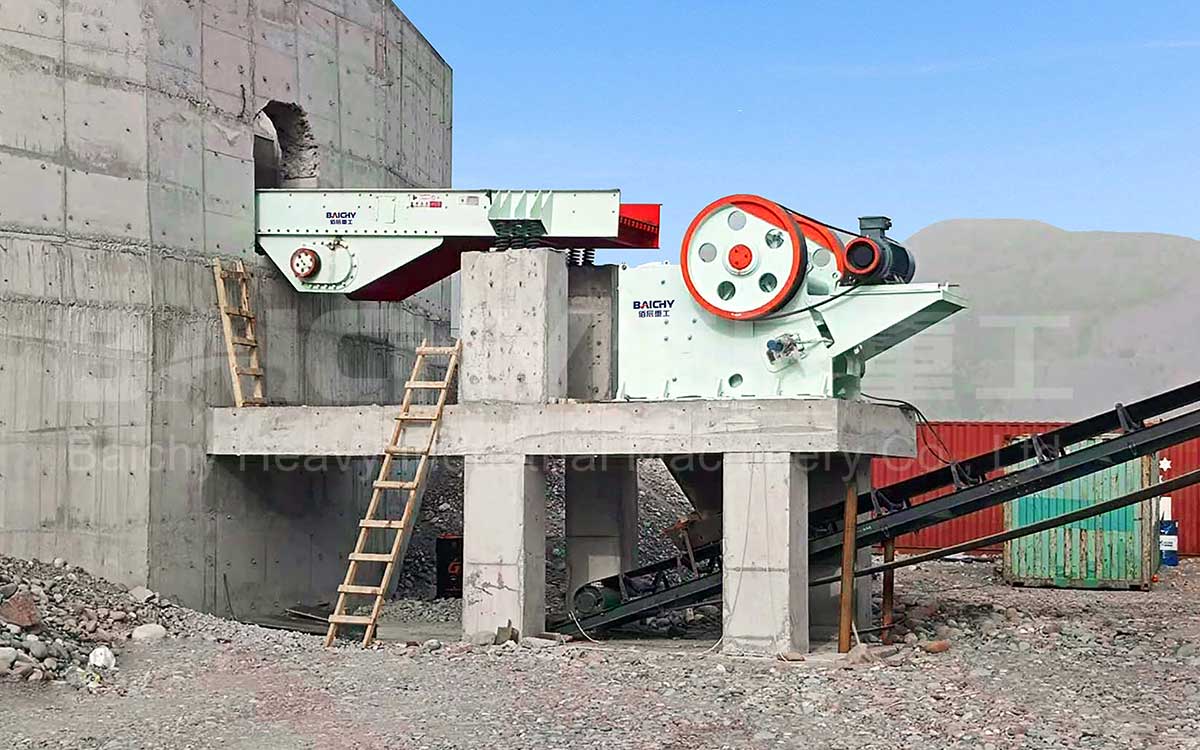
• Coarse Crushing (Optional): PE Series Jaw Crusher—Used for primary coarse crushing when feed size exceeds 800mm.
Based on material analysis reports, Baichy Heavy Industry provides comprehensive "feeding-crushing-screening-grinding" process selection and turnkey production line services.
X. FAQ (Frequently Asked Questions)
Q1: There are so many types of toothed rolls; how can I quickly determine which tooth type to choose?
A: Consider three input factors: maximum feed size (determines number of rolls and tooth height), material moisture and stickiness (choose sparse teeth with wide gaps for wet/sticky materials), and target output size (determines tooth pitch and roll gap). Choose "wolf-tooth" (large, aggressive) teeth for large frozen lumps, square teeth for standard coal and limestone, and fine teeth for coke sizing. Regarding roll configuration: prioritize double-toothed roll crushers for secondary crushing of medium-soft materials, and consider single-toothed roll crushers for primary coarse crushing of exceptionally large lumps. When in doubt, conducting a test run with the actual material is the most cost-effective way to verify the choice.
Q2: Both toothed-roll and smooth-roll crushers are classified as double-roll crushers; what is the difference between them?
A: Toothed-roll crushers rely primarily on shearing and splitting actions; they are suitable for medium-soft, brittle materials like coal and limestone, producing an output size of 25–200 mm. They offer good resistance to jamming and result in minimal over-crushing. Smooth-roll crushers rely on compression and grinding; they are suitable for harder materials or applications requiring fine output (3–10 mm), though they are prone to slipping or material buildup when processing wet, sticky materials. The general rule of thumb is to choose toothed rolls for wet, sticky materials and smooth rolls for dry, hard materials requiring fine crushing.
Q3: If the teeth on a toothed roll break or wear down, must the entire roll be replaced?
A: It depends on the roll's structure. If a solid cast roll sustains severe damage, the entire roll must be replaced or repaired via hardfacing (weld overlay). For modular rolls with replaceable tooth rings, only the damaged rings need to be swapped out, resulting in shorter downtime and lower spare-part costs. Tooth surfaces that have undergone uniform wear can usually be restored through hardfacing, at a cost of approximately 20%–30% of a new roll.
Baichy Heavy Industry
Baichy Heavy Industry is a high-tech mining equipment company integrating R&D, manufacturing, sales, and after-sales service. Focusing on crushing, grinding, and mineral processing equipment, we provide professional solutions to our customers. We are ISO9001:2015 、certified, and our products include mobile crushing palnts, crawler crushing plant, construction waste crushing plants, jaw crushers, sand making machines, cone crushers, fine crushers, grinding mills, ball mills, etc., all with reliable performance to meet diverse project needs.
Baichy Heavy Industry – Your Trusted Partner
To ensure optimal performance of your equipment, Baichy Heavy Industry offers:
- Professional on-site installation guidance
- Comprehensive operator training
- 24/7 technical support & maintenance services
Our complete after-sales service system guarantees long-term, stable operation of your machinery with minimal downtime.
Protect Your Rights – Only Use Official Channels
To avoid scams and ensure authentic support, contact us exclusively through:
• Official Website: www.baichychina.com
• WhatsApp: +8615093222637
• Email: [email protected]
Your satisfaction is our priority – expect prompt, professional service every time.
(Note: Beware of unauthorized third parties claiming to represent Baichy. Always verify through official contacts.)