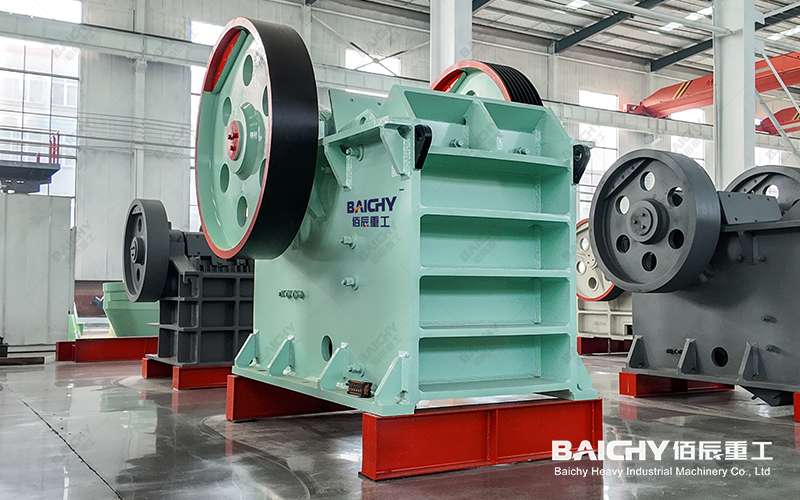

Steel Slag Crushing with Double-Roll Crushers
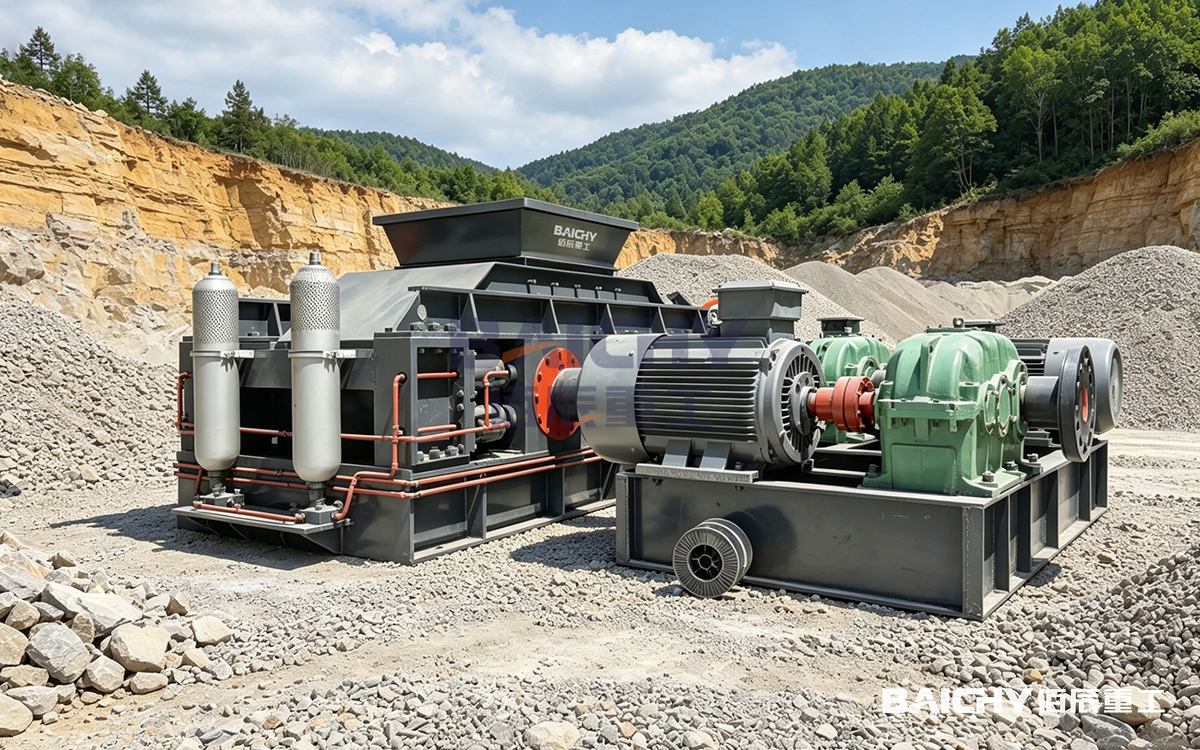
Producing one tonne of crude steel yields approximately 100–150 kg of steel slag as a by-product. Steel slag is not merely waste but a dual resource—serving as both a source of scrap iron and a raw material for construction—provided the slag and iron are effectively separated. The double-roll crusher is the primary machine used in the fine crushing stage of steel slag processing lines. It employs low-speed compression and shearing to dissociate materials along the slag-iron interface, keeping the metallic iron in lump form for easy recovery via magnetic separation. Output particle size is precisely controlled by the roll gap, resulting in a low rate of over-pulverization. A hydraulic overload relief system allows the rolls to retract if they encounter iron chunks that are too hard to crush, thereby protecting the equipment. For steel slag applications characterized by medium-to-high hardness and high abrasiveness, the double-roll crusher is a practical choice that offers superior wear resistance compared to cone crushers, greater safety than impact crushers, and better durability than hammer crushers.
I. Why Use Double-Roll Crushers for Steel Slag? Material Characteristics Dictate the Choice of Equipment
1. Three "Challenging" Characteristics of Steel Slag
Steel slag (including BOF, EAF, and LF slag) differs from natural ore in three key ways: high hardness (Mohs hardness of 5–7; compressive strength of approx. 100–250 MPa, with some hard BOF slag lumps exceeding this); metallic iron content (typically 2%–10%, containing both large iron lumps and granular iron); and high abrasiveness combined with a tendency to generate dust (containing FeO and free calcium oxide; it often becomes wet and sticky after water-based dust suppression). Additionally, free calcium oxide (f-CaO) expands slowly upon contact with water, requiring the residual slag to undergo aging or stabilization treatment before use as a construction material.
2. Working Principle: Why "Compression" Is Superior to "Impact"
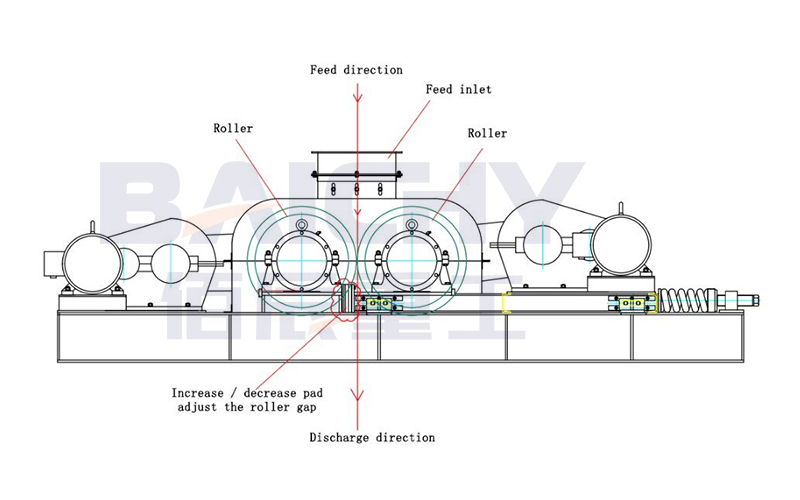
Working Principle of Double-Roll Crusher
The double-roll crusher features a crushing chamber formed by two rolls rotating toward each other at low speeds. Material entering the roll gap is crushed through the combined forces of compression and shearing. The interface between metallic iron and the slag matrix is a natural zone of weakness; shearing forces cause iron particles to detach along this interface rather than being crushed—a result that jaw crushers and cone crushers cannot achieve. While jaw crushers are suitable for primary crushing (reducing slag from 300mm to under 80mm), the inter-particle crushing action of cone crushers tends to flatten or pulverize iron granules, leading to losses in metal recovery. Double-roll crushers handle the fine crushing stage through "compression-based liberation," forming a complete closed-loop system with upstream magnetic separation that ensures effective iron recovery and uniform slag fragmentation.
II. Typical Application Scenarios for Double-Roll Crushers in Steel Slag Processing
1. Steel Plant Slag Processing Centers: Primary Slag-Iron Separation Process
After converter slag undergoes primary crushing (jaw crusher) to under 80mm and large steel chunks are removed via magnetic separation, a double-roll crusher performs fine crushing to a 10–40mm range. A subsequent magnetic separation stage recovers granular iron and steel chips, while the remaining slag is utilized as aggregate for water-stabilized base courses or road paving materials. The value of recovering metallic iron for remelting typically covers the entire line's operating costs; given that scrap steel is valued at thousands of yuan per ton while processing costs are measured in tens of yuan, the more thorough the slag-iron separation, the more profitable the production line becomes.
2. Steel Slag Aggregate and Manufactured Sand Projects
After undergoing aging and stabilization, steel slag is crushed and screened into 5–31.5mm aggregates, serving as a substitute for natural crushed stone in road base and water-stabilized layers. Double-roll crushers produce aggregates with uniform particle shapes, low fines content, and stable gradation, making them key equipment for the initial processing stage in steel slag construction material production.
3. Pre-crushing for Steel Slag Powder/Cement Raw Material Projects
Steel slag powder projects require a feed size of ≤10mm for the grinding mill. Double-roll crushers reduce the jaw crusher output directly to the required mill feed size, replacing the "cone crusher plus screening" configuration. This approach reduces electricity consumption per ton by over 30% and lowers initial investment costs.
4. Mobile On-Site Processing of Electric Arc Furnace (EAF) Slag
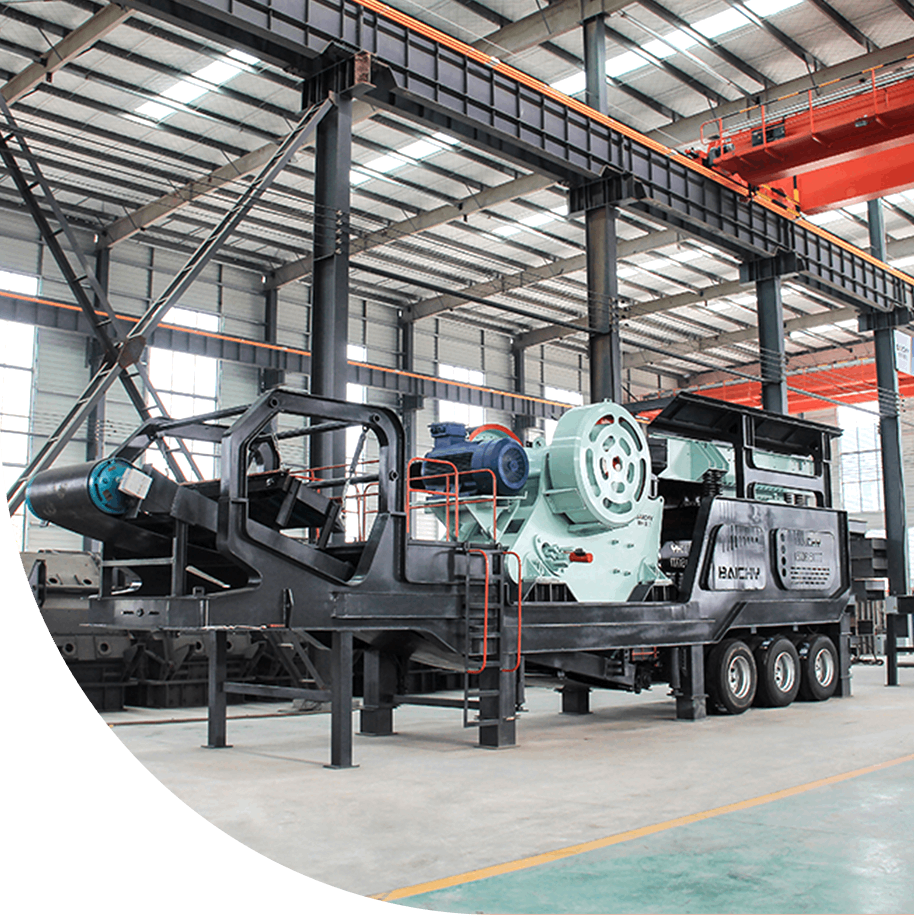
EAF steel plants generate slag in concentrated volumes but often operate across shifting site locations. Mobile crushing stations equipped with a combination of jaw crushers and double-roll crushers enable on-site crushing and magnetic separation for material recovery. This eliminates the need for back-and-forth slag transport, allowing for site relocation cycles measured in days rather than weeks.
III. Core Advantages of Double-Roll Crushers for Steel Slag
| Technical Characteristics | Direct Benefits |
|---|---|
| Liberation via compression and shear; metallic iron remains in lump form | Higher magnetic separation recovery rates; revenue from recycling scrap steel covers operating costs |
| Hydraulic roll gap adjustment (2PGY series) | Output size (10–50mm) adjustable without stopping the machine; uniform particle size ensures a stable price premium for the finished product |
| Hydraulic overload relief with 0.2-second reset | Automatic roll retraction upon encountering iron lumps prevents roll surface damage and eliminates downtime caused by "iron-jamming" incidents |
| Smooth rolls with hard-faced surfaces (8–12mm wear-resistant layer) | Extended roll shell lifespan; on-site hard-facing repair (2–3 times) avoids the need to scrap the entire roll |
| Low-speed, high-torque crushing; low electricity consumption per ton | Saves approximately 20%–30% in electricity compared to cone crushers at the same capacity; direct cost savings |
| Low fines content in output | Minimal loss of fines; reduced load on downstream screening and dust removal systems |
Why not use hammer crushers or impact crushers? High-speed impact equipment faces three inherent drawbacks when processing steel slag: impacts from hammers or blow bars on iron-bearing slag lumps cause a drastic reduction in wear-part lifespan; high impact forces shatter granular iron into fine particles that are difficult to recover via magnetic separation; and the accidental inclusion of large iron chunks can trigger violent vibrations or even catastrophic equipment failure. In contrast, the low-speed compression mechanism of double-roll crushers offers far greater tolerance for hard lumps and metallic inclusions compared to impact-based equipment. This is the fundamental reason why the fine-crushing stage for steel slag—both domestically and internationally—relies almost exclusively on roll crushers and cone crushers, with the market share of roll crushers steadily rising.
IV. Technical Parameters for Steel Slag Processing (Typical Configuration for 2PG/2PGY Series)
Note: Steel slag has a bulk density of approximately 1.8–2.1 t/m³ and a hardness greater than that of limestone. The listed capacities have been adjusted downward from the nominal limestone capacities to account for steel slag processing conditions (reduction factor of approx. 0.7–0.8); these figures serve only as a baseline for model selection, with actual performance determined by material testing.
| Model | Roll Diameter (mm) | Feed Size | Discharge Size (Adjustable) | Steel Slag Capacity (t/h) | Motor Power |
|---|---|---|---|---|---|
| 2PG610×400 | Φ610×400 | ≤40mm | 10–30mm | 10–25 | 30kW |
| 2PGY750×500 | Φ750×500 | ≤45mm | 10–40mm | 20–40 | 37kW |
| 2PG900×700 | Φ900×700 | ≤60mm | 10–50mm | 35–80 | 45–55kW |
| 2PGY1200×1200 | Φ1200×1200 | ≤60mm | 5–25mm | 70–120 | 2×90kW |
V. Real-World Case Reference
Converter Slag Processing Line (Slag processing center of a steel group in East China; typical configuration): The original process utilized a combination of jaw crushing, cone crushing, and magnetic separation. The cone crusher frequently experienced shutdowns due to metallic iron particles jamming the crushing chamber, resulting in high annual replacement costs for the bowl liner and mantle. Following the retrofit to a process flow of "PE600×900 Jaw Crusher (primary crushing) → Magnetic Separation → 2PGY750×500 Double-Roll Crusher (fine crushing) → Magnetic Separation → Vibrating Screen (classification)," the stable production capacity reaches approximately 40 t/h. The recovery rate of metallic iron in the fine-crushing magnetic separation stage increased by about 2 percentage points; based on an annual output of 120,000 tons of slag, this results in the additional recovery of several thousand tons of metallic iron annually. Unplanned downtime caused by chamber jamming (common with cone crushers) was virtually eliminated, and electricity consumption per ton of slag processed dropped by approximately 25%. Furthermore, due to factors like roll surface hard-facing repairs and long-cycle gearbox maintenance, the annual maintenance cost for the double-roll crusher is significantly lower than that of a cone crusher—a Total Cost of Ownership (TCO) advantage that is most pronounced when processing highly abrasive materials like steel slag. Key Takeaway: The value of a double-roll crusher in steel slag applications lies not merely in its ability to crush the material, but in its operational stability, high iron recovery efficiency, and cost-effectiveness.
VI. Recommended Auxiliary Equipment (Complete Steel Slag Processing Line)
| Process Step | Recommended Equipment | Function |
|---|---|---|
| Primary Crushing | PE/PEX Series Jaw Crusher | Coarse crushing of raw slag (300mm) to <80mm |
| Iron Separation | RCYD Iron Remover + CT Series Magnetic Separator | Extracting large steel chunks after primary crushing; recovering granular iron after fine crushing |
| Fine Crushing | 2PG/2PGY Double-Roll Crusher | Slag-iron liberation; controllable output size (10–50mm) |
| Screening | YK Series Vibrating Screen | Aggregate classification; closed-circuit material recirculation |
| Grinding (Optional) | Ball Mill / Raymond Mill | Deep processing for steel slag powder and cement additives |
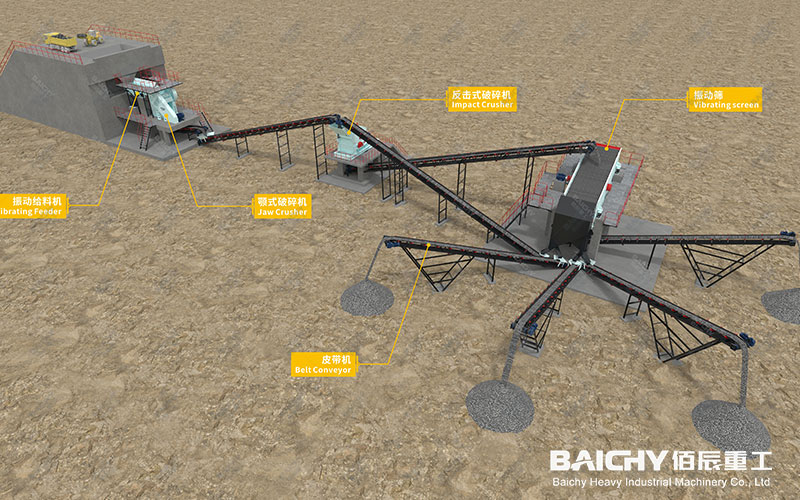
| Feeding & Conveying | ZSW Vibrating Feeder + Belt Conveyor | Uniform feeding; in-line material transfer |
FAQ
Q1: Steel slag is hard and contains iron; can a double-roll crusher handle it? Won't it damage the rolls?
A1: Yes, it can; the key lies in selecting the right configuration. Steel slag has a compressive strength of approximately 100–250 MPa, placing it within the upper operational limit for roll crushers. Processing steel slag requires smooth rolls featuring high-chromium alloy or hard-faced wear-resistant surfaces; the hydraulic version (2PGY) is the preferred choice. When encountering tramp iron, the hydraulic overload system retracts the roll within 0.2 seconds and automatically resets, protecting the roll surface and gearbox from impact damage. Upstream magnetic separation to remove iron can further reduce the frequency of retraction events and extend the service life of the roll surfaces.
Q2: What advantages do roll crushers have over cone crushers or hammer crushers for processing steel slag?
A2: There are three key aspects. First, metal recovery: Roll crushers utilize low-speed compression and shearing to dissociate material along the slag-iron interface, keeping iron particles intact as lumps and ensuring high recovery rates via magnetic separation; in contrast, cone crushers tend to pulverize iron particles, while hammer crushers suffer from frequent wear on impact components. Second, wear and safety: Roll surfaces can be repaired via hard-facing 2–3 times—with a single repair costing only 20%–30% of a new roll—and the absence of high-speed impact parts eliminates the risk of catastrophic failure (or "chamber explosion") when encountering tramp iron. Third, discharge control: Adjusting the roll gap allows for precise sizing (e.g., 10–50 mm), resulting in uniform particle size and a low fines generation rate.
Q3: Can a single roll crusher process steel slag? How should a complete production line be configured?
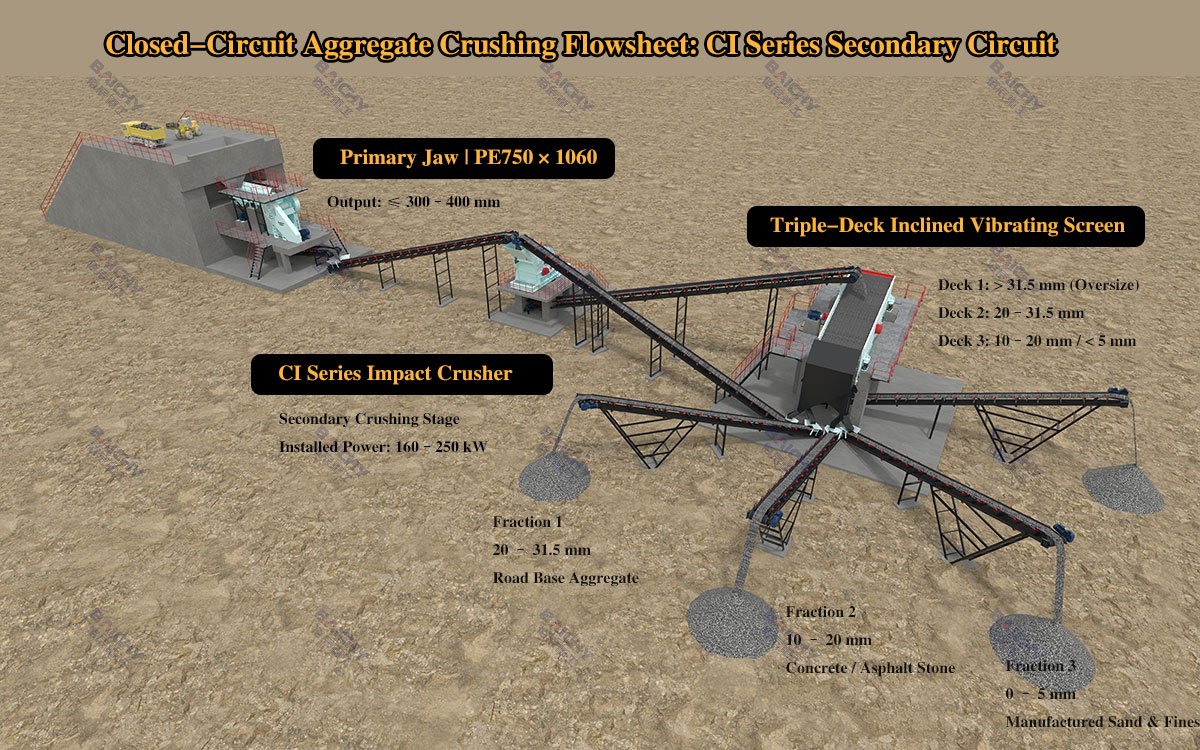
A3: It cannot operate as a standalone unit. Roll crushers require a feed size of ≤40–60 mm, necessitating an upstream jaw crusher for primary crushing; otherwise, large slag chunks or iron lumps entering the roll gap directly would inevitably damage the equipment. The standard process flow is: sorting out large iron pieces → jaw crushing (primary) → magnetic separation → roll crushing (fine) → magnetic separation → screening → aging/stabilization of residual slag for use as construction material. Baichy can provide a complete line configuration and quotation based on your raw materials and target production capacity.
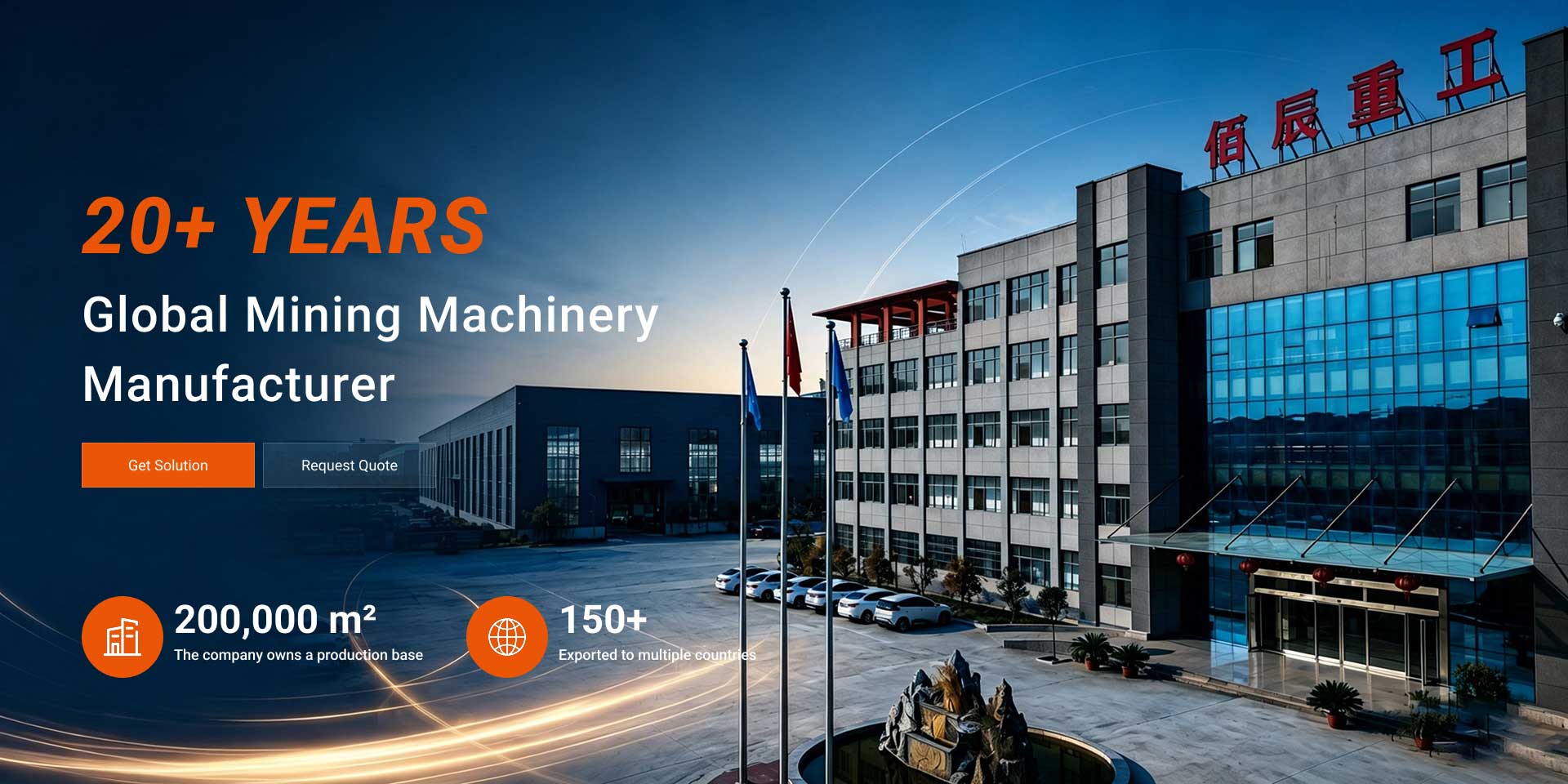
Baichy Heavy Industry
Baichy Heavy Industry is a high-tech mining equipment company integrating R&D, manufacturing, sales, and after-sales service. Focusing on crushing, grinding, and mineral processing equipment, we provide professional solutions to our customers. We are ISO9001:2015 、certified, and our products include mobile crushing palnts, crawler crushing plant, construction waste crushing plants, jaw crushers, sand making machines, cone crushers, fine crushers, grinding mills, ball mills, etc., all with reliable performance to meet diverse project needs.
Baichy Heavy Industry – Your Trusted Partner
To ensure optimal performance of your equipment, Baichy Heavy Industry offers:
- Professional on-site installation guidance
- Comprehensive operator training
- 24/7 technical support & maintenance services
Our complete after-sales service system guarantees long-term, stable operation of your machinery with minimal downtime.
Protect Your Rights – Only Use Official Channels
To avoid scams and ensure authentic support, contact us exclusively through:
• Official Website: www.baichychina.com
• WhatsApp: +8615093222637
• Email: [email protected]
Your satisfaction is our priority – expect prompt, professional service every time.
(Note: Beware of unauthorized third parties claiming to represent Baichy. Always verify through official contacts.)