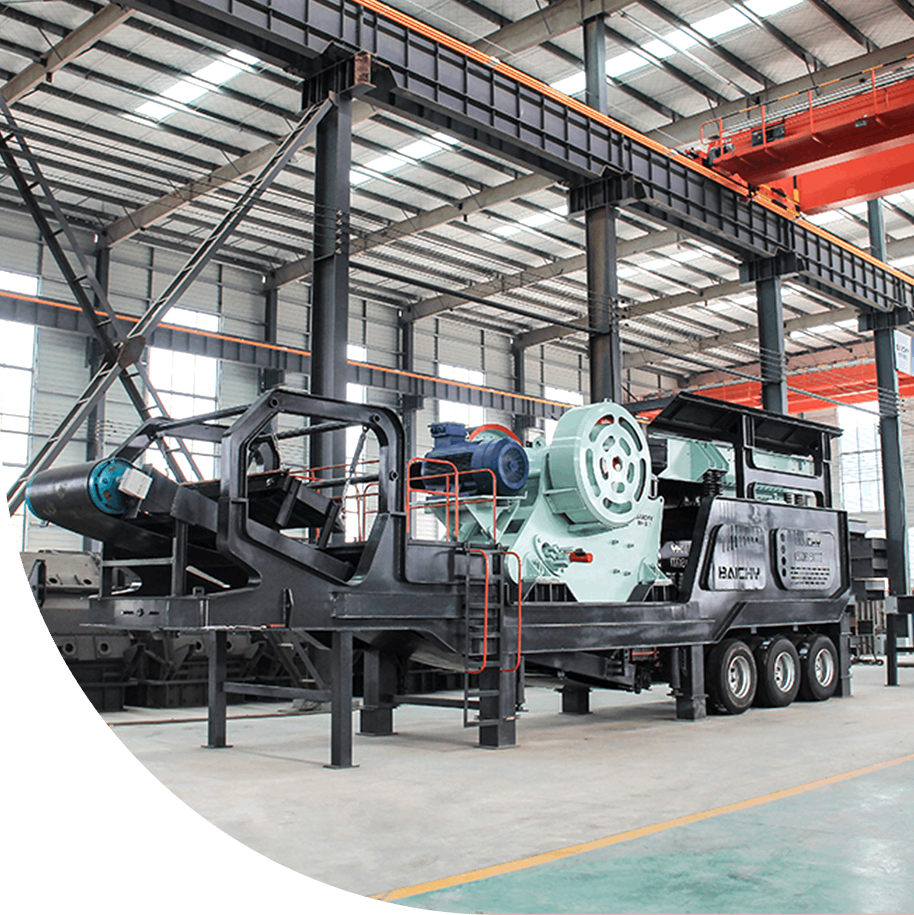

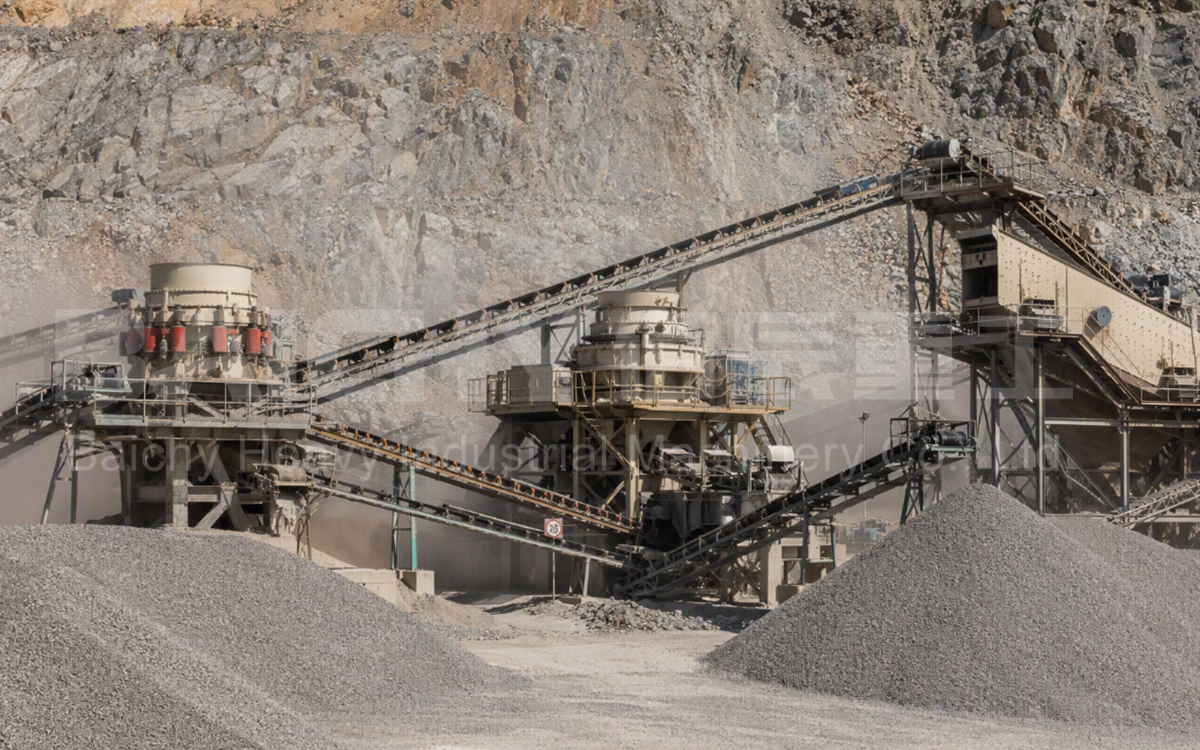
Quarry Crushing Equipment
Intermediate and fine crushing equipment determines the quality and per-ton cost of a quarry's finished products: the choice of intermediate crusher depends on material hardness, while the choice of fine crusher depends on the target product. Choosing the wrong intermediate crusher leads to exorbitant wear-part bills within three months; choosing the wrong fine crusher results in manufactured sand and aggregates that fail to command a good market price. There is no such thing as a "universal" intermediate/fine crusher; all selection errors stem from using equipment in the wrong application.
| Crushing Stage | Hard Rock (Granite/Basalt/Iron Ore/River Pebbles) | Medium-Soft Rock (Limestone/Dolomite/Gypsum) | Brittle Materials (Coal/Gypsum/Shale) |
| Intermediate Crushing (2nd Stage) | Cone Crusher (CS/HP Series) | Impact Crusher (PF Series) | Hammer Crusher (PCH/2PC Series) |
| Fine Crushing (3rd Stage) | Fine-Crushing Cone Crusher / VSI Sand Maker | VSI / Double-Roll Crusher | Double-Roll Crusher / PFL Compound Crusher |
| Sand Making & Shaping | VSI Impact Sand Maker | VSI / Double-Roll Crusher | -- |
Three golden rules to remember before selecting equipment:
1. Use compression crushing for the entire hard rock line: Jaw crusher for primary crushing → Cone crusher for intermediate/fine crushing → VSI for sand making. Only lamination/compression crushing ensures long wear-part life for highly abrasive materials; using an impact crusher on granite requires replacing blow bars 1–2 times a month, causing per-ton costs to spiral out of control.
2. Prioritize impact crushing for medium-soft rock: Use an impact crusher for limestone-grade materials to achieve cubical particle shapes in a single pass (needle-flake content of 8–12%), saving on the investment for a separate shaping stage; for brittle, high-volume materials, use a hammer crusher directly—a single machine can replace a two-stage process.
3. The finished product dictates the fine crushing choice: Choose VSI for manufactured sand (needle-flake content <5%, adjustable gradation); choose a double-roll crusher for fine particles with low over-pulverization rates; choose a PFL compound crusher for small-scale lines where minimizing investment is key (one machine serving dual purposes).
I. Positioning: The Role of Secondary and Tertiary Crushing in the Production Line
A standard quarry crushing circuit follows the sequence: "Primary Crushing → Secondary Crushing → Tertiary Crushing → Sand Making & Shaping → Screening." Each stage has an optimal feed size range; using equipment outside its intended stage can result in anything from a drastic drop in production capacity to total equipment failure.
| Crushing Stage | Feed Size | Discharge Size | Crushing Ratio |
| Primary | ≤500–1000mm | 100–300mm | 4:1–6:1 |
| Secondary | 100–300mm | 30–80mm | 3:1–5:1 |
| Tertiary | 30–80mm | 0–25mm | 3:1–6:1 |
| Sand Making | 5–40mm | 0–5mm | 5:1–8:1 |
Key Distinction: Secondary crushing handles "medium-sized blocks" and establishes the "intermediate gradation," while tertiary crushing processes "finer material" to produce the "final product." Draw a flow chart before discussing specific models—selecting equipment is essentially a "fill-in-the-blank" exercise based on the specific crushing stage.
II. Secondary Crushing Equipment: Choosing One of Three Options
2.1 Cone Crusher (CS/HP/PYB Series) — The Standard Choice for Secondary Crushing of Hard Rock
• Working Principle: Inter-particle (lamination) crushing. Material is crushed through inter-particle compression within the crushing chamber rather than by single-point impact; this yields a uniform product shape with low flake and elongation content.
• Suitable Applications: Highly abrasive hard rocks such as granite, basalt, diabase, and iron ore (compressive strength of 150–350 MPa); suitable for both secondary and tertiary crushing stages.
• Why It Is Essential for Hard Rock: Compared to impact crushers, the wear parts of a cone crusher last 6–10 times longer than the blow bars of an impact crusher. For hard-rock quarries with a monthly output exceeding 30,000 tons, the savings on wear parts and reduced downtime costs allow the cone crusher option to recoup the initial price difference (despite a 15–25% higher upfront investment) within 2–3 years.
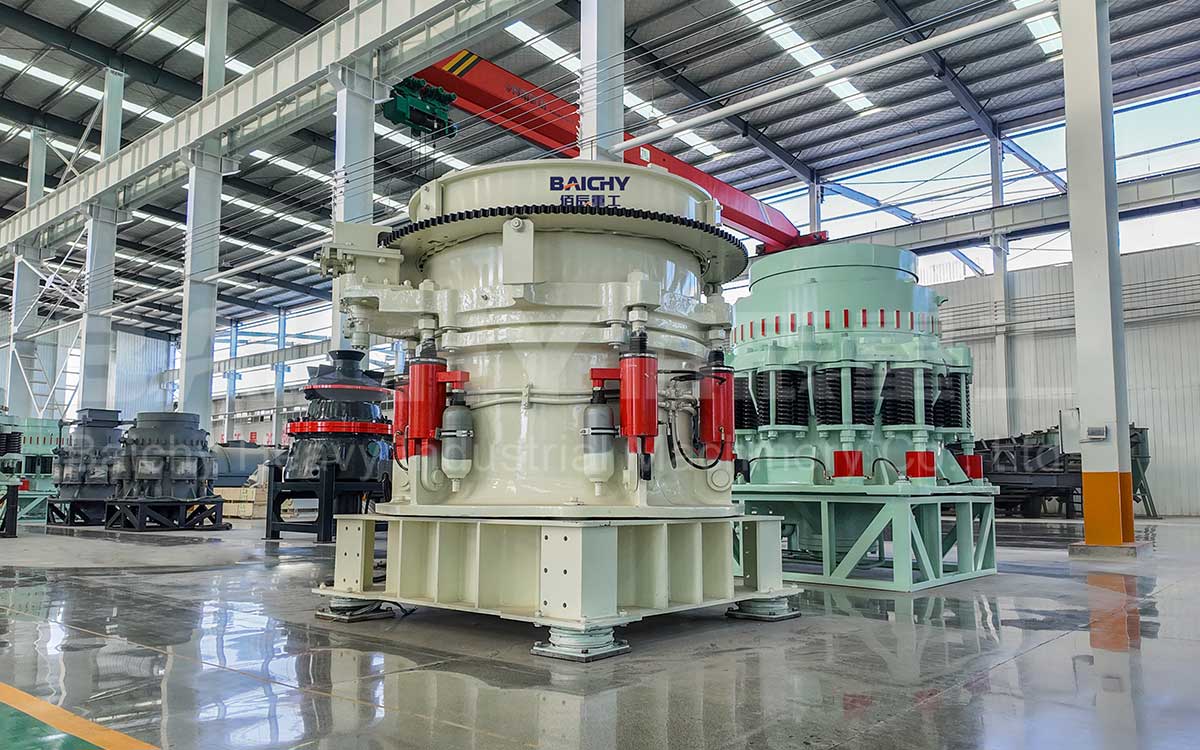
Quarry Crushing Equipment - Hydraulic Cone Crusher
Specifications of Representative Models:
| Model | Max. Feed Size (mm) | Discharge Size (mm) | Capacity (t/h) | Motor (kW) |
| PYB900 | ≤85 | 5-20 | 15-50 | 55 |
| CS110 | ≤160 | 13-38 | 50-150 | 110 |
| CS160 | ≤215 | 19-51 | 110-280 | 160 |
| HP300 | ≤230 | 6-38 | 150-380 | 220 |
• Advantages: Low wear, good particle shape, consistent product quality, and high automation for hydraulic cavity clearing and tramp iron protection.
• Drawbacks: Higher unit price and maintenance requirements compared to impact crushers; unsuitable for materials with high clay content or stickiness; sensitive to feed uniformity (requires a surge bin/feeder for stable feeding).
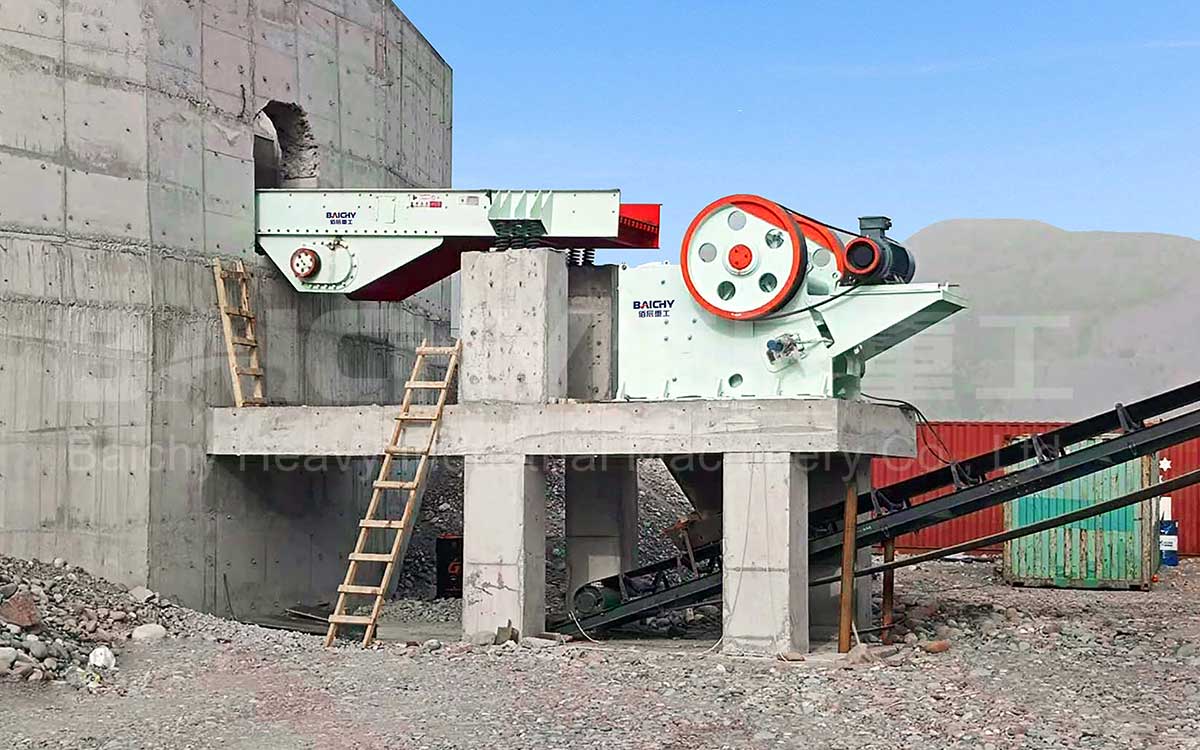
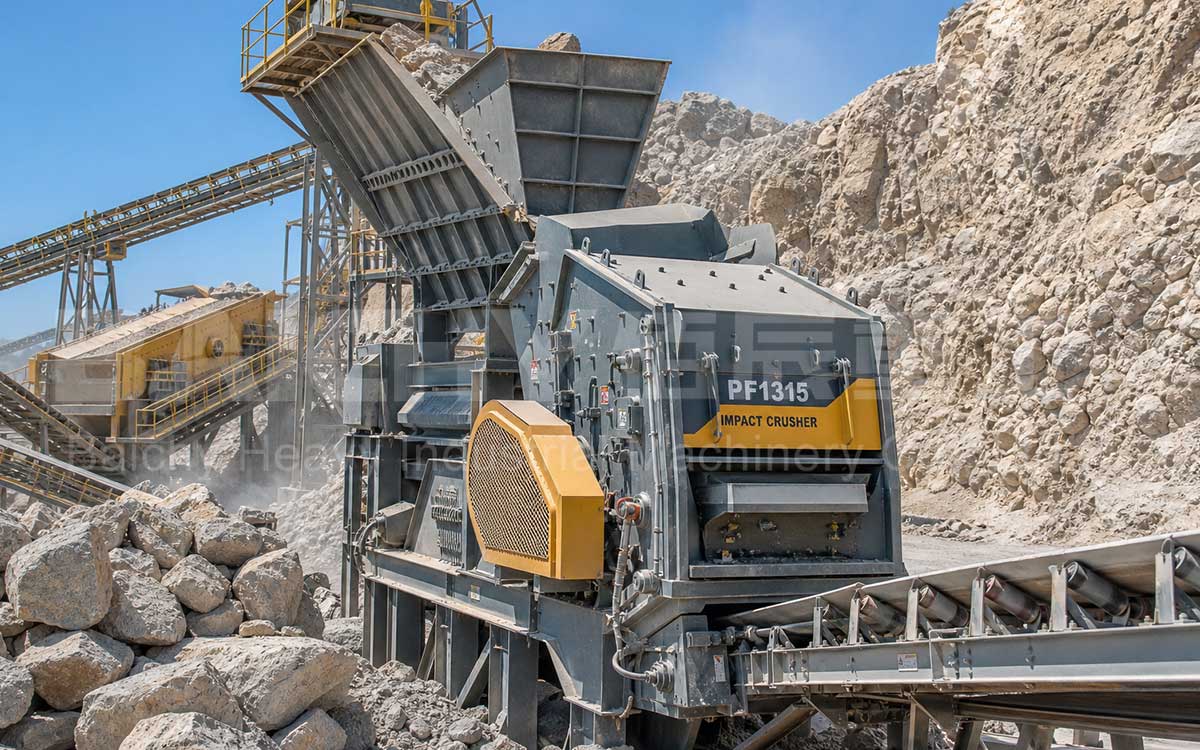
2.2 Impact Crusher (PF Series) — "Dual-purpose" solution for medium-soft rock
• Working Principle: High-speed rotating blow bars throw material against impact plates for breakage; material undergoes repeated impacts until it is small enough to pass through the discharge opening. Utilizes impact crushing with a high reduction ratio (can exceed 10:1).
• Applications: Medium-soft rock such as limestone, dolomite, gypsum, and construction waste (compressive strength ≤150–250 MPa); suitable for secondary crushing, fine crushing, and shaping.
• Value Proposition: Produces cubic particles in a single pass; flake and elongation content can be controlled within 8–12%; aggregates for concrete or asphalt meet standards directly—allowing many production lines for medium-soft rock to eliminate the need for a separate shaping machine.
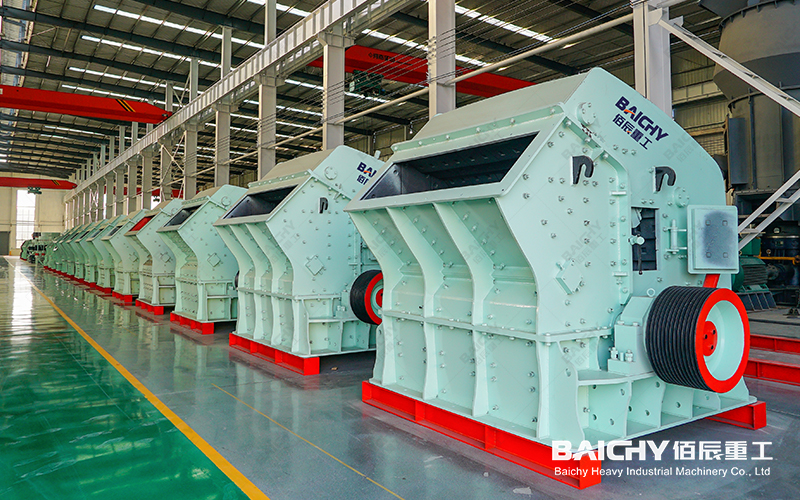
Quarry Crushing Equipment - Impact Crusher
Specifications of Representative Models:
| Model | Rotor Specs (mm) | Max. Feed Size (mm) | Capacity (t/h) | Motor (kW) |
| PF1007 | 1000×700 | ≤300 | 30-70 | 75 |
| PF1214 | 1250×1400 | ≤350 | 80-180 | 132 |
| PF1315 | 1300×1500 | ≤350 | 120-250 | 200 |
| PFW1214 (European Version) | 1250×1400 | ≤500 | 130-250 | 160-200 |
• Advantages: High reduction ratio, excellent particle shape, lower initial investment compared to cone crushers, and capable of processing materials with moisture content ≤12%.
• Drawbacks: Blow bars wear out quickly; costs for wear parts skyrocket when processing hard rock—this is the fundamental reason it is positioned specifically for "soft materials."
2.3 Hammer Crusher (PCH/2PC Series) — A single-stage shaping solution for brittle materials
• Working Principle: High-speed rotating hammers shatter the material; material impacts grate liners for further breakage, and qualified product discharges through the grate gaps. Single-stage crushing with a reduction ratio exceeding 15:1.
• Applications: Brittle, medium-to-soft materials such as limestone, gypsum, coal, shale, and cement clinker; the 2PC dual-rotor hammer crusher accommodates moisture content <20% without clogging the crushing chamber.
• Value Proposition: Direct reduction from feed sizes of ≤350–400mm to product sizes of ≤25mm; a single unit replaces the traditional two-stage "primary + secondary" crushing process, saving on equipment, conveyor belts, and foundation construction; electricity consumption per ton is 20–30% lower than the two-stage process.
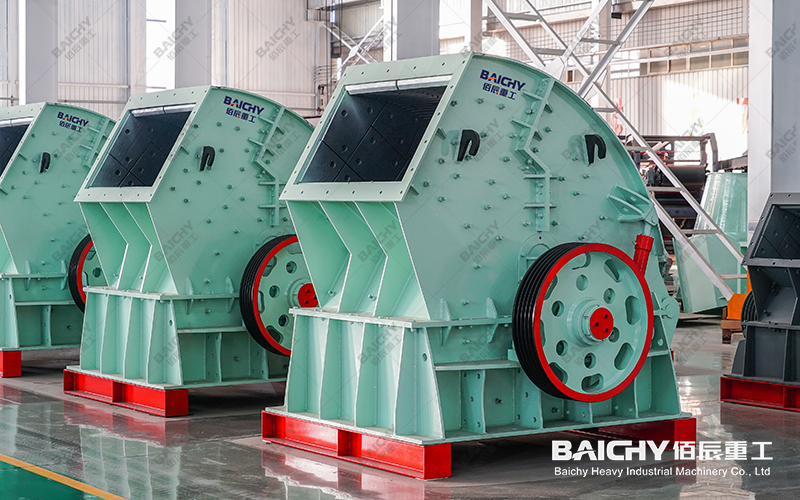
Quarry Crushing Equipment - Hammer Crusher
Representative Model Specifications:
| Model | Rotor Specs (mm) | Max. Feed (mm) | Output (mm) | Capacity (t/h) | Motor (kW) |
| PCK1413 | 1400×1300 | ≤350 | ≤25 | 100-180 | 180 |
| 2PC1000×1200 | 1000×1200 | ≤350 | ≤25 | 80-120 | 110x2 |
| 2PC1214 | 1200×1400 | ≤400 | ≤25 | 120-200 | 160×2 |
• Advantages: Shortest process flow, lowest investment cost, low power consumption.
• Drawbacks: Suitable only for brittle, soft-to-medium-hard materials; hammer lifespan drops drastically when processing hard rock; produces a high proportion of fine powder, requiring screening to control aggregate gradation.
III. Fine Crushing Equipment: Choose One
3.1 VSI Impact Crusher (Sand Maker) — The ultimate stage for manufactured sand production and aggregate shaping
• Working Principle: Material is thrown at high speed (linear velocity of 60–80 m/s) by an impeller and crushed through mutual impact (utilizing dual-chamber "rock-on-rock" and "rock-on-metal" modes). It relies on the material's own kinetic energy for crushing, resulting in cubic, well-rounded particles with an adjustable fineness modulus.
• Applications: Feed size ≤45–50 mm, output 0–10 mm; suitable for fine crushing (3rd stage), sand making (4th stage), and aggregate shaping.
• Value Proposition: Produces manufactured sand with stable gradation and adjustable powder content; needle-and-flake particle content is <5%, meeting the strict acceptance criteria of commercial concrete and asphalt mixing plants. It also functions as a hard-rock aggregate shaper, directly increasing the selling price of the finished product.
Representative Model Specifications:
| Model | Max. Feed Size (mm) | Capacity (t/h) | Motor Power (kW) |
| VSI-7611 | ≤35 | 80-180 | 110-160 |
| VSI-8518 | ≤40 | 120-260 | 180-220 |
| VSI-9526 | ≤45 | 200-380 | 264-320 |
• Advantages: Superior particle shape, adjustable gradation, and particle shaping capabilities; symmetrical dual-motor layout offers high tolerance for voltage fluctuations (compatible with 60Hz/380V/440V grids).
• Drawbacks: Cannot handle large feed sizes; must be positioned after the secondary/fine crushing stage; high-speed operation places strict demands on bearing lubrication and the thin-oil lubrication station; higher unit price compared to double-roll crushers.
3.2 Double-Roll Crusher (2PGY Series)—A fine-crushing specialist with low power consumption and low fines generation
• Working Principle: Two rolls rotate in opposite directions; material is crushed via compression and shearing within the gap between the rolls; discharge particle size is precisely controlled by the roll gap.
• Applications: Fine crushing and sand making (a low-investment alternative to VSI); suitable for medium-soft materials and limestone; low reduction ratio (2:1–4:1), used only for the final crushing stage.
• Value Proposition: Uniform discharge size, low fines generation, and low power consumption—the 2PGY1200×1200 model delivers a stable capacity of 100–150 t/h in limestone processing operations in Vietnam.
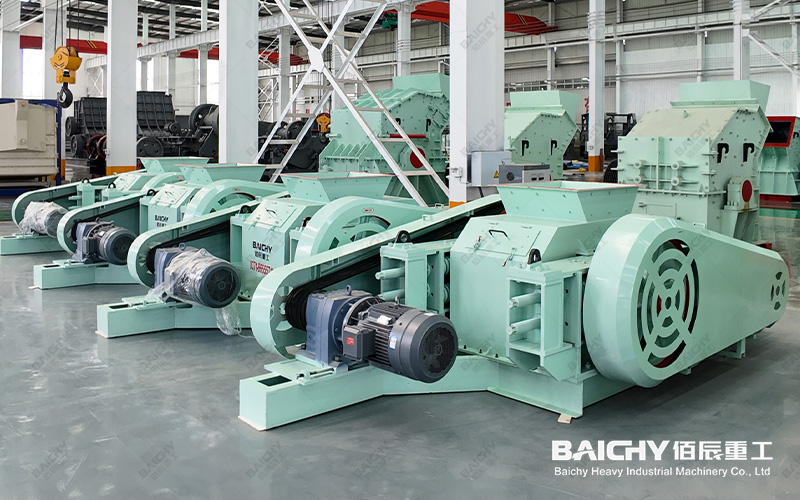
Quarry Fine Crushing Equipment - Double Roller Crusher
Representative Model Specifications:
| Model | Max. Feed Size (mm) | Discharge Size (mm) | Capacity (t/h) | Motor Power (kW) |
| 2PGY1200×1200 | ≤60 | 0–25 (adjustable) | 100–150 | 90×2 |
• Advantages: Adjustable discharge size, low fines generation, low power consumption per ton, and simple maintenance.
• Drawbacks: Roll surfaces require hard-facing repair after wear; low single-machine reduction ratio; cannot span multiple crushing stages.
3.3 PFL Vertical Compound Crusher—A Cost-Saving, Dual-Purpose Solution
• Working Principle: A vertical rotor propels material at high speed. Upon impact with the impact liners, the material shatters and rebounds, re-entering the rotor zone for repeated impacts (material-on-liner and material-on-material). Material meeting the required particle size is continuously discharged through the bottom outlet. The absence of bottom grate bars is the fundamental difference between the compound crusher and the hammer crusher, as well as the structural reason why it does not clog when processing wet or sticky materials.
• Applicable Conditions: Low-to-medium hardness materials with compressive strength ≤150 MPa (e.g., limestone, gypsum, coal gangue, shale, slag, cement clinker); suitable for the fine crushing and sand-making stage.
• Value Proposition: Accepts feed sizes ≤80 mm and produces 0–5 mm output in a single pass (with a yield of ≥80%); replaces the traditional two-stage "secondary crushing + sand making" process, reducing equipment investment by 30–40%; handles materials with moisture content ≤12% without clogging; vertical layout requires approximately 40% less floor space than horizontal impact crushers of equivalent capacity.
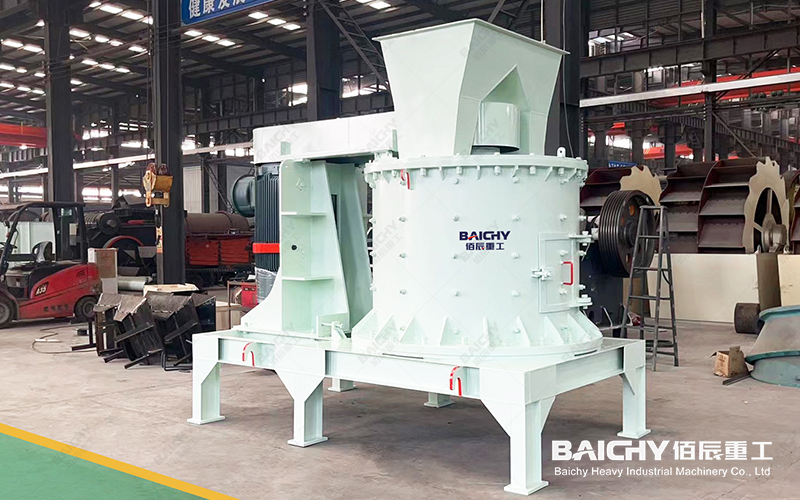
Quarry Fine Crushing Equipment - PFL Vertical Compound Crusher
Representative Model Specifications:
| Model | Feed Size (mm) | Output Size (mm) | Capacity (t/h) | Power (kW) |
| PFL-1000 | ≤60 | ≤5 | 20–40 | 55–75 |
| PFL-1250 | ≤80 | ≤5 | 30–60 | 90–110 |
| PFL-1500 | ≤100 | ≤8 | 60–100 | 132–160 |
| PFL-1750 | ≤120 | ≤8 | 100–150 | 185–220 |
| PFL-2000 | ≤150 | ≤10 | 150–250 | 250–315 |
V. Typical Production Line Configurations (Based on 100–150 t/h capacity)
| Configuration | Secondary Crushing | Tertiary Crushing/Shaping | Application Scenario | Finished Products |
| Hard Rock Line | CS110 Cone Crusher | VSI-8518 Sand-making Machine | Granite/Basalt quarries, High-speed rail aggregates | 0–5mm sand + 5–25mm aggregate |
| Medium-Soft Rock Line | PF1214 Impact Crusher | VSI-7611 or 2PGY1200×1200 | Limestone quarries, Commercial concrete plant supply | 0–5mm sand + aggregate |
| Small-scale/Limestone Line | - | PFL-1250/1500 Compound Crusher | Feed size ≤80mm, budget-constrained lines | 0–5mm fines (≥80%) |
VI. Auxiliary Equipment Recommendations: Feeding, screening, iron removal, and dust suppression are essential, not optional.
• ZSW Vibrating Feeder + Grizzly Pre-screen: Allows 20–40% of fines to bypass the primary crusher, preventing fine material from grinding down jaw plates or cone crusher liners (which would reduce service life by 30%) and avoiding rejection by concrete plants due to excessive silt/clay content;
• Magnetic Iron Separator: Essential for construction waste and steel-containing material lines; protects cone crushers, VSI, and PFL rotors—tramp metal is the most common cause of failure in fine crushing equipment;
• Vibrating Screen Grading: Post-secondary/tertiary crushing, material must be graded according to specifications (0–5/5–10/10–20/20–30mm), with a closed-loop return system (recirculating oversized/unqualified material back to the crusher) to ensure stable particle size distribution;
• Dust Suppression System: With increasingly strict environmental assessments for quarries, dust control is not merely an environmental issue but a prerequisite for obtaining an operating permit.
VII. FAQ
Q1: What specific equipment is used for secondary and tertiary crushing in a quarry?
A: Categorized by crushing stage—Secondary crushing (Stage 2) processes the output from primary crushing (100–300mm) to produce medium-sized fragments (30–80mm); representative equipment includes cone crushers, impact crushers, and hammer crushers. Fine crushing (Stage 3) processes the output from secondary crushing to produce the final product (0–25mm); representative equipment includes VSI sand-making machines, double-roll crushers, PFL compound crushers, and fine-crushing cone crushers. The selection logic differs: secondary crushing is determined by material hardness, while fine crushing is determined by the target product specifications.
Q2: How do I choose between a cone crusher and an impact crusher?
A: Choose based on material hardness. For hard rock like granite or basalt (>150 MPa), a cone crusher is mandatory—its inter-particle (lamination) crushing mechanism results in wear parts lasting 6–10 times longer than the blow bars of an impact crusher, allowing the initial price difference to be recouped within three years. For medium-soft rock like limestone, choose an impact crusher—it offers low investment costs, high output, and produces cubical particles in a single pass. Using an impact crusher on hard rock requires replacing blow bars 1–2 times a month, causing the cost per ton to spiral out of control.
Q3: How should the secondary and fine crushing stages be configured for a granite quarry?
A: Standard configuration: Jaw crusher (primary) → CS/HP cone crusher (secondary) → VSI sand-making machine (fine crushing/sand making). The entire line utilizes compression/lamination crushing. If producing only aggregate without sand, the fine crushing stage can use a fine-crushing cone crusher in a closed-loop circuit; however, if the manufactured sand is intended for commercial concrete or asphalt plants, a VSI crusher is essential to meet strict acceptance criteria (specifically, a needle-and-flake particle content of <5%).
Q4: Should a limestone quarry use an impact crusher or a hammer crusher?
A: It depends on the target product. For aggregate (5–31.5mm graded sizes), choose an impact crusher; it yields good, adjustable particle shapes. For mixed material ≤25mm (used in cement plants, power plant desulfurization, or gypsum production lines), choose a hammer crusher or PFL compound crusher; a single unit can replace a two-stage process, resulting in the shortest possible workflow. For applications with a moisture content exceeding 8%, prioritize the 2PC dual-rotor crusher (capable of handling up to 20% moisture) or the PFL crusher (featuring a grate-free design) to prevent chamber clogging and unplanned downtime.
Q5: Should I use a VSI crusher or a double-roll crusher for sand making?
A: Choose a VSI crusher if you prioritize particle shape and gradation (e.g., sand for commercial concrete or asphalt surface courses)—it offers a flake/elongation content of less than 5%, adjustable fineness modulus, and integrated shaping capabilities. Choose a double-roll crusher if you prioritize low power consumption and low fines generation, or if you have a limited budget (e.g., for general masonry sand). VSI crushers are essential for shaping hard rock, whereas double-roll crushers are suitable only for medium-to-soft materials.