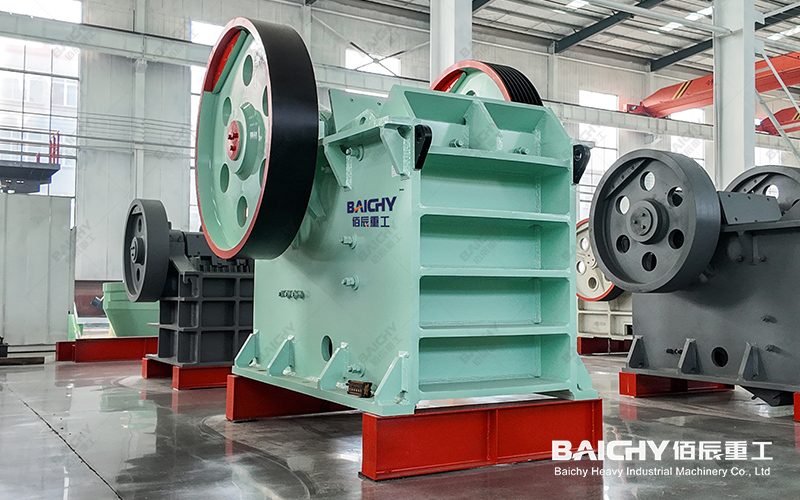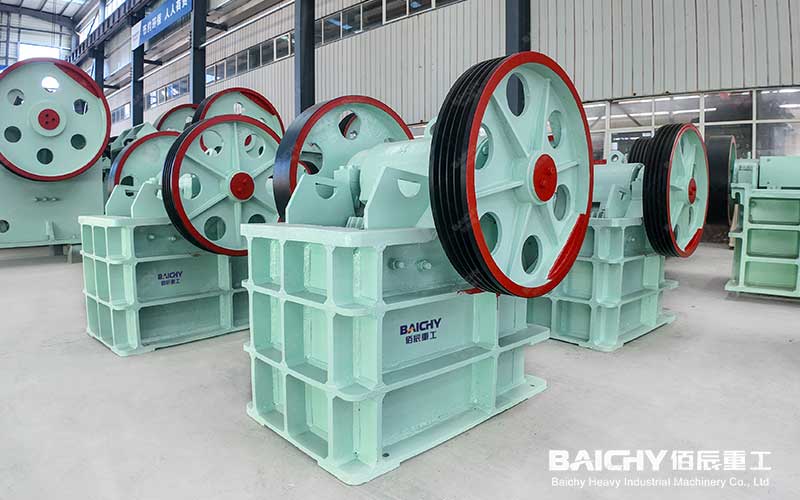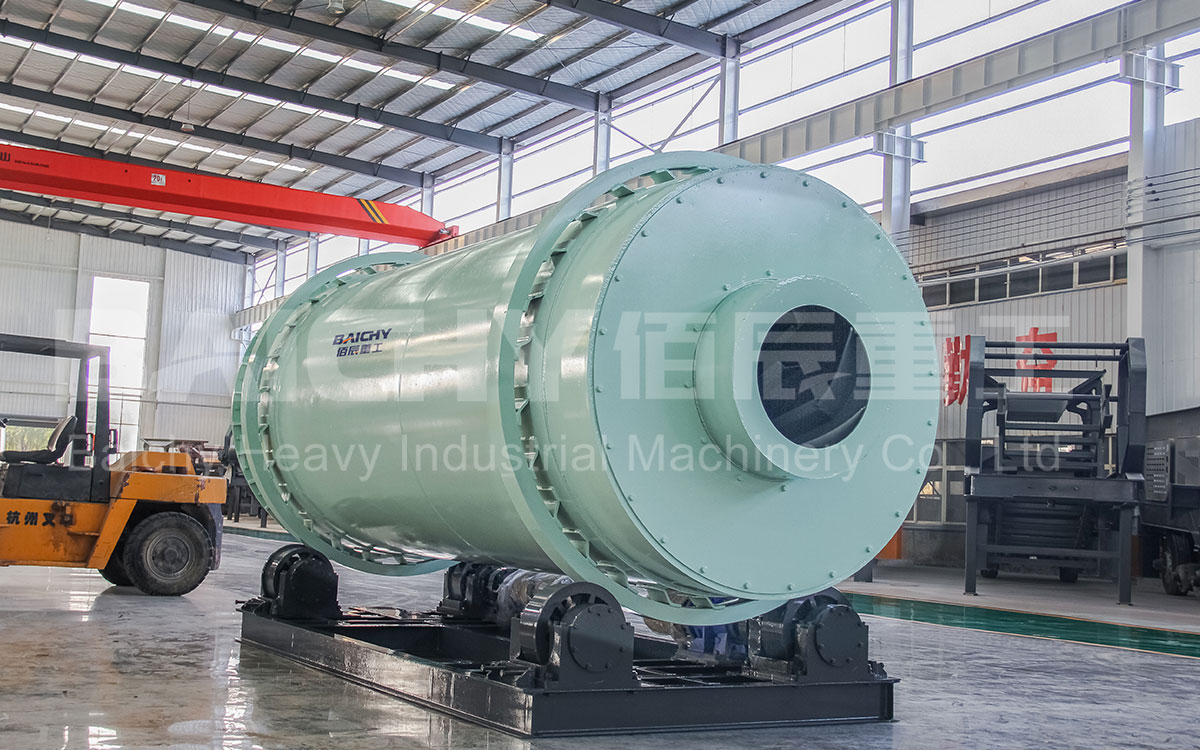
Rotary Drum Dryers
If your production line is bottlenecked by material drying, a rotary drum dryer is the answer — provided you size it right. Across mining, chemical processing, building materials, and environmental engineering, moisture control determines throughput, energy cost, and product quality. No other dryer matches the rotary drum's combination of scale (1–200+ t/h), material tolerance (granular to filter cake), and decades-long service life.
This guide is not a brochure. It is a technical reference that answers the four questions every plant engineer asks before procurement: How does it work? What throughput do I actually get? Which configuration fits my material? What will it cost to run?
1. Operating Principle: Heat Transfer at Industrial Scale
The core mechanism is deceptively simple: a rotating inclined cylinder exposes wet material to a hot gas stream, and internal flights maximize the contact surface area.
Inside the Drum — Step by Step
| Stage | What Happens | Design Factor |
| Feed | Wet material (40–65% moisture) enters via screw conveyor or belt at the elevated end | Feed chute angle matched to material repose angle |
| Lift & Cascade | Lifting flights scoop material, carry it upward, and drop it as a curtain through the hot gas stream | Flight shape (straight, angled, or segmented) determined by material stickiness and particle size |
| Heat Exchange | Convection drives moisture from particle surface; conduction transfers heat into particle core | Gas velocity: 2–5 m/s; residence time: 15–45 minutes |
| Discharge | Dried material (0.5–5% moisture) exits at the lower end via gravity | Discharge hood with rotary airlock prevents false air ingress |
Key Operating Parameters
| Parameter | Small Unit | Medium Unit | Large Unit |
| Drum Diameter | φ0.8–1.2 m | φ1.5–2.2 m | φ2.4–3.6 m |
| Drum Length | 8–12 m | 12–18 m | 18–25 m |
| Capacity (wet basis) | 1–10 t/h | 10–50 t/h | 50–200+ t/h |
| Motor Power | 5.5–15 kW | 18.5–55 kW | 75–160 kW |
| Inlet Gas Temp | 150–400°C | 300–600°C | 500–800°C |
| Rotation Speed | 2–8 rpm (VFD-adjustable) | ||
| Installation Slope | 2–5° | ||
| Final Moisture | 0.5–5% (material-dependent) |
Co-Current vs. Counter-Current: The Decision That Determines Thermal Efficiency
Parallel flow (co-current): Hot gas and wet material move in the same direction. The 600–800°C gas hits the wettest material first — surface moisture evaporates instantly, shielding the particle core from overheating. Use for: fertilizers, biomass, distiller's grains, and any heat-sensitive material where product degradation must be avoided.
Counter-current flow: Material and gas travel in opposite directions. The driest material meets the hottest gas at the discharge end, extracting maximum residual moisture. Thermal efficiency is 15–25% higher than co-current. Use for: quartz sand, mineral powders, slag — materials that tolerate high exit temperatures and where fuel cost is the dominant operating expense.
Baichy configures flow direction, flight geometry, and drum internals per material — not from a catalog, but from your sample test data.
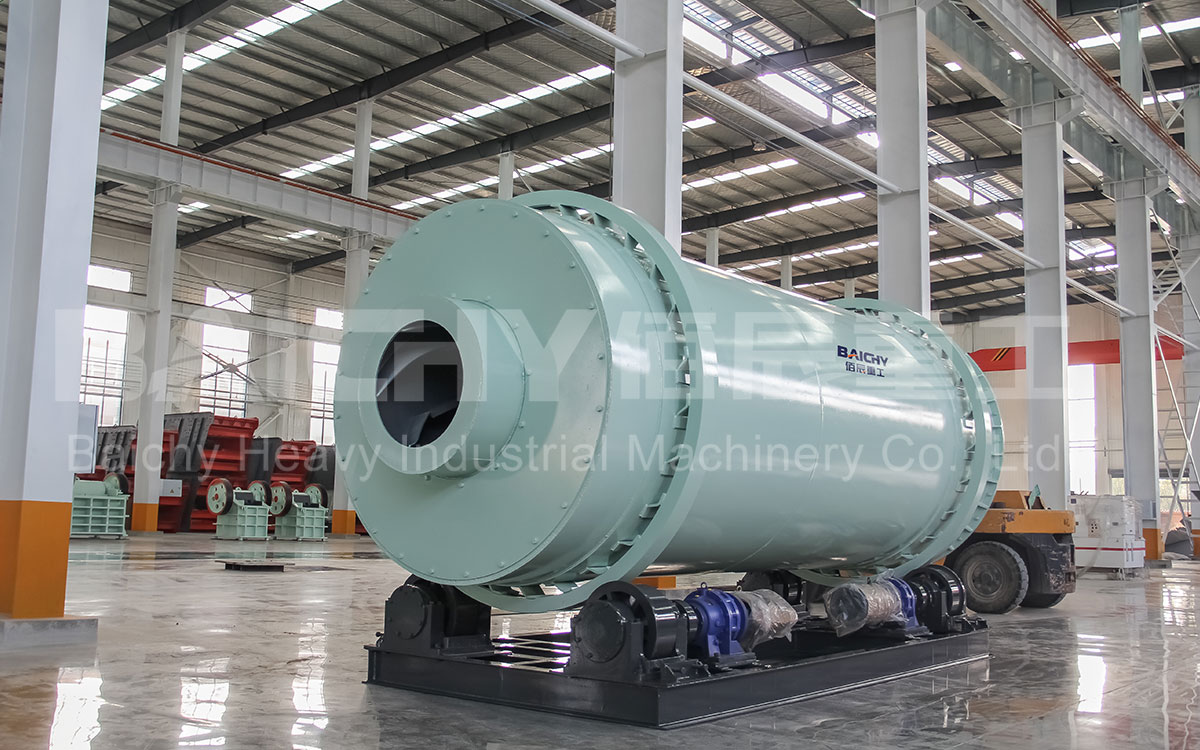
Rotary-Drum-Dryer
2. Why a Rotary Drum Dryer Wins — Measurable Advantages
2.1 Throughput: The Only Single-Machine Solution Above 100 t/h
| Dryer Type Max | Practical Throughput | Best Application |
| Flash dryer | ≤20 t/h | Fine, non-sticky powders |
| Fluidized bed dryer | ≤50 t/h | Uniform granules |
| Belt dryer | ≤10 t/h | Delicate, thin-layer products |
| Rotary drum dryer | 200+ t/h | Any bulk solid above 1 t/h |
If your operation processes over 50 tons per shift, a rotary drum is not an option — it is the only option that scales without adding parallel units.
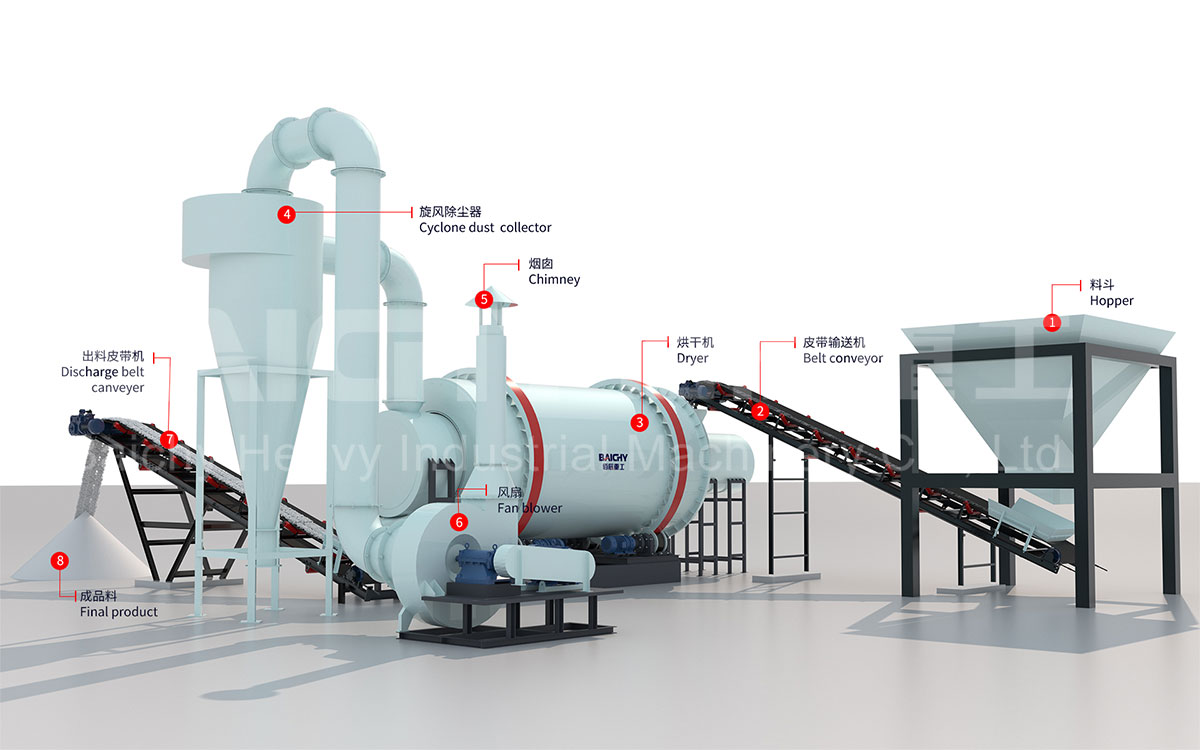
Schematic-diagram-of-the-process-flow-for-a-three-cylinder-dryer.
2.2 Material Flexibility: One Machine, No Retooling
Spray dryers demand pumpable slurry. Belt dryers choke on irregular particle sizes. A rotary drum dryer processes them all — granular quartz sand (0.1–5 mm), filter cake (60% moisture paste), flaky mica, fine mineral powder (200–325 mesh), and sticky sludge — by adjusting three variables: drum speed, gas temperature, and feed rate. No hardware changes required between batches.
2.3 25+ Year Service Life
• Shell: Q245R/Q345R boiler-grade steel, 8–25 mm wall thickness (thicker for larger diameters)
• Support: Forged steel riding rings on hardened thrust rollers
• Seals: Labyrinth or graphite block seals at feed and discharge ends
• Wear protection: Replaceable liner plates in high-abrasion zones
Compare this to belt dryers (belt replacement every 2–3 years) or fluidized beds (grid fouling, media attrition). Over a 20-year lifecycle, the rotary drum's cost-per-ton-dried is the lowest in the industry.
2.4 Thermal Efficiency: 60–80% Standard, 80%+ with Triple-Pass Design
Single-pass rotary drums achieve 60–70% thermal efficiency with proper insulation. Triple-pass (concentric cylinder) designs route exhaust gas through outer annular spaces for feed preheating, pushing efficiency past 80%. Direct-fired rotary kilns, by comparison, operate at 40–55%.
2.5 Maintenance: Scheduled Downtime Is 3–5 Days Annually
No fluidizing grids to descale. No spray nozzles to unclog. No belts to track and tension. The maintenance checklist is short:
• Weekly: Inspect riding ring lubrication
• Monthly: Check trunnion wheel alignment and seal integrity
• Annually: Replace wear liners in high-impact zones (3–5 day shutdown)
3. Where Rotary Drum Dryers Deliver — Industry Applications
| Industry | Typical Materials | Configuration | Throughput |
| Mining & Minerals | Quartz sand, silica sand, bentonite, kaolin, phosphate rock, iron ore concentrate, copper concentrate | φ2.2–3.6 m, counter-current, coal/gas-fired | 30–200 t/h |
| Chemical Processing | NPK fertilizer, ammonium sulfate, soda ash, pesticides, polymer pellets | φ1.5–2.2 m, co-current, temperature-controlled with thermocouple feedback | 5–30 t/h |
| Building Materials | River sand, manufactured sand, limestone, gypsum, slag, fly ash | Triple-pass drum preferred; gas or coal-fired | 20–150 t/h |
| Environmental | Municipal sludge (20–80% MC), industrial sludge, FGD gypsum | Special anti-stick flights + sealed system + wet scrubber for odor control | 3–30 t/h |
| Biomass & Agriculture | Wood chips, sawdust, straw, bagasse, distiller's grains, bio-organic fertilizer | Low-temperature (<300°C), co-current, indirect heating optional | 3–20 t/h |
4. How to Select the Right Rotary Drum Dryer — A 5-Step Framework
Step 1: Characterize Your Material
Send a 5–10 kg representative sample for lab analysis. Five data points drive all subsequent design decisions:
1. Initial moisture content (%) — determines evaporation load
2. Target final moisture (%) — determines required residence time
3. Particle size distribution (mesh or mm range) — determines gas velocity ceiling (to avoid entrainment)
4. Bulk density (kg/m³) — determines drum volume and motor torque
5. Heat sensitivity and abrasiveness — determines flow direction and liner specification
Step 2: Calculate Required Throughput
Use wet-basis tons per hour as your input. Rule-of-thumb sizing:
| Drum Size | Wet Capacity (general minerals) |
| φ1.5 × 12 m | 5–10 t/h |
| φ2.2 × 18 m | 20–40 t/h |
| φ3.0 × 20 m | 60–100 t/h |
| φ3.6 × 25 m | 120–200+ t/h |
These are approximations. Final sizing requires a mass-and-energy balance calculation that accounts for your specific moisture reduction target. High-moisture feed (e.g., 65% → 5%) demands a larger drum than moderate-moisture (e.g., 25% → 5%) at the same hourly tonnage.
Step 3: Select Your Heat Source
| Heat Source | Operating Cost per Ton Dried | Best For |
| Coal hot blast furnace | $3–6 | Regions with cheap coal and permissive emissions regulations |
| Natural gas burner | $4–8 | Precise temperature control; cleaner exhaust |
| Biomass pellets | $2–5 | Carbon-neutral compliance; agricultural co-location |
| Steam/thermal oil (indirect) | $6–12 | Flammable, solvent-laden, or contamination-sensitive materials |
| Heavy oil / diesel | $8–15 | Remote sites without gas pipeline access |
Step 4: Plan for Emissions Compliance
The standard dust collection train: cyclone (≥90% coarse capture) → baghouse filter (≥99% fine particulate capture).
• If local regulations require <30 mg/Nm³: add a wet scrubber after the baghouse
• If processing sludge or organic waste: odor control via biofilter or activated carbon adsorption
• If burning coal: flue gas desulfurization (FGD) may be required — specify this at the quotation stage
Step 5: Verify Site Fit
Before finalizing a model, confirm:
• Foundation dimensions and ground bearing capacity
• Available headroom (drum + hopper + dust collection ducting)
• Electrical supply: 380 V / 50 Hz, 460 V / 60 Hz, or 6 kV / 10 kV for large motors (>75 kW)
• Fuel storage and delivery logistics
Baichy delivers 3D layout drawings with the quotation so you can verify clearance, access ways, and tie-in points against your existing plant.
5. Frequently Asked Questions
Q1. How much does a rotary drum dryer cost?
A complete system — dryer drum, hot blast furnace or burner, cyclone, baghouse, conveyors, and control panel — ranges from 30,000to500,000 depending on capacity and configuration. A φ1.5 × 12 m system typically falls in the 30,000–60,000 range; a φ3.0 × 20 m system with full emissions control can reach 300,000–500,000. Contact Baichy with your throughput and material specifications for a same-day budgetary quote.
Q2. What is the difference between a rotary dryer and a rotary kiln?
A rotary dryer operates at 150–800°C and only removes moisture. A rotary kiln operates at 800–1,450°C and drives a chemical reaction — calcination, sintering, or pyrolysis. Dryers handle physical water removal; kilns handle chemical transformation. The equipment looks similar, but the refractory lining, burner design, and process control systems are fundamentally different.
Q3. How long does installation take?
A standard rotary drum dryer system requires 30–60 days from equipment arrival to commissioning, depending on site preparation and local contractor availability. Baichy provides on-site supervision engineers to manage alignment, electrical integration, and operator training during this period.
Q4. Can a rotary drum dryer handle sticky materials?
Yes — with the right flight design. For sticky materials (clay, filter cake, sludge), Baichy uses a combi