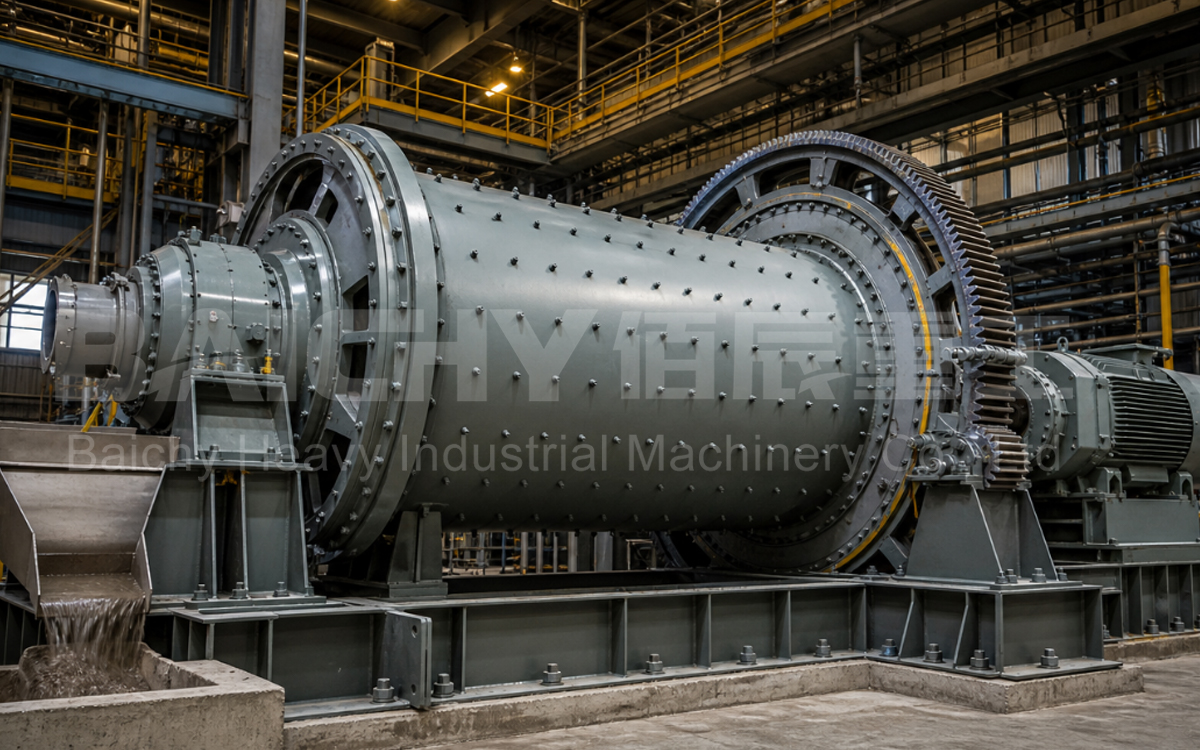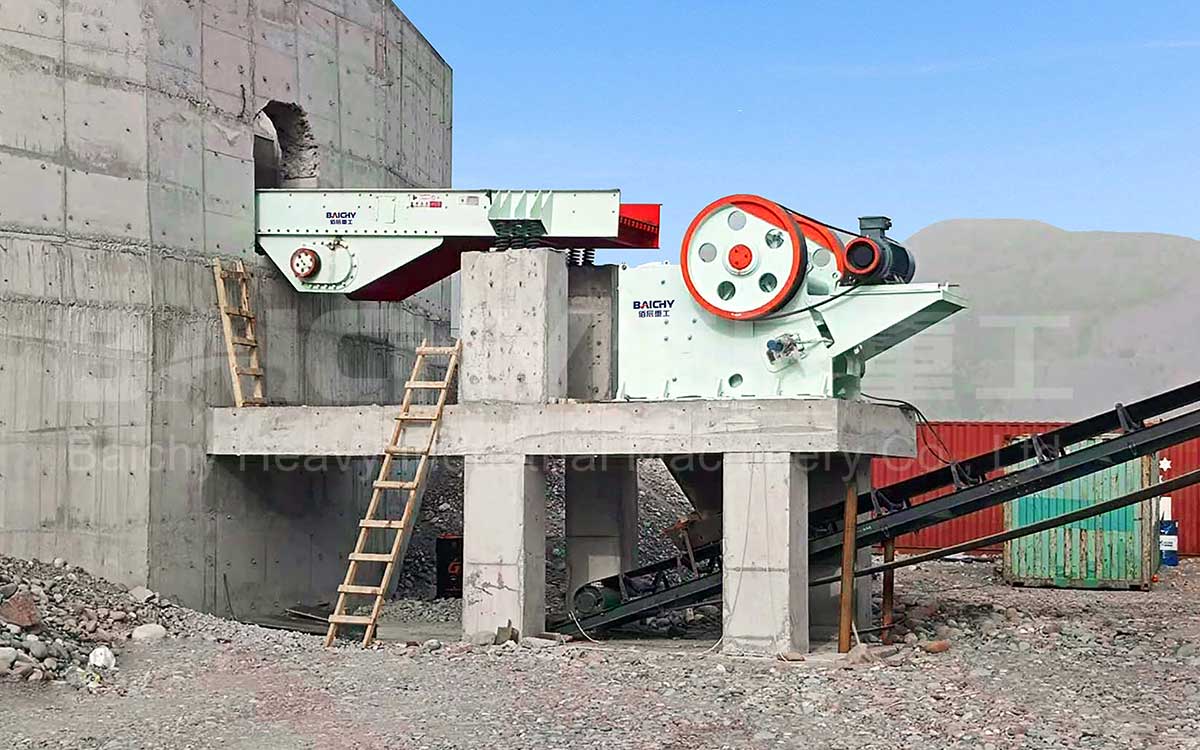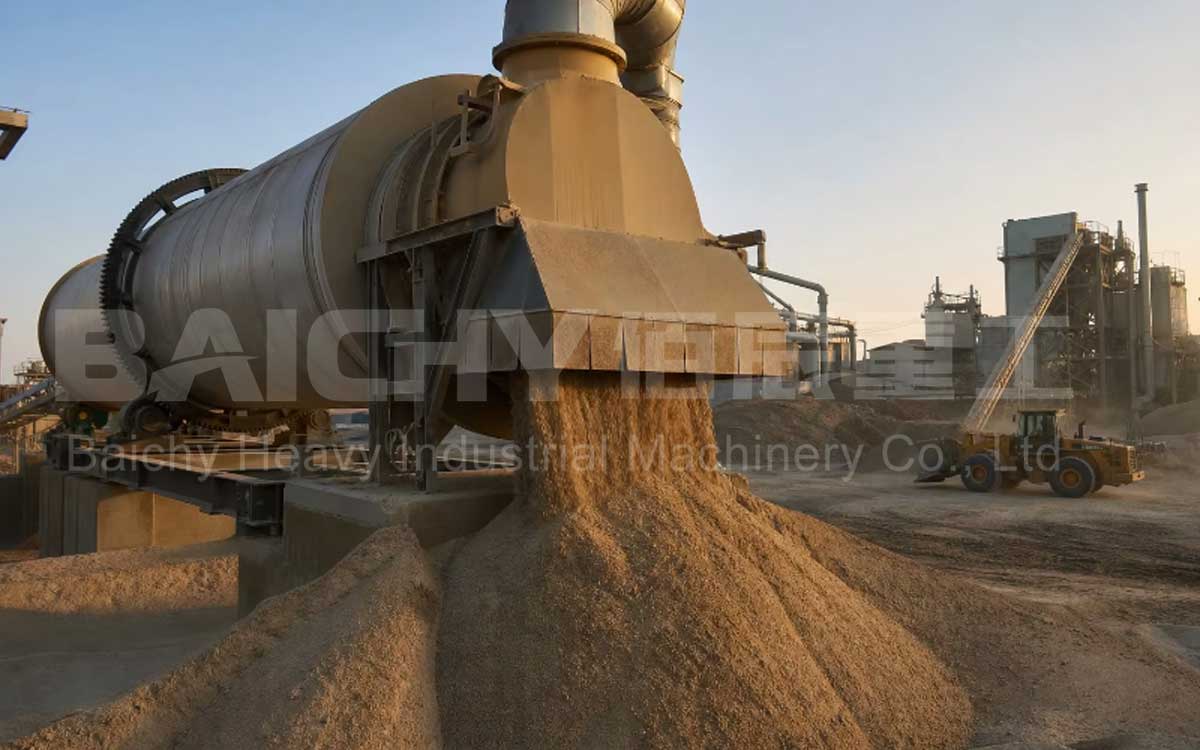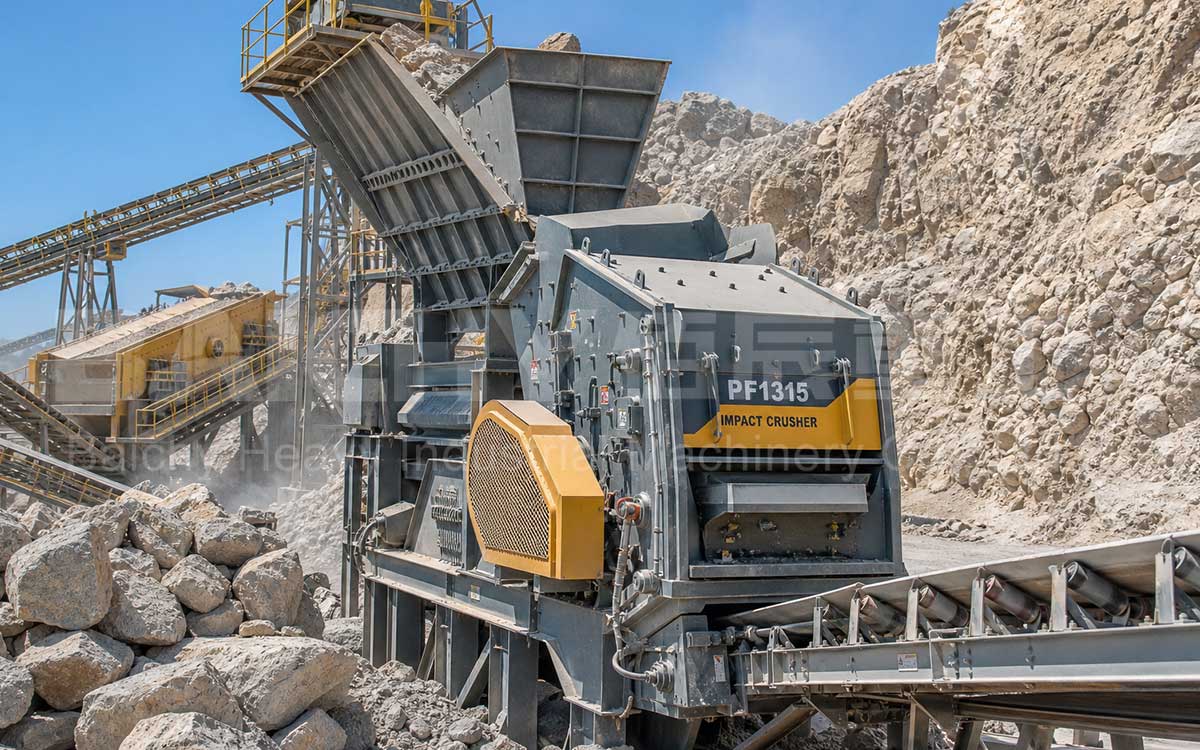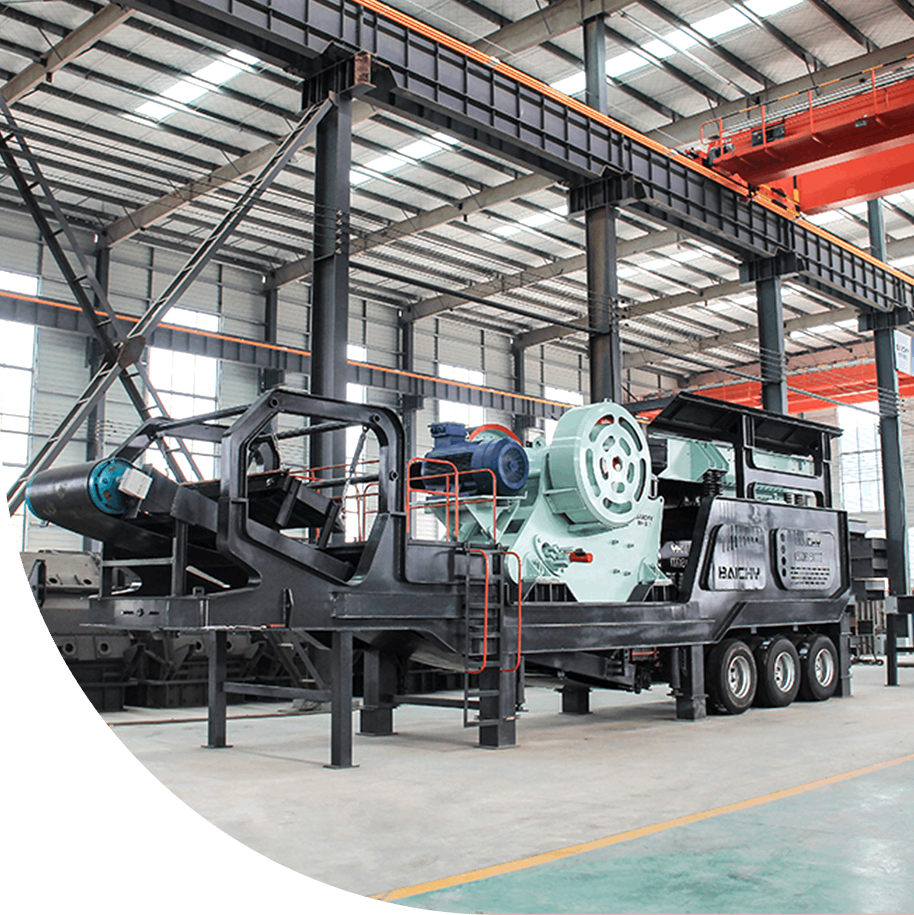

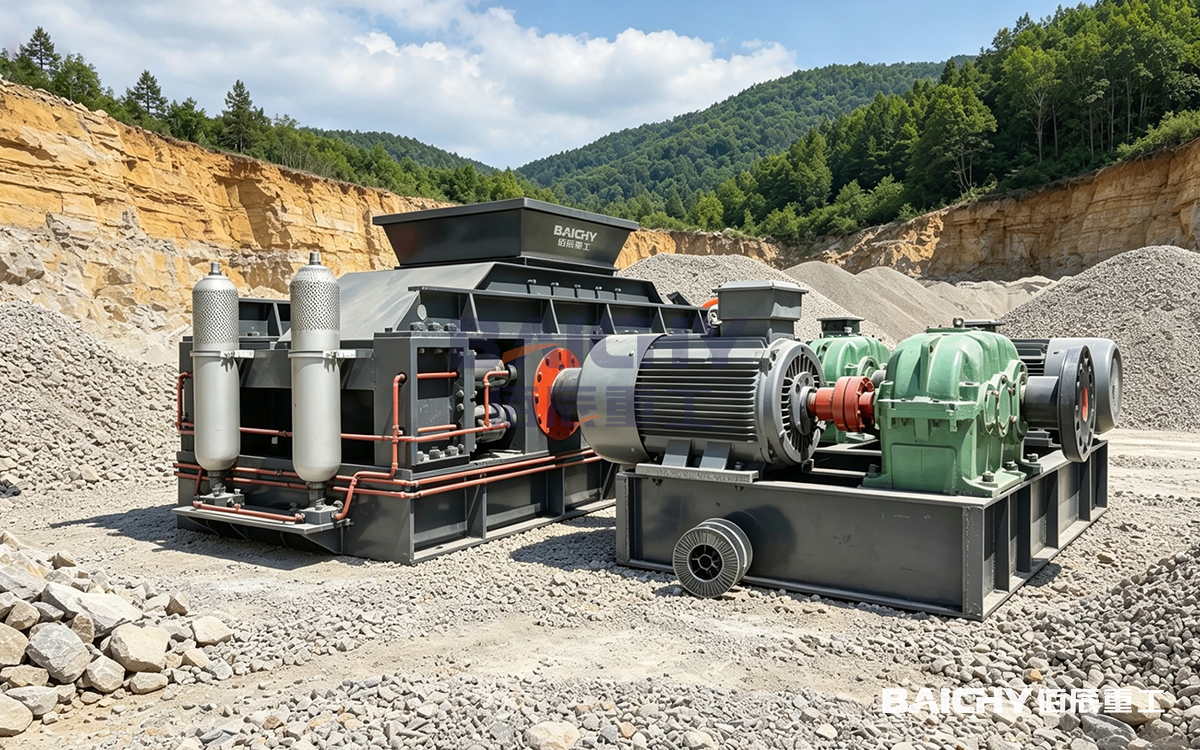
stone fine-crushing equipment
The roll stone crusher (specifically the double-roll stone type, 2PG series) replaces high-speed impact with low-speed compression between two roll stones. The output particle size is determined directly by the roll stone gap, ensuring uniformity and control; the rate of excessive fines generation is below 10%, and the machine does not clog when processing wet or sticky materials. For sand and aggregate production lines struggling with excessive fines, high recirculation rates, or high power consumption, integrating a roll stone crusher into the secondary fine crushing or sand-making stage is one of the most effective upgrade solutions.
I. What is a roll stone Crusher: Structure and Working Principle
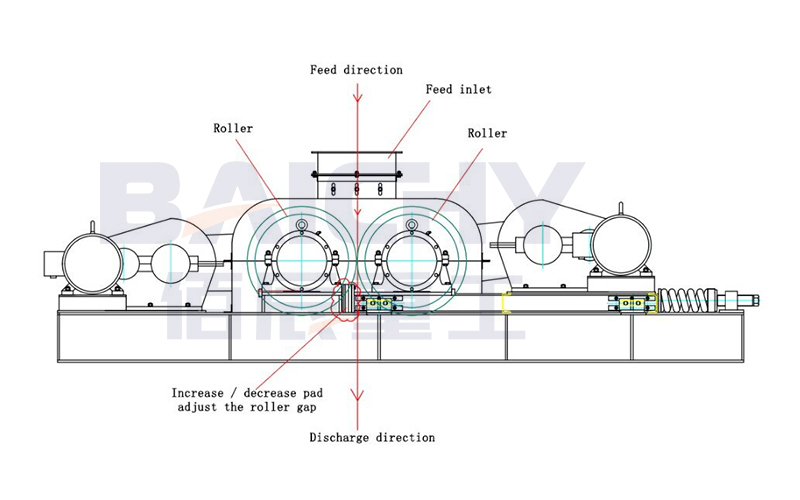
Structural diagram of a double-roll crusher
The roll stone crusher belongs to the double-roll stone crusher family: two counter-rotating roll stones form the crushing chamber. Material is drawn into the roll stone gap, where it fractures along natural planes of weakness under high-pressure compression and minor shearing forces; the finished product is continuously discharged from beneath the gap. The machine consists of a frame, roll stones, a roll stone gap adjustment mechanism, and a drive system. roll stone surfaces come in two types: smooth roll stones and toothed roll stones. Smooth roll stones produce uniform fine particles (2–15 mm) and are primarily used for fine crushing and sand making; toothed roll stones tear apart high-moisture, high-stickiness materials, yielding a coarser product.
1.1 Three-Step Crushing Mechanism
• Feeding: Material is drawn into the roll stone gap by gravity and friction against the roll stone surfaces;
• Primary Compression: Counter-rotating roll stones generate high pressure; material fractures upon compression without repeated impact;
• Sized Discharge: The roll stone gap width sets the upper limit for particle size; particles smaller than the gap pass through directly.
1.2 Why "Compression" Beats "Impact"
Hammer crushers and impact crushers rely on high-speed, repeated impacts, inevitably producing excessive fines (<3 mm). In contrast, this machine concentrates crushing force along the line of the roll stone gap; material undergoes a single compression and passes through based on size—low fines generation is an inherent structural advantage, not merely the result of machine tuning.
II. Typical Application Scenarios for roll stone Crushers
Applicable Scope: Brittle to moderately soft materials with a compressive strength of ≤150 MPa; target output size of 2–30 mm. For hard materials such as granite or basalt, please use jaw crushers or cone crushers instead.
2.1 Sand and Aggregate: Secondary Crushing and Manufactured Sand—The Most Intensive Application Market
Limestone and dolomite, having undergone primary crushing in a jaw crusher, are fed into this machine for secondary fine crushing; the 10–25mm output directly meets aggregate grading requirements. In sand-making applications, it operates in a closed circuit with a circular vibrating screen to shape and refine 2–6mm material, replacing the cone crusher typically used in the fine crushing stage; the low over-crushing rate ensures a high yield of qualified sand and reduces the load on subsequent sand-washing processes.
2.2 Mineral Processing and Metallurgical Auxiliaries
Sinter and manganese ore require "precision-sized crushing with minimal fines generation"; the machine produces a highly concentrated 3–10mm output with a low fines ratio, directly protecting downstream grinding and sintering processes. When used for the fine crushing of iron ore, its electricity consumption per ton is significantly lower than that of impact-type equipment.
2.3 Building Materials and Chemical Raw Materials
Cement plants use it to process gypsum and clinker, producing a uniform and controll stoneable 3–15mm feed for the grinding mill, thereby reducing grinding energy consumption. In the glass and ceramics industries, processing feldspar and glass batch materials relies on precise roll stone gaps to ensure consistent particle size. For caked fertilizers and saline materials, the machine's ability to prevent over-crushing is a key advantage.
2.4 Solid Waste Resource Recovery
For materials containing impurities—such as brick rubble from construction waste or slag—the machine operates reliably thanks to its simple structure and overload protection; replacing hammer crushers with this equipment results in a simultaneous reduction of noise and dust.
III. Core Advantages of roll stoneer Crushers
1. Low over-crushing rate, high yield of qualified product. The proportion of <3mm fines is less than 10% (compared to 18%–25% for impact-type equipment); for a 50 t/h production line, this yields an additional 4–7 tons of marketable material per hour. Since fines are priced as waste in the aggregate and coke markets, this gain represents pure profit.
2. Output particle size is determined by the roll stone gap. The roll stone spacing is adjusted via shims or a hydraulic system, allowing for a range of 2–30mm with ±1mm precision; a single machine accommodates multiple grading specifications, eliminating the need to replace the main unit when switching production requirements.
3. No clogging with wet or sticky materials. Spring-loaded scrapers continuously remove material adhering to the smooth roll stone surfaces, enabling continuous operation with moisture contents of 8%–12%; this capability is the primary reason it replaces hammer crushers in coal washing and chemical processing applications.
4. Low specific power consumption and repairable roll stone shells. It utilizes a low-speed, high-torque direct drive, resulting in approximately 30% lower power consumption per unit compared to impact-type equipment. The roll stone shells—made of high-manganese steel or alloy—can be repaired via on-site hardfacing at just 20%–30% of the cost of a new shell, with each shell capable of undergoing 2–3 repair cycles.
5. Comprehensive overload protection. Spring or hydraulic retraction mechanisms allow for instantaneous yielding and automatic resetting when encountering tramp iron, thereby minimizing unplanned downtime.
Perspective: Switching to a roll stone crusher for the fine crushing stage essentially trades "impact-related energy loss" for "gains in product sizing precision"—the crushing force is fully concentrated along the effective working line of the roll stone gap, utilizing the same amount of electricity.
IV. Technical Parameters of 2PG Series roll stone Crushers
The standard specifications for Baichy Heavy Industry’s 2PG series are as follows (smooth roll stones and toothed roll stones share the same machine platform; roll stone surfaces are selected based on operating conditions):
| Model | Roll Diameter × Length (mm) | Feed Size (mm) | Discharge Size (mm) | Capacity (t/h) | Motor Power (kW) |
|---|---|---|---|---|---|
| 2PG-400×250 | 400×250 | ≤25 | 2–8 | 2–10 | 2×5.5 |
| 2PG-610×400 | 610×400 | ≤30 | 2–10 | 5–20 | 2×15 |
| 2PG-750×500 | 750×500 | ≤40 | 3–15 | 15–40 | 2×18.5 |
| 2PG-800×800 | 800×800 | ≤40 | 3–15 | 20–60 | 2×22 |
| 2PG-900×900 | 900×900 | ≤50 | 3–20 | 50–100 | 2×37 |
| 2PG-1200×900 | 1200×900 | ≤50 | 3–25 | 60–130 | 2×45 |
| 2PG-1200×1200 | 1200×1200 | ≤50 | 3–30 | 80–150 | 2×45 |
Note: Capacity is rated based on a limestone bulk density of 1.6 t/m³; for lightweight materials such as coke, a conversion factor of 0.45–0.55 applies. If moisture content exceeds 12%, scrapers must be installed and the feed rate controll stoneed. Motor voltage (380V/400V/440V/660V) can be customized according to project requirements.
V. roll stoneer Crusher Application Case Studies
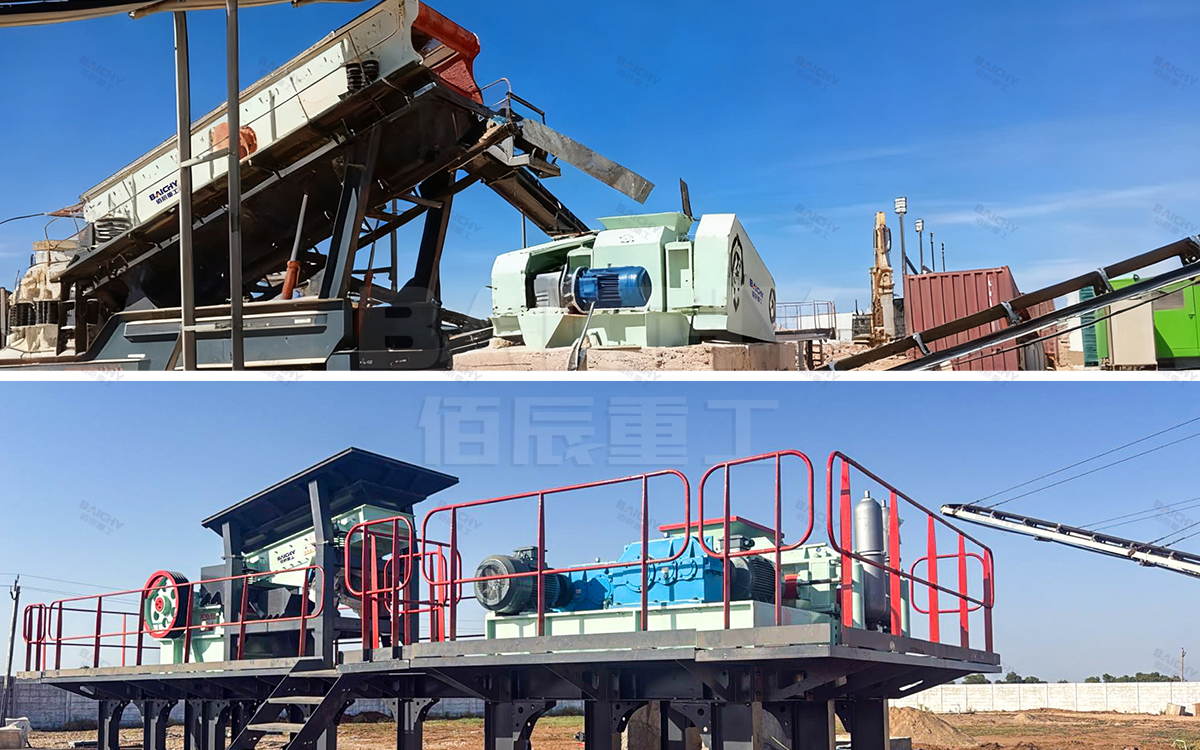
sand-making crusher
Case Study 1: Secondary crushing system upgrade for a limestone aggregate production line. The original secondary hammer crusher produced excessive fines and imposed a heavy load on the screening system; after switching to the 2PG-750×500 model, the output stabilized at 10–25 mm, the fines rate dropped from approximately 18% to below 8%, material recirculation was significantly reduced, and electricity consumption per ton fell by about 25%.
Case Study 2: Closed-circuit shaping of manufactured dolomite sand. A 2PG-800×800 roll stoneer crusher was operated in a closed circuit with a circular vibrating screen; the output stabilized at 2–6 mm with a concentrated particle size distribution, increasing the pass rate of the finished sand, while simultaneously reducing both fine sand loss and electricity consumption during the sand washing stage.
Case Study 3: Final crushing of gypsum clinker at a cement plant. The 2PG-900×900 model replaced the original hammer crusher, stabilizing the output at 3–10 mm; the hourly output of the ball mill increased by approximately 10%, and overall grinding electricity consumption was reduced by over 20%.
(The above serves as a reference for typical configurations based on similar projects; specific plans must be tailored to material analysis and production line layout.)
VI. roll stoneer Crusher Selection: Four Key Pitfalls to Avoid
• Consider hardness: For materials >150 MPa, choose a jaw or cone crusher; roll stoneer crushers are unsuitable.
• Check the roll stone surface: Choose smooth roll stones for uniform fine particles (2–15 mm); choose toothed roll stones for high-moisture, high-viscosity materials like coal gangue or clay.
• Calculate feed size: Feed size generally should not exceed 1/10–1/15 of the roll stone diameter; large lumps require preliminary coarse crushing to avoid drastically increased risks of roll stone wear and material jamming.
• Assess electricity consumption: Electricity consumption per ton for double-roll stone crushers is lower than that of impact-type equipment; make decisions based on a calculation of annual operating hours and OPEX.
VII. Recommended Auxiliary Equipment for roll stoneer Crushers
This machine is typically positioned at the secondary fine crushing or sand-making stage. Recommended configuration based on the process chain:
• Upstream Primary Crushing: PE Series Jaw Crusher—reduces stone sizes (≤500mm) to within the roll stoneer crusher's maximum feed size limit;
• Uniform Feeding: ZSW Vibrating Feeder—ensures even feeding and pre-screening to prevent uneven loading that could damage roll stoneer surfaces;
• Iron Removal/Protection: RCYD Iron Separator—removes iron contaminants at the source to protect roll stoneer surfaces and adjustment systems;
• Closed-Circuit Screening: YK Series Circular Vibrating Screen—returns oversized particles for re-crushing to ensure product granularity;
• Sand Washing Extension: Wheel-bucket or Spiral Sand Washer—paired with sand-making applications to produce clean sand;
• Downstream Grinding: Ball Mill or Raymond Mill—processes fine particles into the grinding stage, creating a "crushing + grinding" combination.
VIII. roll stoneer Crusher FAQs
Q1: Can roll stoneer crushers crush hard materials like granite or basalt?
No. They are suitable for brittle and medium-soft materials with compressive strength ≤150 MPa (e.g., limestone, dolomite, gypsum, coke, sinter). Crushing hard rock results in low efficiency and rapid roll stoneer surface wear. For granite, basalt, or quartzite, use jaw crushers for primary crushing and cone crushers for secondary/tertiary crushing; alternatively, use the roll stoneer crusher solely for the shaping stage of a hard-rock production line.
Q2: How do I choose between a roll stoneer crusher and a hammer crusher/impact crusher for fine crushing and sand making?
Consider three factors: fines generation rate (roll stoneer crusher <10% vs. impact crusher 18%–25%; for materials where "fines reduce value," this difference directly impacts profit); moisture adaptability (impact crushers easily clog with wet, sticky material, whereas roll stoneer crushers use scrapers for continuous operation); and electricity consumption per ton (roll stoneer crushers are ~30% more efficient). Prioritize the roll stoneer crusher if your main pain points are excessive fines, high material recirculation rates, or high electricity costs.
Q3: Can the output particle size remain stable over the long term? What happens if the roll stone shells wear down?
Yes, it can. The particle size is determined by the roll stone gap; if wear on the roll stone surfaces causes the gap to widen, it can be compensated for using spring or hydraulic mechanisms (requiring a minor adjustment every 300–400 operating hours, taking about 5 minutes). The roll stone shells are made of high-manganese steel or alloy hard-facing material and support in-situ hard-facing repair; the cost per repair is only 20%–30% of the price of a new roll stone, and a single set can be repaired 2–3 times.
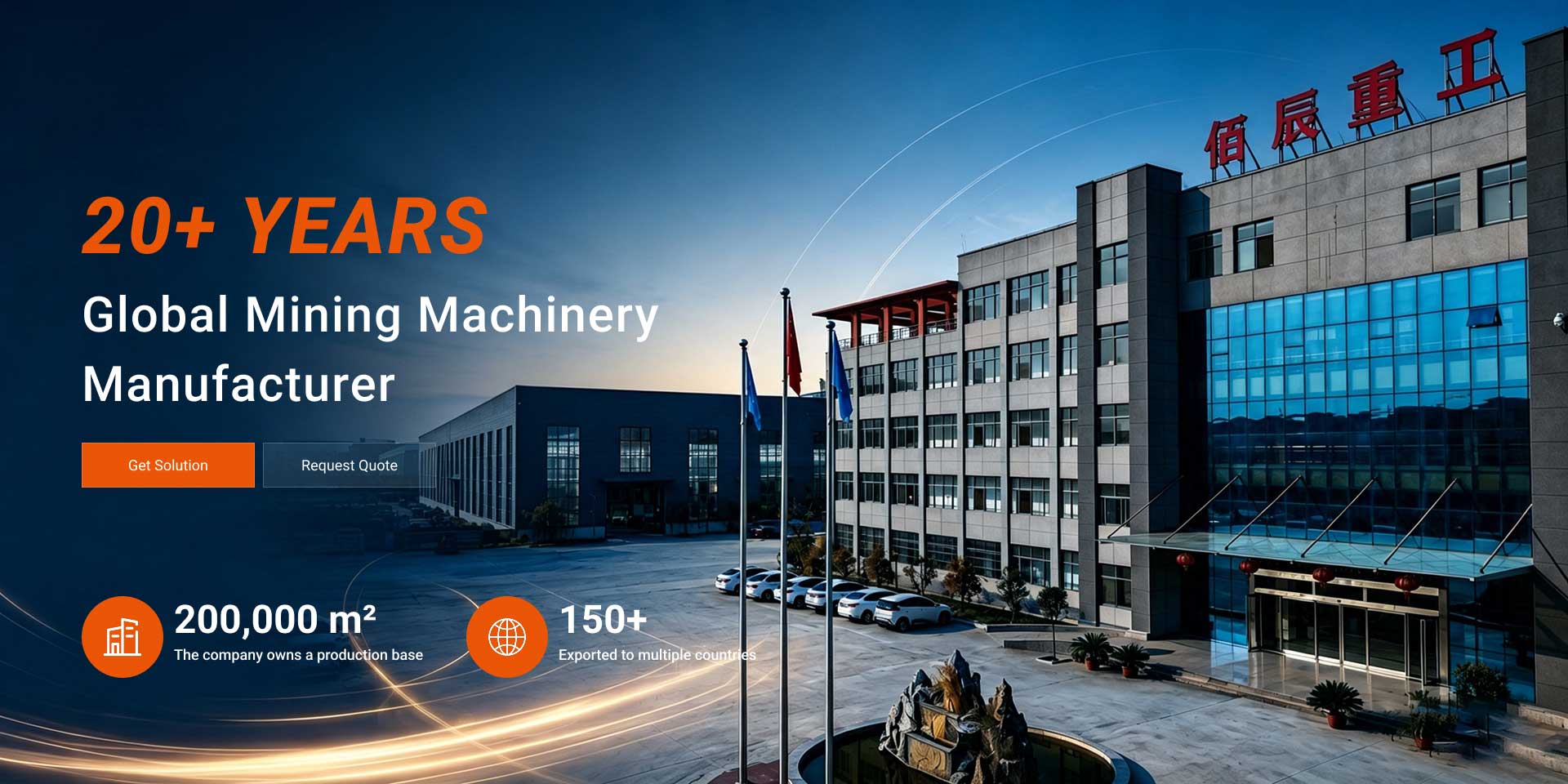
Baichy Heavy Industry
Baichy Heavy Industry is a high-tech mining equipment company integrating R&D, manufacturing, sales, and after-sales service. Focusing on crushing, grinding, and mineral processing equipment, we provide professional solutions to our customers. We are ISO9001:2015 、certified, and our products include mobile crushing palnts, crawler crushing plant, construction waste crushing plants, jaw crushers, sand making machines, cone crushers, fine crushers, grinding mills, ball mills, etc., all with reliable performance to meet diverse project needs.
Baichy Heavy Industry – Your Trusted Partner
To ensure optimal performance of your equipment, Baichy Heavy Industry offers:
- Professional on-site installation guidance
- Comprehensive operator training
- 24/7 technical support & maintenance services
Our complete after-sales service system guarantees long-term, stable operation of your machinery with minimal downtime.
Protect Your Rights – Only Use Official Channels
To avoid scams and ensure authentic support, contact us exclusively through:
• Official Website: www.baichychina.com
• WhatsApp: +8615093222637
• Email: [email protected]
Your satisfaction is our priority – expect prompt, professional service every time.
(Note: Beware of unauthorized third parties claiming to represent Baichy. Always verify through official contacts.)