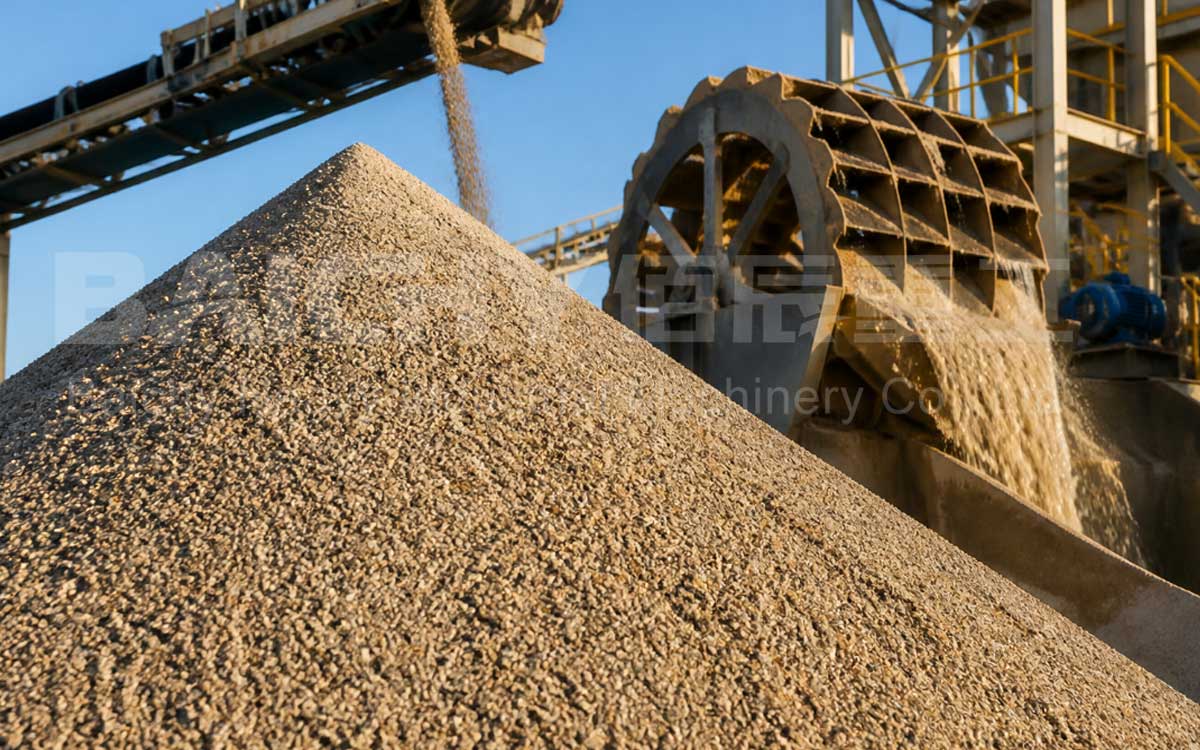
Sand-Making Equipment
The shift from natural sand to manufactured sand is an irreversible trend in the global aggregate industry, and sand-making equipment serves as the core productive force driving this transformation. Whether processing river pebbles, granite, or construction waste, a properly selected sand-making system can generate a full return on investment within three years. Focusing on Baichen Heavy Industry’s VSI series sand-making machines, this article provides a comprehensive analysis—covering working principles, application scenarios, parameter comparisons, and real-world case studies—to explain the logic behind equipment selection and return on investment, ensuring every penny of the equipment expenditure is clearly accounted for.
I. What is sand-making equipment?
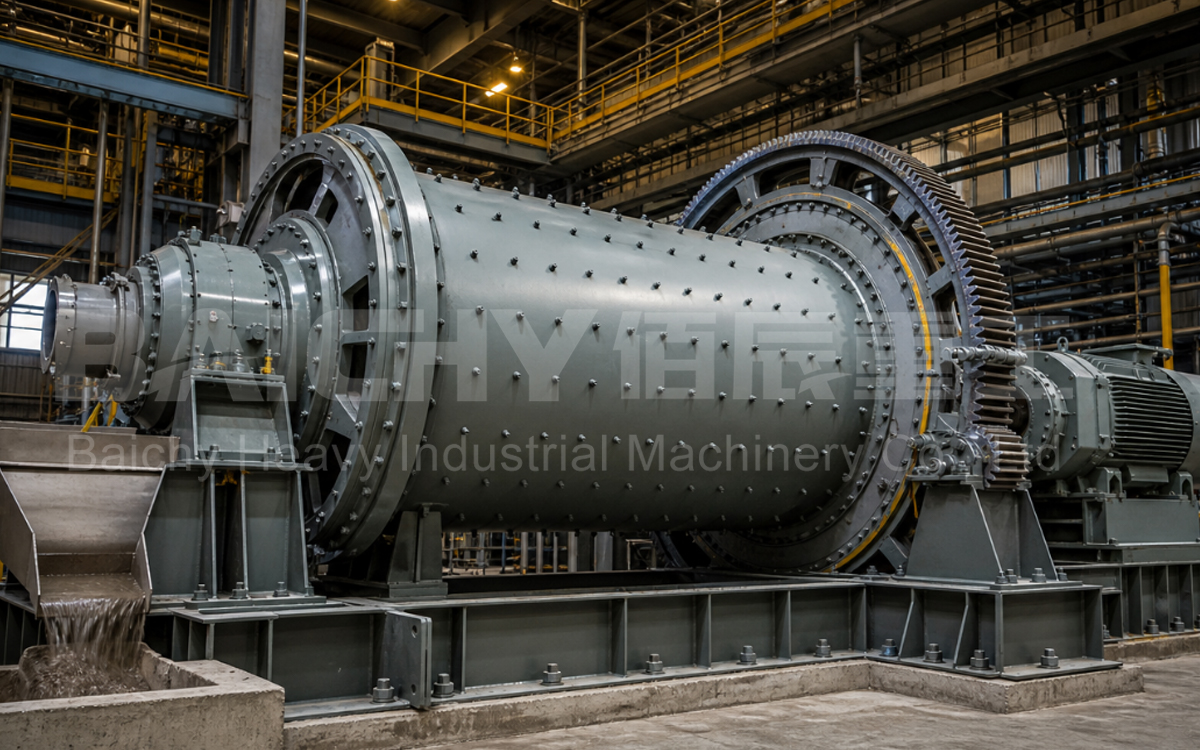
Sand-making equipment refers to a complete set of machinery designed to process natural stone, river pebbles, or tailings into manufactured sand (0–5 mm) that meets the gradation requirements for concrete and asphalt mixtures. Core units include Vertical Shaft Impact (VSI) sand-making machines, vertical compound crushers (PFL), and double-roll sand-making machines. Among these, the VSI sand-making machine—featuring a dual-chamber design that utilizes both "rock-on-rock" and "rock-on-iron" impact mechanisms—combines particle shaping with fine crushing capabilities, making it the primary choice for medium-to-large-scale sand production lines. A complete sand-making system typically comprises six major subsystems: feeding, crushing, sand making, screening, sand washing, and dust removal. Single-line production capacities range from 50 to 500 tons per hour, meeting perse downstream demands for aggregates, dry-mixed mortar, and ready-mixed concrete.
II. Typical application scenarios for sand-making equipment
1. Aggregates for ready-mixed concrete and dry-mixed mortar
Manufactured sand particles are cubic with distinct angularity, offering strong bonding with cement paste. Concrete blended with 40%–60% manufactured sand exhibits superior workability and strength compared to concrete made solely with natural sand; consequently, it has become the preferred aggregate source for projects such as subways, bridges, and high-rise buildings.
2. Sand making from river pebbles and granite
River pebbles have a Mohs hardness of 7 and are highly abrasive, causing rapid wear on standard crushing equipment. The sand-making equipment utilizes a high-chrome alloy throwing head and peripheral liner structure; when processing river pebbles, the wear cost per ton can be controlled between 0.8 and 1.5 RMB. When paired with a sand washing machine, it produces clean, premium manufactured sand—an ideal combination for river remediation and the sand-and-gravel economy.
3. Resource Utilization of Construction Waste and Tailings
Urban renewal generates vast amounts of construction waste. Mobile sand-making equipment can operate directly on-site to process concrete blocks and brick rubble, enabling "on-site crushing and on-site utilization." The comprehensive utilization rate can exceed 85%, and operators can benefit from local subsidies for construction waste recycling, balancing environmental protection with profitability.
4. On-site Sand Production for Hydropower and Road/Bridge Projects
Transporting natural sand to remote construction sites is costly. Deploying on-site sand-making equipment allows excavated waste rock to be converted into sand and aggregate locally, reducing transportation costs by over 60%, significantly shortening construction schedules, and mitigating supply chain risks.
III. VSI Sand-Making Equipment Core Specifications
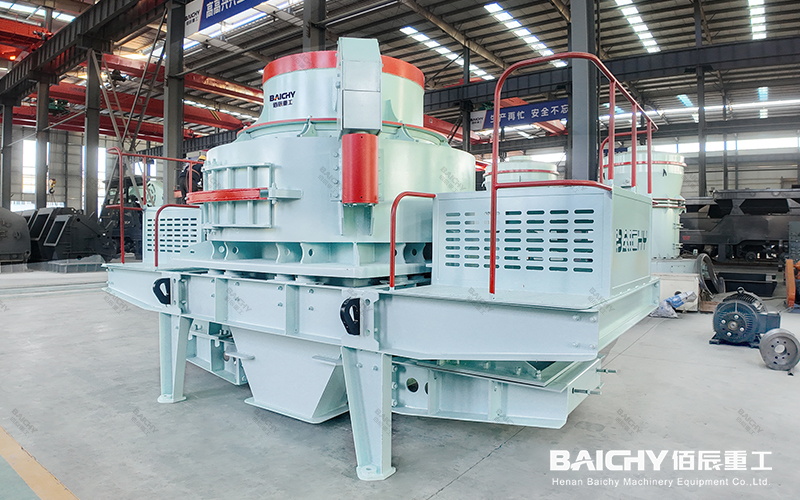
VSI Sand-Making Equipment
| Model | Max. Feed Size (mm) | Processing Capacity (t/h) | Motor Power (kW) | Dimensions (mm) | Application Scenario |
| VSI-7611 | 35 | 80-180 | 2×55 | 4600×2350×2600 | Small-scale sand production lines, aggregate shaping |
| VSI-8518 | 40 | 120-240 | 2×90 | 5200×2500×2900 | Medium-scale aggregate plants, dry-mixed mortar |
| VSI-9526 | 45 | 160-360 | 2×132 | 5600×2750×3200 | Large-scale commercial concrete plant support |
| VSI-1140 | 50 | 220-480 | 2×220 | 6200×3000×3500 | Ultra-large aggregate production bases |
Note: The above capacities are based on granite (bulk density: 1.6 t/m³). The harder the material and the coarser the feed size, the lower the actual production capacity; therefore, when selecting sand-making equipment, it is recommended to allow for a 15%–20% capacity margin based on the specific material characteristics.
IV. Five Core Advantages of the Sand-Making Equipment
1. Controllable Particle Shape and Stable Gradation
The finished sand produced by the VSI sand-making equipment has a flaky and elongated particle content of less than 8%, and the fineness modulus can be flexibly adjusted between 2.4 and 3.2. It consistently meets GB/T 14684 and ASTM C33 standards without the need for frequent screen changes to adjust gradation.
2. Transparent and Calculable Wear Costs
High-chromium alloy throwing heads offer a service life of 300–500 hours. The wear cost per ton of sand produced is approximately 0.5–1.5 RMB, representing a small fraction of total operating costs; this allows for precise calculation of the investment payback period and clear budgeting for both initial quotes and ongoing operations.
3. Multi-functional: Sand Making and Particle Shaping
The equipment not only produces sand but also shapes crushed stone, increasing the aggregate's market value by 5–10 RMB per ton. A single unit replaces the traditional two-stage "fine crushing + shaping" configuration, saving approximately 40% in footprint and reducing system power consumption by over 15%.
4. High Level of Automation
Features include a fully hydraulic lid-opening mechanism, thin-oil lubrication, and an electronic control interlocking system. It supports remote start/stop and fault alarms, reducing on-site labor costs by 30% and minimizing downtime caused by malfunctions.
5. Dust and Noise Control for Environmental Compliance
The feed inlet comes standard with a negative-pressure dust extraction port and a sound-insulating cover. Dust emission concentrations remain below 20 mg/m³, meeting environmental impact assessment (EIA) requirements and facilitating green, compliant production for mines and aggregate plants.
V. Application Case Study: From River Pebbles to Premium Manufactured Sand
Case Study 1: Mobile Sand-Making Line for River Pebbles in the Philippines
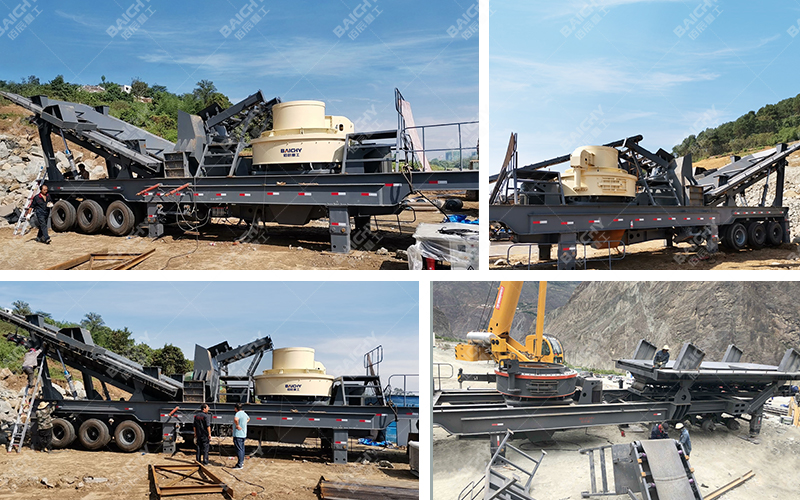
Mobile Sand-Making Machine at Customer Site
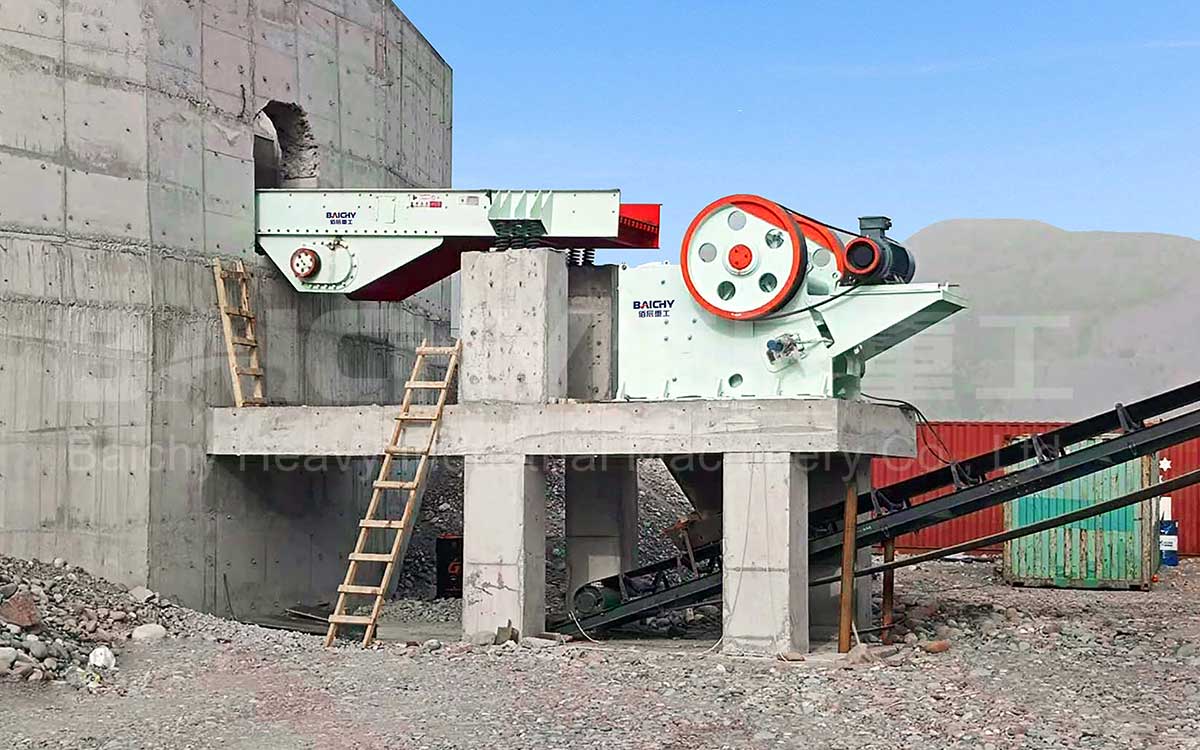
A client in the Philippines utilized a configuration comprising a jaw crusher, a cone crusher, a VSI-9526 sand maker, and a wheel-bucket sand washer to process river pebbles into sand suitable for C30 concrete. This sand-making system achieves an actual production capacity of 260 t/h, with a silt content in the finished sand of less than 1%. The equipment investment was recouped within just eight months of operation, and the system has now become a primary source of sand and gravel in the local market.
Case Study 2: Stationary Granite Sand-Making Plant in Mexico
A Mexican client purchased the VSI-9526 model. Configured with a linear vibrating screen and a fine sand recovery unit to process granite into manufactured sand, the system boosted the fine sand recovery rate to over 95%. This reduced the cost associated with fine sand loss by approximately 400,000 RMB annually. The finished sand is supplied directly to local commercial concrete plants at a significant price premium.
VI. Recommended Auxiliary Equipment
An efficient sand-making system relies on the synergy between upstream and downstream equipment.
Recommended configurations include:
| Process | Recommended Equipment | Function |
| Primary Crushing | PE/PEX Series Jaw Crusher | Crushing hard rock such as river pebbles and granite |
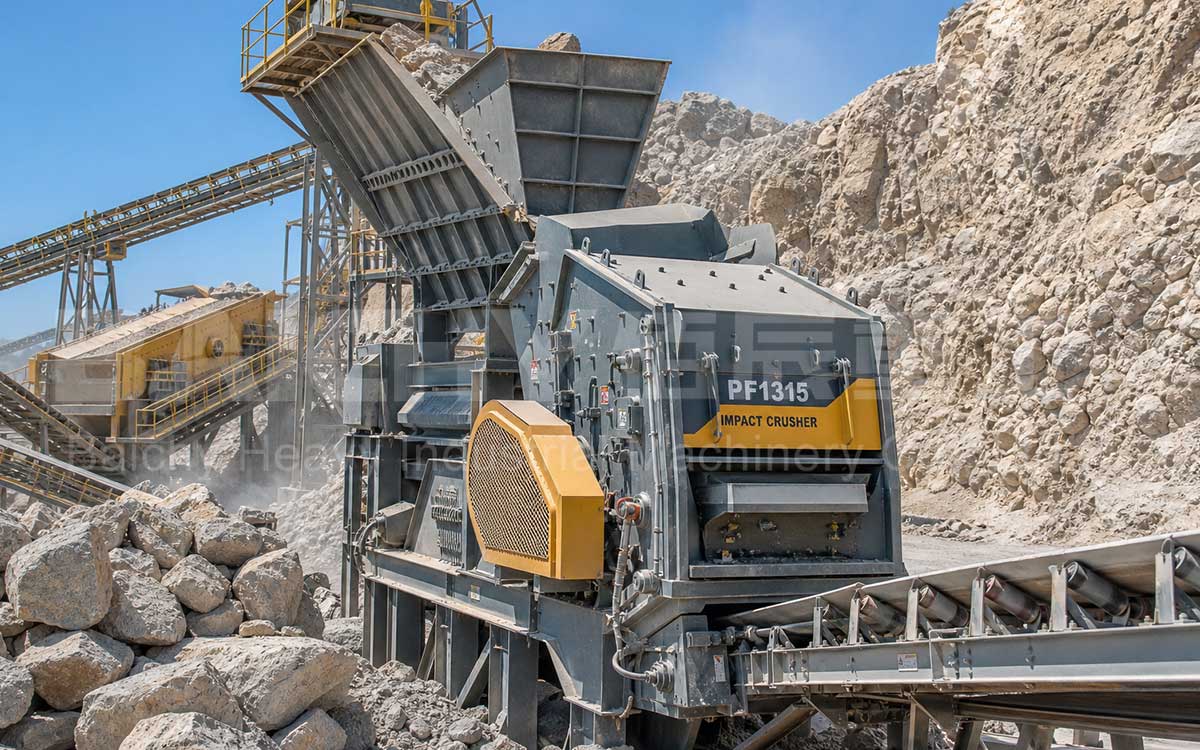
| Secondary/Fine Crushing | PYB/CS Series Cone Crusher | Providing high-quality feed for the sand-making machine |
| Sand Making & Shaping | VSI Series Sand-Making Machine | Core sand production and particle shape shaping |
| Sand Washing | XSD Wheel-type/Spiral Sand Washer | Removing silt and impurities to produce clean sand |
| Fine Sand Recovery | Fine Sand Recovery Unit + Dewatering Screen | Recovering lost fine sand and recycling wastewater |
| Feeding & Conveying | ZSW Vibrating Feeder + Belt Conveyor | Ensuring continuous and stable material feeding |
VII. Sand-Making Equipment FAQ
Q1: How many tons of sand can the equipment produce per hour?
The capacity of a single VSI sand-making machine ranges from 80 to 480 t/h, depending on the model, feed particle size, and material hardness. Taking the VSI-9526 as an example, the output is approximately 160–360 t/h when processing granite smaller than 45 mm. When integrated with sand washing and screening systems, estimating the total line capacity at 85%–90% of the main machine's capacity provides a more realistic figure.
Q2: Which equipment offers the lowest wear when making sand from river pebbles?
River pebbles are hard and highly abrasive; we recommend using a VSI sand-making machine equipped with high-chromium alloy impellers. The wear cost per ton is approximately 0.8–1.5 RMB, representing a reduction of over 40% compared to traditional hammer-type sand makers. If particle shape requirements are extremely high, a "rock-on-rock" crushing chamber configuration can be selected to further minimize iron contamination from wear.
Q3: What is the approximate total investment for a sand-making plant?
A small-scale sand-making line (50–100 t/h) costs approximately 0.8–1.5 million RMB, while large-scale lines (over 200 t/h) typically exceed 3 million RMB; exact costs depend on material characteristics, the equipment configuration, and the level of automation. Please provide material analysis reports and target production capacity, and we can prepare a detailed quotation including CAPEX and OPEX estimates.