Double-roll crushers for granite sand making
With a Mohs hardness of 6–7 and a compressive strength of 100–250 MPa, granite is one of the most demanding raw materials for sand-making equipment. Double-roll crushers utilize low-speed compression between two rollers rather than impact crushing; this reduces the over-pulverization rate by over 30% and lowers electricity consumption per ton by 20%–30%, while producing 0–5 mm manufactured sand with uniform particle shape and stable gradation. For a granite sand-making line with an annual capacity of 100,000 tons, replacing impact-based fine crushing equipment with a double-roll crusher can save 150,000 to 300,000 RMB annually in electricity and wear-part costs. Conclusion: Choosing a double-roll crusher for granite sand production ensures the economic efficiency of the production line.
I. Overview of Double-Roll Crushers for Granite Sand Making: Principles and Line Positioning
1.1 Working Principle of Double-Roll Crushers
The core of a double-roll crusher consists of two crushing rollers rotating towards each other. Granite falls into the gap between the rollers and is crushed through repeated compression and shearing; the final particle size is precisely controlled by the roller gap. Unlike the "high-speed striking" action of impact crushers, double-roll crushing relies on low-speed, high-pressure static force—trading pressure for quality—which is the reason for minimal over-pulverization and low stone powder content.
1.2 Positioning of Double-Roll Crushers in Granite Sand-Making Lines
A standard production line follows this flow: Jaw Crusher (Primary Crushing) → Cone Crusher (Secondary Crushing) → Double-Roll Crusher (Sand Making) → Circular Vibrating Screen (Grading) → Sand Washing and Desliming. The double-roll crusher performs the core sand-making function of "crushing instead of grinding," compressing 5–40 mm crushed stone directly into sand. This replaces the high-energy-consuming ball-milling process and serves as the key component for cost reduction across the entire line.
II. Typical Application Scenarios for Granite Double-Roll Crushers
• Manufactured Sand for Commercial Concrete Plants: Granite manufactured sand offers high strength and low crushing values. It serves as a substitute for river sand in C30–C50 concrete, providing stable sand gradation and minimal fluctuation in mix proportions.
• Expressway and High-Speed Rail Aggregate Plants: Road and bridge projects impose strict requirements on particle shape and fines content. Roll crushers produce cubical sand with low fines content, meeting standards for high-grade concrete.
• Quarry Tailings & Waste Processing: Screening tailings and crushed stone offcuts are re-crushed into sand, turning waste into a valuable resource and boosting the production line's overall utilization rate.
• Large-Scale Infrastructure (Hydropower Stations, Airports, etc.): These projects involve tight schedules and high sand volume requirements. Roll crushers offer stable capacity and low failure rates, making them ideal for continuous, high-intensity production.
• Granite Mine Waste Utilization: Overburden and waste rock are processed into manufactured sand, aligning with green circular economy policies while increasing mine revenue.
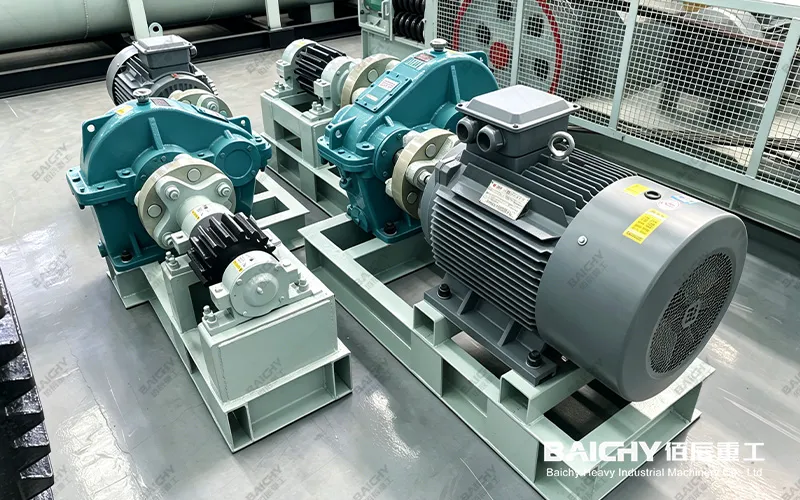
granite double-roll sand-making machines
III. Core Advantages of Roll Crushers for Granite Sand Making
1. High Sand Yield & Low Fines Content: The amount of stone powder (particles <0.075mm) generated through compression crushing is significantly lower than that from impact-type equipment. For granite applications, the finished sand yield increases by 8–15 percentage points, and the fines content is controlled within 8%, thereby reducing sand washing costs.
2. Cubical Particle Shape & Stable Gradation: Low-speed compression produces angular, cubical particles with high bulk density. Hydraulic roll gap adjustment allows for fine-tuning the discharge size without stopping the machine, enabling a single production line to switch between various product specifications (e.g., 0–3mm, 0–5mm, 3–8mm).
3. Low Electricity Consumption per Ton: The linear speed of roll crushers is only one-third to one-half that of impact-type equipment, resulting in 20%–30% lower electricity consumption for the same output. Based on an electricity price of 0.6 RMB/kWh and an annual production of 100,000 tons of sand, annual electricity cost savings exceed 100,000 RMB.
4. Wear-resistant roller shells with a predictable service life: Granite is highly abrasive; therefore, the roll crusher comes standard with high-chromium alloy or hard-faced composite roller shells, offering a service life of 3,000–5,000 hours. Once worn, the segmented shells can be partially replaced or restored via hard-facing, with repair costs amounting to only 20%–30% of the price of new shells.
5. Hydraulic protection against uncrushable objects: Upon encountering uncrushable items such as iron, the hydraulic system automatically widens the roll gap within 0.2 seconds and resets after the object passes. This prevents roller surface cracking and drive system damage, significantly reducing the risk of downtime.
6. Simple structure and low maintenance costs: The design eliminates screen bars and hammers, with roller shells and bearings being the only wear parts; routine maintenance is limited to checking roller surface wear and lubrication.
IV. Technical Parameters (Typical Configuration for 2PG Series Granite Sand-Making Operations)
| Model | Roll Diameter × Width (mm) | Feed Size (mm) | Discharge Size (mm) | Reference Granite Capacity (t/h) | Motor Power (kW) | Roll Surface Type |
|---|---|---|---|---|---|---|
| 2PG400×250 | 400×250 | ≤25 | 2–8 | 3–7 | 2×5.5 | Smooth Roll |
| 2PG610×400 | 610×400 | ≤40 | 2–10 | 8–25 | 2×15 | Smooth / Grooved Roll |
| 2PG750×500 | 750×500 | ≤40 | 2–20 | 12–40 | 2×22 | High-Chrome / Hard-faced Composite |
| 2PG1000×700 | 1000×700 | ≤50 | 3–30 | 20–60 | 2×37 | Hard-faced Composite |
Note: Reference capacity is converted from the limestone baseline (bulk density approx. 1.6 t/m³) using a factor of 0.55–0.65 for granite (bulk density approx. 2.6–2.8 t/m³). Actual capacity varies with rock properties, moisture content and discharge setting.
V. Typical Application Case Studies
Case Study 1: Production Capacity Upgrade for Granite Sand-Making Line (Replacing Hammer Crusher with Double-Roll Crusher) A stone plant in East China originally used a hammer crusher to produce granite sand, facing issues such as a high fines content and the need for monthly hammer replacements. After switching to the 2PG750×500 double-roll crusher, the fines content in the finished sand dropped from 15% to approximately 7%, and the sand yield increased by about 10 percentage points. Hammer replacement was replaced by roll shell hard-facing repair, reducing annual wear-part costs by approximately 40% and allowing the investment cost to be recouped within eight months.
Case Study 2: Secondary Sand Making with a Mobile Granite Sand-Making Station. An infrastructure project in Southeast Asia utilized a mobile combination station—comprising a jaw crusher, a double-roll crusher, and a screen—to process granite surface material (overburden) on-site. The 2PG610×400 served as the core sand-making unit; the resulting 0–5mm manufactured sand was used directly for on-site concrete mixing, eliminating the transportation costs associated with purchasing river sand and reducing sand material costs by approximately 30%.
Note: The above is a summary of typical operating scenarios rather than a specific client case study; actual data varies based on rock properties and process configuration.
VI. Recommended Equipment
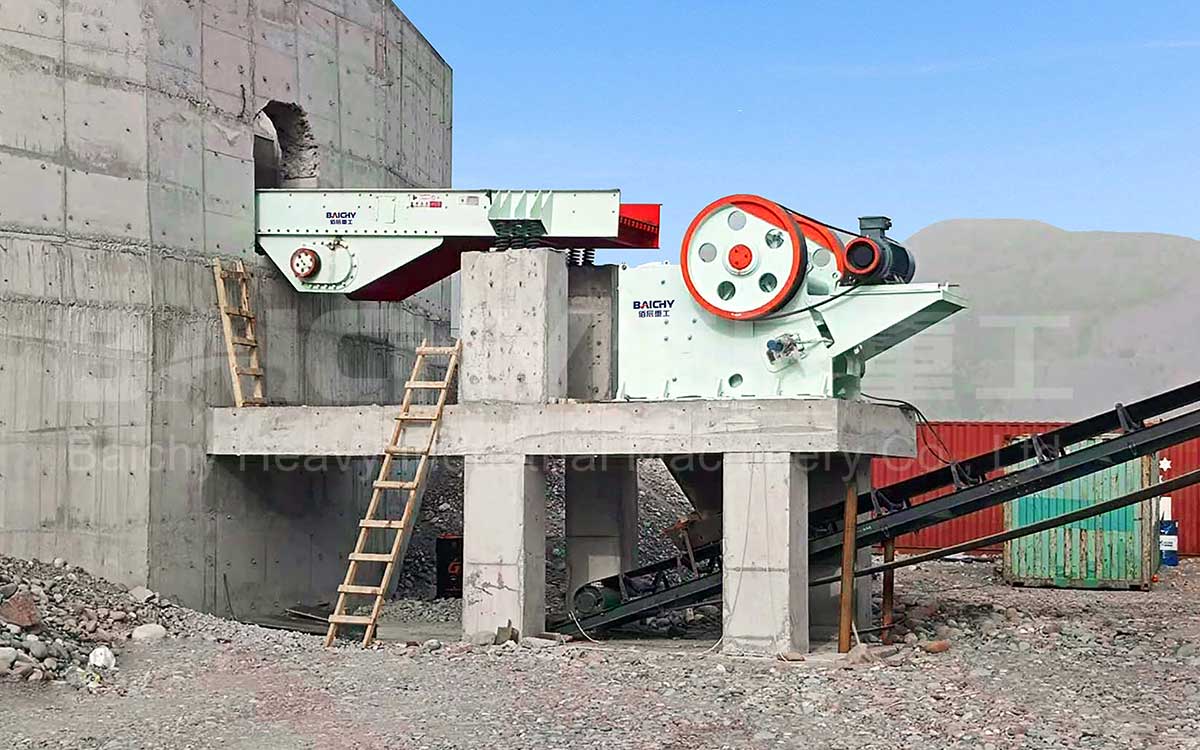
• Jaw Crusher (PE/PEX Series): Primary coarse crushing; reduces raw granite ore to the feed size required for the double-roll crusher.
• Cone Crusher (CS/HP Series): Secondary intermediate crushing; suitable for hard granite and provides ideal feed material for the double-roll crusher.
• 2PG Double-Roll Crusher: Core sand-making unit; select the appropriate model based on target production capacity.
• Circular Vibrating Screen (YK Series): Closed-circuit screening; controls product gradation and recirculates oversized material.
• Wheel-Bucket Sand Washer (XSD Series): Removes stone dust and clay impurities; improves the cleanliness and market value of the finished sand.
• Fine Sand Recovery Machine: Recovers 0.075–0.6mm fine sand lost during the washing process; minimizes resource waste.
• Vibrating Feeder (ZSW Series): Ensures uniform feeding and stable, full-load operation of the sand-making process.
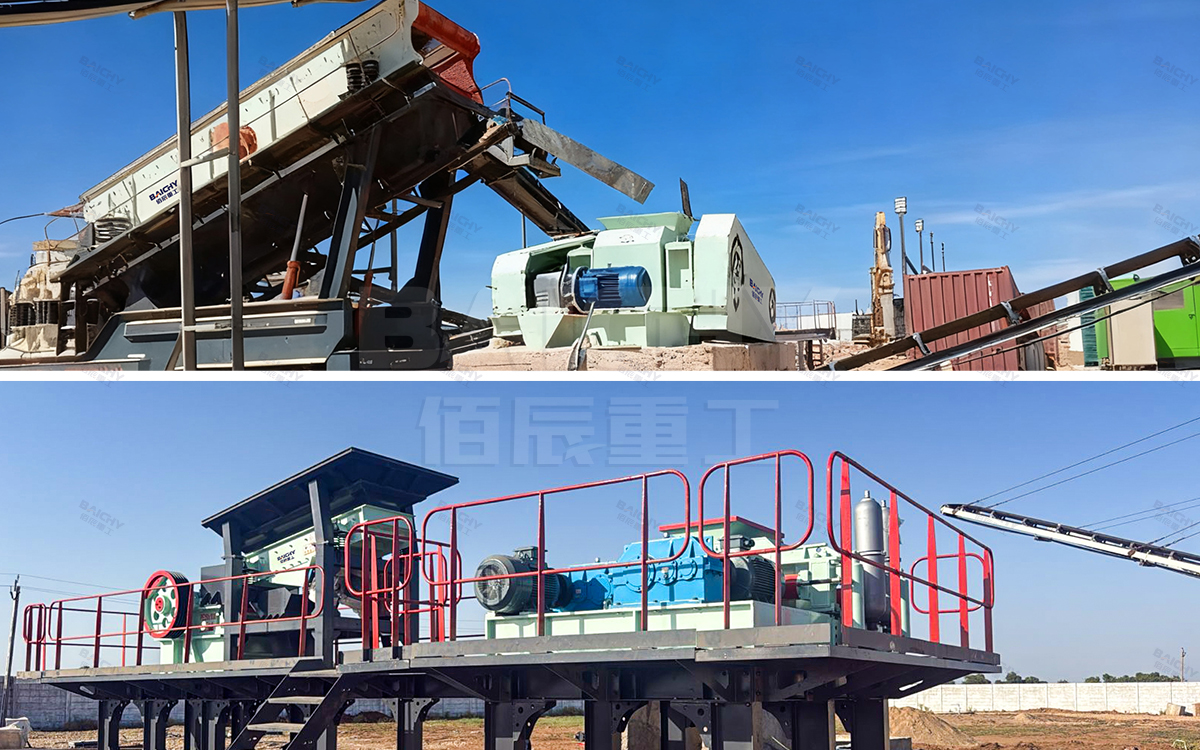
granite sand-making equipment
VII. FAQ (Frequently Asked Questions)
Q1: Granite is very hard; can a double-roll crusher be used for sand making? How does it compare to a VSI sand-making machine?
A: Yes, it can. Double-roll crushers crush hard rock through low-speed, high-pressure static compression; using roll shells made of high-chromium or composite hard-facing materials makes them fully capable of the task. Compared to VSI: Choose VSI if you prioritize superior particle shape and are less sensitive to electricity costs; choose the double-roll crusher for granite sand making if you prioritize a low stone dust rate, low power consumption, low maintenance, and a quick return on investment. The two can also be combined: the roll crusher produces coarse sand, while the VSI shapes the fine sand.
Q2: What are the sand yield rate and particle shape when producing granite sand with a roll crusher? What is the approximate stone dust content?
A: Under typical operating conditions, the yield of finished sand (0–5 mm) from a roll crusher processing granite can reach 70%–85%. The stone dust content (particles smaller than 0.075 mm) can be controlled to within 8%—far lower than the ~15% level associated with hammer crushers. The resulting particles are angular and cubical with high bulk density, meeting the requirements for high-grade concrete sand.
Q3: What is the service life of roll crusher shells when processing granite? Are maintenance costs high?
A: Granite is highly abrasive; high-chromium alloy or hard-faced composite roll shells typically last 3,000–5,000 hours at low operating speeds (depending on the roll gap and feed particle size). The shells feature a modular design, allowing for partial replacement or repair via hard-facing; repair costs are only 20%–30% of the price of a new shell. Routine maintenance focuses on checking roll surface wear, the hydraulic system, and bearing lubrication—costs that are significantly lower than the complete hammer replacement required for hammer crushers.
Baichy Heavy Industry
Baichy Heavy Industry is a high-tech mining equipment company integrating R&D, manufacturing, sales, and after-sales service. Focusing on crushing, grinding, and mineral processing equipment, we provide professional solutions to our customers. We are ISO9001:2015 、certified, and our products include mobile crushing palnts, crawler crushing plant, construction waste crushing plants, jaw crushers, sand making machines, cone crushers, fine crushers, grinding mills, ball mills, etc., all with reliable performance to meet diverse project needs.
Baichy Heavy Industry – Your Trusted Partner
To ensure optimal performance of your equipment, Baichy Heavy Industry offers:
- Professional on-site installation guidance
- Comprehensive operator training
- 24/7 technical support & maintenance services
Our complete after-sales service system guarantees long-term, stable operation of your machinery with minimal downtime.
Protect Your Rights – Only Use Official Channels
To avoid scams and ensure authentic support, contact us exclusively through:
• Official Website: www.baichychina.com
• WhatsApp: +8615093222637
• Email: [email protected]
Your satisfaction is our priority – expect prompt, professional service every time.
(Note: Beware of unauthorized third parties claiming to represent Baichy. Always verify through official contacts.)