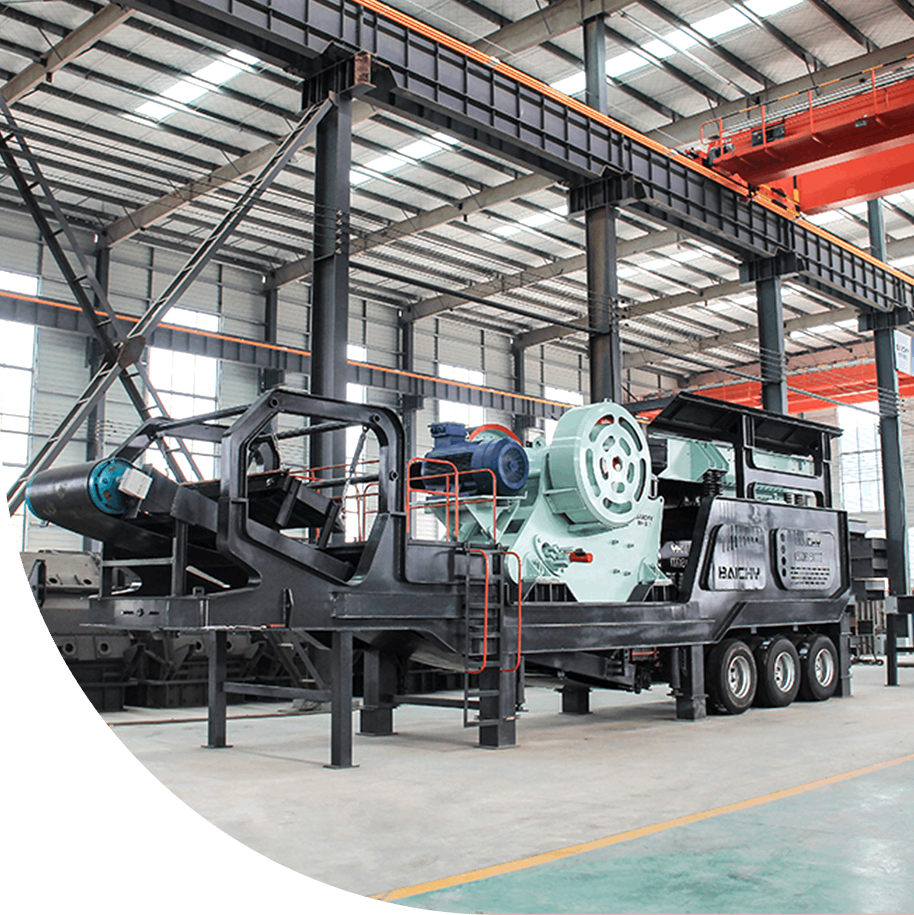

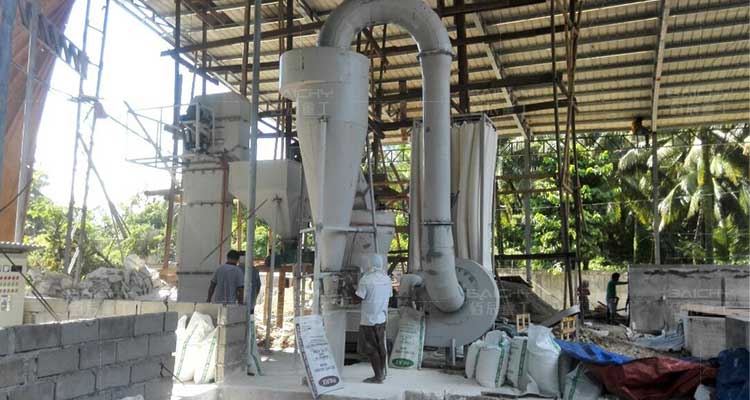
5R Raymond mill
The fundamental operating principle of the Raymond mill (a suspended-roller mill) is a closed-circuit, dry-grinding process combining "roller-ring crushing" and "air classification." Under the influence of centrifugal force (supplemented by 1,000–1,500 kg of spring pressure in high-pressure models), the grinding rollers press firmly against the grinding ring to pulverize the material. The resulting powder is carried by an airflow into the classifier, where it is separated based on fineness; coarse particles fall back for regrinding, fine powder is collected as the finished product, and the airflow is recirculated. The entire process operates without screens and prevents dust leakage; fineness is adjustable online, and the product meets specifications with a 99% pass rate. These characteristics explain why, for non-metallic mineral powder production (capacities of 0.5–36 t/h), the Raymond mill outperforms the ball mill by requiring less floor space, consuming less electricity, and allowing for faster product specification changes.
Understanding how the machine works directly informs three key purchasing decisions: the maximum achievable fineness determines which downstream markets you can enter (e.g., construction materials, coatings, papermaking, or chemicals); whether production must stop to change product specifications; and the level of investment required for environmental compliance. This article breaks down the operating principle into a four-step cycle and translates these factors into your operational profitability.
I. Why the Operating Principle Dictates Purchasing Decisions
The Raymond mill is a vertical grinding unit featuring air classification. Its core components include the main mill unit (grinding rollers, grinding ring, and plow blades), a classifier, a blower, a cyclone collector, a pulse-jet bag filter, and connecting air ducts. Upstream equipment typically includes a jaw crusher, bucket elevator, storage hopper, and electromagnetic vibrating feeder. Understanding the working principle directly impacts four operational decisions:
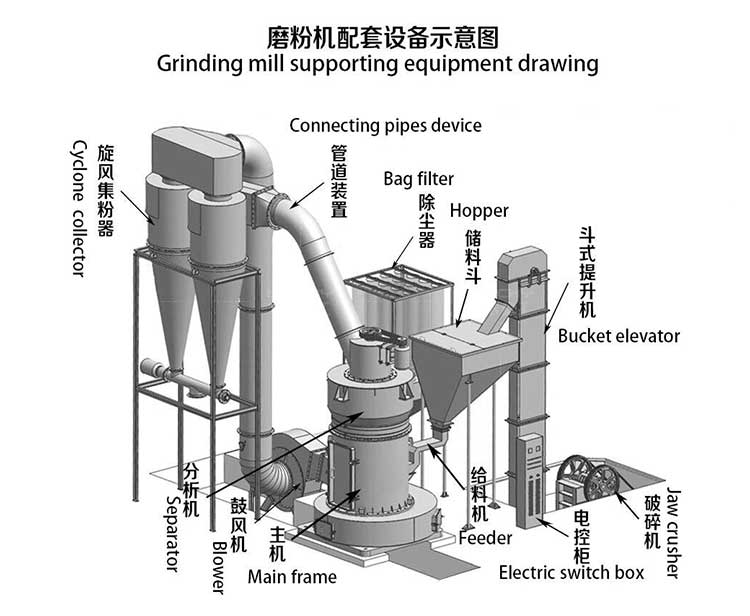
Schematic diagram of the powder grinding production line process
1.1 Fineness Upper Limit—R-series (up to 325 mesh), YGM (up to 425 mesh), and YGMX (up to 600 mesh)—determines your target customer base (e.g., 400-mesh heavy calcium carbonate powder and 200-mesh construction material powder represent markets with distinct price points);
1.2 Classification Method—Air classification replaces mechanical screening; changing specifications involves adjusting rotational speed rather than swapping screens, determining whether product switching takes 10 minutes or requires a half-day shutdown;
1.3 Pressurization Mechanism—The presence of high-pressure springs in addition to centrifugal force determines the machine's ability to process hard materials (Mohs hardness 5–7) such as barite and marble;
1.4 Closed-Loop Circulation—Air circulates within a positive/negative pressure loop, and exhaust gas is purified via a pulse dust collector; this determines costs associated with environmental compliance inspections and on-site dust control.
II. Step-by-Step Breakdown of the Working Principle—Four-Stage Closed-Loop Cycle
2.1 Material Preparation and Feeding: Keeping "Fluctuations" Out of the Grinding Chamber
Raw ore is first coarsely crushed by a jaw crusher to ≤25–40 mm (depending on the model), transported to a storage hopper via a bucket elevator, and then fed quantitatively, evenly, and continuously into the main grinding chamber by an electromagnetic vibrating feeder.
Value to You: Stable feed input = stable grinding load = minimal fluctuation in finished product fineness. Inconsistent particle size caused by uneven feeding is the root cause of most customer complaints regarding fineness in Raymond mills—an issue that can be resolved right at the source.
2.2 Centrifugal Grinding: The Core Grinding Action
The rotation of the main shaft drives the grinding roller assembly to revolve; centrifugal force presses the grinding rollers firmly against the stationary grinding ring. Plows (scrapers) scoop up the material and throw it into the grinding zone between the rollers and the ring, where the material is repeatedly crushed, sheared, and pulverized. The relative motion between the revolving/rotating rollers and the stationary ring generates the grinding action. The YGM series features high-pressure springs (1,000–1,500 kg) installed on the roller suspension; the spring pressure combines with centrifugal force to deliver a grinding pressure approximately 1.2 times that of standard Raymond mills at the same power level. Additionally, the system compensates for roller ring wear through the high-pressure mechanism, extending the component's service life rather than requiring immediate replacement.
Value to you: Higher grinding pressure results in greater output for the same power input and enables the processing of harder materials. The ability to compensate for wear means a longer effective lifespan for wear parts and a lower cost of wear per ton of product.
2.3 Airflow Classification: Screenless Air Separation
A blower establishes an airflow circuit within the system, carrying ground powder up into the classifier. The classifier's rotational speed determines the fineness of the finished product—higher speeds yield finer particles. Particles meeting the fineness requirement pass through the classifier, while coarser particles are rejected and fall back into the grinding chamber for further processing.
Value to you: Air separation replaces mechanical screening, eliminating screen clogging and allowing for fineness adjustments without stopping the machine. A single unit covers a product range from 80 to 600 mesh; simply adjusting the speed allows you to target different market segments without purchasing separate equipment for each fineness specification.
2.4 Collection and Purification: Closed-Loop Cycle
The dust-laden airflow enters a cyclone collector for gas-solid separation; fine powder is discharged via a discharge valve as the finished product (with a pass rate of up to 99%). Exhaust gas is purified in a pulse-jet bag filter before being discharged in compliance with standards or recirculated into the system. The entire unit operates within a closed-loop cycle involving both positive and negative pressures.
Value to you: Dust circulates within the system without escaping, eliminating the need for costly dust-control retrofitting. The finished product features uniform particle size and a high pass rate, reducing downstream rework and customer complaints.
III. Comparison of Core Specifications (Official Data)
R Series (Classic Suspended Roller Mill)
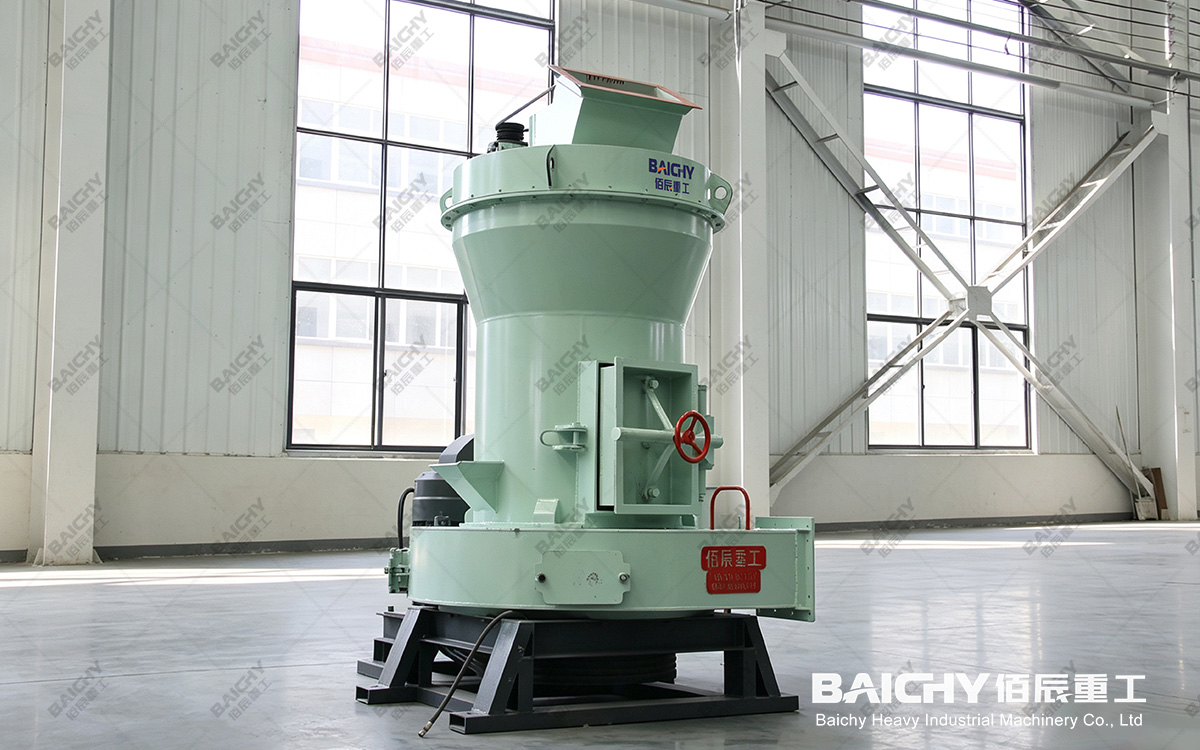
Raymond Grinding Mill
| Model | No. of Rollers | Roller Dimensions (mm) | Feed Size (mm) | Output Fineness (mm) | Capacity (t/h) | Power (kW) |
| 3R2115 | 3 | 210×150 | ≤15 | 0.125–0.044 | 0.4–1 | 15 |
| 4R3016 | 4 | 300×160 | ≤25 | 0.125–0.044 | 1-4 | 30 |
| 5R4119 | 5 | 410×190 | ≤30 | 0.613–0.044 | 2.5–9.5 | 75 |
YGM Series (High-Pressure Suspended Roller Mill; Grinding pressure is 1.2x that of equivalent-power models)
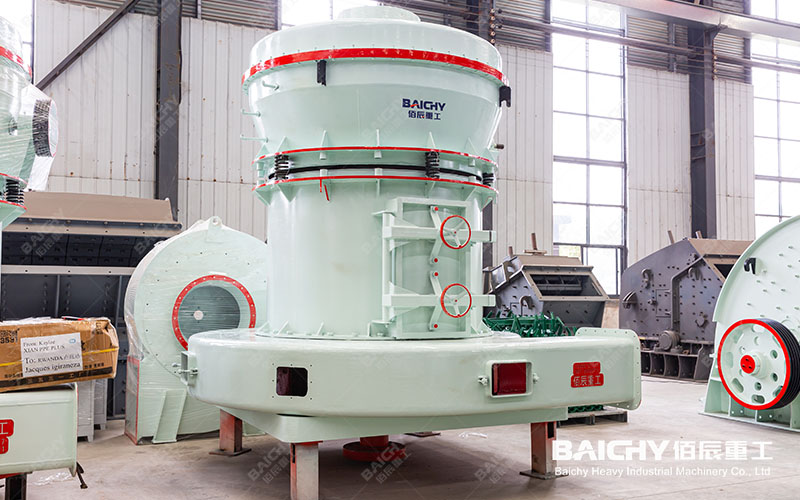
YGM Raymond Grinding Mill
| Model | No. of Rollers | Roller Dimensions (mm) | Feed Size (mm) | Output Fineness (mm) | Capacity (t/h) | Power (kW) |
| YGM95 | 4 | 310×190 | ≤25 | 0.613–0.033 | 2.1–5.6 | 45 |
| YGM130 | 5 | 410×230 | ≤30 | 0.613–0.033 | 2.5–9.5 | 90 |
| YGM160 | 6 | 450×300 | ≤35 | 0.613–0.033 | 8–16 | 132 |
| YGM190 | 6 | 500×330 | ≤40 | 0.613–0.033 | 18–36 | 250 |
Example of electricity consumption calculation per tonne (5R4119): Full-load power 75kW × 85% load factor &pide; Median capacity 6 t/h ≈ 10.6 kWh/t. By applying local electricity rates, you can estimate the electricity cost per ton—this is the most direct data point for negotiations when comparing against ball mill solutions (which typically consume more power for the same fineness).
IV. Selection Recommendations & Pitfalls to Avoid
Selection based on capacity:
• 0.4–1 t/h → 3R2115 / YGM65
• 1–4 t/h → 4R3016 / YGM95
• 2.5–9.5 t/h → 5R4119 / YGM130 (Both are 5-roller models in the same class, but the YGM130 offers a higher upper limit for fineness: 425 mesh)
• 8–36 t/h → YGM160 / YGM190
Selection based on fineness:
• ≤325 mesh → R Series (best cost-performance ratio)
• 325–425 mesh → YGM Series
• 400–600 mesh (high precision & stability) → YGMX Enhanced Series (features a cage-type classifier + VFD for real-time fineness adjustment)
Three golden rules to avoid pitfalls:
1. Nominal capacity ≠ Actual operating capacity. Rated capacity is based on easy-to-grind materials and standard fineness; switching to hard or fine materials will cause a significant drop in output. Before signing a contract, provide material samples and target fineness specifications so engineers can calculate performance based on actual operating conditions.
2. Dry first if moisture content >6%. Raymond mills are dry-processing equipment; wet material causes clogging (material sticking to rollers), blocks air ducts, and leads to a sharp drop in capacity. High-moisture materials (such as raw gypsum ore) require a pre-drying stage.
3. Avoid using if hardness >7 (Mohs scale). Siliceous or corundum-like materials accelerate roller and ring wear; for such applications, consider ball mill or HGM ultrafine mill solutions instead.
VI. FAQ
Q1: How fine can a Raymond mill grind the material?
The R-series produces a fineness of 80–325 mesh; the YGM high-pressure series reaches 425 mesh (0.033 mm); and the YGMX enhanced series offers steplessly adjustable fineness between 80 and 600 mesh. Fineness is determined by the classifier's rotational speed, which can be adjusted during operation without stopping the machine.
Q2: What materials can be ground?
Any non-flammable, non-explosive mineral with a Mohs hardness ≤7 and moisture content ≤6% is suitable. Examples include limestone, calcite, gypsum, barite, talc, dolomite, kaolin, bentonite, marble, and potassium feldspar—over 500 varieties in total.
Q3: Why doesn't the Raymond mill use a screen?
It employs airflow classification (air separation): powder enters the classifier with the airflow, and separation of coarse and fine particles is achieved via rotational speed. Unlike vibrating screens, it avoids screen clogging, allows for faster fineness adjustment, and integrates with pneumatic conveying to form a closed-loop system with no dust leakage.
Q4: How do I choose between a Raymond mill and a ball mill?
For 80–600 mesh fine powder, small-to-medium capacity (0.5–36 t/h), and concerns regarding footprint and power consumption → Raymond mill. For finer output (>600 mesh), ultra-high capacity, or wet grinding conditions → Ball mill or HGM ultra-fine mill. The final choice should be made after calculating the cost-per-ton based on specific material parameters.
Q5: What is the difference between nominal and actual capacity?
Actual capacity is influenced by four factors—material hardness, moisture content, feed particle size, and target fineness—and typically falls within the lower-to-middle range of the nominal capacity. Baichen provides quotes distinguishing between "nominal" and "actual" capacity; by providing material parameters before signing a contract, you can obtain a capacity calculation based on actual operating conditions.