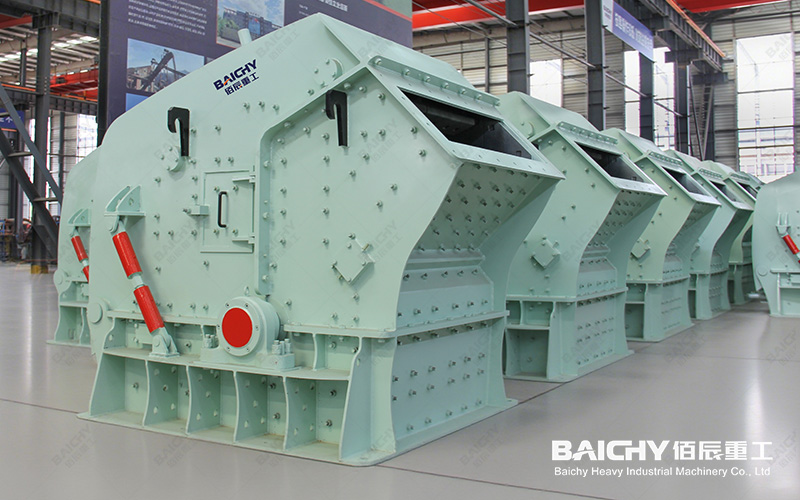
PF1214 Impact Crusher
In crushing production lines across industries such as mining, construction, and building materials, the efficiency of the medium and fine crushing stages—along with the quality of the finished product—directly determines the overall profitability of the entire project. The PF1214 impact crusher, a timeless classic in this field, has become a core piece of equipment for numerous users processing medium-hardness materials—such as limestone, bluestone, and concrete—thanks to its simple structure, high crushing ratio, and superior product particle shape. This article will provide an in-depth analysis of the PF1214 impact crusher's technical features, application advantages, and key selection criteria to assist you in making an informed decision.
In-Depth Analysis of the PF1214 Model
The PF1214 impact crusher is classified as a medium-sized unit within the "PF" series. Its model designation intuitively reflects its core specifications: "12" indicates a rotor diameter of approximately 1250 mm, while "14" indicates an effective rotor working length of approximately 1400 mm. This naming convention allows users to quickly grasp the equipment's approximate processing capacity range.
Core Working Principle and Structural Overview
The impact crusher utilizes a high-speed rotating rotor to drive a set of blow bars (hammers), which deliver violent impacts to materials fed into the crushing chamber. Upon impact, the materials acquire significant kinetic energy and are hurled against the impact plates, undergoing a secondary impact-crushing process. Simultaneously, the materials collide with one another, achieving a "stone-on-stone" secondary crushing effect. This entire process cycles continuously within the crushing chamber until the material particle size is reduced to a dimension smaller than the gap between the blow bars and the impact plates, at which point the material is discharged.
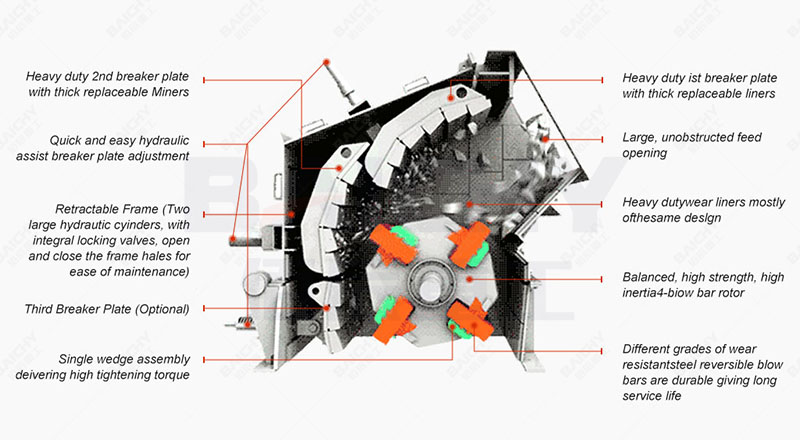
Structural Diagram of an Impact Crusher
The main structural components of the PF1214 include:
• Rotor Assembly: The core dynamic component of the equipment, comprising the main shaft, rotor disc, blow bars, and other parts; it requires extremely high precision in dynamic balancing.
• Impact Liners: Together with the blow bars on the rotor, these form the crushing chamber; their shape and angle directly influence crushing efficiency and the final product's particle shape.
• Frame: Constructed from heavy-duty welded steel plates to ensure stable operation of the equipment under high-speed impact conditions.
• Transmission System: Typically consists of an electric motor that drives the rotor to rotate at high speed via a belt transmission mechanism.
PF1214 Key Advantages at a Glance
Compared to jaw crushers and cone crushers, the PF1214 impact crusher offers distinct advantages in specific application scenarios:
• Superior Product Shape: Utilizing an impact crushing principle, the machine produces a predominantly cubical product with low needle-and-flaky content, making it the preferred equipment for producing high-standard aggregates and manufactured sand.
• Flexible Adjustment: By adjusting the rotor speed and the clearance between the impact plate and the blow bars, the discharge size can be easily controlled to meet perse finished product specifications.
• High Crushing Ratio: A single unit can achieve a crushing ratio exceeding 50:1, thereby simplifying the process flow and reducing equipment investment costs.
• High Return on Investment: Featuring a relatively simple structure, its initial purchase cost and ongoing maintenance costs are typically lower than those of cone crushers with equivalent processing capacities.
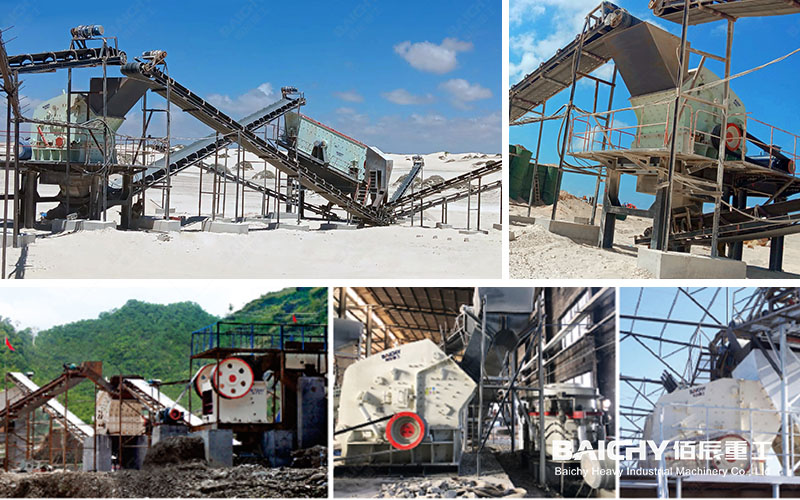
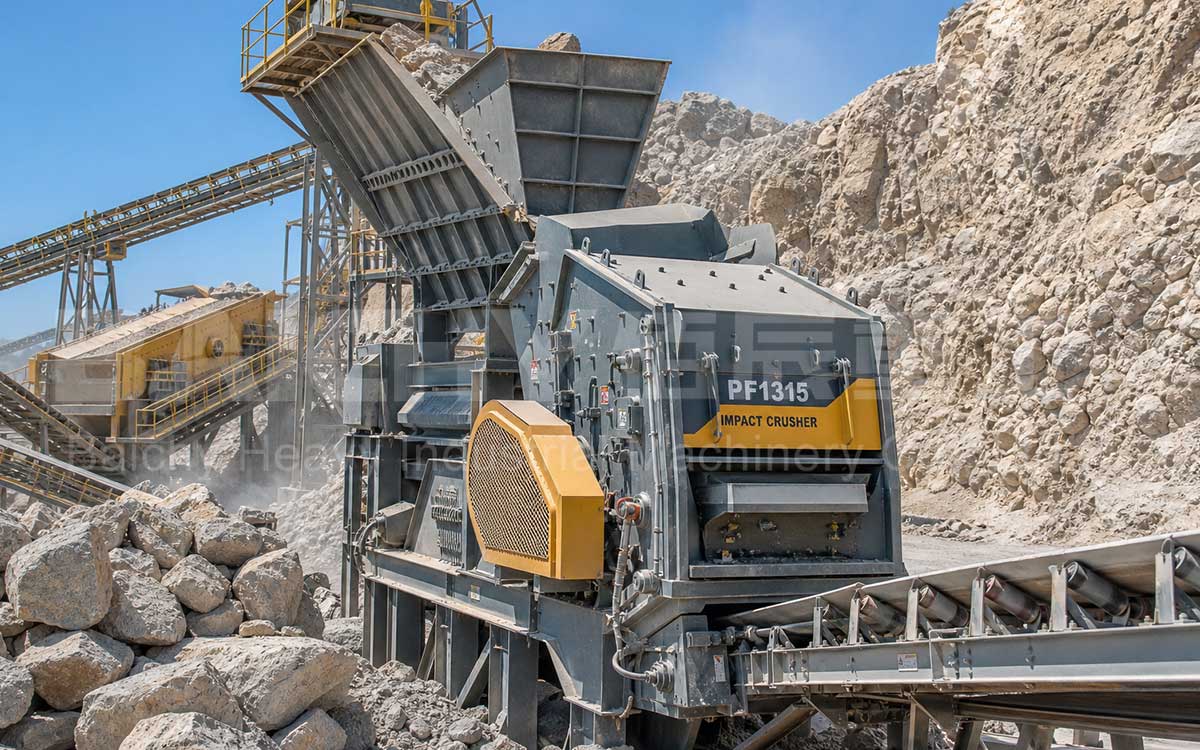
Impactor Crusher Stone Crushing Site
Typical Application Cases and Configuration Recommendations
The PF1214 impact crusher serves as the backbone of medium-scale production lines (yielding 100–200 tons per hour), making it particularly well-suited for projects with stringent requirements regarding the shape of the finished product.
Successful Case Study: A Limestone Aggregate Production Line
• Raw Material: Limestone; compressive strength approx. 150 MPa; feed size ≤ 500 mm.
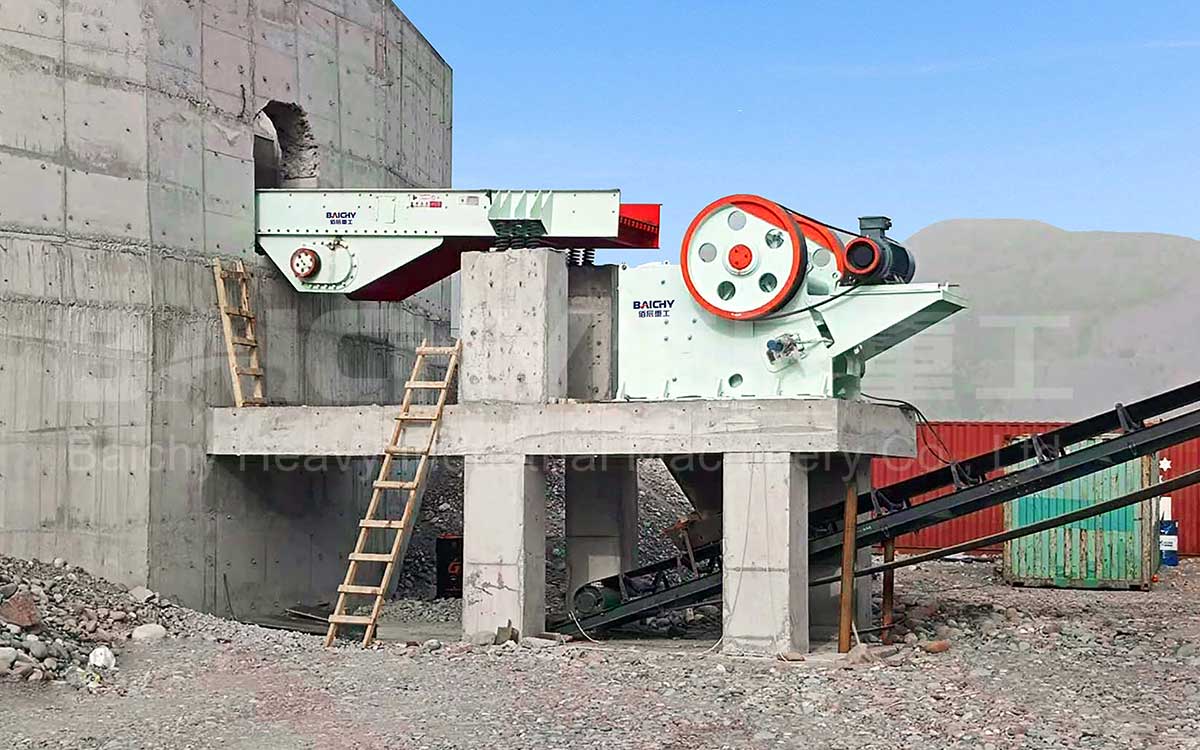
• Core Configuration: Vibrating Feeder + PE750×1060 Jaw Crusher (Primary Crushing) + PF1214 Impact Crusher (Secondary/Tertiary Crushing) + 3YK2460 Vibrating Screen.
• Finished Products: Production of four high-quality aggregate specifications: 0–5 mm, 5–10 mm, 10–20 mm, and 20–31.5 mm.
• Operational Feedback: The PF1214 operates with exceptional stability and produces aggregates with excellent shape characteristics—qualities highly appreciated by concrete batching plant clients. The entire production line maintains a steady output of approximately 180 tons per hour.
Recommended Equipment Combinations
To fully maximize the performance potential of the PF1214, a well-planned and rational production line configuration is absolutely essential.
The following serves as a reference for a general configuration scheme:
| Process | Recommended Equipment Model | Primary Function |
| Feeding | GZD-960×3800 Vibrating Feeder | Feeds material to the primary crusher uniformly and continuously, while simultaneously screening out soil and fines. |
| Primary Crushing | PE-600×900 Jaw Crusher | Performs the first stage of crushing, reducing large blocks of material to a size of 250 mm or less. |
| Secondary & Tertiary Crushing | PF-1214 Impact Crusher | The core crushing stage; completes secondary crushing and partial tertiary crushing, determining the primary particle size and shape of the finished product. |
| Screening | 3YK-1854 Circular Vibrating Screen | Classifies the crushed material; qualified material is directed to the finished product stockpile, while oversized material is returned to the impact crusher (forming a closed circuit). |
Frequently Asked Questions (FAQ)
Q1: What types of materials are best suited for crushing with the PF-1214 Impact Crusher?
A1: The PF-1214 Impact Crusher is primarily designed for medium-hardness materials with a compressive strength not exceeding 350 MPa—such as limestone, calcite, dolomite, bluestone, concrete blocks, and construction waste. While it is capable of processing high-hardness materials (e.g., granite, river pebbles), the wear rate of consumable parts—such as the blow bars—will accelerate significantly; therefore, the overall operating costs should be carefully evaluated in such cases.
Q2: How is the discharge particle size controlled on the PF-1214?
A2: Adjustment is primarily achieved through two methods: First, mechanical adjustment, which involves using the adjustment bolts located at the rear of the machine to alter the gap between the impact liners and the blow bars (a smaller gap results in finer discharge). Second, speed adjustment, which involves varying the rotor speed within the permissible operating range (higher speeds result in stronger crushing action and potentially finer products). Typically, mechanical adjustment is the primary method used.
Q3: What should be done if the blow bars experience uneven wear during operation?
A3: Uneven wear of the blow bars can disrupt the dynamic balance of the rotor, leading to increased vibration of the equipment. The blow bars should be inspected regularly and replaced promptly. It is imperative to adhere to the principle of symmetrical replacement—specifically, replacing a set of blow bars located in opposing positions simultaneously—and to ensure that the weight difference among all blow bars remains within the specified tolerance (typically ±0.5 kg) in order to maintain the rotor's proper dynamic balance.