
Ball Mill
Selecting a ball mill is essentially a three-dimensional balancing act involving particle size, production capacity, and power consumption; the goal is not simply "bigger is better," but rather "precision is better." Baichy offers 20 standard models ranging from Φ900×1800 to Φ3200×4000, with processing capacities spanning 0.65 t/h to 180 t/h. The two most common selection errors are:
① opting for a large diameter combined with a low length-to-diameter ratio, resulting in severe over-grinding and a sharp increase in steel media consumption; and
② ignoring the "golden range" for feed particle size (≤25mm), causing the mill to function merely as a stone crusher and slashing output to just 40% of its rated capacity. This article breaks down the three dimensions—feed particle size, discharge fineness, and shell rotation speed—into an actionable decision-making process, enabling you to pinpoint the ideal model based on your raw ore characteristics and target capacity.
I. Three Core Dimensions of Ball Mill Selection
Ball mill performance is not determined by a single parameter but by the combined effect of feed particle size, product fineness, and rotational speed settings. A mismatch in any of these dimensions causes a precipitous drop in the efficiency of the entire grinding circuit.
1.1 Feed Particle Size: ≤25mm is the critical threshold for efficiency.
A ball mill is not a primary crusher. The impact energy of the steel balls is designed for grinding fine particles, not for breaking large chunks of ore.
• ≤10mm (Recommended): 100% of nominal capacity; optimal grinding efficiency; steel ball consumption at the normal baseline; the mill operates purely as a grinding unit.
• 10–25mm (Standard): 85–100% of nominal capacity; normal operating conditions; steel ball consumption increases by ~10%; the mill functions primarily as a grinder with acceptable efficiency.
• 25–40mm (Exceeds Limit): Capacity drops to 60–75% of nominal value; steel ball consumption increases by 30–50%; the mill is forced to perform partial crushing tasks; liner service life is severely reduced.
• >40mm (Severely Exceeds Limit): Capacity remains at only 40–55%; abnormal mill noise occurs; steel ball consumption doubles; the equipment effectively becomes a "rock crusher," completely deviating from design specifications.
Industry Consensus (Metso Outotec Grinding Handbook): For every 10mm the feed size exceeds the recommended value, ball mill energy consumption increases by approximately 12–15%, and liner service life decreases by 20%.
Take a Ф1500×3000 ball mill with a nominal capacity of 2–7 t/h as an example. If the discharge opening of the upstream jaw crusher is set to 40mm instead of 20mm, actual capacity may drop to 1.5–2.8 t/h—a loss equivalent to the throughput of a small Ф900 mill, yet electricity costs remain unchanged.
Selection Strategy: A jaw crusher or cone crusher must be installed upstream of the mill to ensure the feed particle size is ≤25mm. If the run-of-mine ore has a high fines or moisture content, adding a vibrating screen upstream for pre-screening allows material of the required size to be fed directly into the mill, thereby reducing specific energy consumption.
1.2 Discharge Fineness: Finer is Not Necessarily Better
The choice of discharge fineness is determined by downstream processing requirements; "finer" is not always "better."
• 0.5–2 mm (Coarse grinding): Suitable for gravity separation (shaking tables, jigs) and sand/aggregate classification. Recommended setup: Grate-discharge ball mill with large-diameter steel balls (Φ80–120 mm); operates at the upper end of the capacity range.
• 0.15–0.5 mm (Medium grinding): Suitable for coarse-particle flotation and magnetic separation. Recommended setup: Grate-discharge or overflow ball mill with mixed ball sizes (Φ40–80 mm); operates in the mid-range of capacity.
• 0.074–0.15 mm (Standard fine grinding): Suitable for flotation and cyanidation leaching (CIL/CIP). Recommended setup: Overflow ball mill with small-diameter steel balls (Φ25–60 mm); operates at the lower end of the capacity range.
• <0.074 mm (Ultrafine grinding): Suitable for concentrate regrinding and ultrafine non-metallic mineral powders. Requires an overflow mill with ceramic balls or a two-stage grinding process; capacity is very low, and a closed-circuit classification system is mandatory.
When the target fineness exceeds a passing rate of >80% at 200 mesh (0.074 mm), the efficiency of single-stage open-circuit grinding drops sharply; a spiral classifier or hydrocyclone must be introduced to establish a closed-circuit loop.
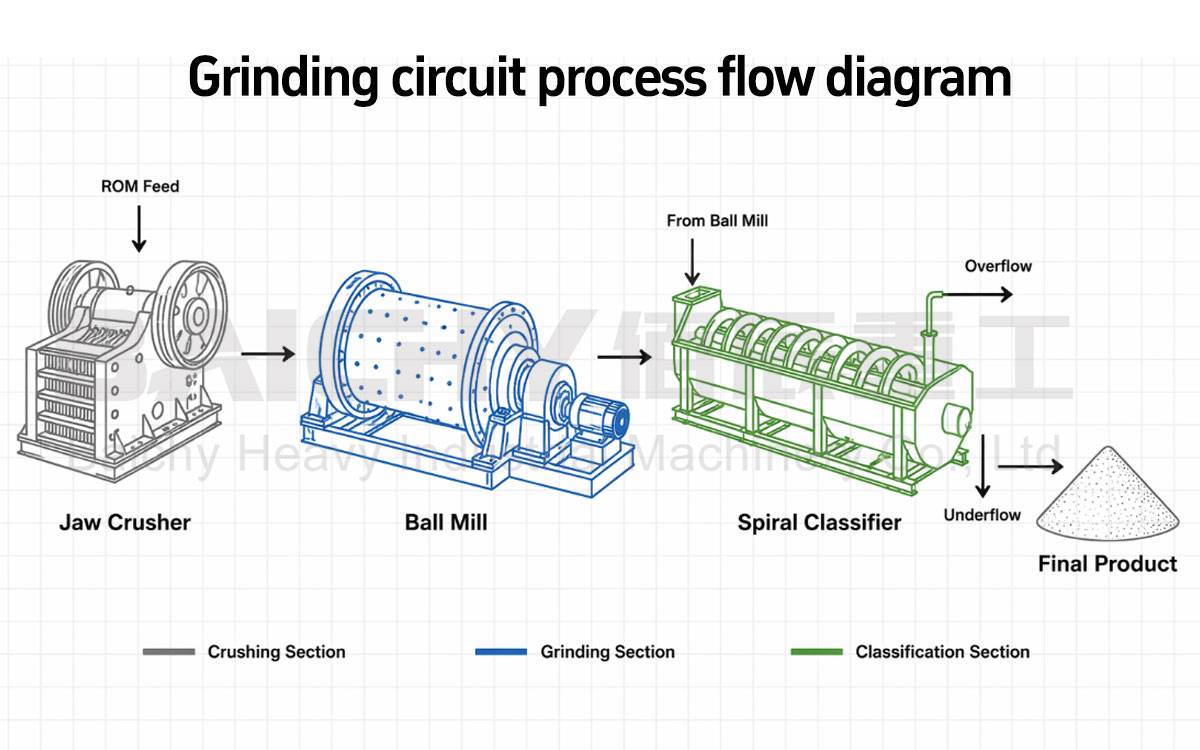
Equipment Selection Strategy: The standard configuration for flotation plants is a ball mill in a closed circuit with a spiral classifier; this allows slurry of the required fineness to be separated promptly while coarse particles are returned for regrinding. CIL/CIP gold plants typically require 80–90% passing 200 mesh (corresponding to a ball mill discharge of 0.074–0.15 mm) and utilize closed-circuit classification to ensure particle size specifications are met.
1.3 Shell Rotational Speed: The "Golden Range" of 76–88% of Critical Speed
The grinding action of a ball mill relies on the shell's rotation to lift the steel balls to a certain height before they cascade or cataract down. If the speed is too low, the balls merely slide at the bottom ("rolling without cascading"); if the speed is too high, the balls cling to the shell wall due to centrifugal force ("rotating without falling"). Both scenarios result in zero grinding efficiency.
• Ф900–Ф1200: Typical speed 35–40 r/min (80–88% of critical speed). Small-diameter mills rely on higher speeds to compensate for lower energy input.
• Ф1500–Ф1830: Typical speed 24–32 r/min (76–82% of critical speed). These are workhorse models for standard mineral processing plants; speed settings balance efficiency against steel consumption.
• Ф2100–Ф2400: Typical speed 20–24 r/min (76–80% of critical speed). Medium-to-large mills compensate for reduced rotational speed by increasing the ball charge volume.
• Ф2700–Ф3200: Typical speed 18–21 r/min (78–84% of critical speed). Large-diameter mills maintain grinding energy by relying on the lift height of the steel balls rather than rotational speed.
Design Principle: The speed ratio (actual speed &pide; critical speed) is the most critical design parameter for a ball mill. Baichy ball mills are factory-set to the optimal speed for standard operating conditions; non-professionals should not alter the variable frequency drive (VFD) settings.
Selection Strategy: Once the model is selected, the rotational speed has already been optimized by the manufacturer. When purchasing, the primary focus should be on whether the motor supports local voltage and frequency standards (e.g., 380V/50Hz in Africa, 220V/60Hz in South America), rather than the rotational speed itself.
Grinding Equipment Selection
II. Baichy Ball Mill Series: Model and Parameter Comparison Table
The following lists Baichy’s 20 standard ball mill models currently available (technical parameters applicable to both wet and dry grinding), covering a processing capacity range of 0.65–180 t/h.
Note: Processing capacities are based on standard operating conditions (feed size ≤25 mm; medium-hardness ore such as limestone). Actual capacity is influenced by factors such as material hardness, feed size distribution, target fineness, and grinding slurry concentration. Processing capacities for high-hardness ores—such as iron ore or gold ore—may be 20–30% lower.
| Model | Capacity (t/h) |
Rotate Speed (r/min) |
Grinding Balls (t) |
Power (kw) | Gear Box | |
|---|---|---|---|---|---|---|
| Model | Speed Ratio | |||||
| Φ1.2x4.5 | 1.6-5.8 | 30.3 | 5 | 55 | ZD30 | 4.5 |
| Φ1.5x5.7 | 3.5-6 | 26.34 | 11 | 130 | ZD40 | 4 |
| Φ1.83x6.4 | 6.5-15 | 23.9 | 21 | 210 | ZD60 | 4.5 |
| Φ1.83x7 | 7.5-17 | 24.5 | 23 | 245 | ZD60 | 4.5 |
| Φ2.2x6.5 | 14-20 | 21.4 | 31 | 280 | ZD70 | 5 |
| Φ2.4x7 | 17-28 | 20.4 | 39 | 380 | ZD80 | 5 |
| Φ2.4x8 | 20-35 | 20.3 | 42 | 570 | ZD80 | 5 |
| Φ2.4x12 | 35-45 | 20 | 63 | 800 | MBY710 | 6.3 |
| Φ2.4x13 | 35-48 | 19.4 | 68 | 800 | MBY710 | 6.3 |
| Φ2.6x13 | 40-55 | 19.5 | 82 | 1000 | JDX800 | 6.3 |
| Φ3x9 | 50-55 | 18.34 | 78 | 1000 | JDX800 | 6.3 |
| Φ3.2x9 | 60-70 | 17.6 | 95 | 1250 | MBY900 | 7.1 |
| Φ3.5x11 | 75-85 | 16.8 | 150 | 1250 | JDX900 | 5.84 |
| Φ3.8x12 | 85-110 | 17 | 175 | 1600 | MBY800 | 5.6 |
| Φ4.6x10+3.5 | 180-210 | 15 | 278 | 3550 | JQS3500 | 15.1 |
Quick Capacity Calculation Formula
For model selection based on known material and target fineness, use the following empirical formula for a preliminary estimate:
Actual Capacity ≈ Nominal Capacity × K₁ (Hardness Coefficient) × K₂ (Feed Coefficient) × K₃ (Fineness Coefficient)
K₁ (Hardness Coefficient): Limestone 1.0 | Copper Ore 0.85 | Iron Ore 0.70 | Gold Ore 0.65
K₂ (Feed Coefficient): ≤25 mm 1.0 | 25–40 mm 0.75 | >40 mm 0.55
K₃ (Fineness Coefficient): 0.15–0.4 mm 1.0 | 0.074–0.15 mm 0.70 | <0.074 mm 0.45
Example: Model Ф2100×4500 processing gold ore; feed size 30 mm; target fineness 200 mesh. Nominal capacity: 7.6–28 t/h
Actual capacity ≈ 28 × 0.65 × 0.75 × 0.70 = 9.6 t/h (based on the upper limit; this figure is approached during closed-circuit operation)
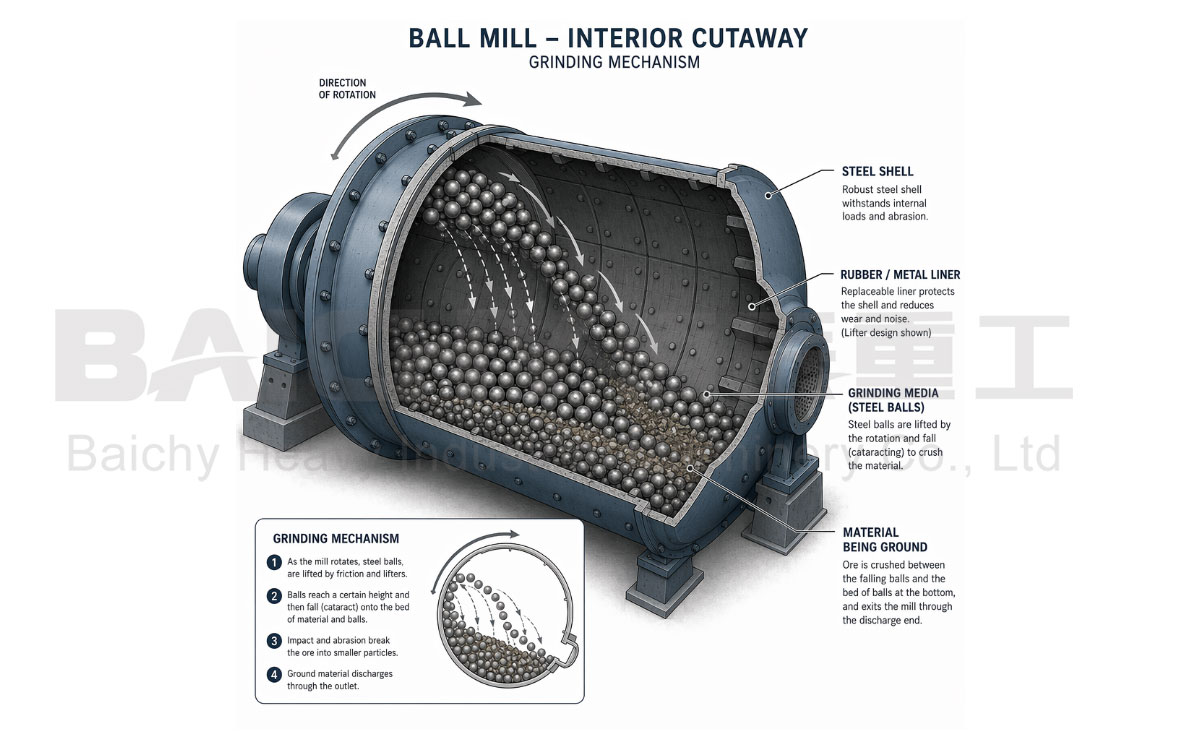
Cutaway view of the internal working principle of a ball mill
III. Typical Model Selection Scenarios
Scenario 1: Laboratory / Small-scale pilot production (Daily processing capacity: 10–50 tons)
Recommended models: Ф900 series and entry-level Ф1200—motor power is only 18.5–37 kW; standard industrial power supply is sufficient, eliminating the need for a dedicated high-voltage line.
• Ф900×1800 (18.5 kW, daily capacity 15–48 t): Suitable for mineral processing tests, university laboratories, and small-scale tailings reprocessing trials. Typical configuration: PE250×400 jaw crusher → Ф900×1800 ball mill → shaking table. Total equipment investment: 8,000–15,000 USD (FOB); payback period: 3–6 months.
• Ф900×3000 (22 kW, daily capacity 26–84 t): Suitable for small-scale gold mine pilot production and ceramic raw material processing; features a shell length 60% greater than the Ф900×1800 model, resulting in more thorough grinding.
• Ф1200×2400 (37 kW, daily capacity 38–140 t): Suitable for small-scale flotation plants; can form a complete mineral processing circuit when paired with shaking tables or flotation machines.
Scenario 2: Medium-sized mineral processing plant (Daily processing capacity: 100–500 tons)
Primary models fall within the Ф1500–Ф2200 range; motor power is 130–380 kW, requiring a 380V three-phase power supply.
• Ф1500×5700 (130 kW, daily capacity 62–336 t): Entry-level model for medium-sized gold or copper flotation plants; features a high length-to-diameter ratio and offers precise control over grinding fineness. • Ф1830×7000 (245 kW, daily capacity 180–408 t): A mainstay for medium-sized magnetic separation/flotation lines; typical configuration: PE500×750 jaw crusher → vibrating screen (classification) → ball mill + spiral classifier (closed-circuit) → flotation machine.
• Ф2100×4500 (245 kW, daily capacity 182–672 t): The preferred choice for standard medium-sized lines; offers the greatest capacity flexibility for the given power rating.
• Ф2200×4500 (280 kW, daily capacity 125–768 t): Features a wide capacity range, suitable for production needs involving frequent switching between different ore types.
Equipment investment for a single grinding-beneficiation line is approximately 60,000–150,000 (FOB).
Scenario 3: Large-scale mines / EPC projects (daily capacity 500–2,000+ tonnes)
Models Ф2400 and above, with motor power of 320–800 kW; requires an independent transformer and high-voltage distribution cabinet.
• Ф2400×4500 (320 kW, daily capacity 204–1,440 t): Entry-level model for large-scale non-ferrous metal beneficiation; offers better energy efficiency per unit than a parallel setup of multiple smaller-diameter units.
• Ф2700×4500 (430 kW, daily capacity 288–1,920 t): Standard configuration for large-scale gold/iron ore CIL/CIP plants; utilizes an FX350 cyclone cluster for closed-circuit grinding.
• Ф2700×13000 (630 kW, daily capacity 288–1,920 t): High length-to-diameter ratio model; significantly extends material residence time inside the mill, making it suitable for refractory ores with extremely fine dissemination sizes.
• Ф3200×4000 (800 kW; daily processing capacity: 720–4,320 t): Core equipment for ultra-large-scale mining EPC projects; a single unit can meet daily processing requirements exceeding 4,000 tons.
Investment cost for a complete grinding and beneficiation EPC production line: approx. 500,000–2,500,000+ USD (FOB; excluding civil works and installation).
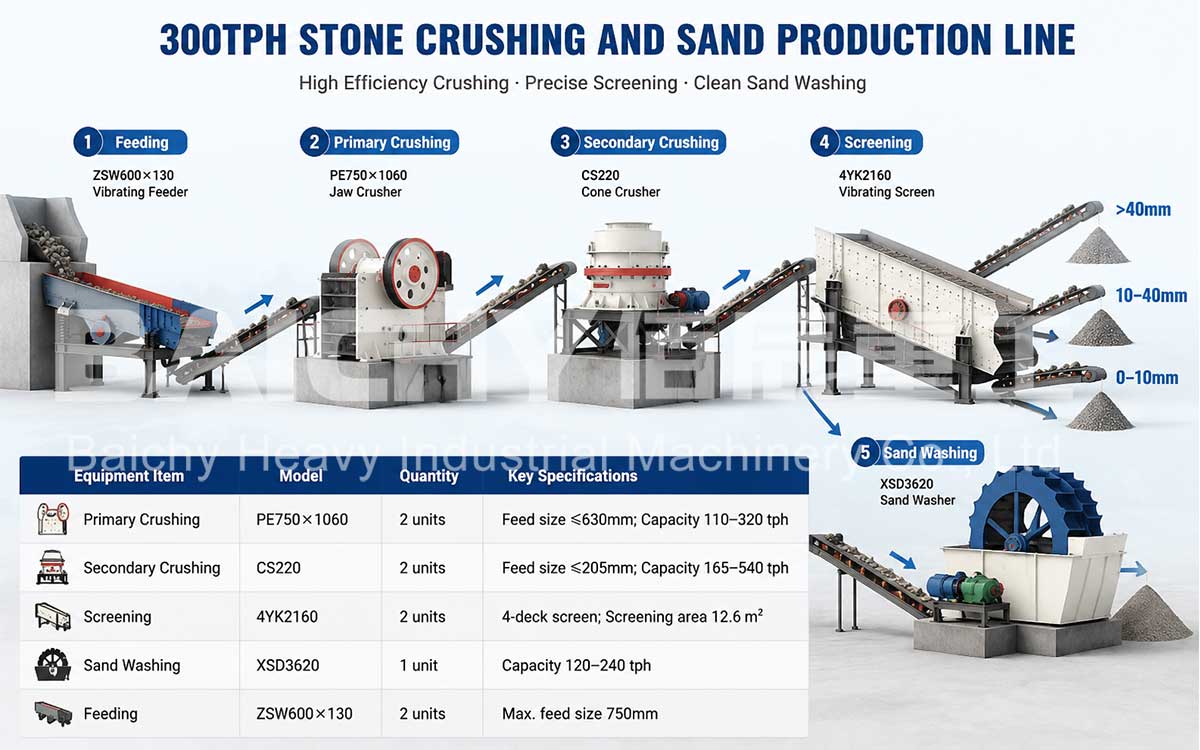
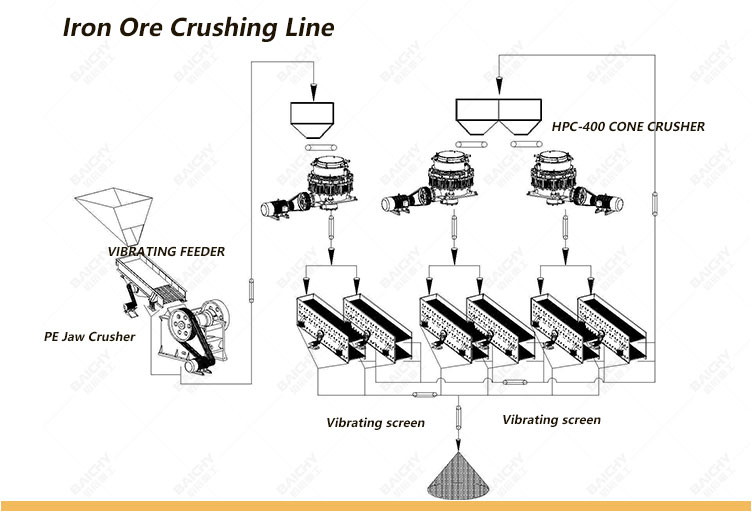
Design Recommendation: For daily processing capacities >500 tons, a two-stage grinding process (primary coarse grinding + secondary fine grinding) is recommended over a single ultra-large mill. Two-stage grinding offers higher energy efficiency and eliminates the risk of a total plant shutdown caused by the failure of a single mill. Typical configuration: PE750×1060 Jaw Crusher + PYB1750 Cone Crusher → Ф2700×4500 Primary Ball Mill + FX350 Hydrocyclone Cluster → Ф2100×4500 Secondary Ball Mill + Flotation/Leaching System.
IV. Recommendations for Auxiliary Equipment
A ball mill is not a standalone unit; it serves as the central node of the grinding circuit. The following is a standard auxiliary equipment package:
Cutaway view of the internal working principle of a ball mill
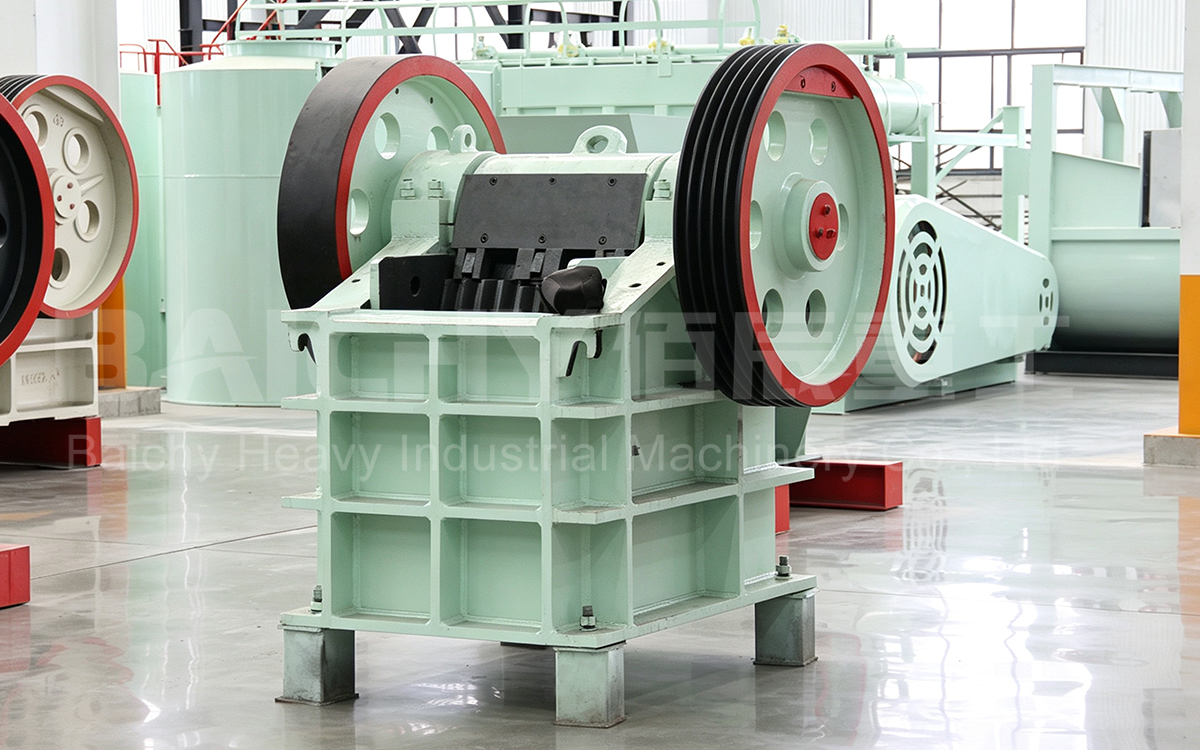
• Jaw Crusher (PE Series, PE250×400 to PE750×1060) — Crushes run-of-mine ore to ≤25 mm; essential equipment.
• Spiral Classifier (FG Series, Ф500–Ф2000) — Closed-circuit classification; discharges material of the required fineness while returning coarse particles; essential for flotation/leaching processes.
• Hydrocyclone Cluster (FX Series, FX150–FX500) — High-precision classification with a small footprint; can serve as an alternative to the spiral classifier.
• Magnetic Separator (CTB Series) — Used for early-stage tailings rejection in iron ore processing; essential for iron ore applications.
• Flotation Machine (XCF/KYF Series) — Used for the purification of non-ferrous metals via flotation; essential for gold, copper, and lead-zinc ores.
• Agitation Tank (XB Series) — Used for slurry agitation/conditioning and pre-leaching preparation; essential for CIL/CIP processes.
• Electromagnetic Vibrating Feeder (GZ Series) — Ensures uniform, metered ore feeding to prevent the mill from running empty or becoming overloaded ("choked"); highly recommended.
• Bag-type Dust Collector (DMC Series) — Mandatory for dry ball milling; not required for wet milling.
Quick Comparison: Dry vs. Wet Milling
Wet ball mills offer 20–30% higher grinding efficiency than dry mills and produce no dust emissions, though they require downstream dewatering equipment (thickening/filtration). Dry ball mills eliminate the need for dewatering and feature a simpler process flow but require a high-power dust collection system and result in faster wear of steel balls and liners. Discharge mechanisms, liner structures, and feed mechanisms differ completely between the two; they cannot be retrofitted into one another.
Baichy Recommendation: Wet ball mills are recommended for over 90% of metal mineral processing plants. Dry ball mills are suitable only for applications requiring dry powder delivery (e.g., cement clinker, refractory materials, fertilizers) or for regions with severe water scarcity.
V. Common Selection Pitfalls and Tips to Avoid Them
Pitfall 1: "For a given diameter, longer is always better."
While a Ф1830×7000 mill indeed has a higher throughput than a Ф1830×4500 mill, increasing the length-to-diameter ratio amplifies two risks: ① Increased over-grinding—excessive residence time in the shell causes fine particles to be repeatedly crushed and turned into "slimes," actually reducing flotation recovery rates; ② Uneven liner wear—significant wear gradients between the feed and discharge ends of the long shell increase maintenance costs. Selection Principle: First, determine the diameter based on capacity requirements; then, determine the length based on the target fineness. Higher fineness requirements (e.g., >90% passing -200 mesh) necessitate a higher length-to-diameter ratio.
Pitfall 2: "The more grinding balls loaded, the faster the grinding."
There is a physical upper limit to the ball charge: 40–45% of the shell's effective volume. Exceeding this ratio leaves insufficient buffer space for collisions between steel balls; the action degrades from "cataracting impact" to "slumping/rolling," causing grinding efficiency to drop rather than rise. Simultaneously, motor current surges, and the risk of gearbox overload increases sharply.
Misconception 3: "Just choose the model based on price; technical specifications don't matter."
For the same diameter (e.g., Φ2100), price quotes may be similar, but the power configuration and foundation design differ vastly between a Φ2100×4500 unit (245 kW; 7.6–28 t/h) and a Φ2100×7000 unit (280 kW; 7.6–28 t/h). Civil engineering rework costs resulting from choosing the wrong length can exceed the price difference of the mill itself.
VI. Frequently Asked Questions (FAQ)
Q1: When selecting a ball mill, should the diameter or the length be determined first?
A: Determine the diameter first. Diameter dictates the maximum production capacity (steel ball impact energy ∝ diameter²), while length determines grinding fineness (material residence time ∝ length). Selection sequence: Determine daily processing capacity → calculate shell diameter based on capacity formulas → determine shell length based on target fineness.
Q2: Can a Φ900 ball mill process gold ore?
A: Yes, but only for small-scale trial production (15–50 tons/day). A Φ900×1800 unit equipped with an 18.5 kW motor is suitable for beneficiation tests or small-scale gold trial production lines. It is recommended to use a PE250×400 jaw crusher upstream to pre-crush ore to ≤20 mm, and a shaking table or small flotation machine downstream for gold recovery.
Q3: What is the approximate steel ball consumption rate for a ball mill?
A: For medium-hardness ore (e.g., copper ore), steel ball consumption is approximately 0.8–1.2 kg per ton of ore; for high-hardness ore (e.g., iron ore, quartz vein gold ore), it is approximately 1.5–2.5 kg per ton of ore. Taking a medium-sized gold mine with a daily processing capacity of 200 tonnes as an example, the annual consumption of steel balls is approximately 110–180 tonnes.
Q4: Wet-typeCan a ball mill be converted for dry operation?
A: It is not recommended. Dry and wet ball mills differ significantly in their discharge mechanisms, liner designs, and feed systems. Converting from wet to dry operation results in a drastic drop in efficiency and creates a risk of motor overload due to material accumulation.
Q5: How do I determine whether a two-stage grinding process is needed instead of a single-stage one?
A: There are three criteria: a target fineness requiring >85% passing through a 200-mesh screen; a daily processing capacity exceeding 500 tons; and ore that is difficult to liberate (fine-grained dissemination). If any two of these criteria are met, a two-stage grinding process is recommended.
Q6: What liner material options are available for Baichy ball mills?
A: High-manganese steel (Mn13) liners come as standard and are suitable for most metal ores. Optional materials include: rubber liners (reduce noise by 10–15 dB; suitable for soft ores), ceramic liners (zero iron contamination; suitable for high-purity quartz/feldspar), and chromium-molybdenum alloy steel liners (50% higher wear resistance; suitable for high-hardness ores).
Q7: How long does it take to ship after an order is placed?
A: Standard models (Ф900–Ф2100) are well-stocked and ship within 7–15 days of payment. Large-scale mills (Ф2200–Ф3200) have a production lead time of 25–45 days. Shipping time depends on the destination port: approximately 30–45 days for major African ports and 10–20 days for Southeast Asia.